Browse NASA Astronomy Picture of the Day archive by date and media: Archive Discoveries
Browse the NASA APOD archive without needing the exact date first. Filter by media type and keep moving deeper into older images and videos.
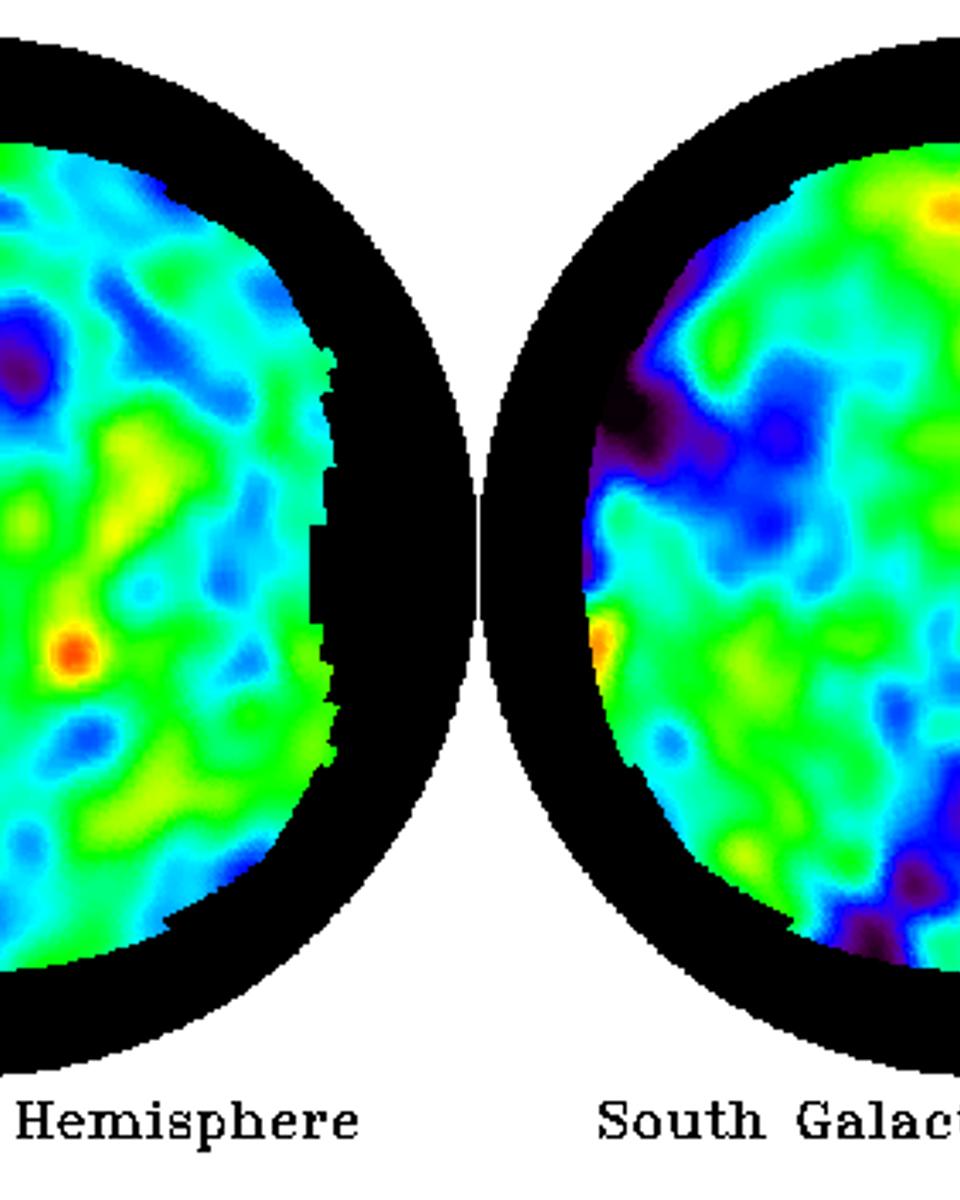
COBE Hotspots: The Oldest Structures Known
Above are two microwave images of the sky, looking north and south of our galaxy 's equator, based on data from NASA's COBE satellite. After computer processing to remove…
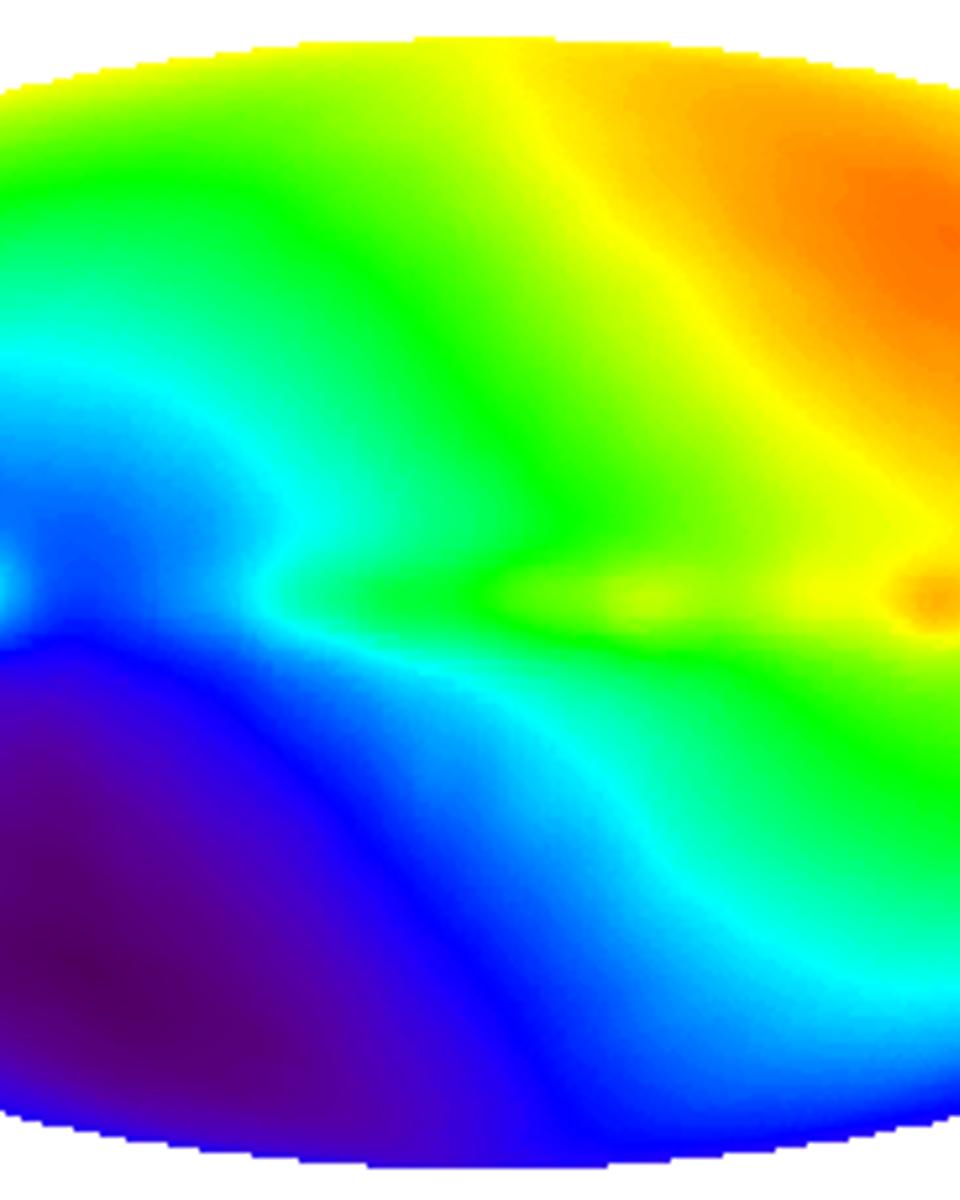
COBE Dipole: Speeding Through the Universe
Our Earth is not at rest. The Earth moves around the Sun . The Sun orbits the center of the Milky Way Galaxy . The Milky Way Galaxy orbits in the Local Group . The Local Group…
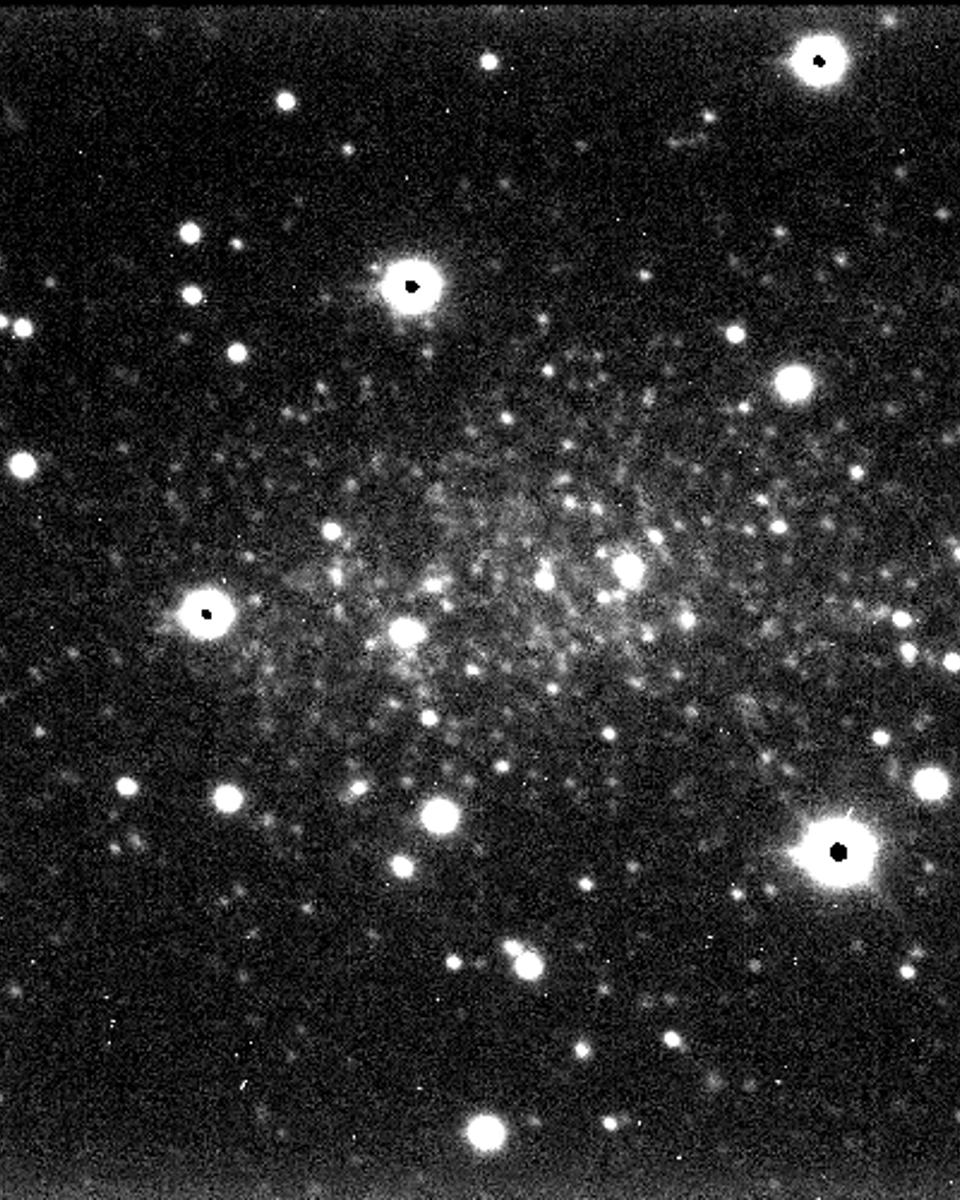
The Closest Galaxy: The Sagittarius Dwarf
What's the closest galaxy to our Milky Way? For many years astronomers thought it was the Large Magellanic Cloud (LMC). But the seemingly insignificant fuzzy patch shown above…
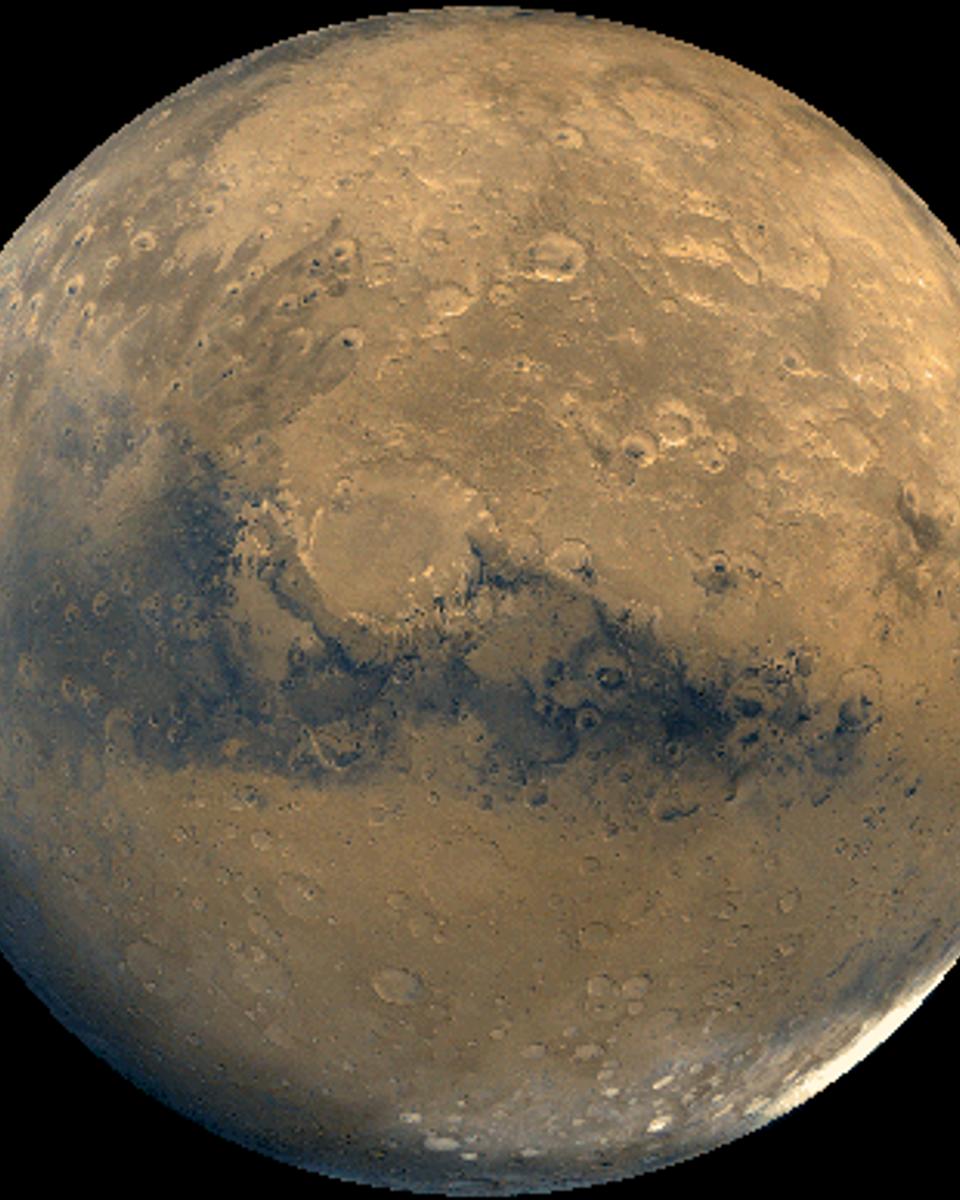
A Huge Impact Crater on Mars
What hit Mars ? The impact crater Schiparelli near the center of the above image was likely caused by a collision with an object the size of an asteroid . Also evident in this…
A MACHO View of Galactic Dark Matter
What is our Galaxy made of? Stellar motions indicate there is much more mass than just stars and gas . Photographs like the two shown above may be yielding a clue about the dark…
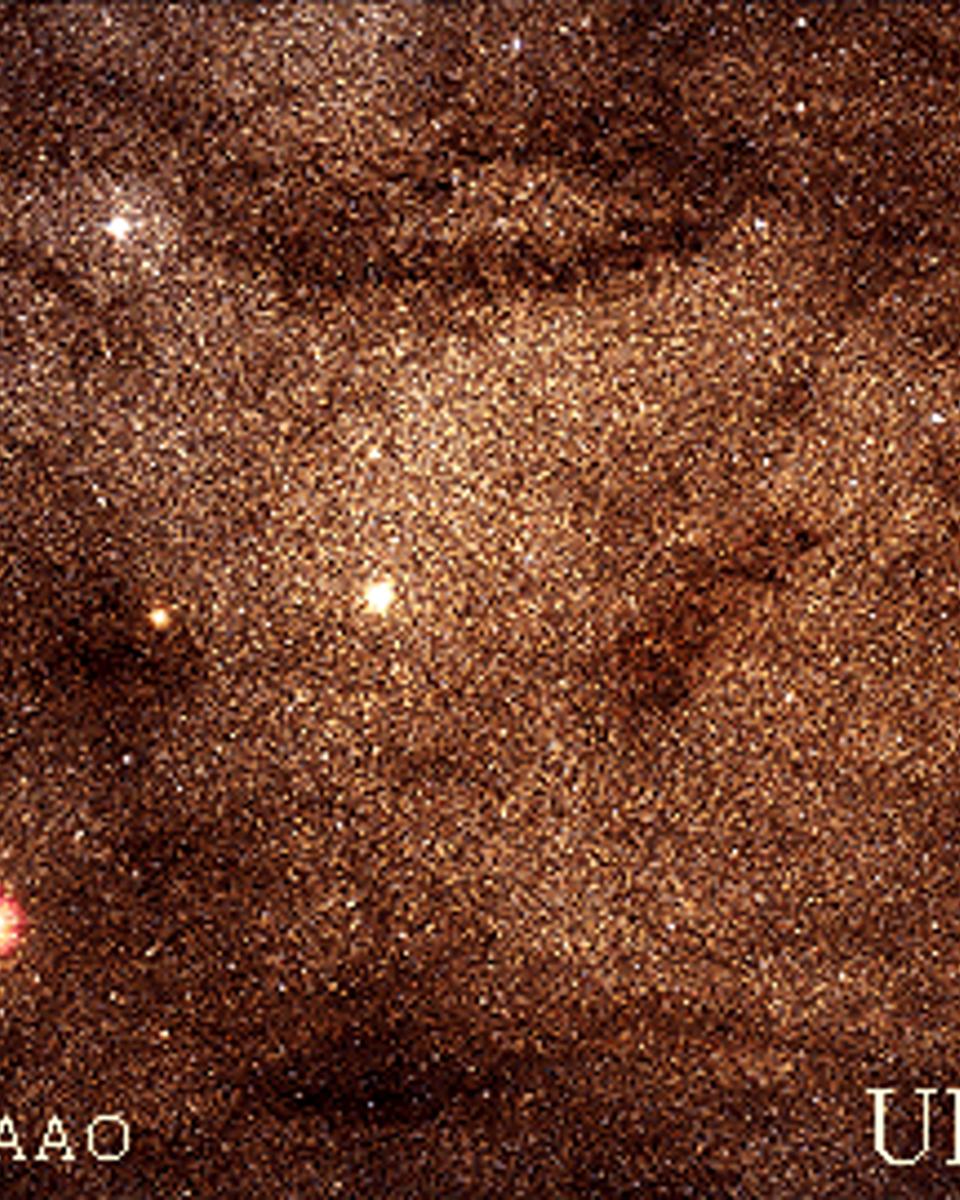
Lensing through Baade's Window
What is the shape and composition of our Milky Way Galaxy ? This question would be easier to answer if there wasn't so much obscuring dust ! In the 1940s, however, astronomer…
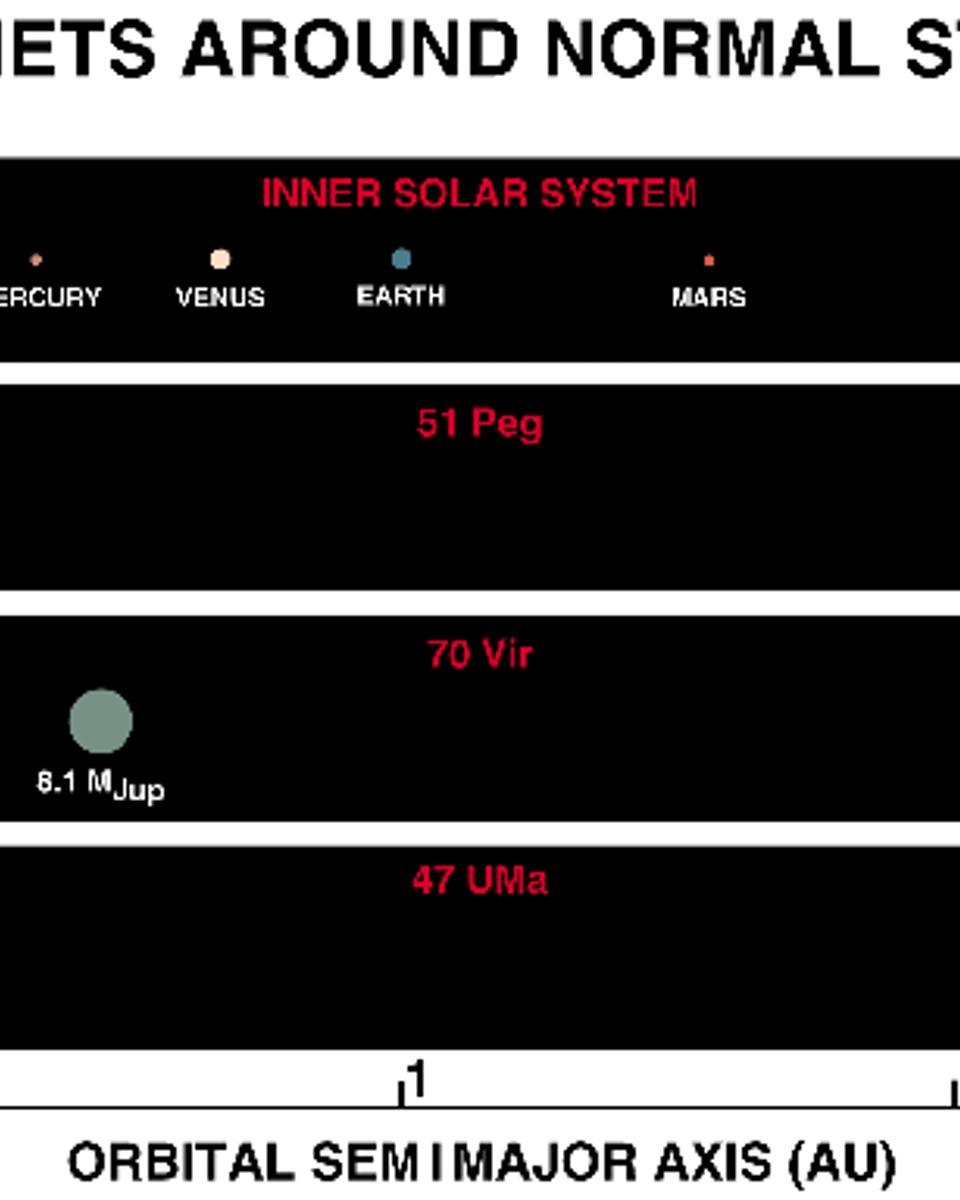
Planets Around Sun-Like Stars
Do many Sun -like stars have planets? Speculation on this point has been ongoing since humanity's realization that other stars existed . Only in the past year, however, have…
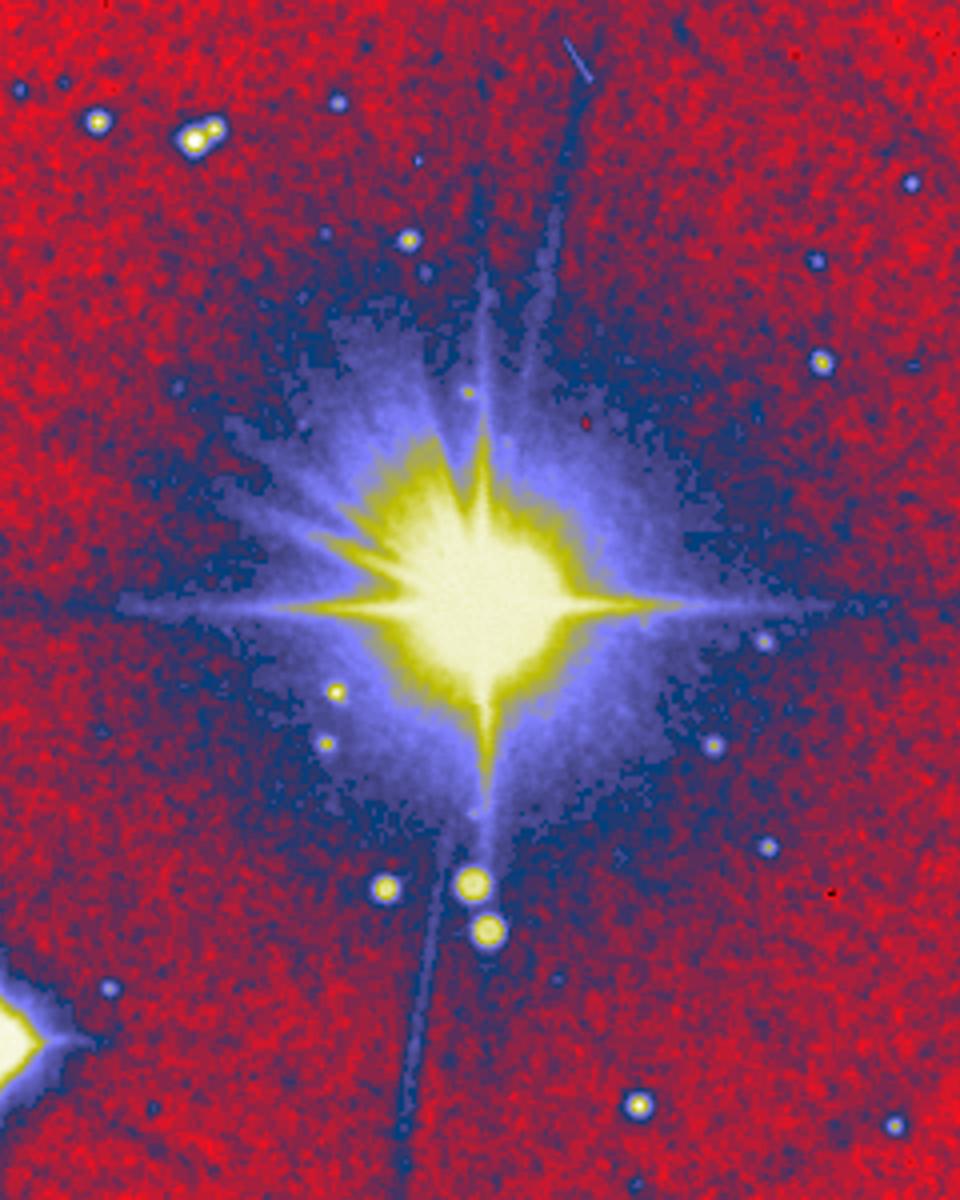
70 Virginis b: A New Water Planet?
The star 70 Virginis has a planet. This recent discovery is the second known case of a planet orbiting a normal star other than our Sun itself. The first case involved 51 Pegasi…
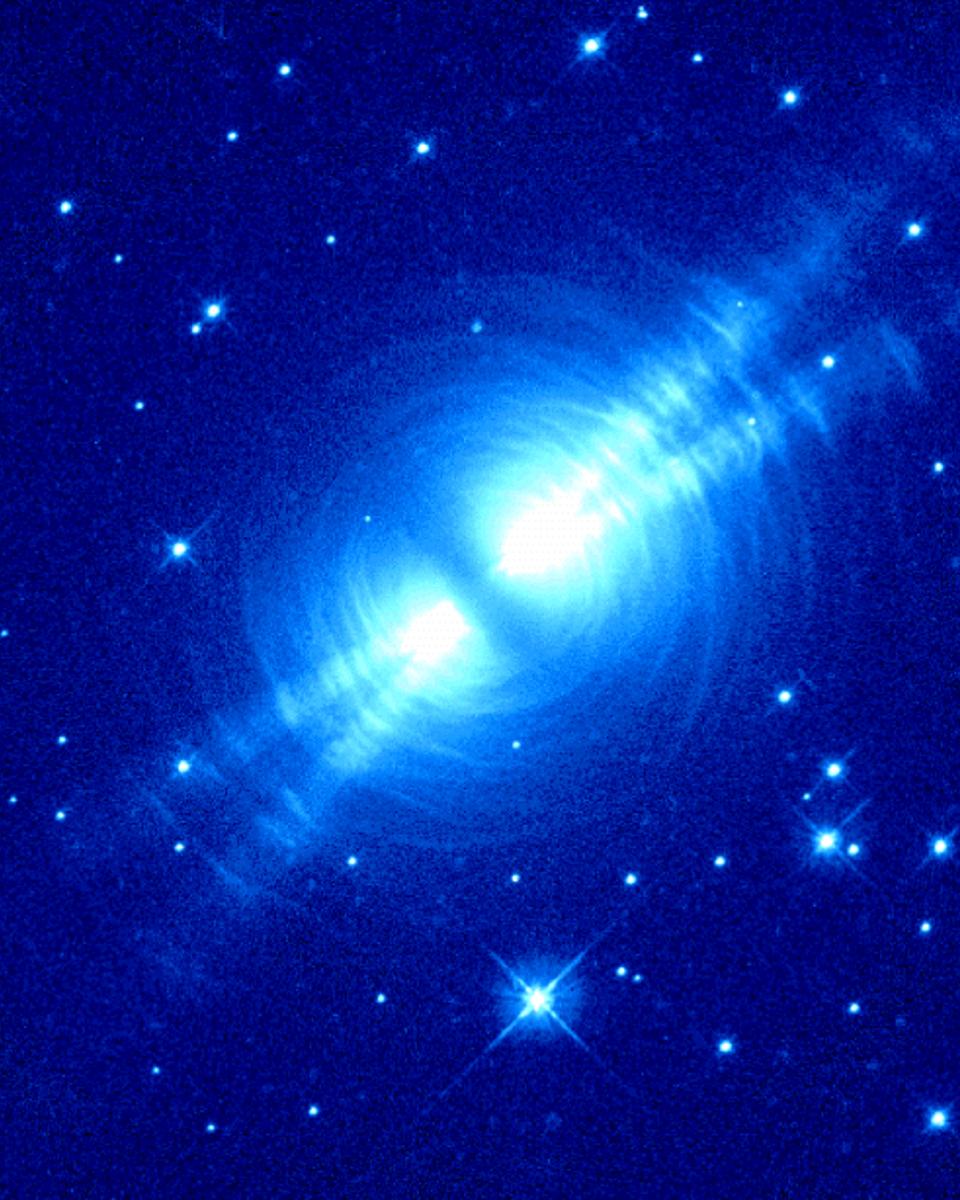
Searchlight Beams from the Egg Nebula
The dramatic and mysterious looking object revealed in this Hubble Space Telescope image is known as the Egg Nebula . It is an aging star about 3,000 lightyears distant, entering…
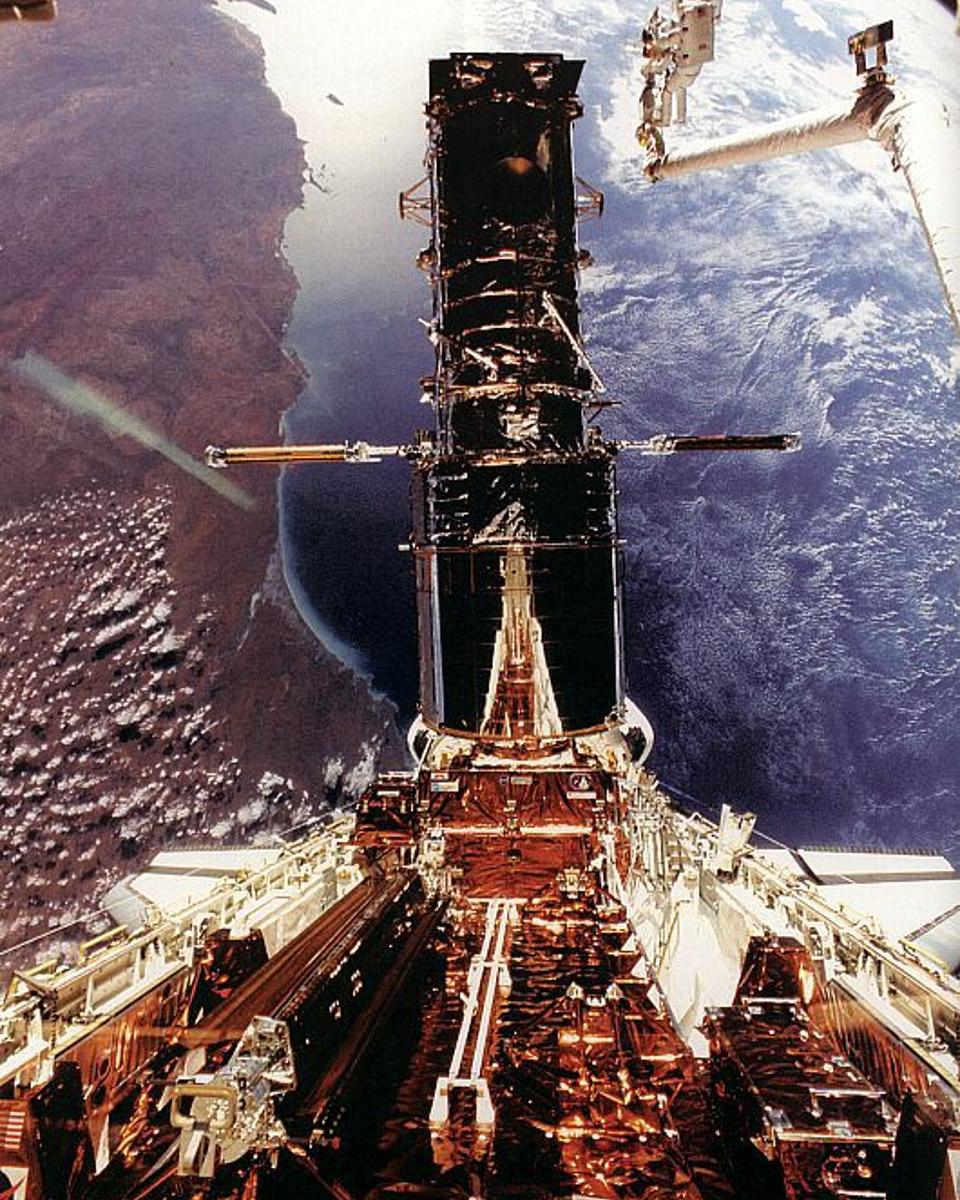
Orbiting Repairmen
In December of 1993 astronauts Story Musgrave and Jeffrey Hoffman performed the orbiting repairmans' ballet 400 miles above the Earth. They are seen in this photo perched at the…
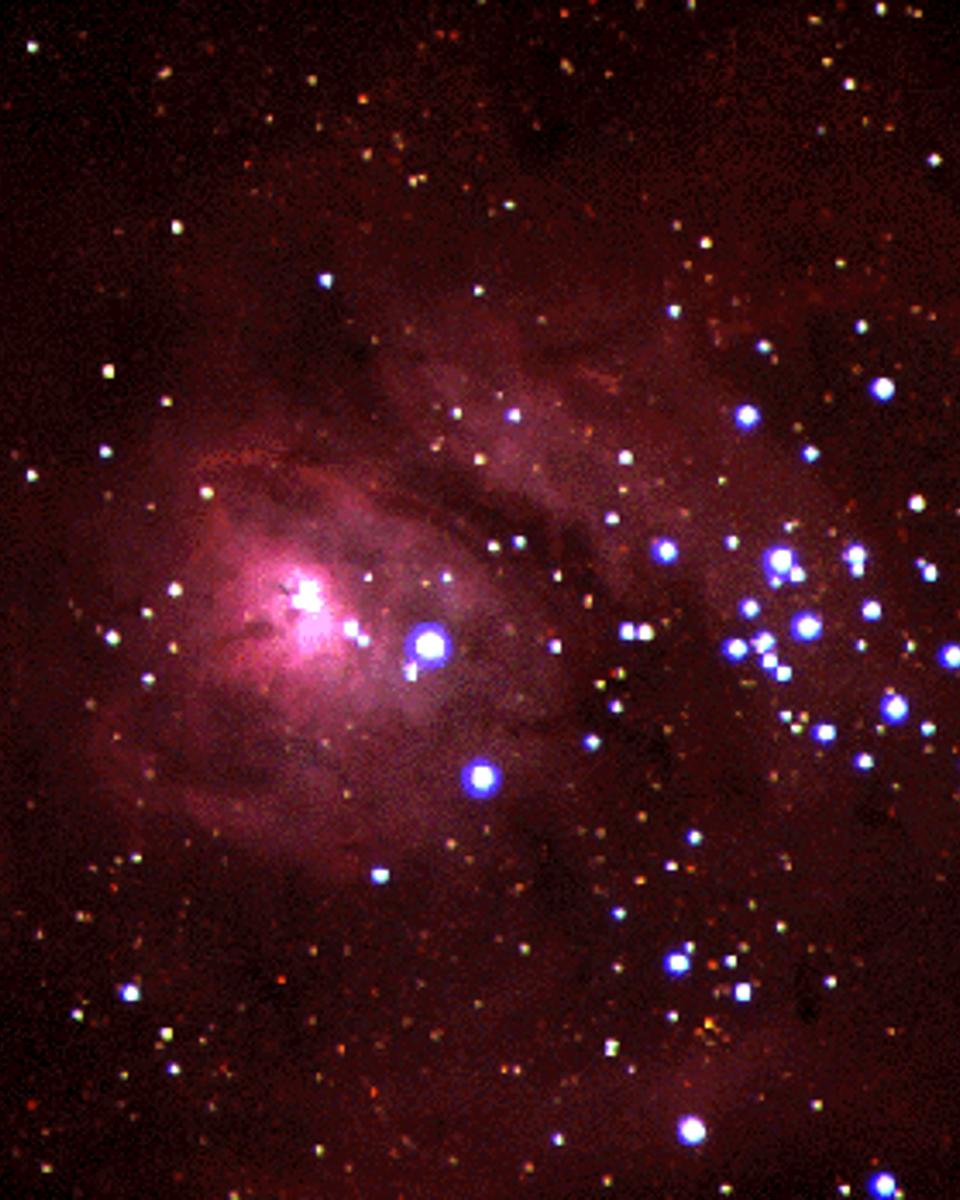
M8: An Open Cluster in the Lagoon
The large majestic Lagoon Nebula is home for many young stars and hot gas . The Lagoon Nebulae is so large and bright it can be seen without a telescope. Formed only several…
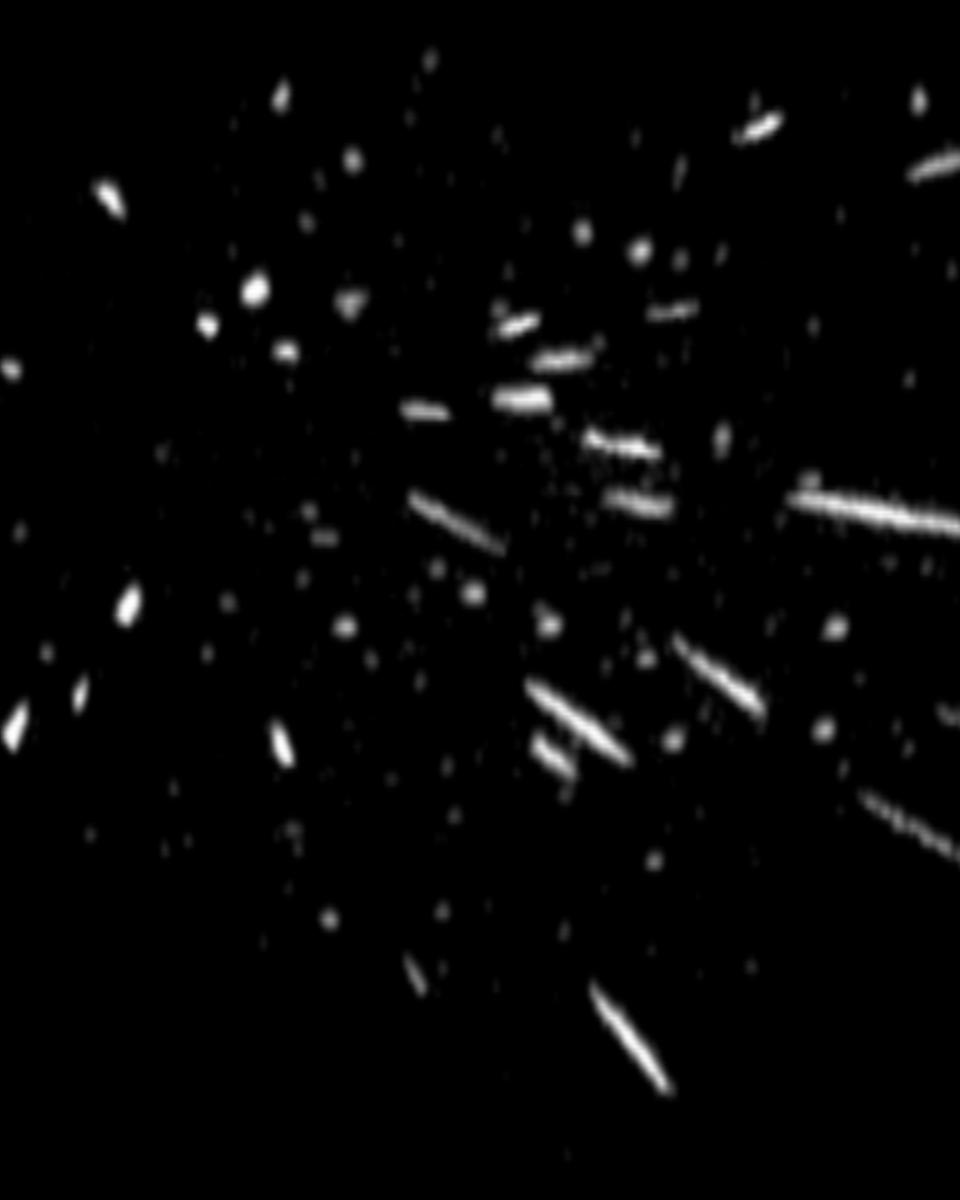
Quadrantids: Meteors in Perspective
Meteor showers are caused by streams of solid particles, dust size and larger, moving as a group through space. In many cases, the orbits of these meteor streams can be identified…
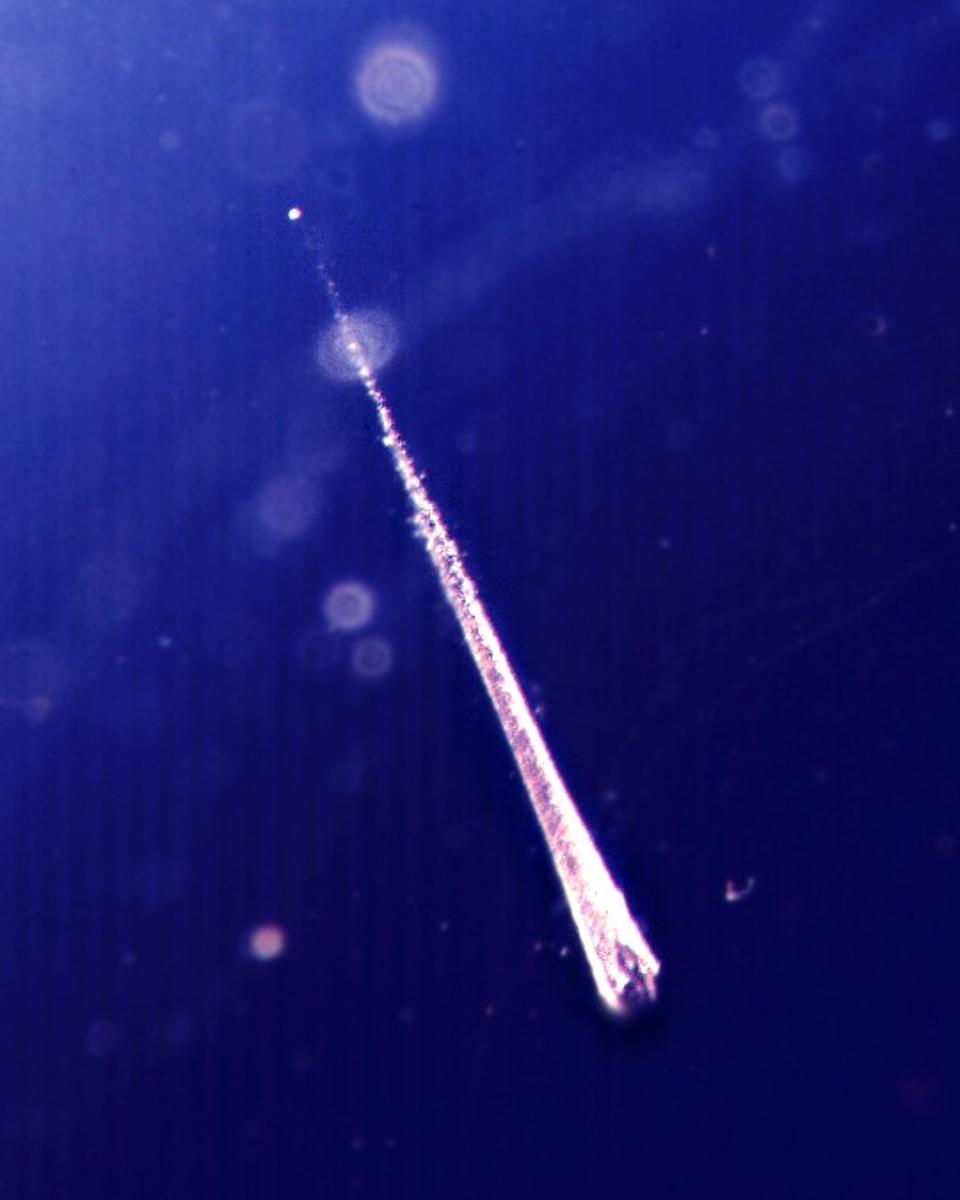
Catching Falling Stardust
This carrot shaped track is actually little more than 5 hundredths of an inch long. It is the trail of a meteroid through a gel exposed to space in low earth orbit by the shuttle…
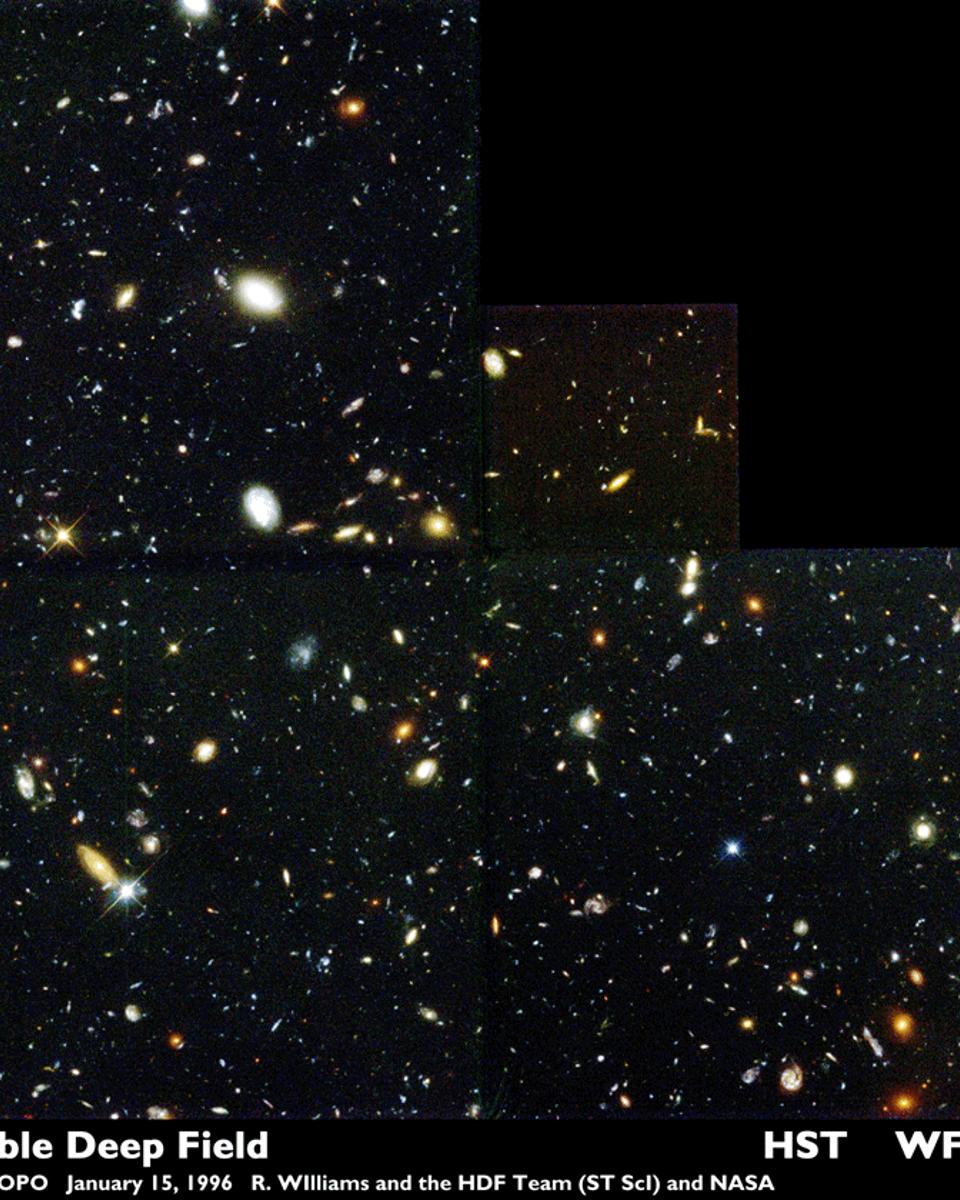
The Deep Field
The image above is part of the Hubble Deep Field and represents humanity's most distant yet optical view of the Universe . Galaxies like colorful pieces of candy fill the field,…
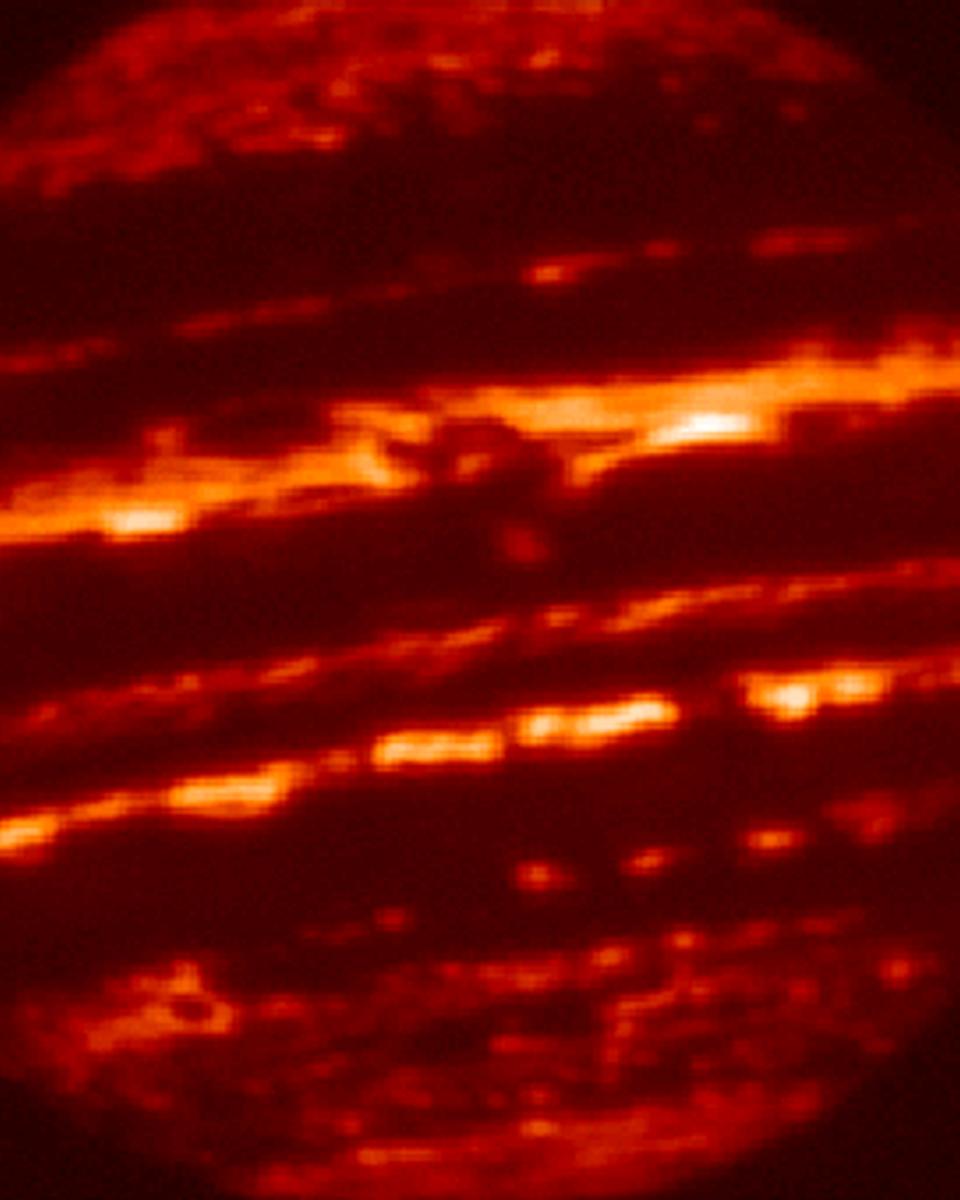
Beneath Jupiter's Clouds
This near-infrared image of Jupiter was made using instrumentation at NASA's Infrared Telescope Facility, located on the summit of Mauna Kea, Hawaii , in support of the Galileo…
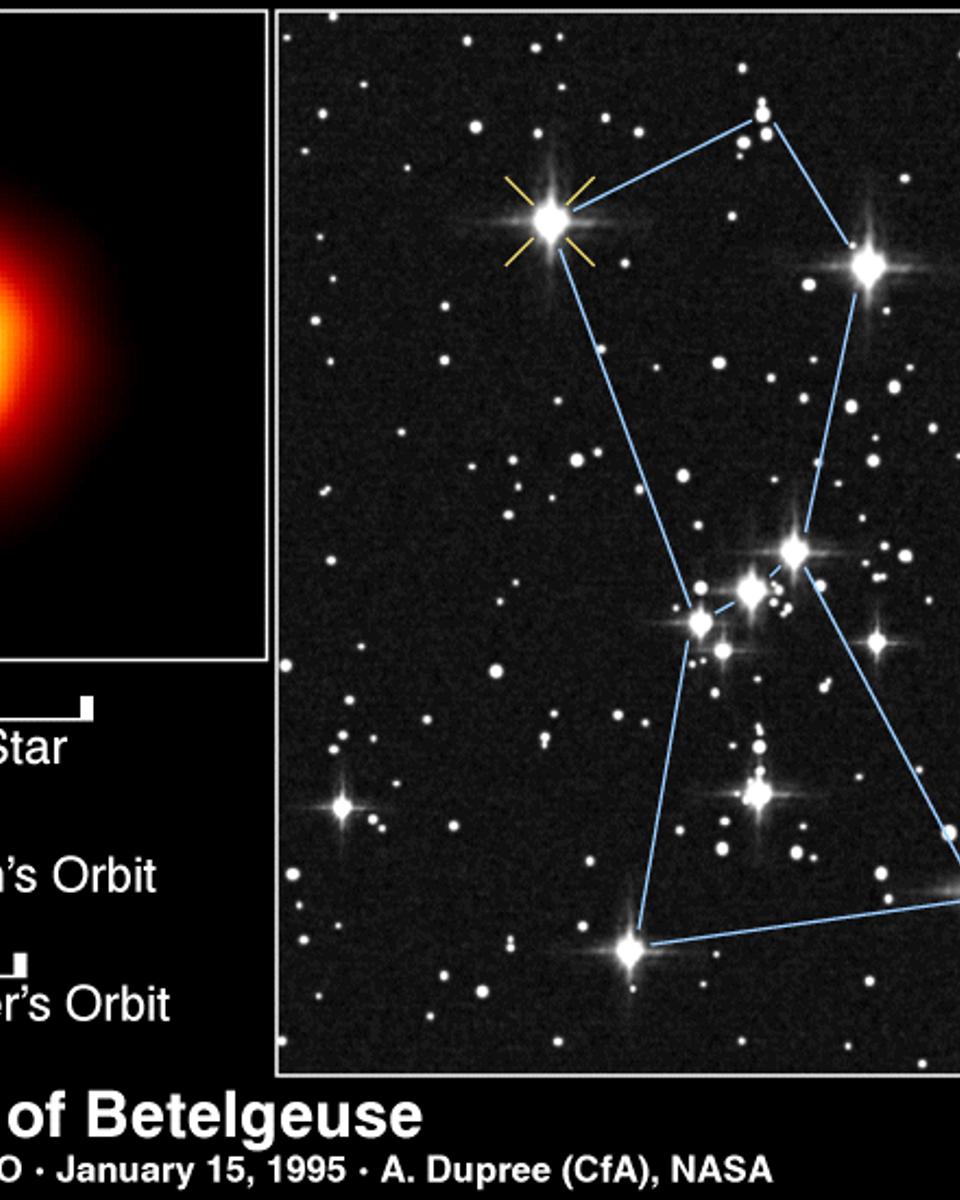
Betelgeuse, Betelgeuse, Betelgeuse
Betelgeuse (sounds a lot like “beetle juice”), a red supergiant star about 600 lightyears distant, is shown here in this Hubble Space Telescope image which represents the first…
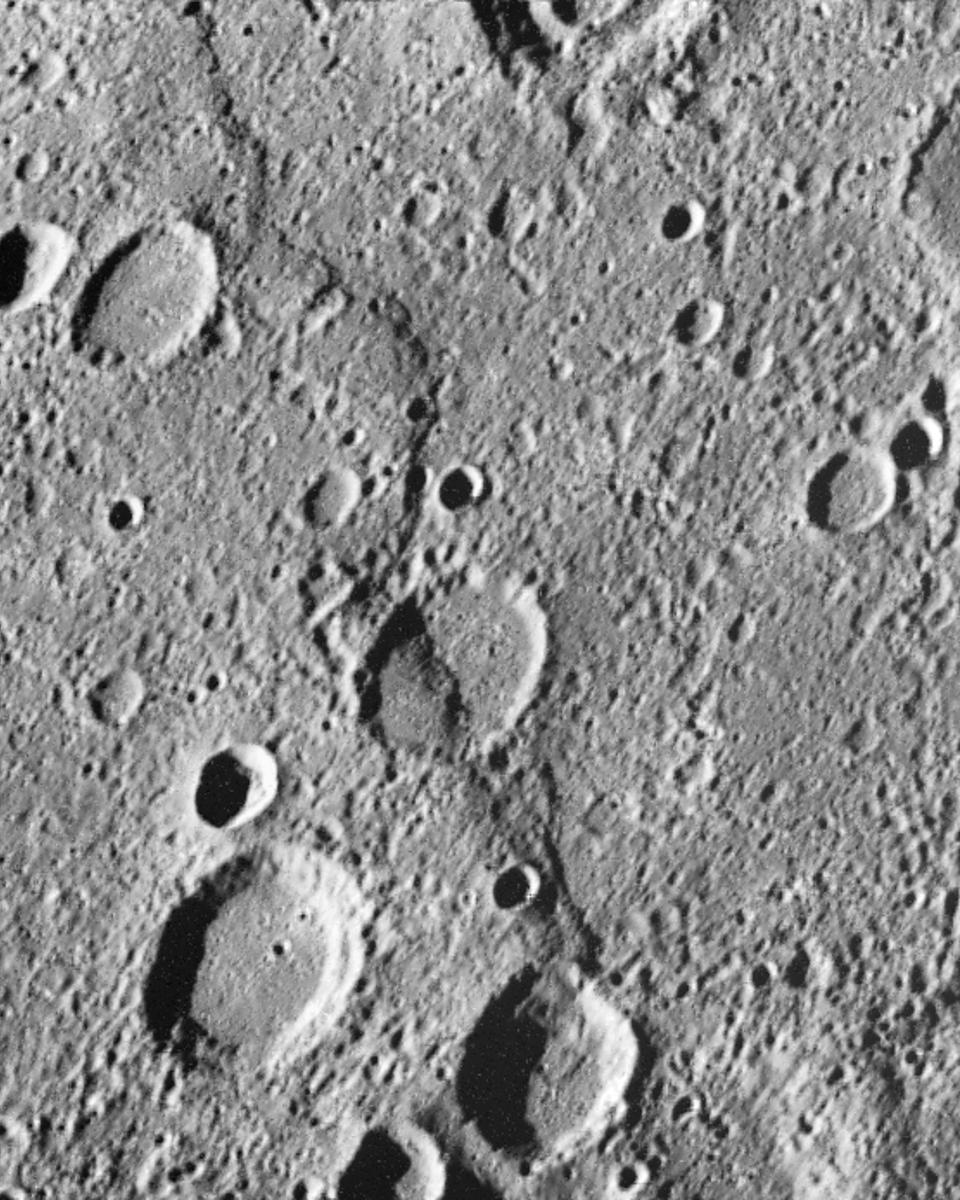
Mercury's Faults
The surface of the planet Mercury is not without fault. In this case, however, “fault” refers to unusual surface features that are the topic of much speculation. The above fault…
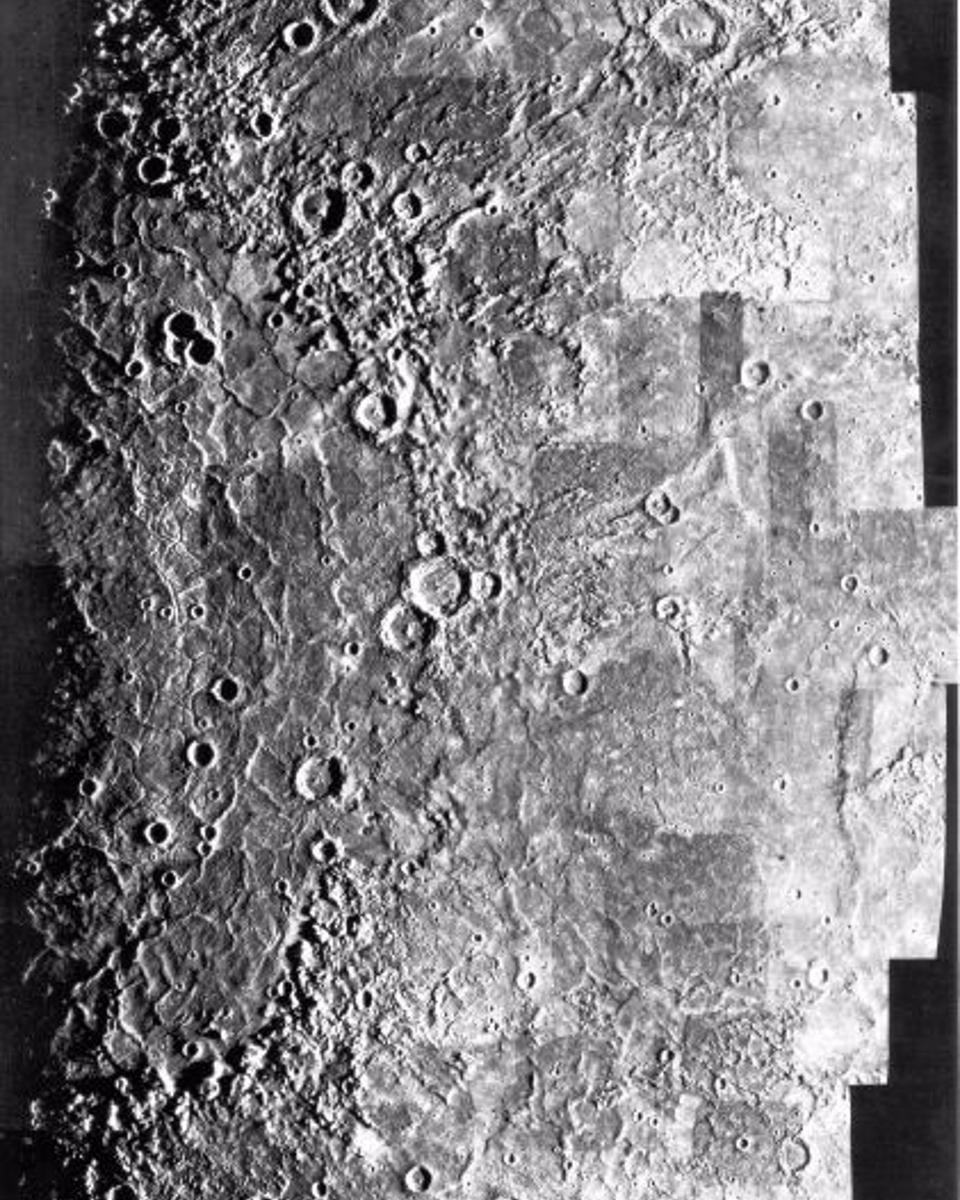
Mercury's Caloris Basin
Mercury , the closest planet to the Sun , has a surface with so many craters it resembles the Earth 's Moon . The largest surface feature on Mercury is the Caloris Basin, which…
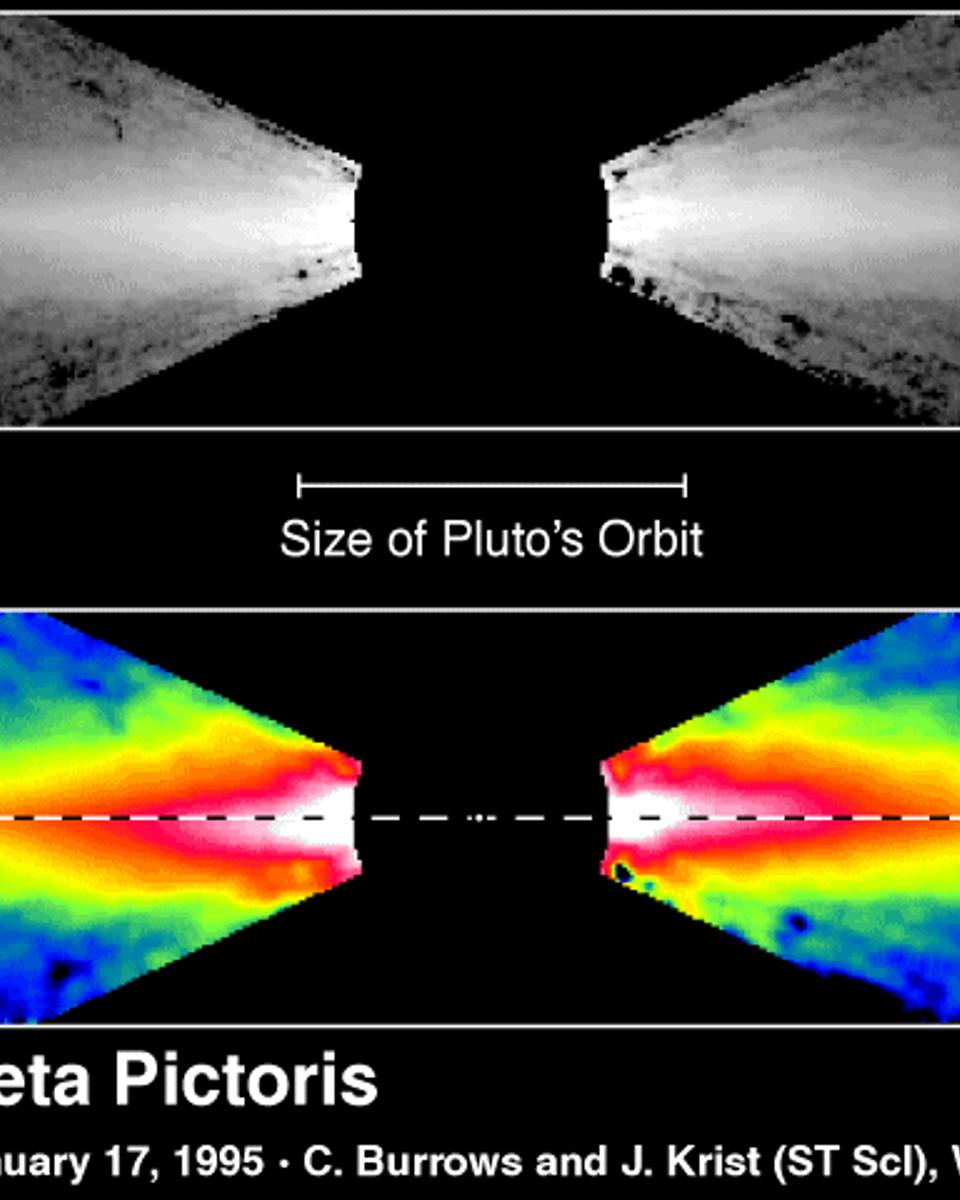
The Dusty Disk of Beta Pic
This dusty disk , viewed edge on surrounding Beta Pictoris , a star only 50 lightyears distant, may signal the presence of an infant solar system. Beta Pictoris is a young…
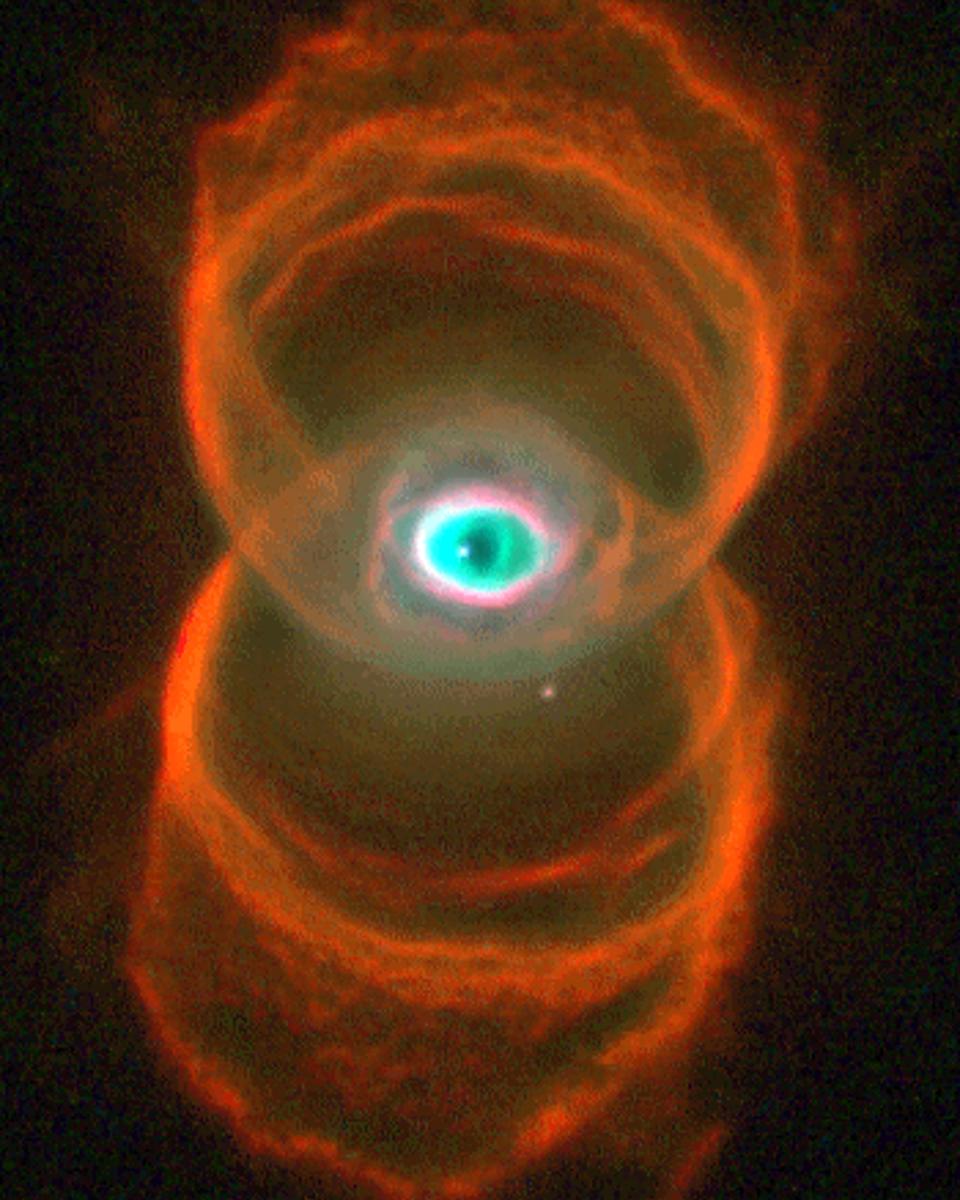
MyCn18: An Hourglass Nebula
The sands of time are running out for the central star of this hourglass-shaped planetary nebula . With its nuclear fuel exhausted, this brief, spectacular, closing phase of a…
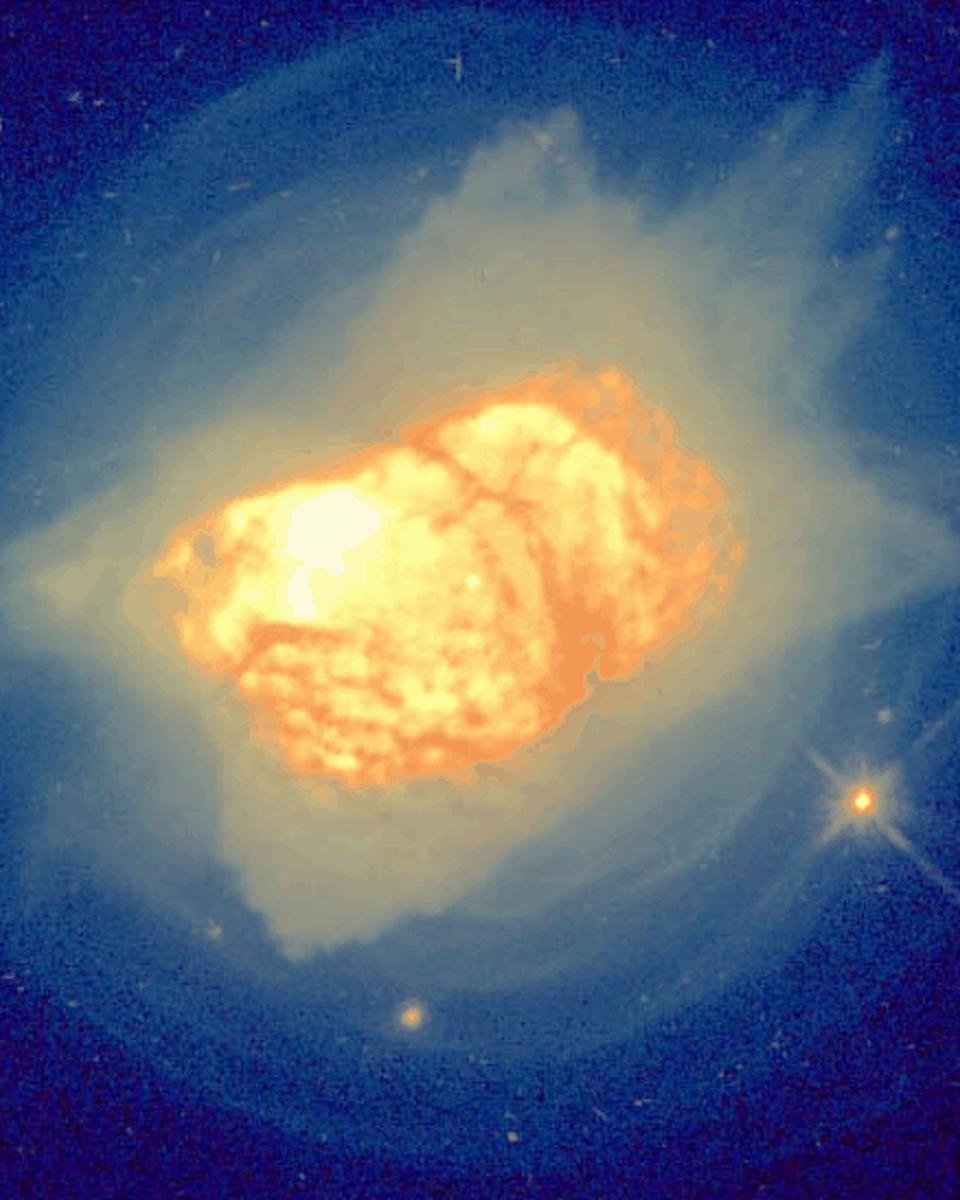
NGC 7027: A Dying Star's Nebula
This pseudo-color composite of two recent Hubble Space Telescope images is a picture of a Sun-like star nearing the end of its lifetime . The exquisite details visible in this…
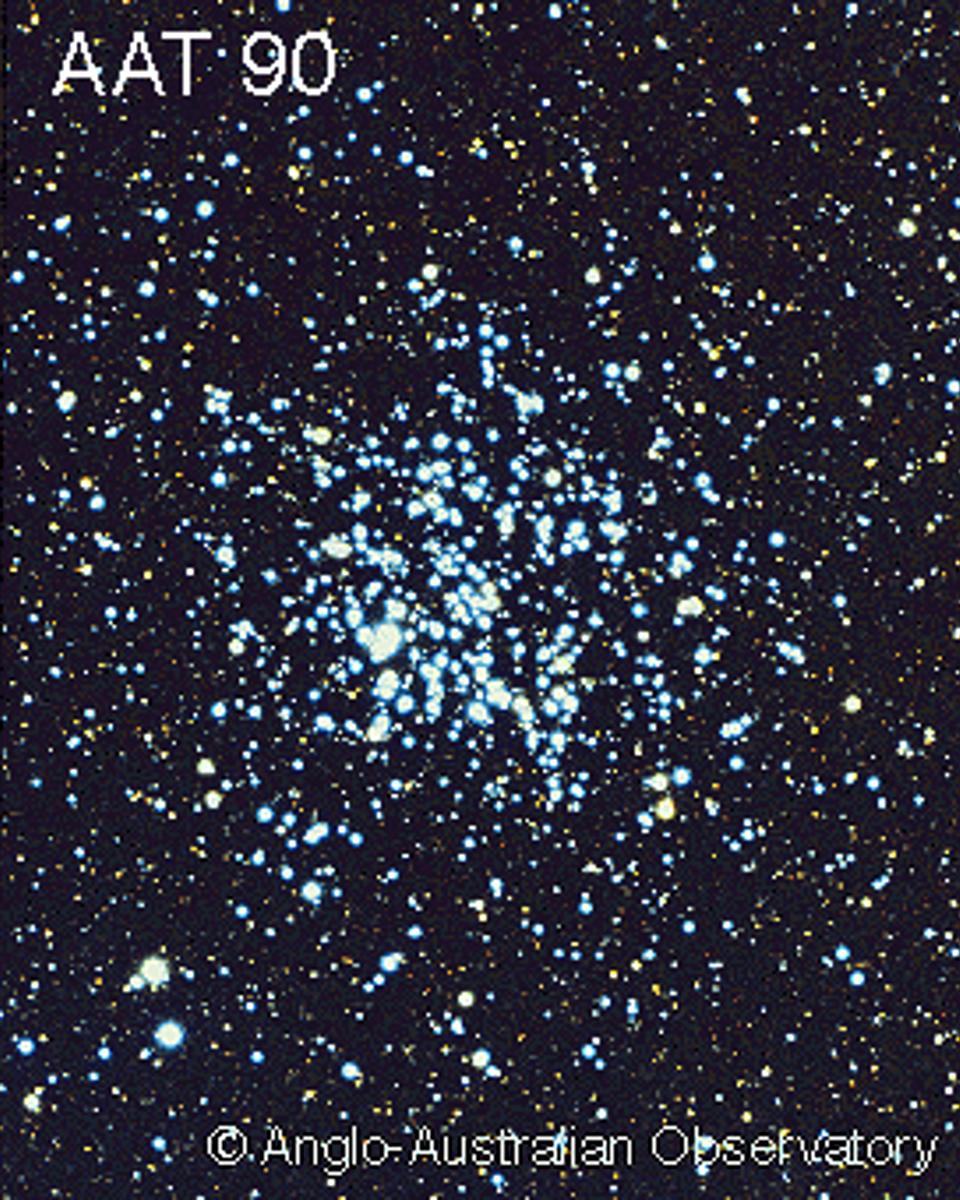
Wild Duck Open Cluster M11
Many stars like our Sun were formed in open clusters . The above open cluster, M 11, contains thousands of stars and is just over three thousand light years distant. The stars in…
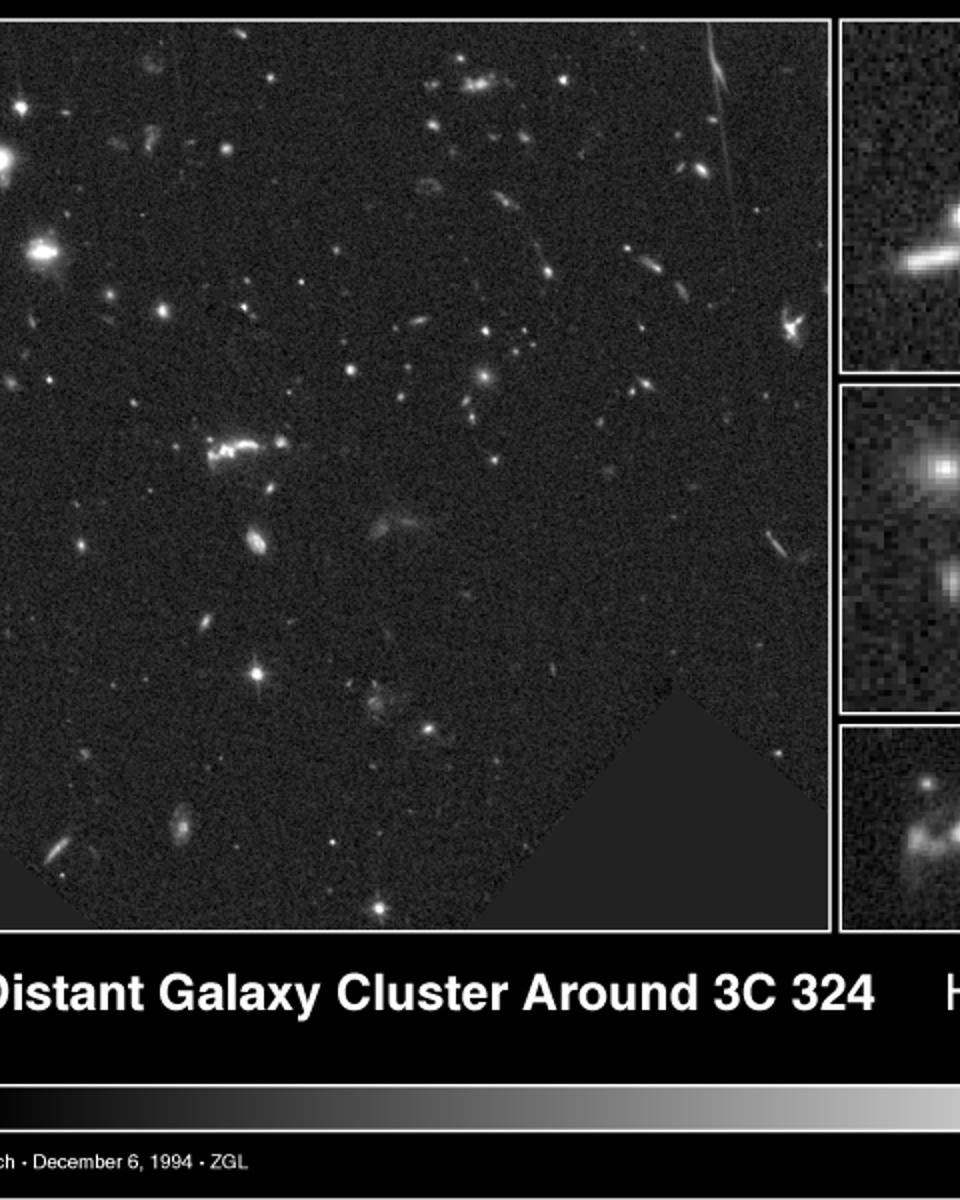
The Dawn of the Clusters
What did the universe look like near the beginning? This exciting photo by the Hubble Space Telescope is one of the deepest ever taken, and shows galaxies as far away as ever…
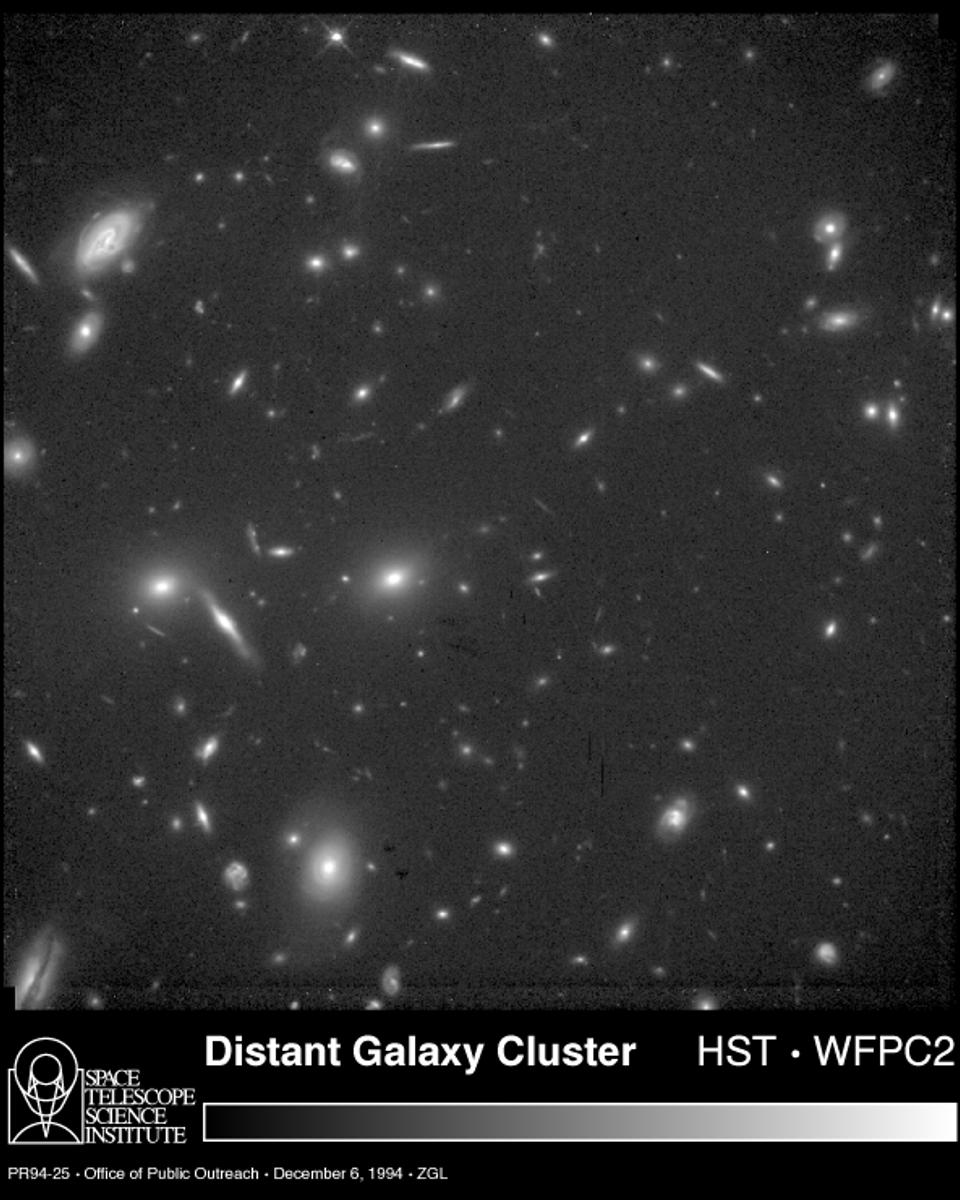
A Distant Cluster of Galaxies
Every bright object in this 1994 photograph by the Hubble Space Telescope is a galaxy . Oddly - most of the objects are spiral galaxies. This rich cluster of galaxies , named CL…
Viewing discoveries from 6 February 1996 through 14 January 1996.