Browse NASA Astronomy Picture of the Day archive by date and media: Archive Discoveries
Browse the NASA APOD archive without needing the exact date first. Filter by media type and keep moving deeper into older images and videos.
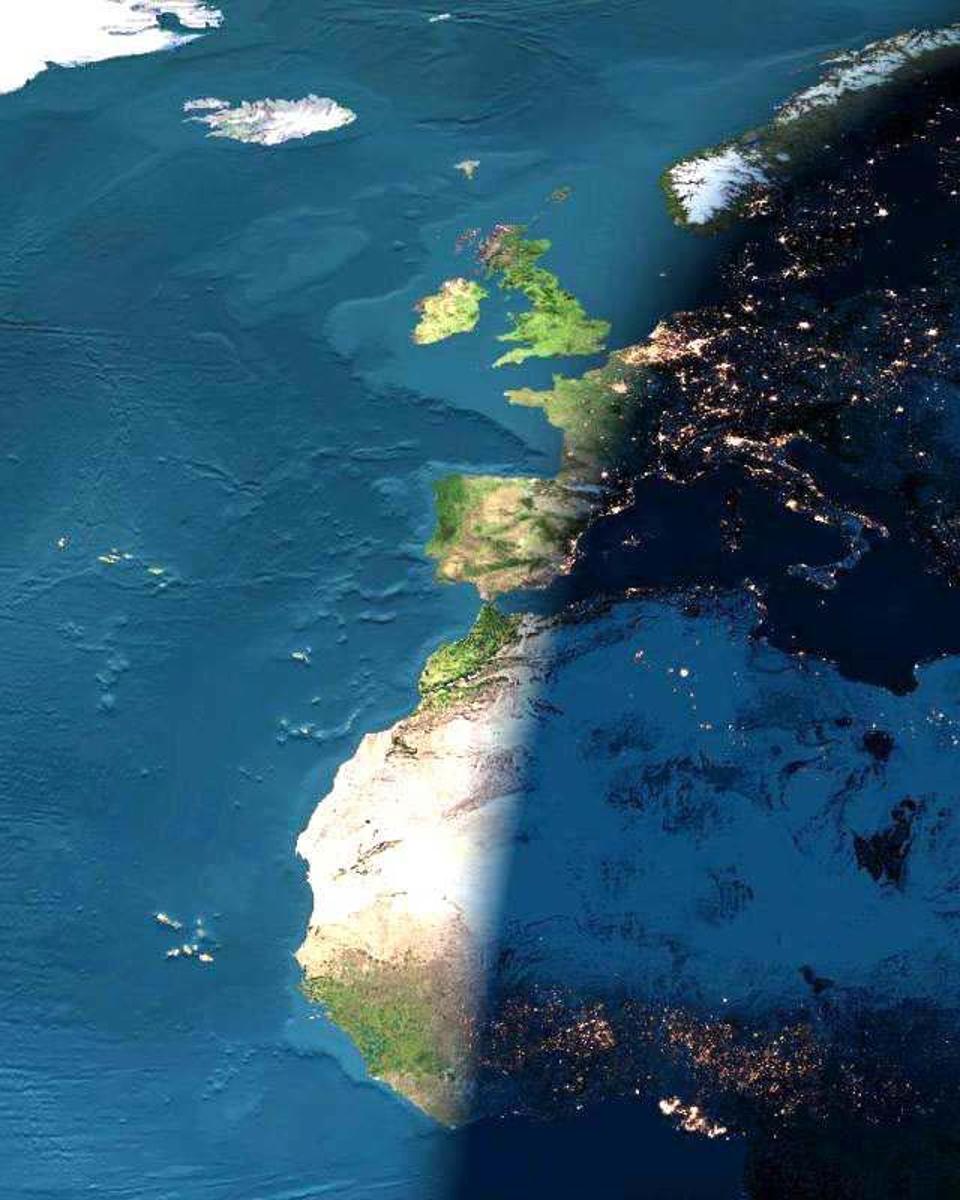
A Digital Sunset Over Europe and Africa
No single spacecraft or astronaut took this picture . It is a digital composite of archived images taken by several Earth-orbiting satellites and ocean-faring ships. Similar…
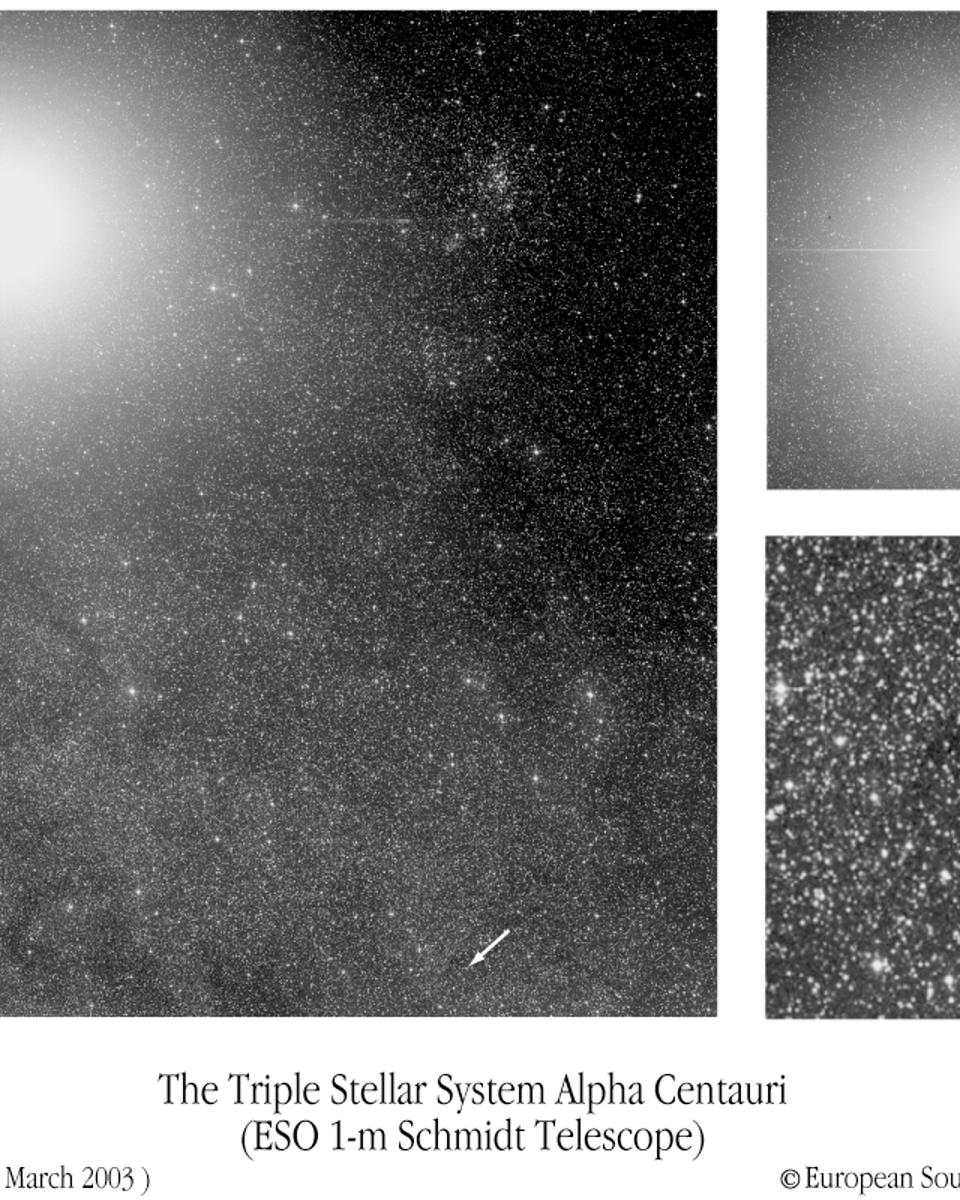
Alpha Centauri: The Closest Star System
The closest star system to the Sun is the Alpha Centauri system . Of the three stars in the system, the dimmest -- called Proxima Centauri -- is actually the nearest star . The…
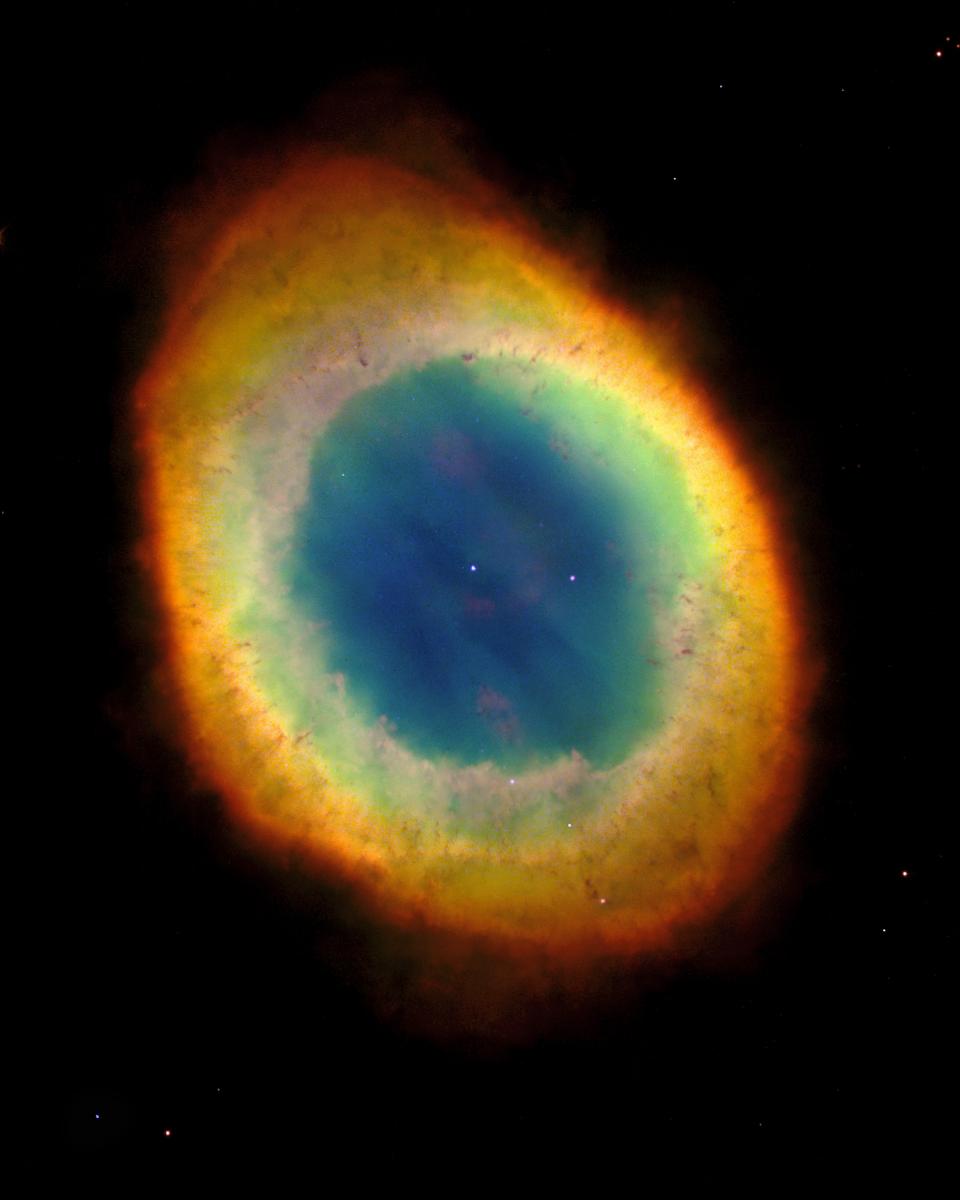
M57: The Ring Nebula
Except for the rings of Saturn , the Ring Nebula (M57) is probably the most famous celestial band. This planetary nebula's simple, graceful appearance is thought to be due to…
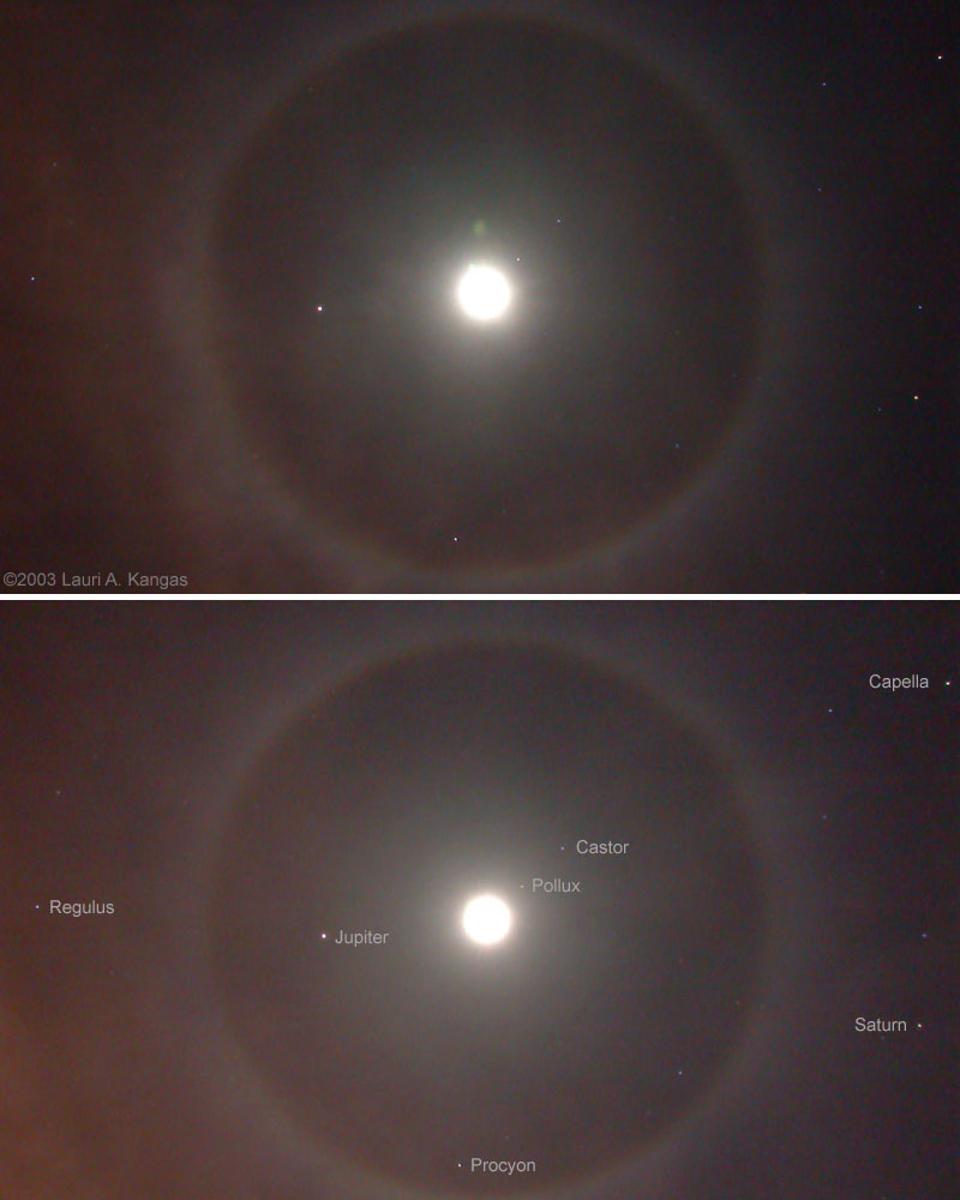
Stars and Planets in the Halo of the Moon
Photographed on March 13th from Caledon, Ontario, Canada, a bright Moon was surrounded by this lovely halo. Planet Jupiter and stars Procyon, Castor, and Pollux also appear within…
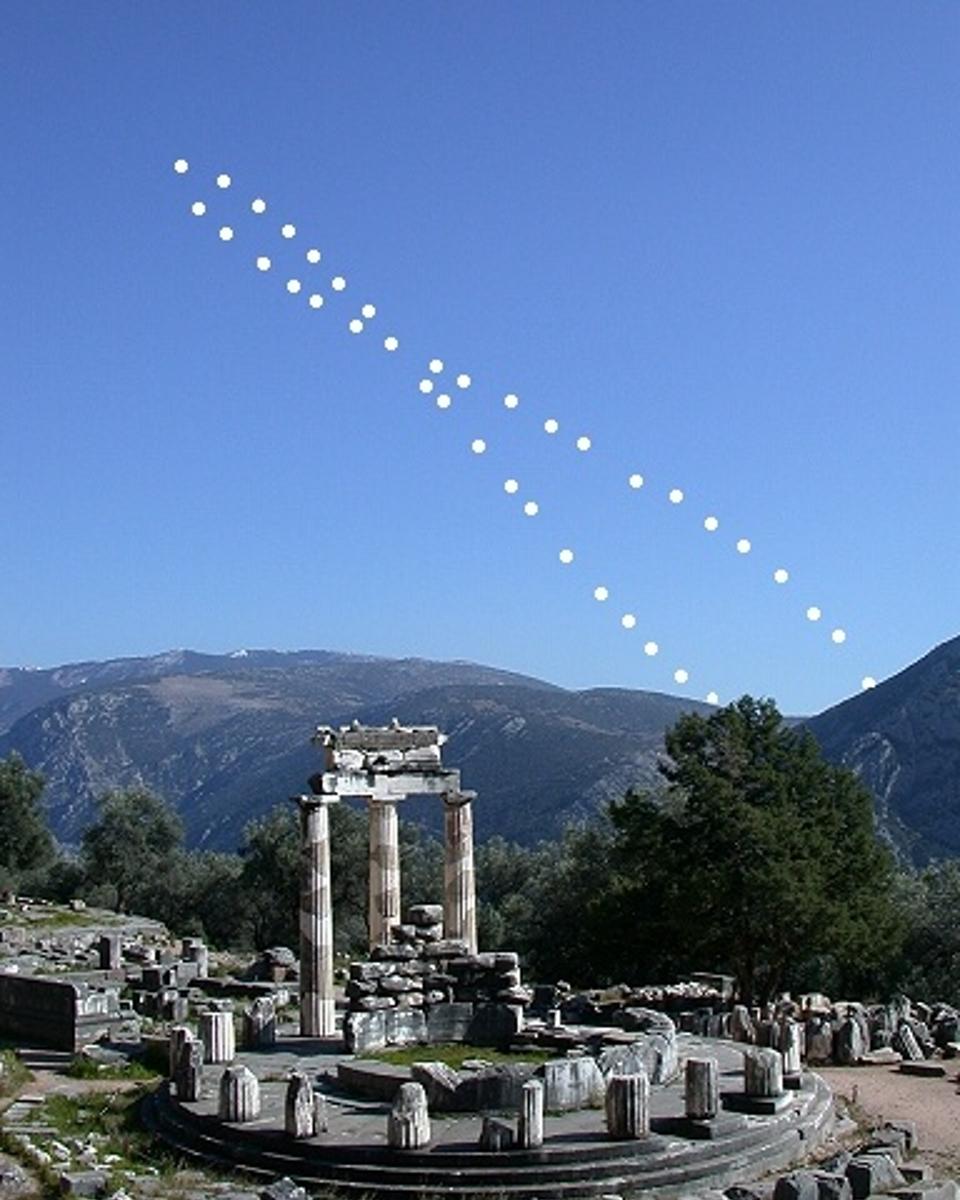
Sunrise Analemma
Astronomically speaking , at the Equinox on March 21, 0100 UT (March 20, 8:00 PM ET) the season changes. For this Equinox the Sun rises due east as it crosses the celestial…
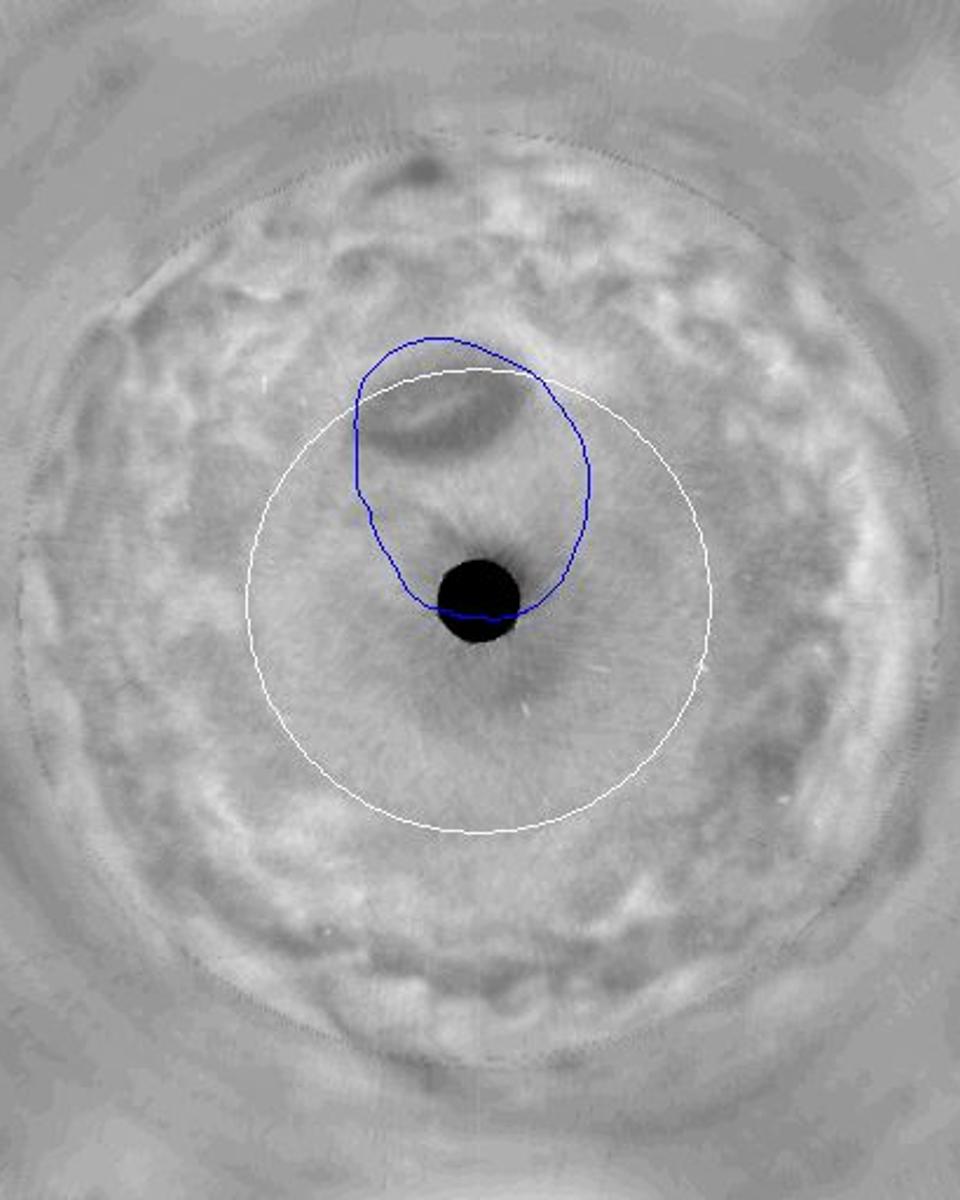
Jupiter's Great Dark Spot
Seventeenth century astronomer Giovanni Domenico Cassini was an astute observer of Jupiter's Great Red Spot. So it seems only fitting that his namesake, the Cassini spacecraft,…
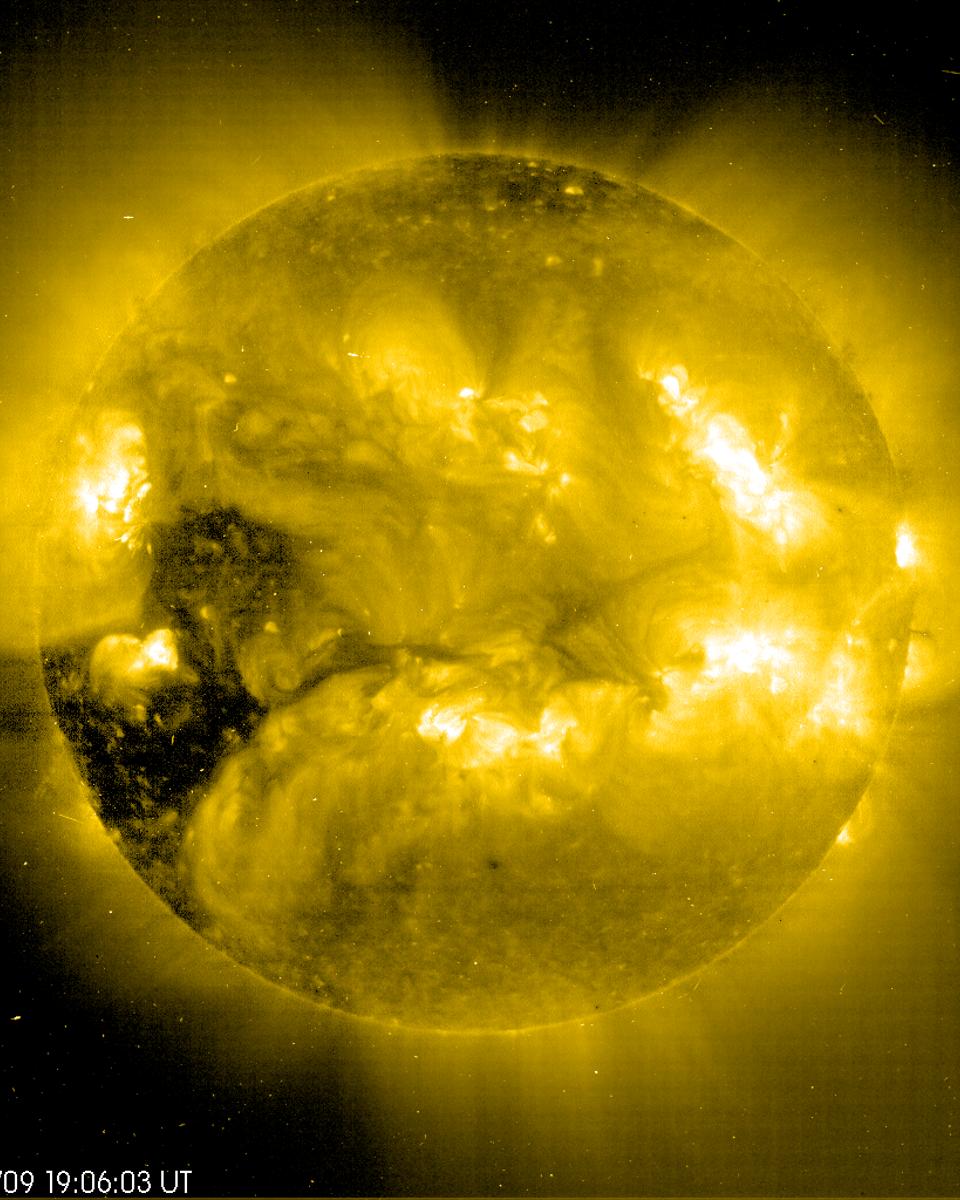
Coronal Holes on the Sun
The ominous, dark shapes haunting the left side of the Sun are coronal holes -- low density regions extending above the surface where the solar magnetic field opens freely into…
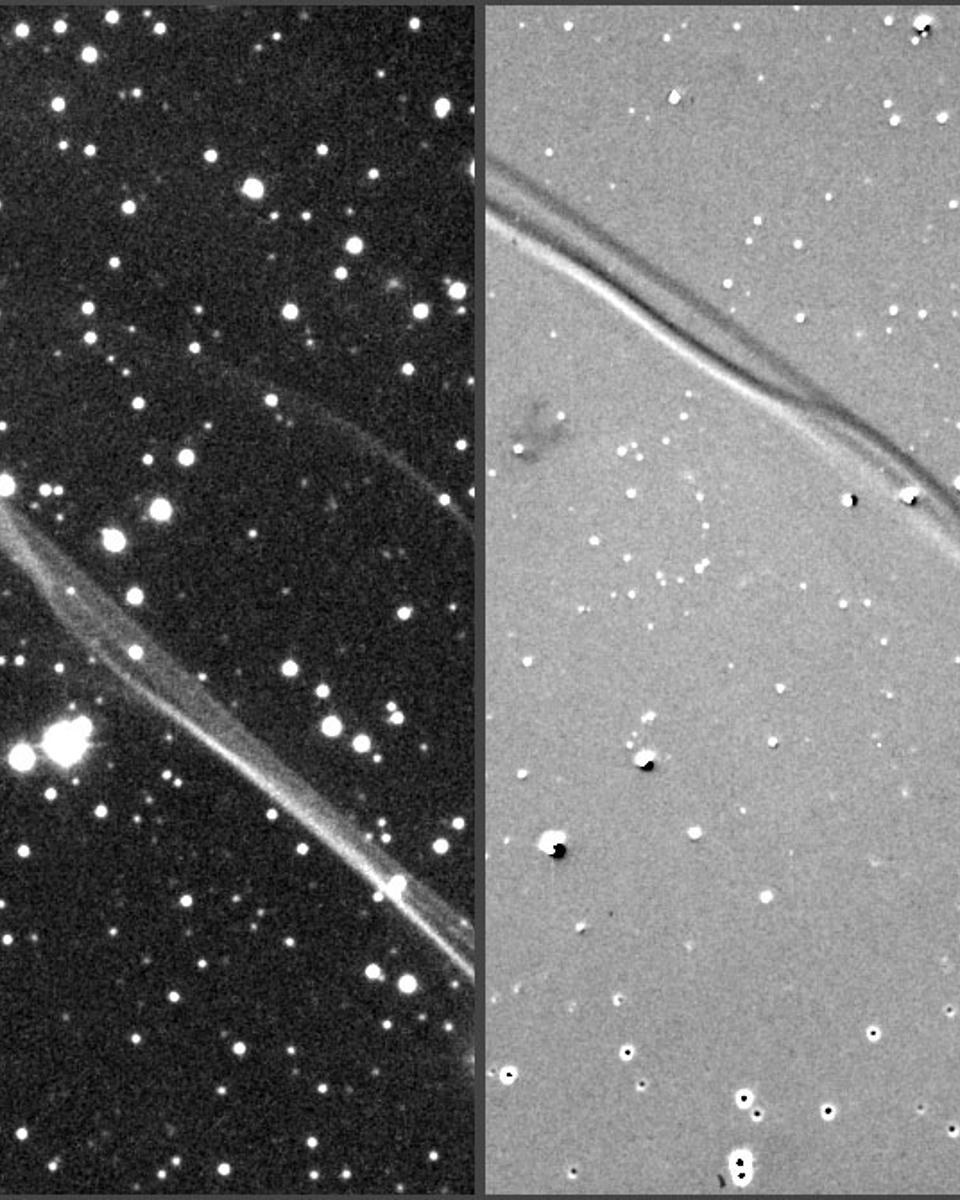
SN 1006: History's Brightest Supernova
Suddenly, in the year 1006 AD, a new star appeared in the sky. Over the course of just a few days, the rogue star became brighter than the planet Venus . The star, likely the talk…
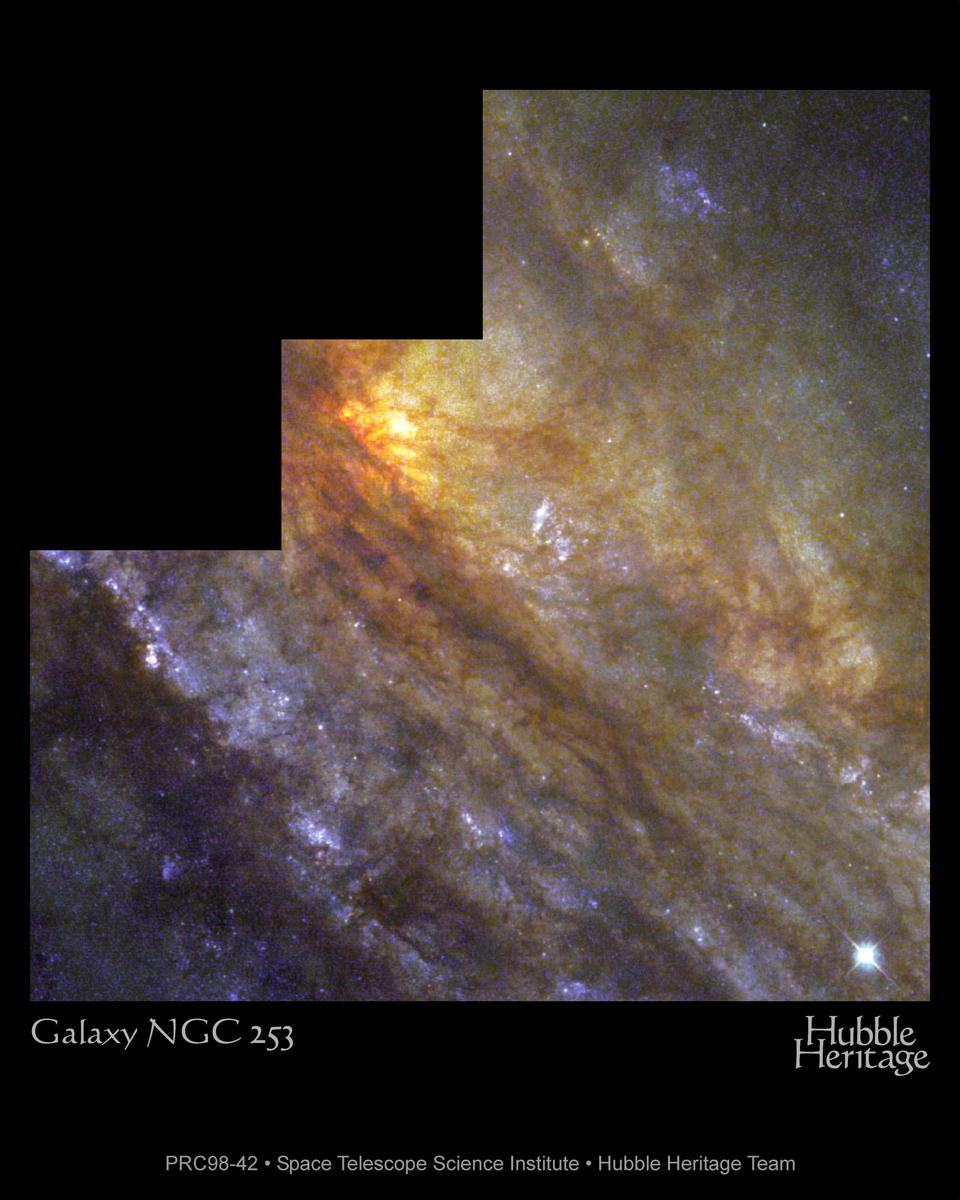
NGC 253: The Sculptor Galaxy
NGC 253 is not only one of the brightest spiral galaxies visible, it is also one of the dustiest . Discovered in 1783 by Caroline Herschel in the constellation of Sculptor , NGC…
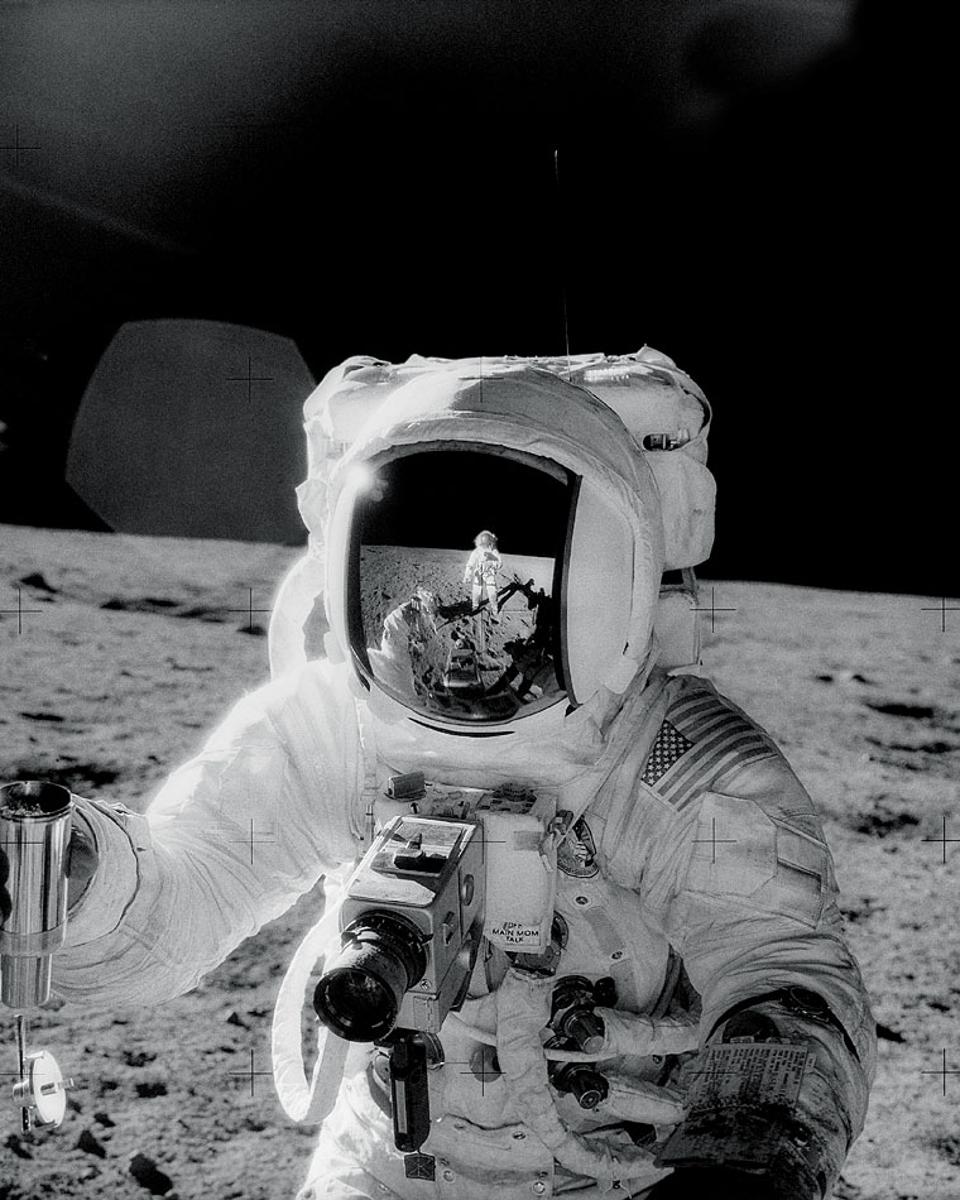
Apollo 12: Self-Portrait
Is it art? In November of 1969, Apollo 12 astronaut-photographer Charles “Pete” Conrad recorded this masterpiece while documenting colleague Alan Bean's lunar soil collection…
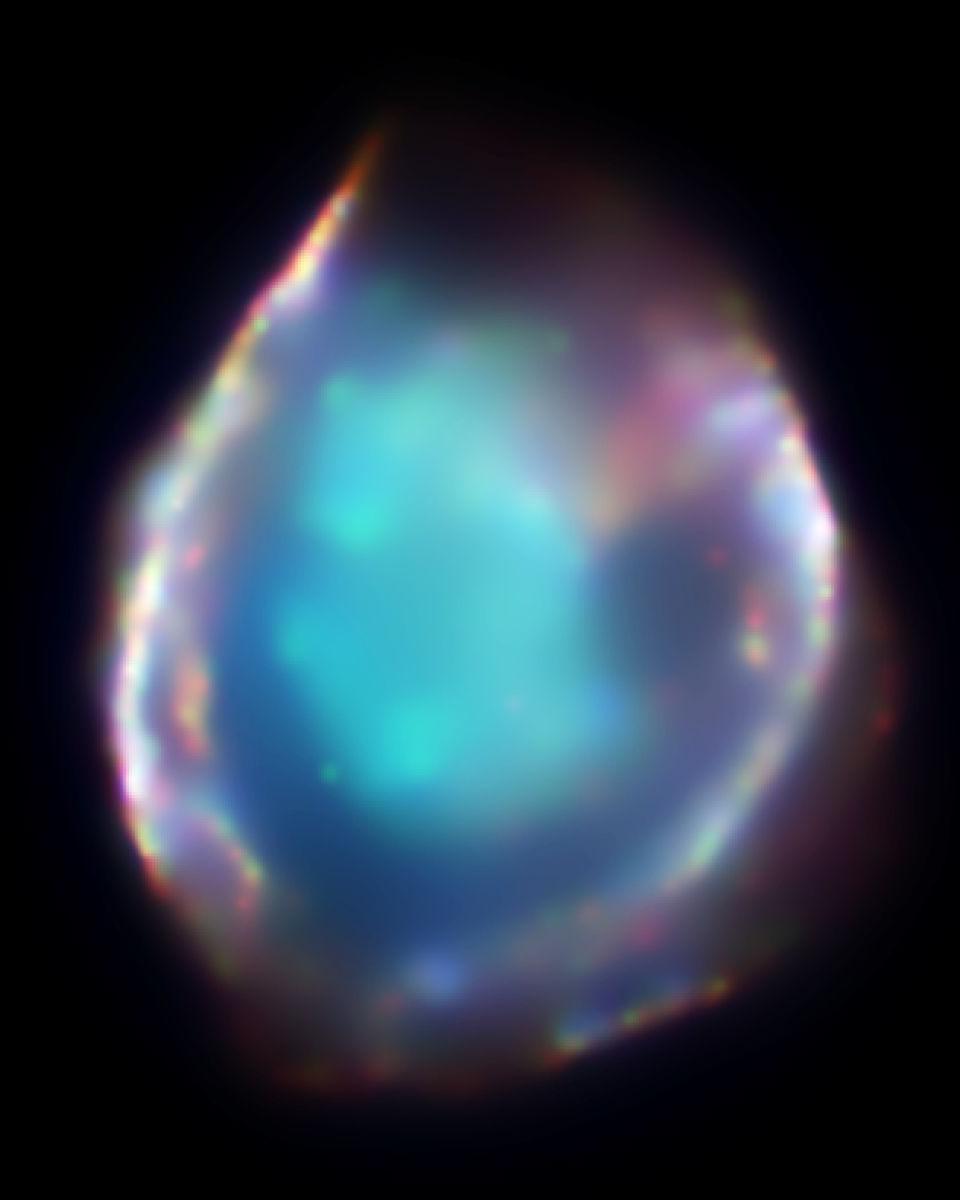
DEM L71: When Small Stars Explode
Large, massive stars end their furious lives in spectacular supernova explosions -- but small, low mass stars may encounter a similar fate. In fact, instead of simply cooling off…
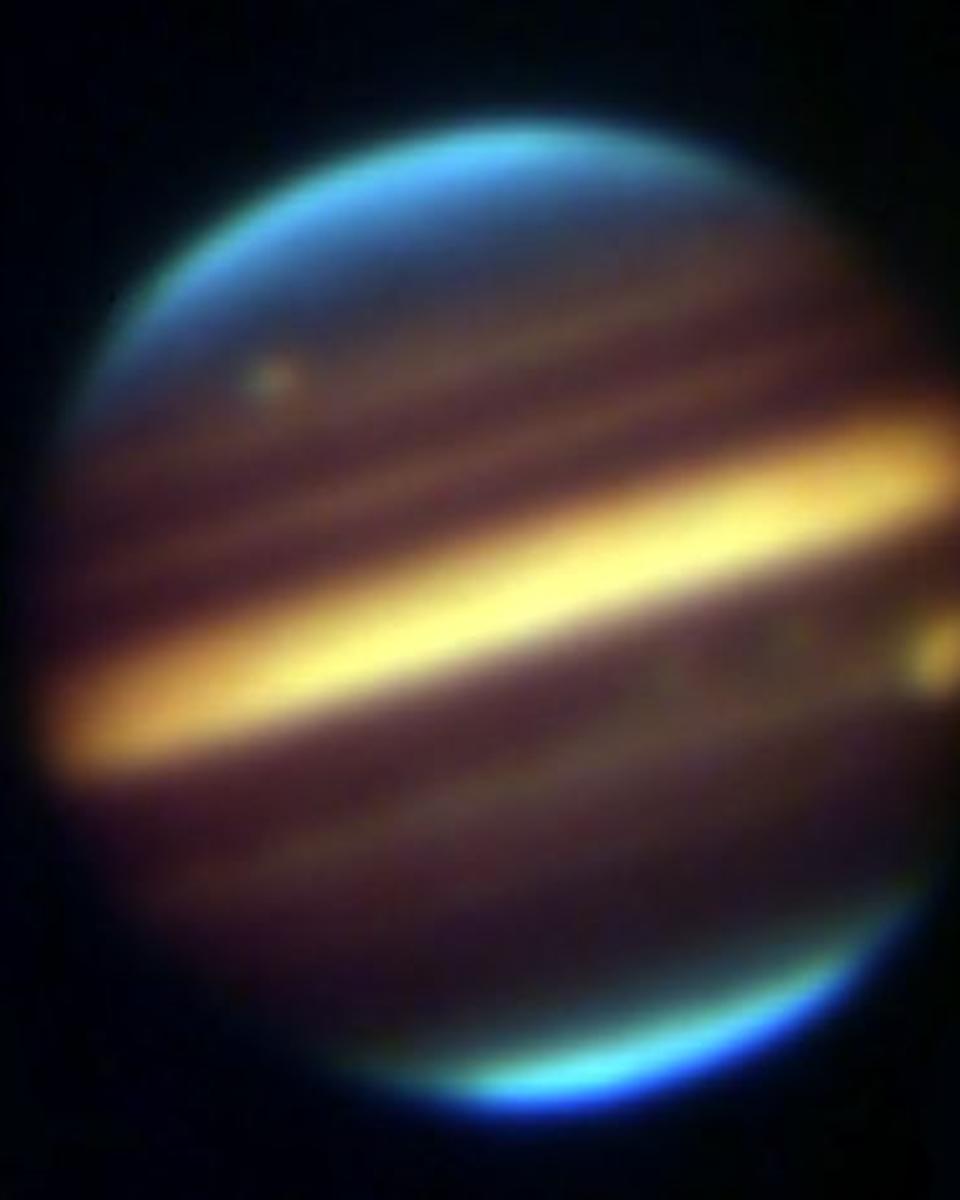
WIRO at Jupiter
Gazing out over the mountaintops from the Wyoming InfraRed Observatory (WIRO), astronomers recently recorded this bizarre looking image of the solar system's ruling planet, gas…
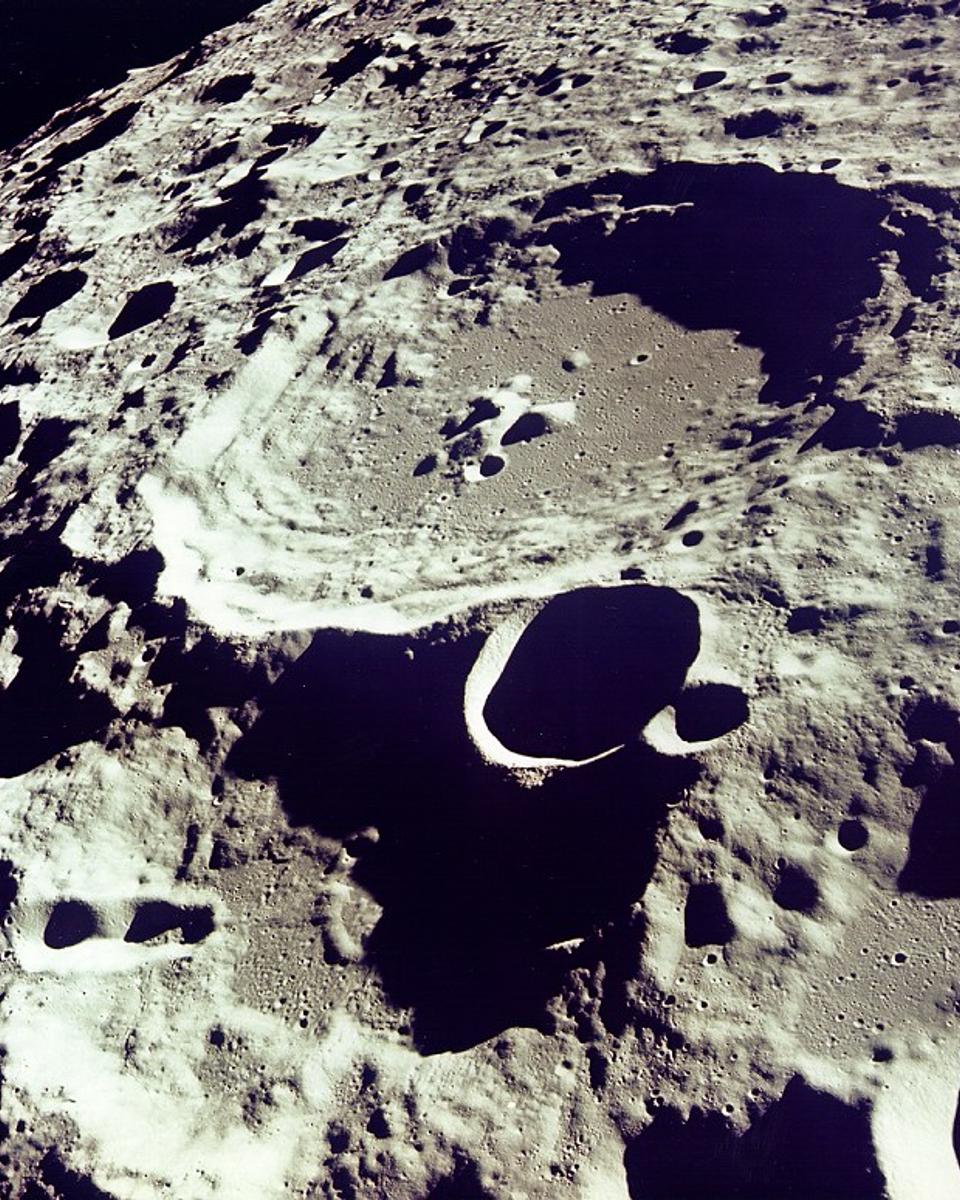
Lunar Farside from Apollo 11
The far side of the Moon is rough and filled with craters . By comparison, the near side of the Moon , the side we always see, is relatively smooth. Since the Moon is rotation…
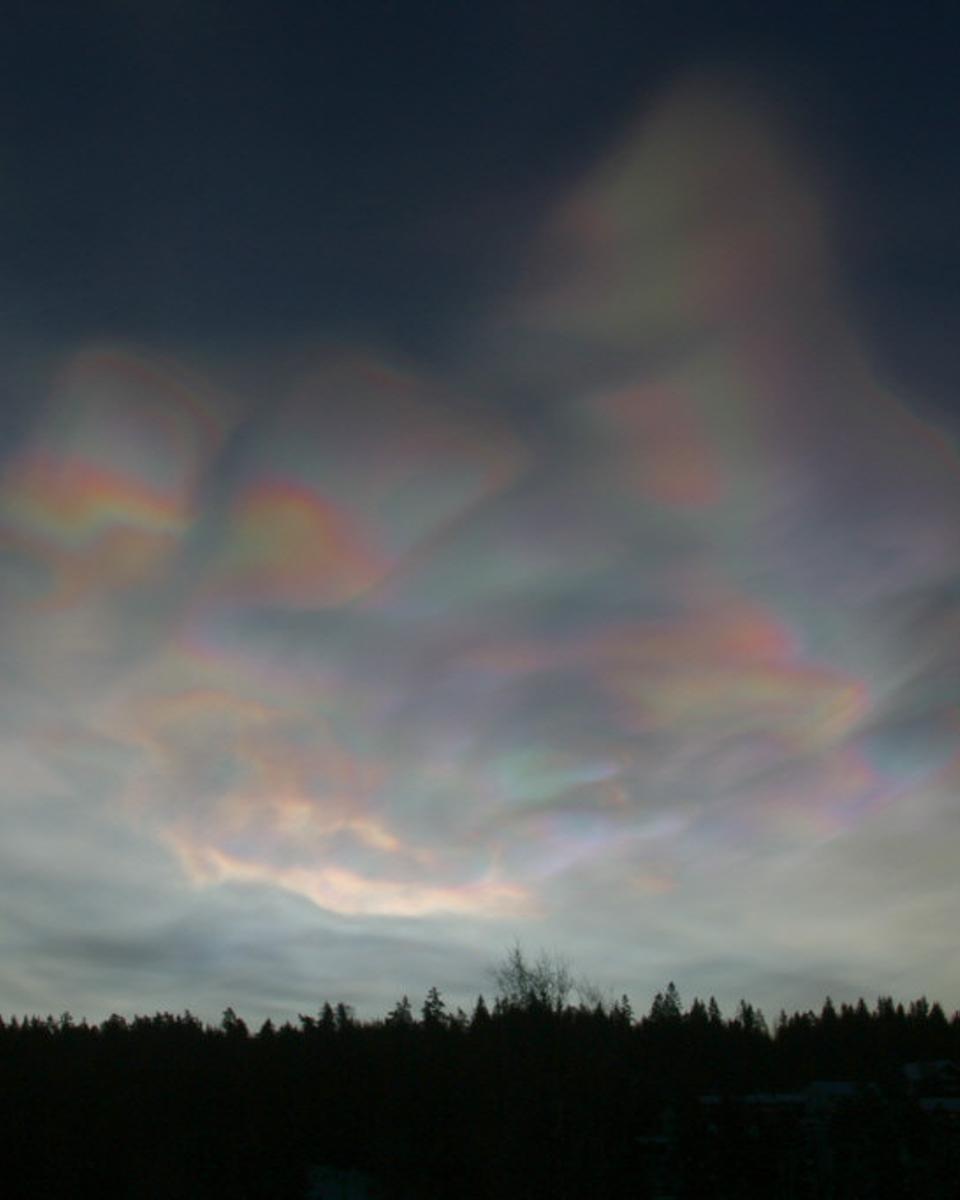
Iridescent Clouds
Why would clouds appear to be different colors? A relatively rare phenomenon known as iridescent clouds can show unusual colors vividly or a whole spectrum of colors…
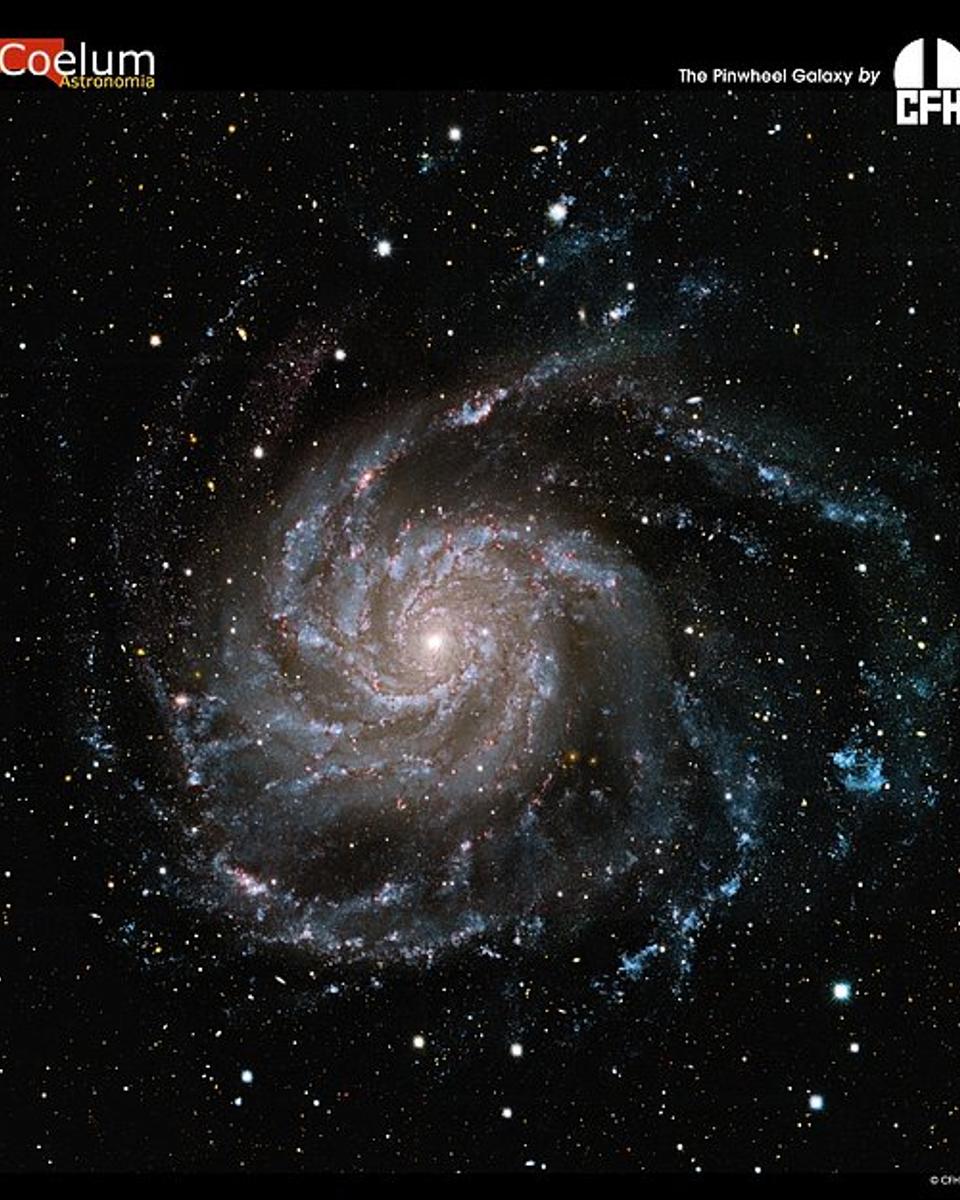
M101: The Pinwheel Galaxy
Why do many galaxies appear as spirals ? A striking example is M101, shown above , whose relatively close distance of about 22 million light years allow it to be studied in some…
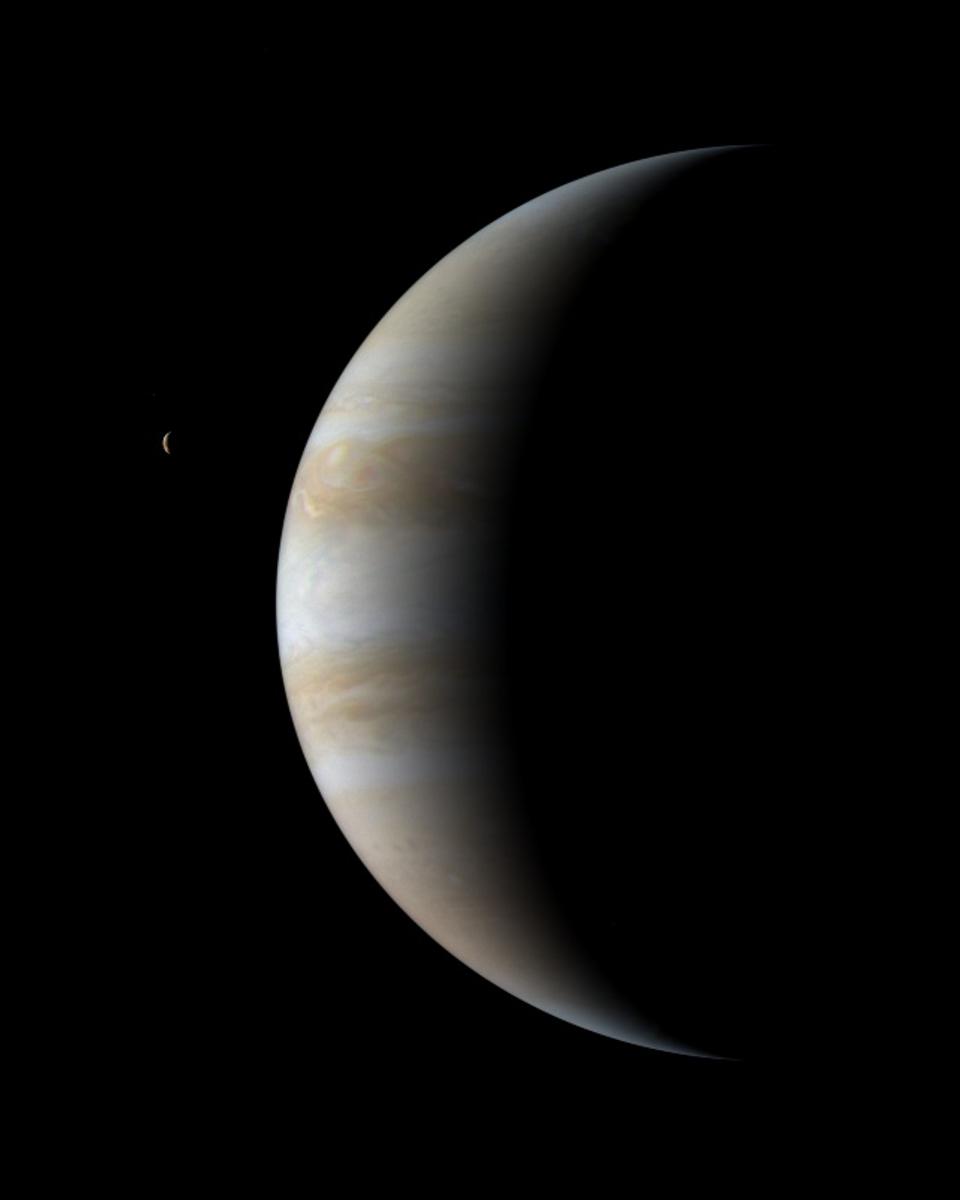
Farewell Jupiter
Next stop: Saturn. The Cassini spacecraft , launched from Earth in 1997, has now swung past Jupiter and should arrive at Saturn in the year 2004. Pictured to the left is a parting…
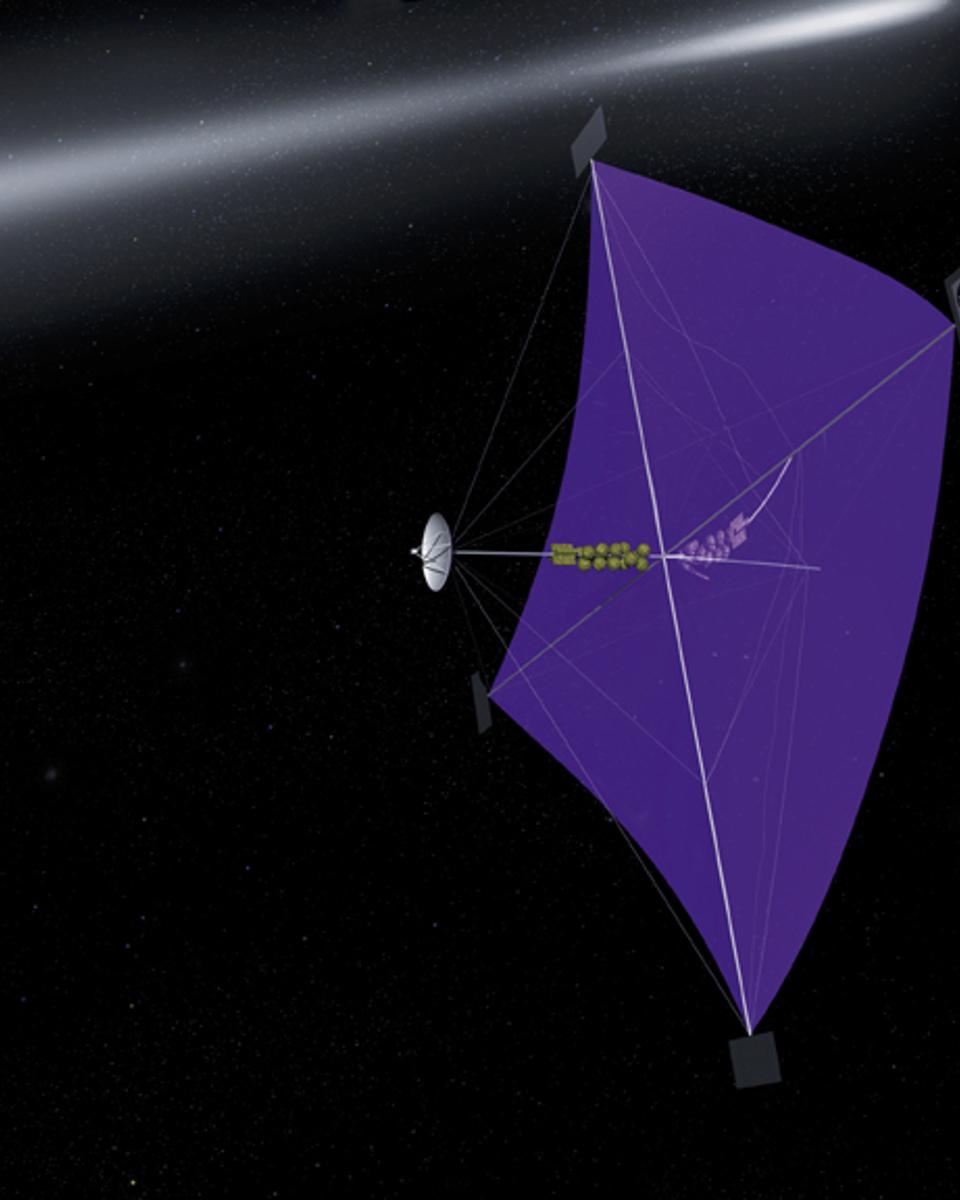
Solar Sail
Nearly 400 years ago astronomer Johannes Kepler observed comet tails blown by a solar breeze and suggested that vessels might likewise navigate through space using appropriately…
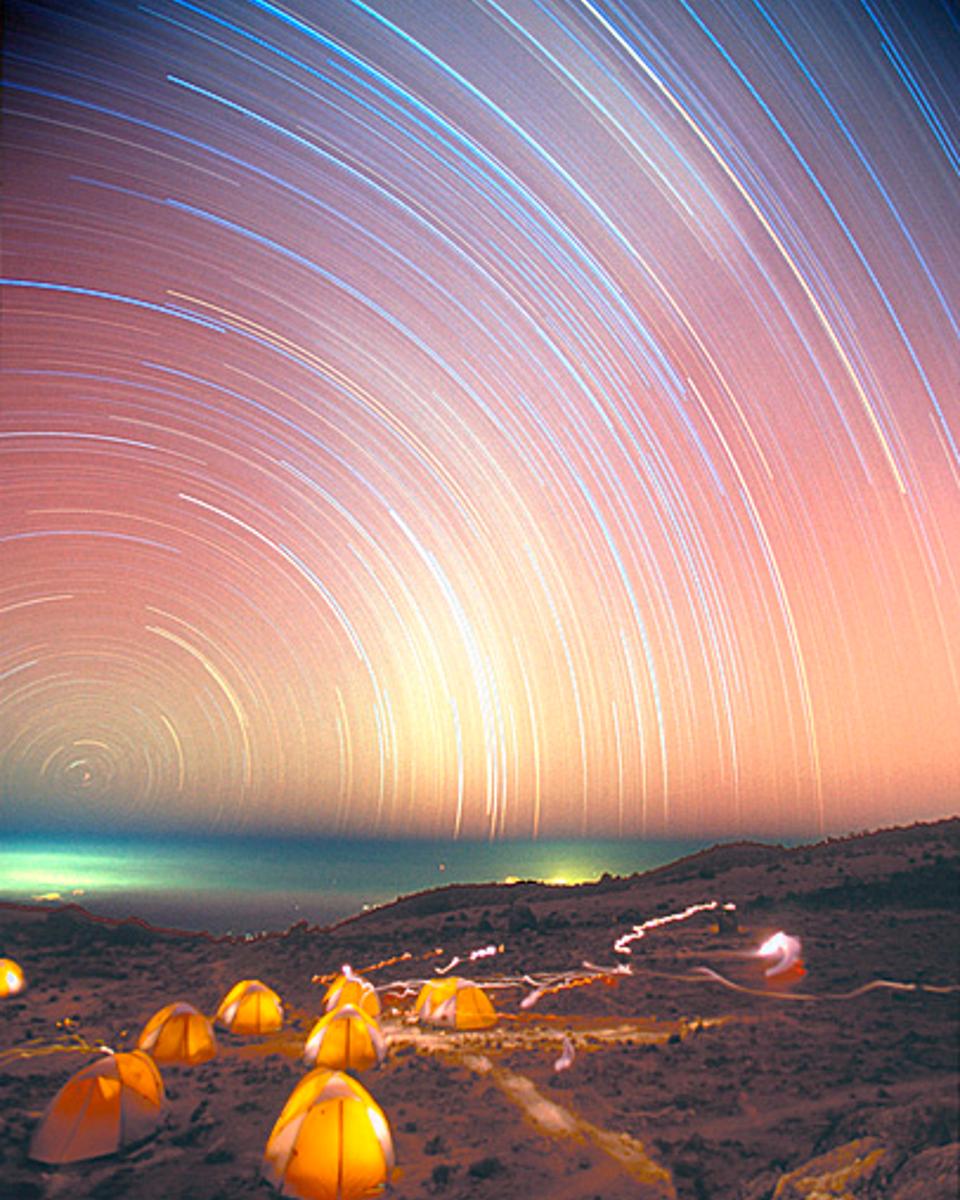
The Star Trails of Kilimanjaro
The night had no moon, but the stars were out. And camped at 16,000 feet on Mt. Kilimanjaro , photographer Dan Heller recorded this marvelous 3 1/2 hour long exposure. Here the…
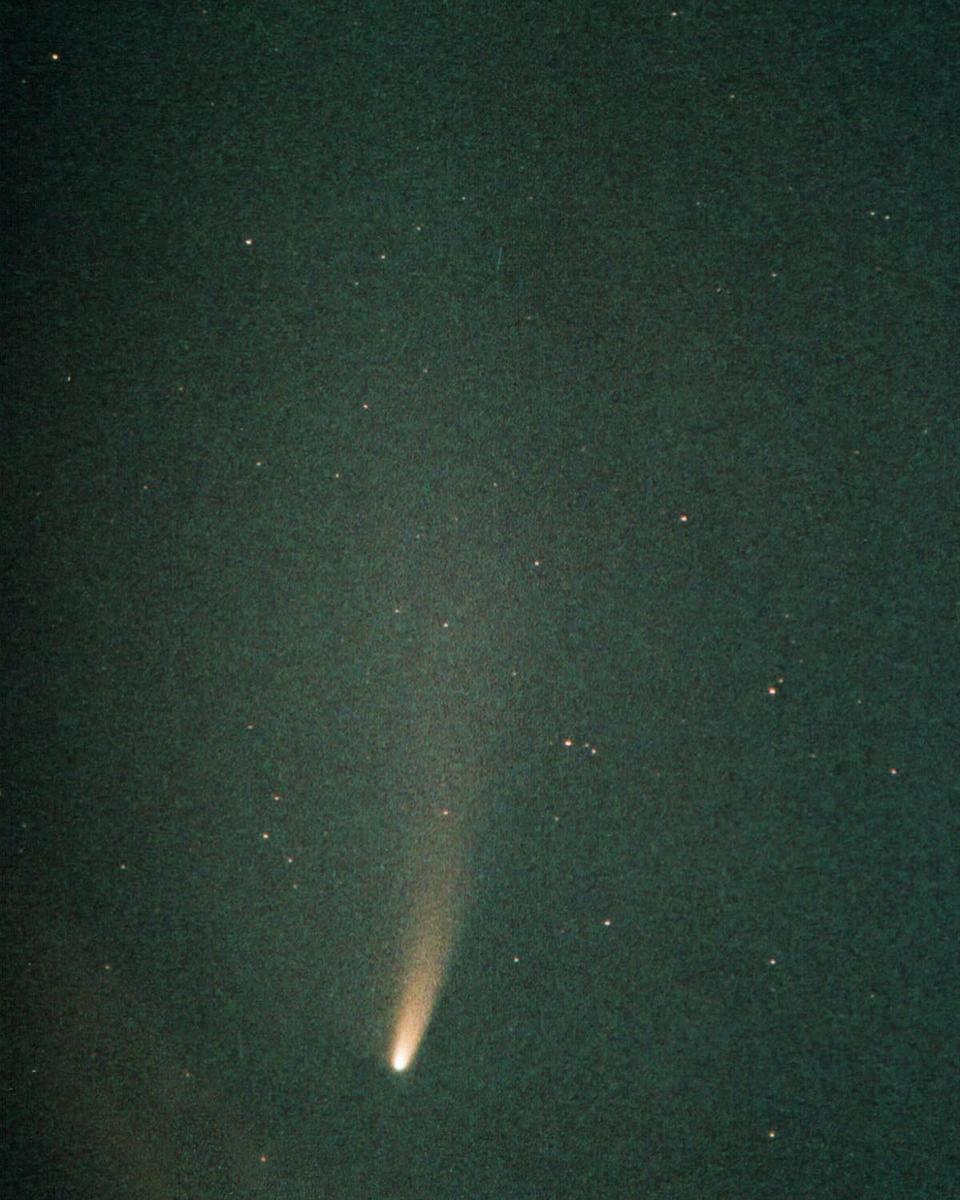
Comet NEAT in Southern Skies
After last month's dramatic swoop past the Sun, Comet NEAT (C/2002 V1) appeared as a naked-eye comet , emerging from the evening twilight in planet Earth's southern skies. On…
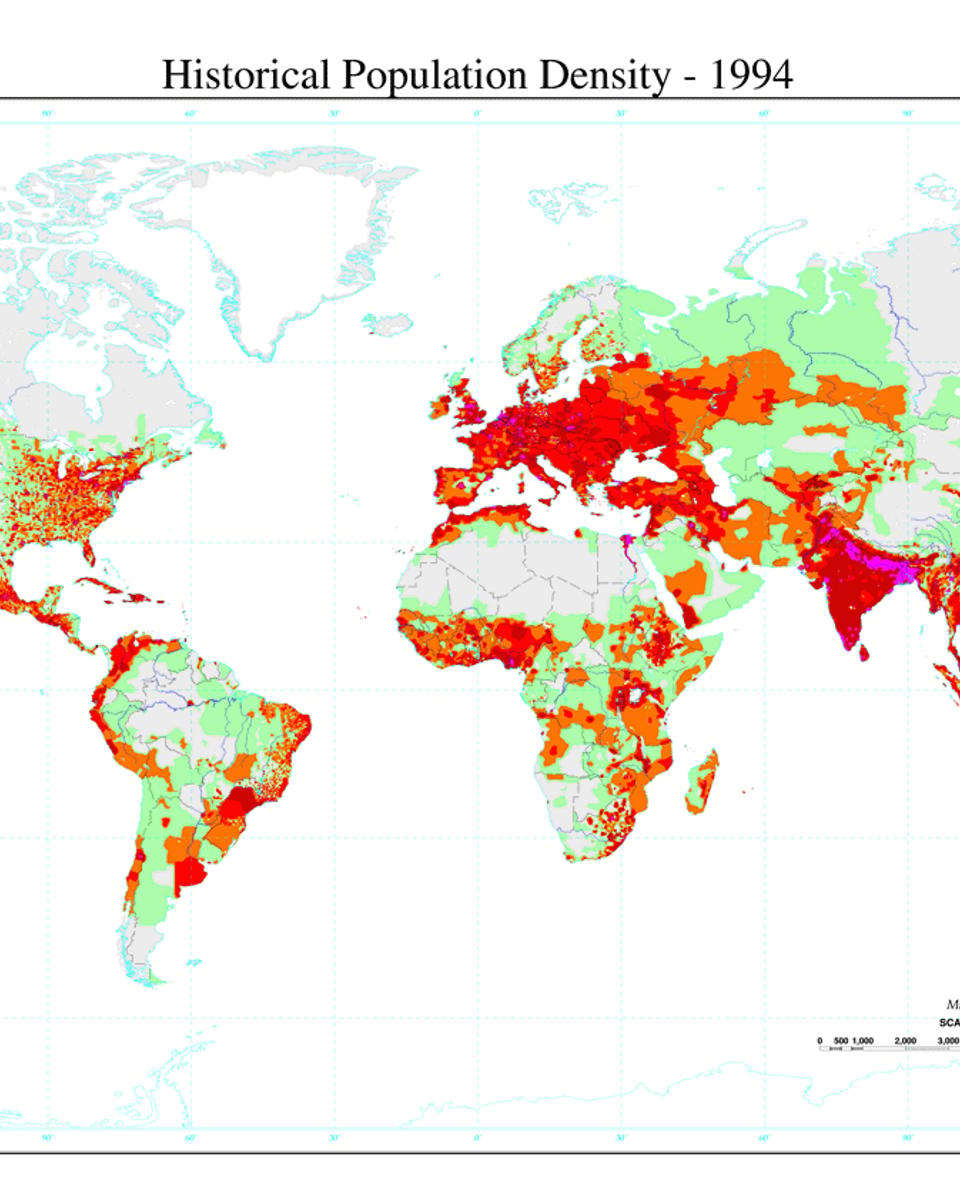
Where People Live on Planet Earth
Where do people live on Planet Earth ? Although people inhabit every continent , the highest population densities occur in Asia . Sparsely inhabited regions occur on virtually…
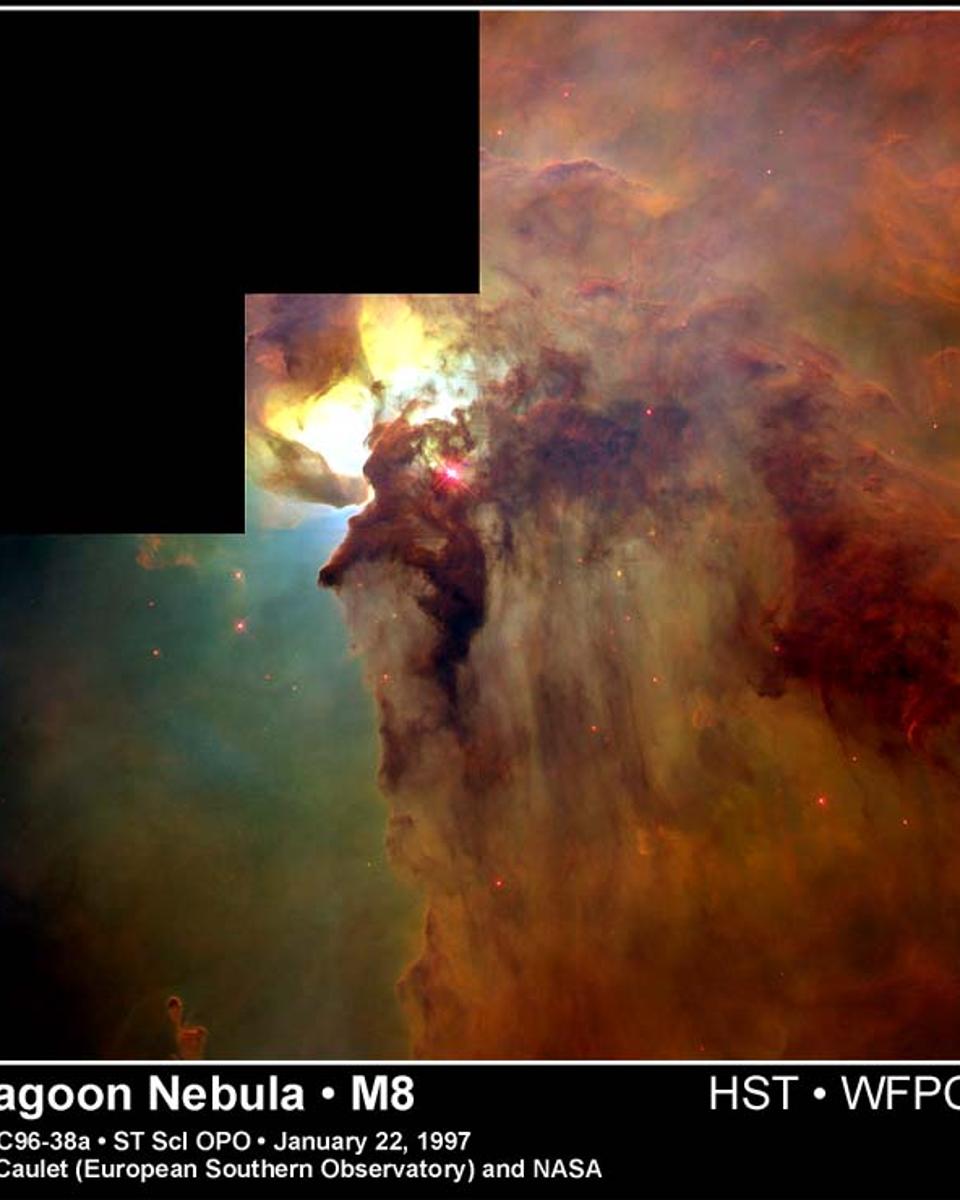
In the Center of the Lagoon Nebula
The center of the Lagoon Nebula is busy with the awesome spectacle of star formation . Visible in the lower left, at least two long funnel-shaped clouds, each roughly half a…
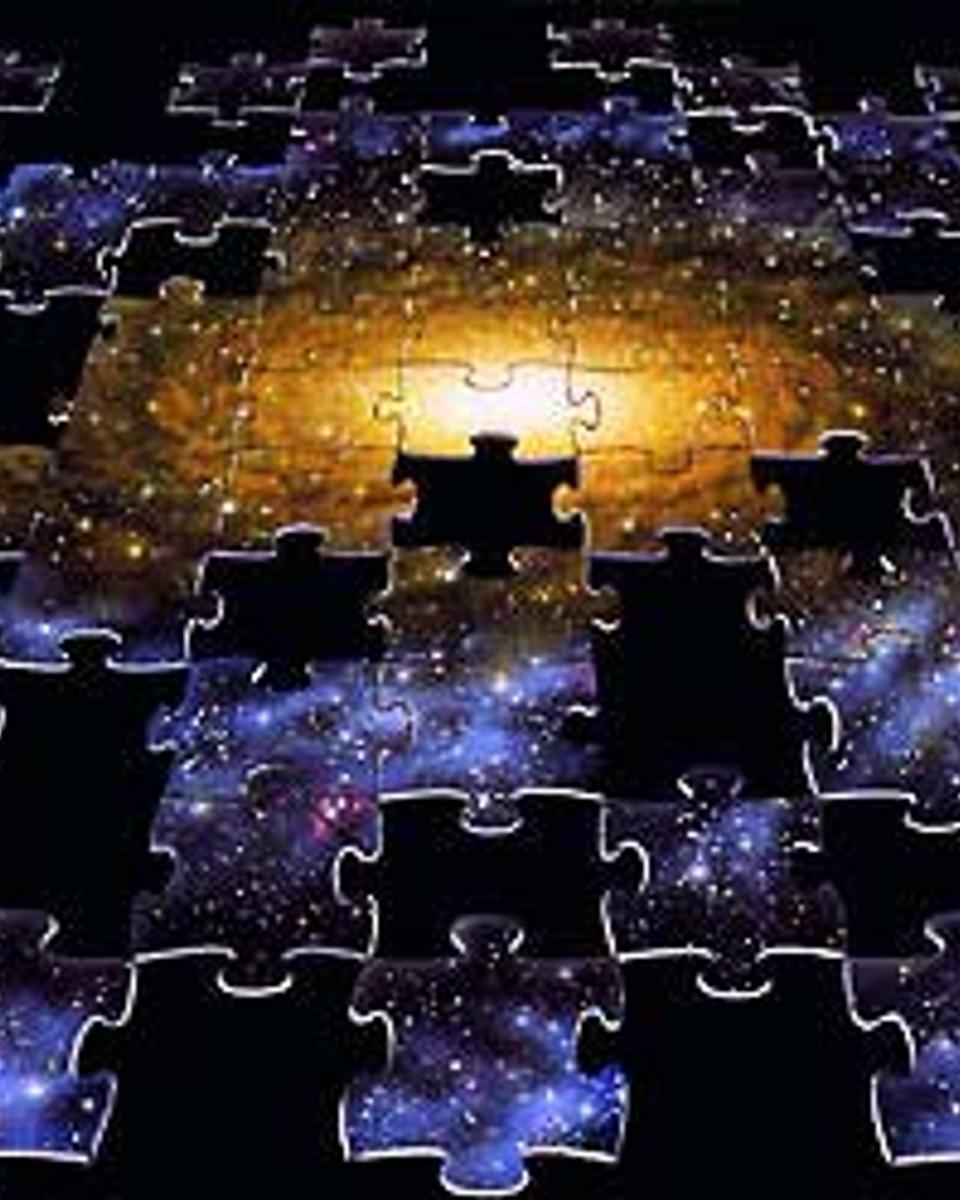
Will the Universe End in a Big Rip?
How will our universe end? Recent speculation now includes a pervasive growing field of mysterious repulsive energy that rips virtually everything apart. Although the universe…
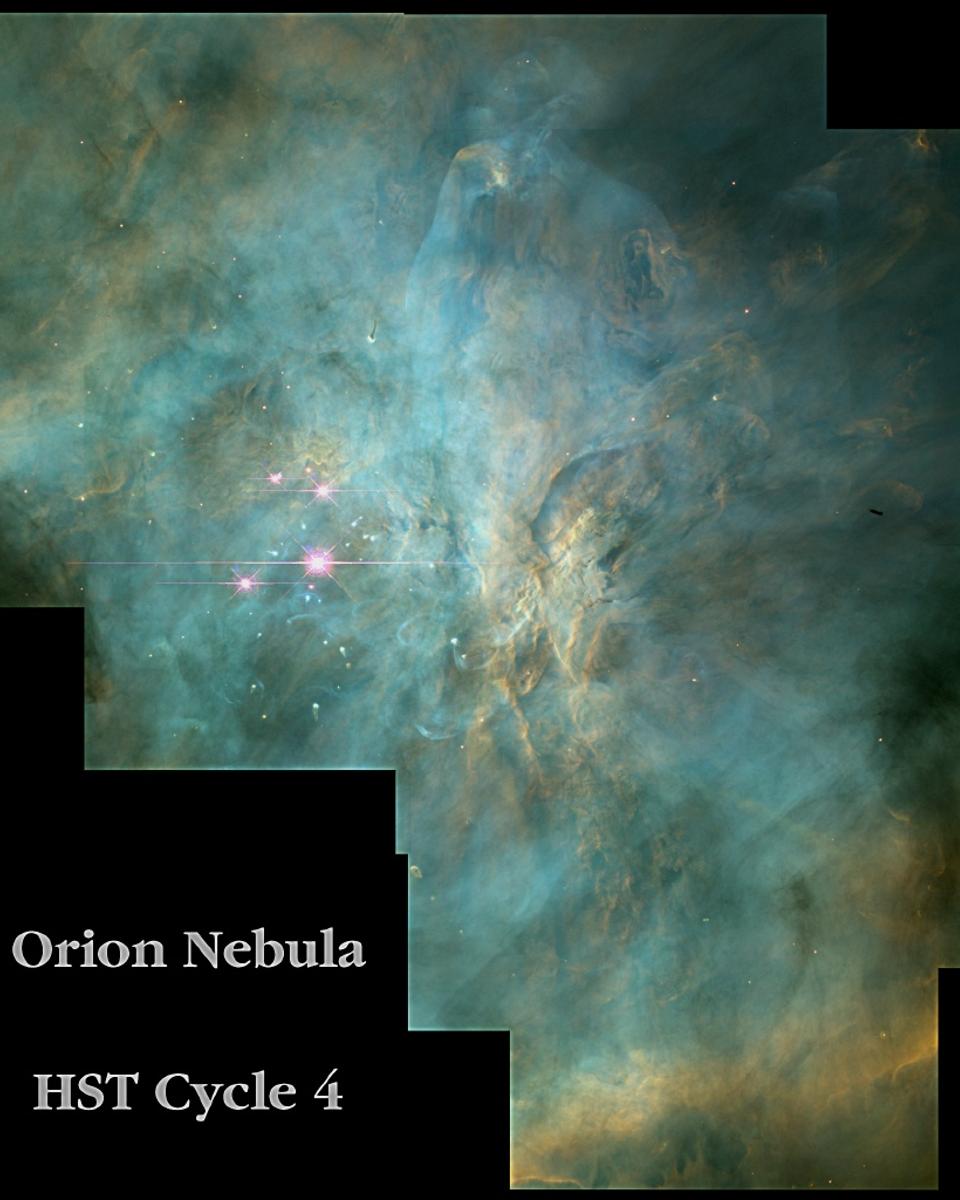
In the Center of the Trapezium
Start with the constellation of Orion . Near Orion's belt is a fuzzy area known as the Great Nebula of Orion or M42 . In this nebula is a bright star cluster known as the…
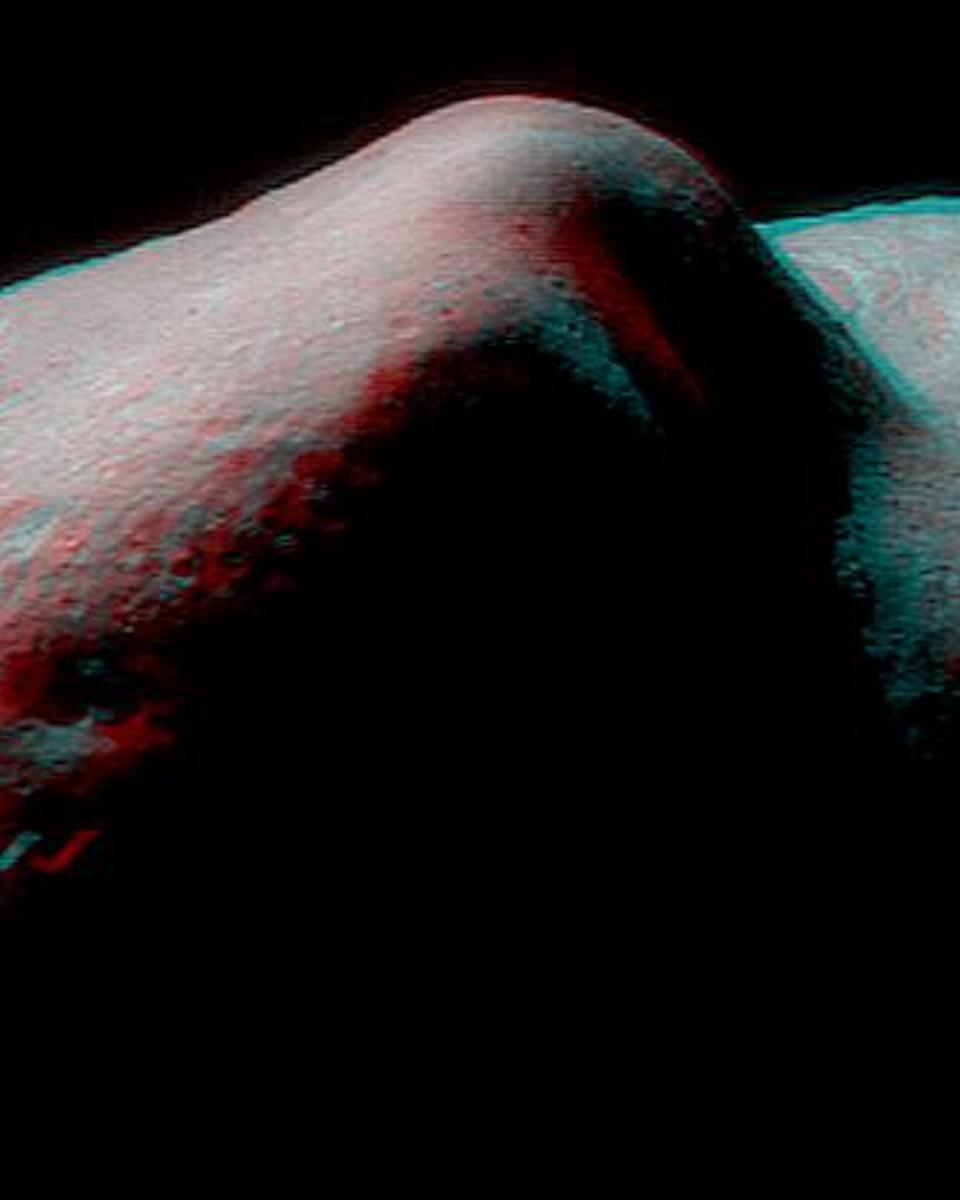
Stereo Eros
Get out your red/blue glasses and float next to asteroid 433 Eros , 170 million kilometers away! Orbiting the Sun once every 1.8 earth-years, asteroid Eros is a diminutive 40 x 14…
Viewing discoveries from 24 March 2003 through 1 March 2003.