
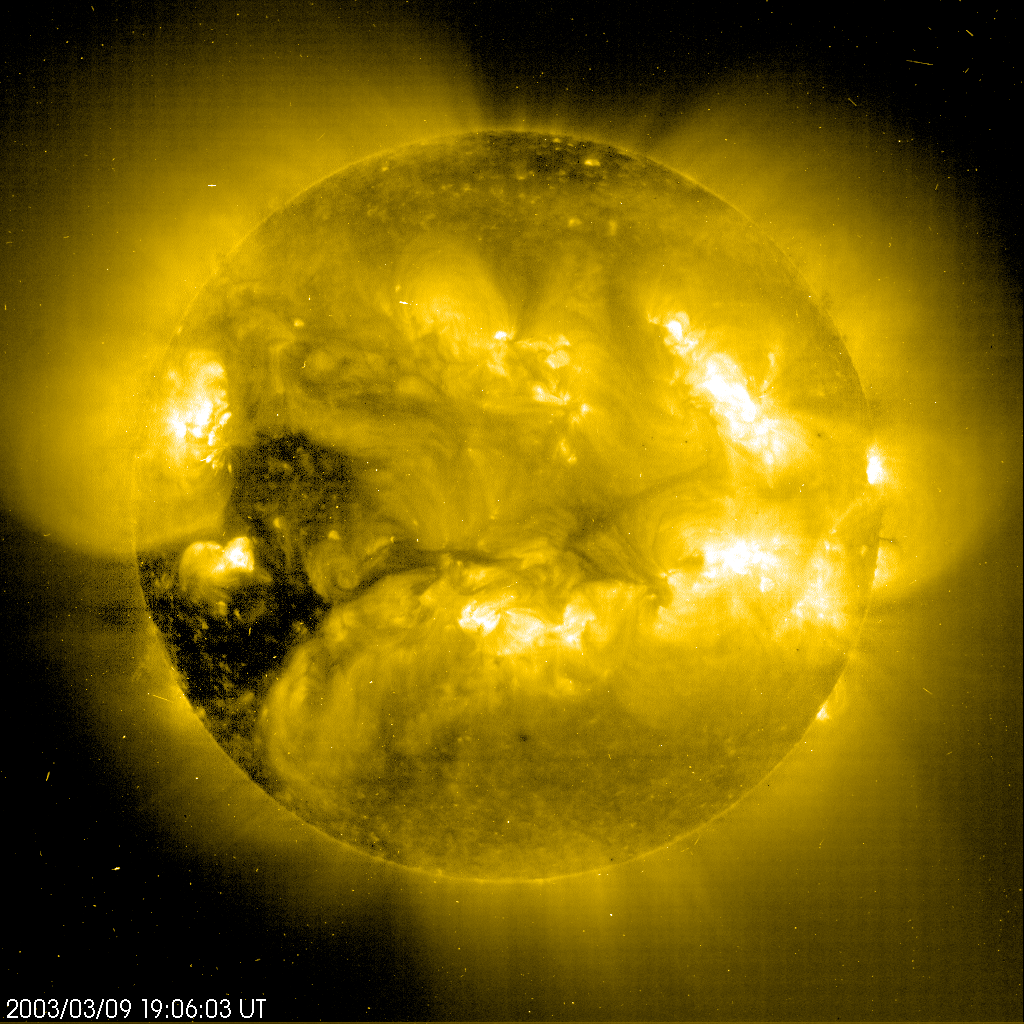
The ominous, dark shapes haunting the left side of the Sun are coronal holes -- low density regions extending above the surface where the solar magnetic field opens freely into interplanetary space . Studied extensively from space since the 1960s in ultraviolet and x-ray light , coronal holes are known to be the source of the high-speed solar wind , atoms and electrons which flow outward along the open magnetic field lines. During periods of low activity, coronal holes typically cover regions just above the Sun's poles. These coronal holes , however, have just moved into view near the Sun's equator, and particles escaping them have already caused notable aurora here on Earth. Coronal holes like this one may last for a few solar rotations before the magnetic fields shift and change configurations. Shown in false-color, this picture of the Sun on March 9 was made in extreme ultraviolet light by the EIT instrument on board the space-based SOHO observatory.
Media Credits & Attribution
Credit: SOHO - EIT Consortium , ESA , NASA