Browse NASA Astronomy Picture of the Day archive by date and media: Archive Discoveries
Browse the NASA APOD archive without needing the exact date first. Filter by media type and keep moving deeper into older images and videos.
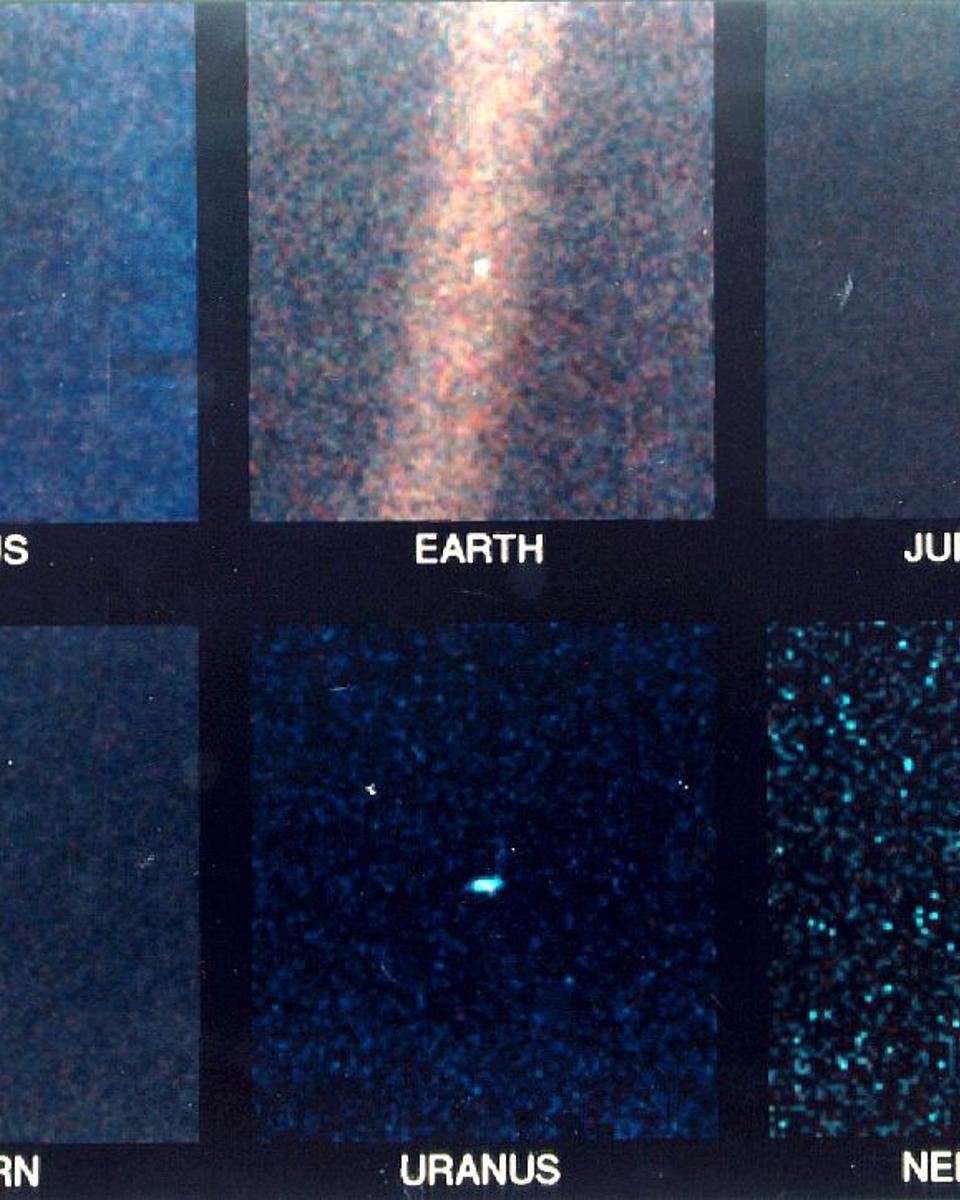
Our Solar System from Voyager
Explanation : After taking spectacular pictures of our Solar System's outer planets, Voyager 1 looked back at six planets to take our Solar System's first family portrait. Here…
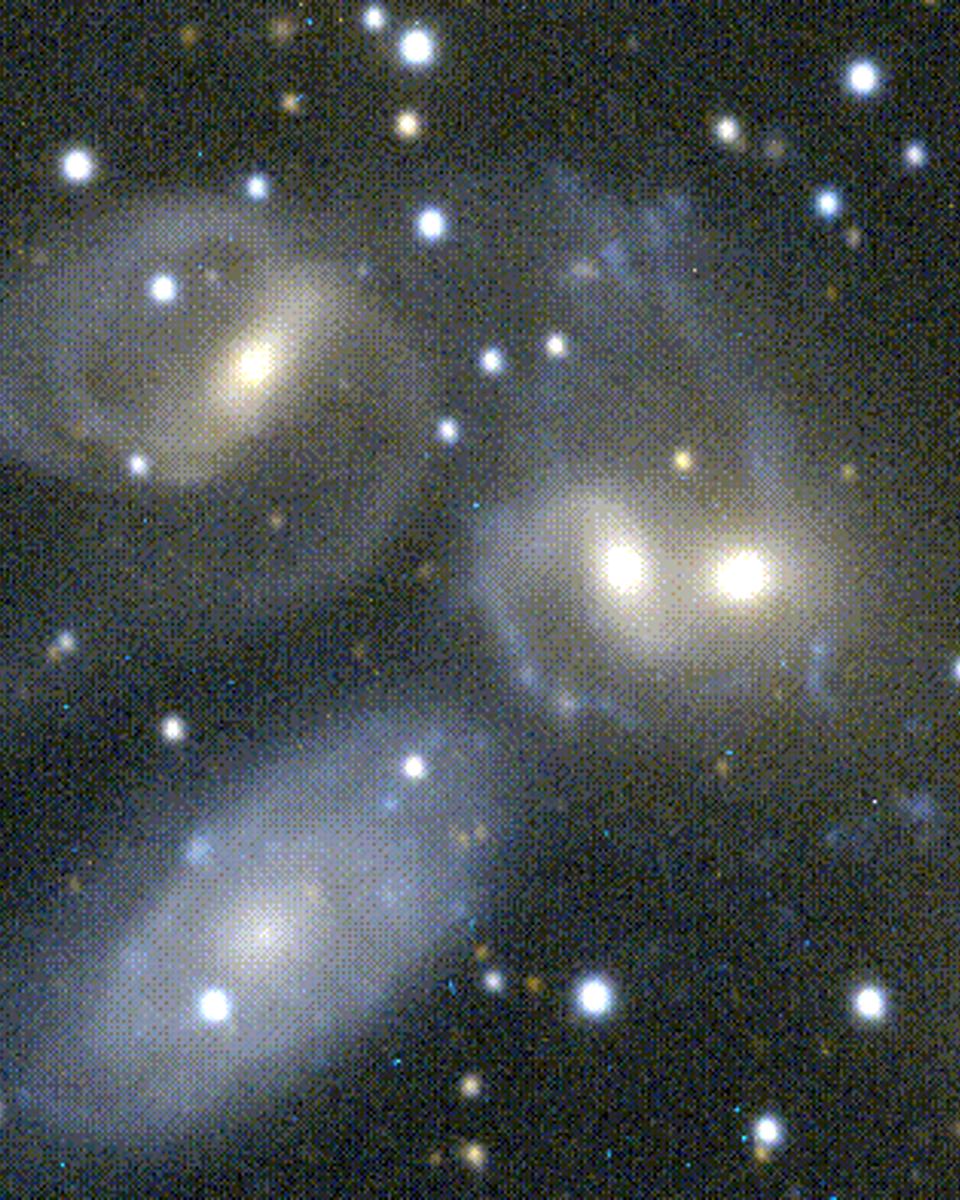
Disorder in Stephan's Quintet
Explanation : Five closely grouped galaxies are visible in this image made using the Kitt Peak National Observatory 2.1 meter telescope. The grouping is commonly known as…
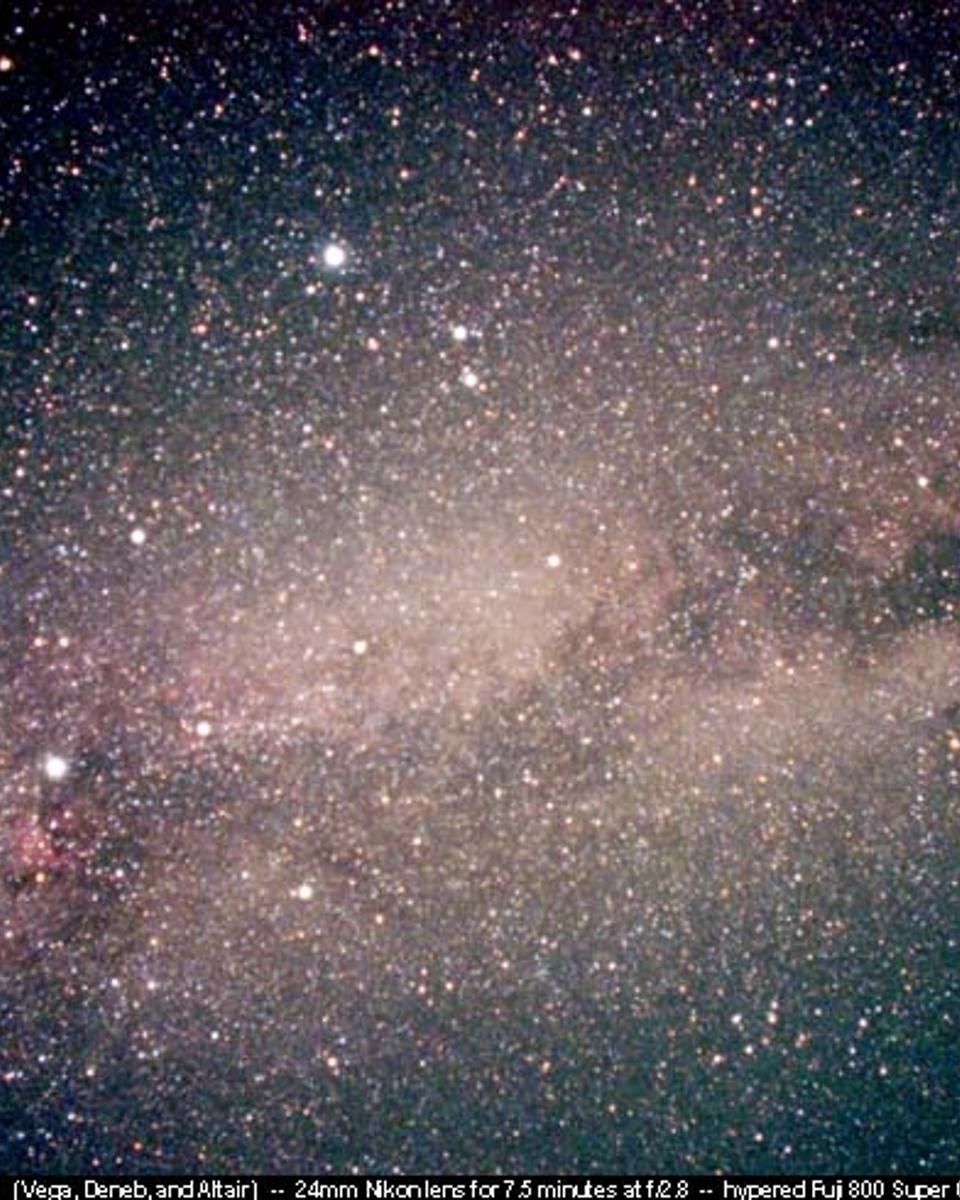
The Milky Way Through the Summer Triangle
Explanation : There are more than a few stars in our Galaxy. The light from many of them combines to appear as a wisp of faint light across the night sky - the Milky Way . In the…
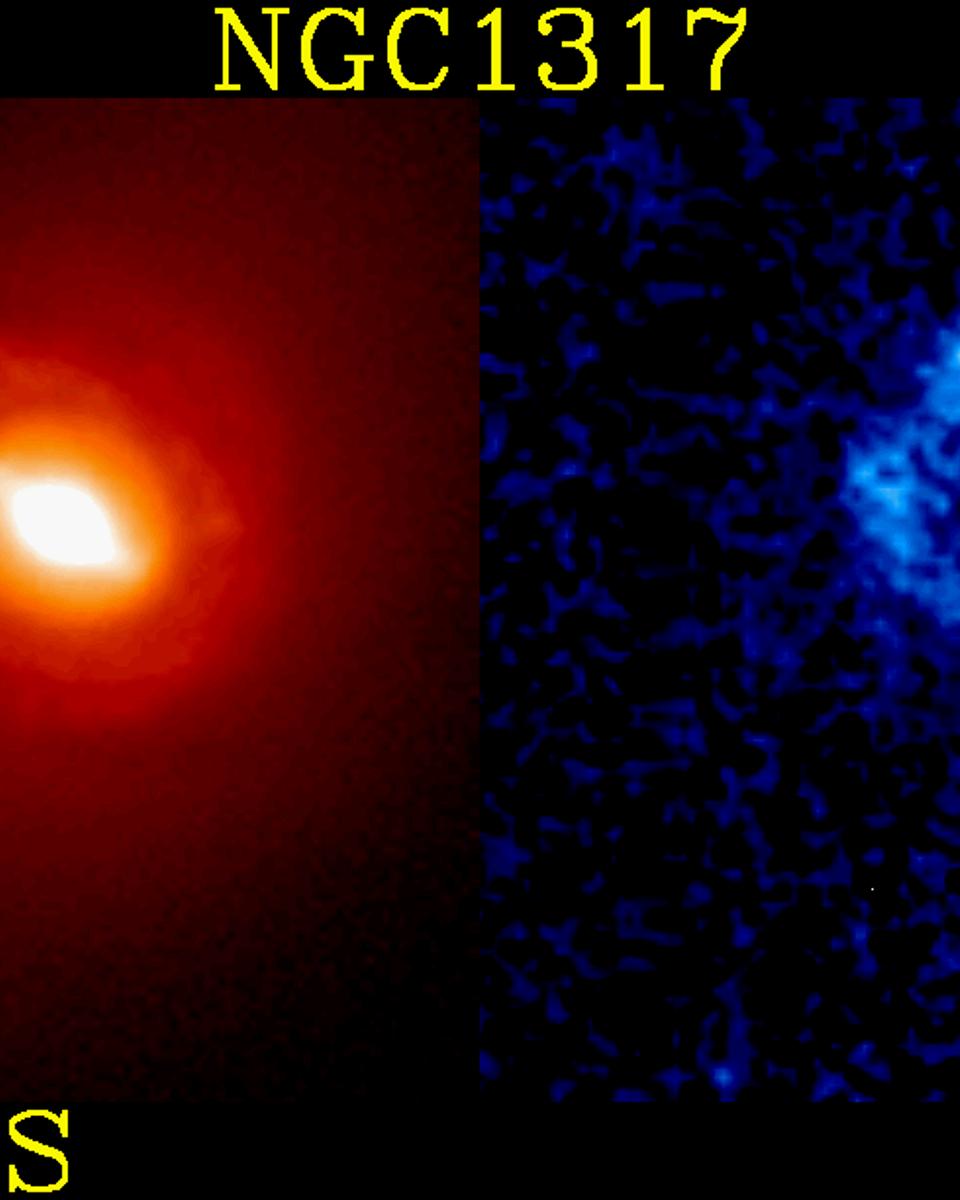
Starburst Ring in Galaxy NGC 1317
Explanation : Where do stars form? A typical place is an area of dense nebular gas common to arms in spiral galaxies . Sometimes, however, a burst of star formation can occur with…
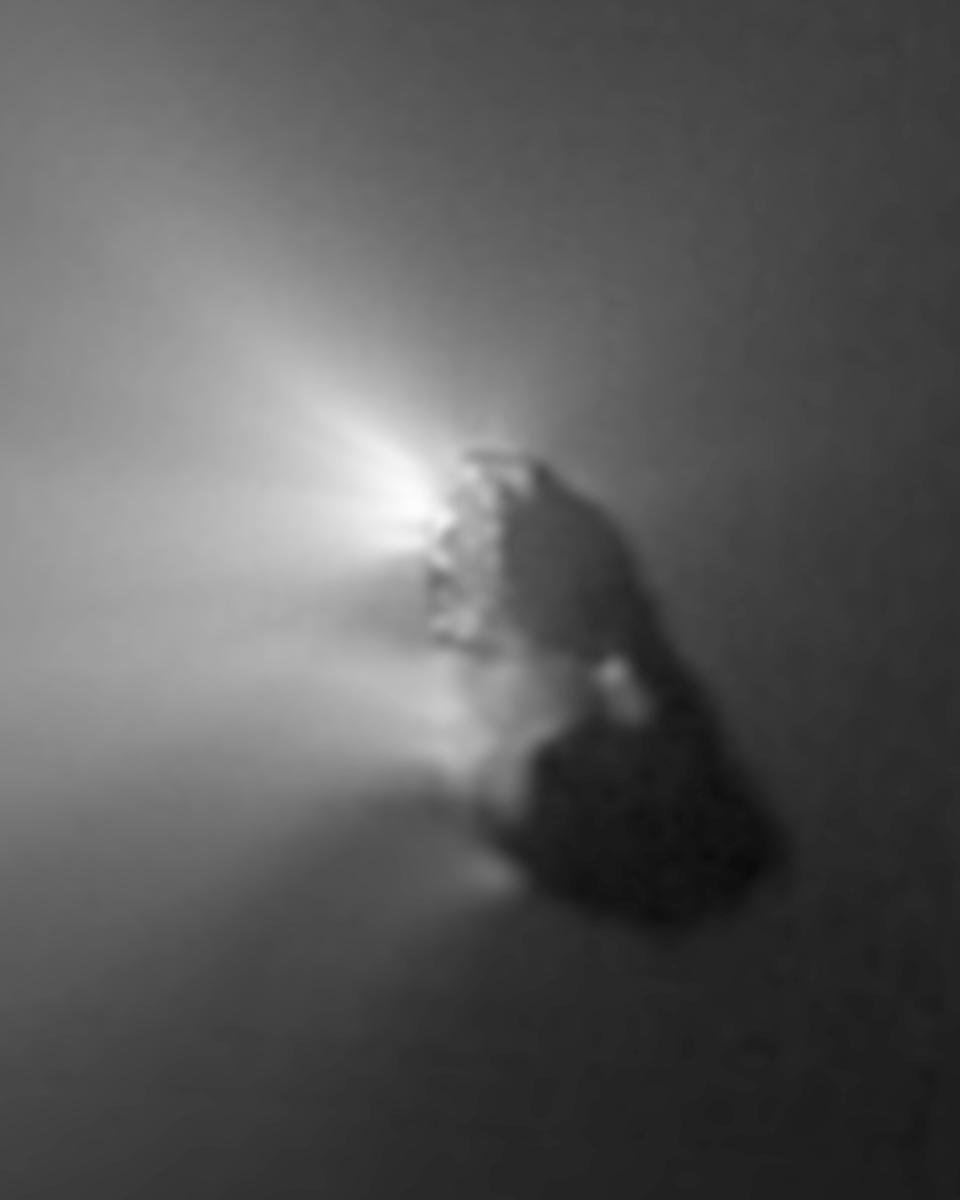
Comet Halley's Nucleus
Explanation : Here is what a comet nucleus really looks like. For all active comets except Halley , it was only possible to see the surrounding opaque gas cloud called the coma .…
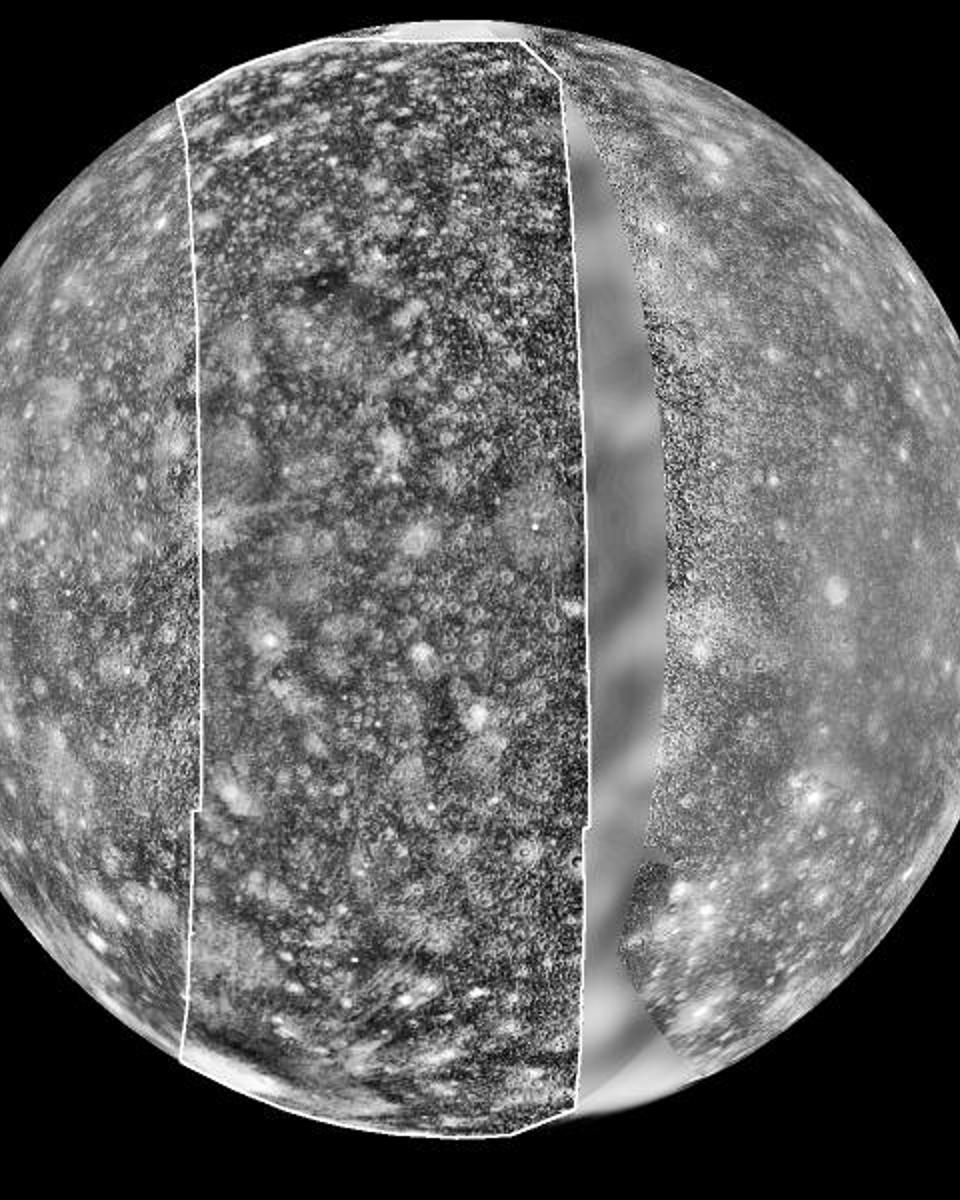
Callisto Full Face
Explanation : Callisto's surface shows its age. While probably formed at the same time as Io , the difference between the surfaces of these two moons of Jupiter could hardly be…
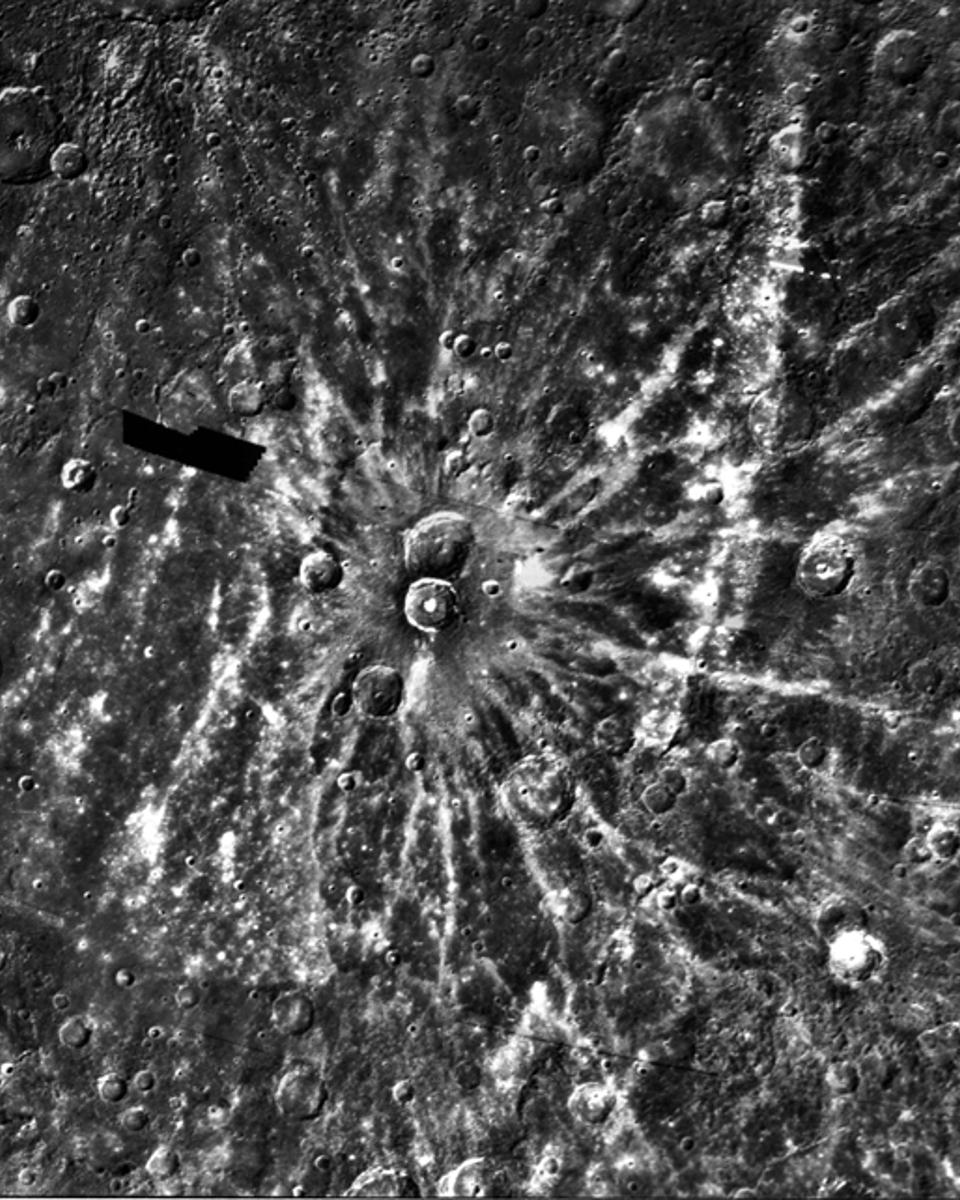
Degas Ray Crater on Mercury
Explanation : Like the Earth's Moon, Mercury is scarred with craters, testifying to an intense bombardment during the early history of the Solar System. In 1974, the Mariner 10…
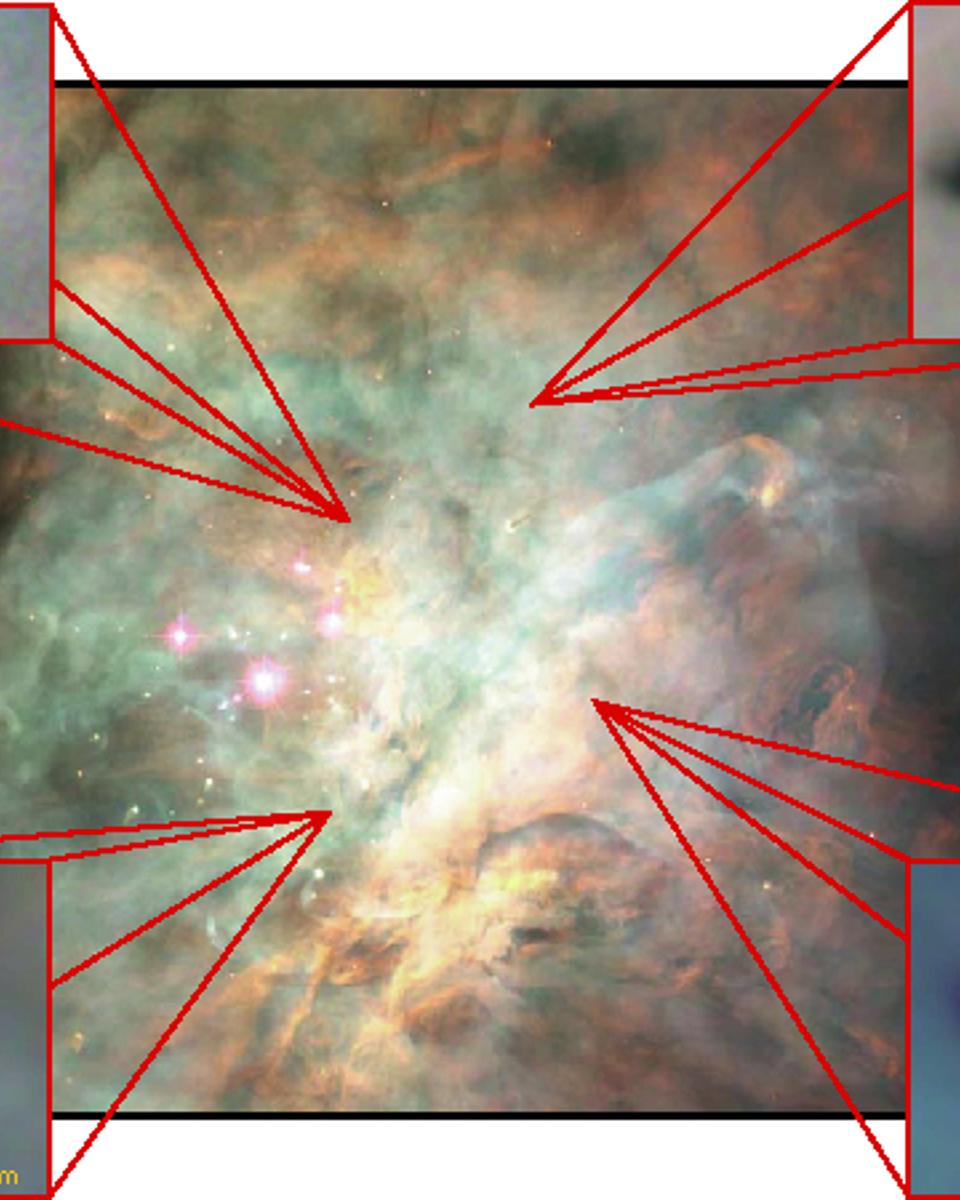
Planetary Systems Now Forming in Orion
Explanation : How do planets form? Astronomers are finding out by studying one of the most interesting of all astronomical nebulae known, the Great Nebula in Orion . Insets to…
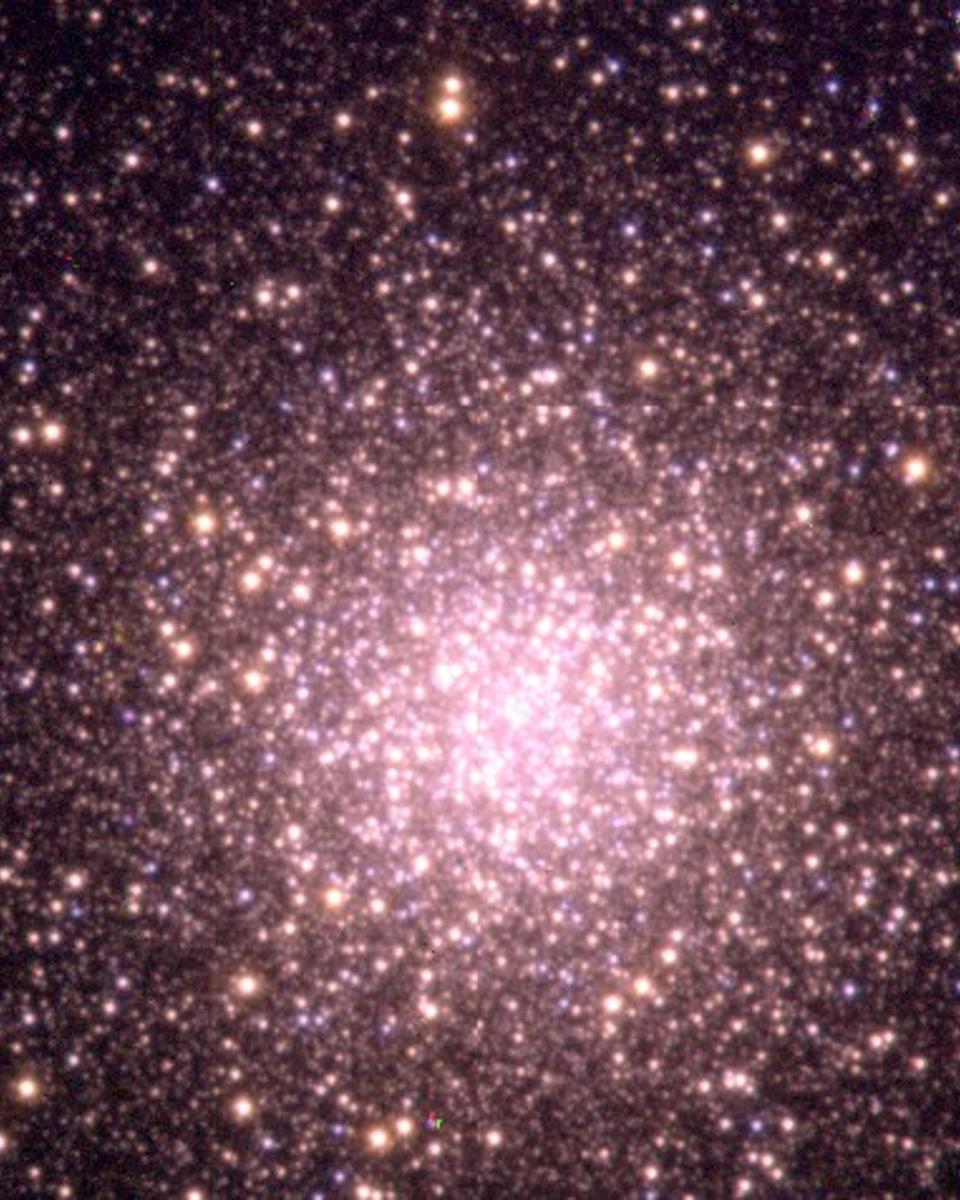
Globular Cluster M3
Explanation : This huge ball of stars predates our Sun. Long before mankind evolved, before dinosaurs roamed , and even before our Earth existed, ancient globs of stars condensed…
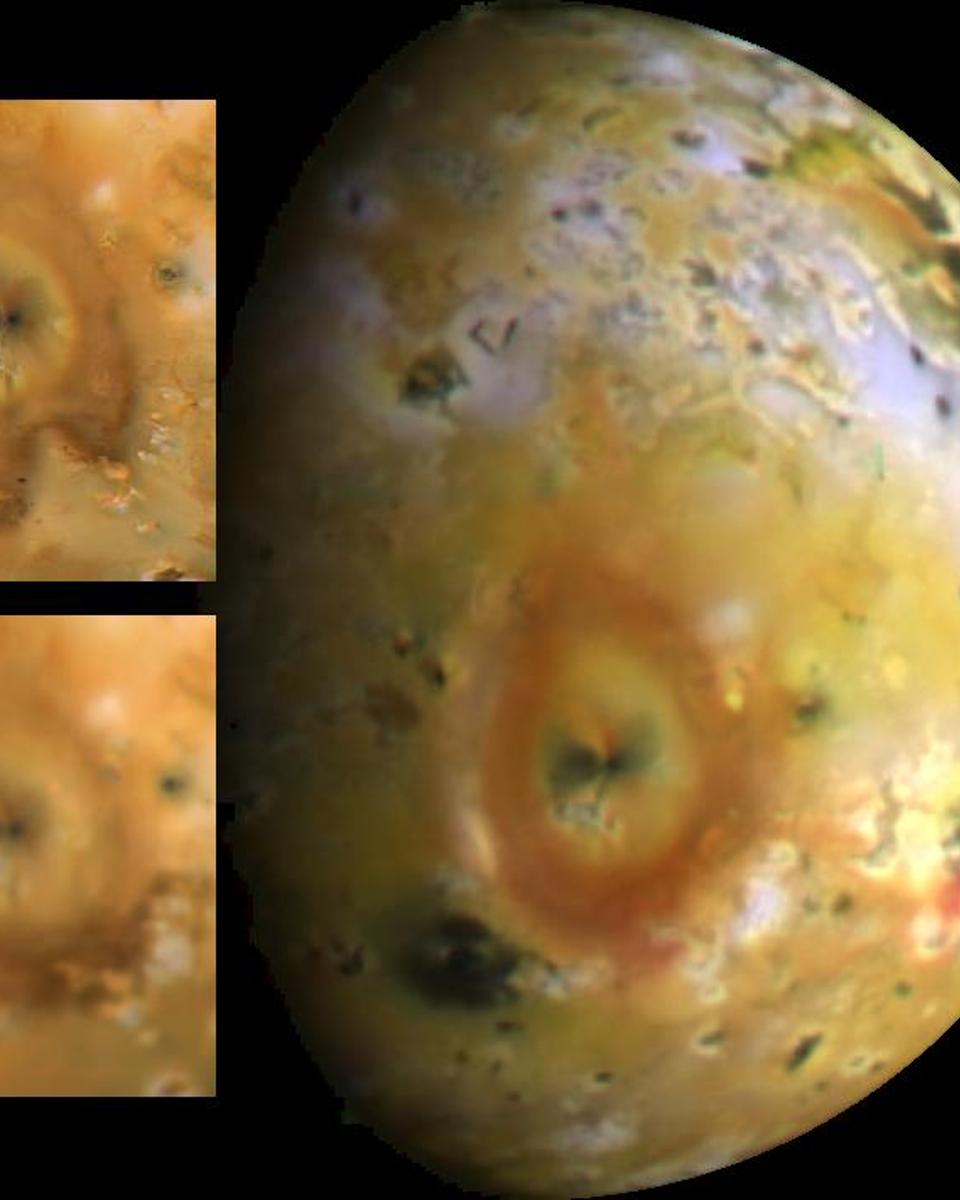
Io's Giant Volcano Pele
Explanation : Io has some very large volcanoes. One of the largest is evident near the center of the above photograph and named Pele , for the mythological Polynesian fire…
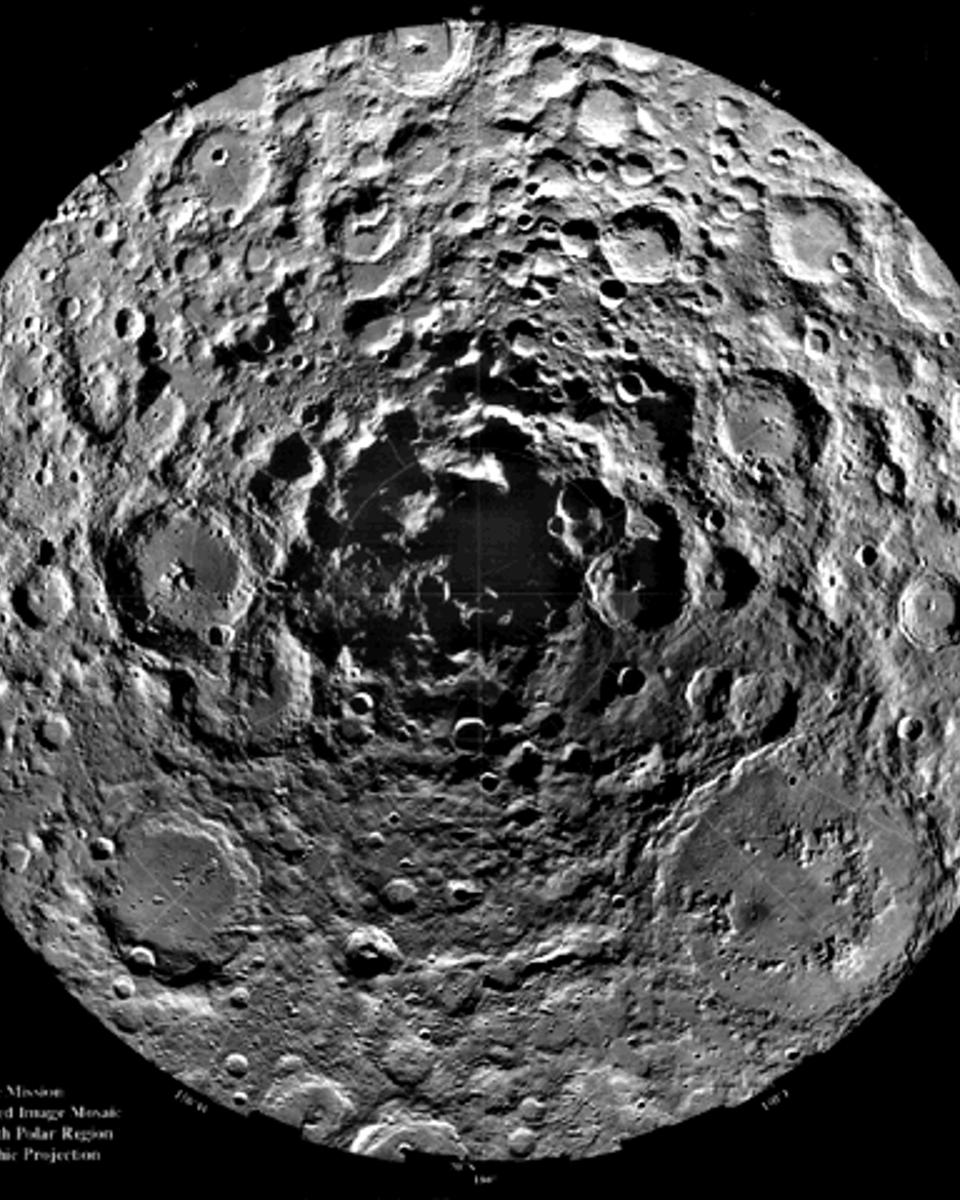
Ice at the Lunar South Pole
Explanation : Ice on the Moon? The prospecting Clementine spacecraft may well have discovered it. In 1994, Clementine spent 70 days in lunar orbit mapping the Moon's surface .…
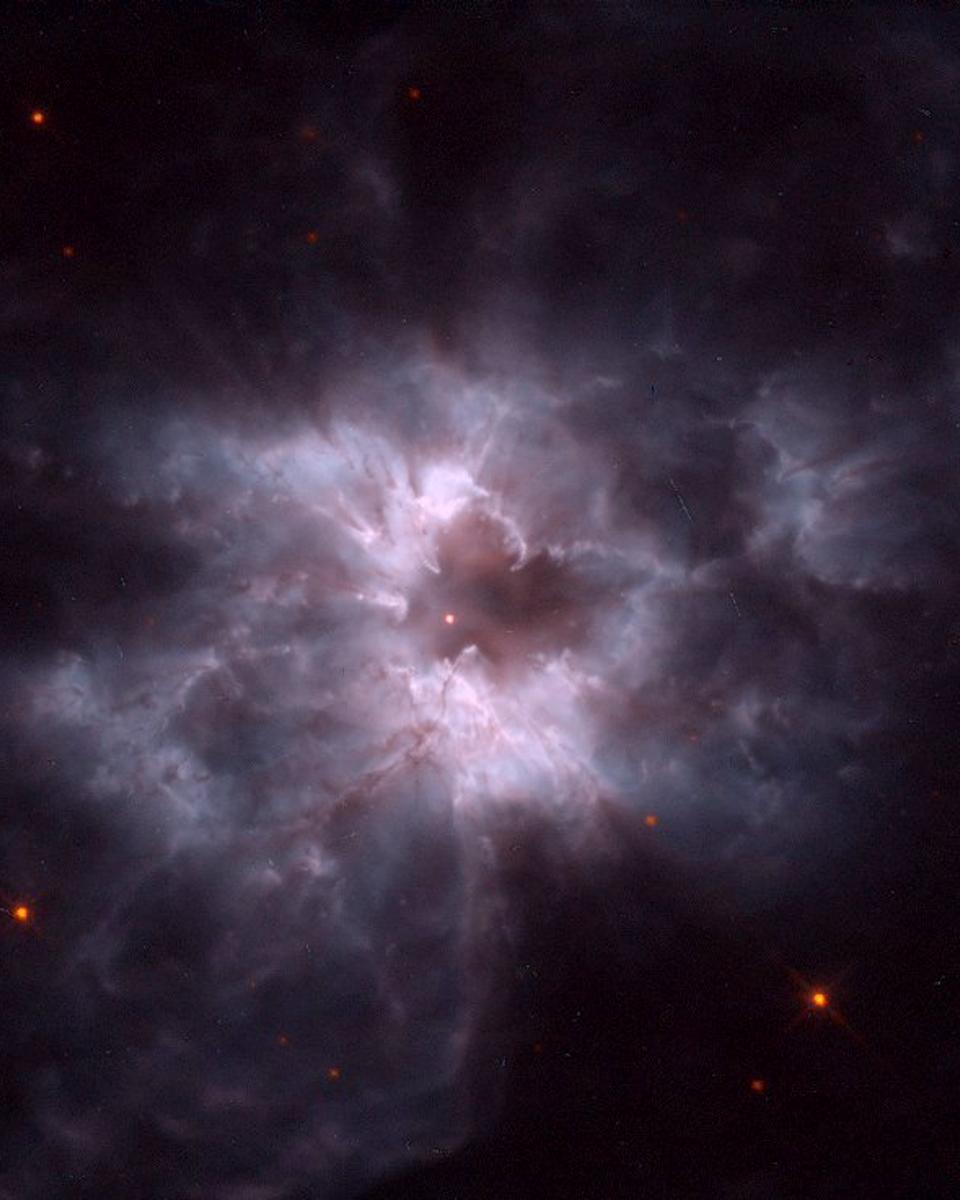
Cocoon of a New White Dwarf
Explanation : Like a butterfly , a white dwarf star begins its life by casting off a cocoon that enclosed its former self. In this analogy, however, the Sun would be a caterpillar…
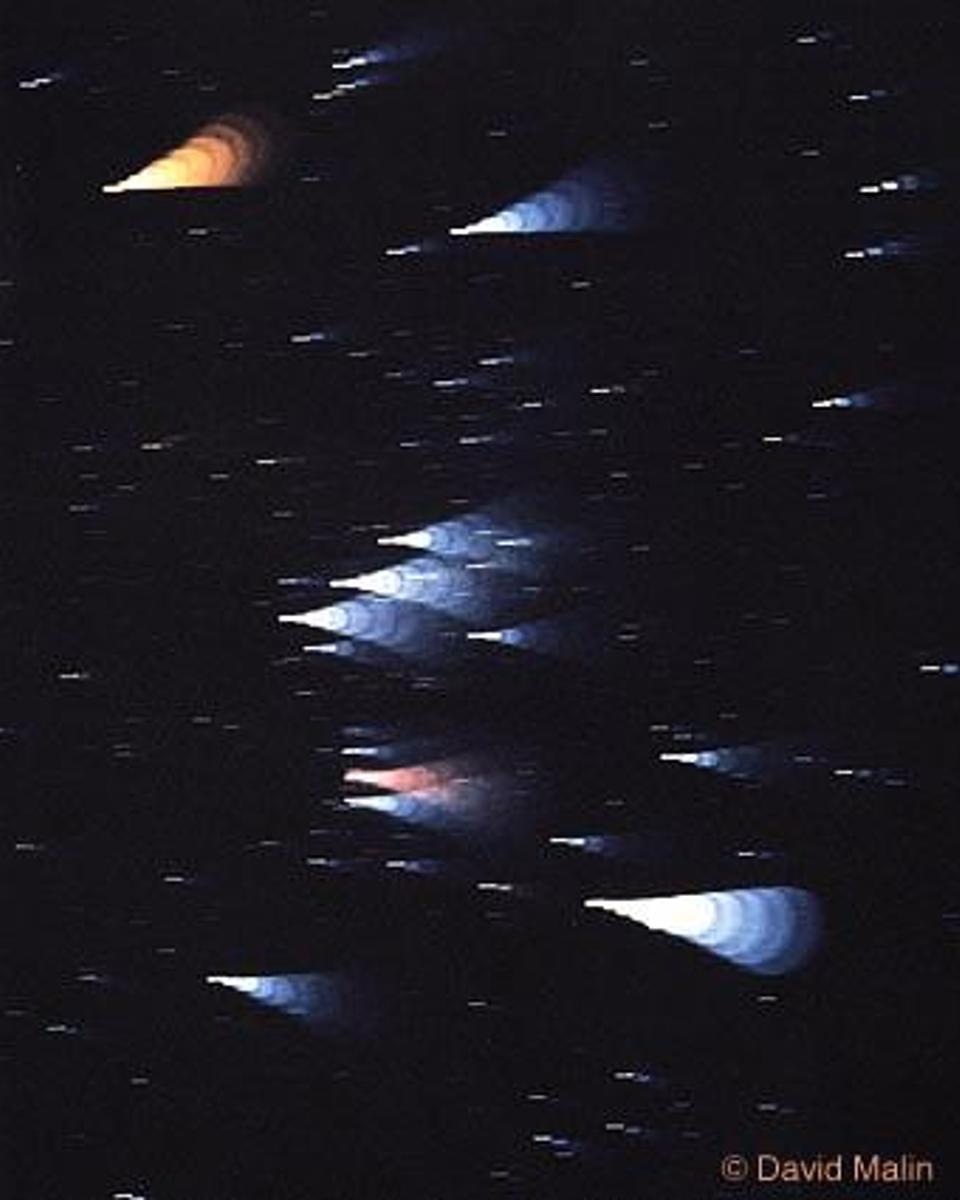
Orion's Star Colors
Explanation : What determines a star's color? Its temperature . Red stars are cool, with temperatures of around 3,000 kelvins (K), while blue stars are hotter and can have…
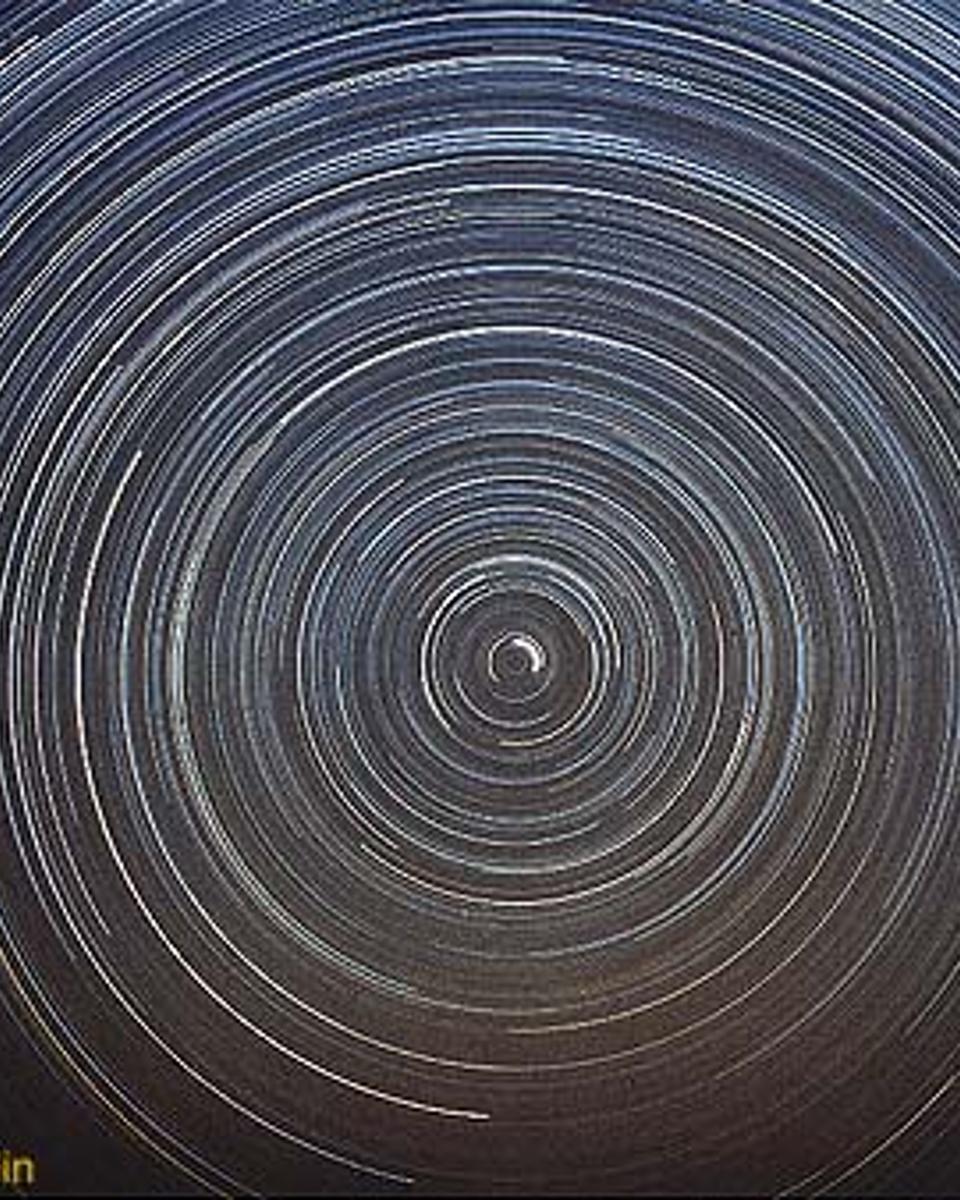
Star Trails in Northern Skies
Explanation : As the Earth spins on its axis, the sky seems to rotate around us . This motion produces the beautiful concentric arcs traced out by the stars in this time exposure…
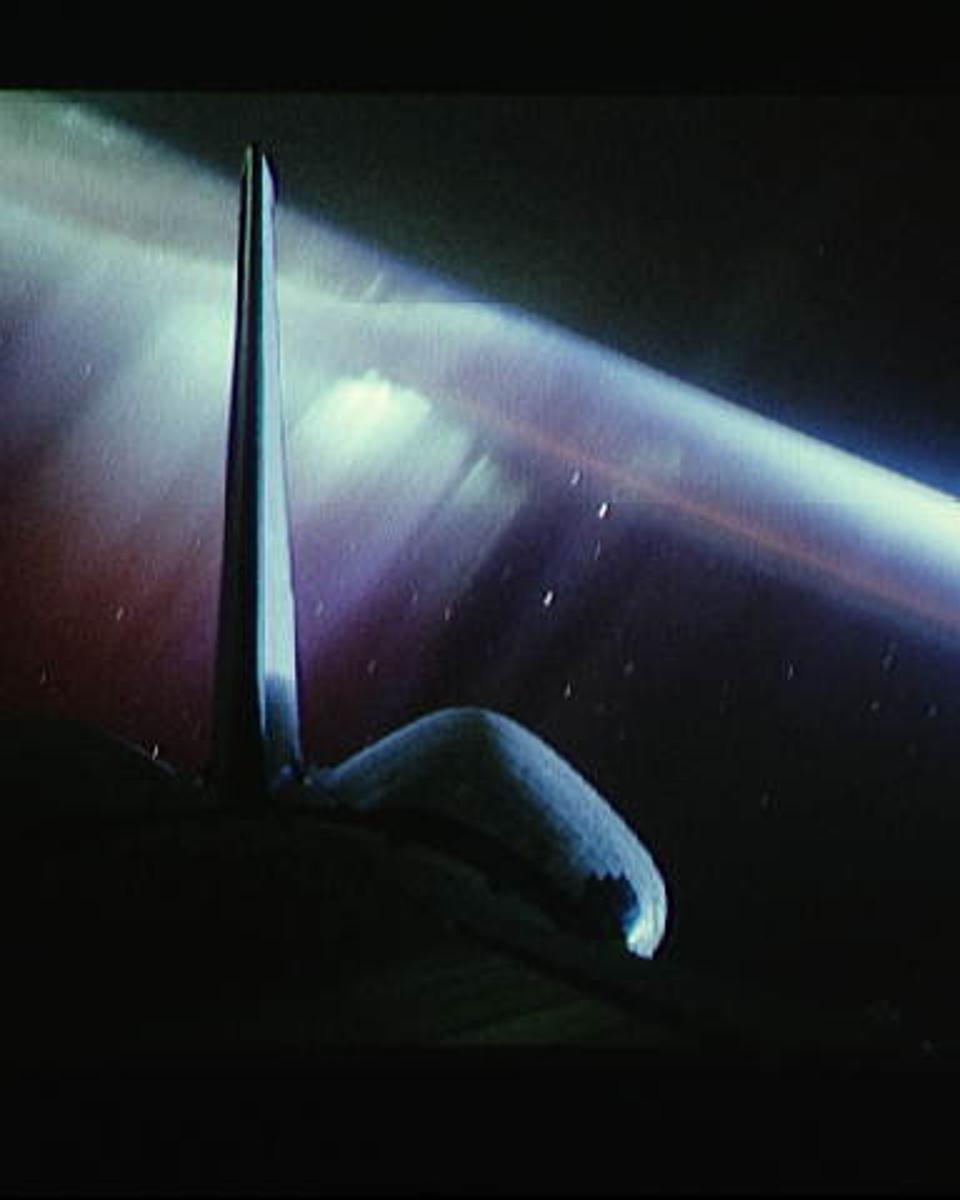
Aurora Astern
Explanation : Sailing upside down , 115 nautical miles above Earth, the crew of the Space Shuttle Endeavour made this spectacular time exposure of the southern aurora (aurora…
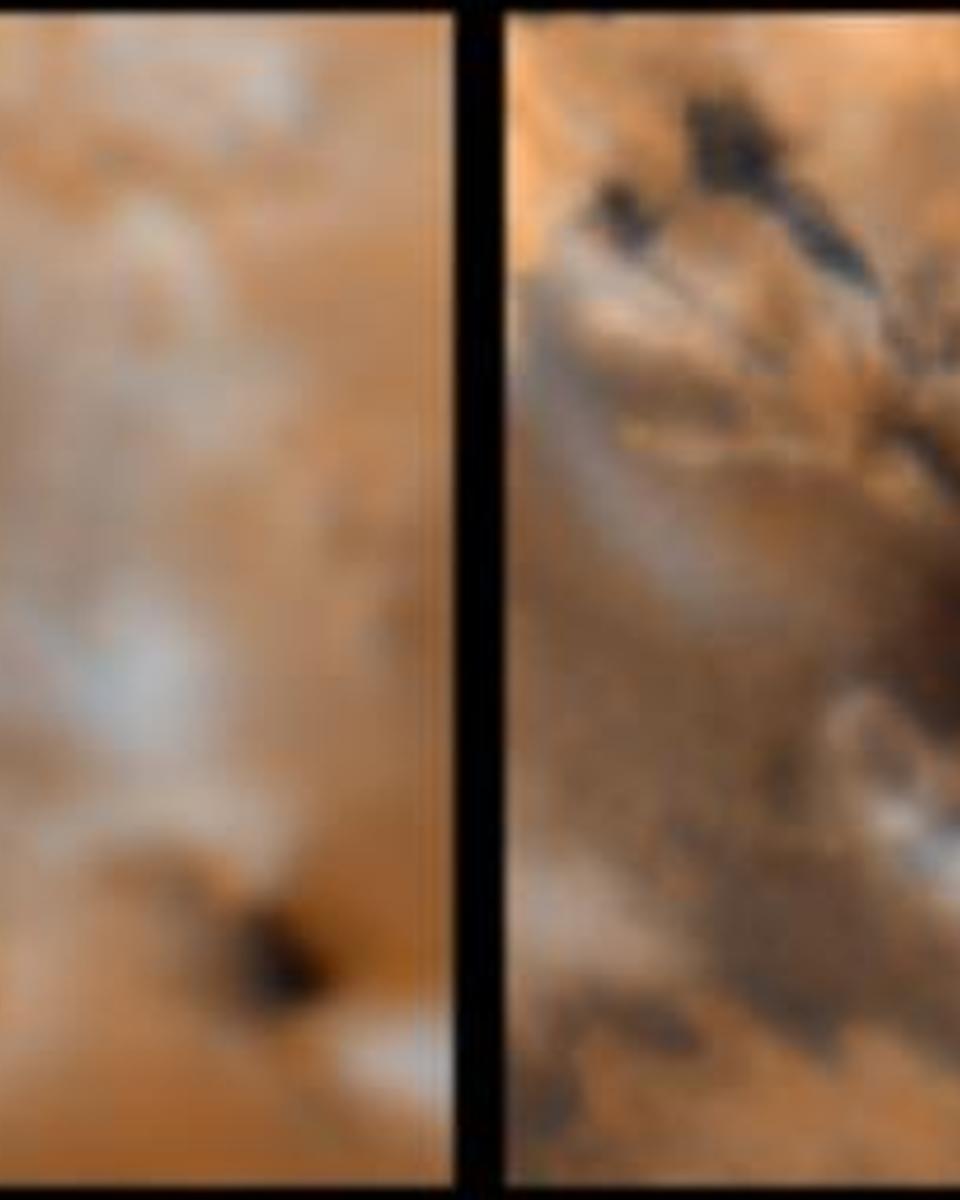
Io: The Fissure King?
Explanation : Is Io the solar system's Fissure King ? Well, probably not ... but it is the most active volcanic moon . Active volcanoes on Jupiter's moon Io were a surprise…
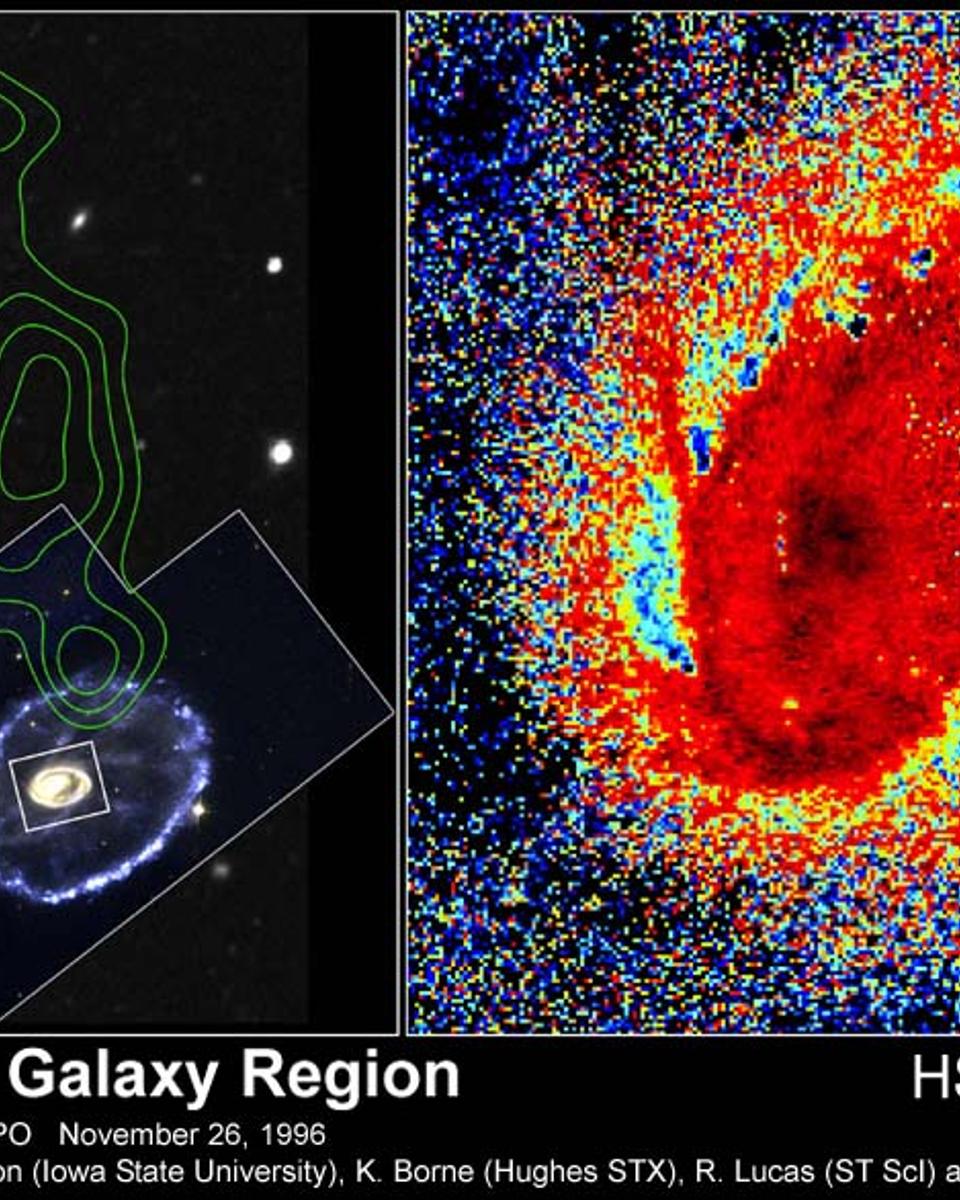
Comet-like Clouds in the Cartwheel Galaxy
Explanation : In a cartwheel-shaped galaxy far, far away, huge comet-shaped clouds of gas have been discovered racing through the nucleus at about 700,000 miles per hour. The…
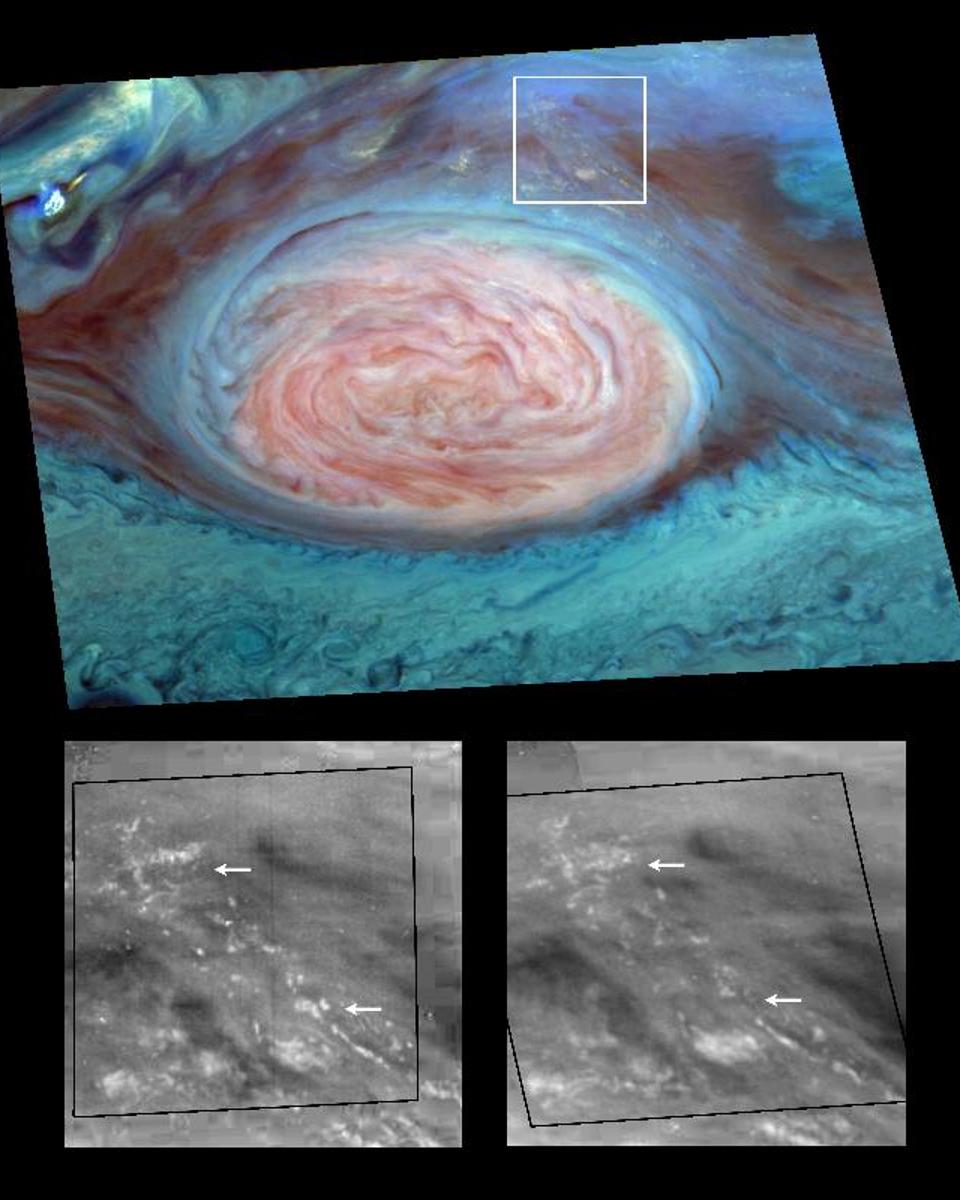
Storm Clouds Over Jupiter
Explanation : Storm clouds , similar to the familiar cumulonimbus thunderheads of Earth , appear to be present on Jupiter. The mosaic of images above shows the region near the…
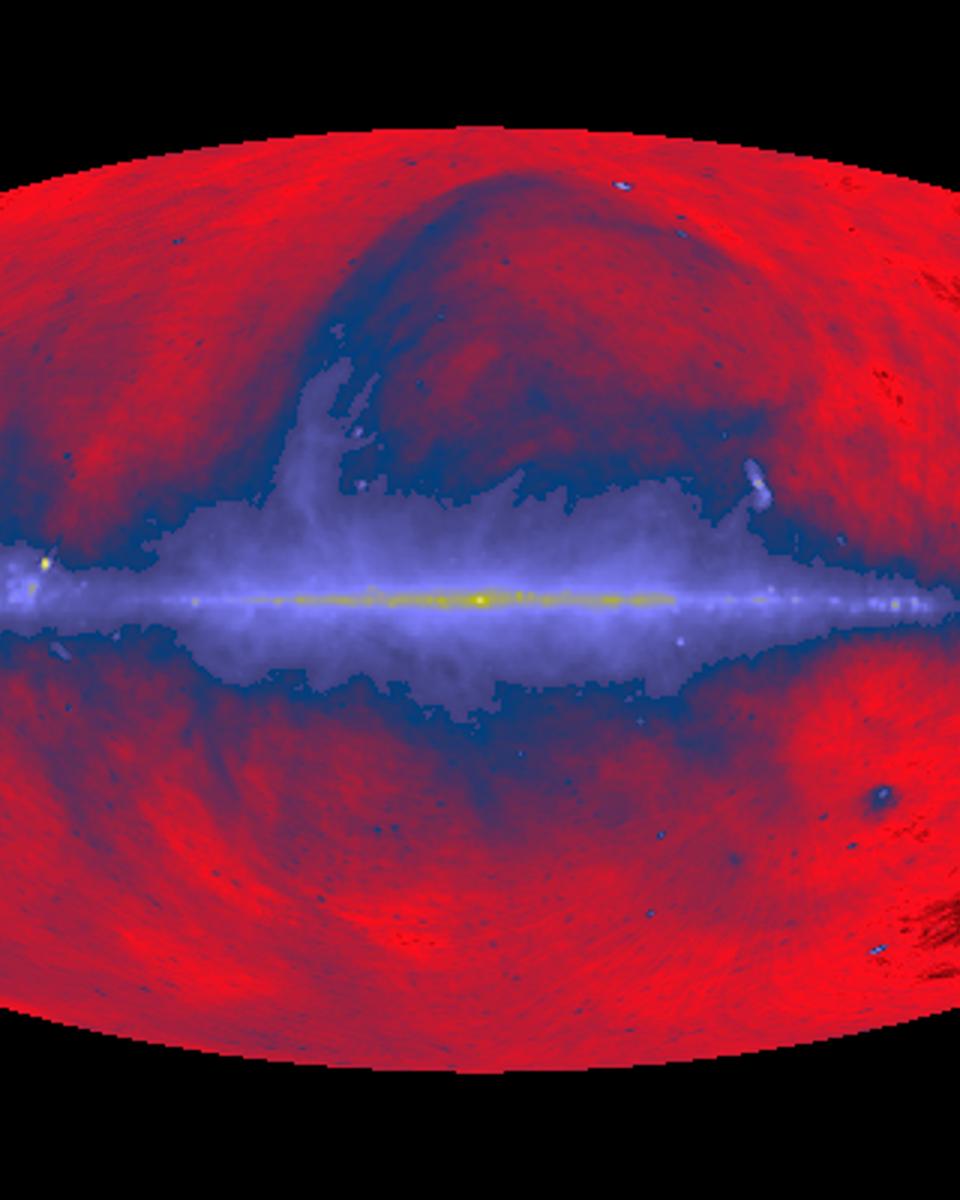
The Radio Sky: Tuned to 408MHz
Explanation : Tune your radio telescope to 408MHz (408 million cycles per second) and check out the Radio Sky! You should find that frequency on your dial somewhere between US…
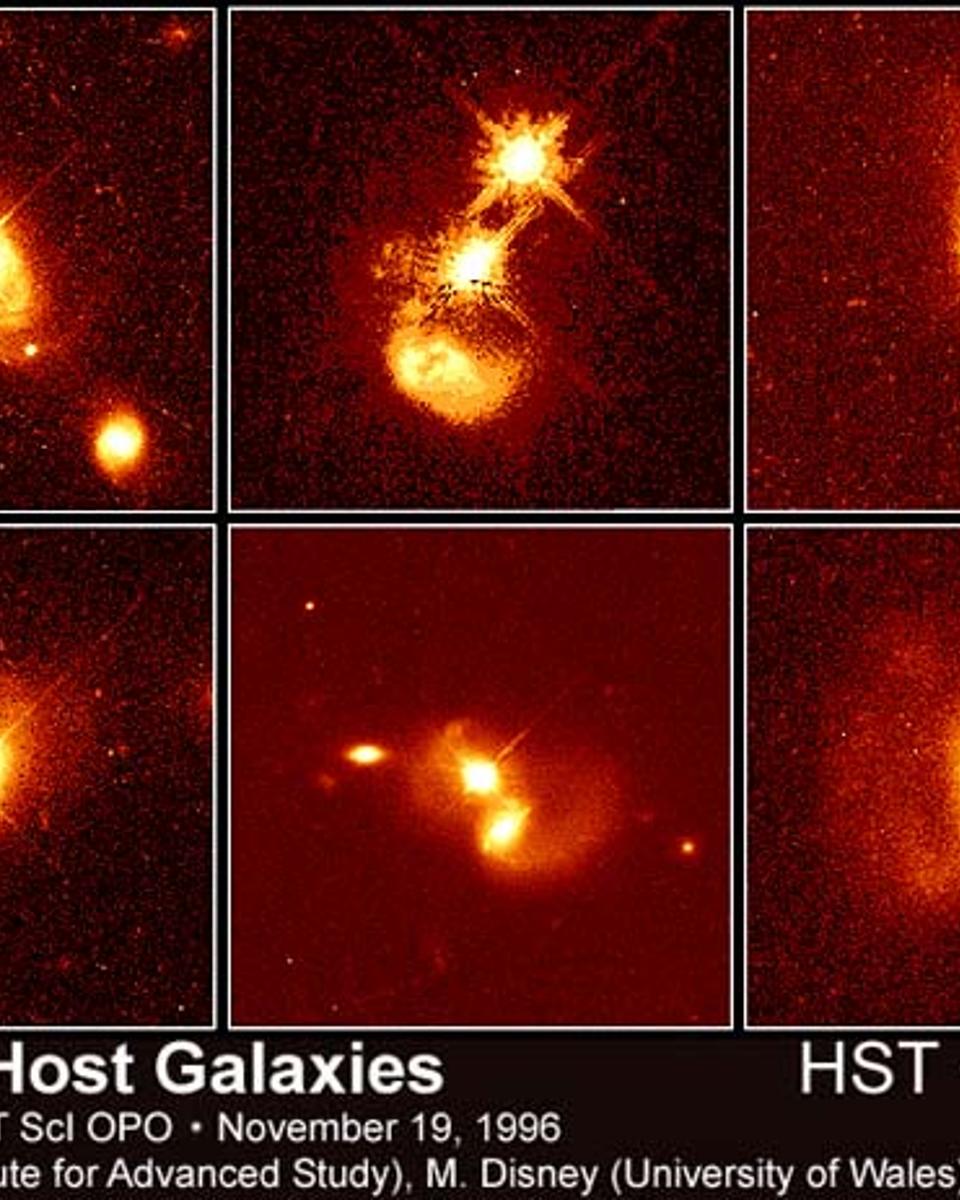
A Quasar Portrait Gallery
Explanation : QUASARs (QUASi-stellAR objects) lie near the edge of the observable Universe . Discovered in 1963 , astronomers were astounded - to be visible at such extreme…
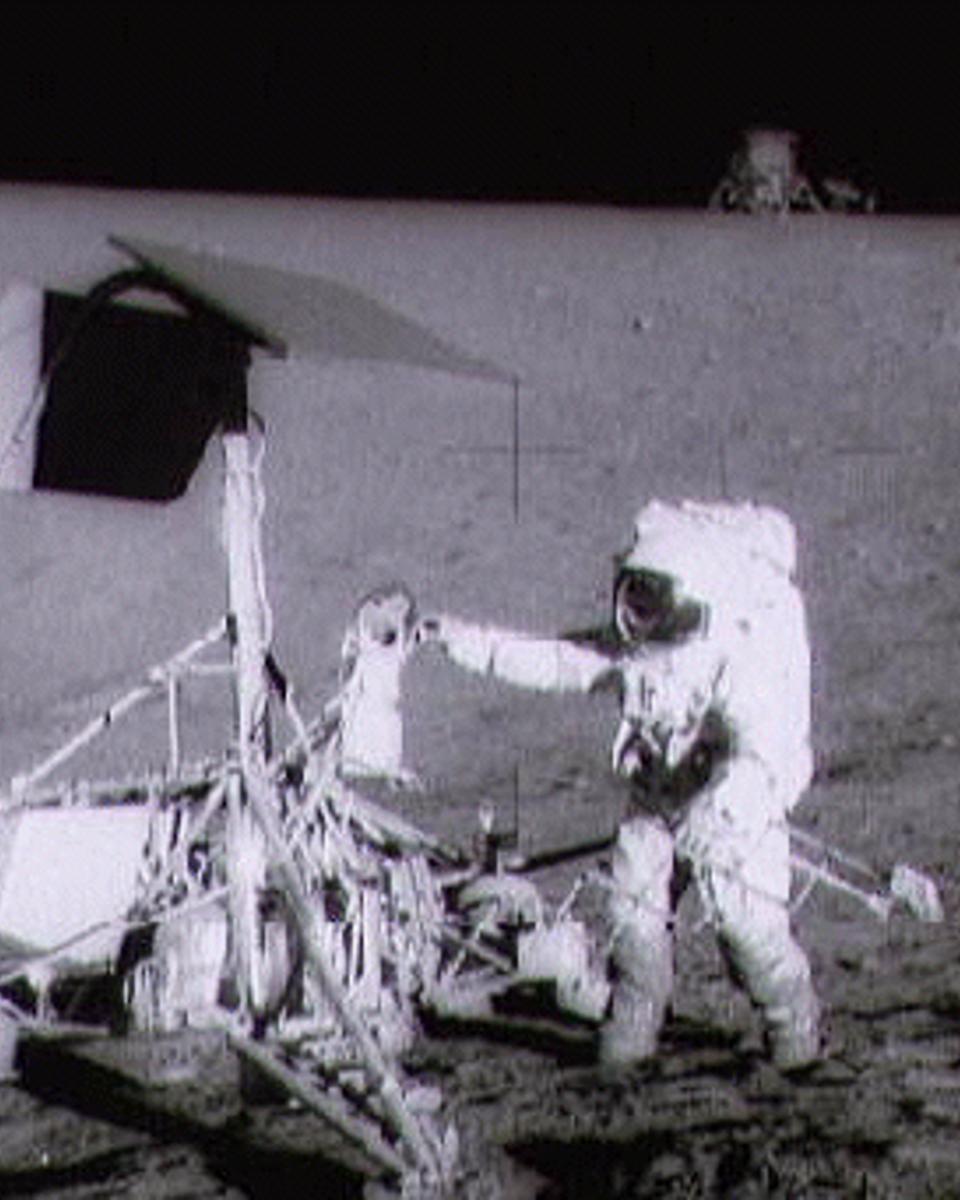
Apollo 12 Visits Surveyor 3
Explanation : Apollo 12 was the second mission to land humans on the Moon . The landing site was picked to be near the location of Surveyor 3, a robot spacecraft that had landed…
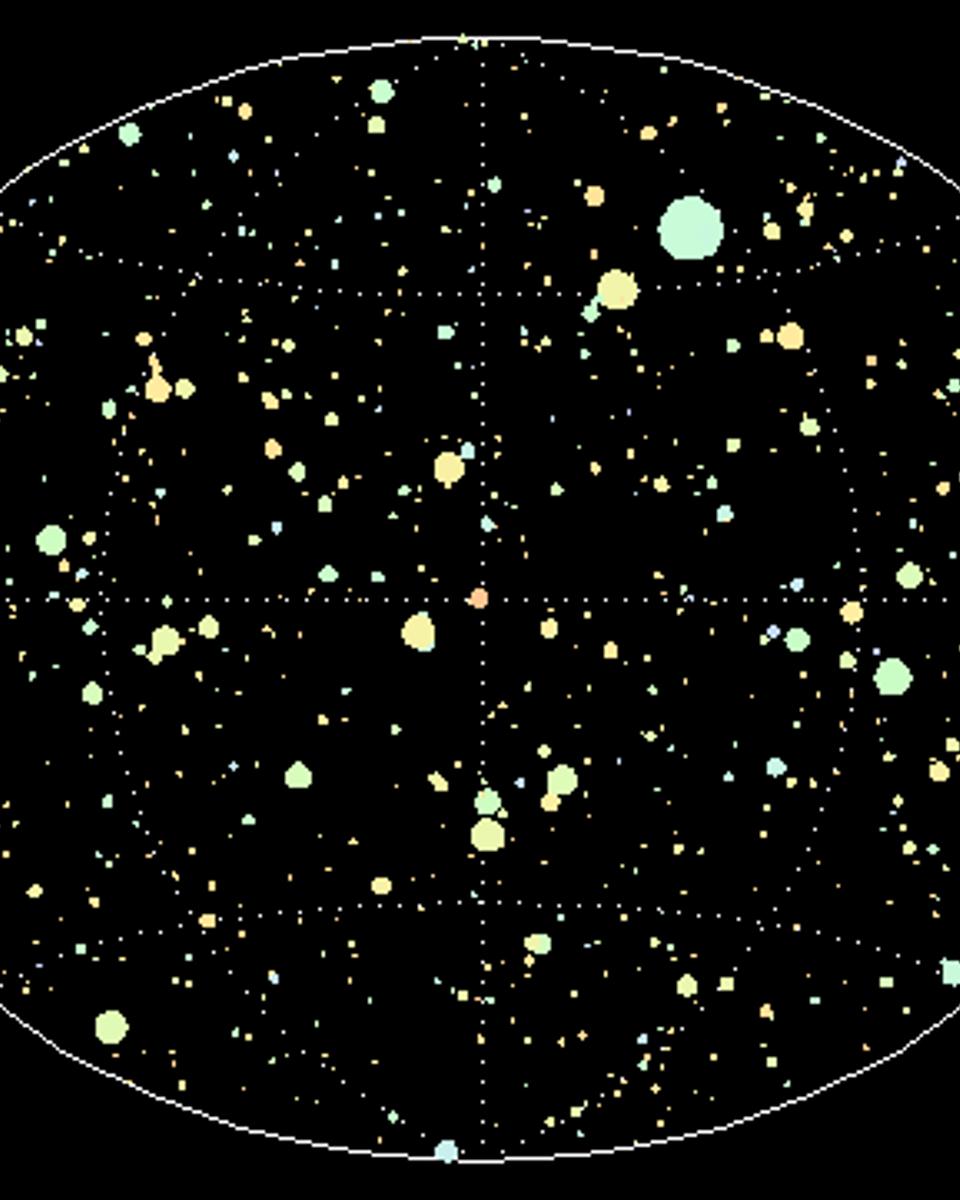
Gamma Ray Bursts from the Unknown
Explanation : Gamma Ray Bursts (GRBs) pose one of the greatest mysteries of modern astronomy. About once a day, the gamma-ray sky lights up with a spectacular explosion. No one…
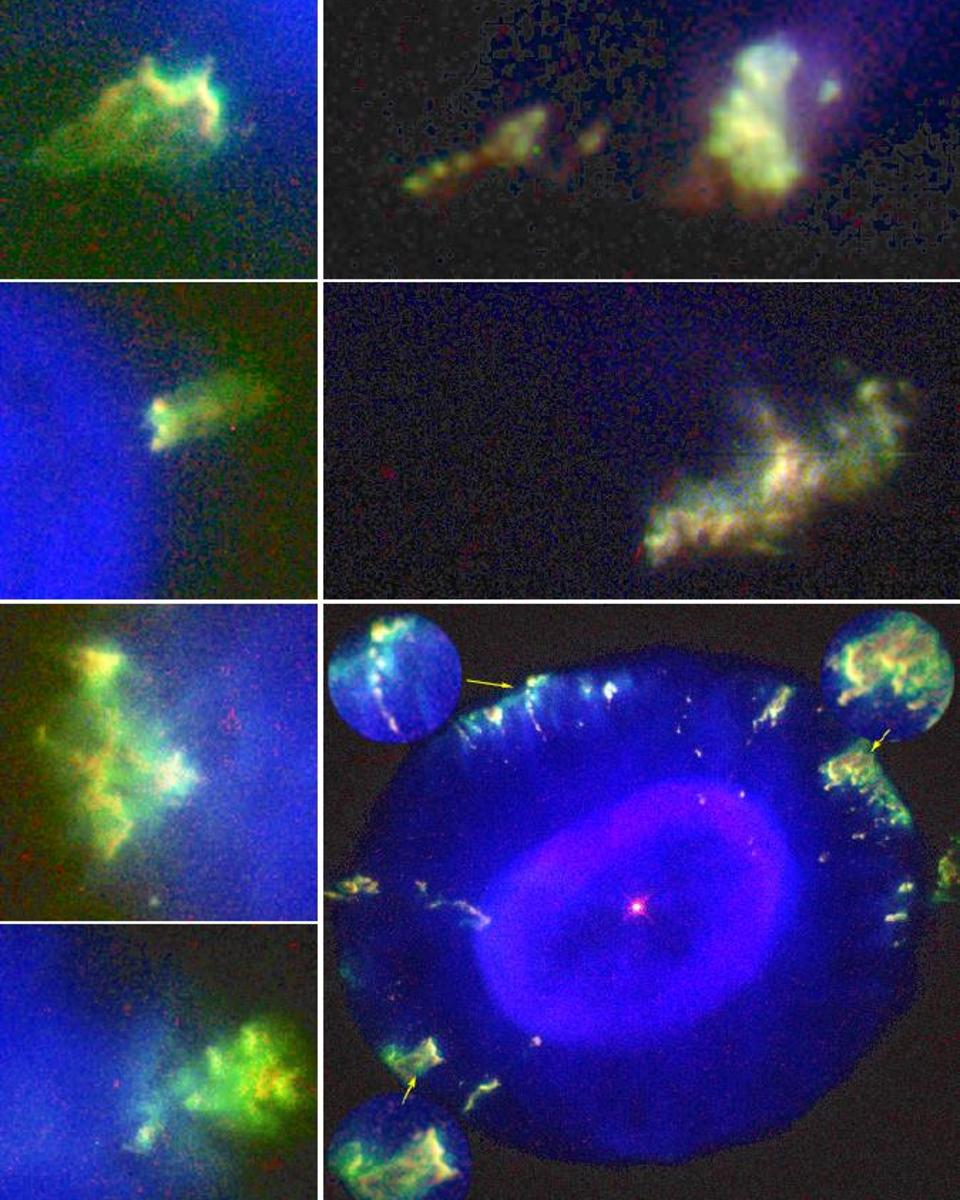
Fliers Around the Blue Snowball Nebula
Explanation : Planetary nebulae are strange. First, they are gas clouds and have nothing to do with our Solar System 's planets. Next, although hundreds of planetary nebulae have…
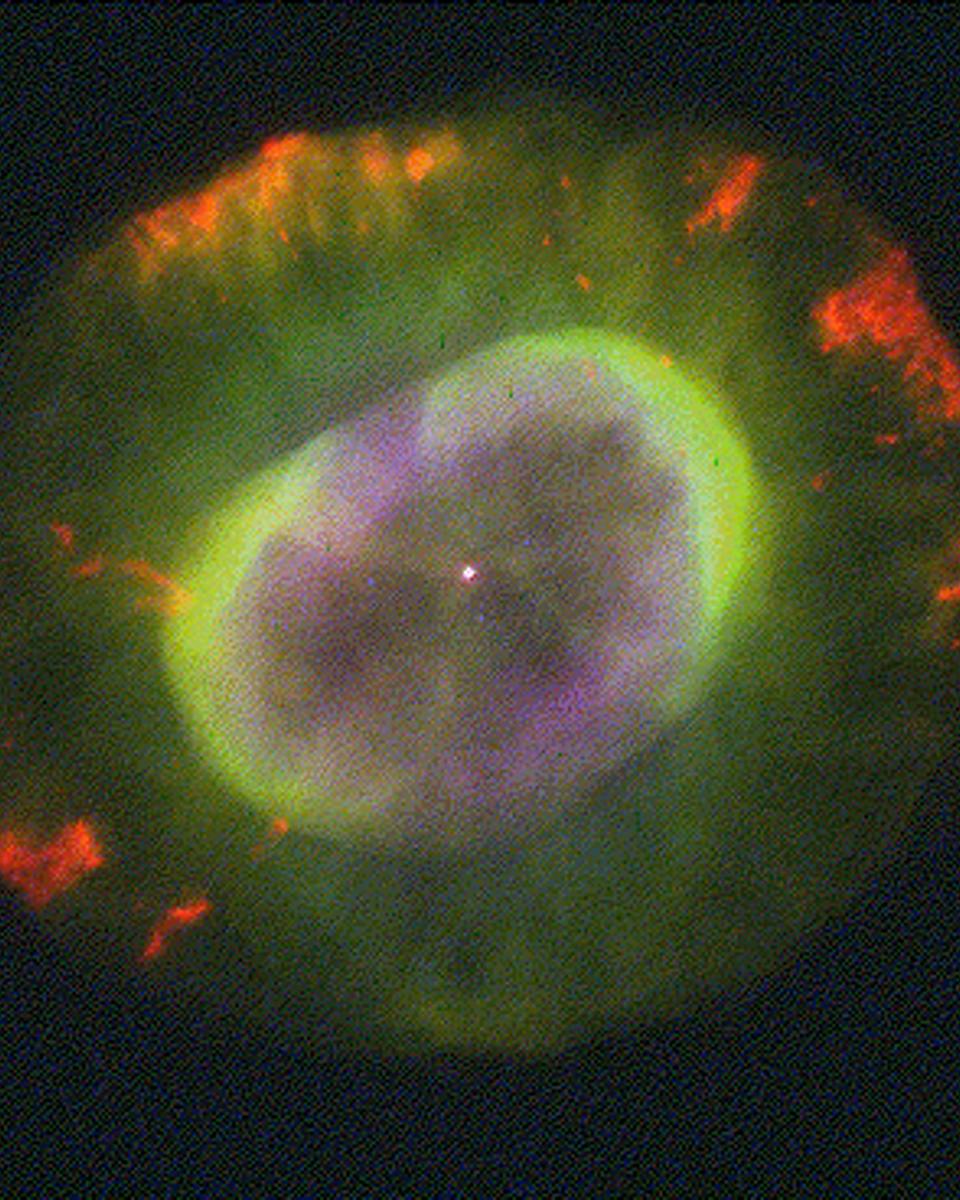
The Blue Snowball Planetary Nebula
Explanation : Will the Sun one day look like - a blue snowball? Maybe! The Blue Snowball is a planetary nebula - and in 5 billion years the Sun will throw off its outer layers and…
Viewing discoveries from 14 December 1996 through 21 November 1996.