Browse NASA Astronomy Picture of the Day archive by date and media: Archive Discoveries
Browse the NASA APOD archive without needing the exact date first. Filter by media type and keep moving deeper into older images and videos.

A Message From Earth
What are these Earthlings trying to tell us? The above message was broadcast from Earth towards the globular star cluster M13 in 1974. During the dedication of the Arecibo…
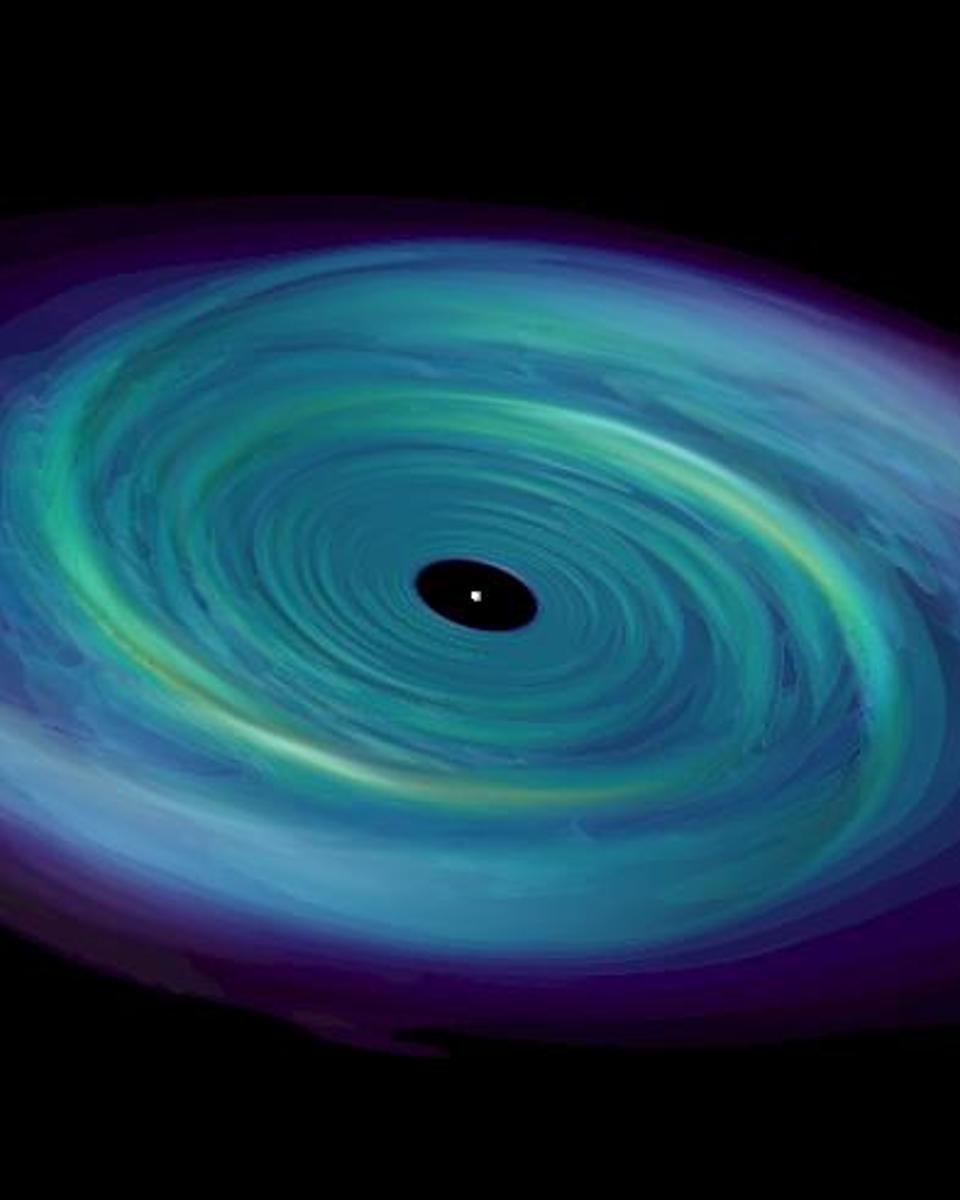
Accretion Disk Simulation
Don't be fooled by the familiar pattern. The graceful spiral structure seen in this computer visualization does not portray winding spiral arms in a distant galaxy of stars .…
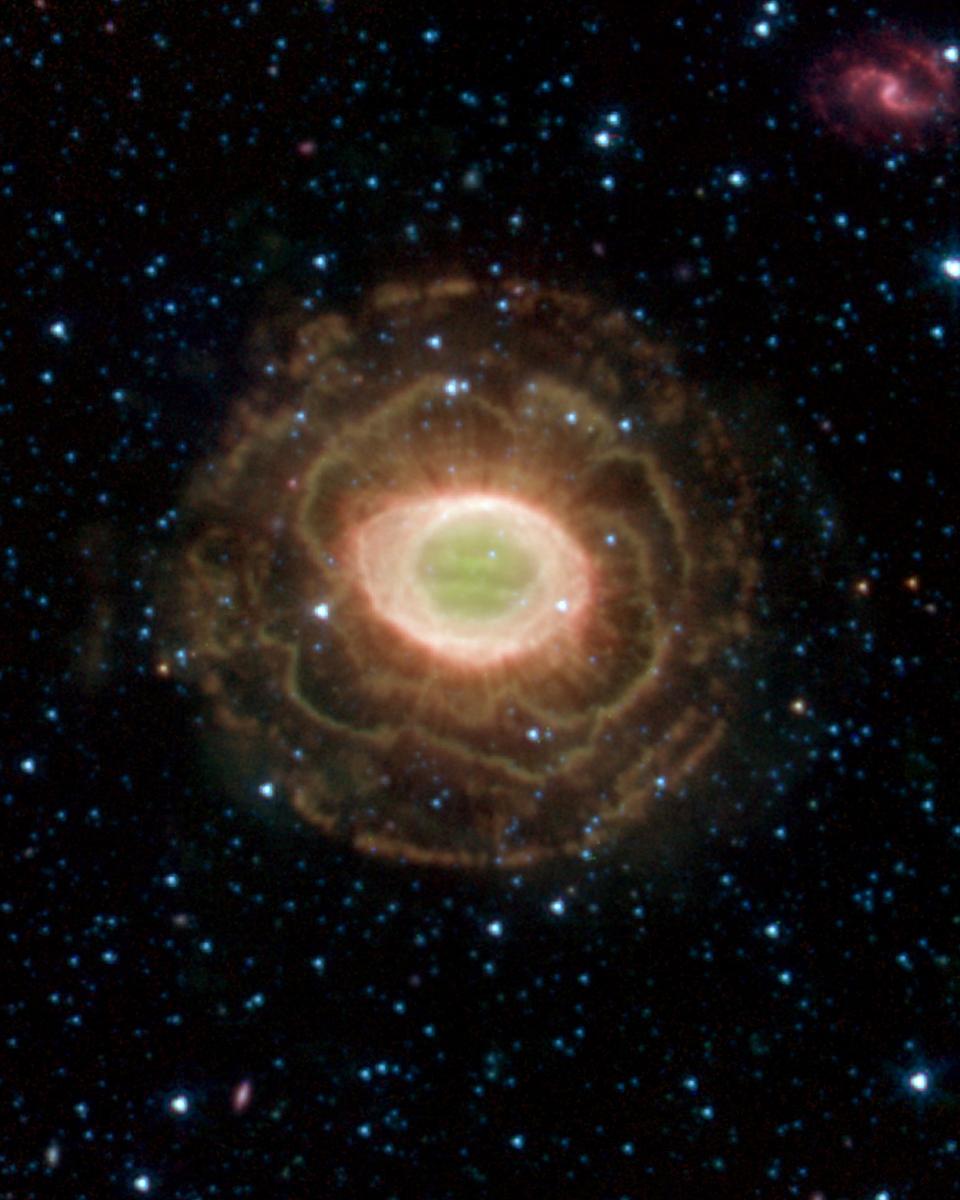
Infrared Ring Nebula
The classic appearance of the popular Ring Nebula (aka M57) is understood to be due to perspective - our view from planet Earth looks down the center of a roughly barrel-shaped…
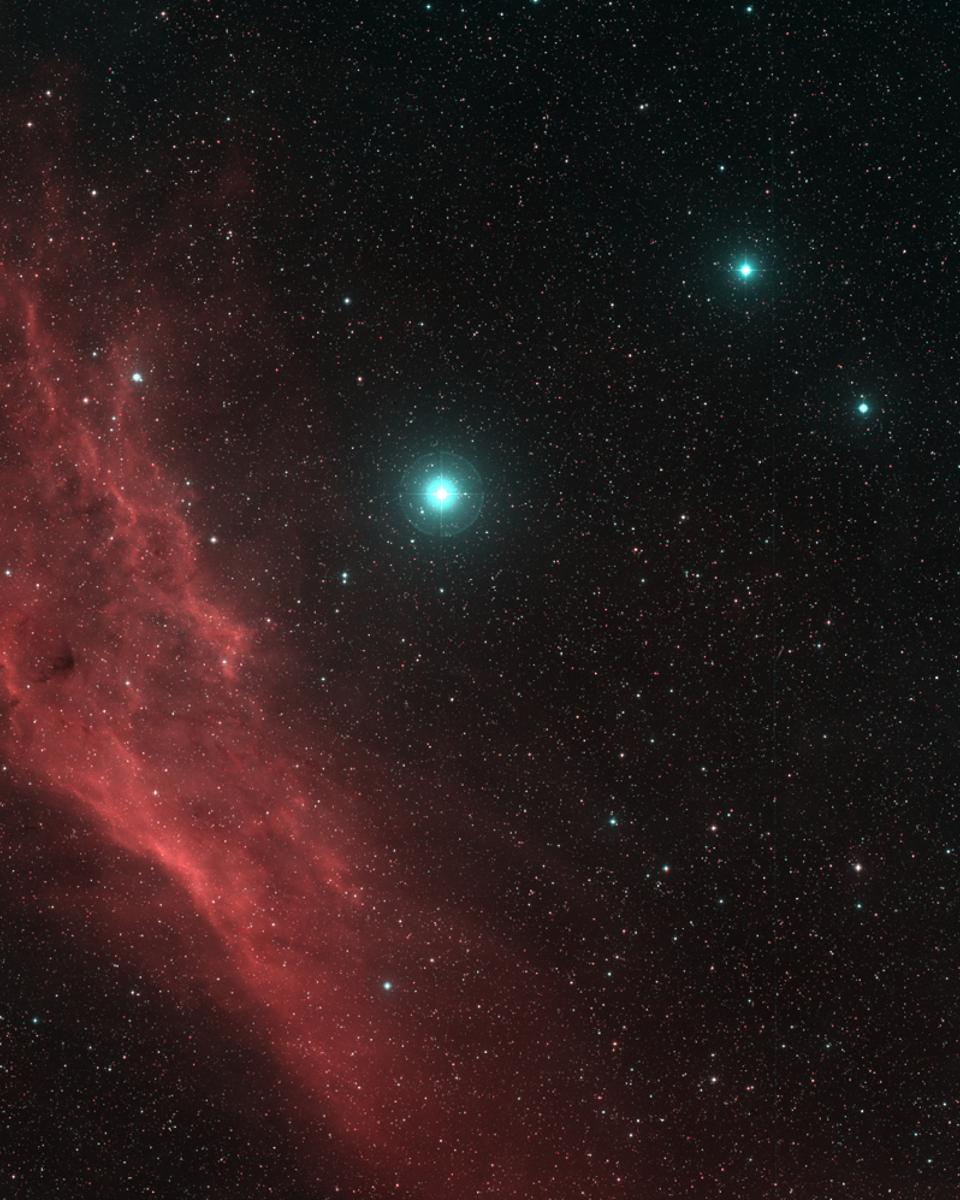
NGC 1499: California Nebula
Drifting through the Orion Arm of the spiral Milky Way Galaxy, this cosmic cloud by chance echoes the outline of California on the west coast of the United States. Our own Sun…
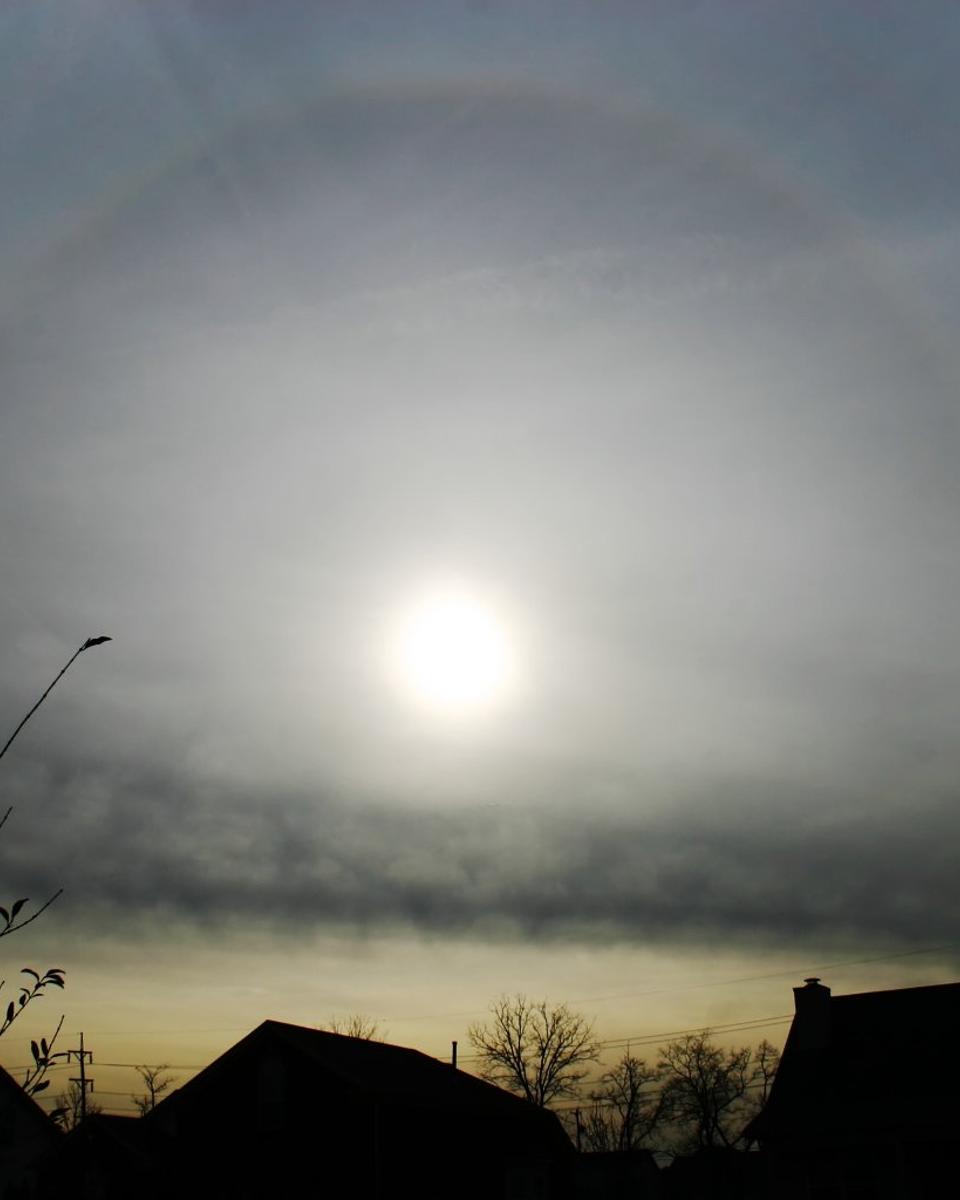
A Sun Halo Over Tennessee
Sometimes it looks like the Sun is being viewed through a large lens . In the above case, however, there are actually millions of lenses: ice crystals . As water freezes in the…
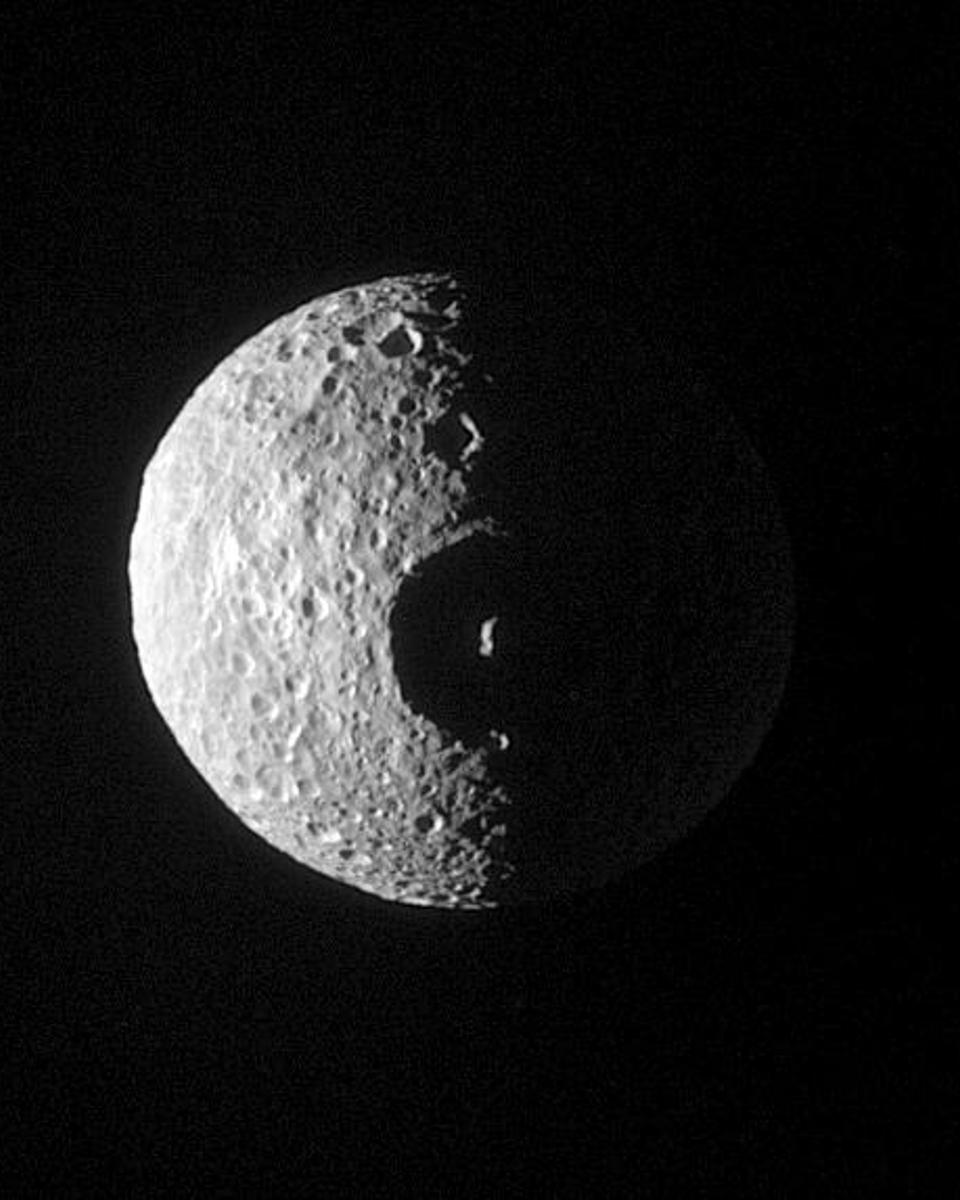
Crater on Mimas
Whatever hit Mimas nearly destroyed it. What remains is one of the largest impact craters on one of Saturn 's smallest moons. The crater, named Herschel after the 1789 discoverer…
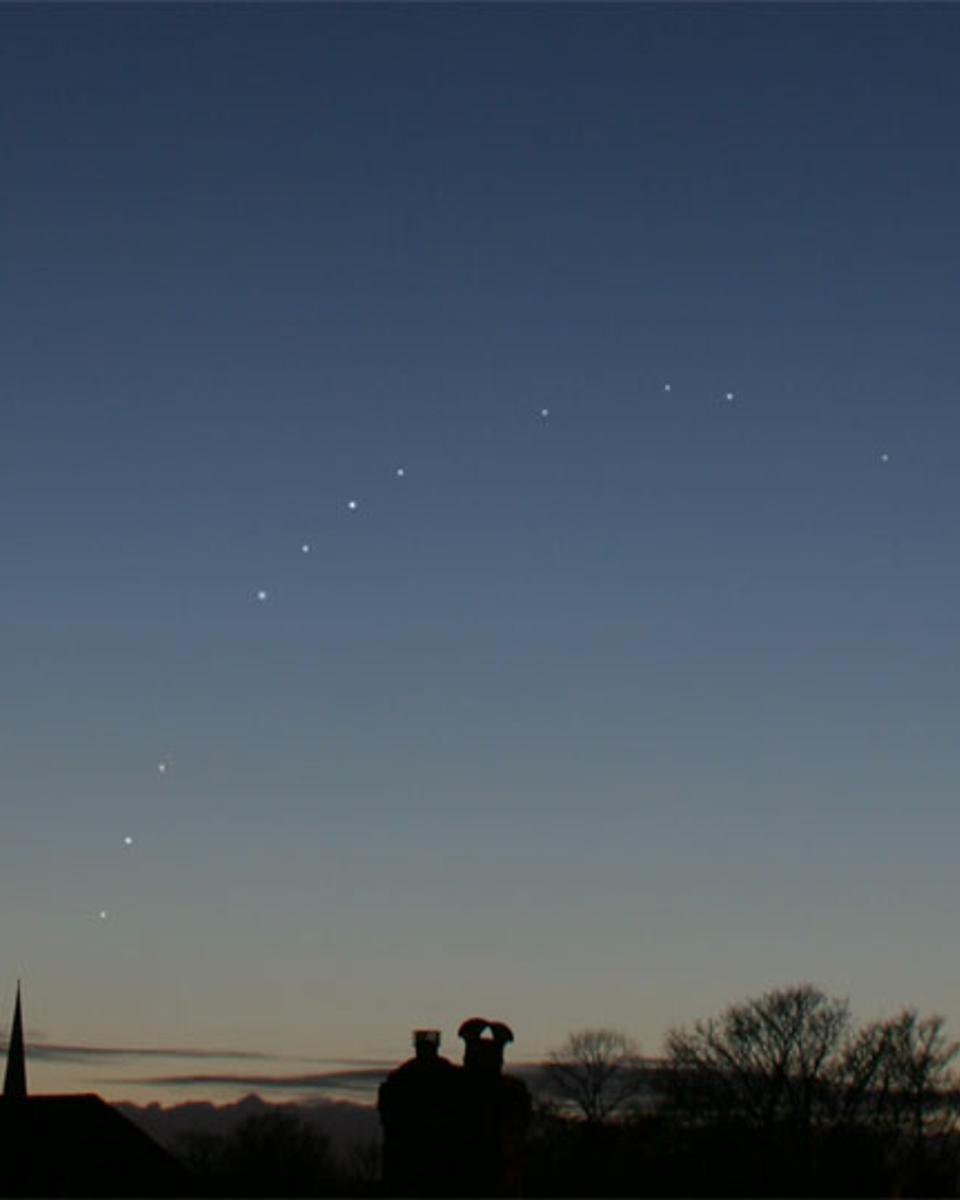
Mercury Over Leeds
Have you ever seen the planet Mercury? This week might be a good time. Because Mercury orbits so close to the Sun, it never wanders far from the Sun in Earth's sky. If trailing…

The View from Everest
What would it be like to stand atop the tallest mountain on Earth? To see a full panoramic vista from there, scroll right. Visible are snow peaked mountains near and far,…
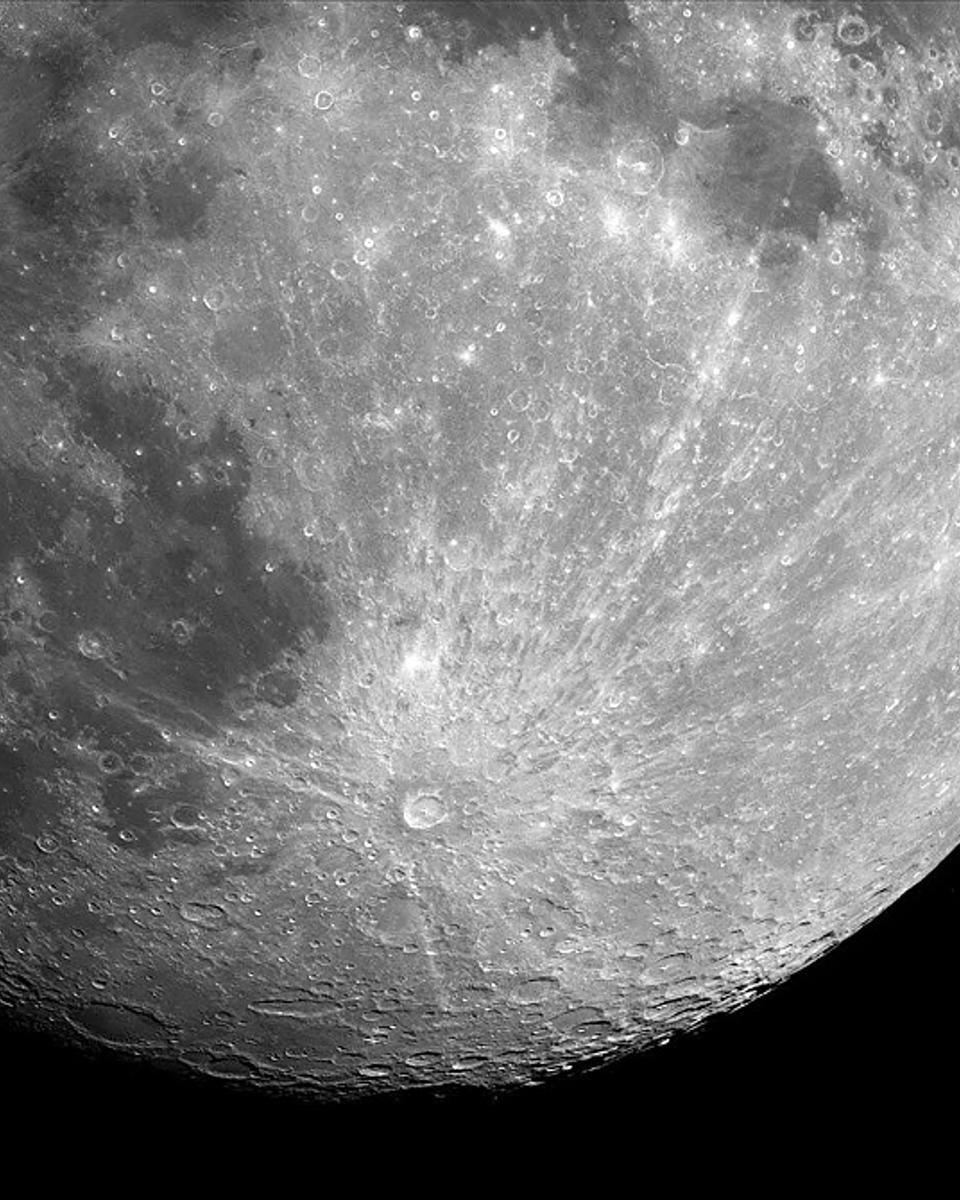
Tycho and Copernicus: Lunar Ray Craters
Dazzling in binoculars or a small telescope, the Moon is pocked with impact craters. During partial lunar phases , the craters along the terminator are cast in dramatic relief by…
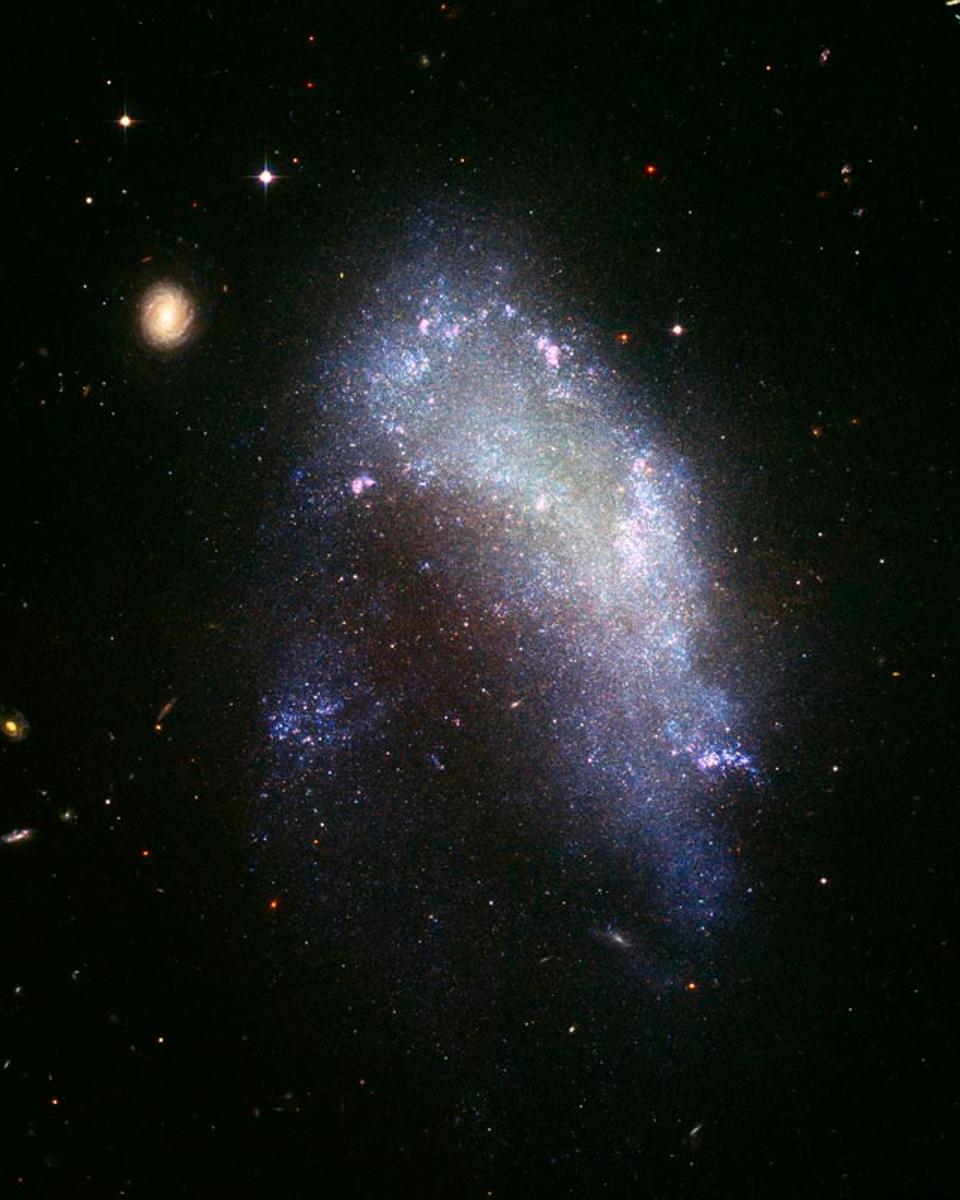
NGC 1427A: Galaxy in Motion
In this tantalizing image , young blue star clusters and pink star-forming regions abound in NGC 1427A, a galaxy in motion. The small irregular galaxy's swept back outline points…
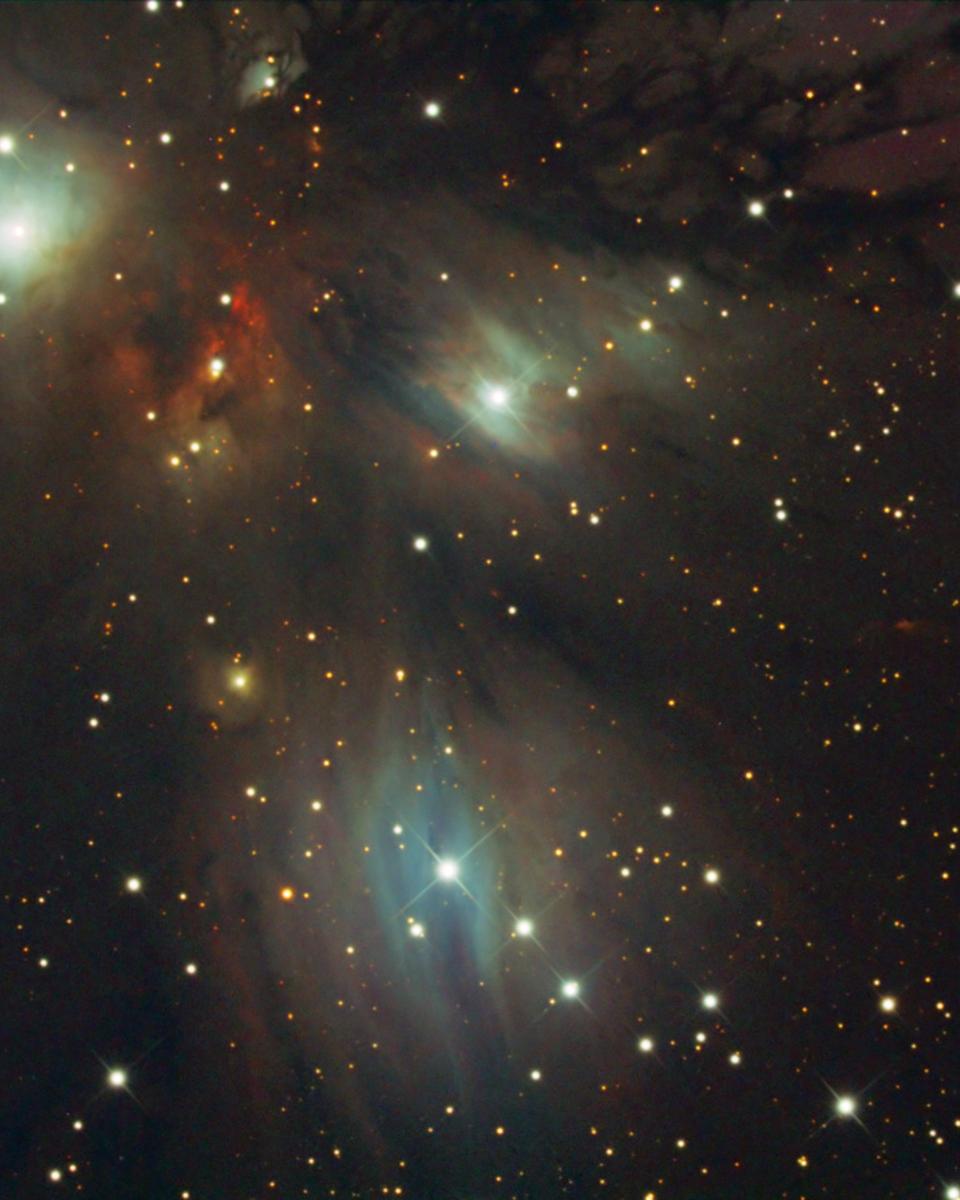
Still Life with NGC 2170
In this beautiful celestial still life composed with a cosmic brush, dusty nebula NGC 2170 shines at the upper left. Reflecting the light of nearby hot stars, NGC 2170 is joined…
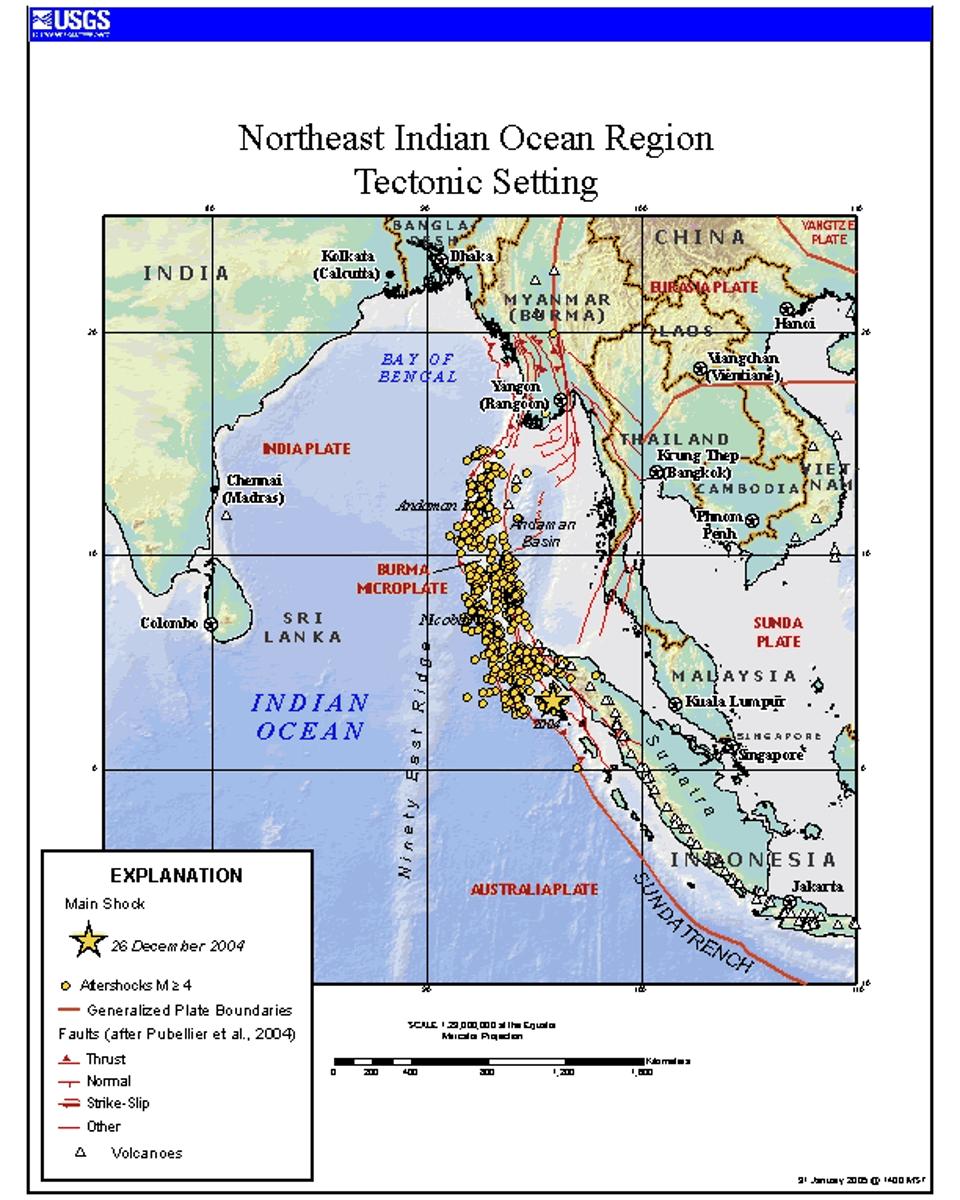
The Powerful Sumatra-Andaman Islands Earthquake
December's 9.0 earthquake has likely shortened Earth's day by about three microsecond s and may also have tweaked Earth's rotational wobble . The megathrust earthquake occurred as…
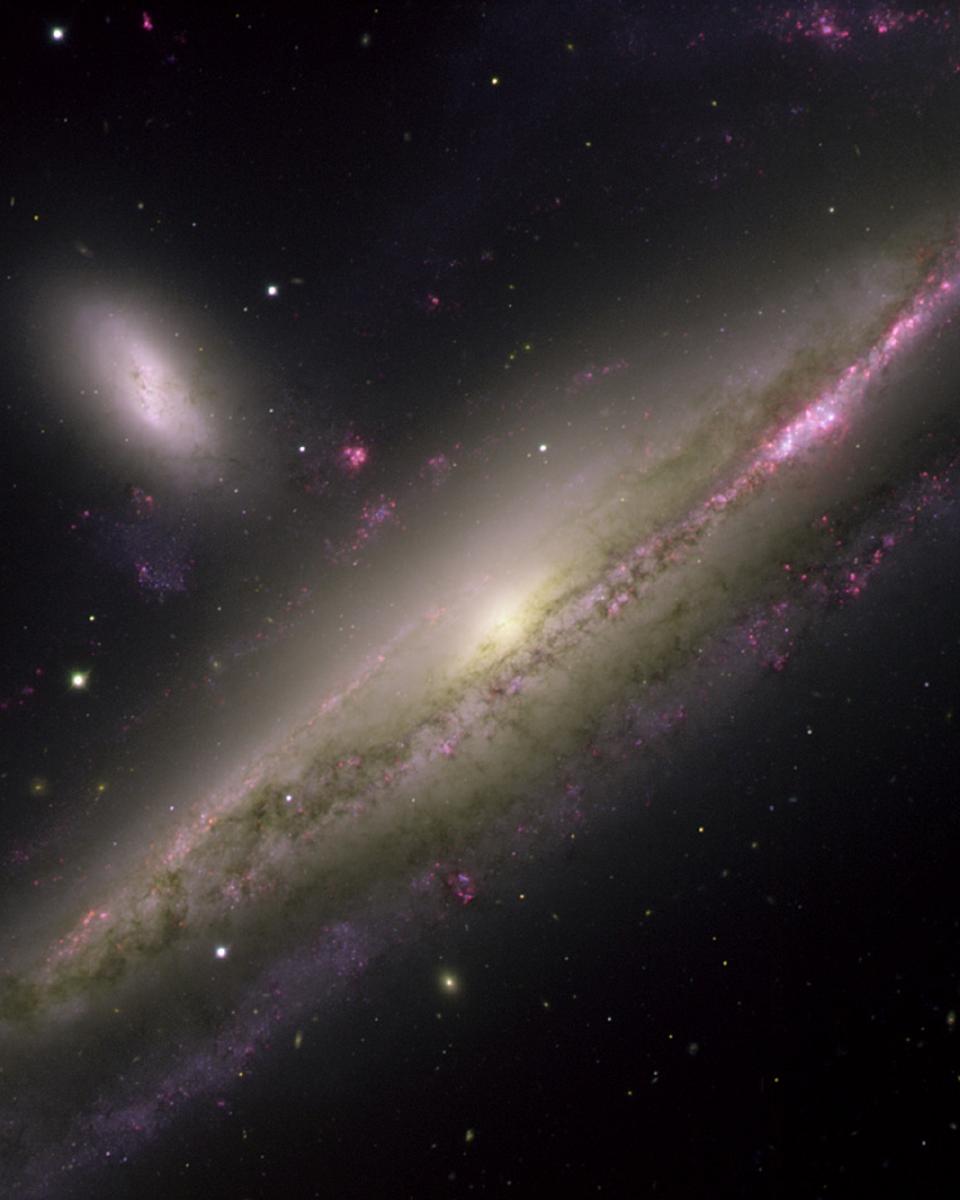
NGC 1531/2: Interacting Galaxies
This dramatic image of an interacting pair of galaxies was made using 8-meter Gemini South telescope at Cerro Pachon , Chile . NGC 1531 is the background galaxy with a bright core…
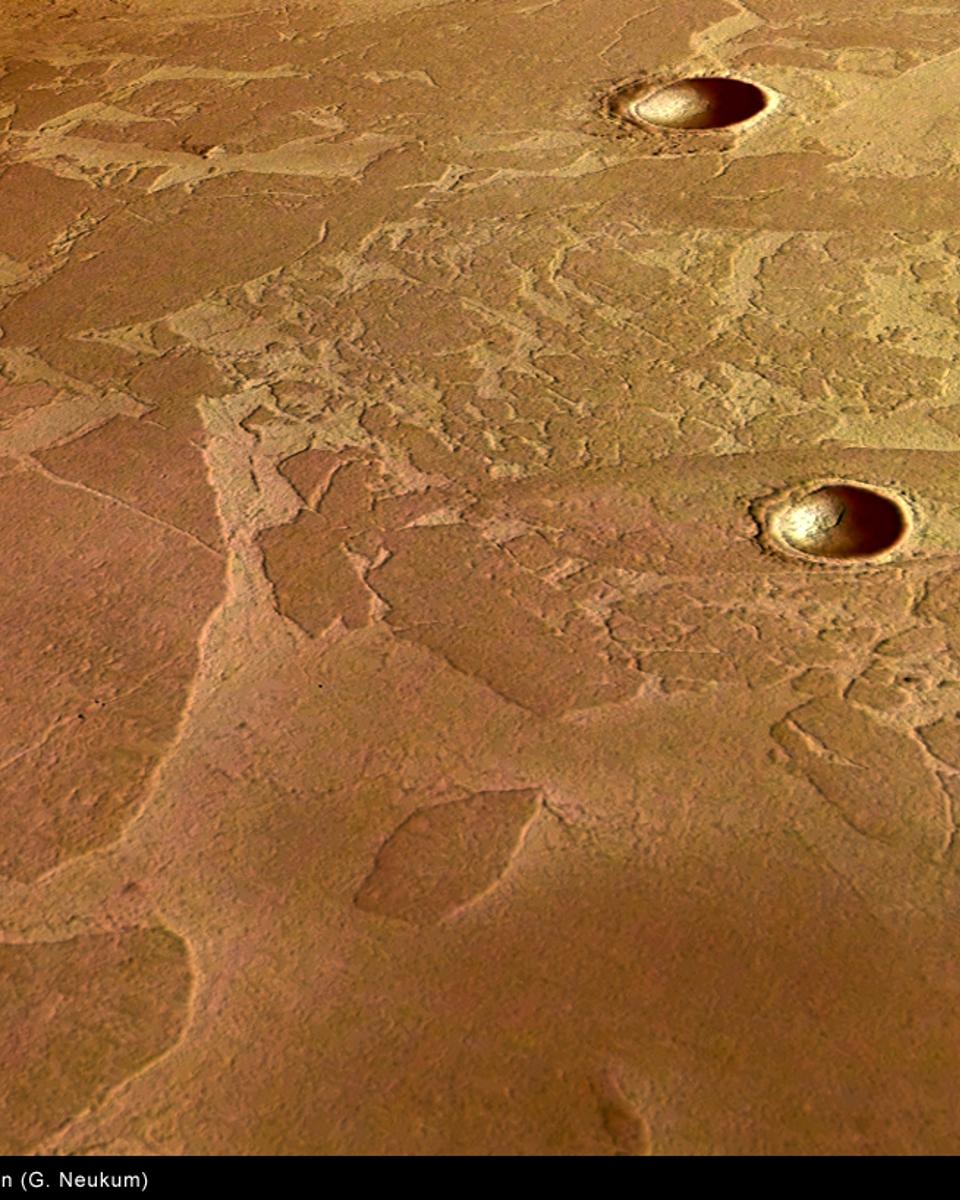
Unusual Plates on Mars
What are those unusual plates on Mars? A leading current interpretation holds that they are blocks of ice floating on a recently frozen sea covered by dust. The unusual plates…
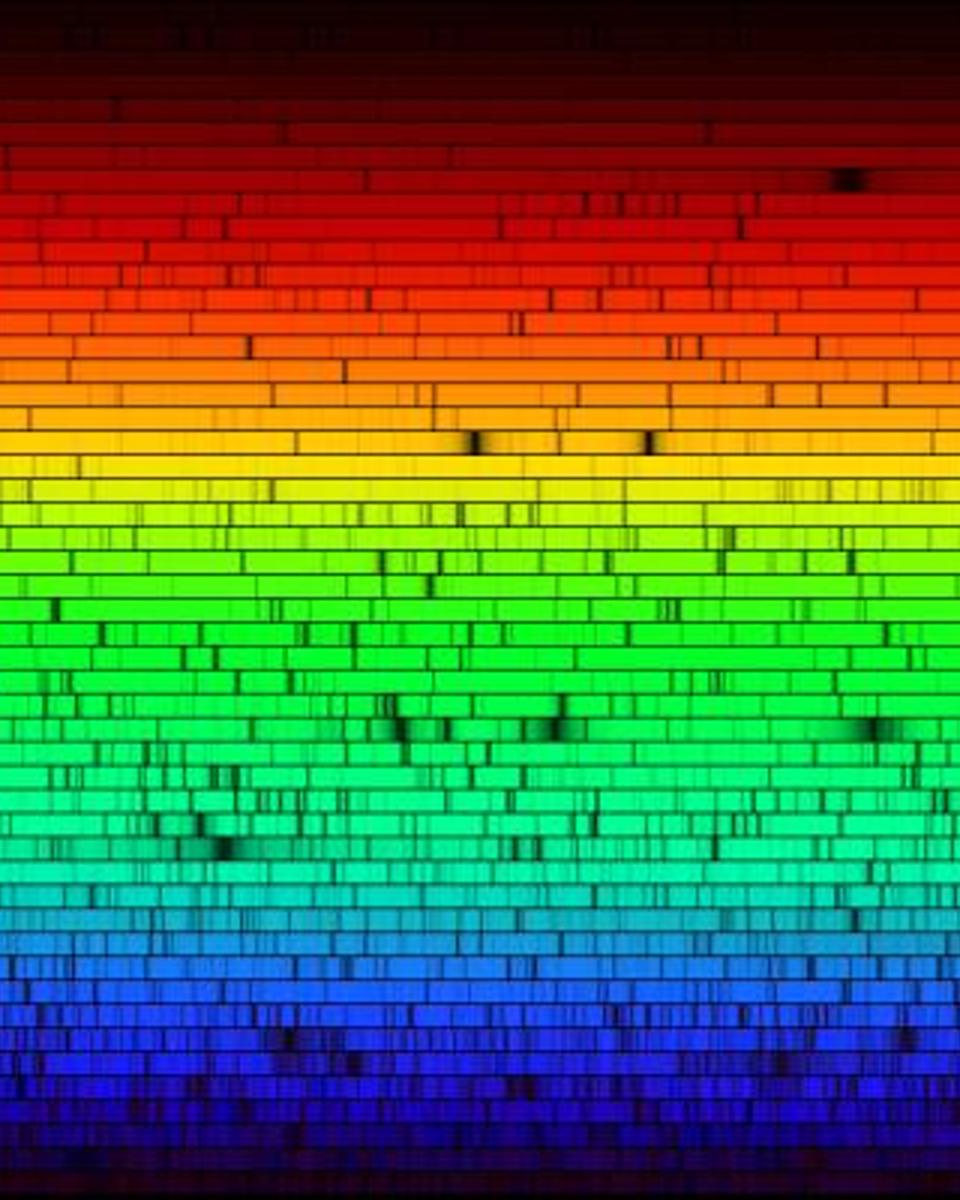
The Solar Spectrum
It is still not known why the Sun's light is missing some colors. Shown above are all the visible colors of the Sun , produced by passing the Sun's light through a prism -like…
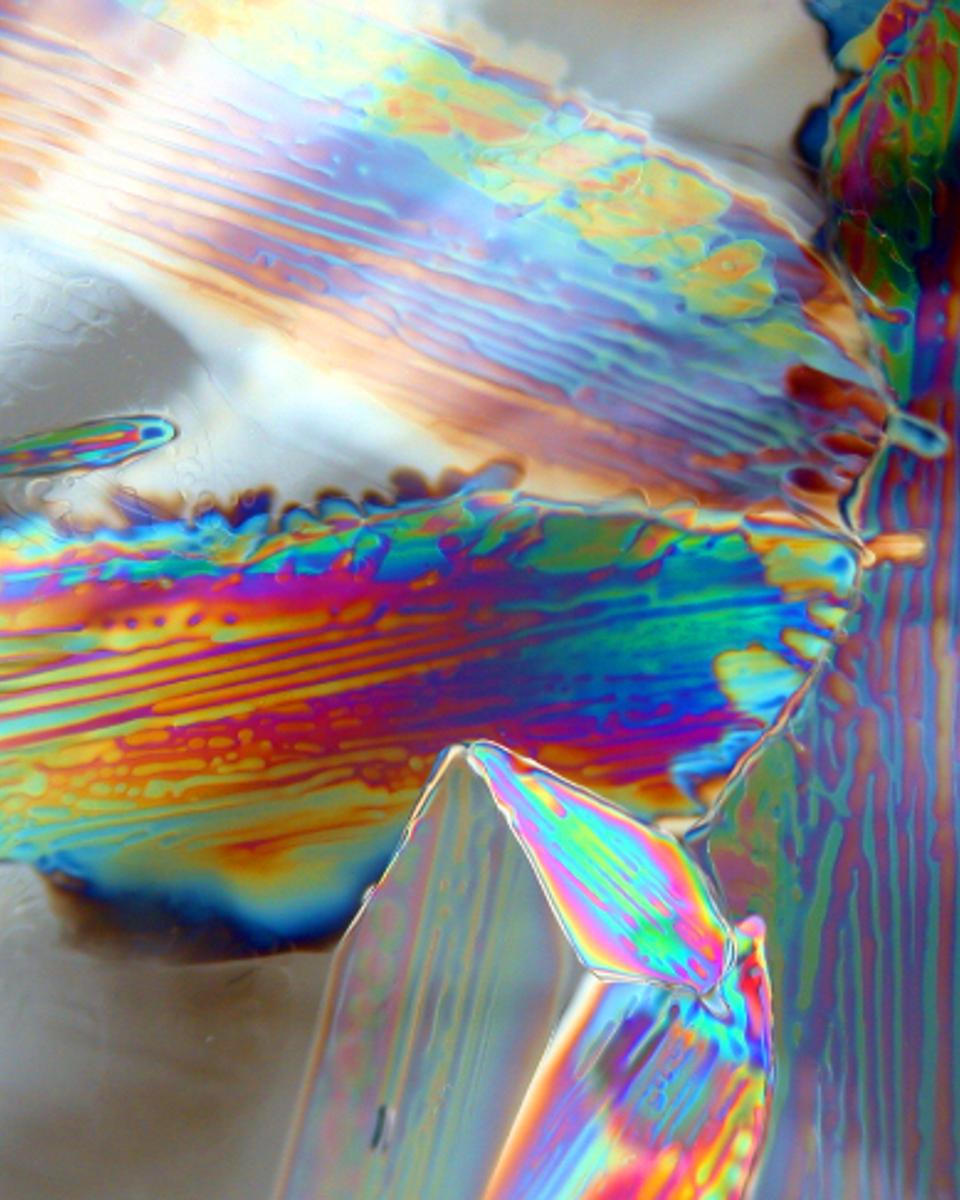
Frizion Illume
Scientific images of cosmic dust clouds or even frozen water can be esthetic too. In fact, this picture of thin layers of forming ice crystals uses a scientific understanding of…
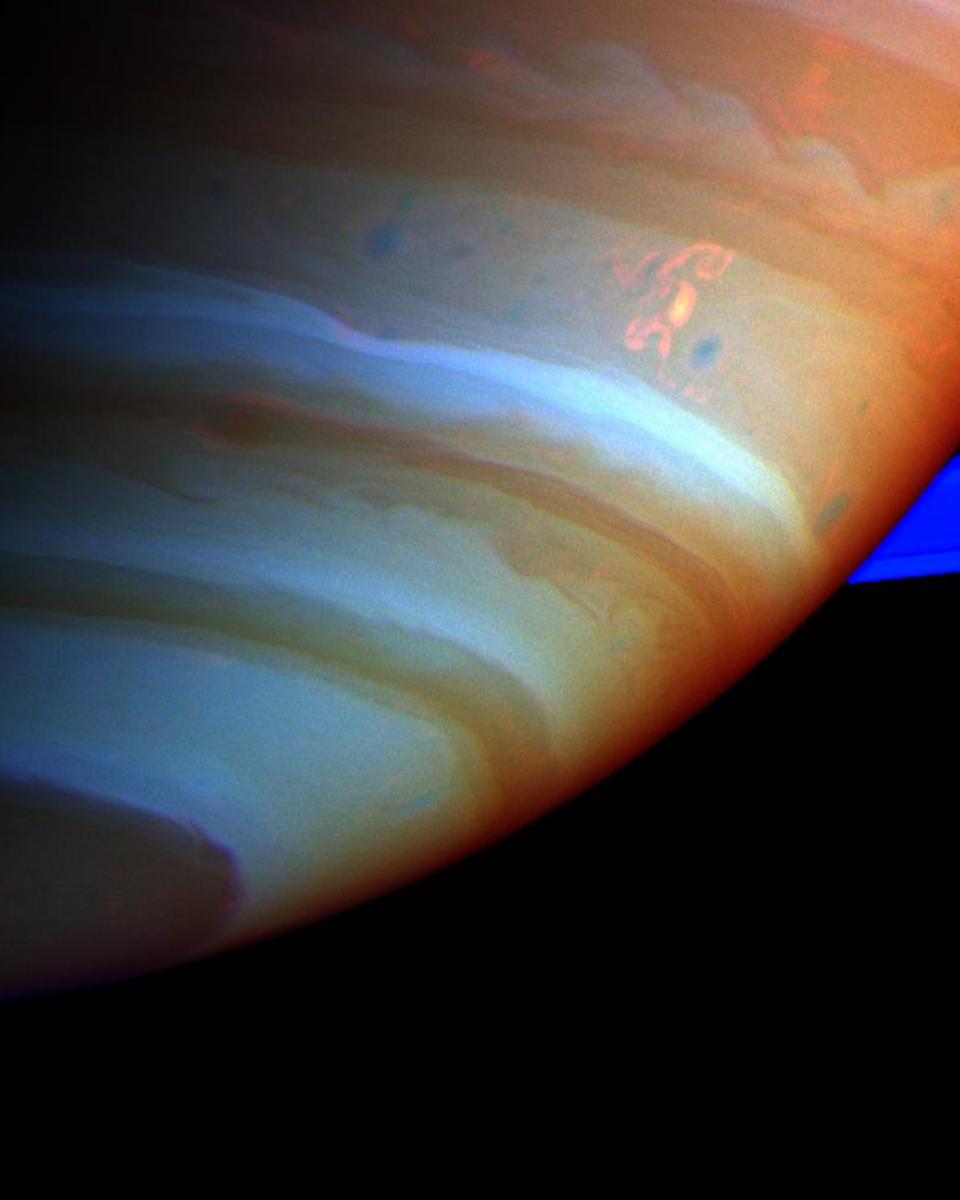
Saturn's Dragon Storm
Dubbed the “Dragon Storm” , convoluted, swirling cloud features are tinted orange in this false-color, near-infrared image of Saturn's southern hemisphere. In one of a series of…
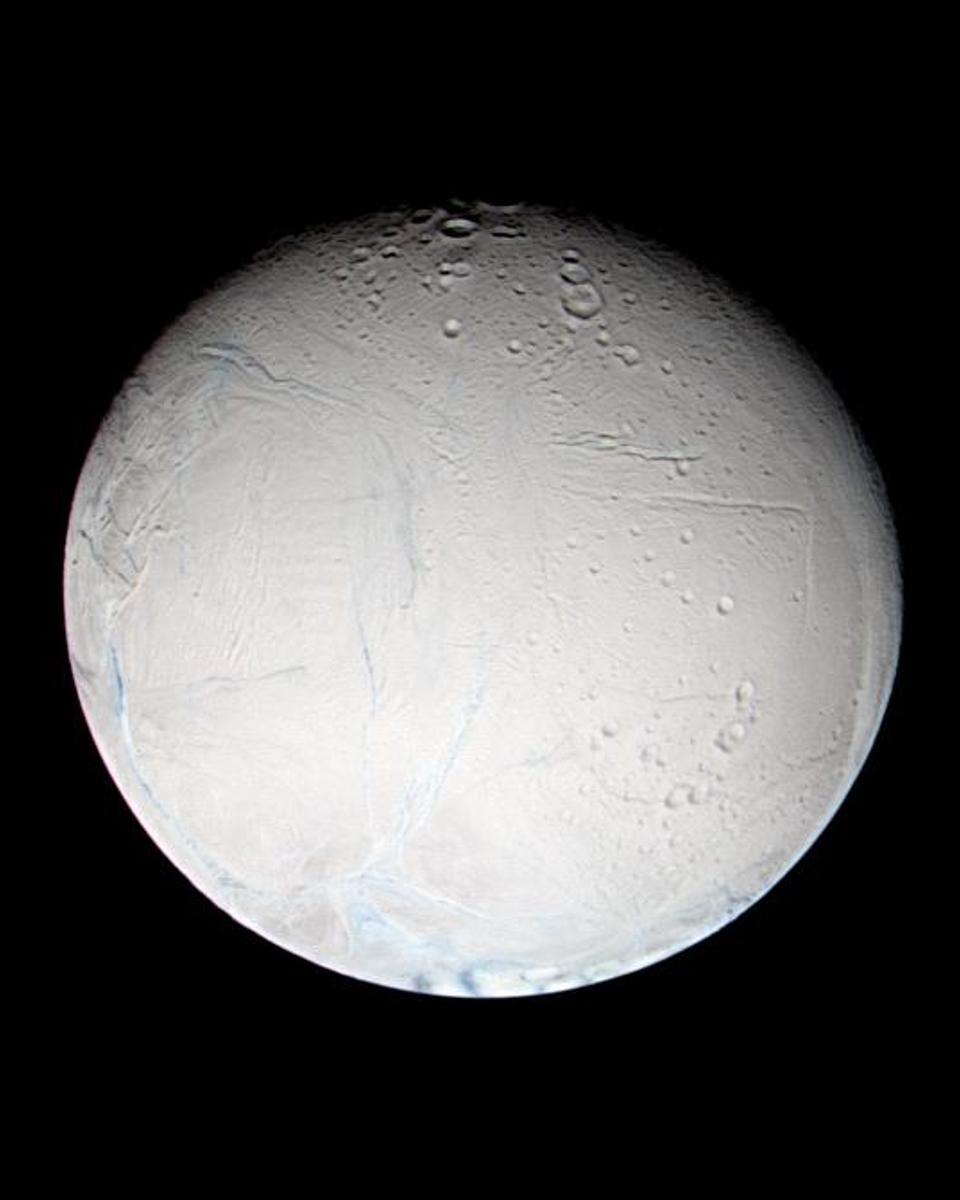
Ski Enceladus
Small, icy, inner moon of Saturn , Enceladus is only about 500 kilometers in diameter. But the distant world does reflect over 90 percent of the sunlight it receives, giving its…
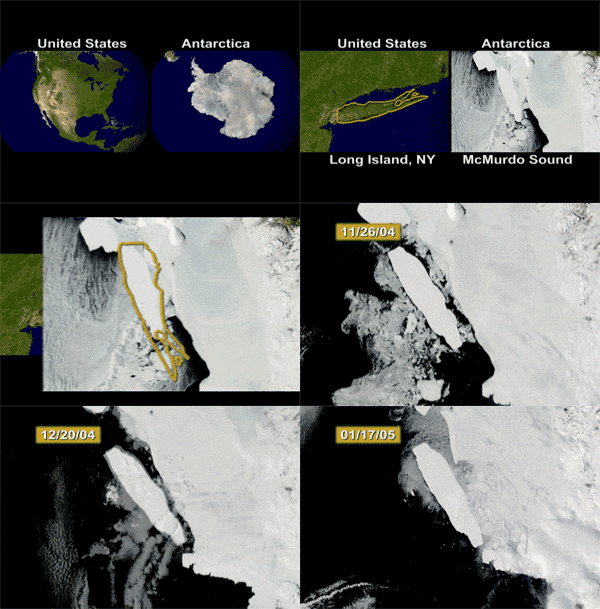
Voyage of an Antarctic Iceberg
What if part of New York broke off and slammed into New Jersey ? Both being anchored land masses , that is unlikely to happen, but an event of that size scale did occur off the…
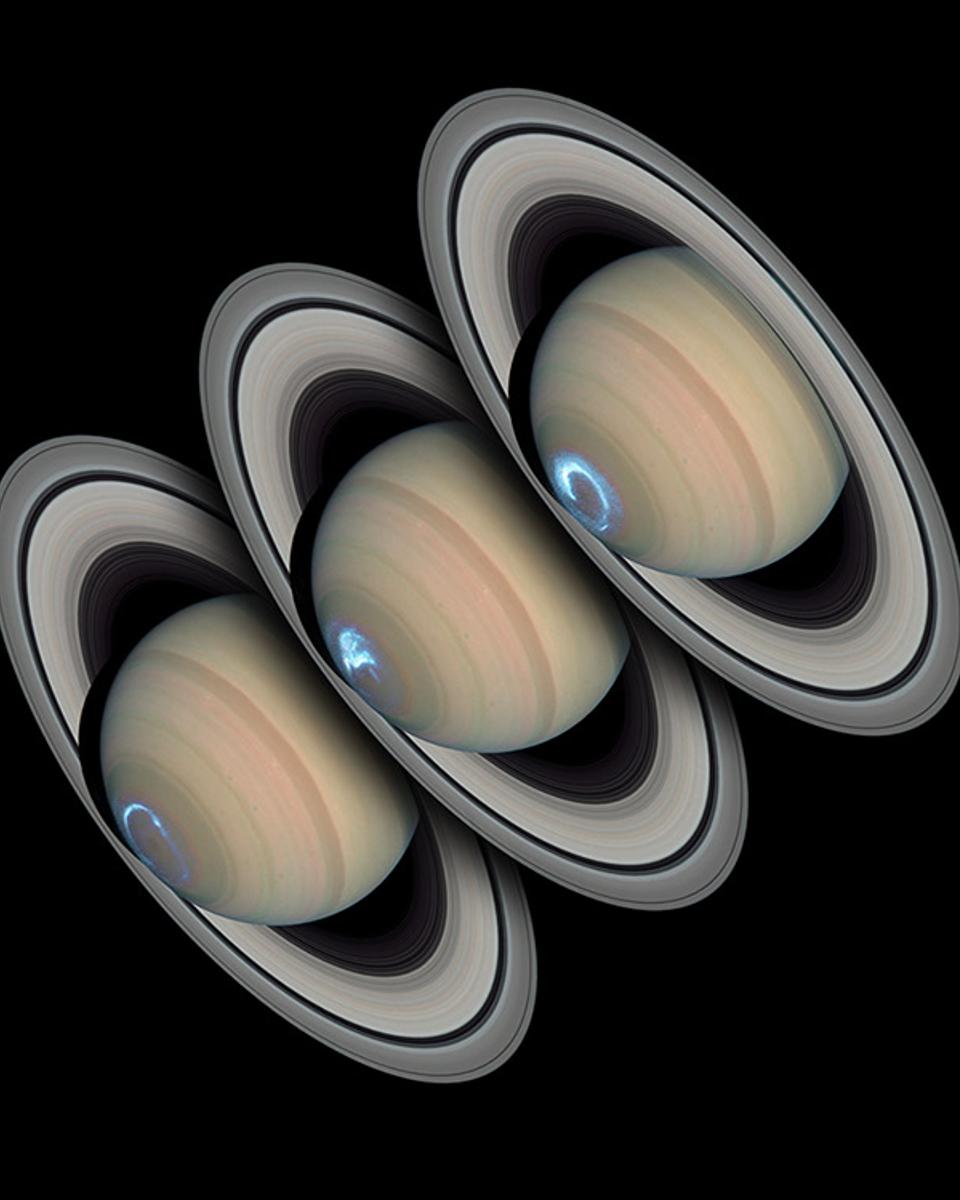
Persistent Saturnian Auroras
Are Saturn's auroras like Earth's? To help answer this question, the Hubble Space Telescope and the Cassini spacecraft monitored Saturn's South Pole simultaneously as Cassini…
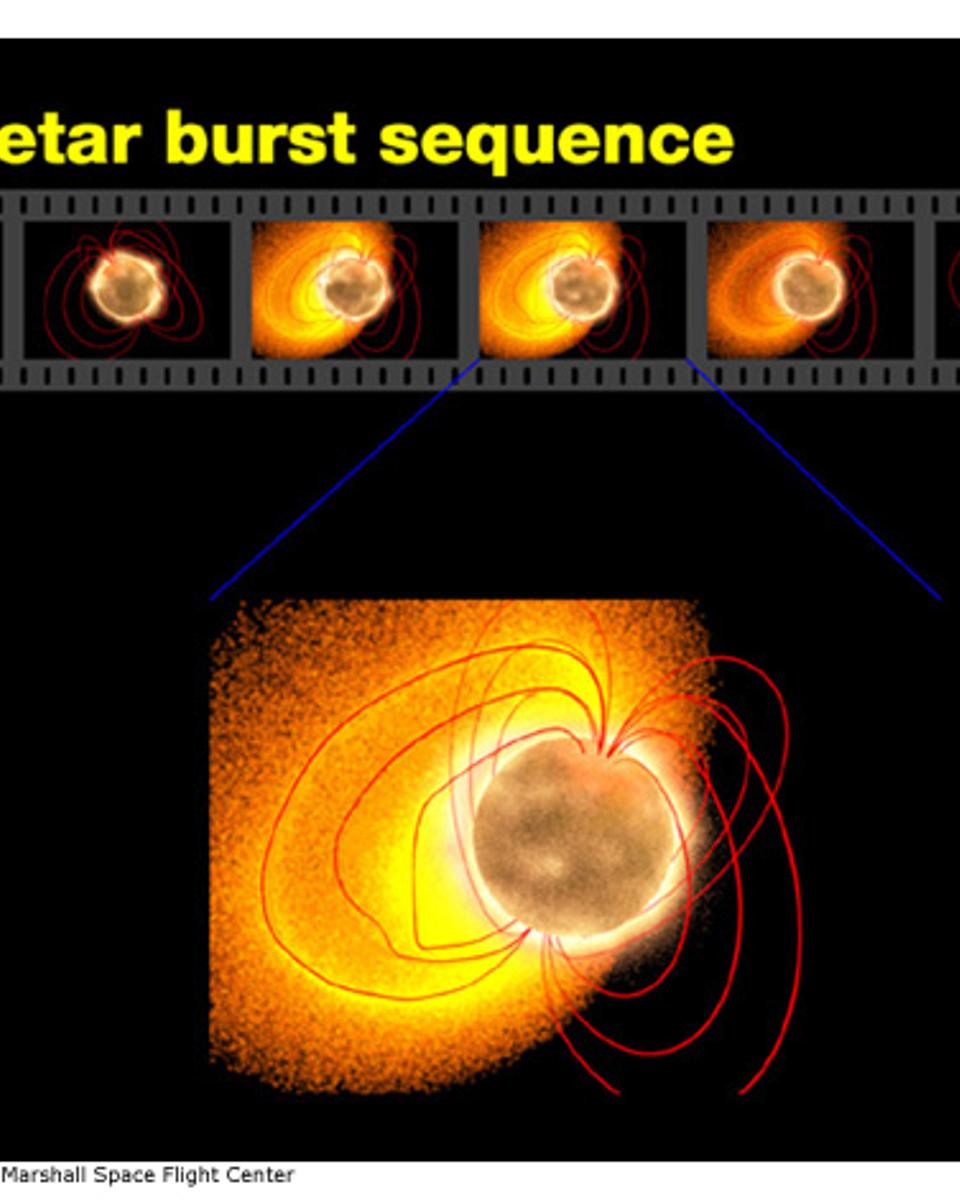
Galactic Magnetar Throws Giant Flare
Was the brightest Galactic blast yet recorded a key to connecting two types of celestial explosions? Last December, a dense sheet of gamma rays only a few times wider than the…
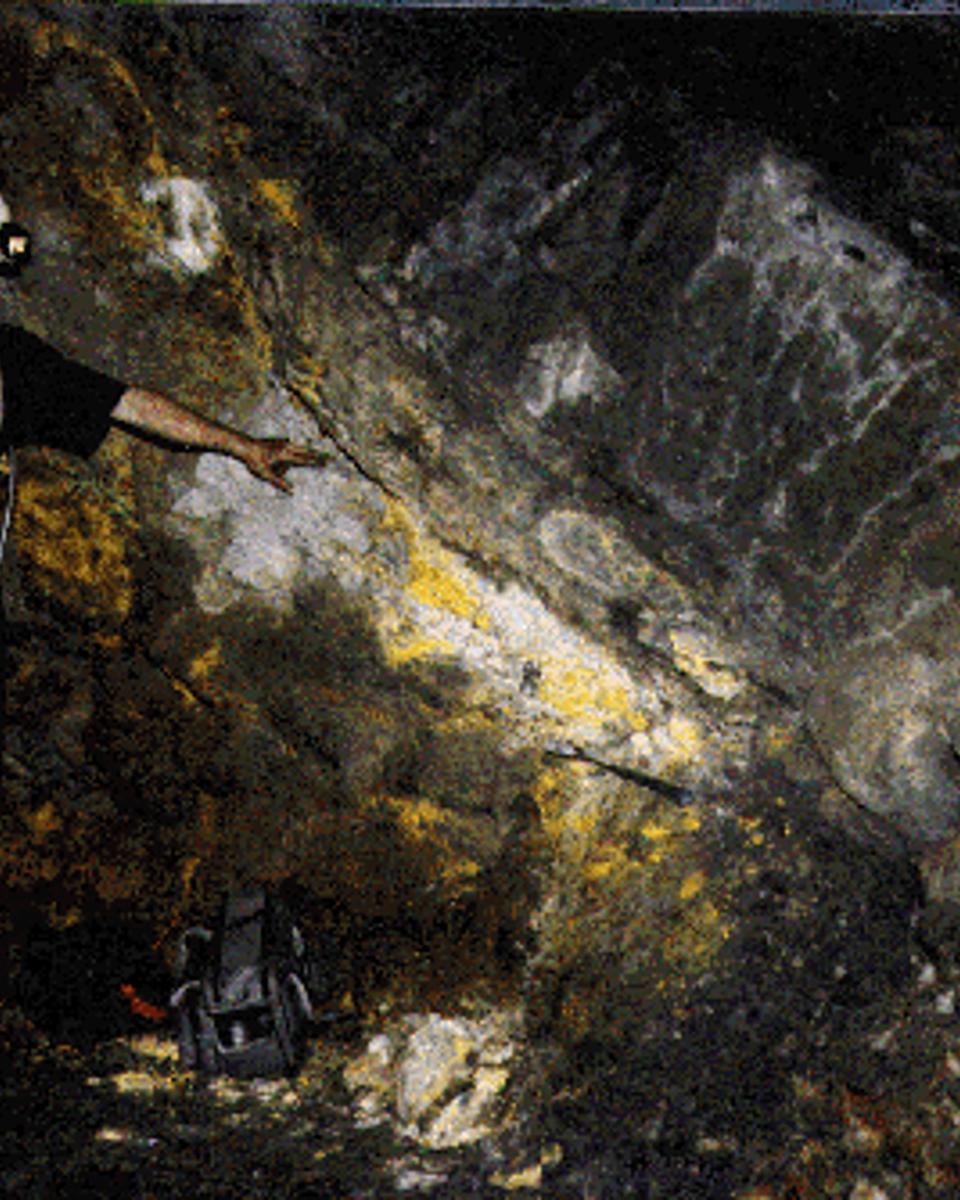
Oklo: Ancient African Nuclear Reactors
The remnants of nuclear reactors nearly two billion years old were found in the 1970s in Africa. These reactors are thought to have occurred naturally. No natural reactors exist…
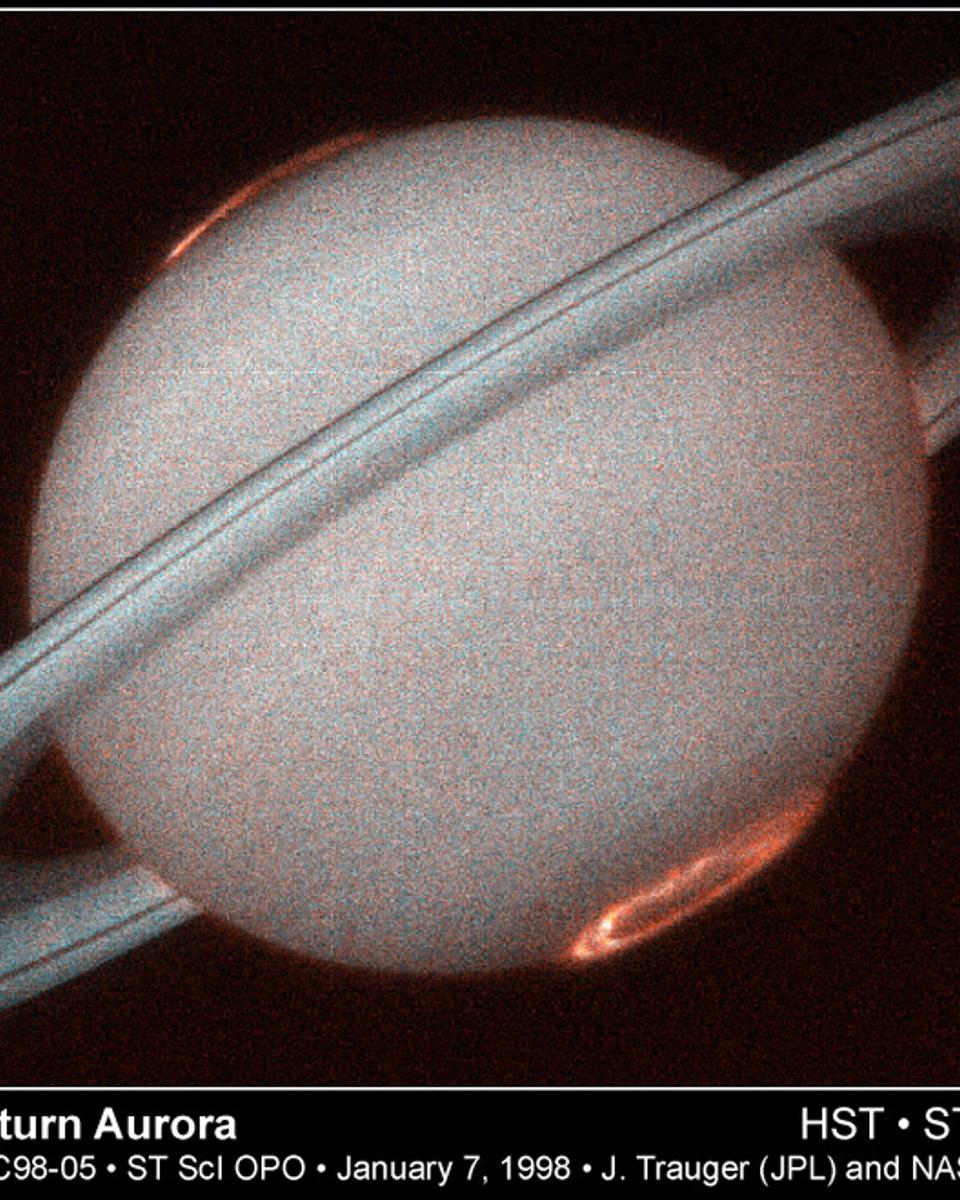
Saturnian Aurora
Saturn's Rings are one of the most spectacular sights in the solar system. Still, this image from the Hubble Space Telescope offers a striking view of another kind of ring around…
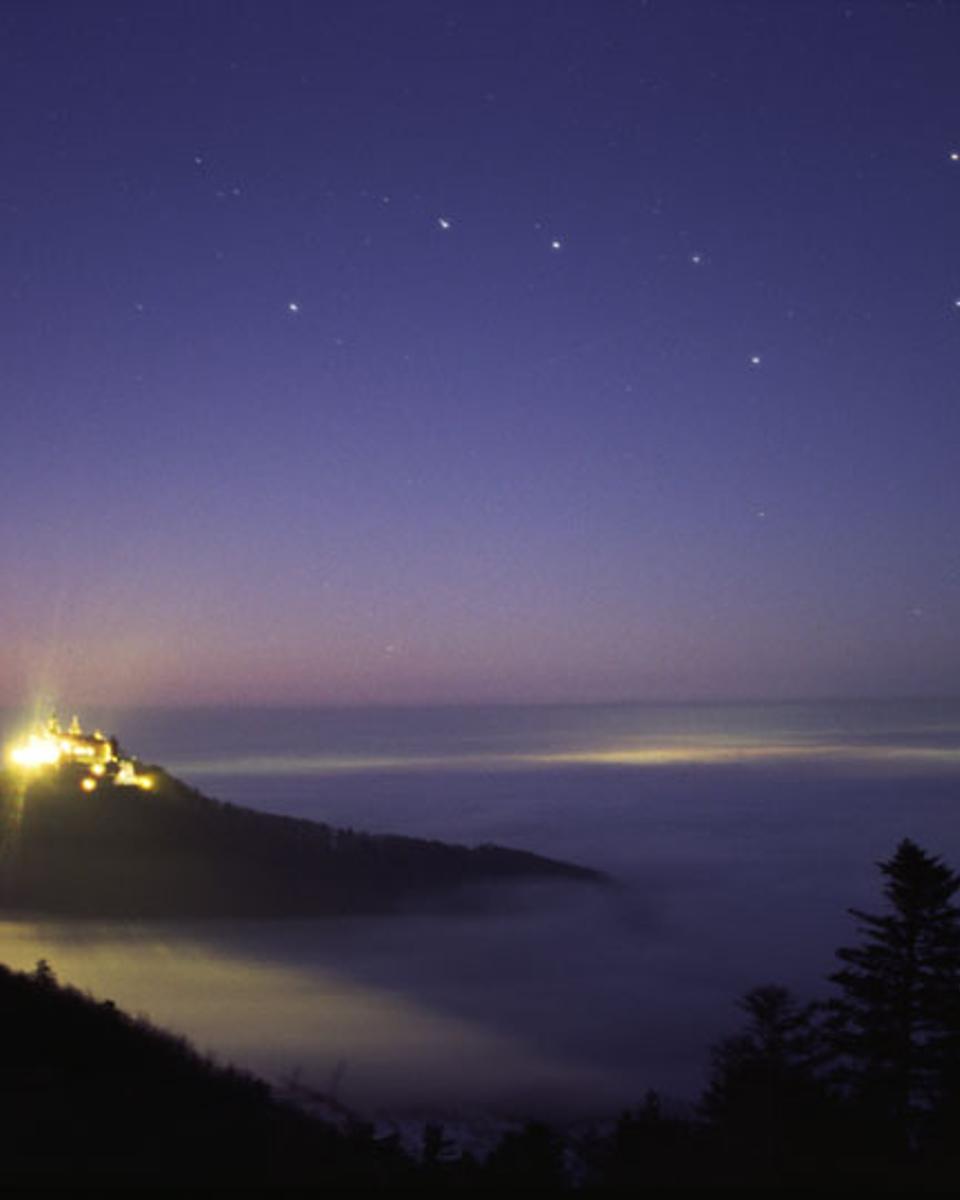
Big Dipper Castle
The stars of the big dipper, a well known asterism in the constellation Ursa Major , are easy to recognize in this dramatic skyscape . In fact, northern hemisphere skygazers often…
Viewing discoveries from 13 March 2005 through 18 February 2005.