Browse NASA Astronomy Picture of the Day archive by date and media: Archive Discoveries
Browse the NASA APOD archive without needing the exact date first. Filter by media type and keep moving deeper into older images and videos.
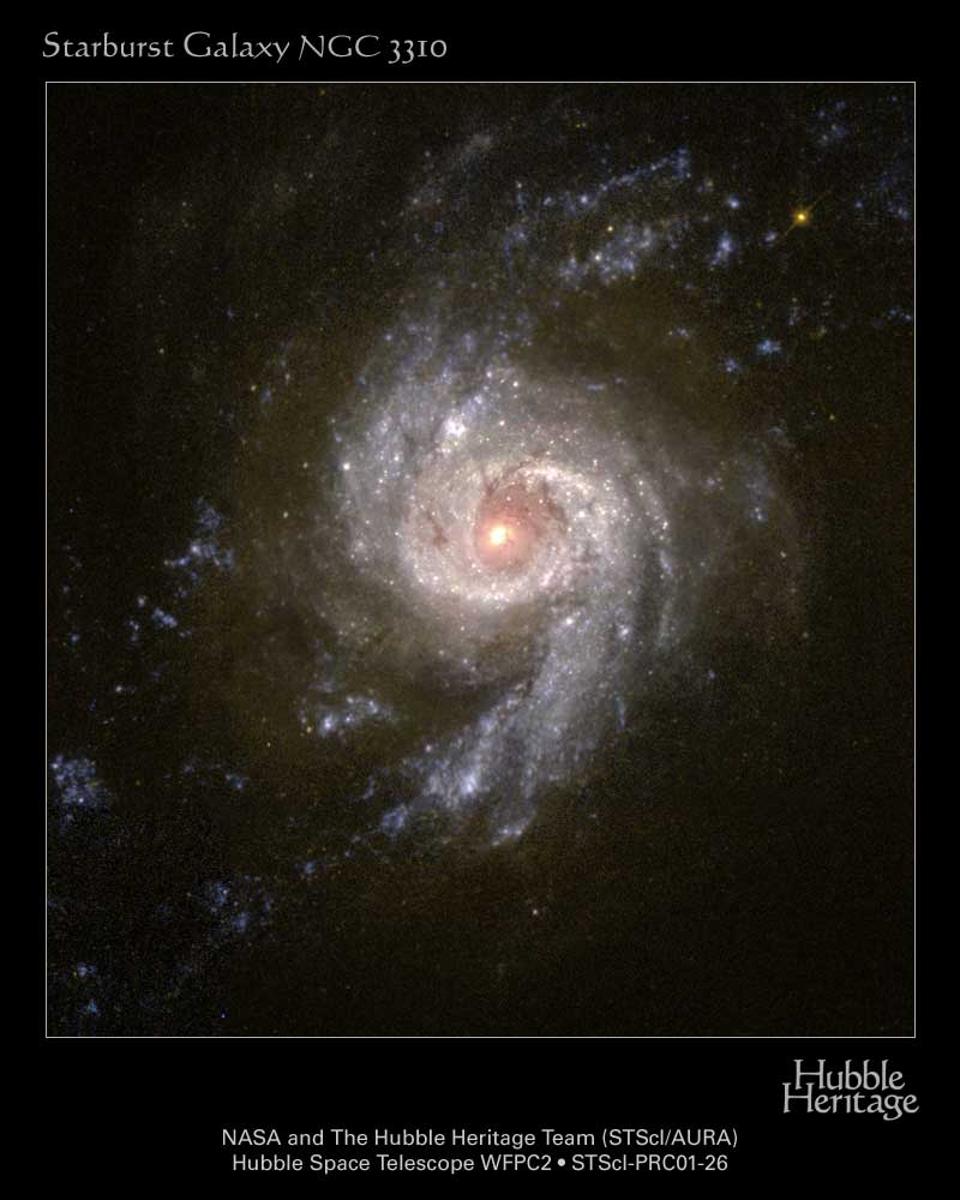
Spiral Galaxy NGC 3310 Across the Visible
The party is still going on in spiral galaxy NGC 3310. Roughly 100 million years ago, NGC 3310 likely collided with a smaller galaxy causing the large spiral galaxy to light up…
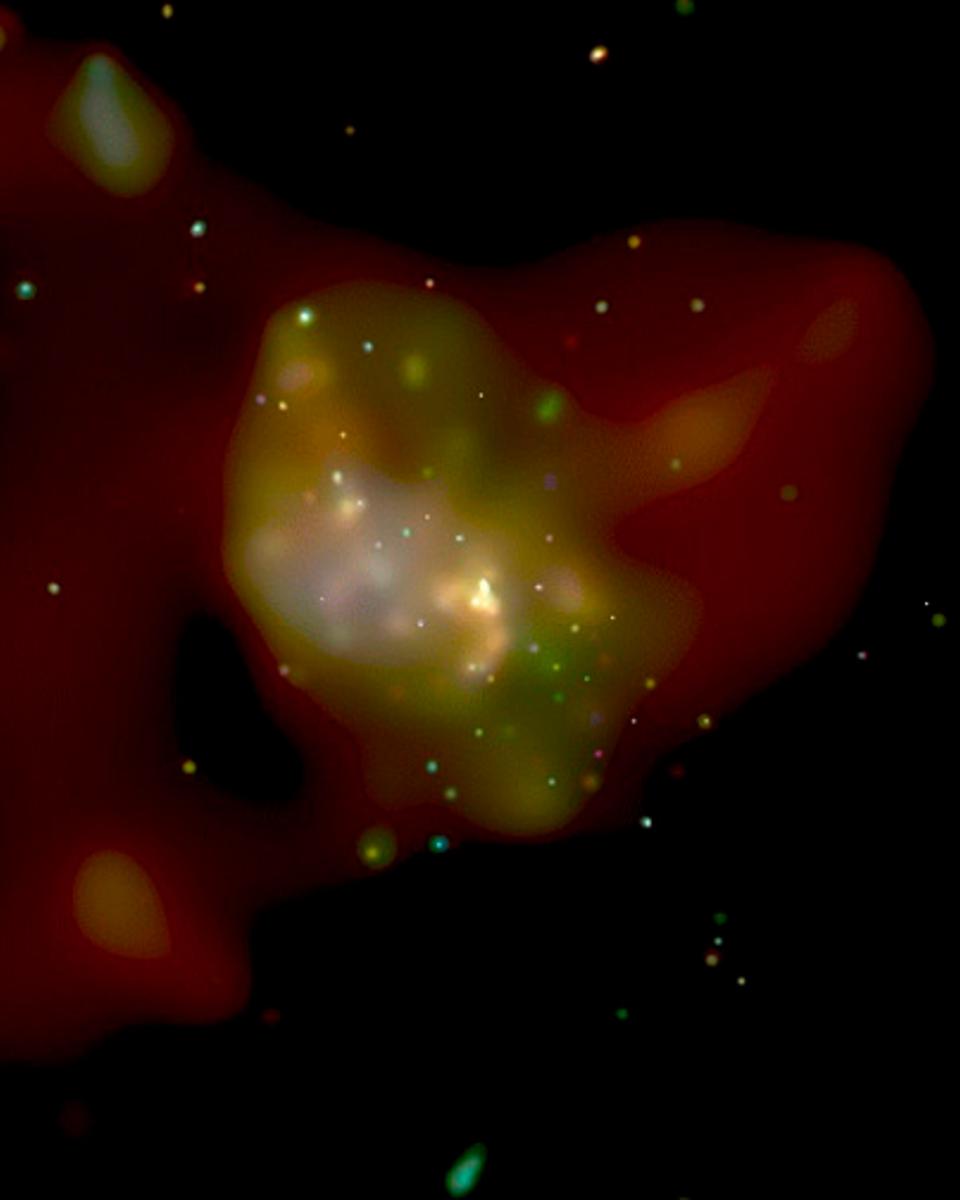
Galactic Center Flicker Indicates Black Hole
Why would the center of our Galaxy flicker? Many astronomers believe the only credible answer involves a black hole . During observations of Sagittarius A with the orbiting…
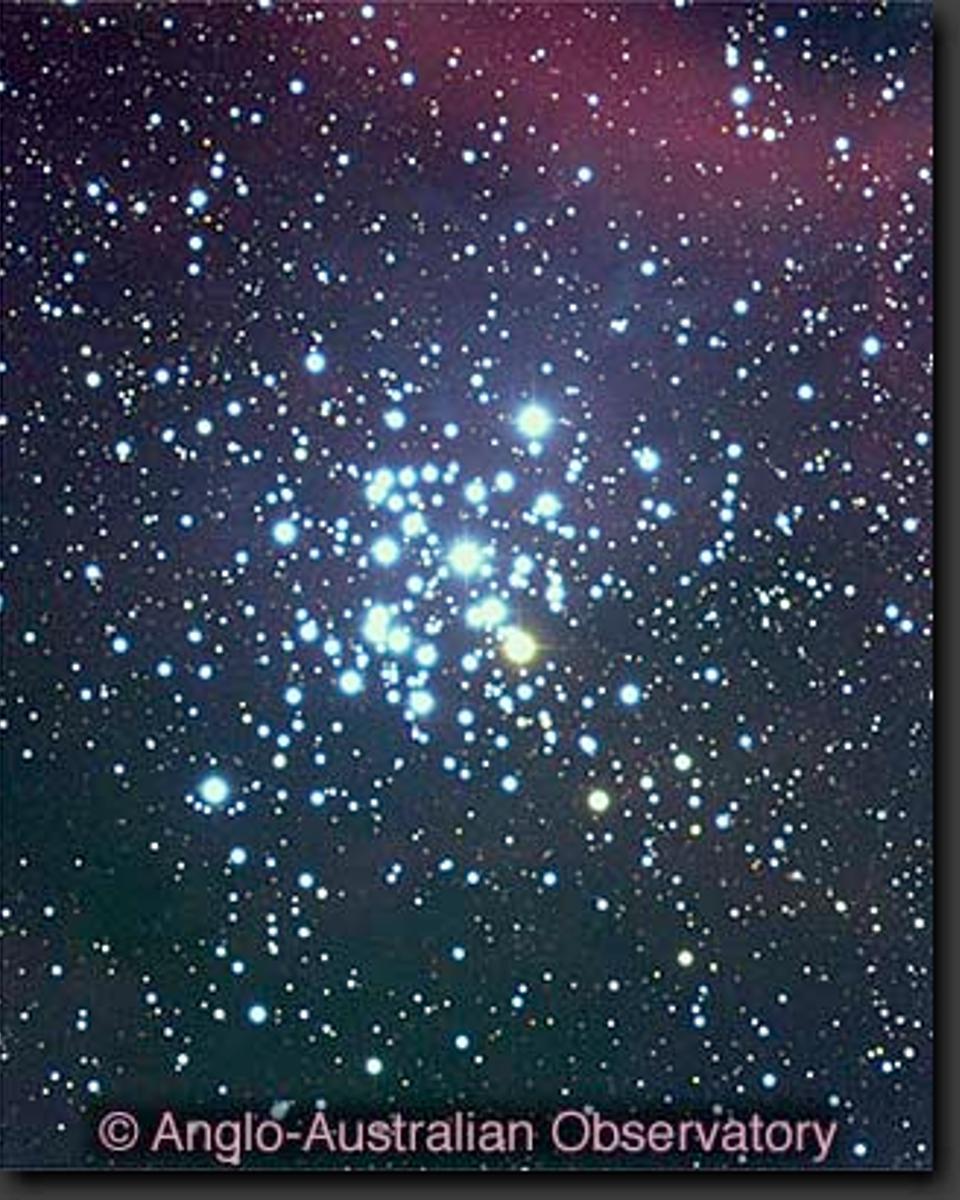
NGC 3293: A Bright Young Open Cluster
Hot blue stars shine brightly in this beautiful, recently formed galactic or “open” star cluster . Open cluster NGC 3293 is located in the constellation Carina , lies at a…
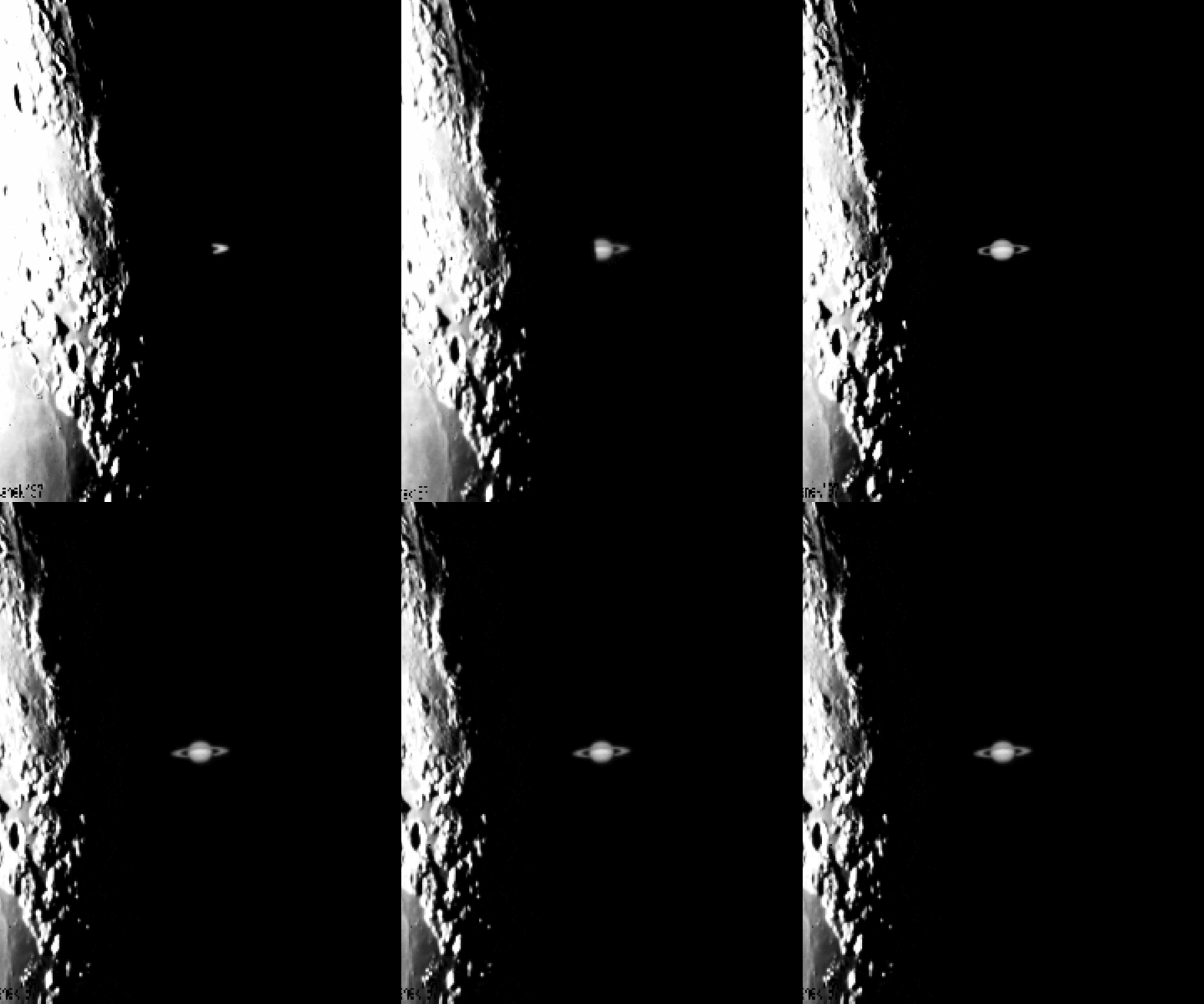
Moon Occults Saturn
On September 18, 1997, many stargazers in the U. S. were able to watch a lovely early morning lunar occultation as a bright Moon passed in front of Saturn. Using a 1.2 meter…
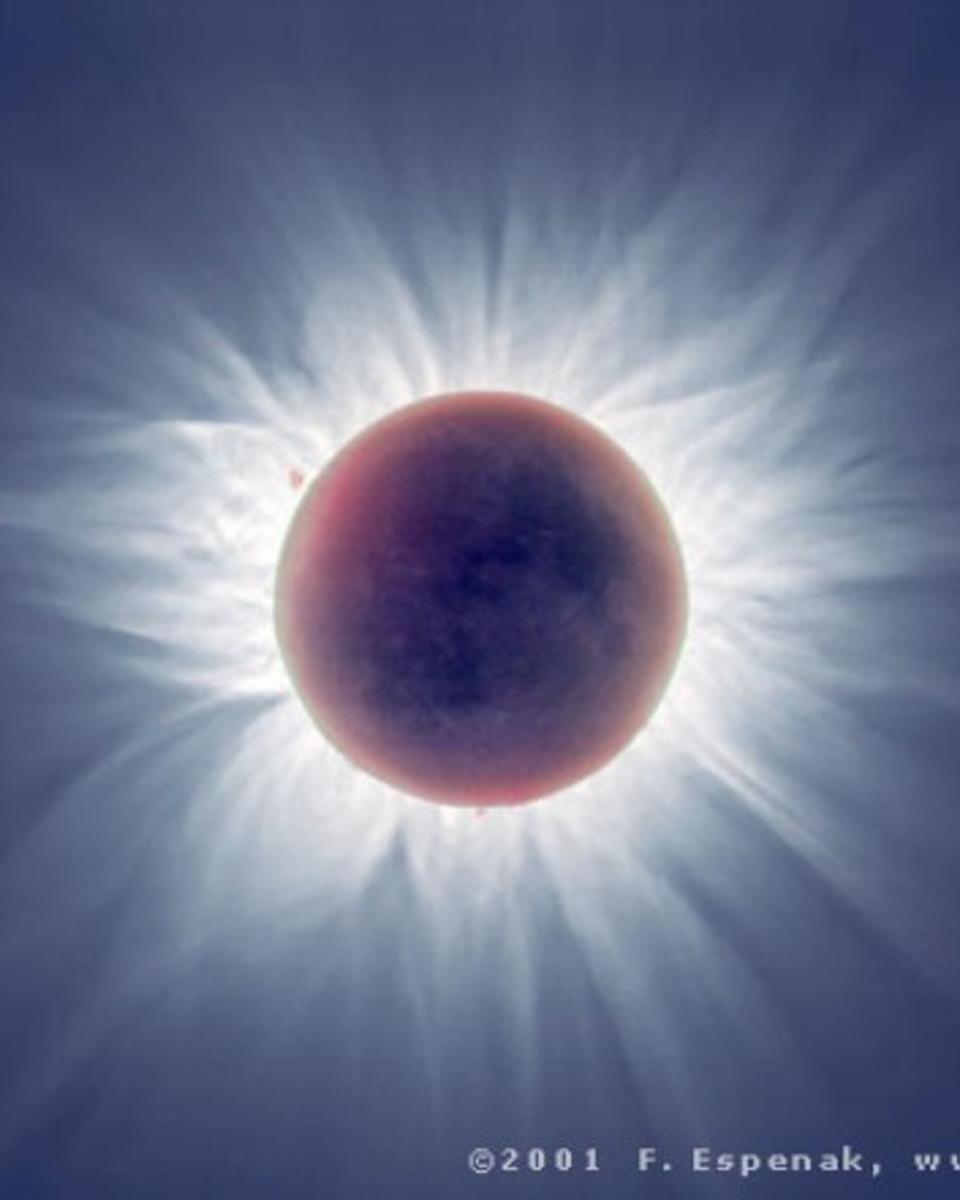
Moon AND Sun
Today's composite image was made from 22 separate pictures of the Moon and Sun all taken from Chisamba, Zambia during the total phase of the 2001 June 21 solar eclipse . The…
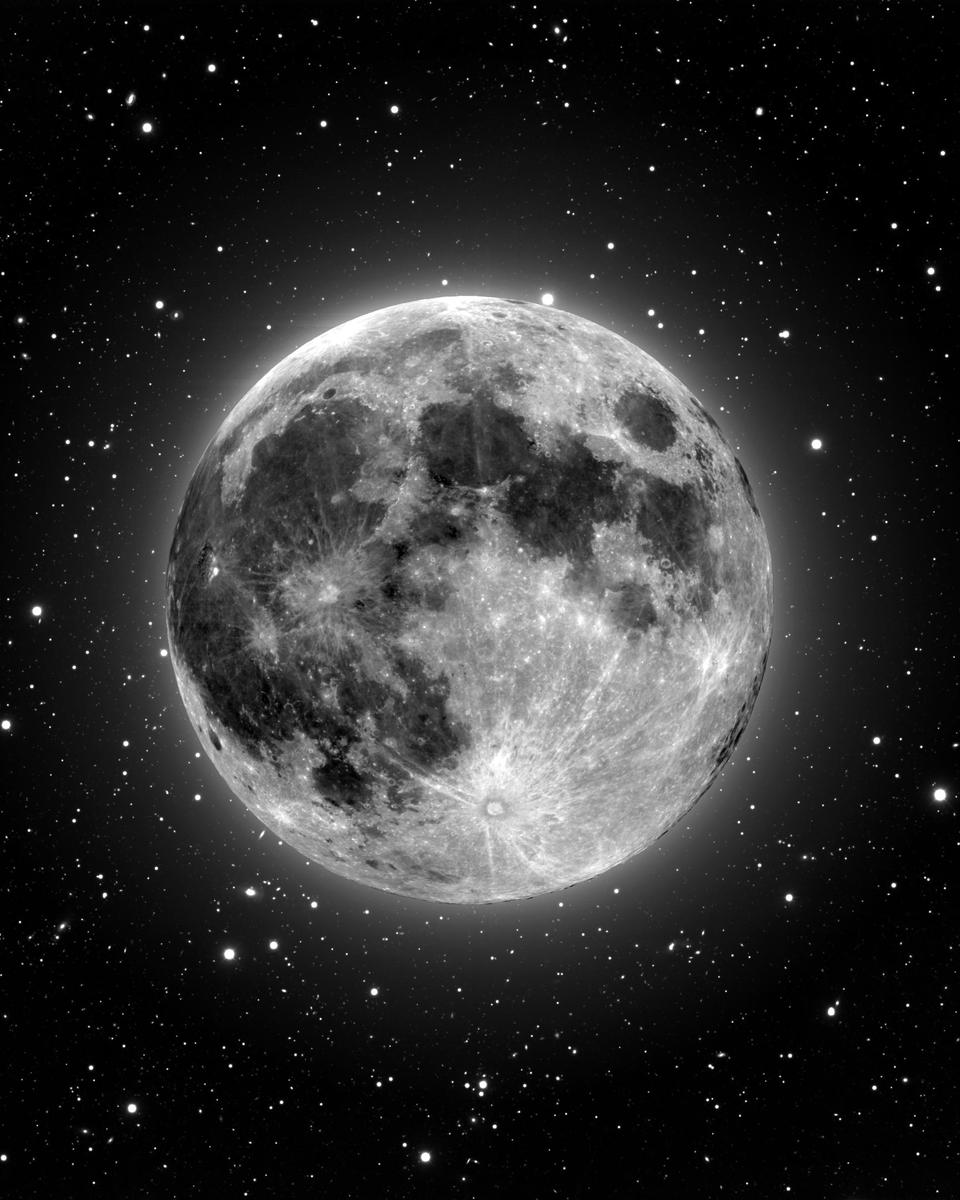
Moon AND Stars
Here's something you don't see too often ... a detailed picture of the full Moon surrounded by a rich field of background stars. It's true that bright moonlight scattered by the…
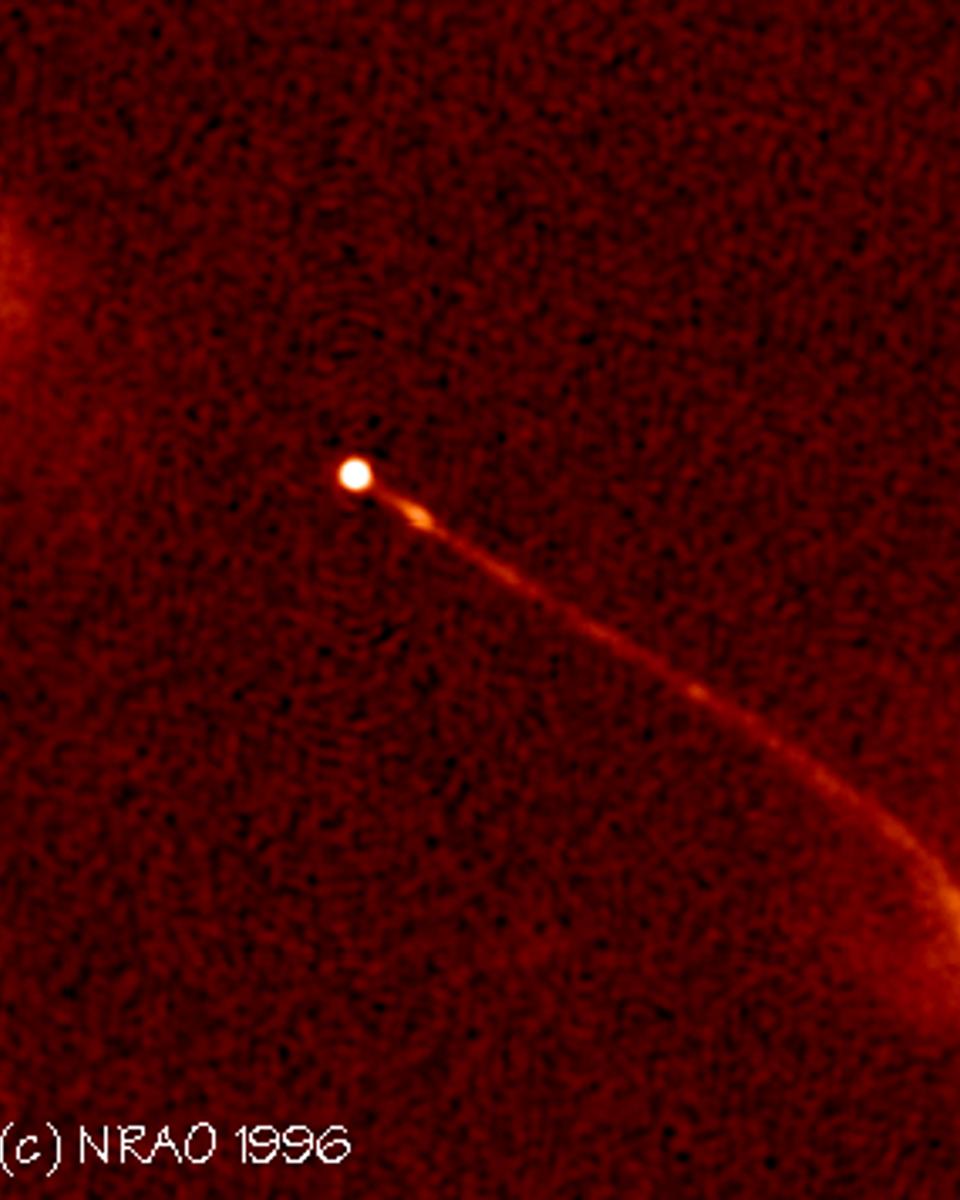
3C175: Quasar Cannon
3C175 is not only a quasar, it is a galaxy-fueled particle cannon. Visible as the central dot is quasar 3C175, the active center of a galaxy so distant that the light we see from…
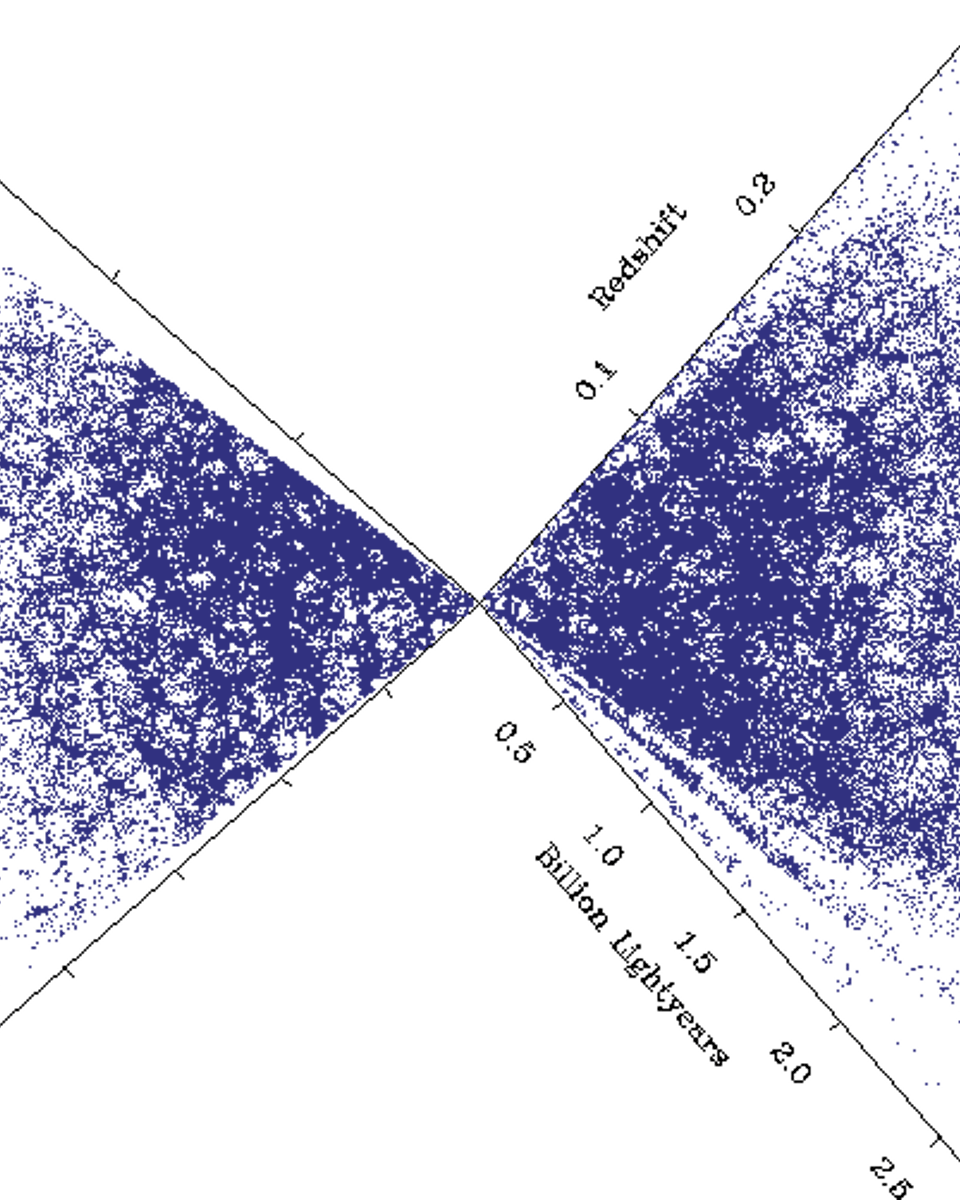
2dF Sees Waves of Galaxies
How are galaxies distributed in the universe? This question is of more than aesthetic interest because the answer likely holds clues to composition of the universe itself. The…
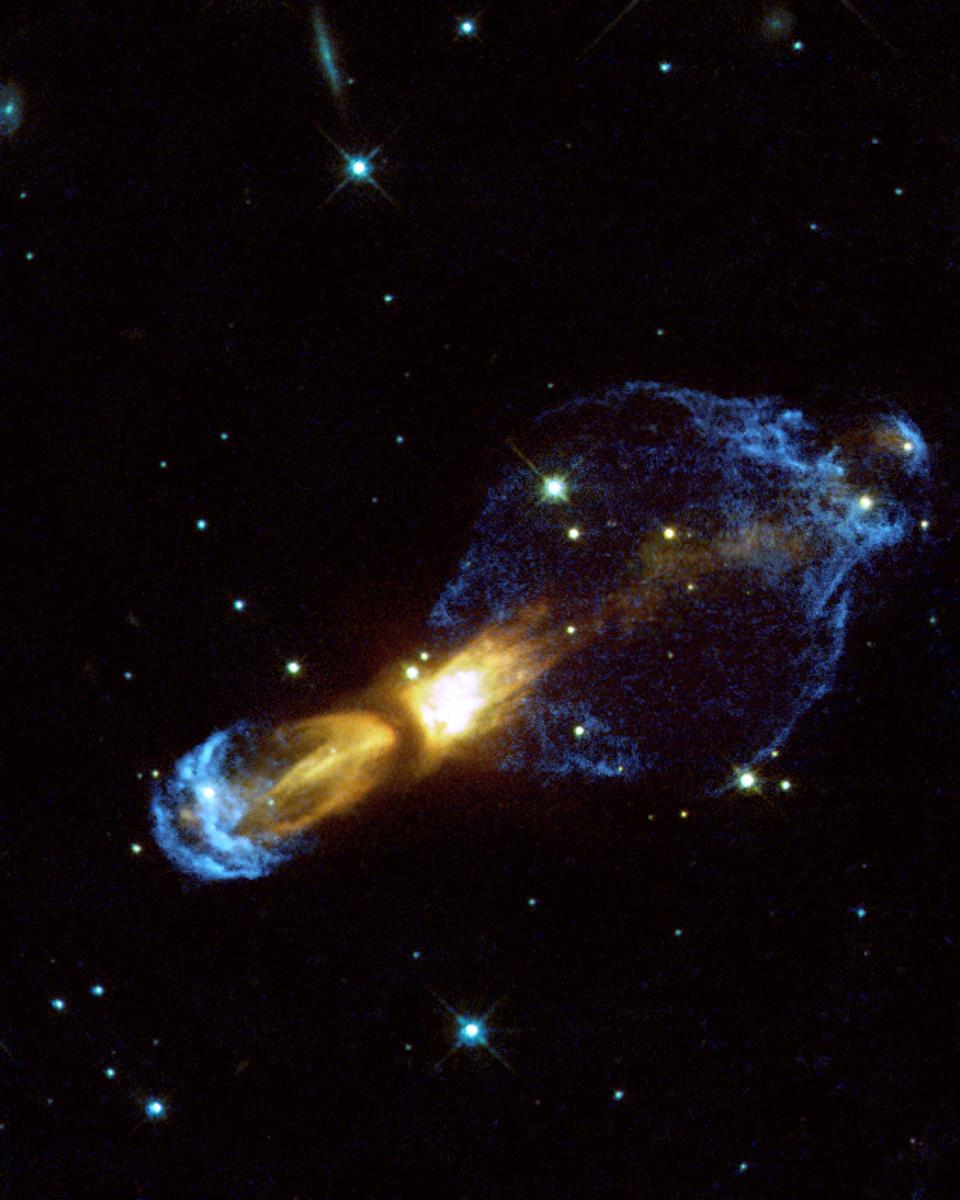
The Making of the Rotten Egg Nebula
Fast expanding gas clouds mark the end for a central star in the Rotten Egg Nebula . The once-normal star has run out of nuclear fuel , causing the central regions to contract…
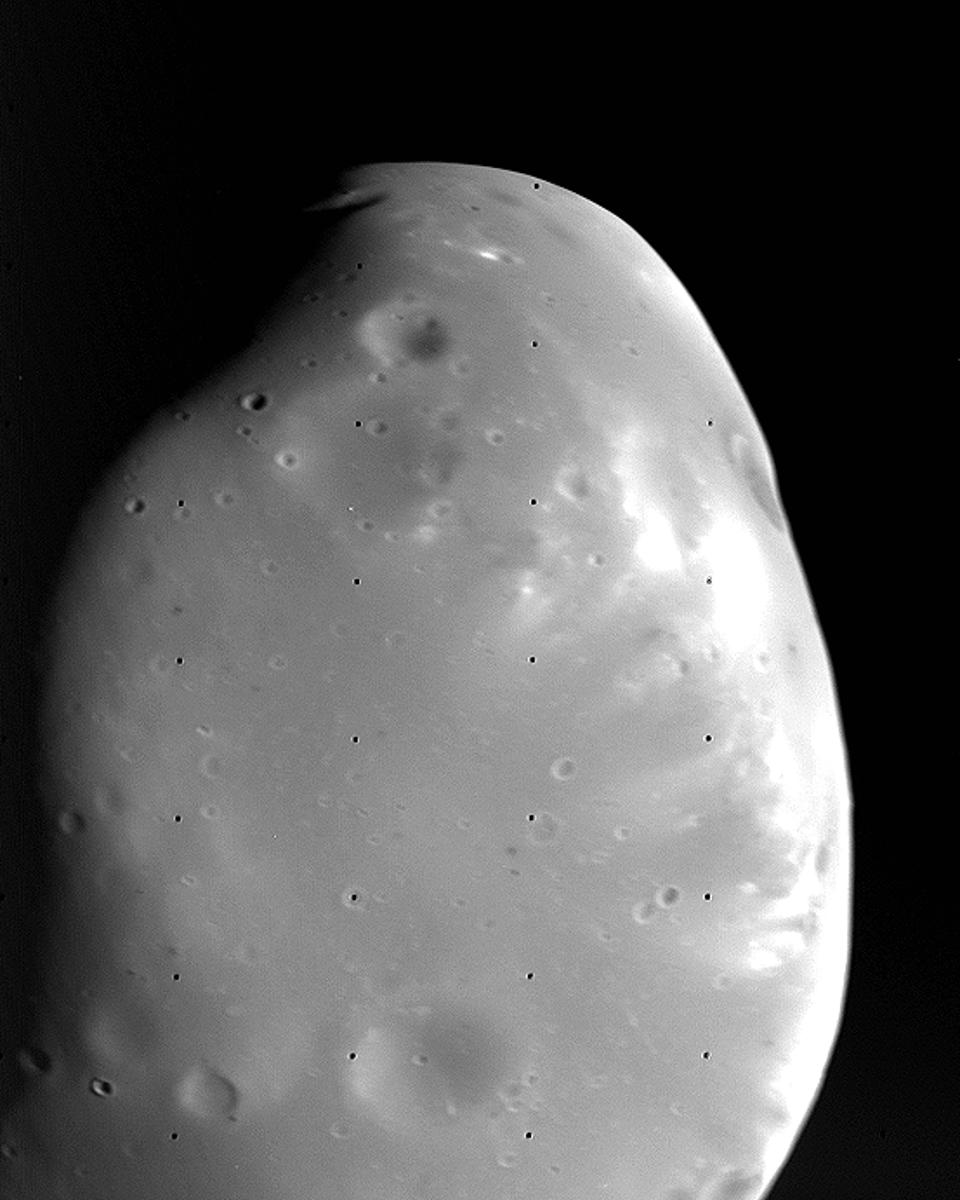
Deimos: A Small Martian Moon
Mars has two tiny moons, Phobos and Deimos . Pictured above is Deimos , the smaller moon of Mars. In fact, Deimos is one of the smallest known moons in the Solar System measuring…
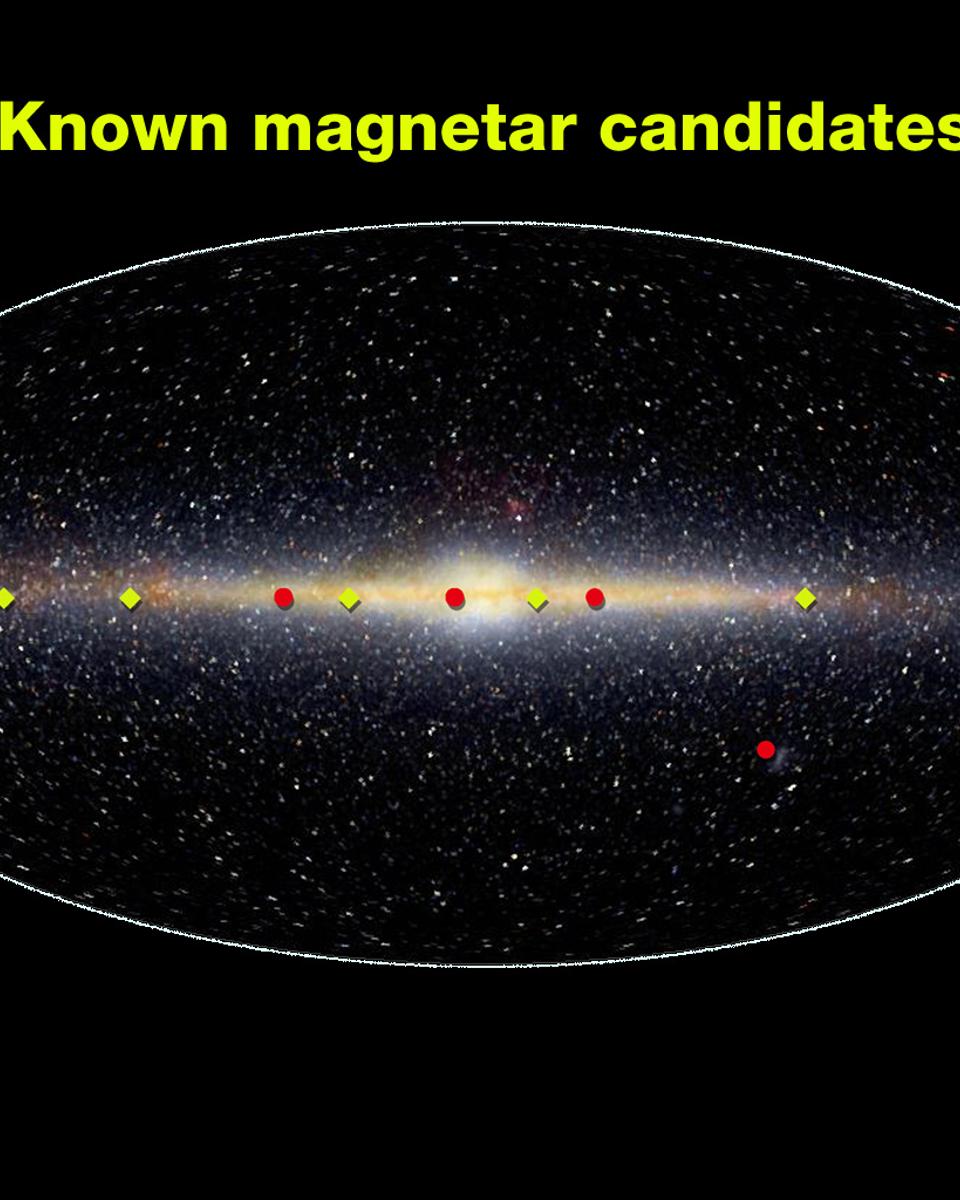
Magnetars In The Sky
Indicated on this infrared image of the galactic center region are positions of candidate magnetars -- believed to be the strongest magnets in the galaxy. Classified by observers…

The Flight Of Helios
Solar-powered , remotely piloted, and flying at about 25 miles per hour, NASA's Helios aircraft , is pictured above at 10,000 feet in skies northwest of Kauai, Hawaii on August…
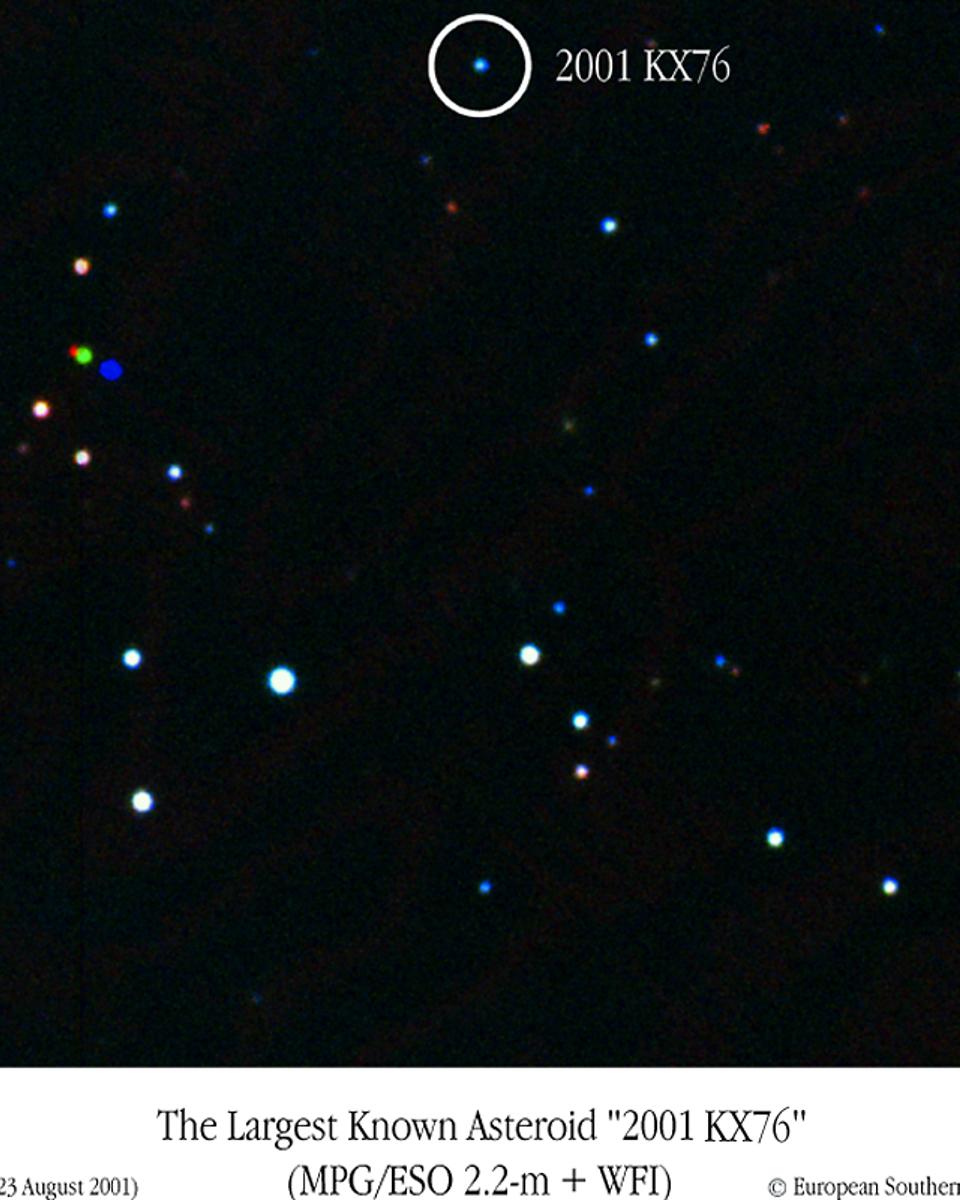
How Big Is 2001 KX76?
Newly discovered minor planet 2001 KX76 is circled in the top panel above, a recent composite image from the European Southern Observatory's 2.2 meter telescope at La Silla, Chile…
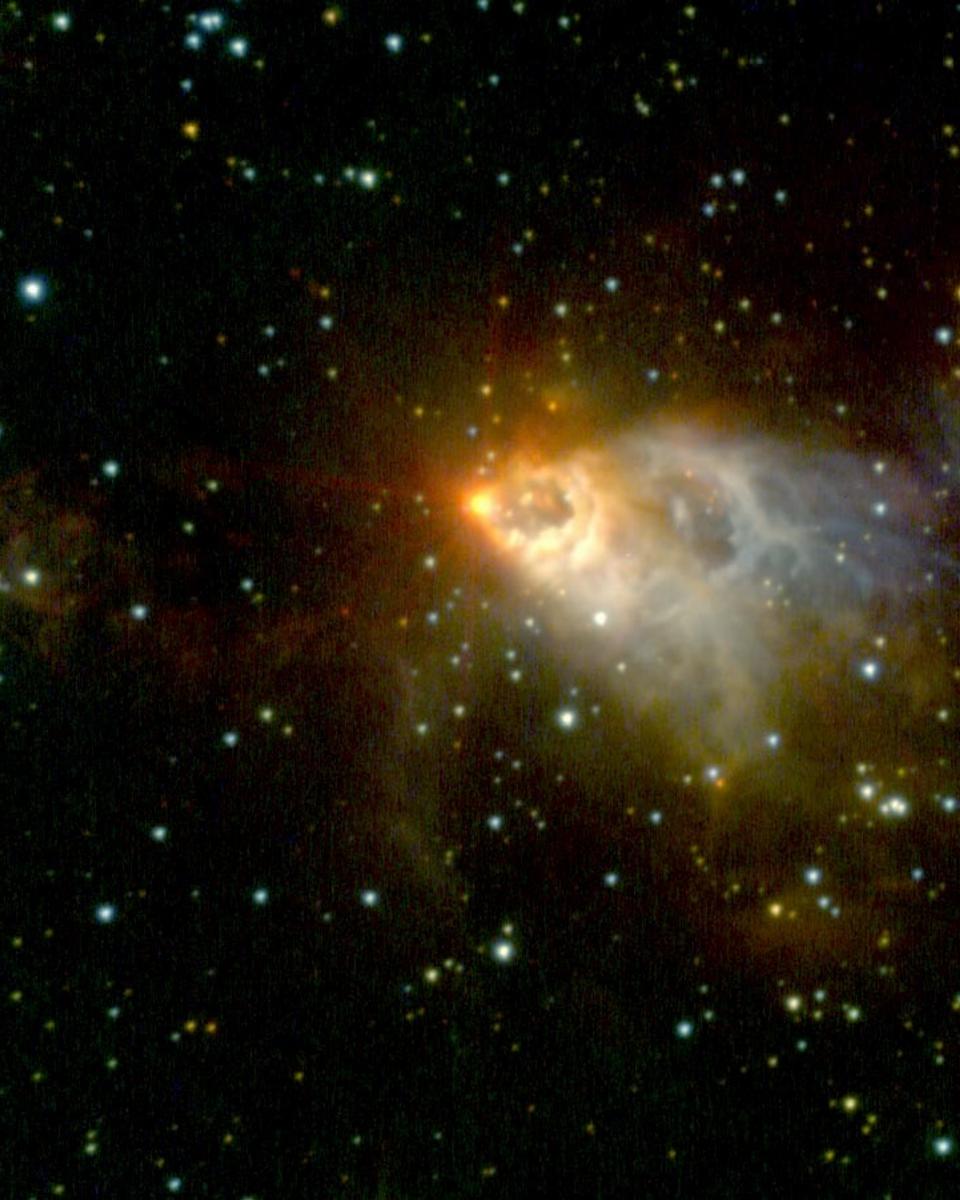
AFGL 2591: A Massive Star Acts Up
Young star AFGL 2591 is putting on a show. The massive star is expelling outer layers of dust -laced gas as gravity pulls inner material toward the surface. AFGL 2591 is estimated…
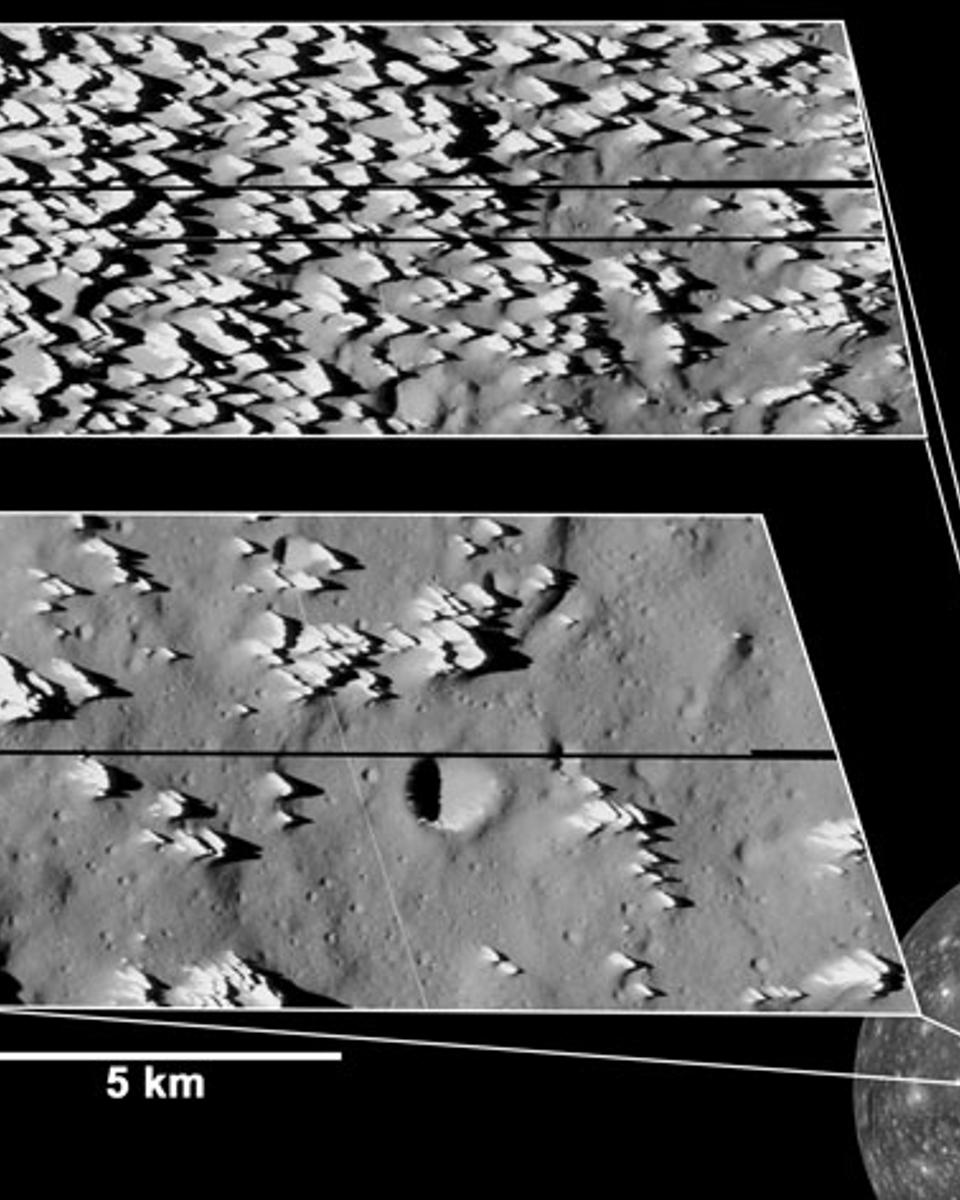
Jagged Hills on Jupiter's Callisto
Why does Jupiter's moon Callisto have unusual jagged hills? This mystery came to light after the robot spacecraft Galileo , in orbit around Jupiter since 1995, swooped past the…

Artificial Night Sky Brightness
Where have all the dim stars gone? From many places on the Earth including major cities, the night sky has been reduced from a fascinating display of hundreds of stars to a…
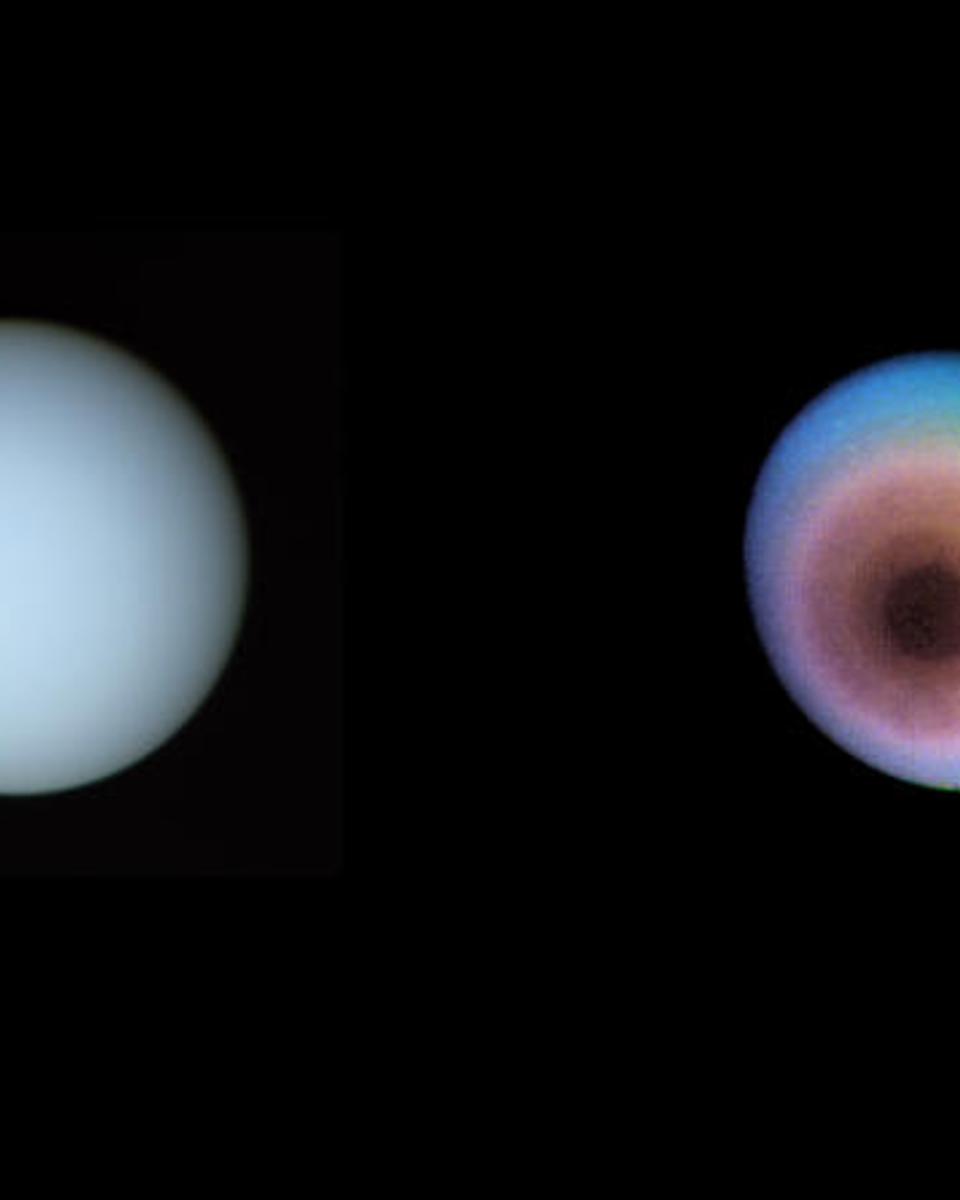
Uranus: The Tilted Planet
Uranus is the third largest planet in our Solar System after Jupiter and Saturn . Uranus is composed mostly of rock and ices, but with a thick hydrogen and helium atmosphere. The…
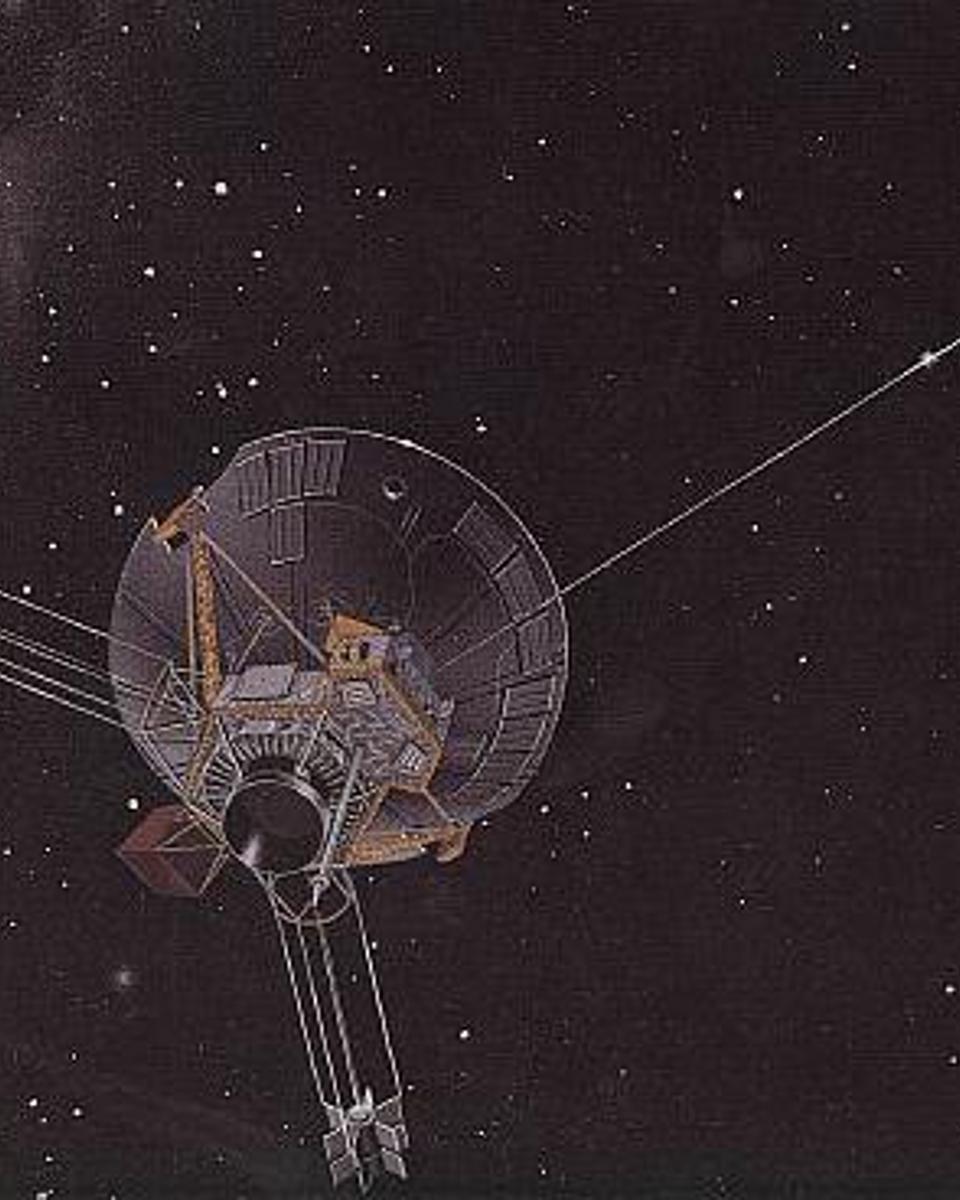
Pioneer 10: The First 7 Billion Miles
Q: What was made by humans and is 7.3 billion miles away? A: Pioneer 10 -- and 1997 was the 25th anniversary of its launch. Almost 11 light-hours distant, Pioneer 10 is presently…
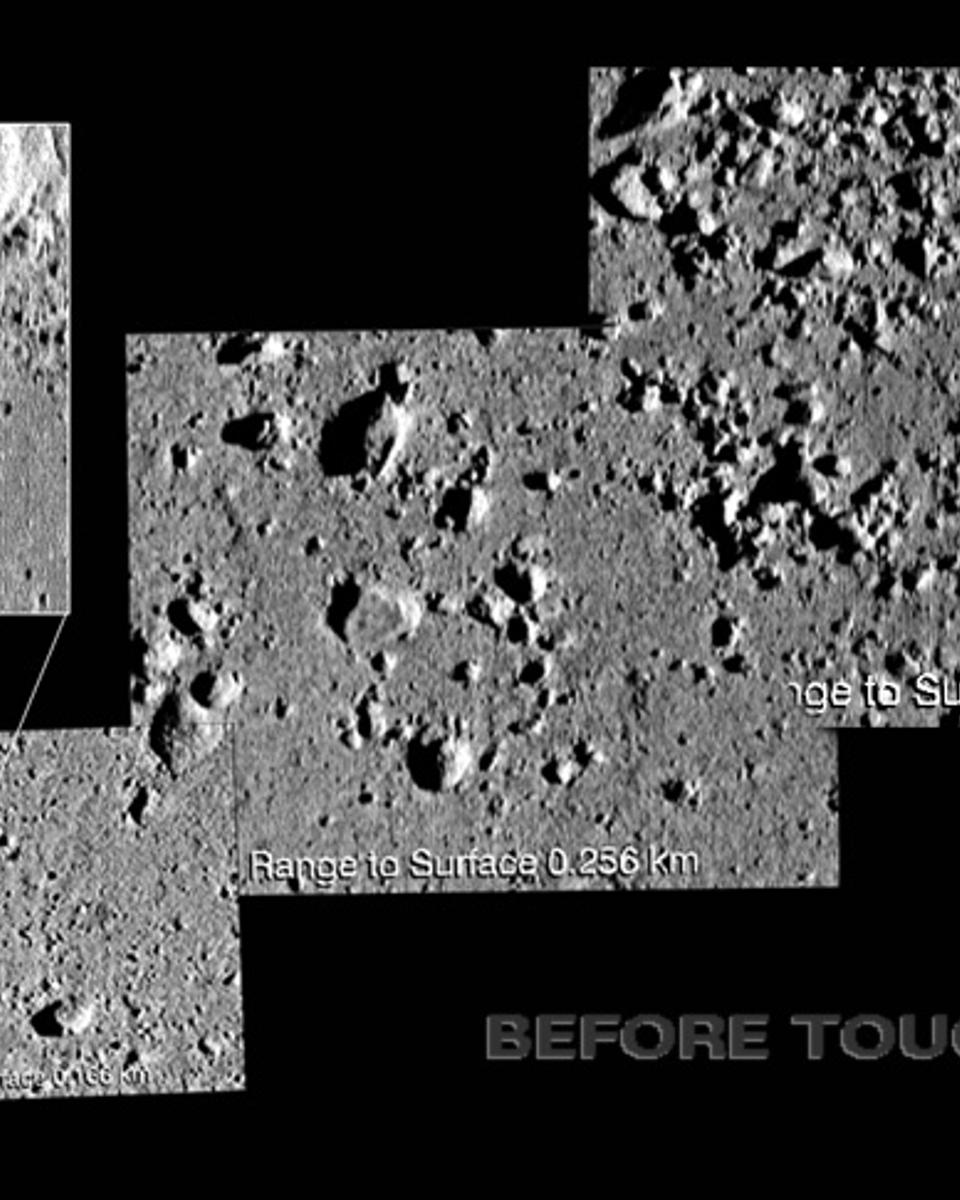
NEAR at Eros: Before Touchdown
On 12 February, 2001, the NEAR-Shoemaker spacecraft gently touched-down on the the surface of Eros -- the first ever landing on an asteroid . During the descent, the spacecraft's…
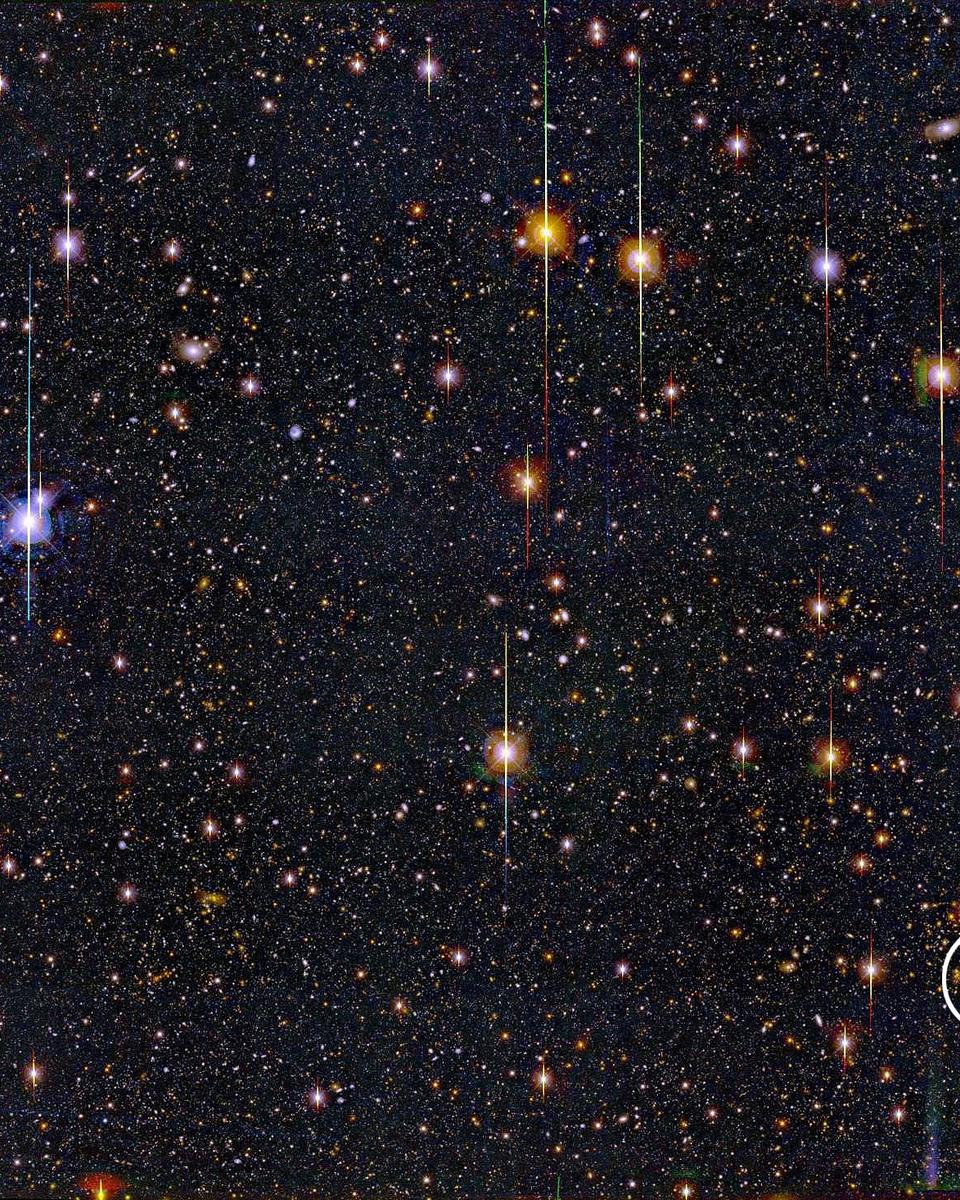
Distortion from a Distant Cluster
This stunning color deep sky view toward the constellation Pisces was made with data from a fast, sensitive, digital detector known as the Big Throughput Camera operating at Cerro…
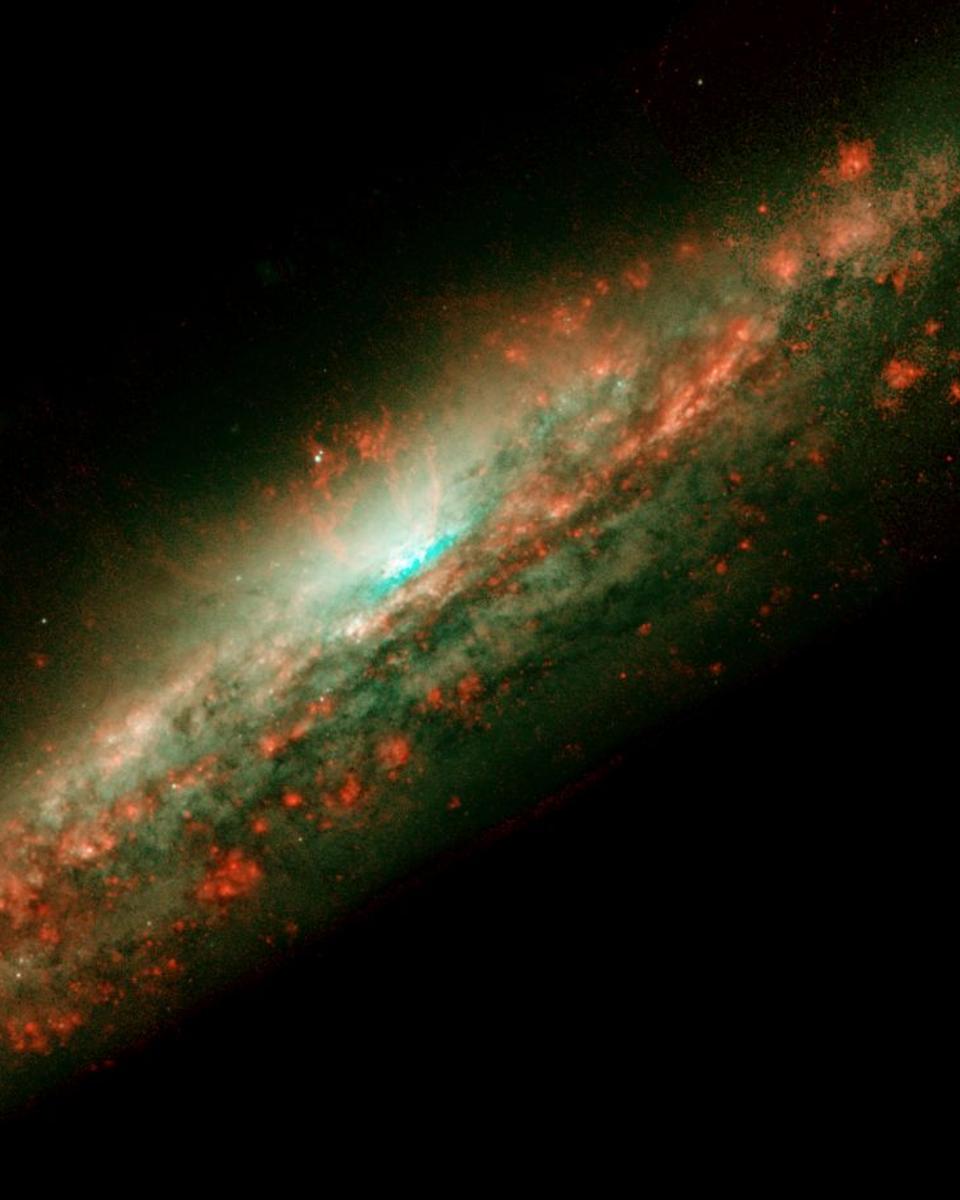
The Bubbling Cauldron of NGC 3079
Edge-on spiral galaxy NGC 3079 is a mere 50 million light-years away toward the constellation Ursa Major. Shown in this stunning false-color Hubble Space Telescope image, the…
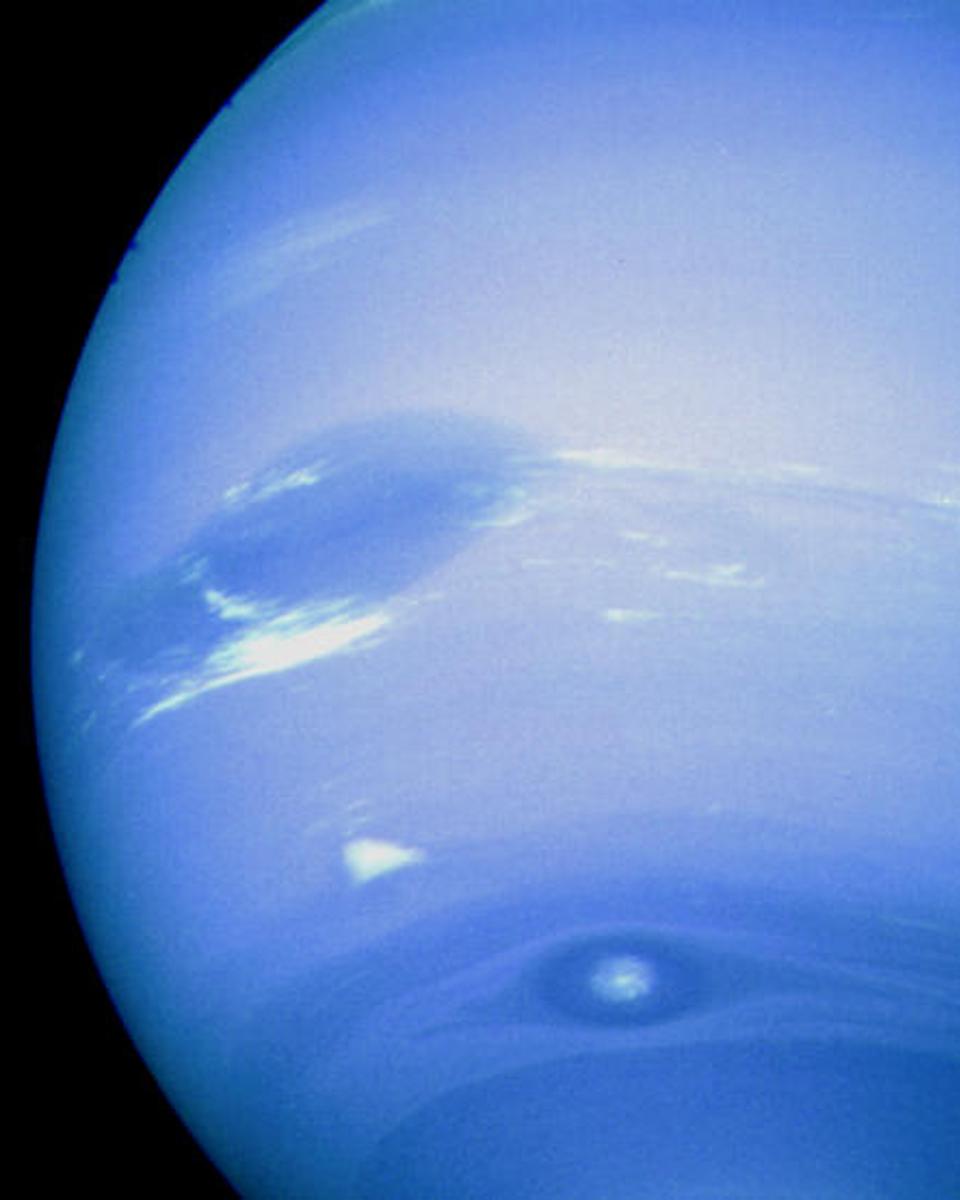
Dark Spots on Neptune
Neptune has spots. The Solar System 's outermost gas giant shows a nearly uniform blue hue created by small amounts of methane drifting in a thick atmosphere of nearly colorless…
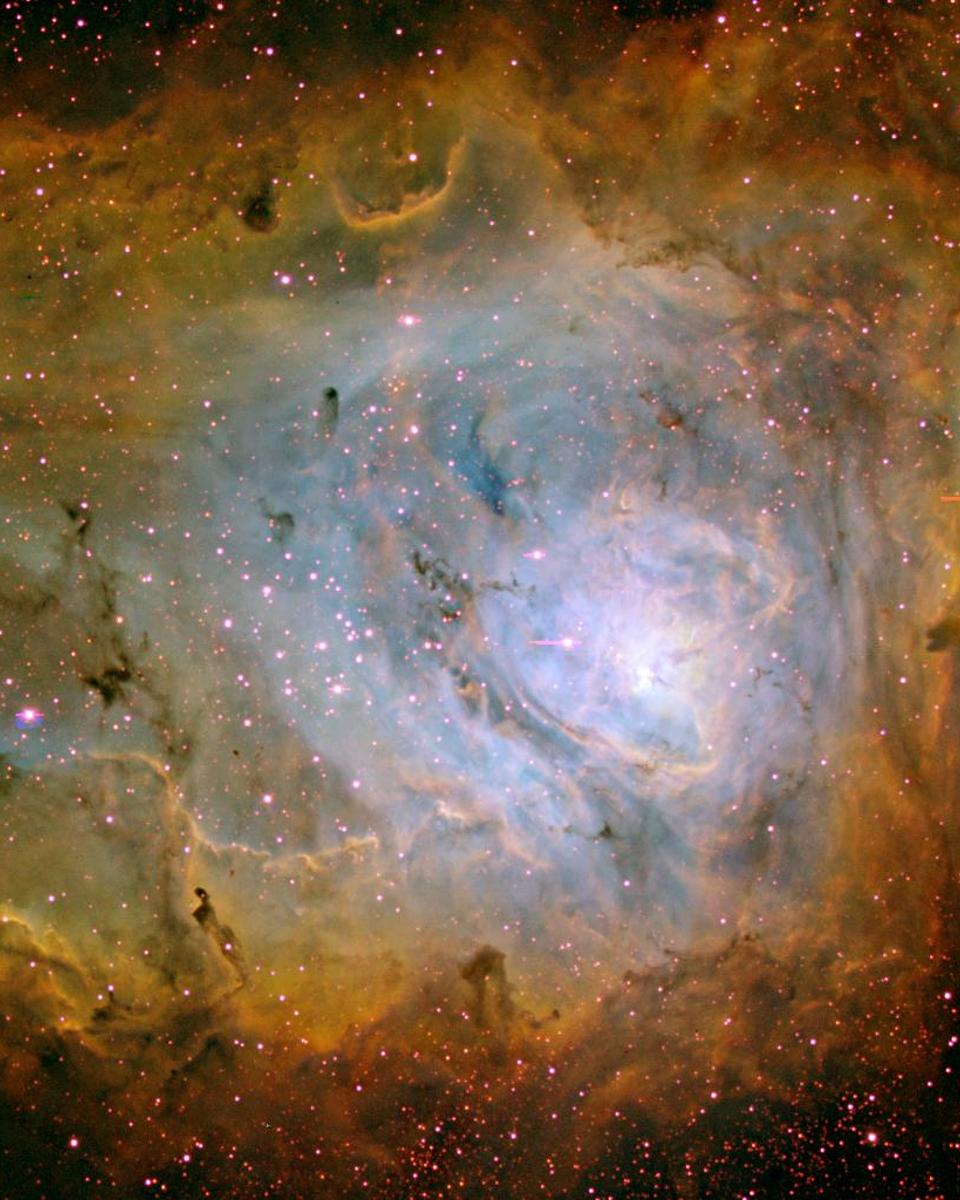
The Lagoon Nebula in Three Colors
The bright Lagoon Nebula is home to a diverse array of astronomical objects. Particularly interesting sources include a bright open cluster of stars and several energetic…
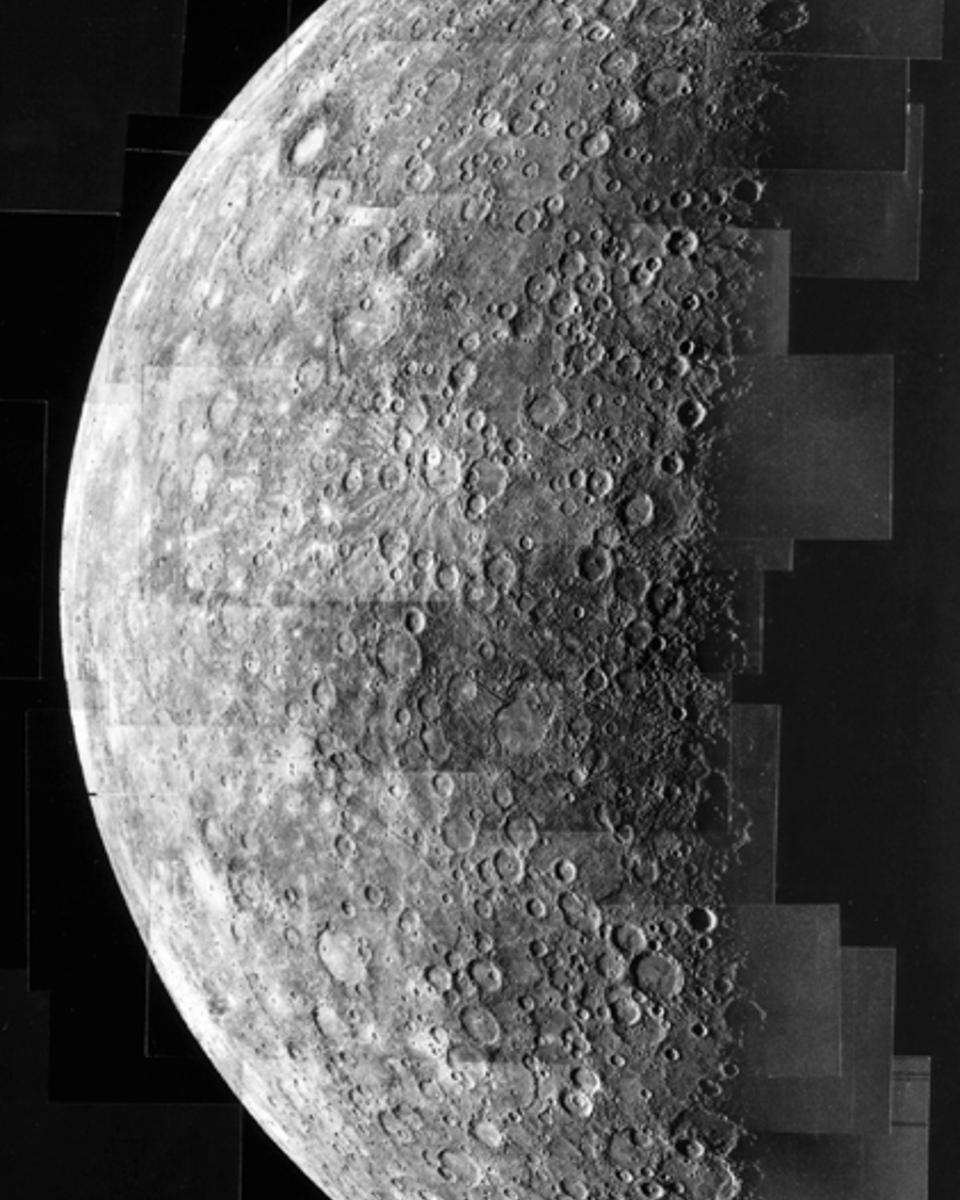
Mercury: A Cratered Inferno
Mercury's surface looks similar to our Moon's. Each is heavily cratered and made of rock. Mercury 's diameter is about 4800 km, while the Moon 's is slightly less at about 3500 km…
Viewing discoveries from 11 September 2001 through 19 August 2001.