Browse NASA Astronomy Picture of the Day archive by date and media: Archive Discoveries
Browse the NASA APOD archive without needing the exact date first. Filter by media type and keep moving deeper into older images and videos.
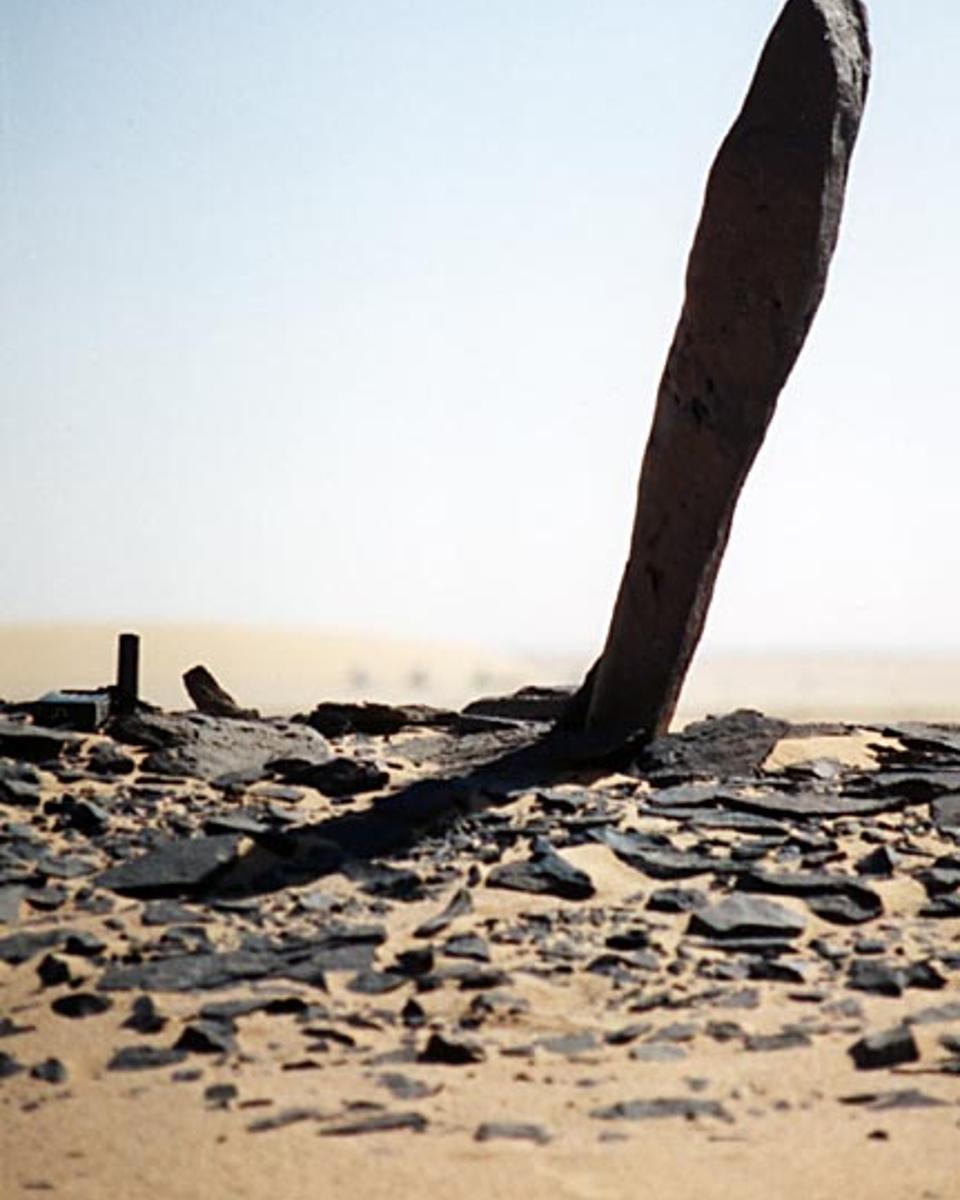
Nabta: Older than Stonehenge
In the Sahara Desert in Egypt lie the oldest known astronomically aligned stones in the world: Nabta . Over one thousand years before the creation of Stonehenge , local herders…
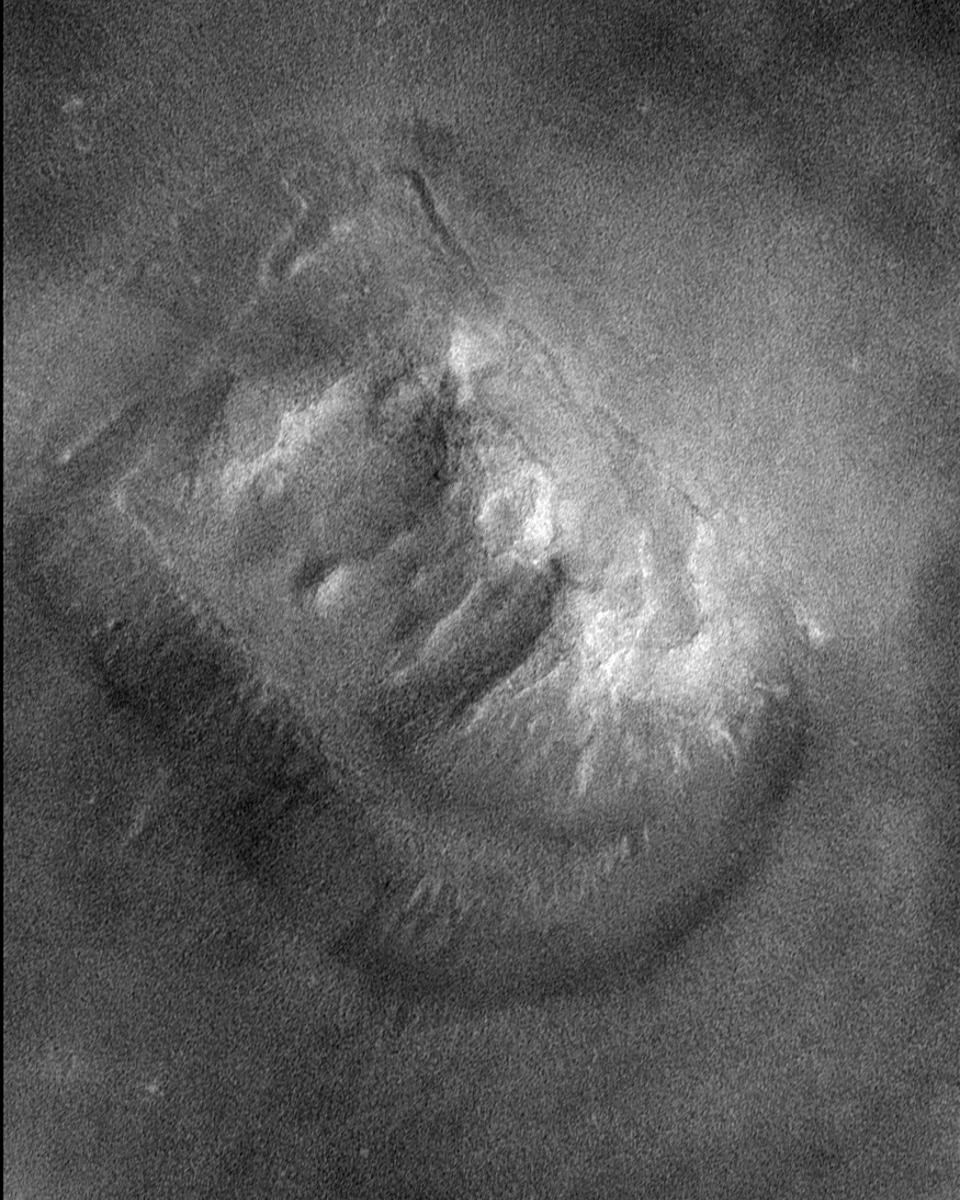
Return To Cydonia
Yesterday the Mars Global Surveyor project released a new close-up image of a portion of the Cydonia region on Mars. This cropped and processed version shows an area about 2 miles…
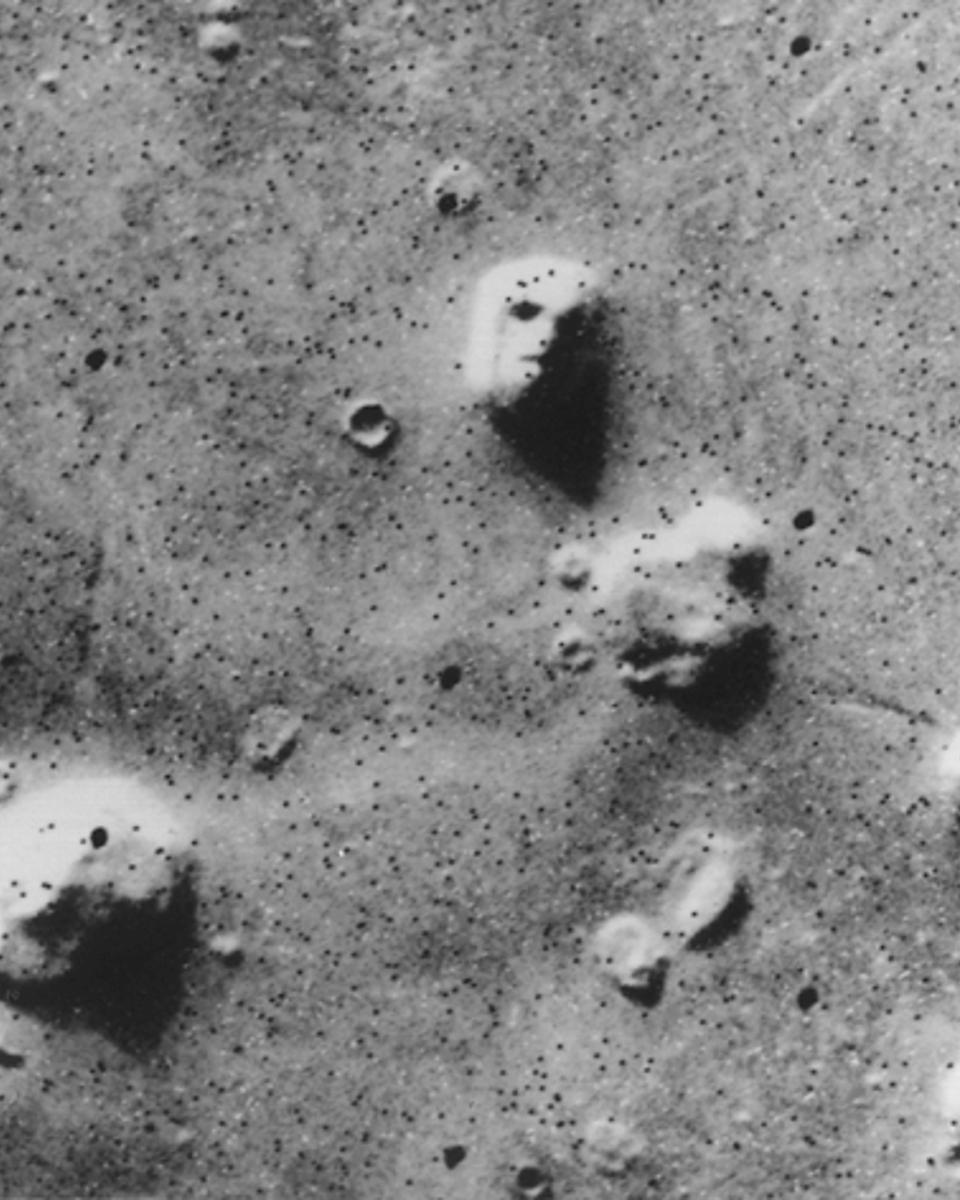
A Face On Mars
This image, showing what looks to be a human face (above center) and other features of the Cydonia region on the Martian surface , was produced using data from NASA's Viking 1…
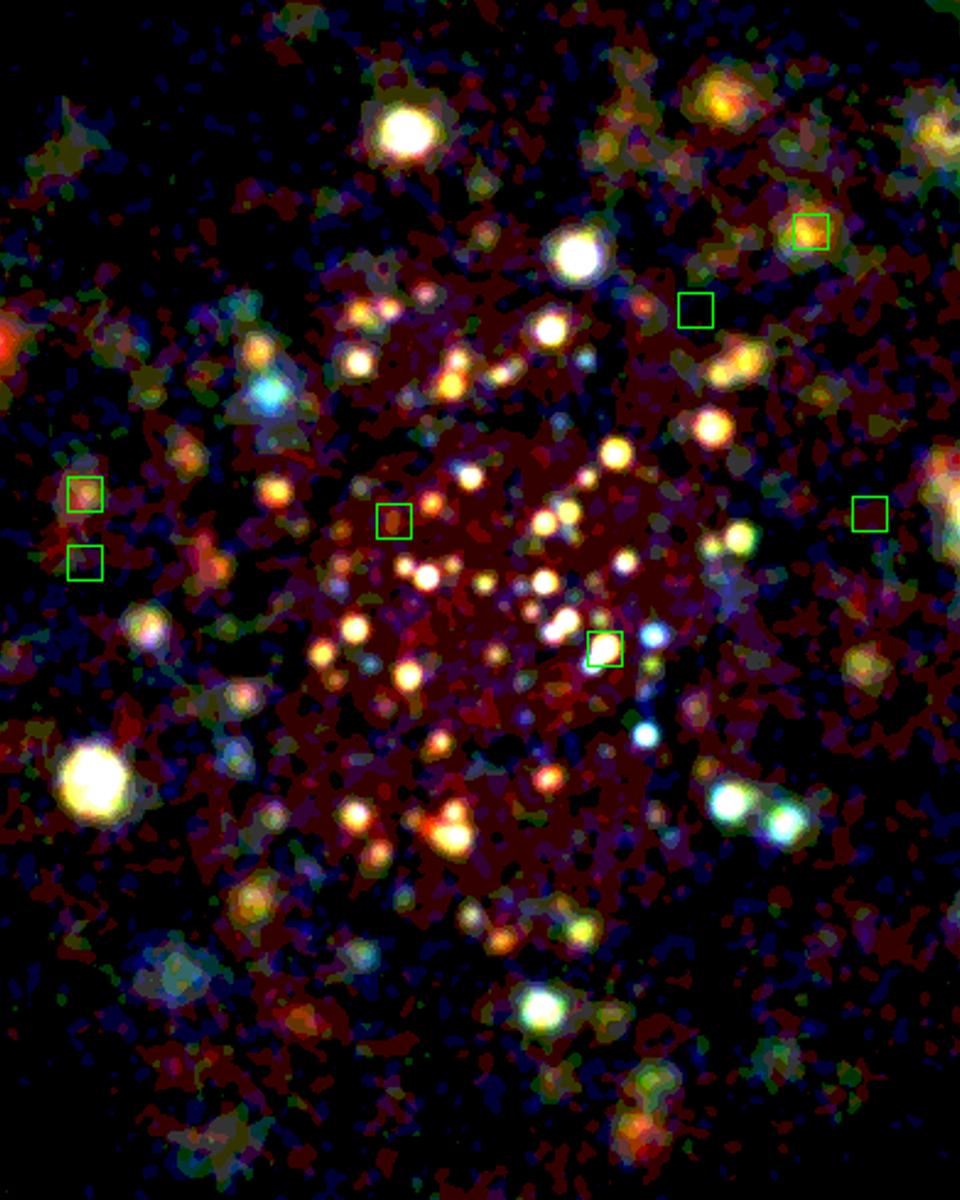
X-Ray Pleiades
The Pleiades star cluster is one of the jewels of the northern sky . To the unaided eye it appears as a lovely and tantalizing grouping of stars in the constellation of Taurus ,…

Mercury Astronauts and a Redstone
Space suited project Mercury astronauts John H. Glenn , Virgil I. Grissom , and Alan B. Shepard Jr. (left to right) are posing in front of a Redstone rocket in this vintage 1961…
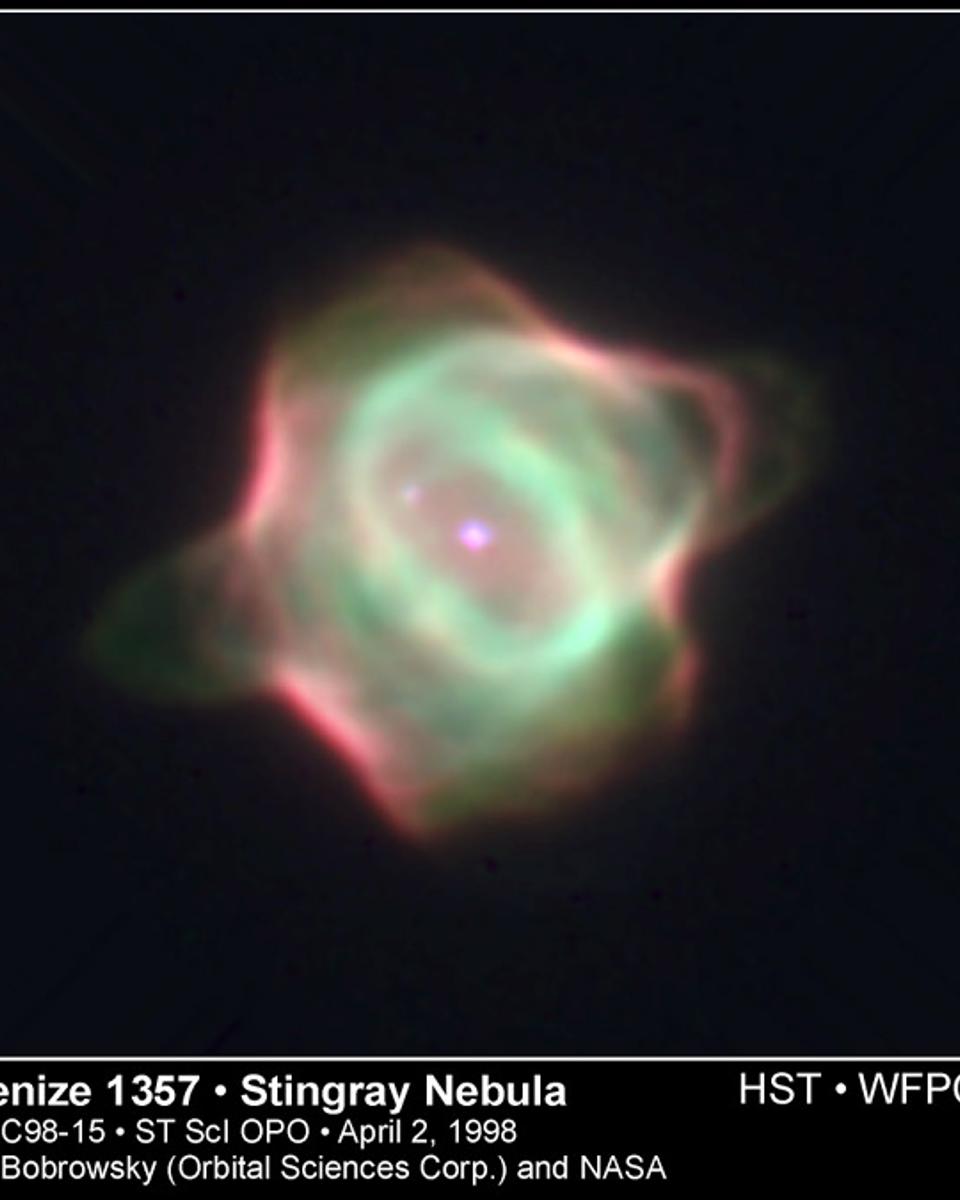
Hen-1357: New Born Nebula
This Hubble Space Telescope picture shows Hen-1357, the youngest known planetary nebula . Graceful, gentle curves and symmetry suggest its popular name - The Stingray Nebula .…
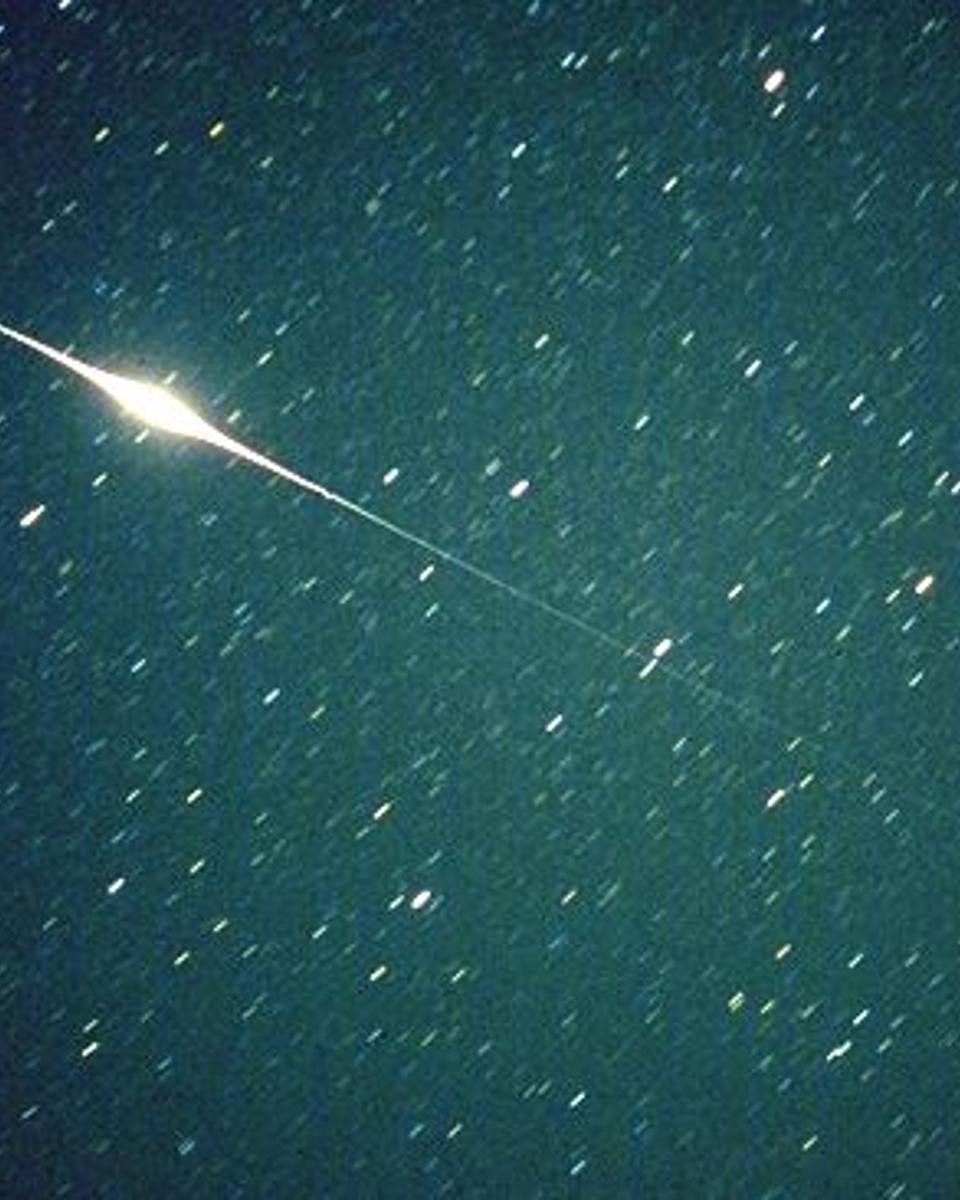
Iridium Flare
Have you seen an Iridium flare ? Satellites in low Earth orbit reflect sunlight and are often visible gliding across early evening and predawn skies. But sun glints from Iridium…
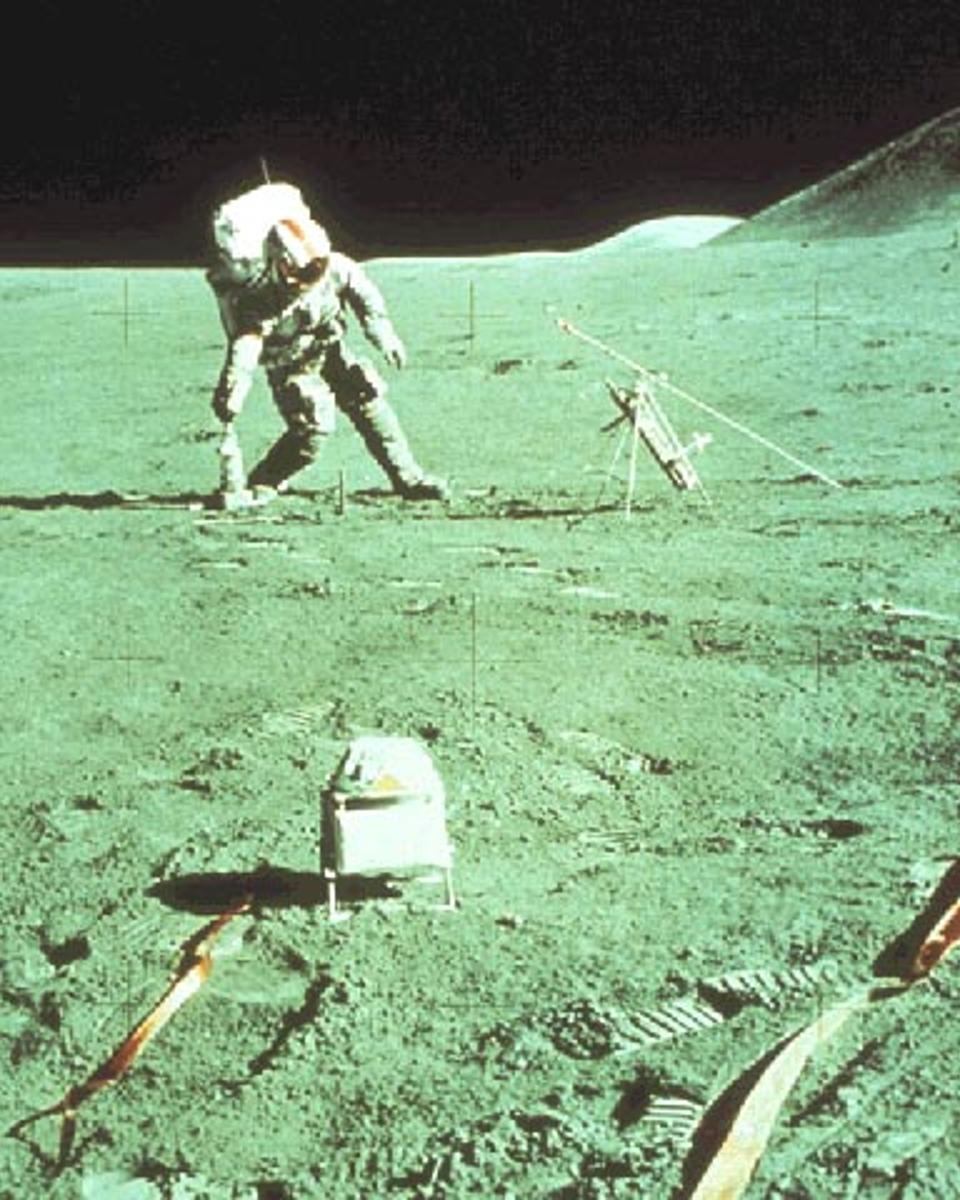
Astronaut Kicks Lunar Field Goal
Score three points for NASA. With time running out late in Apollo 15 's mission to the Moon in 1971, Astronaut David Scott prepared to “split the uprights” and bring about yet…
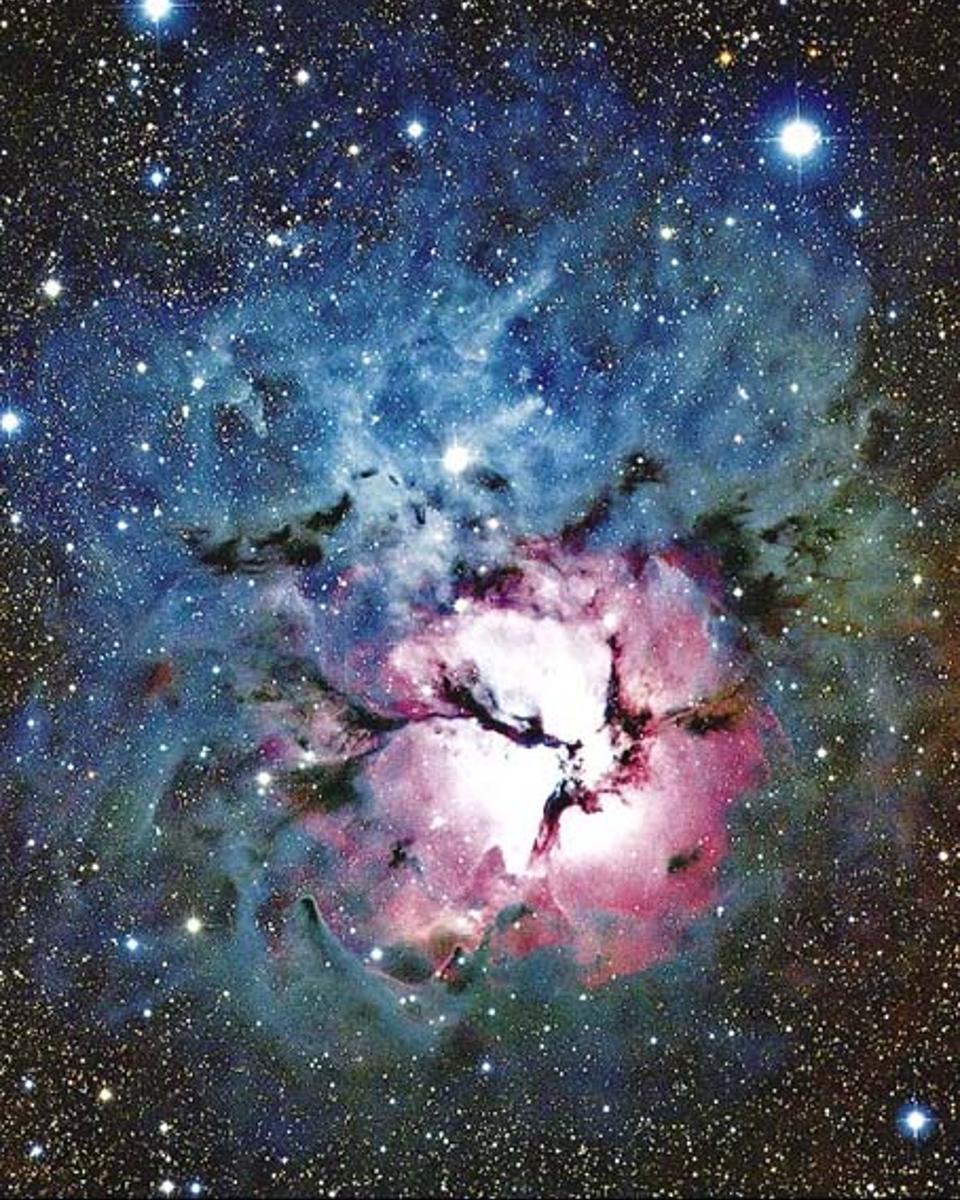
M20: The Trifid Nebula
Unspeakable beauty and unimaginable bedlam can be found together in the Trifid Nebula . Also known as M20, this photogenic nebula is visible with good binoculars in the…
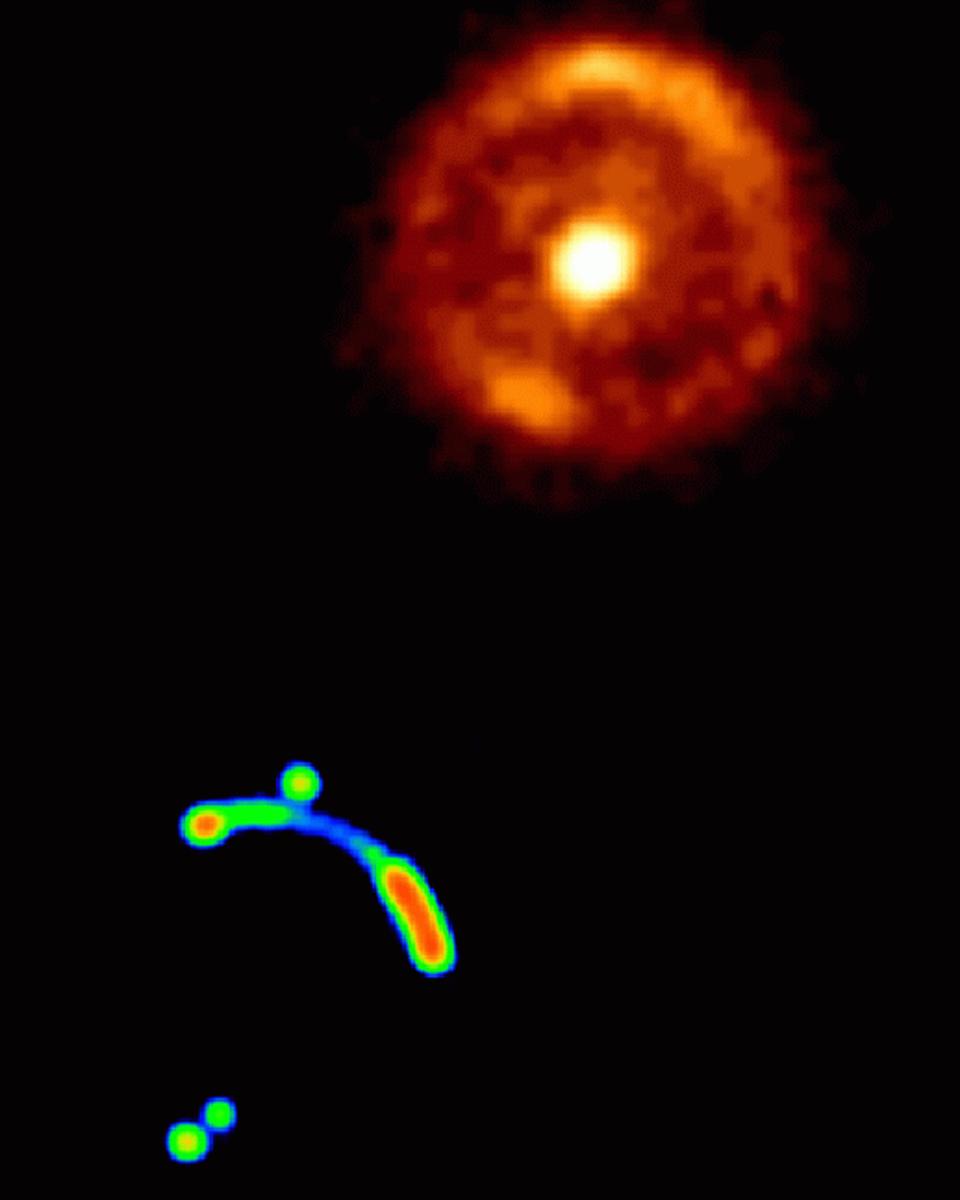
A Bulls-Eye Einstein Ring
Can one galaxy hide behind another? Not in the case of B1938+666 . Here the foreground galaxy acts like a huge gravitational lens , pulling the light from the background object…
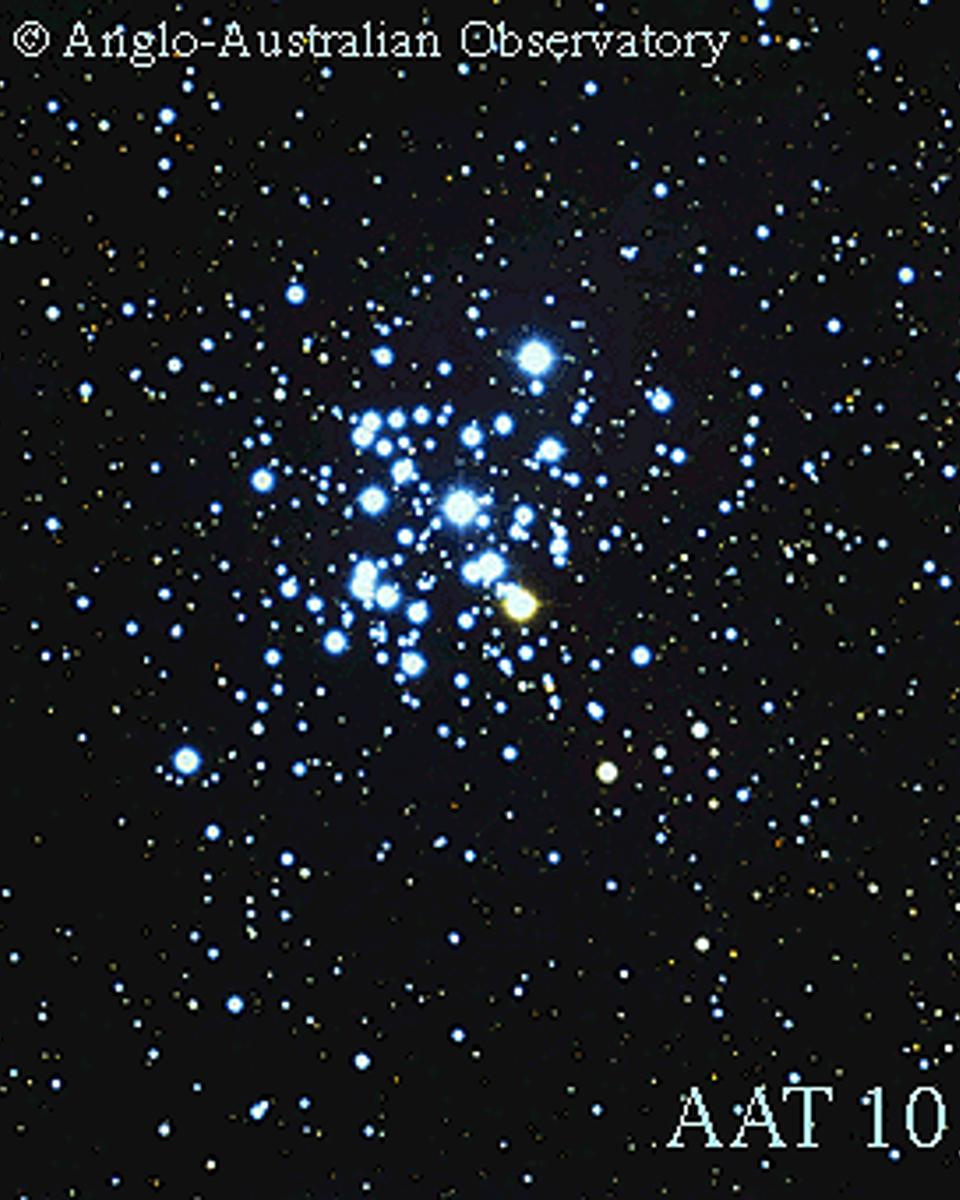
NGC 3293: A Bright Young Open Cluster
Hot blue stars shine brightly in this beautiful, recently formed galactic or “open” star cluster. Open cluster NGC 3293 is located in the constellation Carina , lies at a distance…
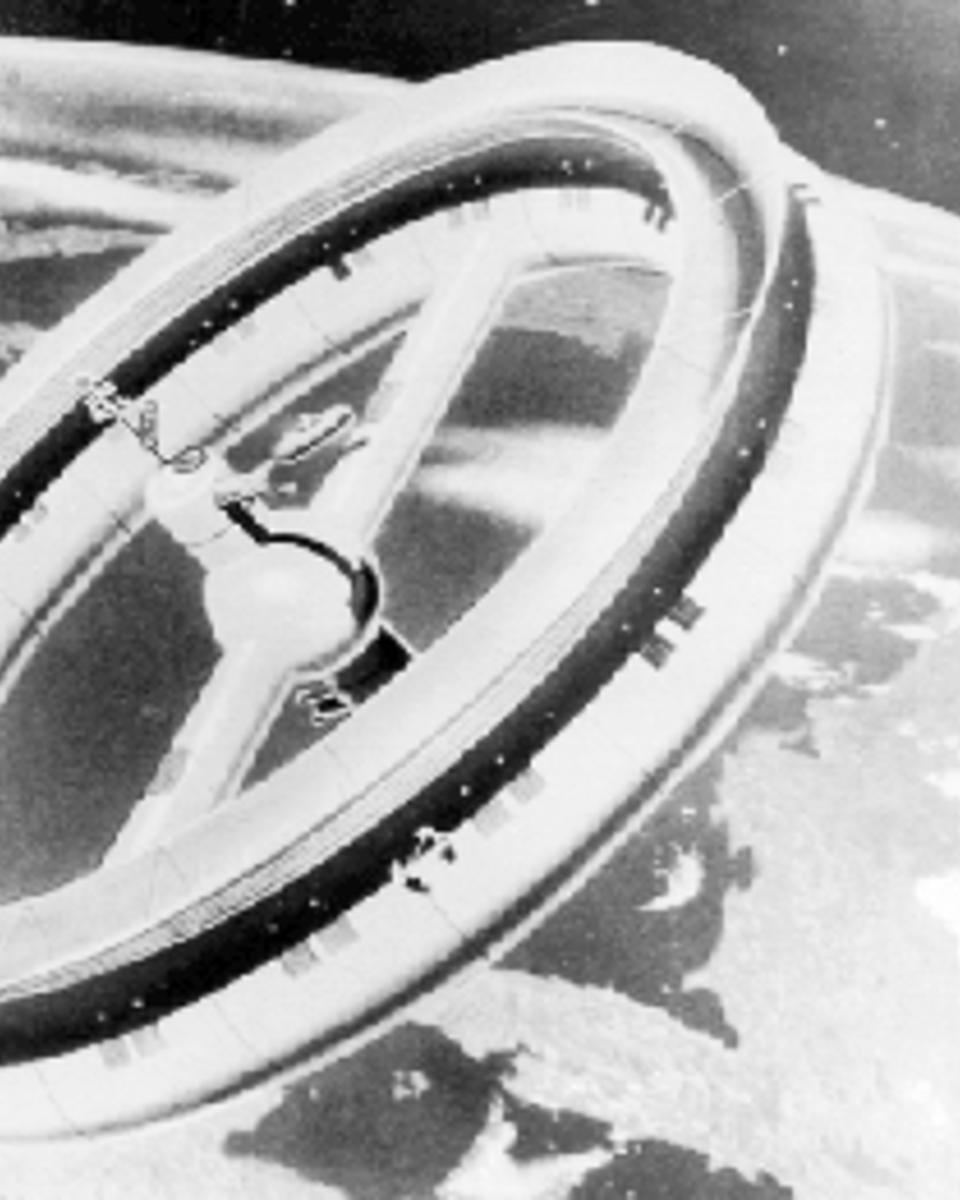
Von Braun's Wheel
Orbiting 1,075 miles above the Earth, a 250 foot wide, inflated, reinforced nylon “wheel” was conceived in the early 1950s to function as a navigational aid, meteorological…
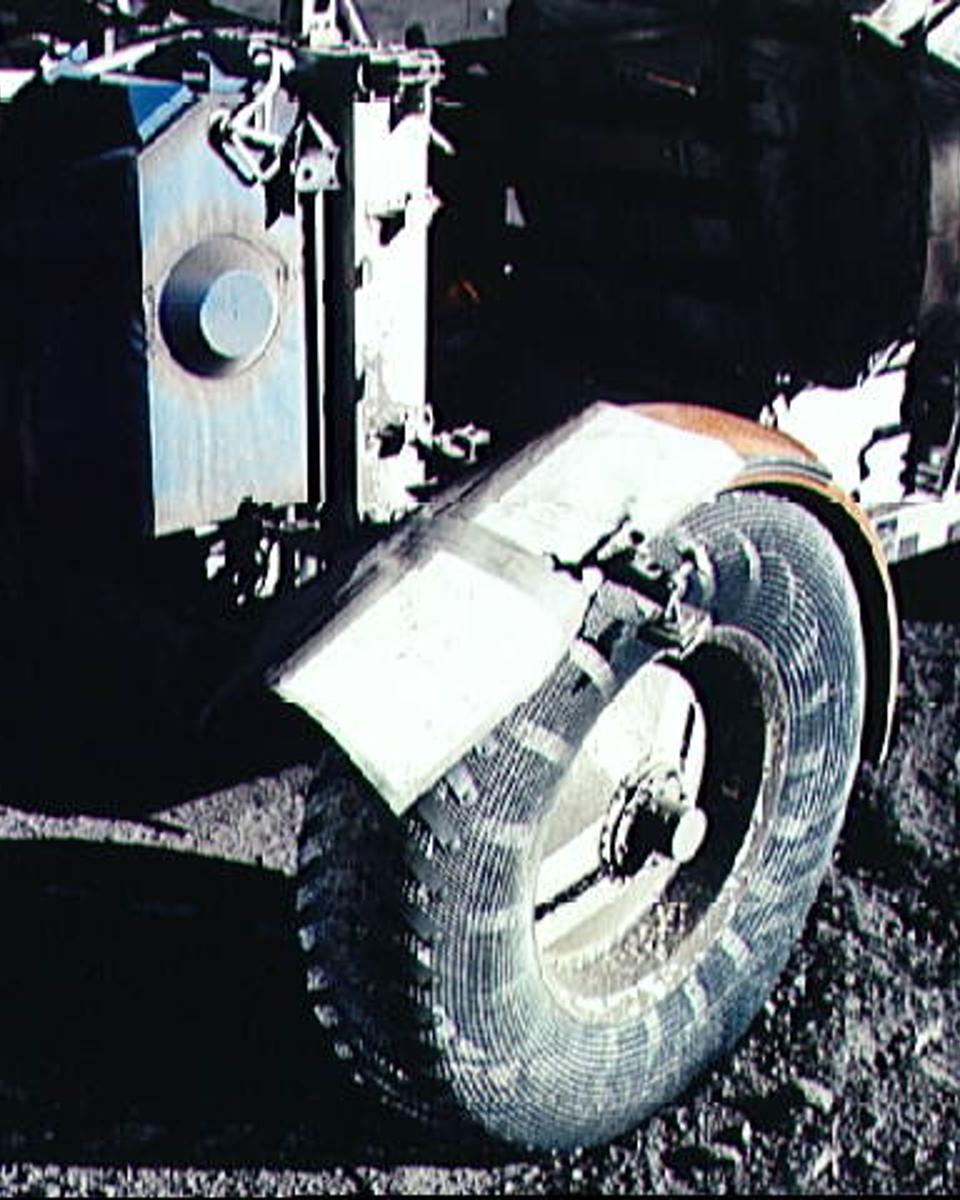
Lunar Dust and Duct Tape
Why is the Moon dusty ? On Earth, rocks are weathered by wind and water, creating soil and sand. On the Moon, the long history of micrometeorite bombardment has blasted away at…
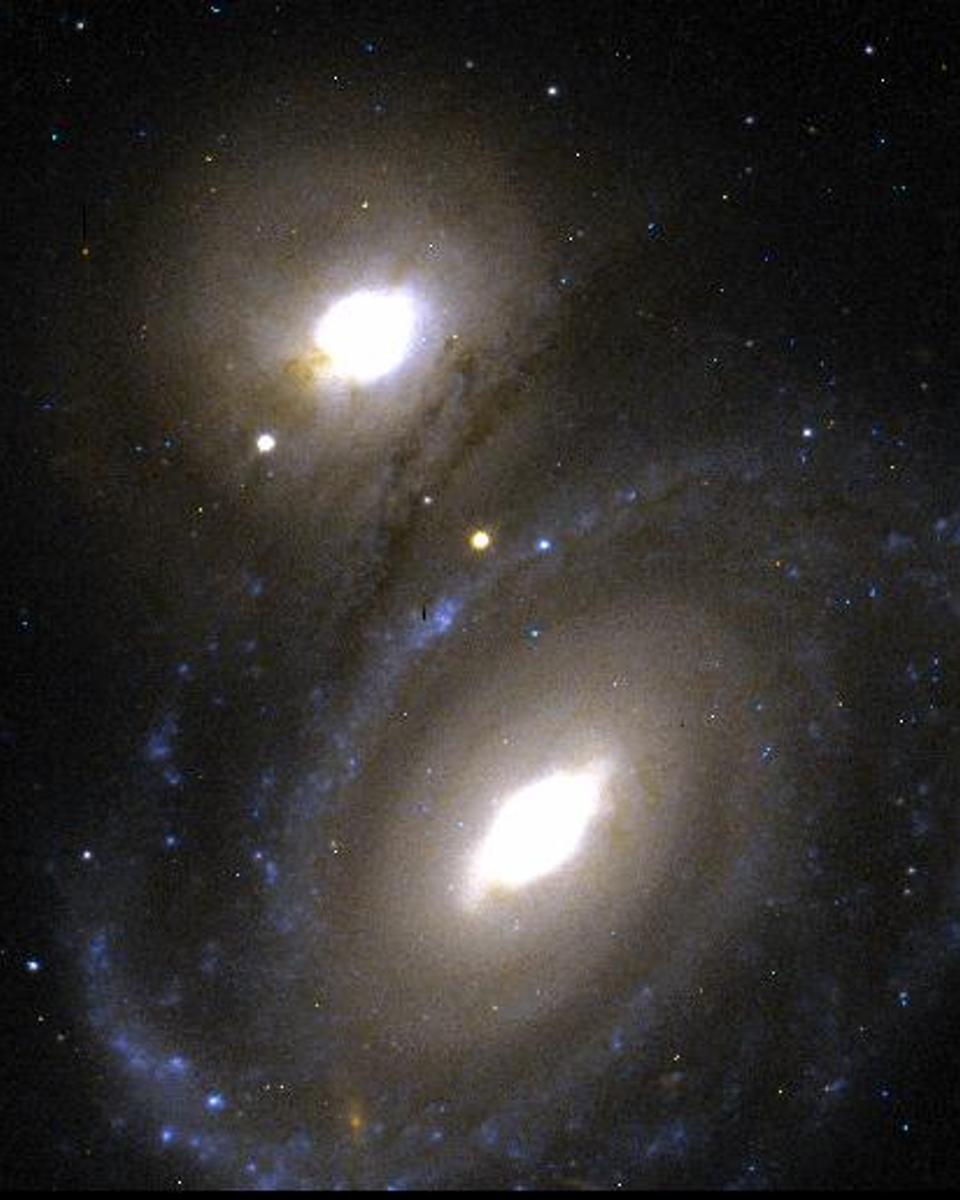
Galaxies Away
This striking pair of galaxies is far, far away ... about 350 million light-years from Earth . Cataloged as AM0500-620 , the pair is located in the southern constellation Dorado .…
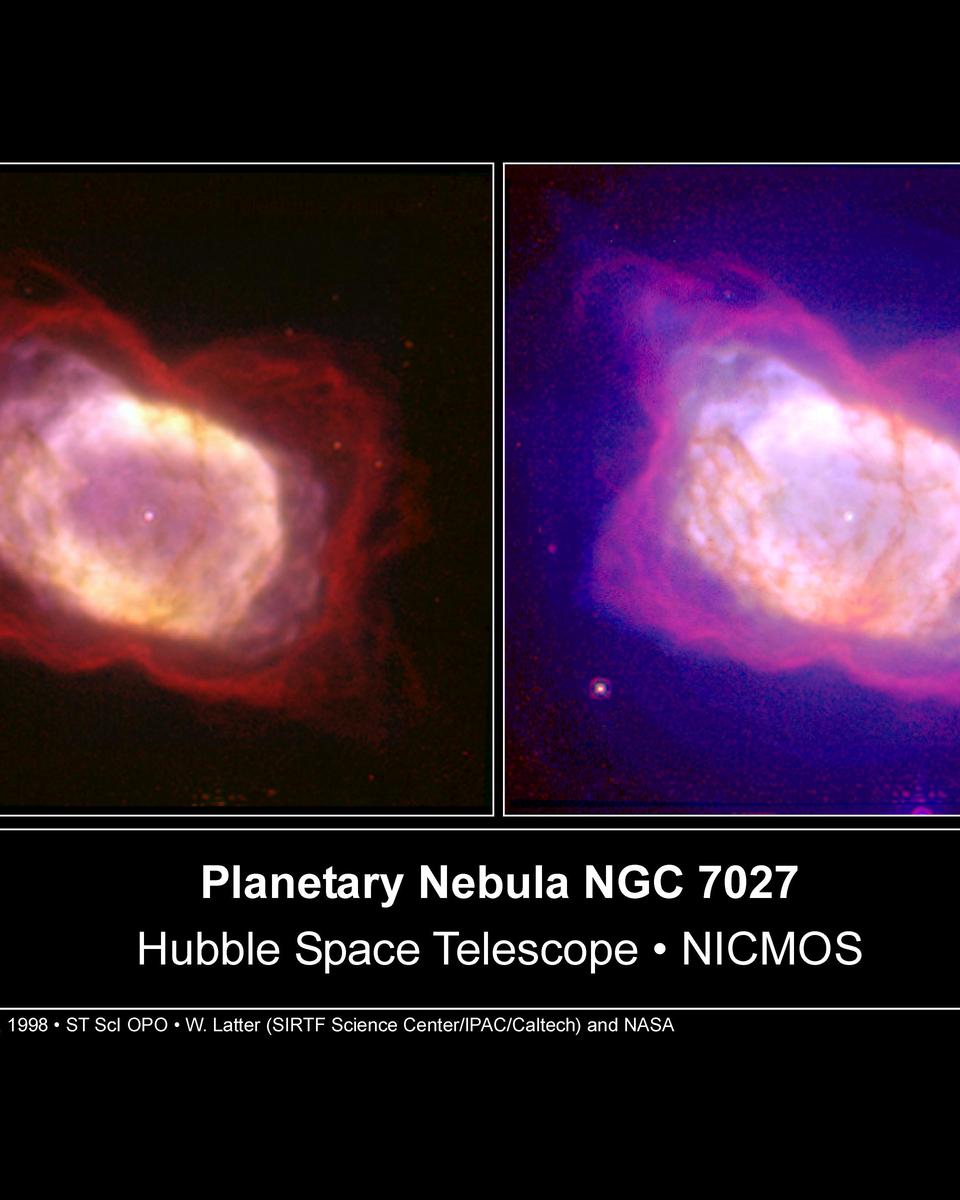
Planetary Nebula NGC 7027 in Infrared
NGC 7027 is one of the smallest known planetary nebulae . Even so, NGC 7027 is 14,000 times larger than the Earth-Sun distance . Planetary nebula are so named because the first…
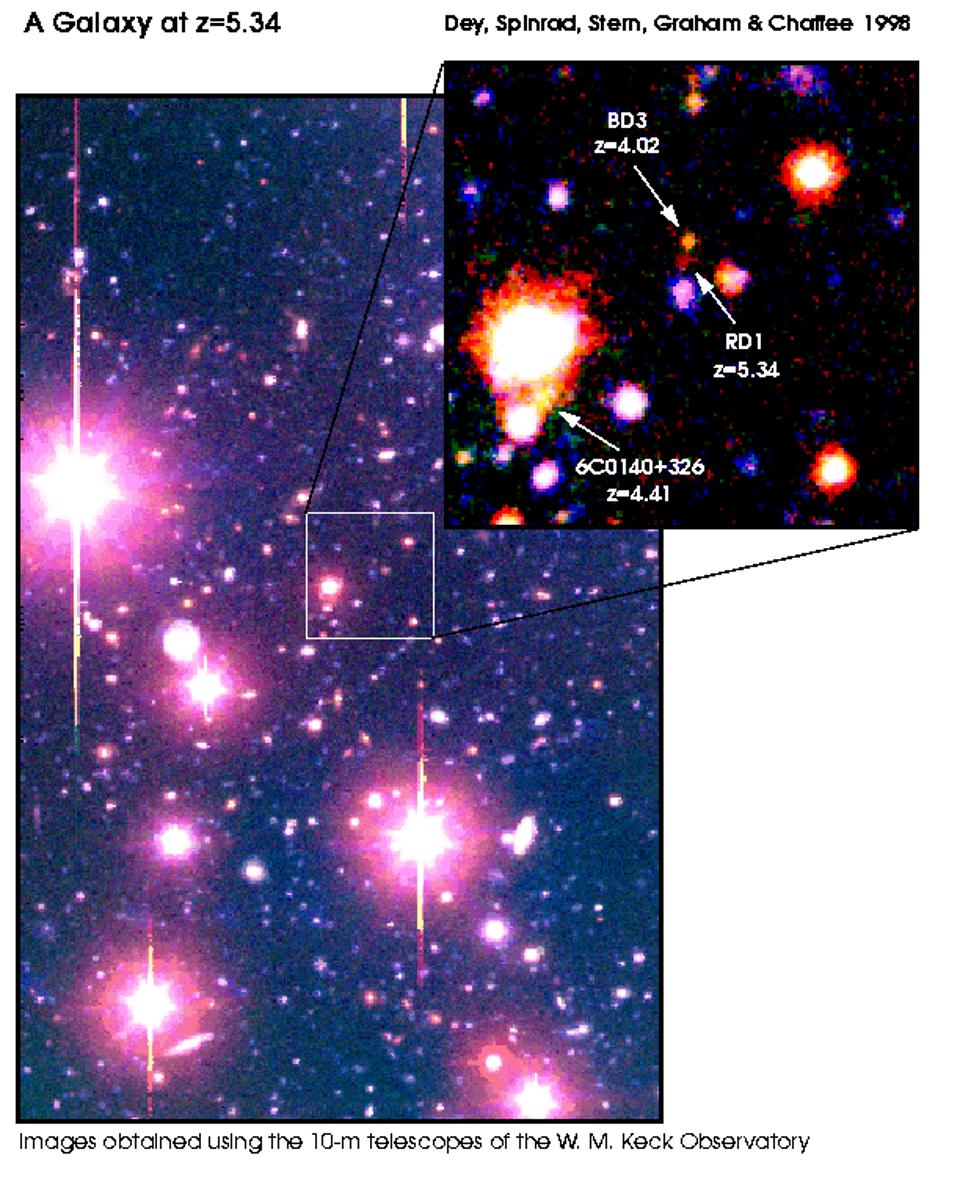
A Baby Galaxy
What's the farthest galaxy known? The answer keeps changing as astronomers compete to find new galaxies which top the list. The new record holder is now the faint red smudge…
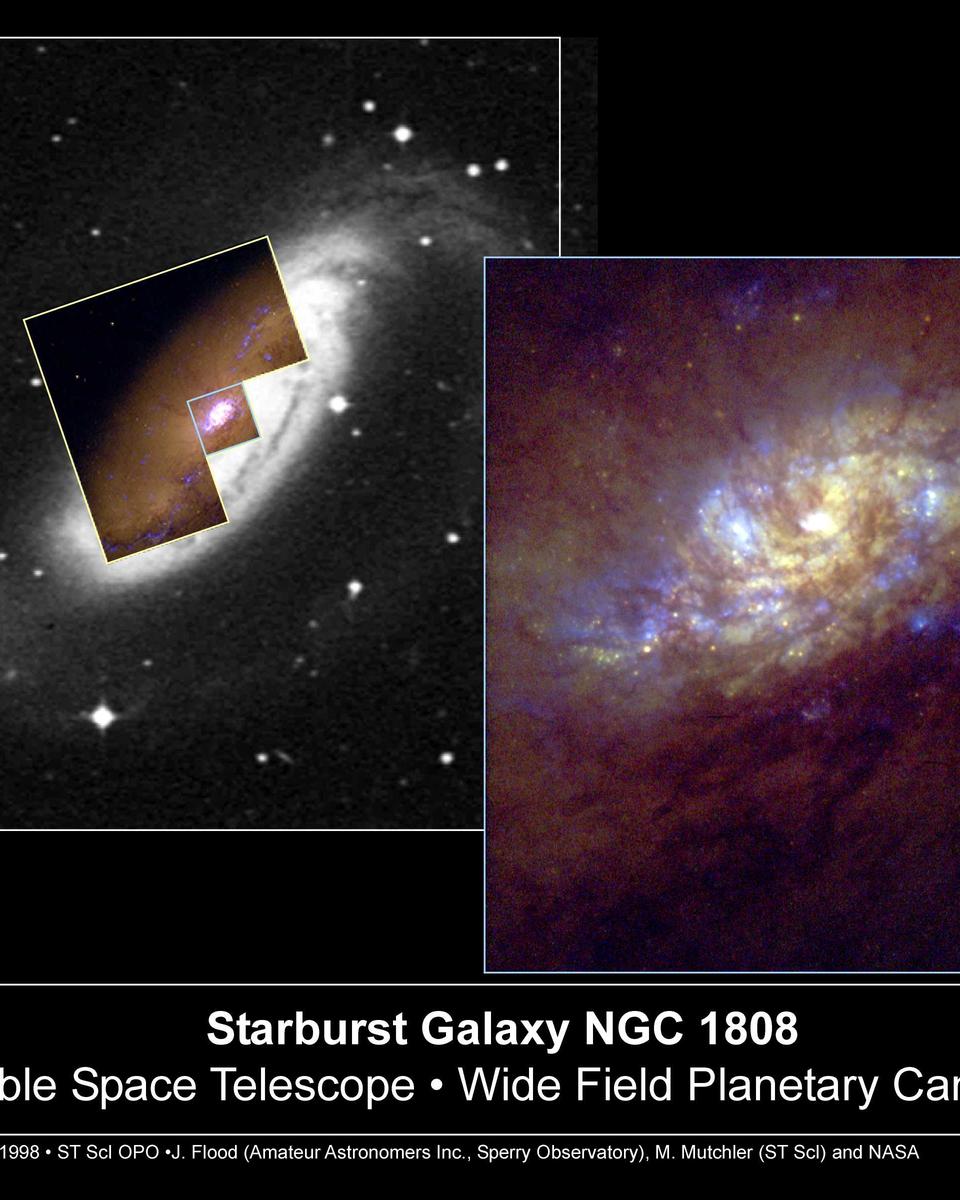
Starbirth in NGC 1808
The center of galaxy NGC 1808 is bursting with new stars, but why? Being a barred spiral galaxy makes NGC 1808 somewhat similar to our own Milky Way Galaxy . But the disk of NGC…
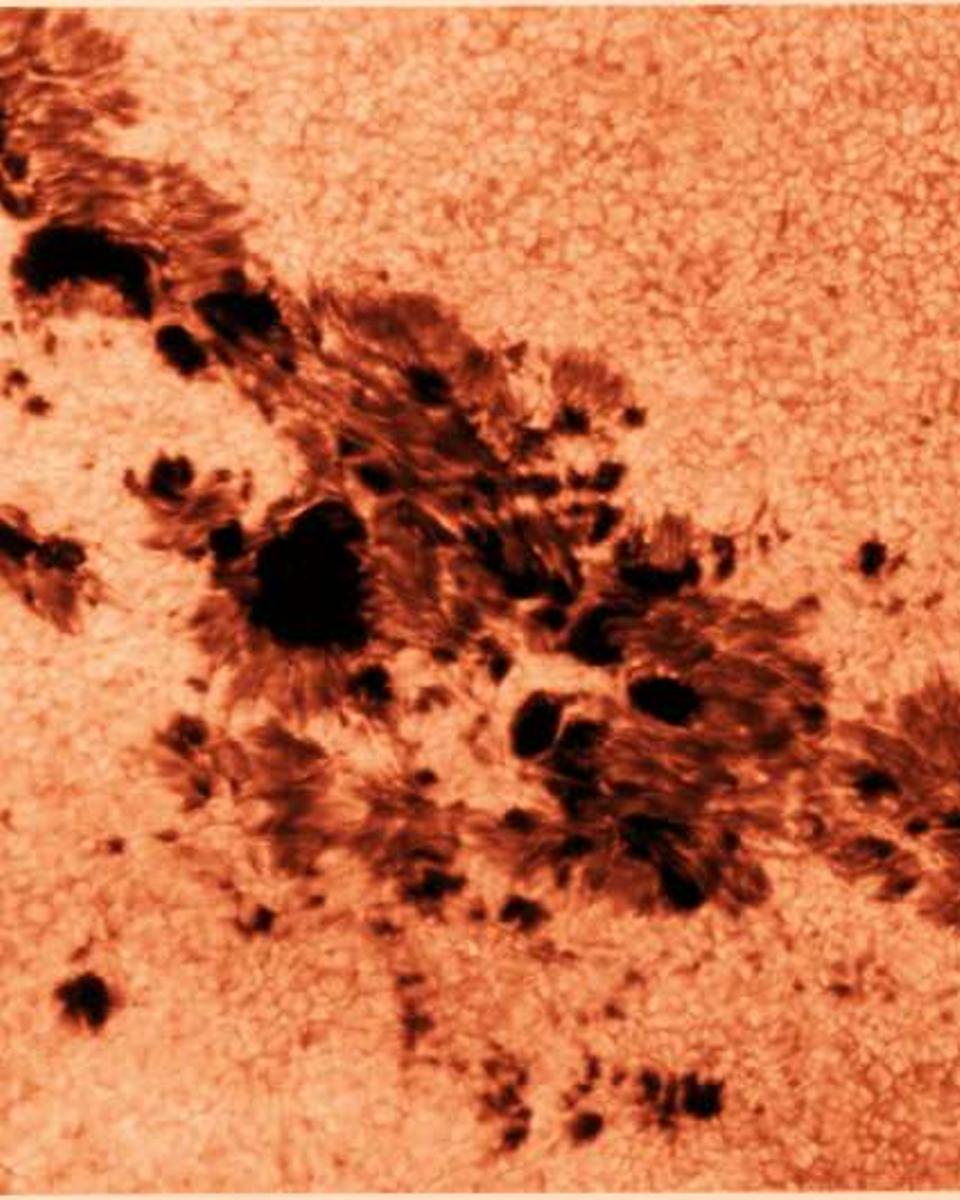
Sunspots: Magnetic Depressions
Our Sun has spots! These spots appear dark in photographs like the one above, but in fact sunspots are quite bright - they are just dark compared to the rest of the Sun. Sunspots…
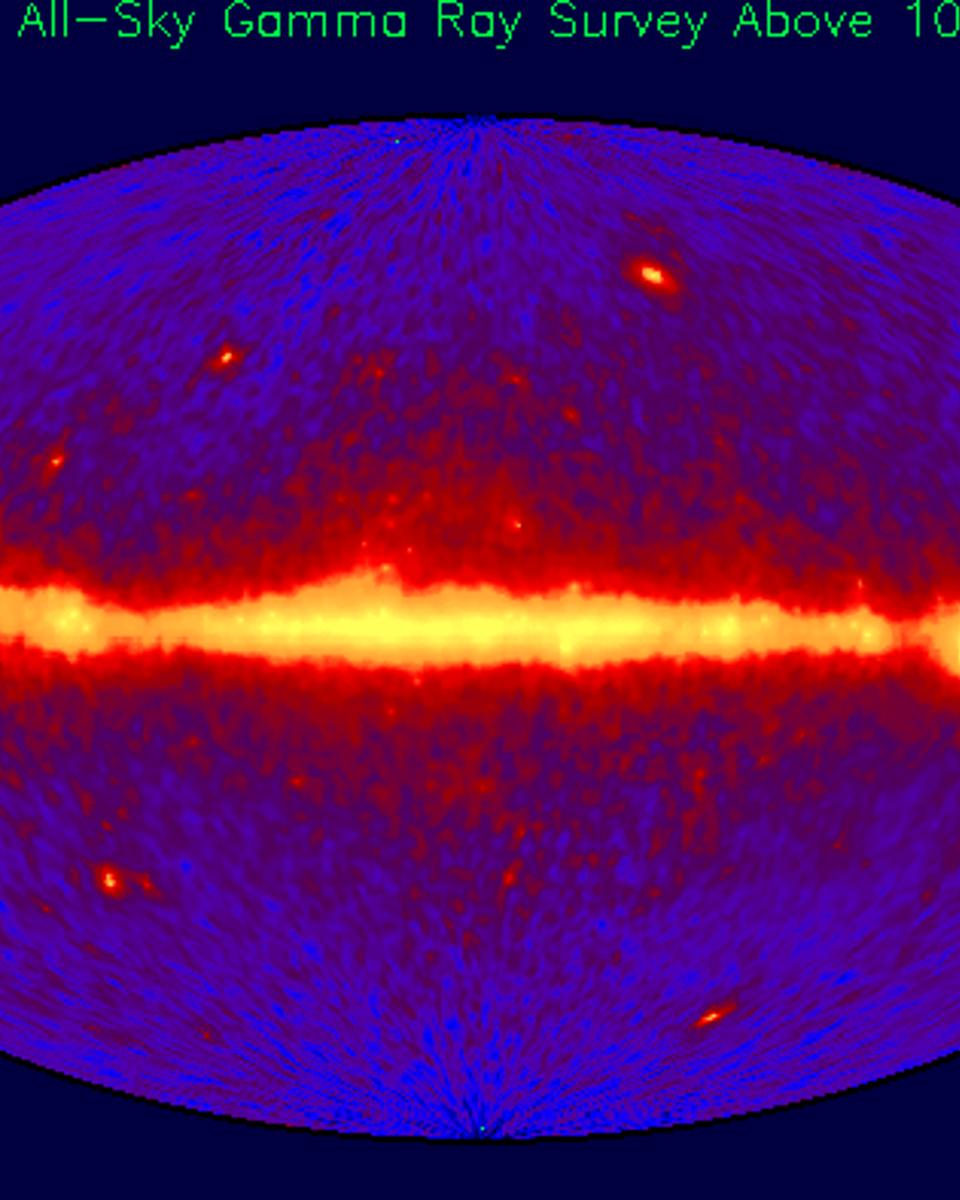
The Gamma Ray Sky
What if you could “see” gamma rays? If you could, the sky would seem to be filled with a shimmering high-energy glow from the most exotic and mysterious objects in the Universe .…
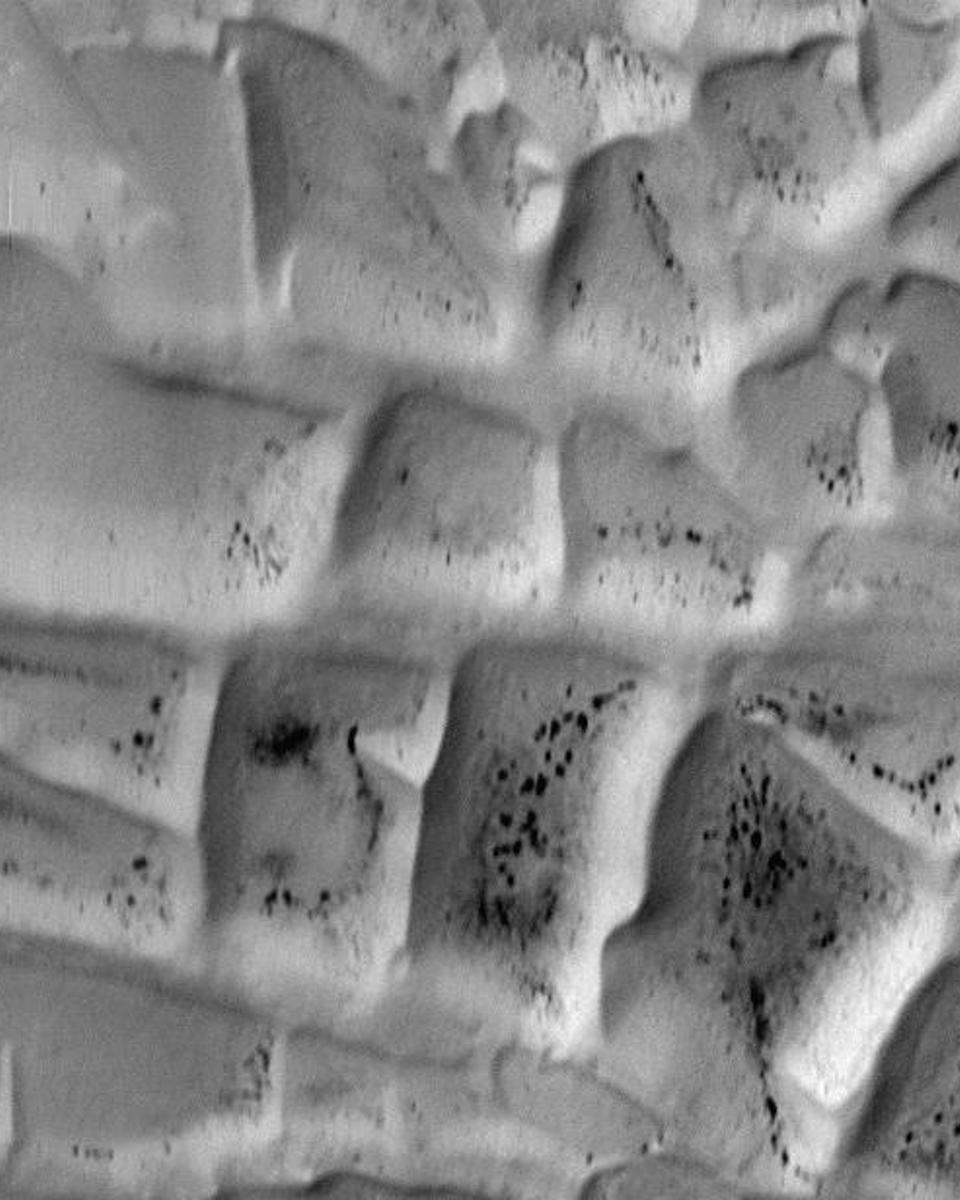
Mars: Ridges Near The South Pole
No, it's not breakfast ... but looking down from an orbiting spacecraft , the odd intersecting ridges covering this area of Mars do present a waffle-like appearance. The cause of…
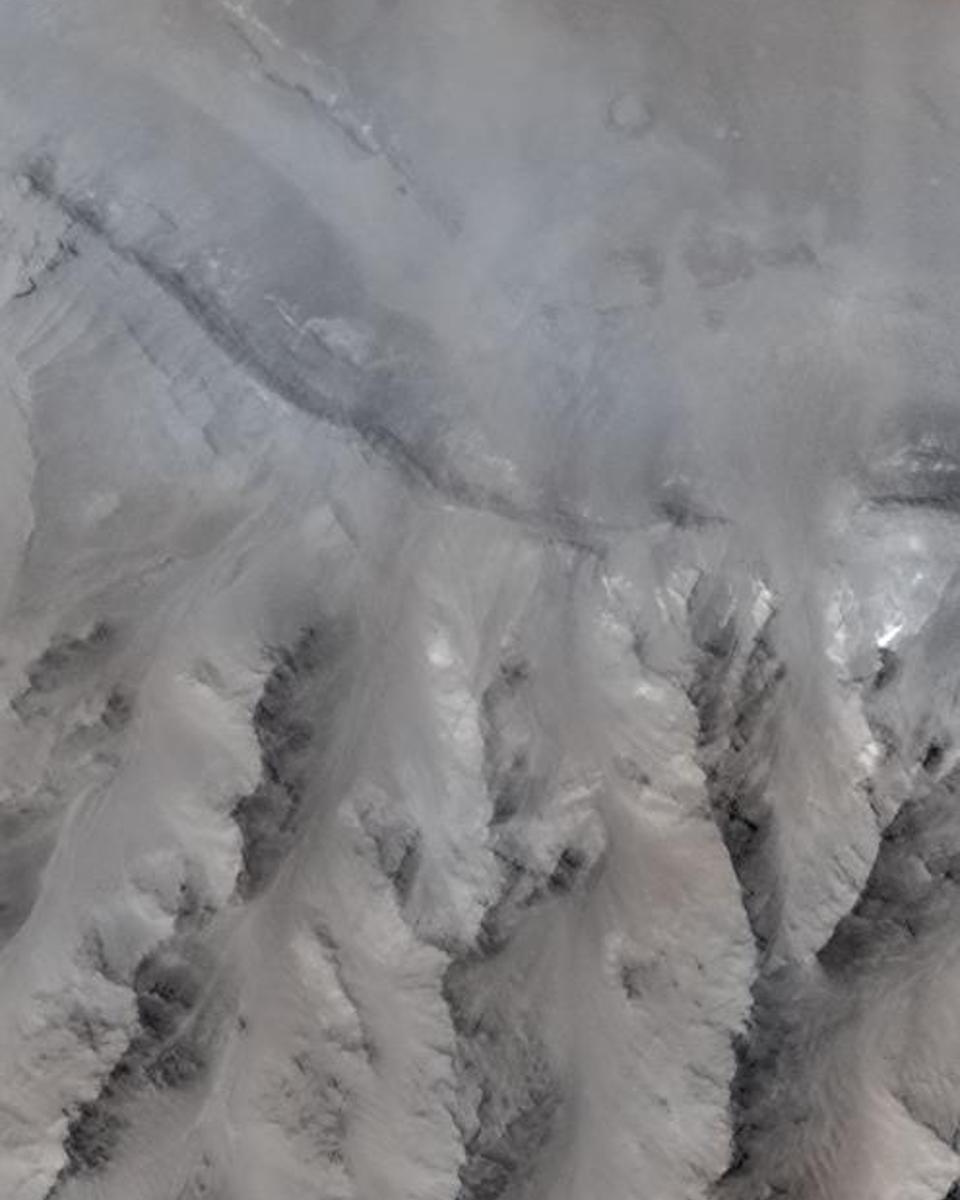
Mars: A Canyon's Edge
High resolution Mars Global Surveyor images were combined with Viking Orbiter color data to produce this stunning, detailed view of a Martian canyon's edge. The area pictured is…
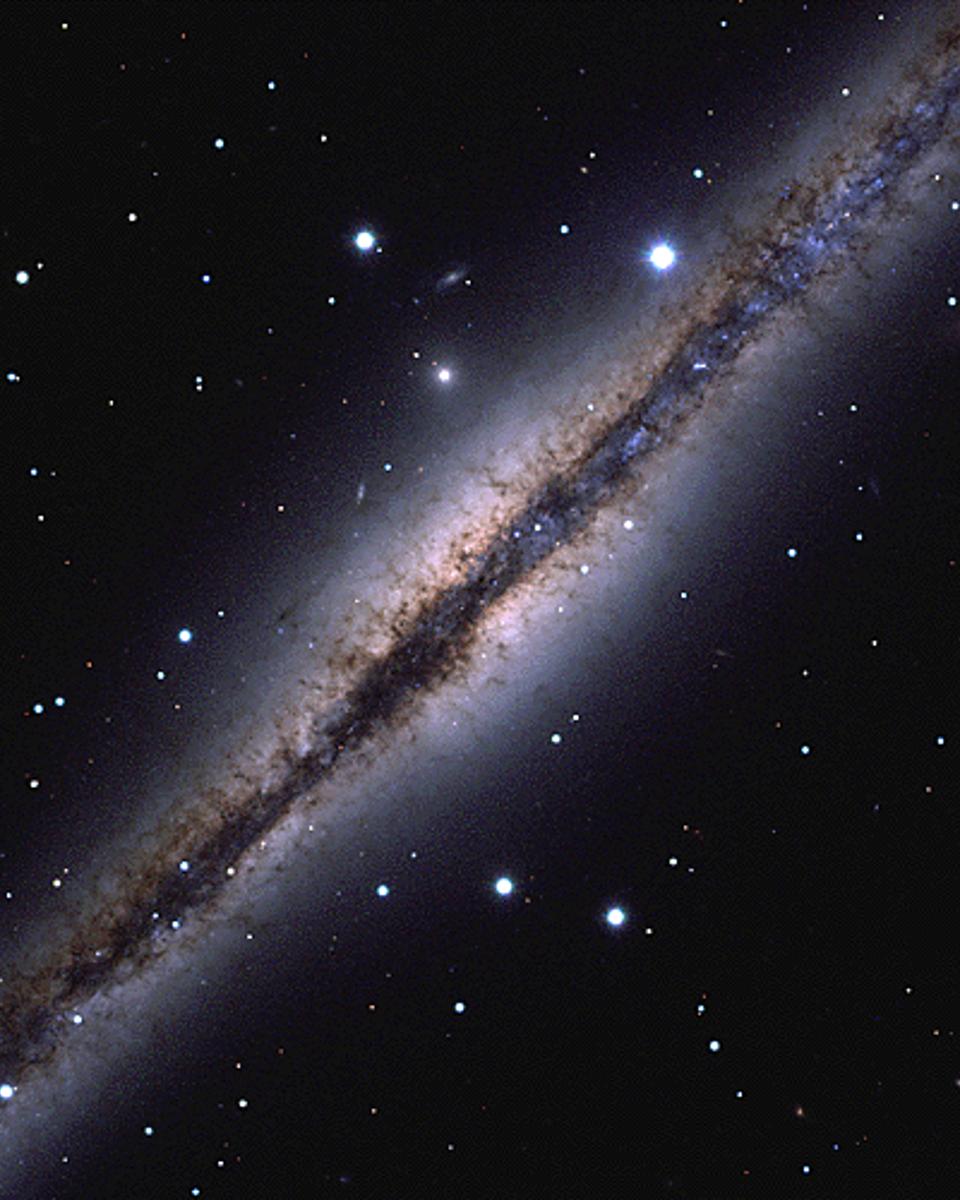
Interstellar Dust-Bunnies of NGC 891
What is going on in NGC 891 ? This galaxy appeared previously to be very similar to our own Milky Way Galaxy : a spiral galaxy seen nearly edge-on . However, recent…
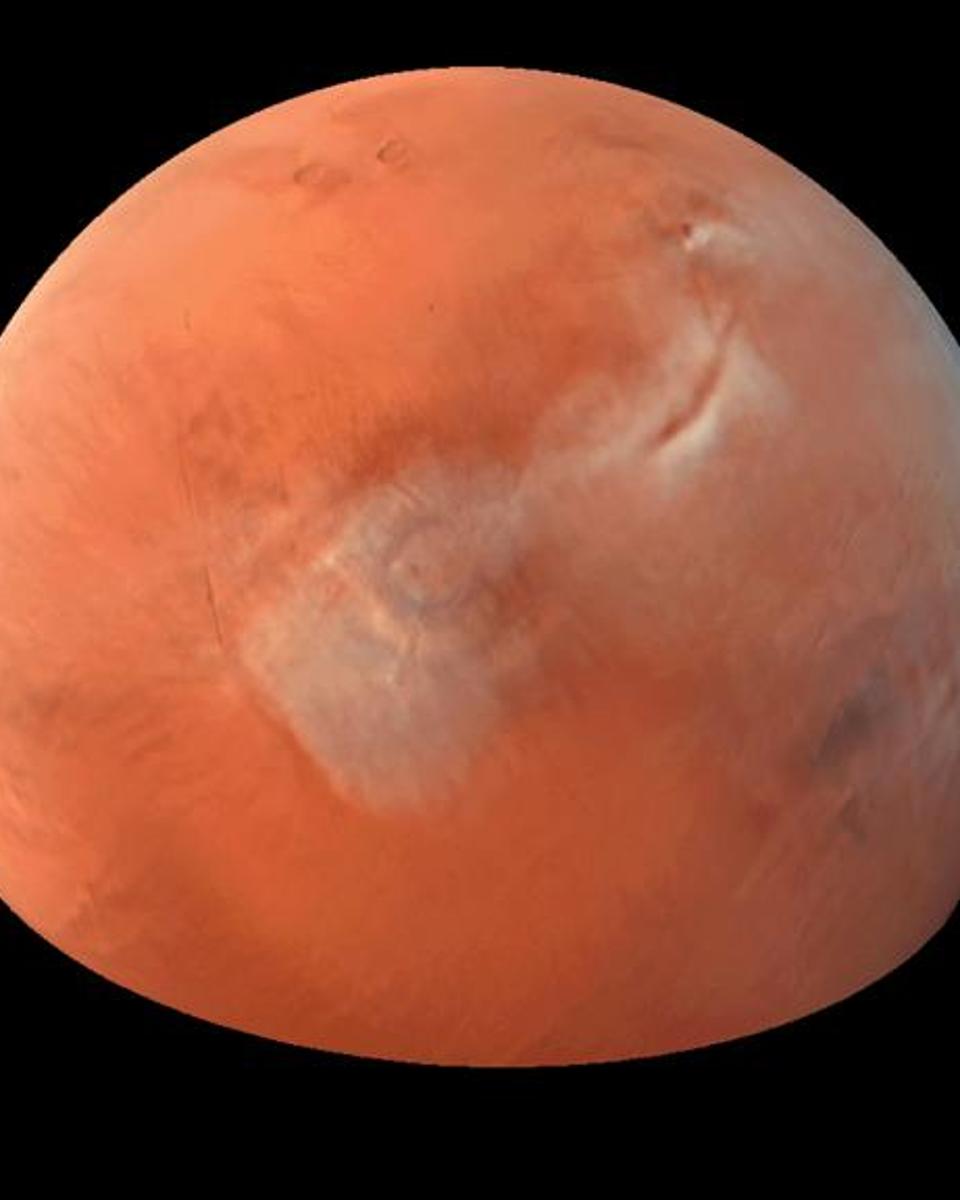
Clouds Over Tharsis on Mars
When and where do clouds form on Mars ? The Mars Global Surveyor spacecraft currently orbiting Mars is finding out. Photographs released last week showed clouds forming above…
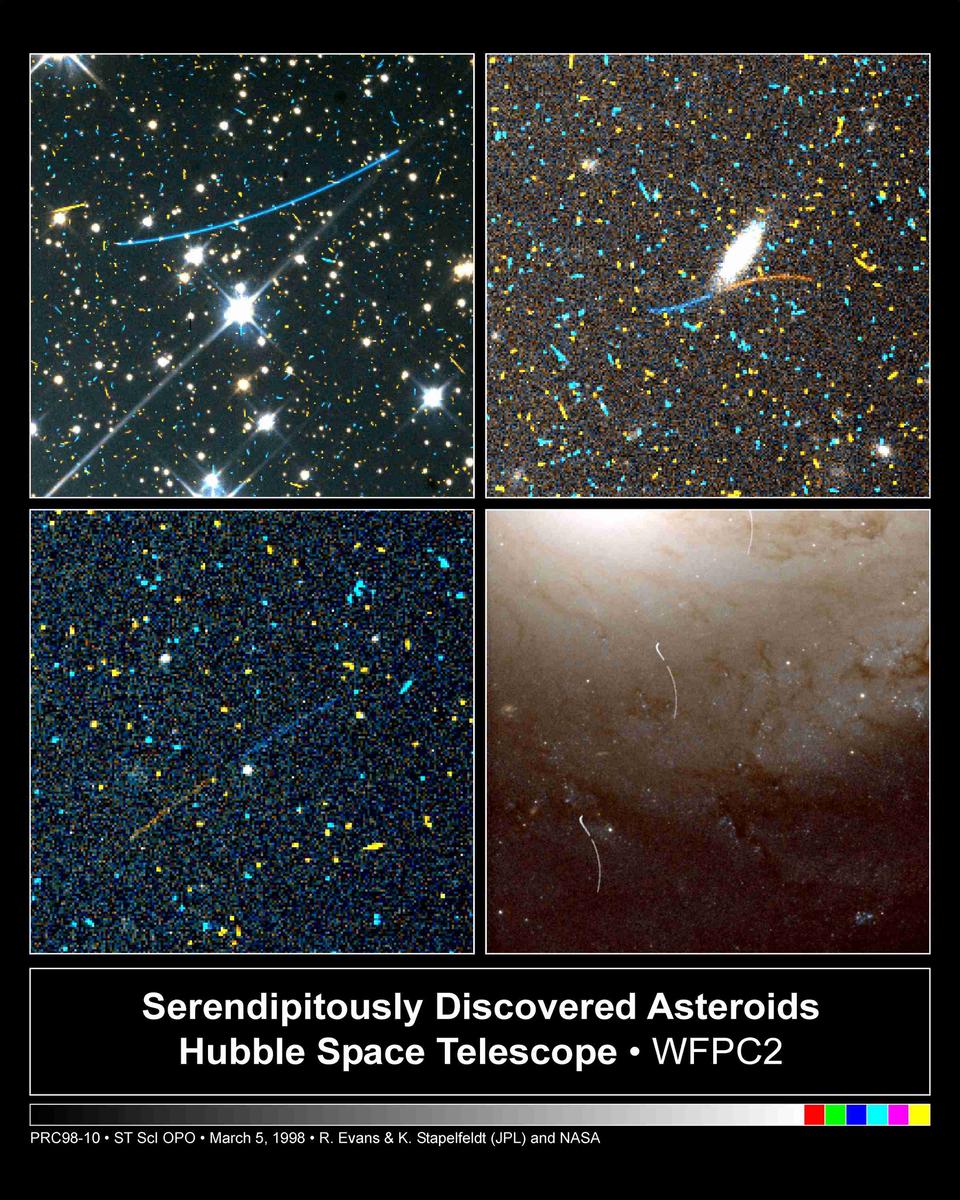
Asteroids in the Distance
Rocks from space hit Earth every day. The larger the rock, though, the less often Earth is struck. Many kilograms of space dust pitter to Earth daily. Larger bits appear initially…
Viewing discoveries from 8 April 1998 through 16 March 1998.