Browse NASA Astronomy Picture of the Day archive by date and media: Archive Discoveries
Browse the NASA APOD archive without needing the exact date first. Filter by media type and keep moving deeper into older images and videos.
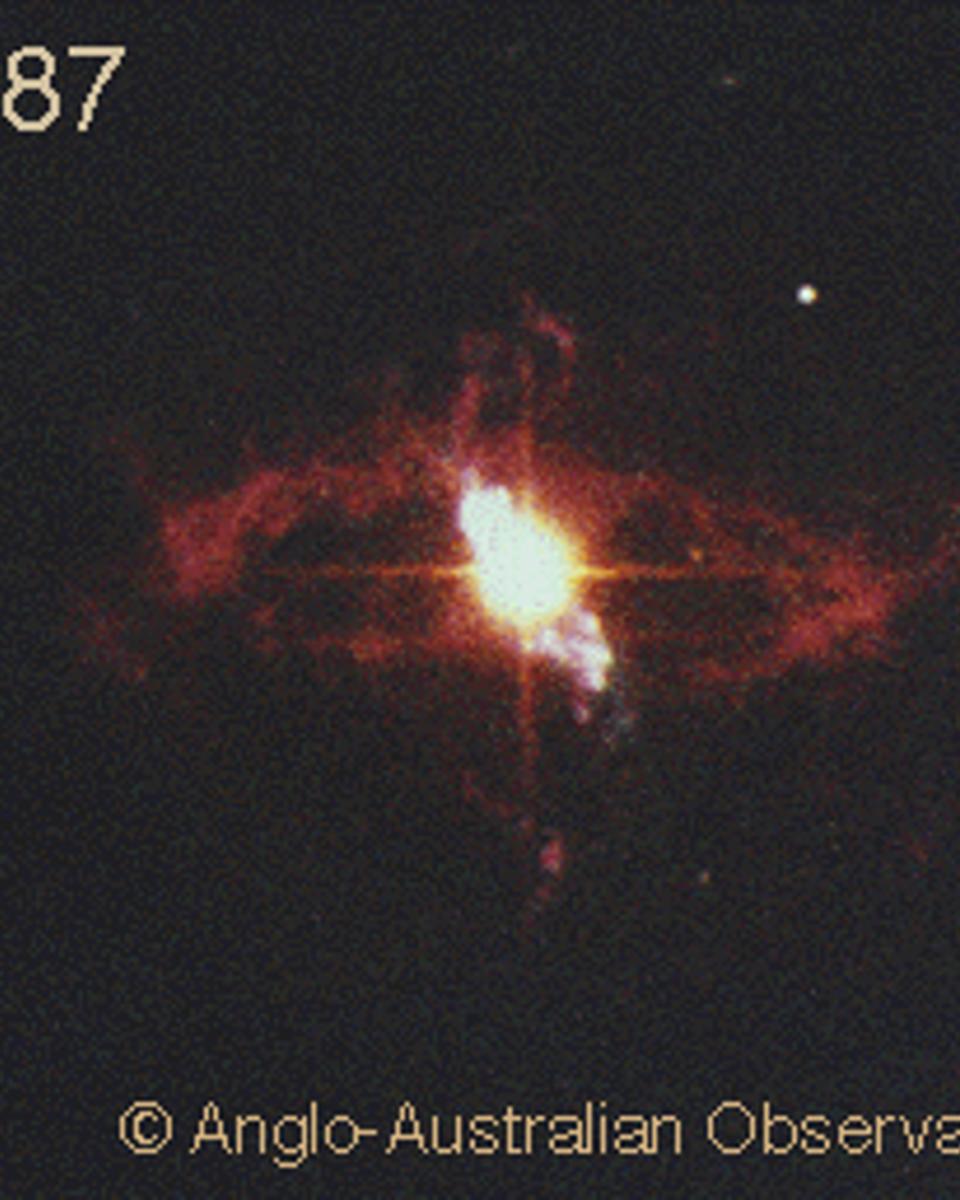
Symbiotic Star System R Aquarii
Sometimes stars work together to create a spectacular display. Such is the case with the binary star system R Aquarii - a “symbiotic” star system. Here two stars, a variable giant…
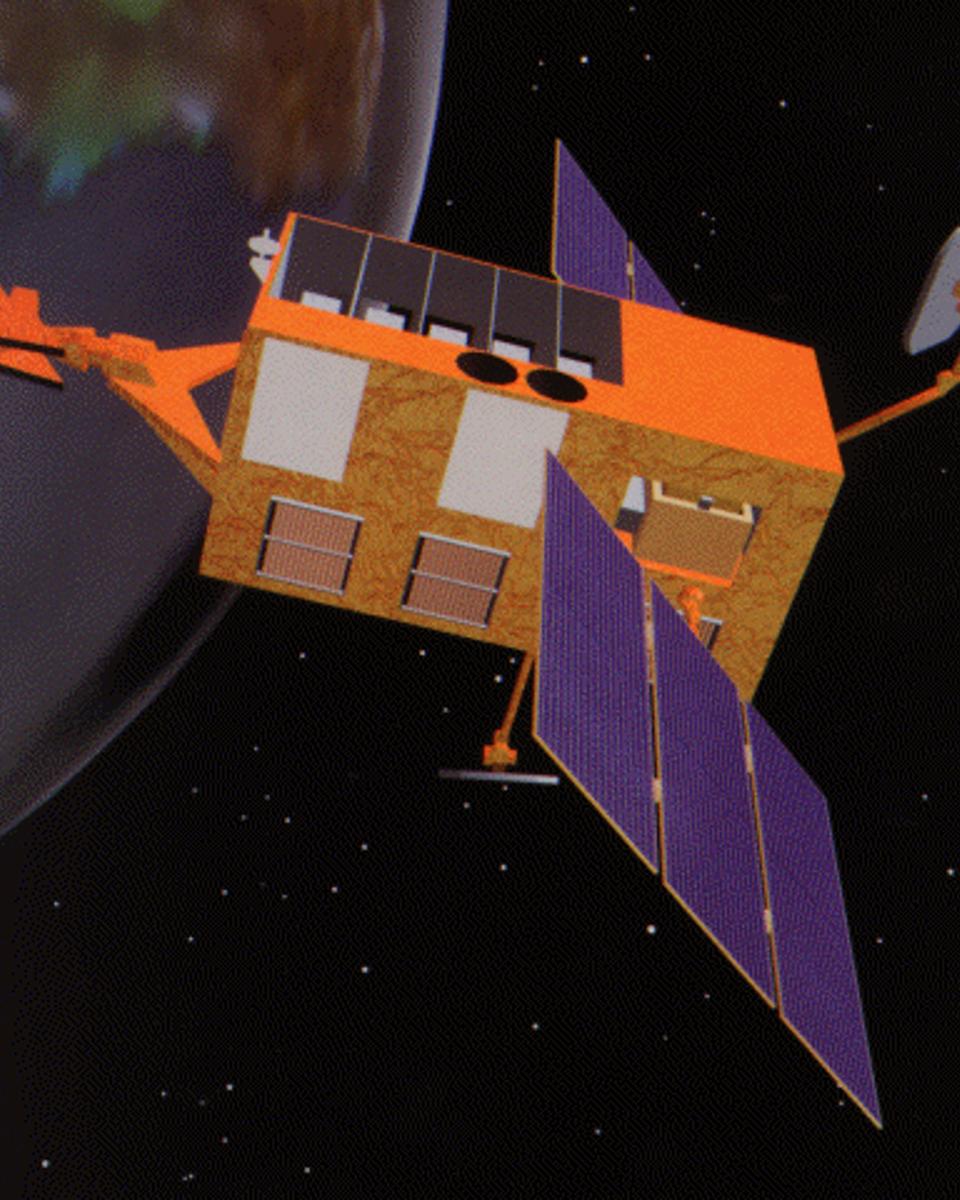
The X-ray Timing Explorer
Launched Saturday on a Delta rocket , the X-ray Timing Explorer (XTE) will watch the sky for rapid changes in X-rays . XTE carries three separate X-ray telescopes. The…
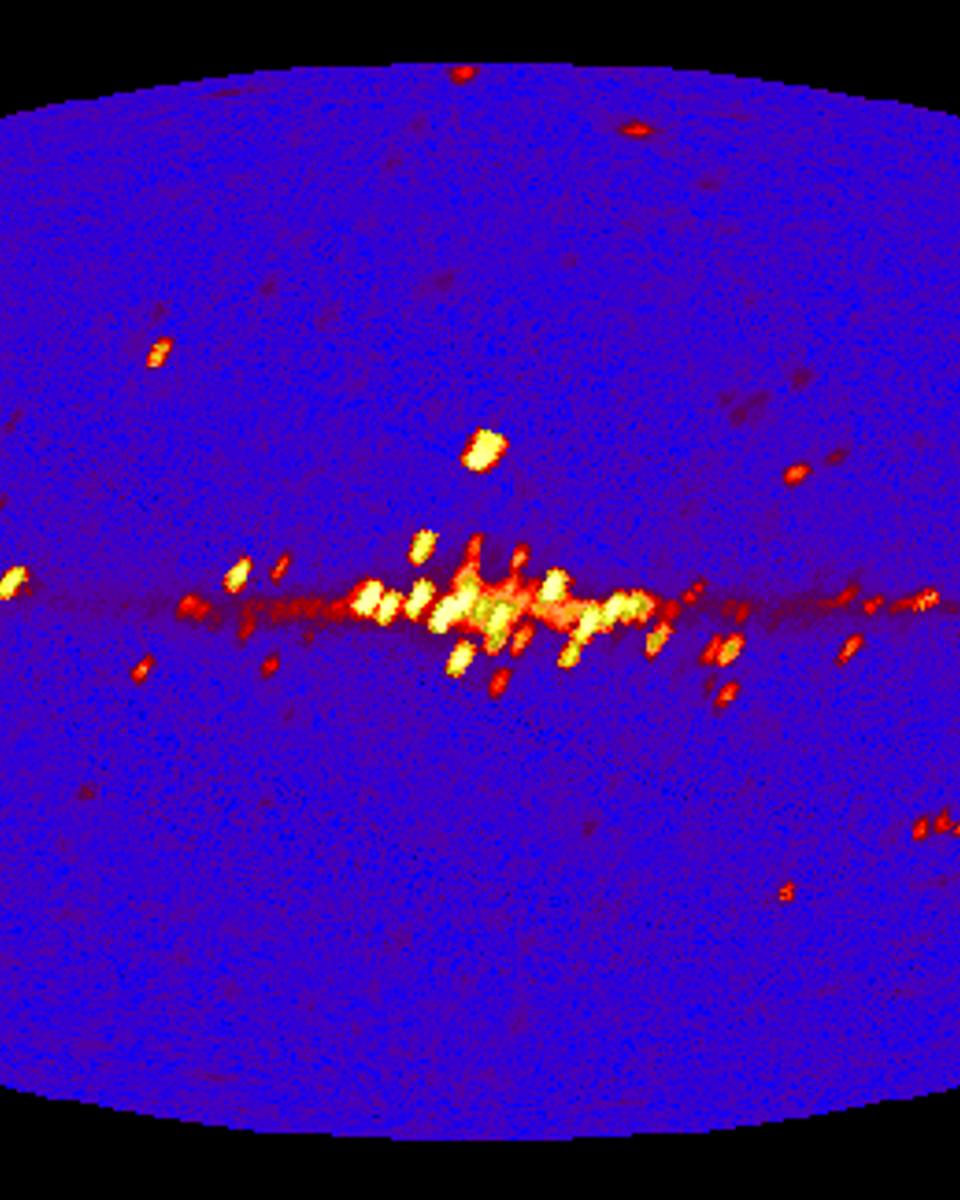
The X-Ray Sky
What if you could see X-rays ? If you could, the night sky would be a strange and unfamiliar place. X-rays are about 1,000 times more energetic than visible light photons and are…
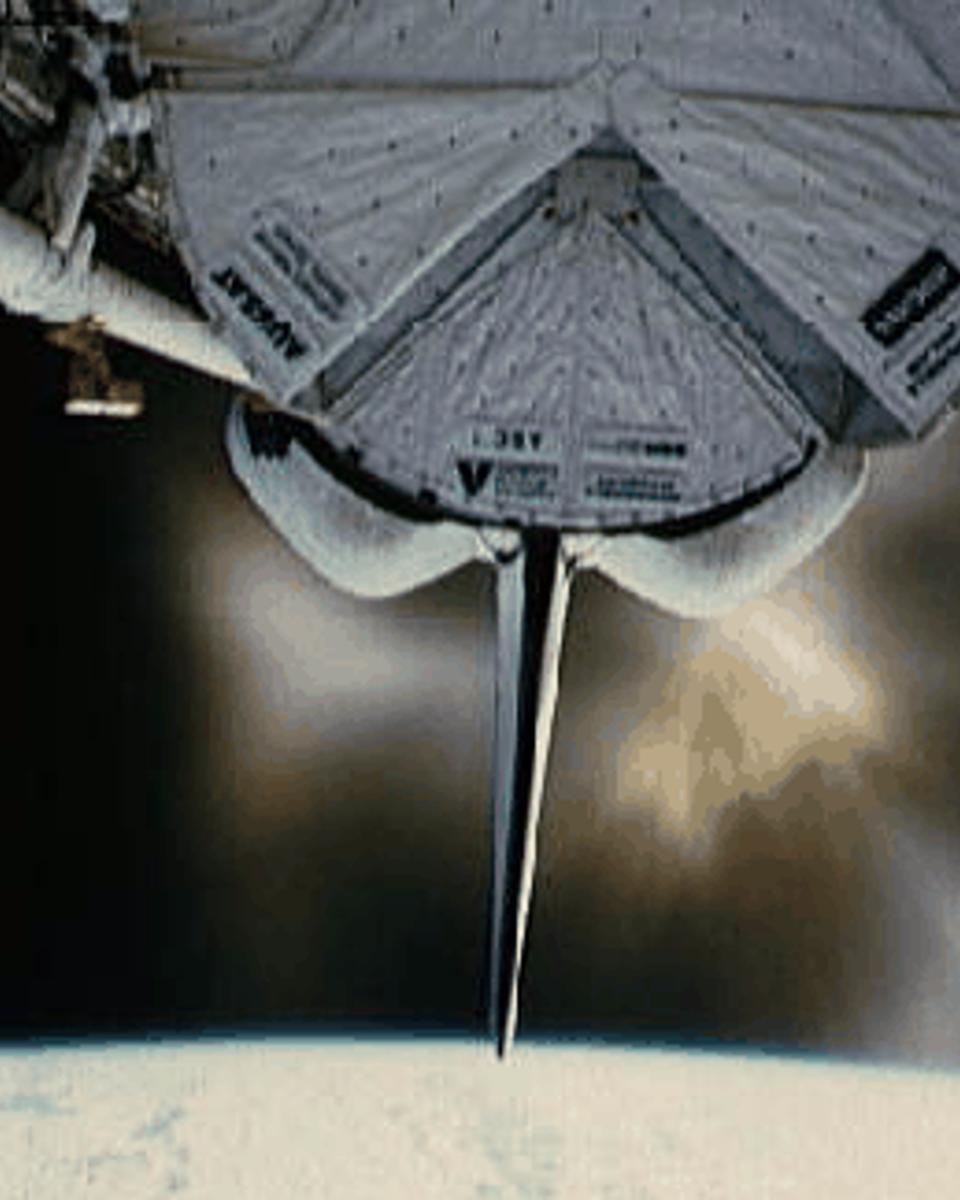
Shuttle Engine Blast
The Space Shuttle Discovery 's orbital maneuvering system (OMS) engine firing produced this dramatic flare as it cruised “upside down” in low Earth orbit. Discovery was named for…
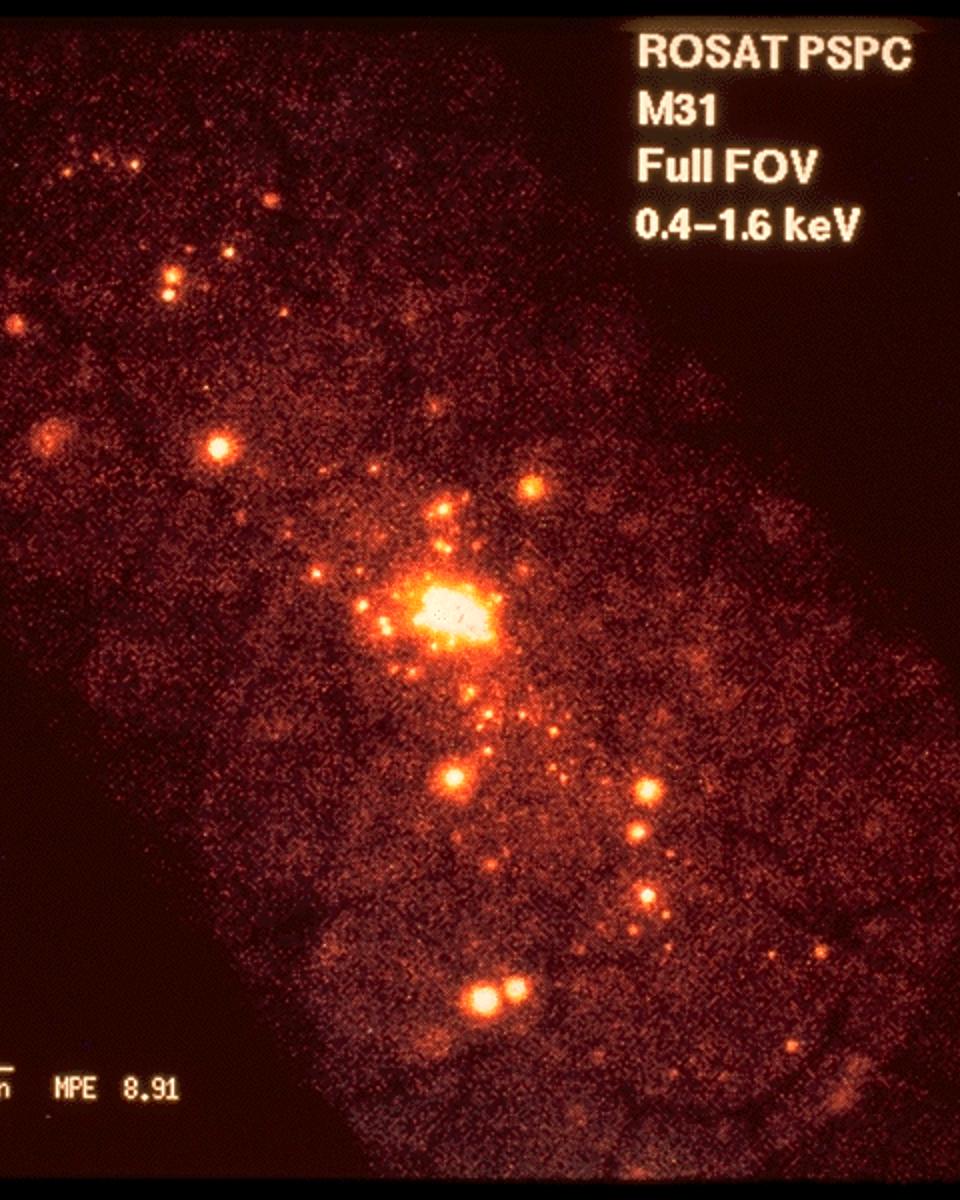
The X-ray Sources of M31
Just like our own Milky Way Galaxy , the nearest major galaxy M31 has many star systems spewing high energy radiation . High energy X-radiation is visible to certain satellites in…
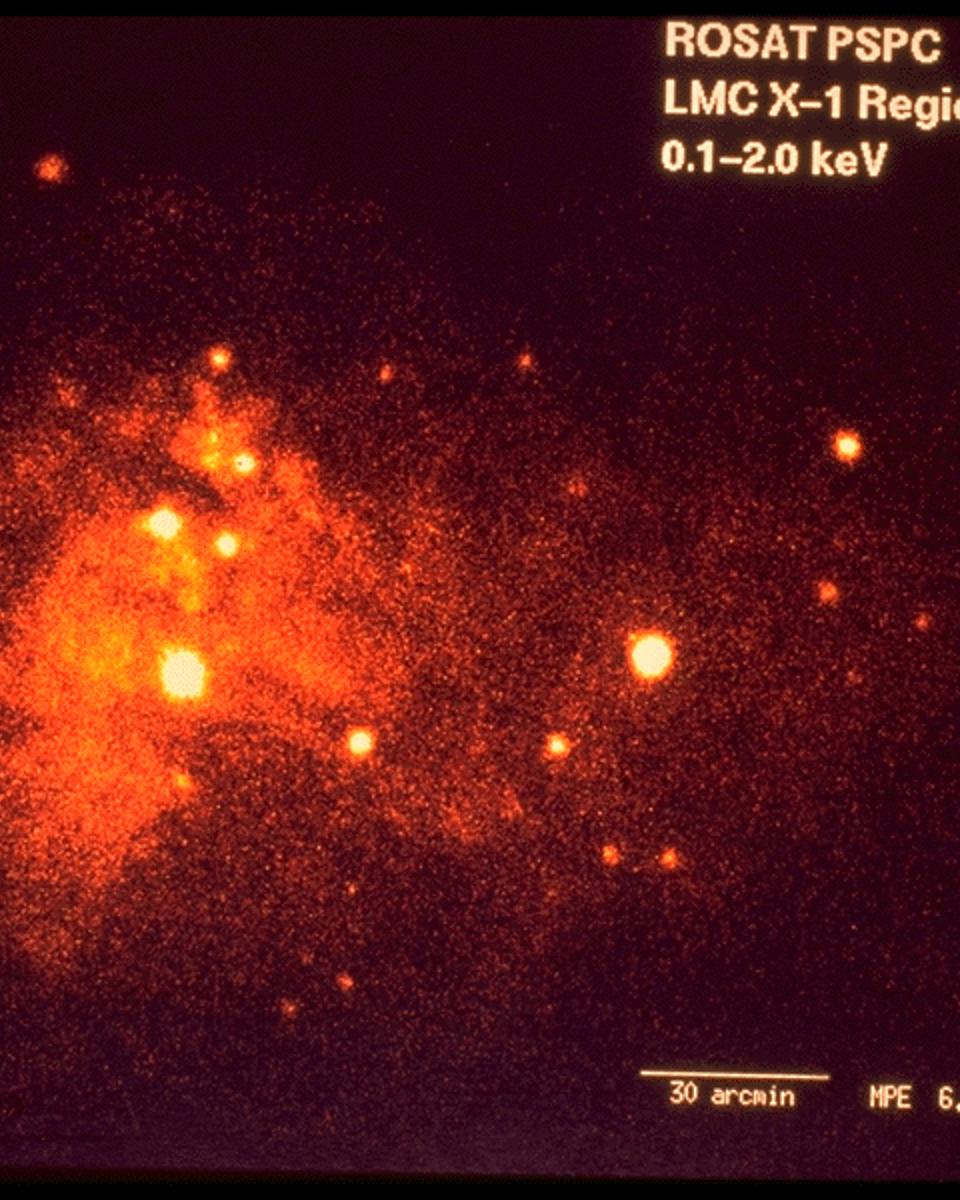
LMC X-1: A Black Hole Candidate
The strongest source of X-rays in the Large Magellanic Cloud originates from an unusually energetic binary star system . This strong source, dubbed LMC X-1, is thought to be a…
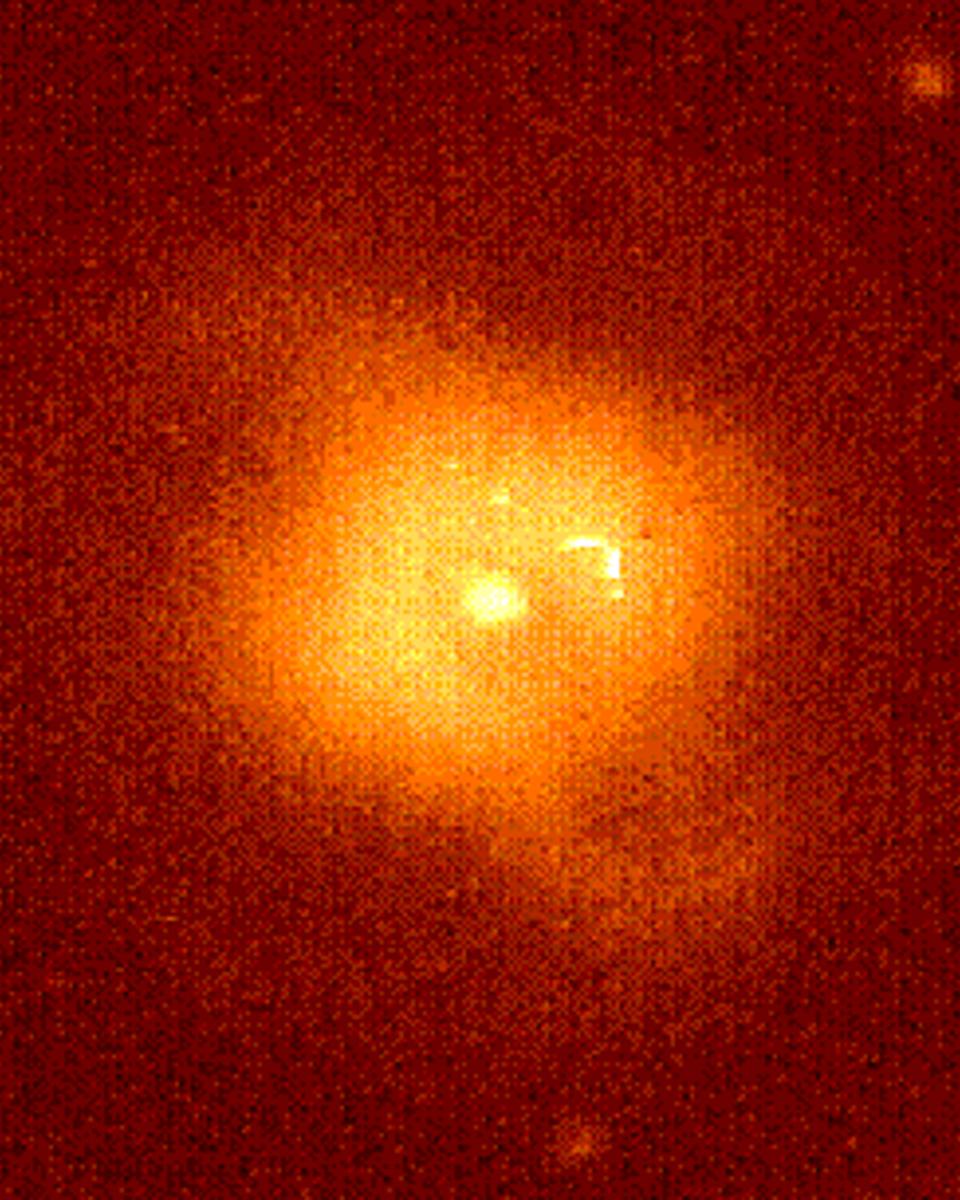
NGC 4361: Galaxy Shaped Planetary Nebula
Glowing in the red light emitted by hydrogen atoms , the planetary nebula NGC 4361 is pictured above. The nebula itself is formed by the outer layers of gas shrugged off by the…
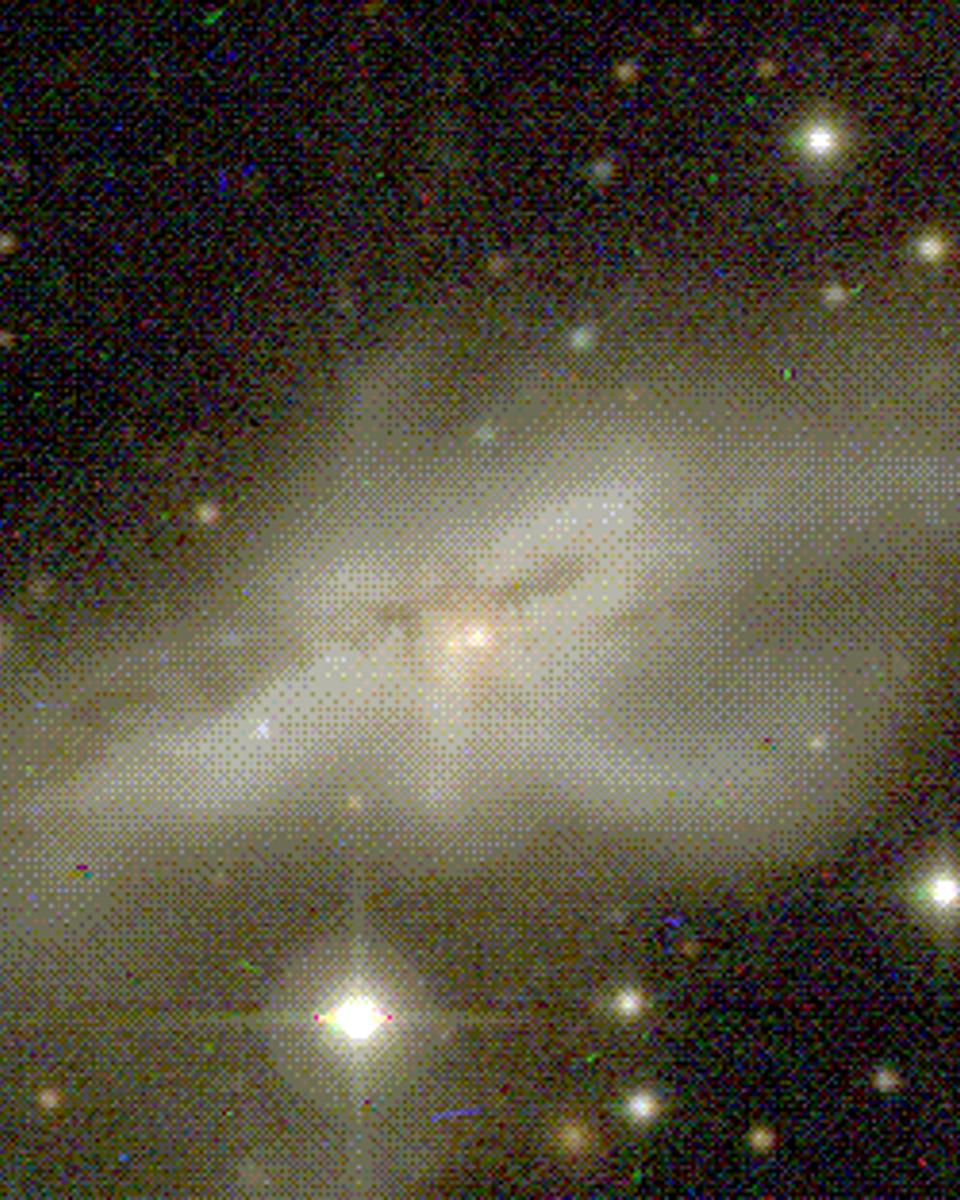
NGC 6240: When Galaxies Collide
Sometimes even galaxies can suffer a fatal attraction. Here gravity causes two galaxies to collide in a spectacular display of energetic gas , dust , and light. When galaxies…
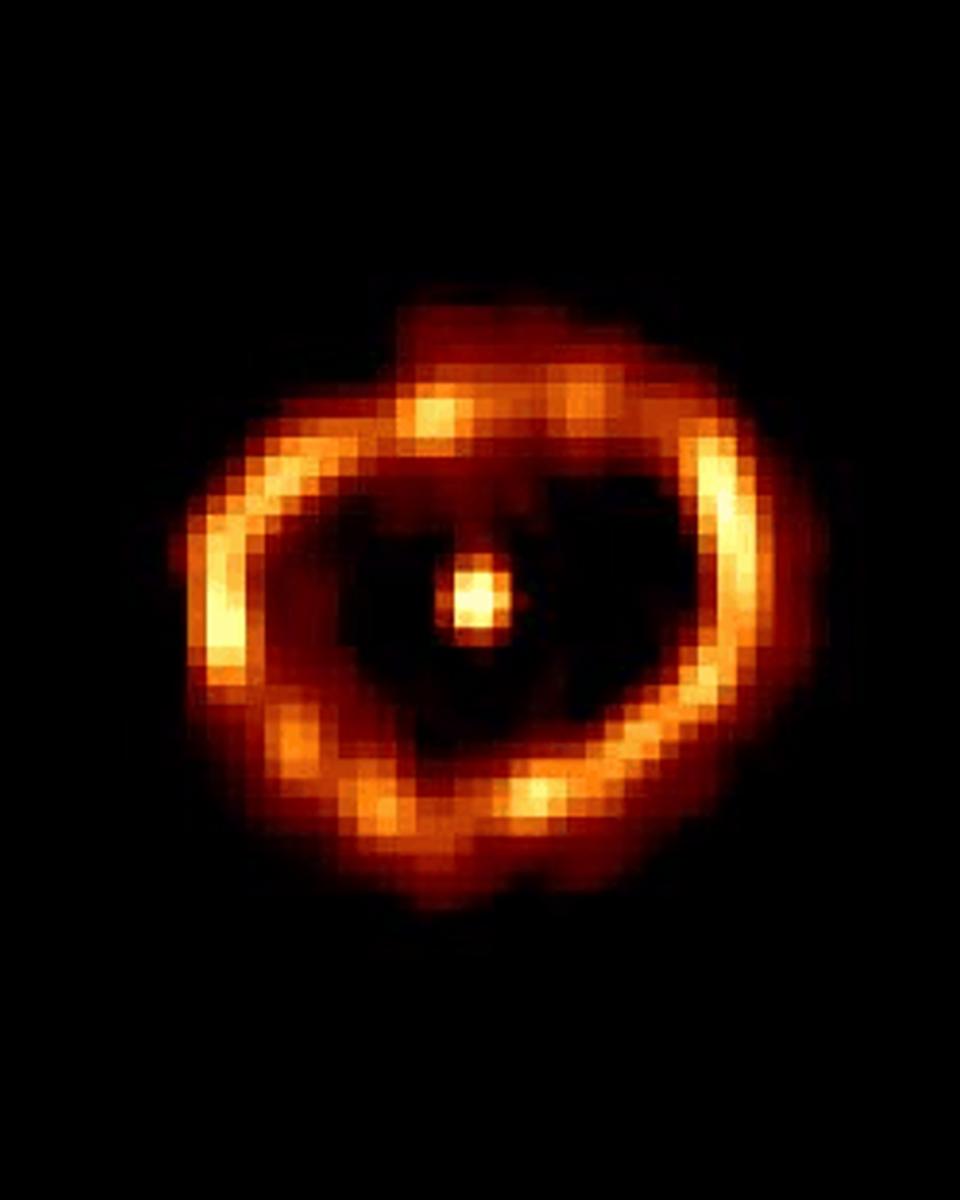
Nova Cygni 1992
In 1992 a tremendous explosion occurred in the constellation of Cygnus . Dubbed Nova Cygni 1992, this event most probably occurred in an accretion disk binary system . Astronomers…
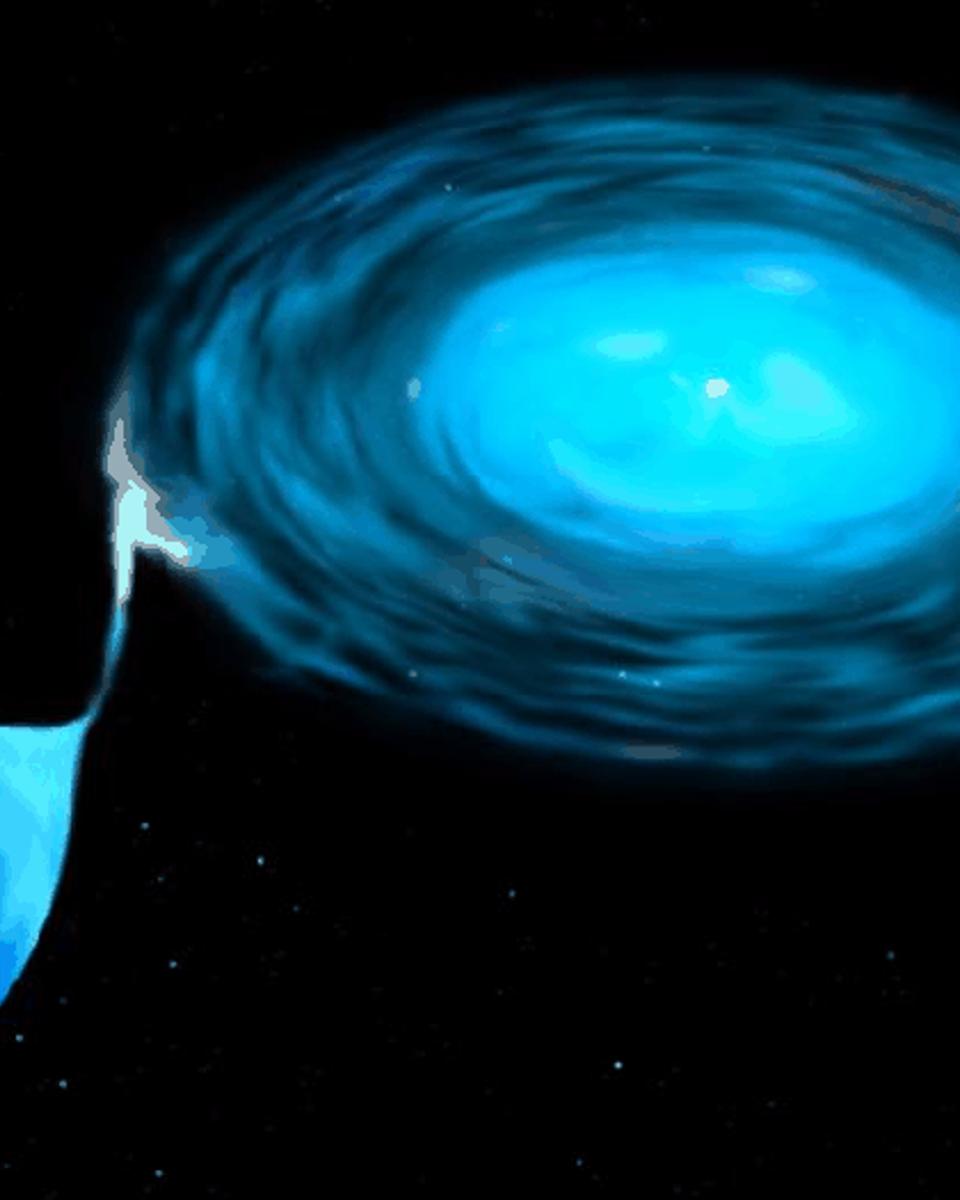
Accretion Disk Binary System
Our Sun is unusual in that it is alone - most stars occur in multiple or binary systems . In a binary system, the higher mass star will evolve faster and will eventually become a…
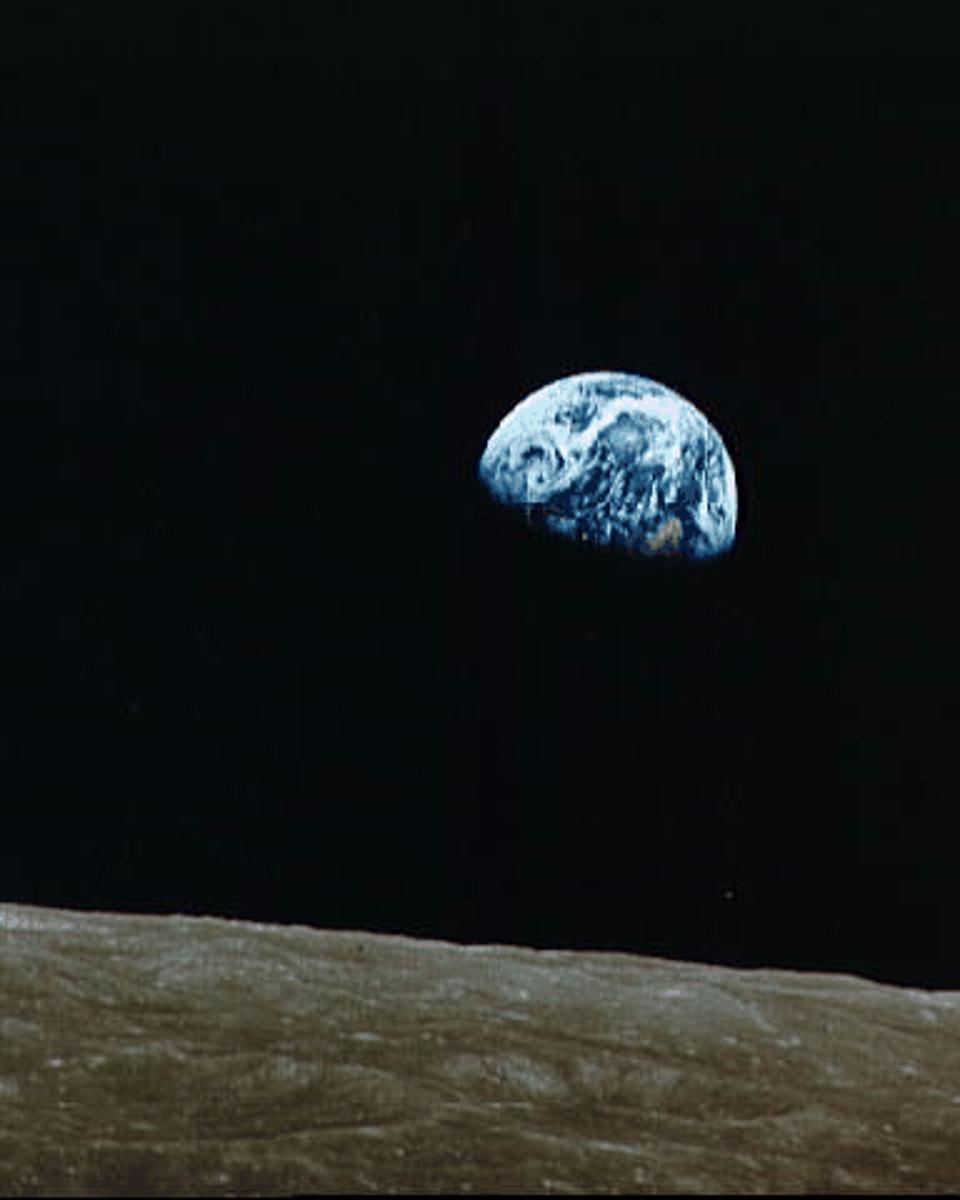
Earth Rise
During the 1968 Christmas season Frank Borman, James Lovell, and William Anders flew the Apollo 8 command module From the Earth to the Moon and back (launched Dec. 21, achieved 10…
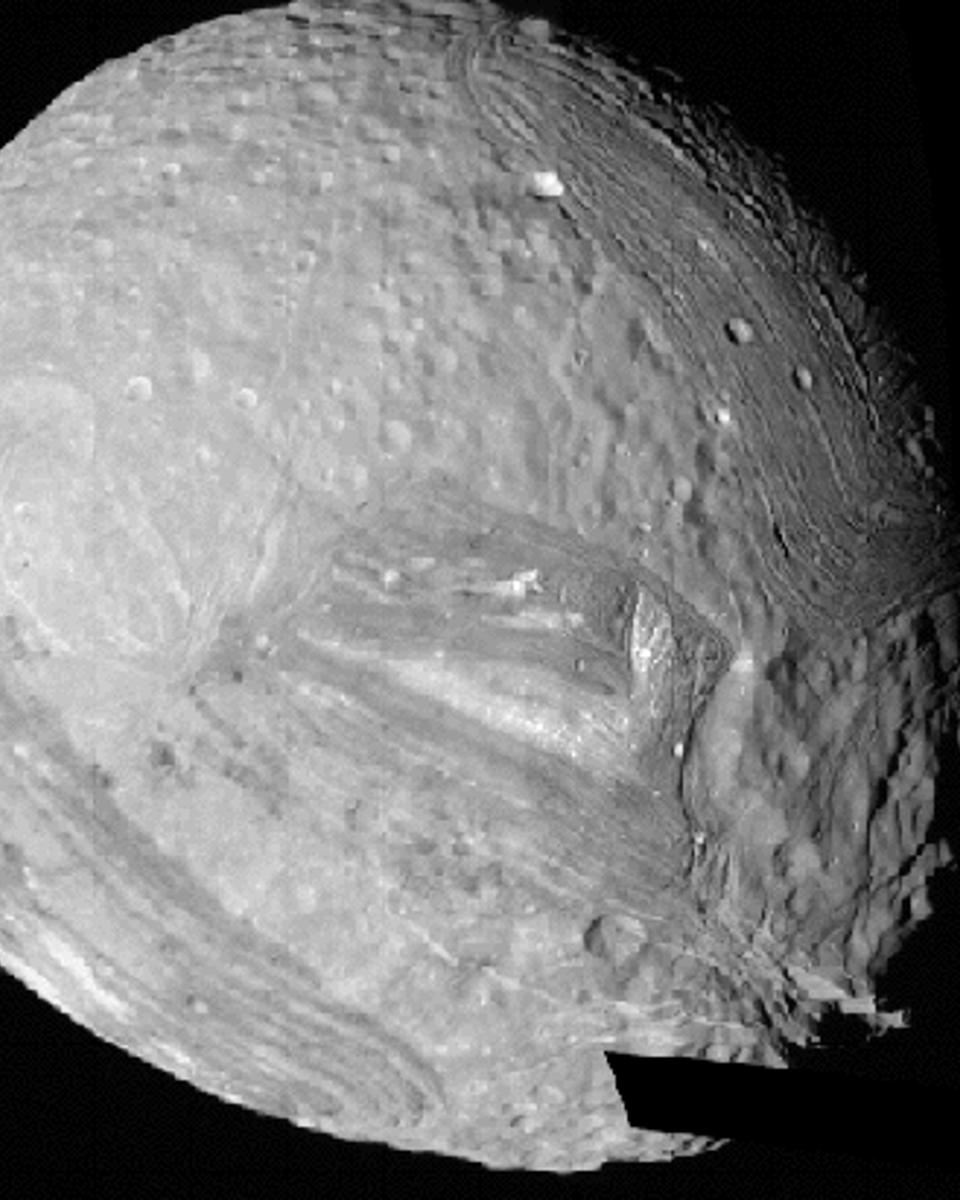
Uranus' Moon Miranda
NASA's robot spacecraft Voyager 2 passed the planet Uranus and its moons in 1986. While the cloud tops of Uranus proved to be rather featureless, the surface of Miranda , the…
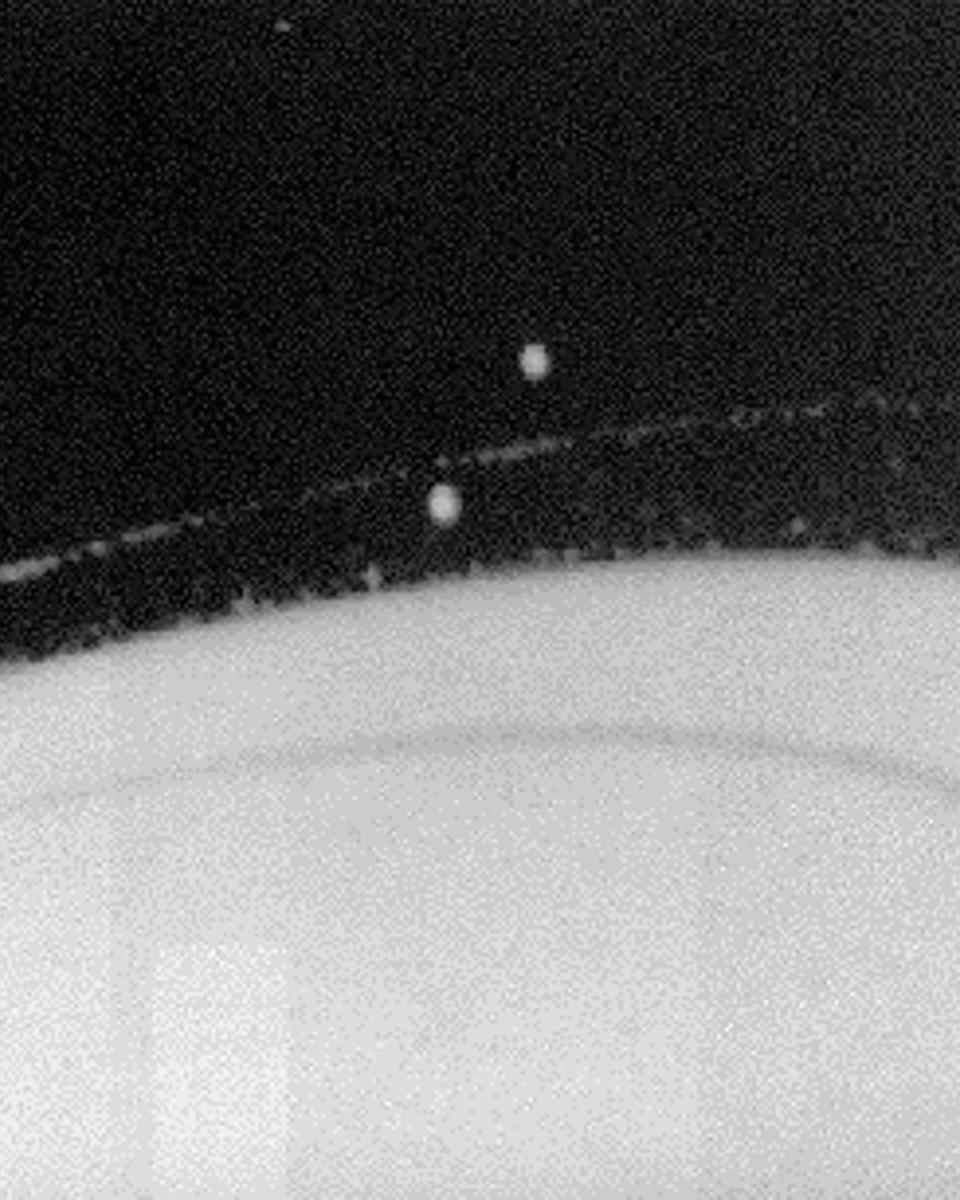
Prometheus, Pandora and Saturn's F Ring
The third and fourth innermost moons of Saturn were unexpectedly discovered to be gravitational “shepards.” The inner moon Prometheus and the outer moon Pandora use their…
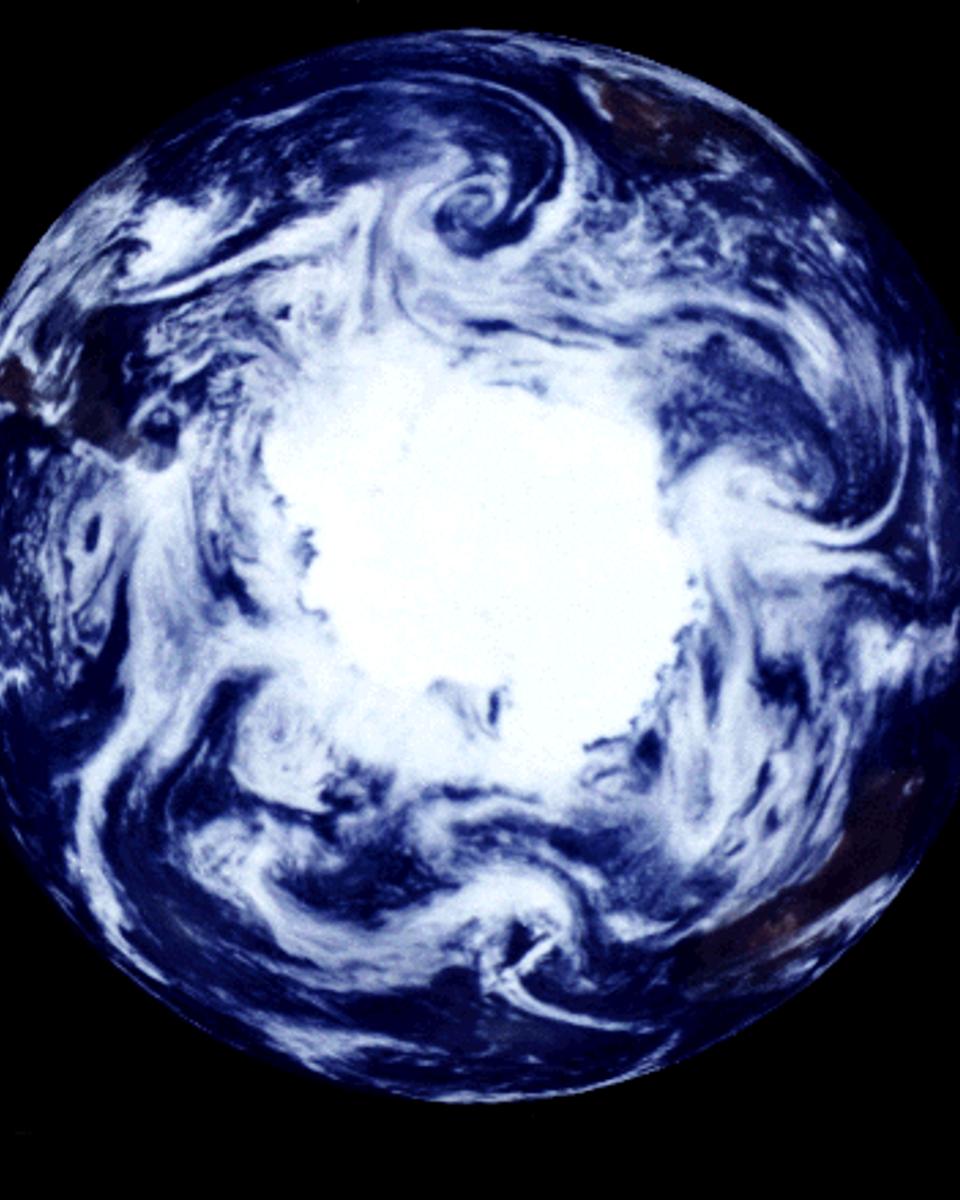
Summer at the South Pole
December 22 marks the Winter Solstice - the beginning of winter in the Earth's northern hemisphere, and the first day of summer in the south! This view of Earth's southern…
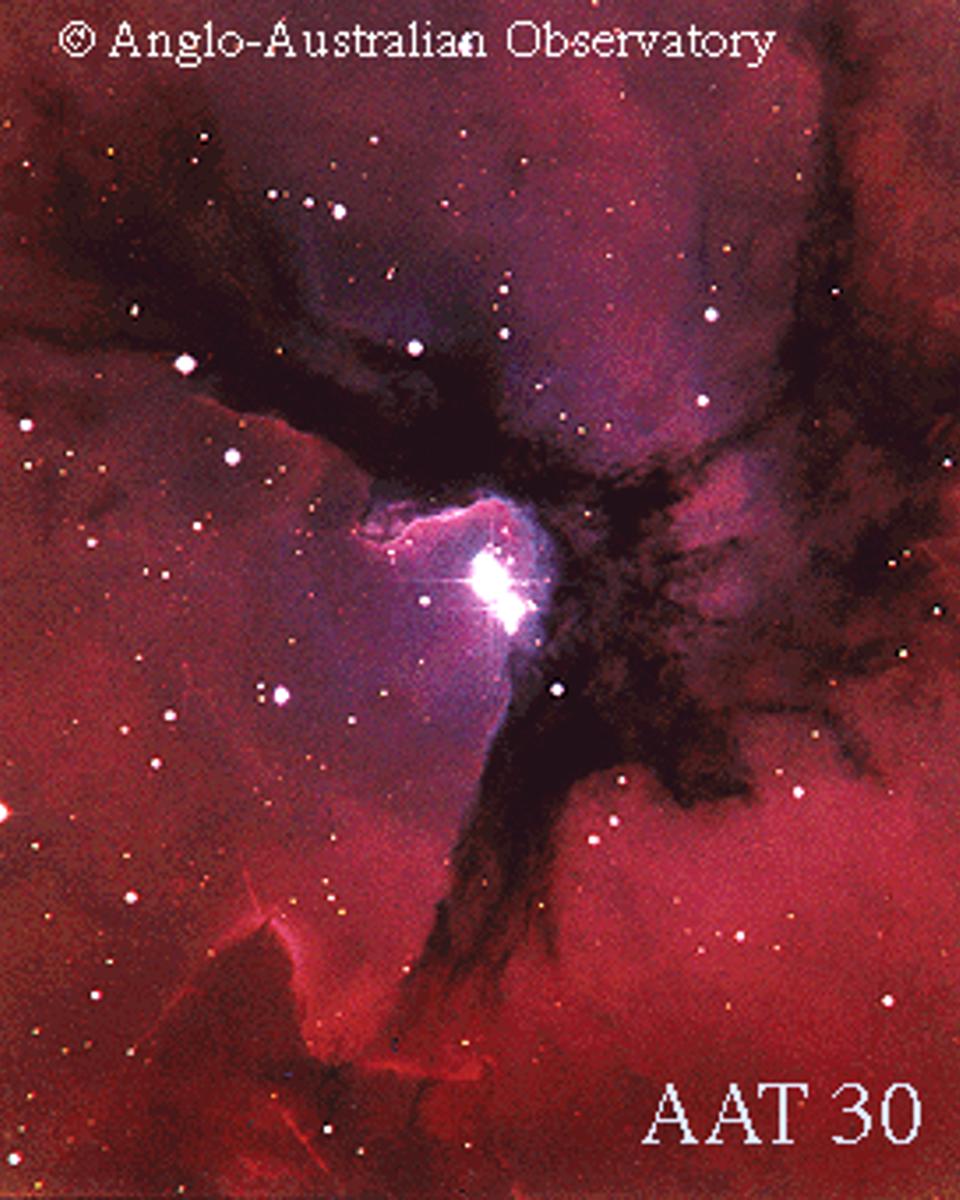
Hot Stars in the Trifid Nebula
In the center of the glowing red gas on the Trifid Nebula lies an open cluster of young hot stars . The energetic light from these stars strikes hydrogen atoms in the surrounding…
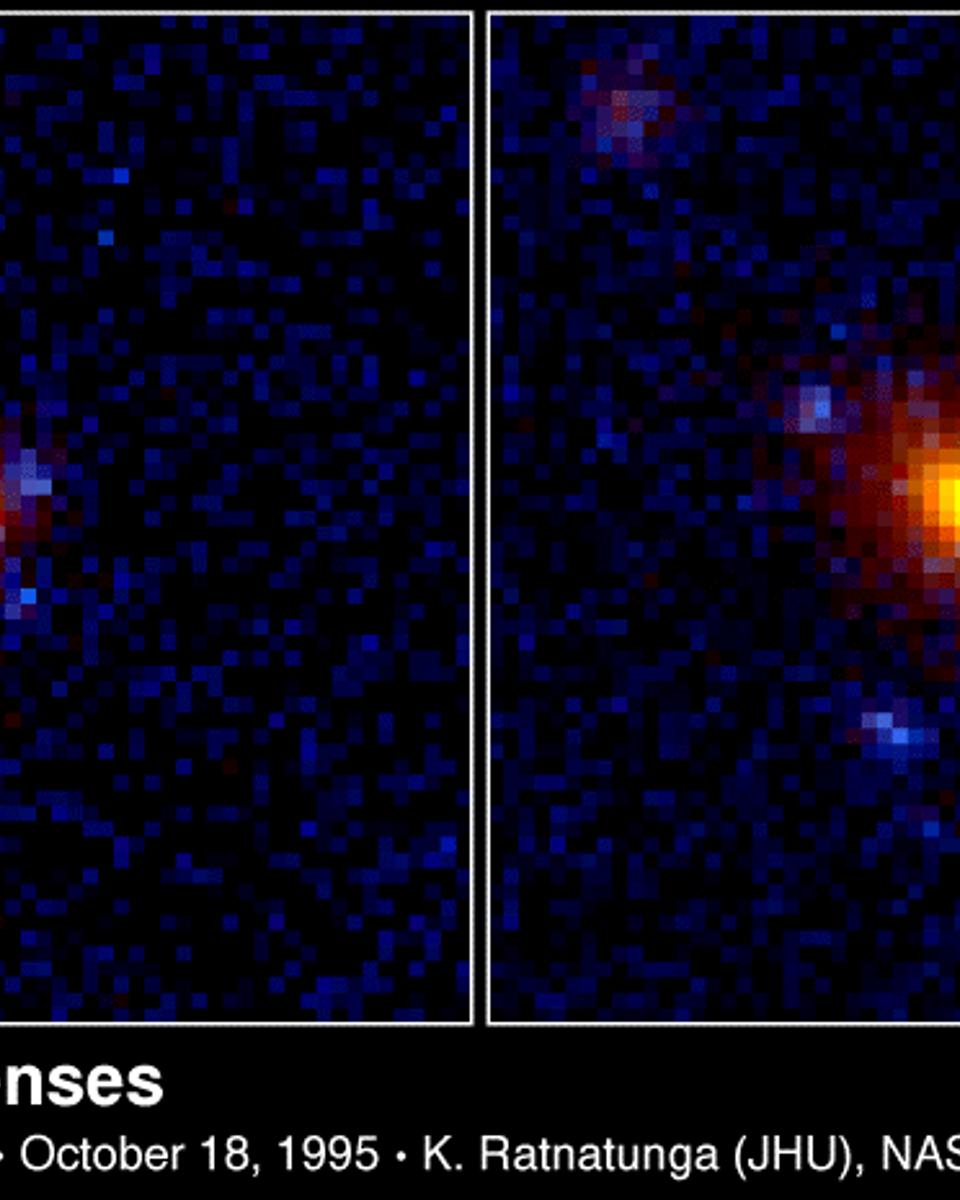
A Galaxy Gravitational Lens
Sometimes it takes a keen eye to see a good mirage. Around the center of the red galaxy image in the above photograph lie four blue “smudges.” Each smudge is actually a different…
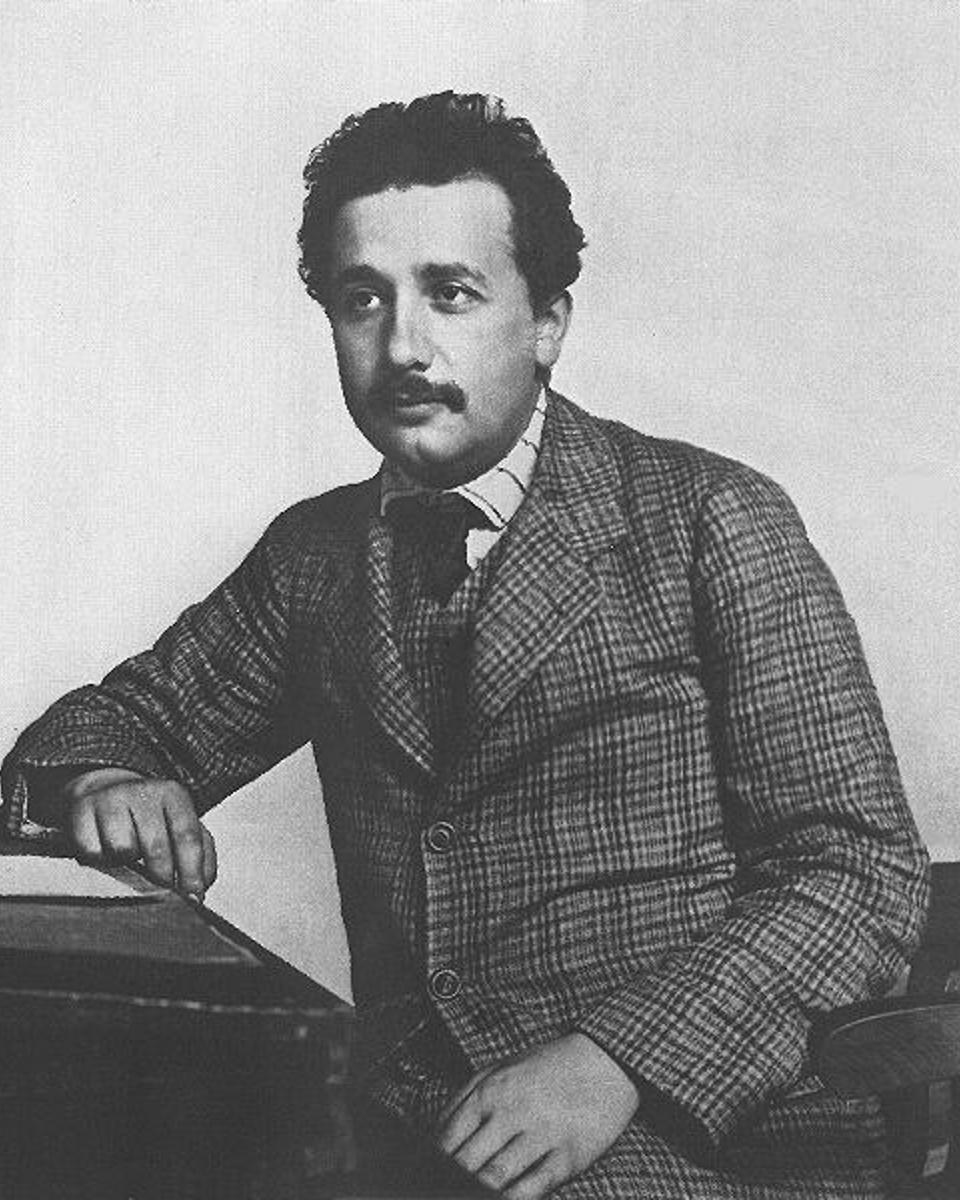
Albert Einstein: 1879 - 1955
Albert Einstein is considered by many the greatest astrophysicist. He is pictured here in the Swiss Patent Office where he did much of his great work. Einstein 's many visionary…
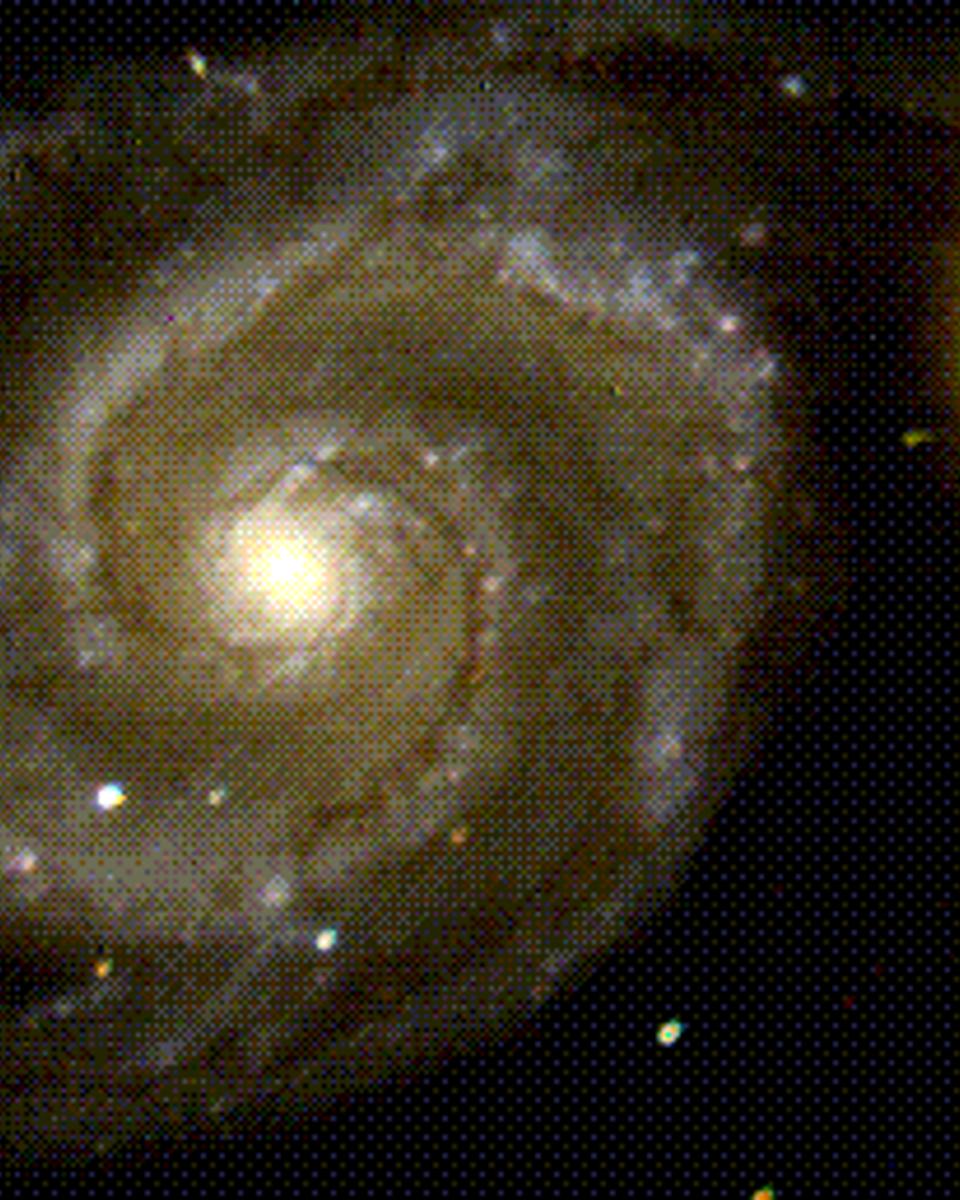
M51: The Whirlpool Galaxy
The Whirlpool Galaxy is frequently given as an example of a galaxy with classic spiral design. At only 15 million light years distant, M 51, also cataloged as NGC 5194, is also…
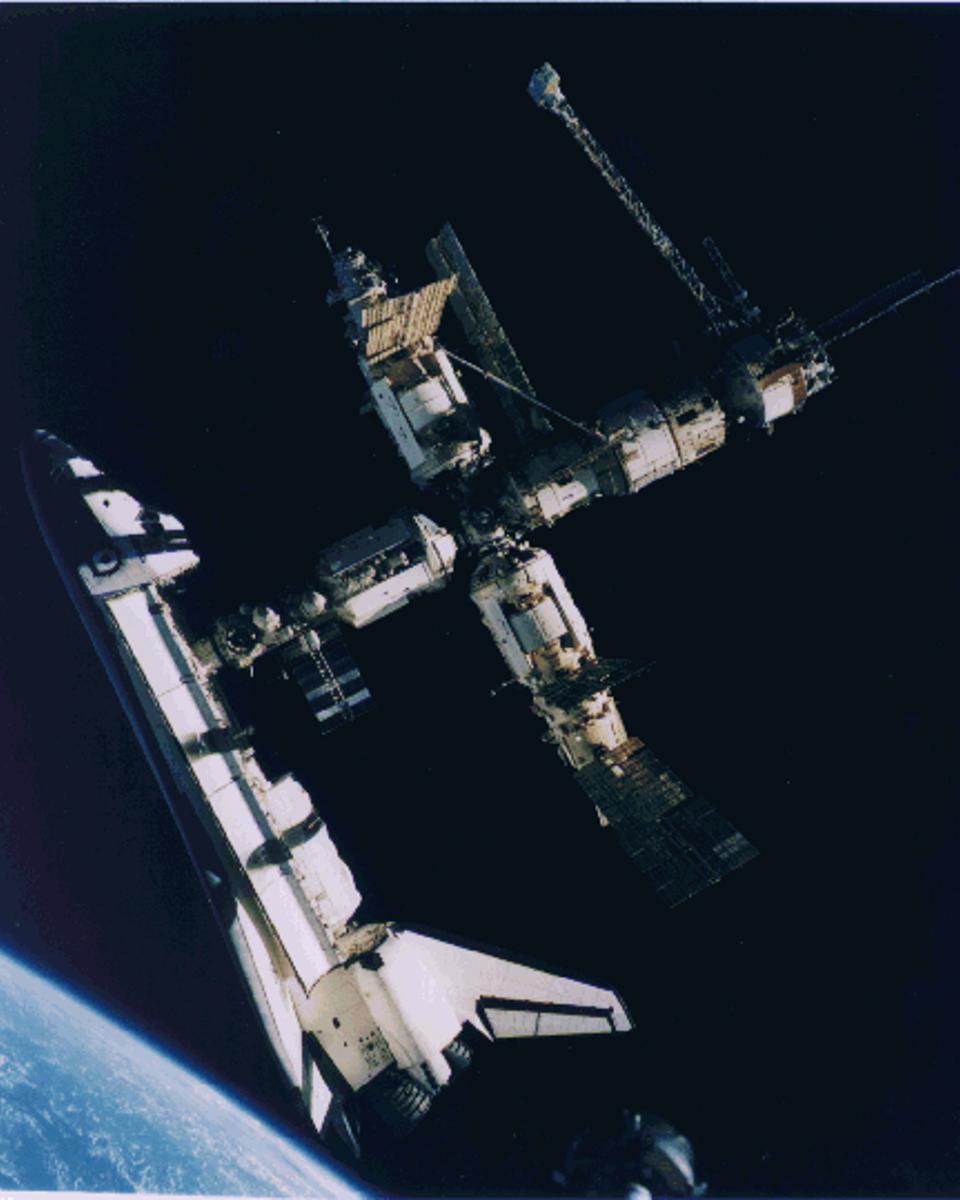
The Space Shuttle Docks with Mir
Hundreds of kilometers above the Earth 's surface, the United States Space Shuttle Atlantis docks with the Russian Space Station Mir . The photograph was taken by Nikolai Budarin…
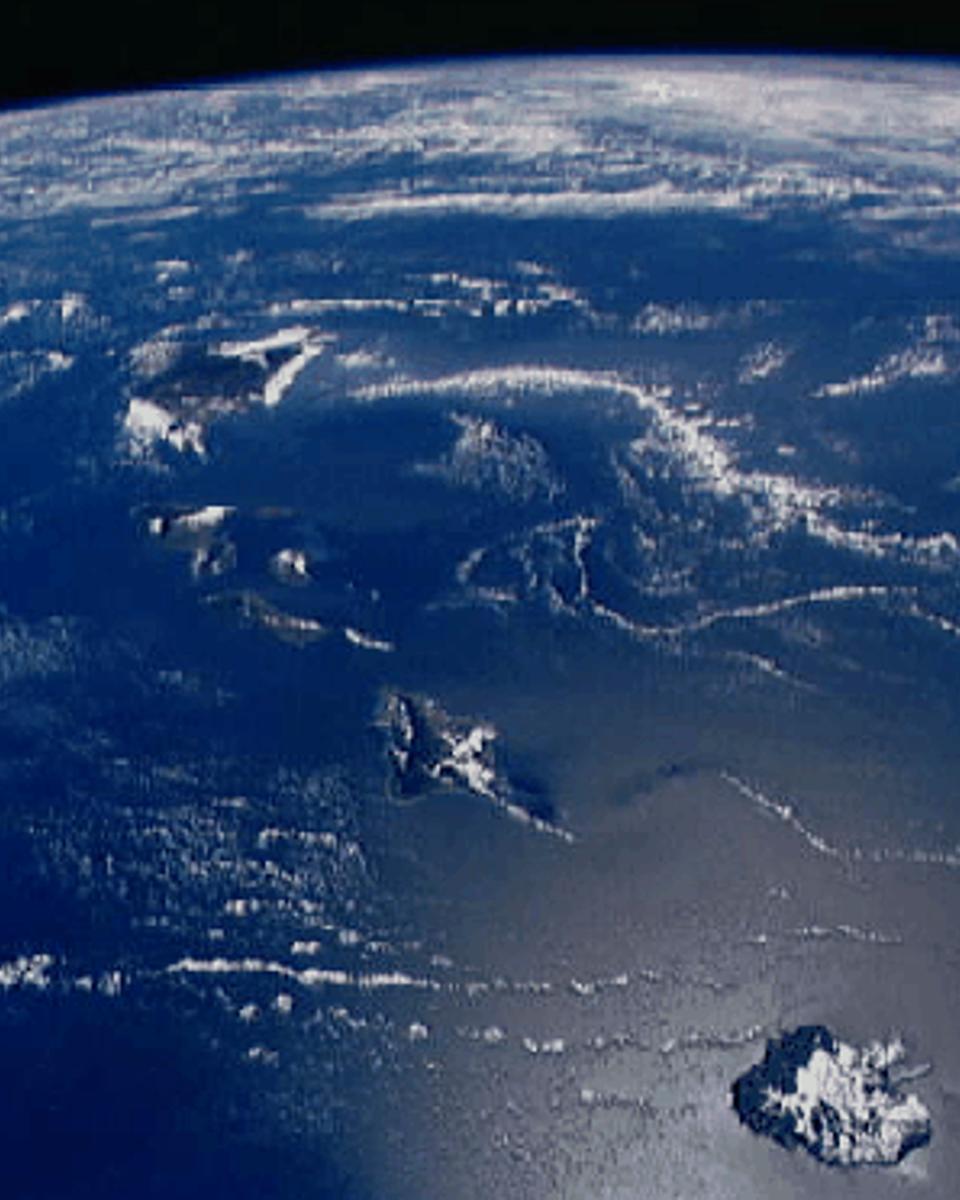
Hawai`i
Aloha! With the graceful arc of the Earth's limb in the background, the entire Hawaiian Island archipelago is visible in this stunning photo taken by the astronauts onboard the…
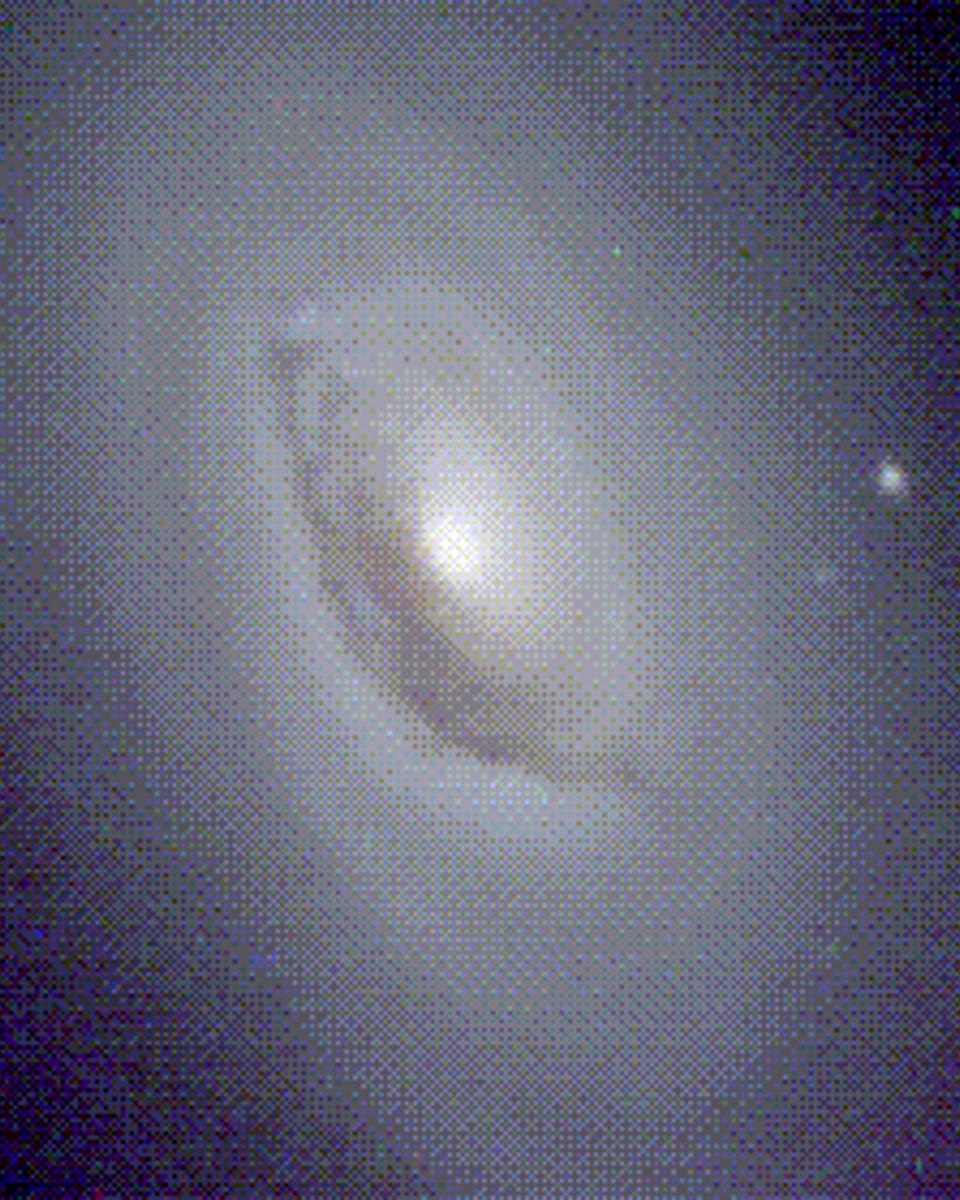
M64: The Sleeping Beauty Galaxy
The Sleeping Beauty galaxy may appear peaceful at first sight but it is actually tossing and turning. In an unexpected twist, recent observations have shown that the center of…
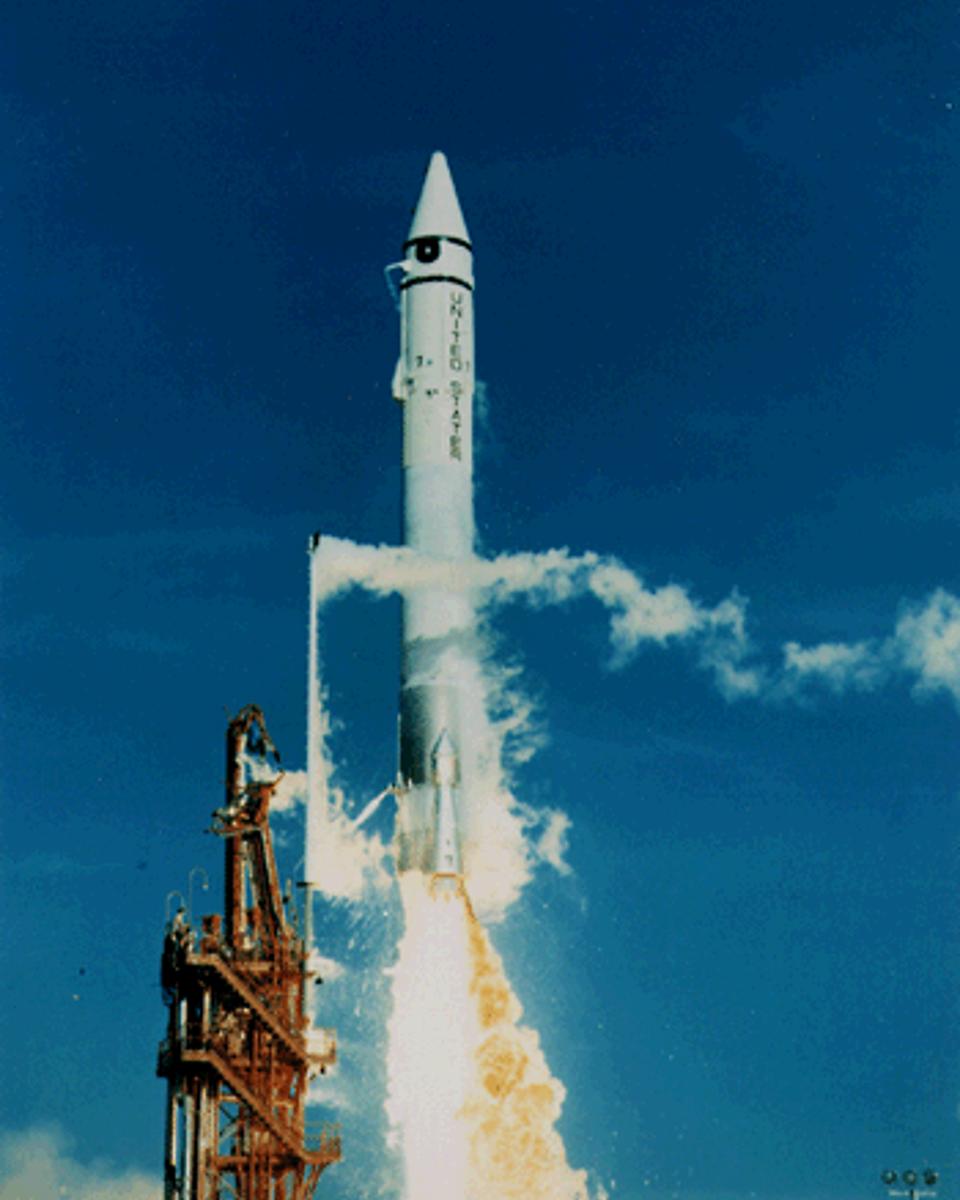
An Atlas Centaur Rocket Launches
Atlas Centaur rockets have launched over 75 successful unmanned missions. These missions included the Surveyor series - the first vehicles to make soft landings on the Moon ,…
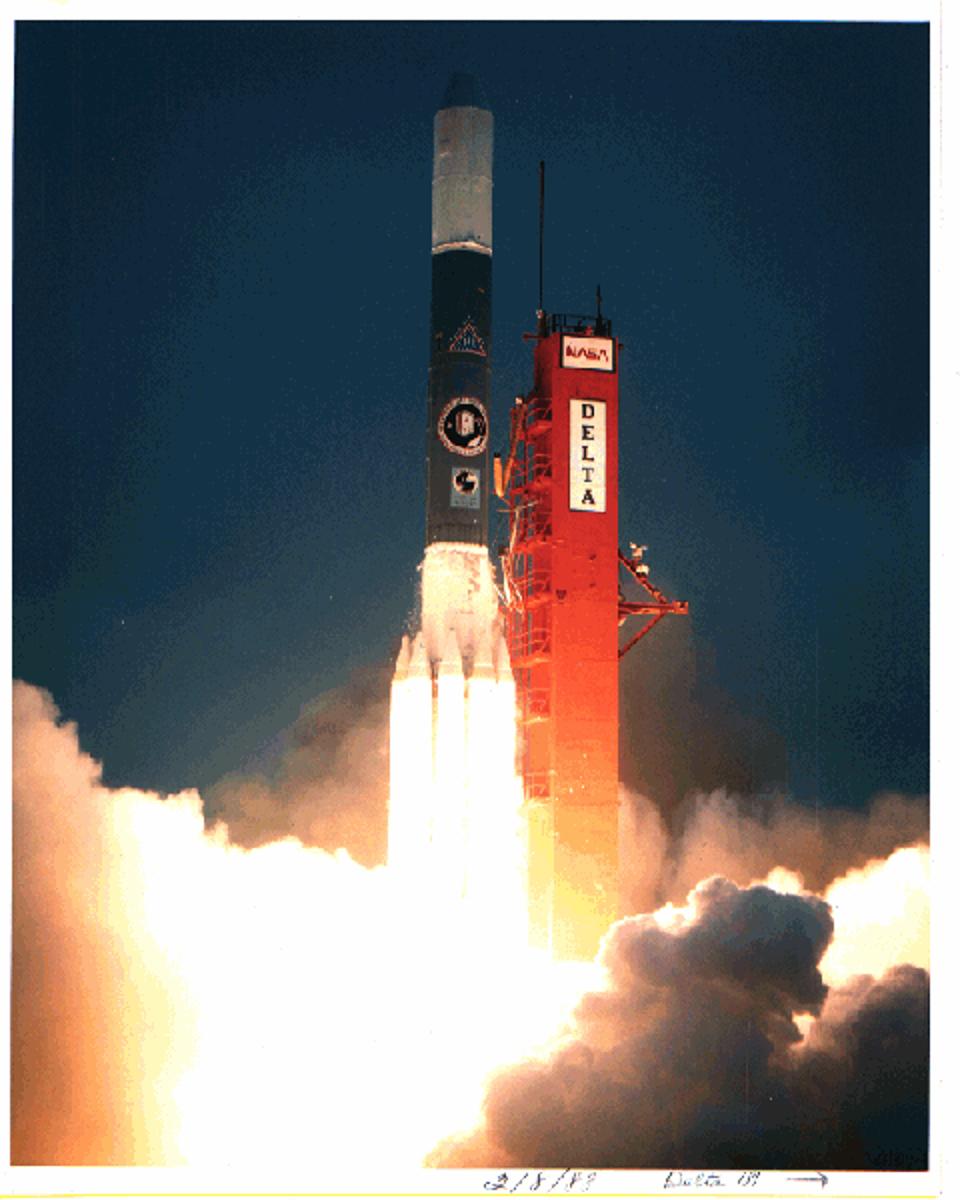
A Delta Rocket Launches
A Delta rocket is seen being launched in 1988. In use since 1960, Delta rockets have been launched successfully over 200 times. Scientific satellites placed into orbit by a Delta…
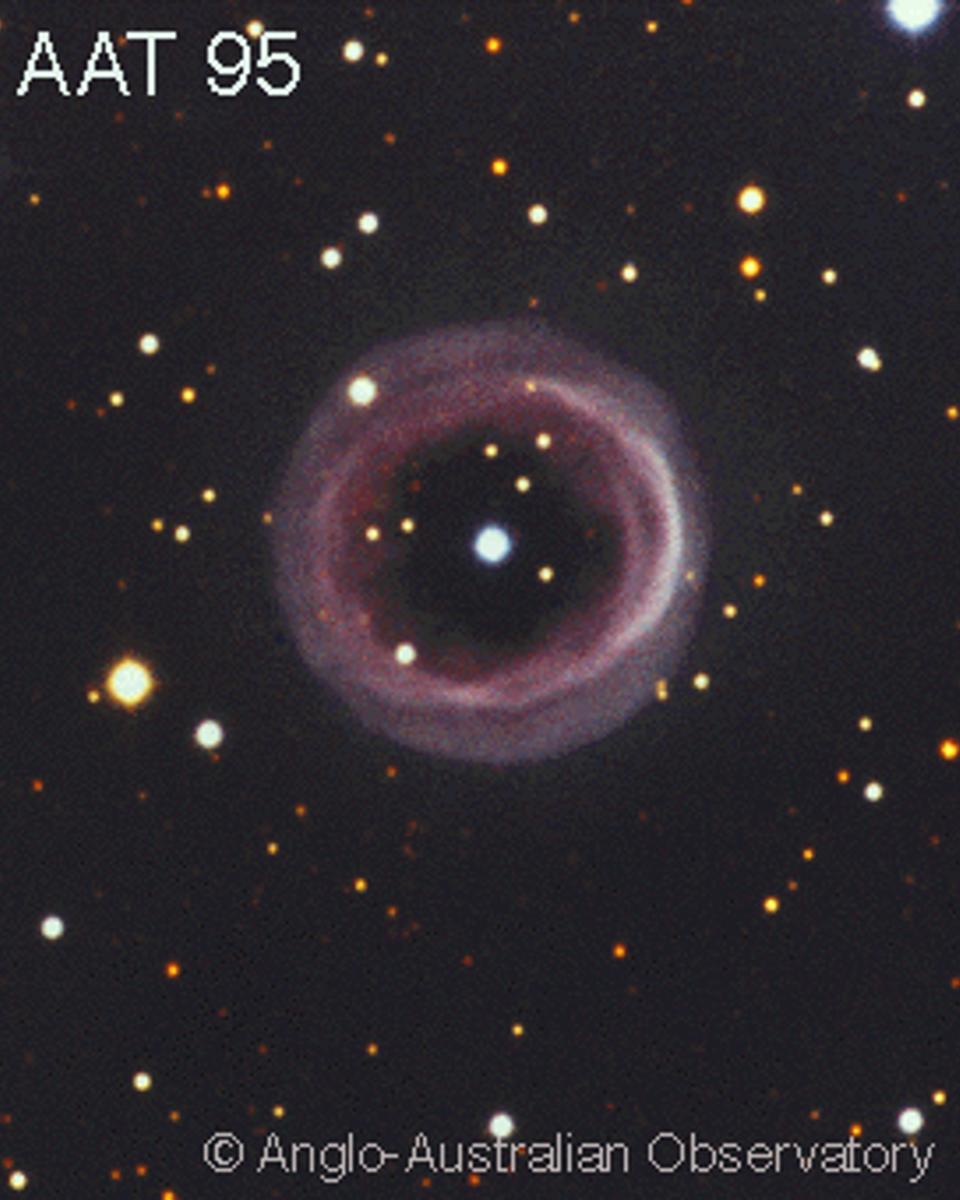
Shapley 1: An Annular Planetary Nebula
This strange structure is what can result when a normal star runs out of nuclear fuel in its core. At that time, the center condenses into a white dwarf while the outer…
Viewing discoveries from 4 January 1996 through 12 December 1995.