Browse NASA Astronomy Picture of the Day archive by date and media: Archive Discoveries
Browse the NASA APOD archive without needing the exact date first. Filter by media type and keep moving deeper into older images and videos.
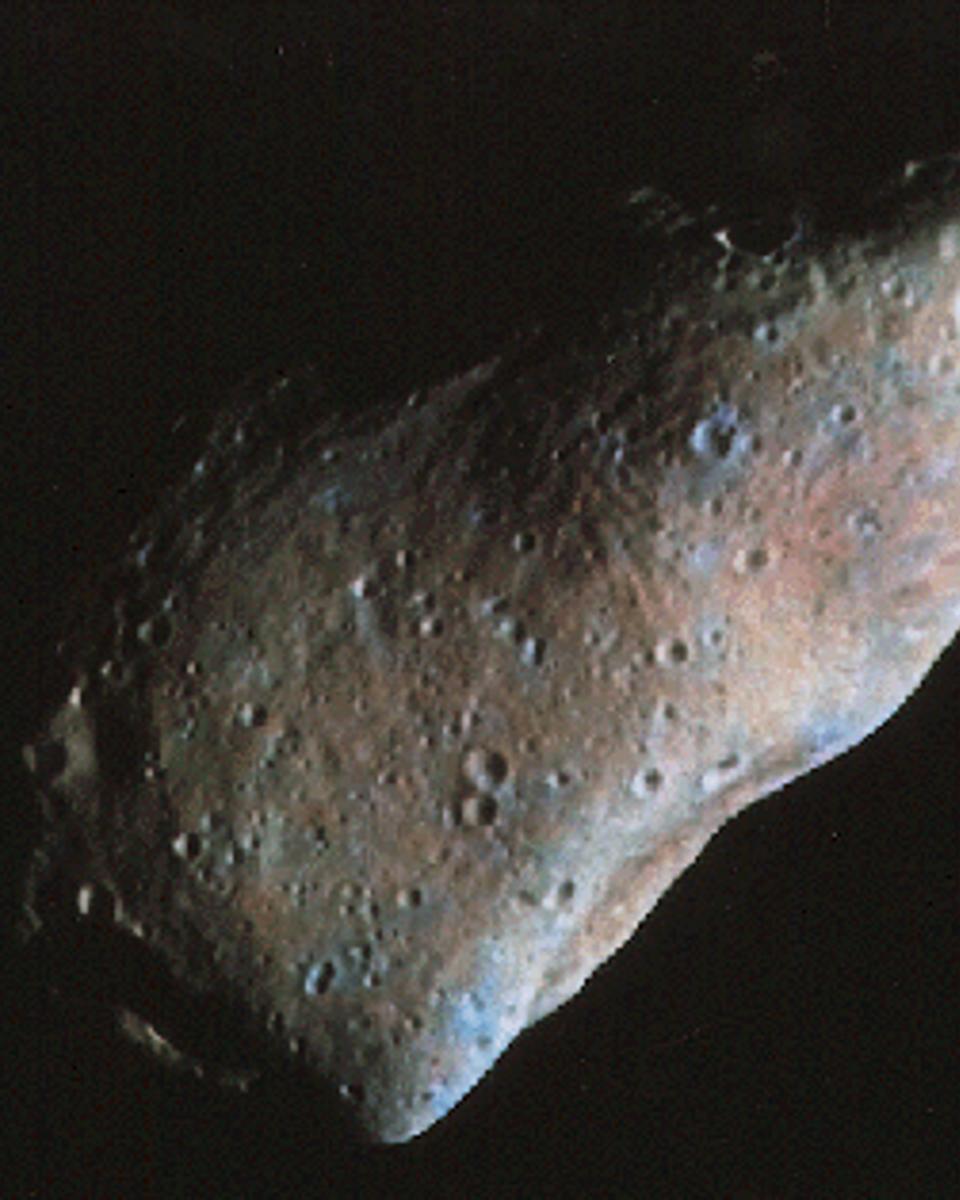
Asteroid Gaspra's Best Face
Above is the best yet color image of the asteroid Gaspra based on data returned by NASA's Galileo spacecraft. Color variations have been added to high resolution images and…
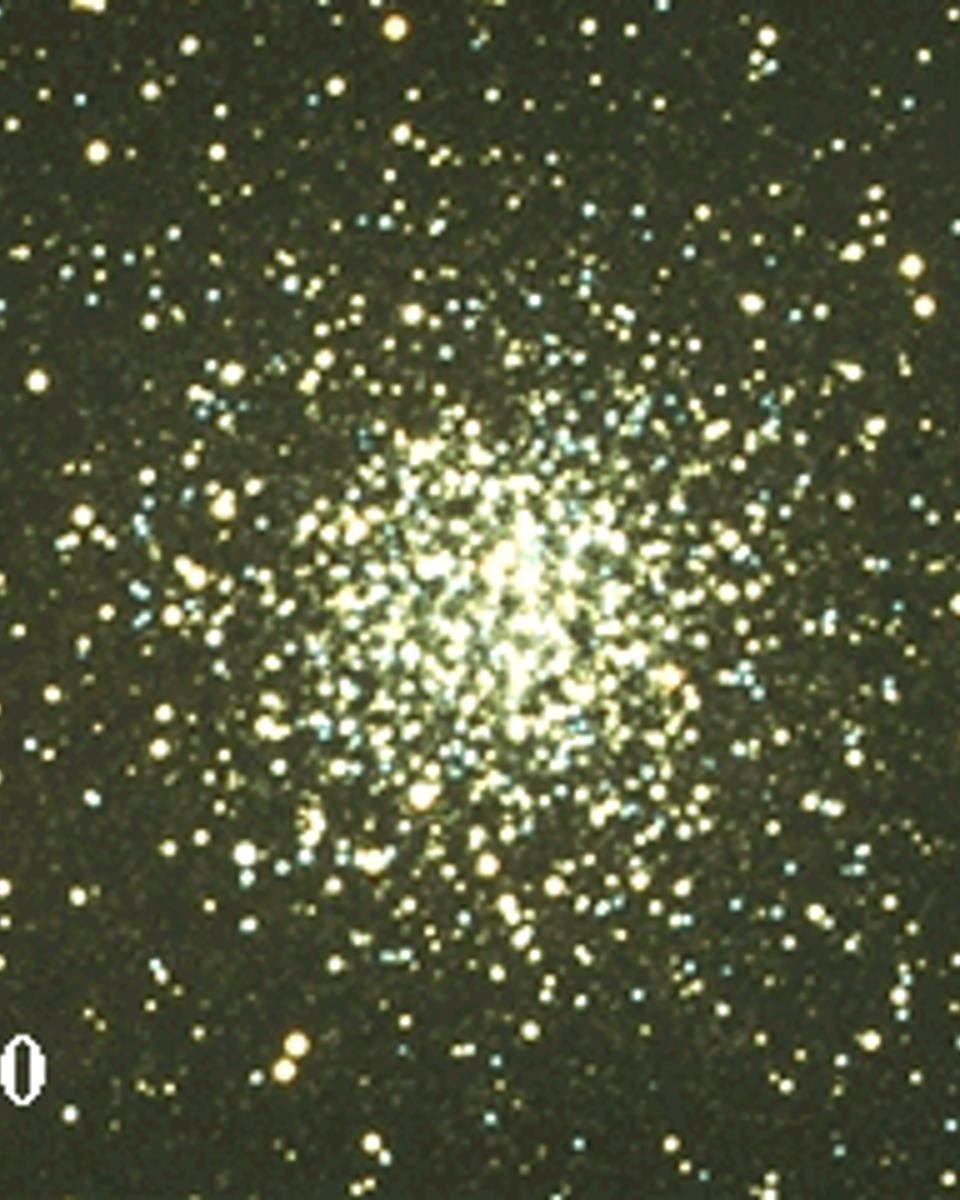
Globular Cluster M5
The globular cluster M 5, pictured above, contains roughly 100,000 stars. These stars formed together and are gravitationally bound. Stars orbit the center of the cluster, and the…
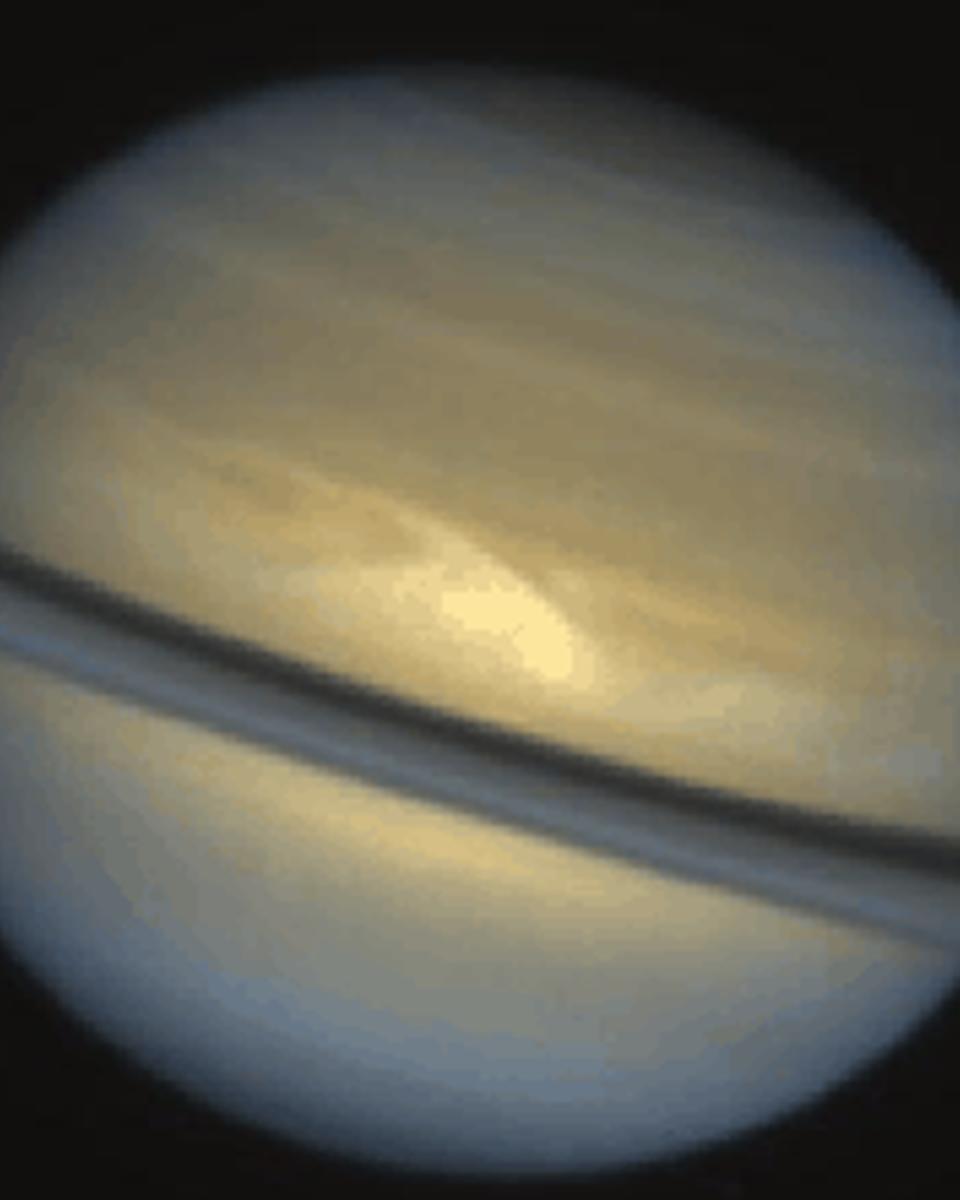
A Storm on Saturn
The white wisp shown on Saturn 's cloud tops is actually a major storm system only discovered in December of 1994. Saturn 's clouds are composed of primarily hydrogen and helium ,…
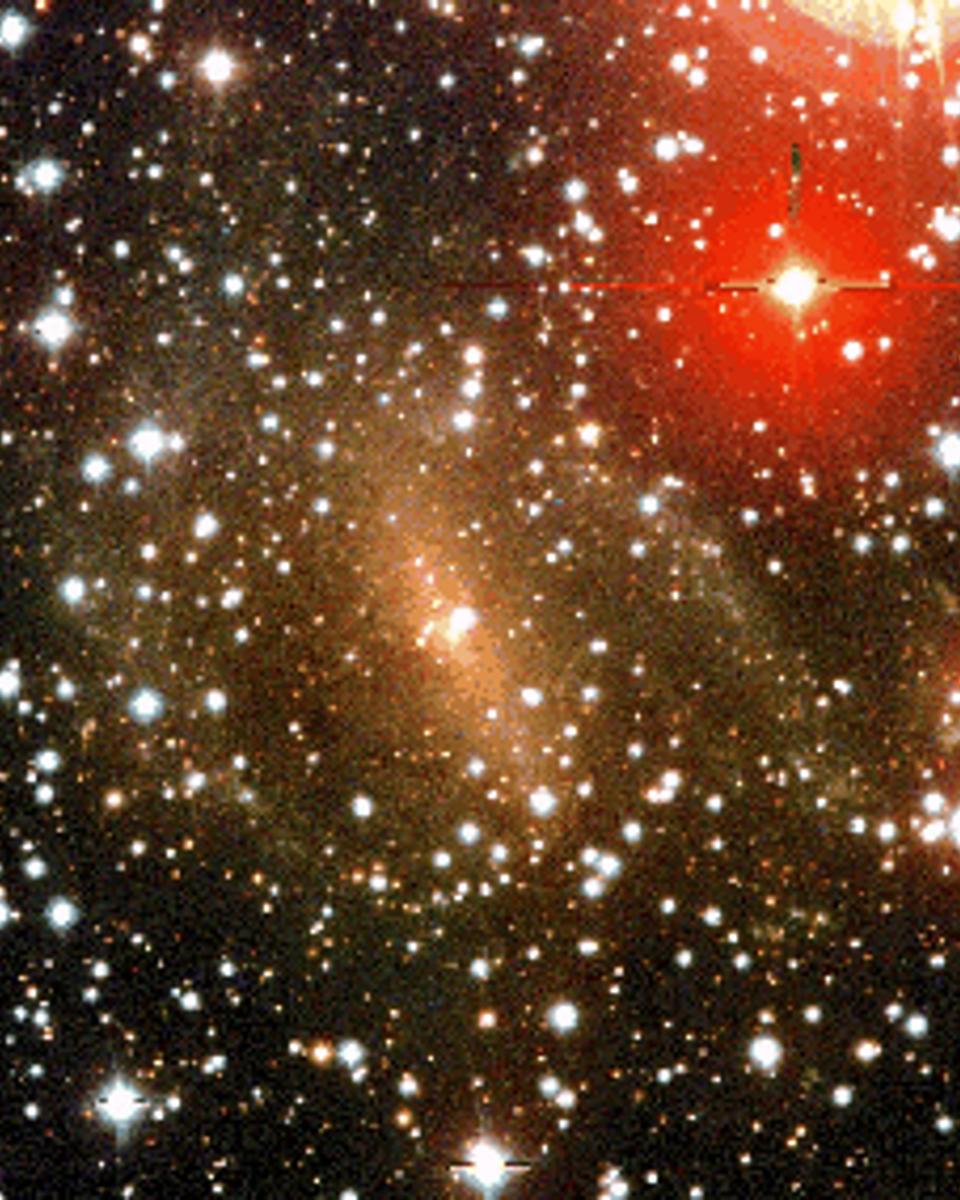
Galaxy Dwingeloo 1 Emerges
If you look closely at the center of the above photograph, you will see a spiral galaxy behind the field of stars. Named Dwingeloo 1 , this nearby galaxy was only discovered…
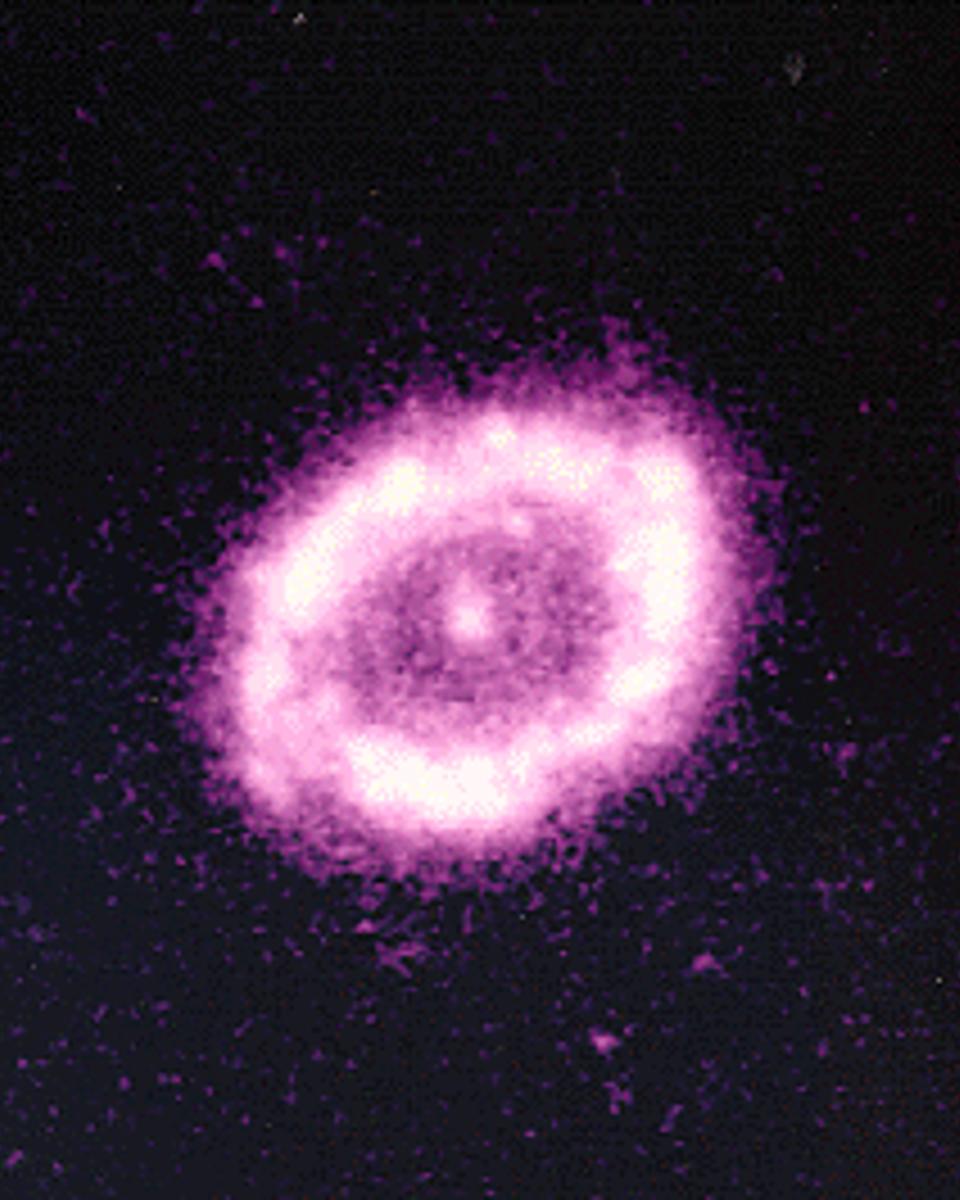
Starburst Galaxy M94
The spiral galaxy M94 is somewhat unusual in that it shows a great ring of bright young stars particularly apparent when observed in ultraviolet light , as shown above. Such a…
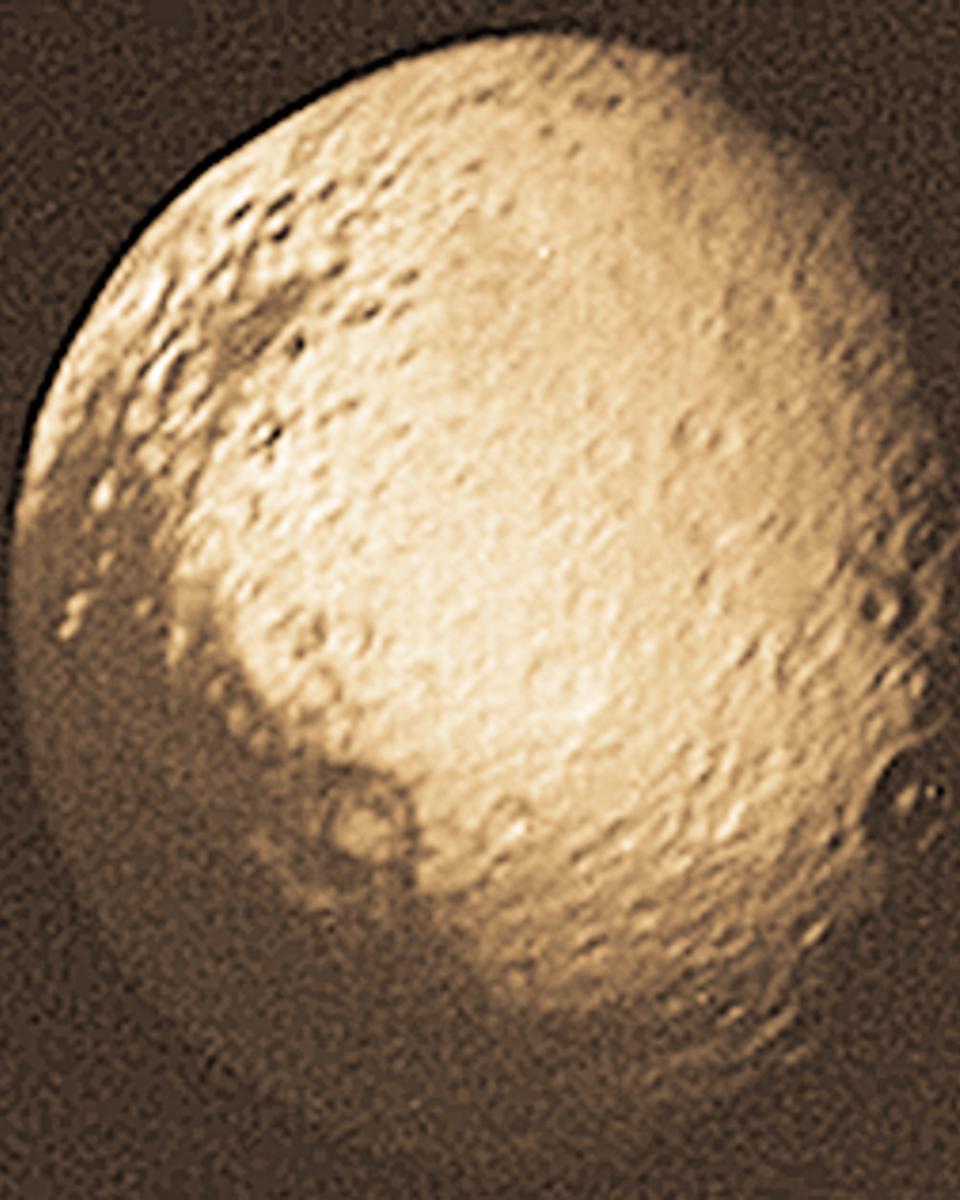
Iapetus: Saturn's Disappearing Moon
Iapetus has an unusual surface, one half of which is very dark, the other half very light. This caused it's discoverer Cassini to remark that Iapetus could only be seen when on…
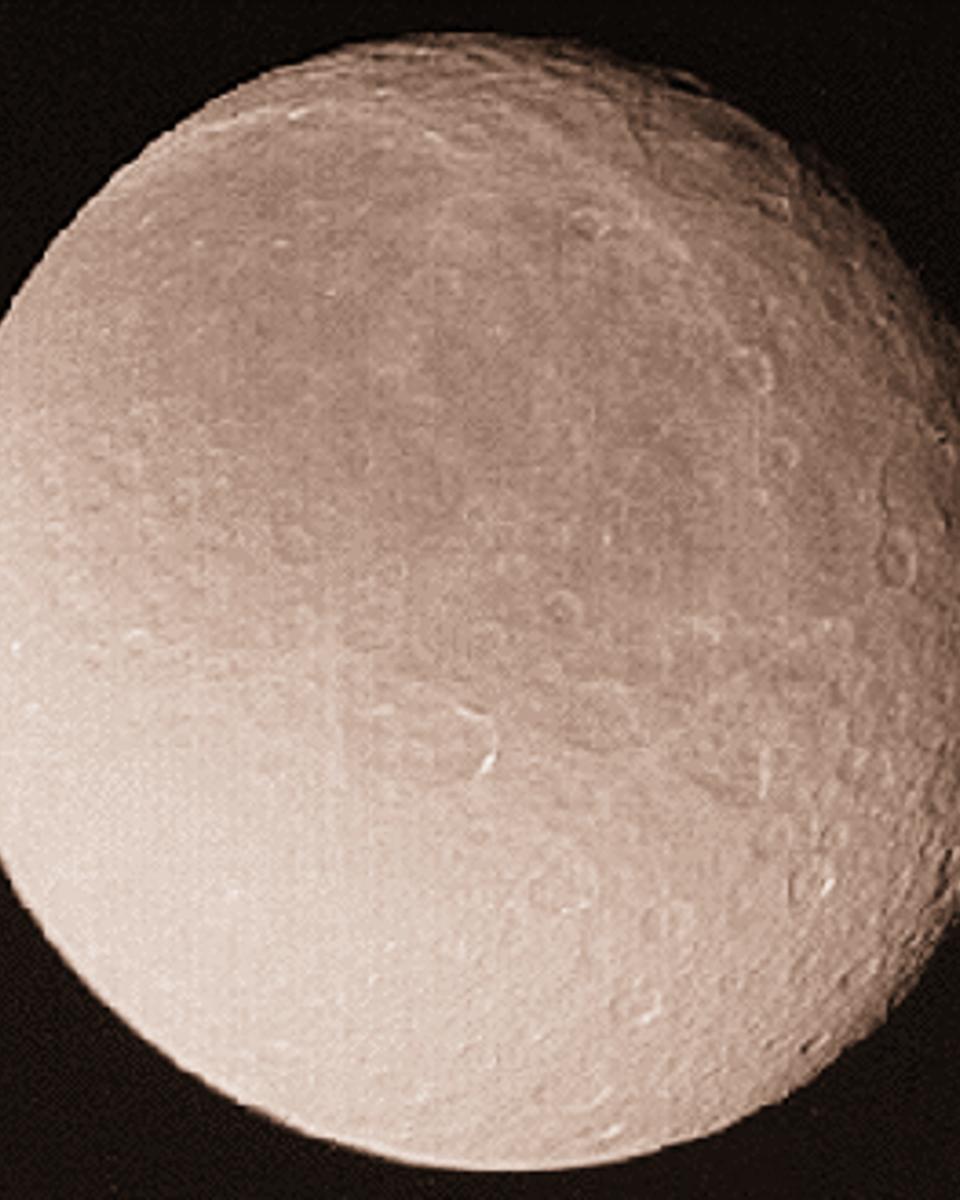
Rhea: Saturn's Second Largest Moon
Rhea is the second largest moon of Saturn , behind Titan , and the largest without an atmosphere. It is composed mostly of water ice, but has a small rocky core. Rhea 's rotation…
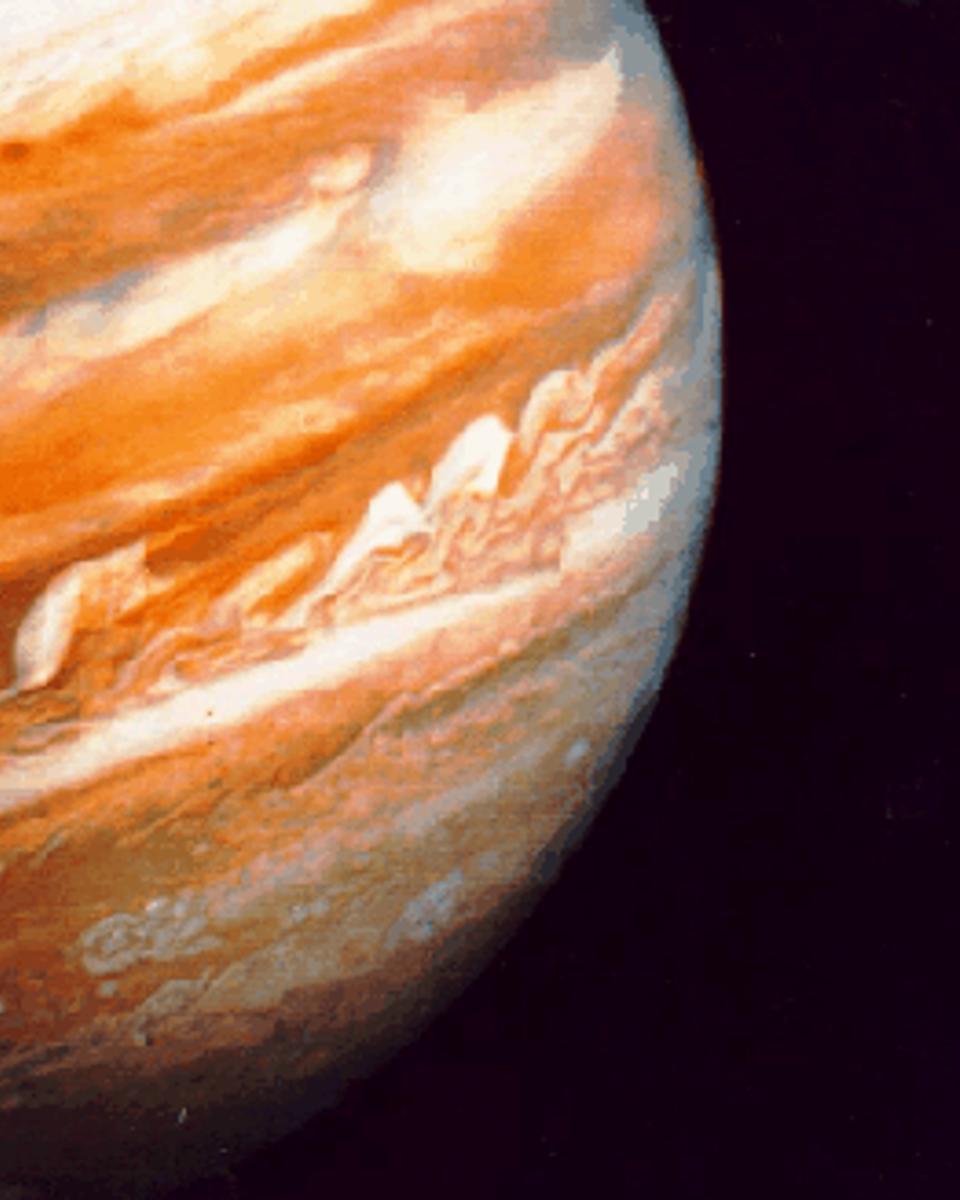
Jupiter, Io, and Ganymede's Shadow
Jupiter , the solar system 's largest planet, is seen here next to Io , its closest Galilean moon. On the cloud tops of Jupiter near the left edge of the picture can be seen a…
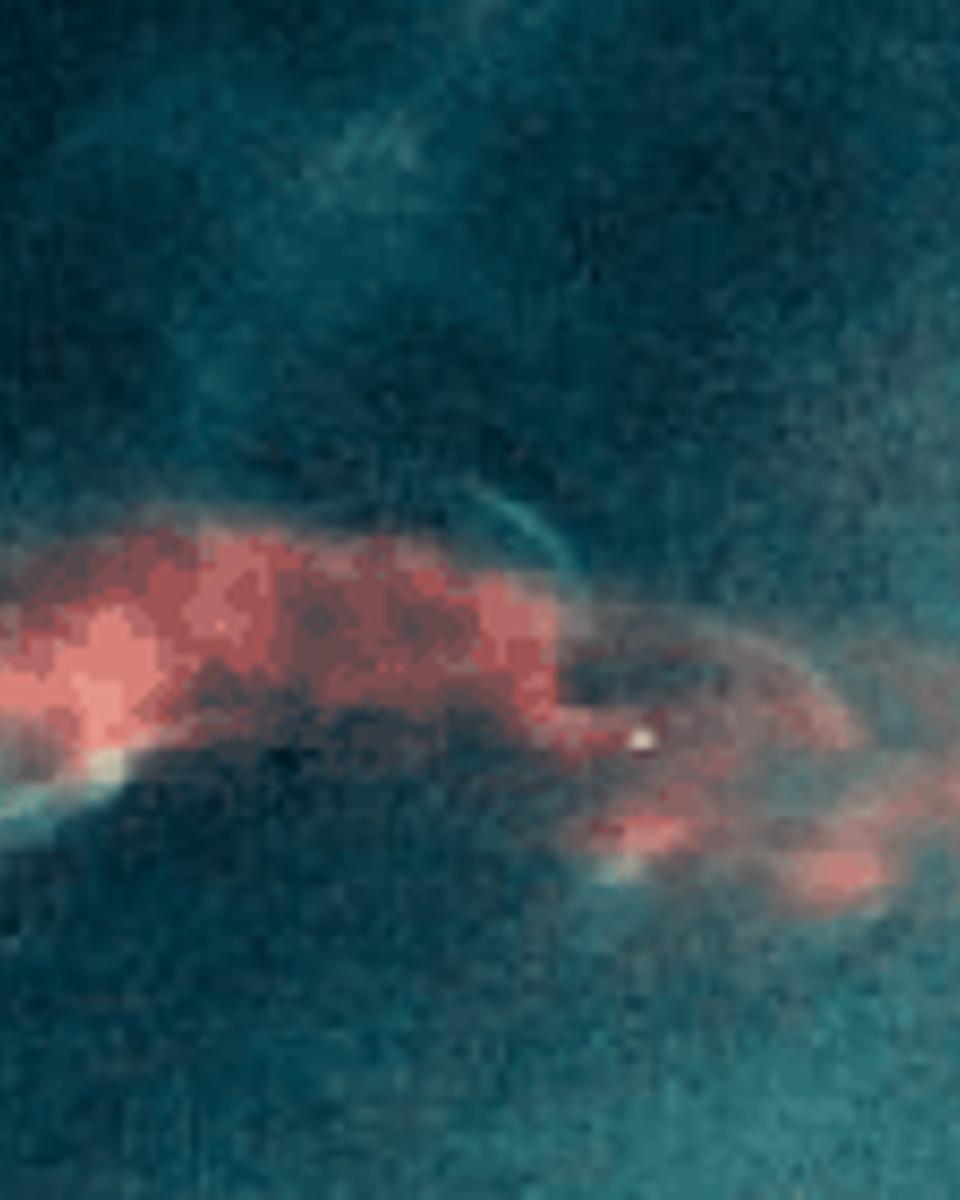
HH-47 Star Jet
The star masked by a dust cloud at the left of the above photo is expelling an energetic beam of charged particles into interstellar space. This jet , moving from left to right,…
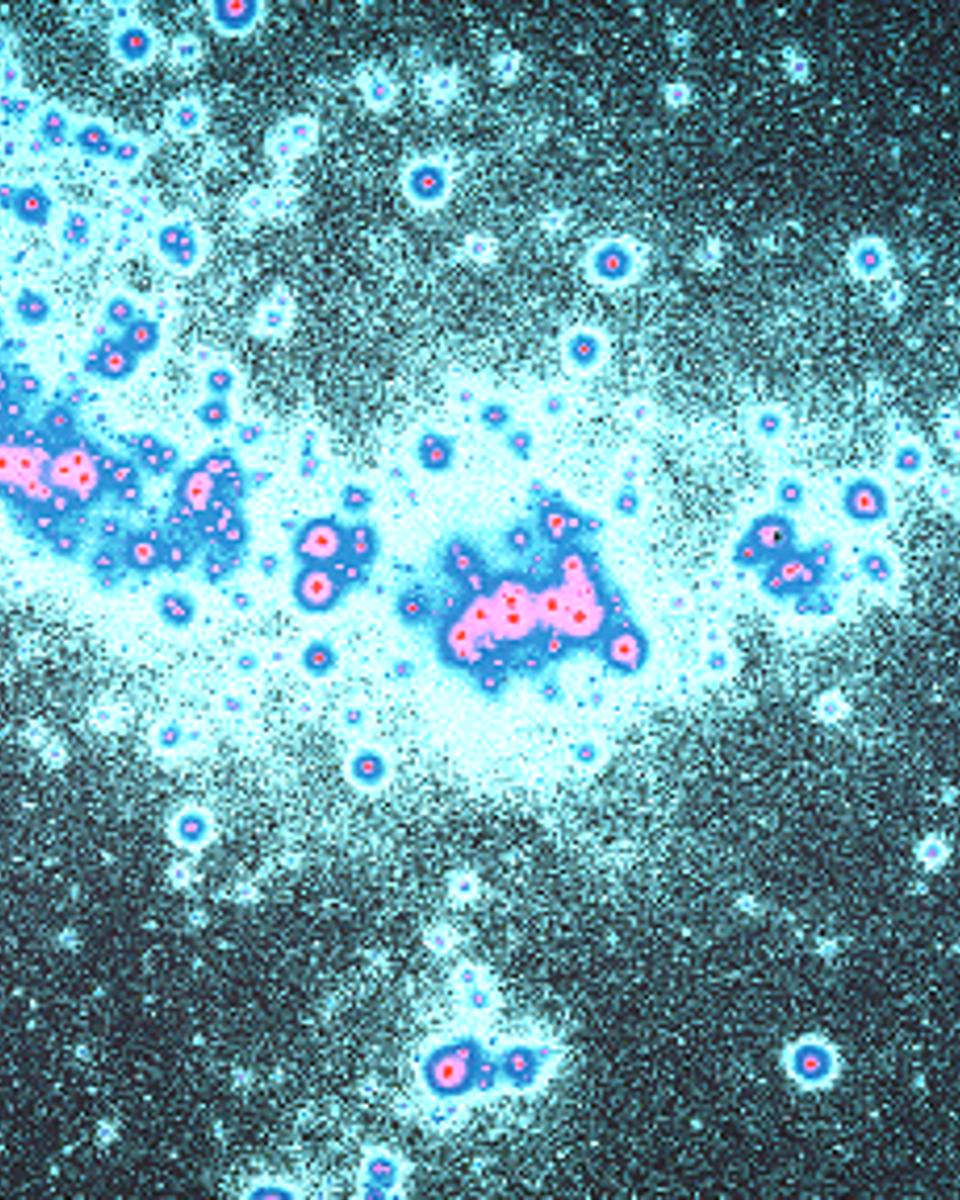
LMC Star Clouds
Pictured above are clouds of young stars forming an arc in the nearby Large Magellanic Cloud , the nearest galaxy to the our Milky Way Galaxy . These stars are situated in a star…
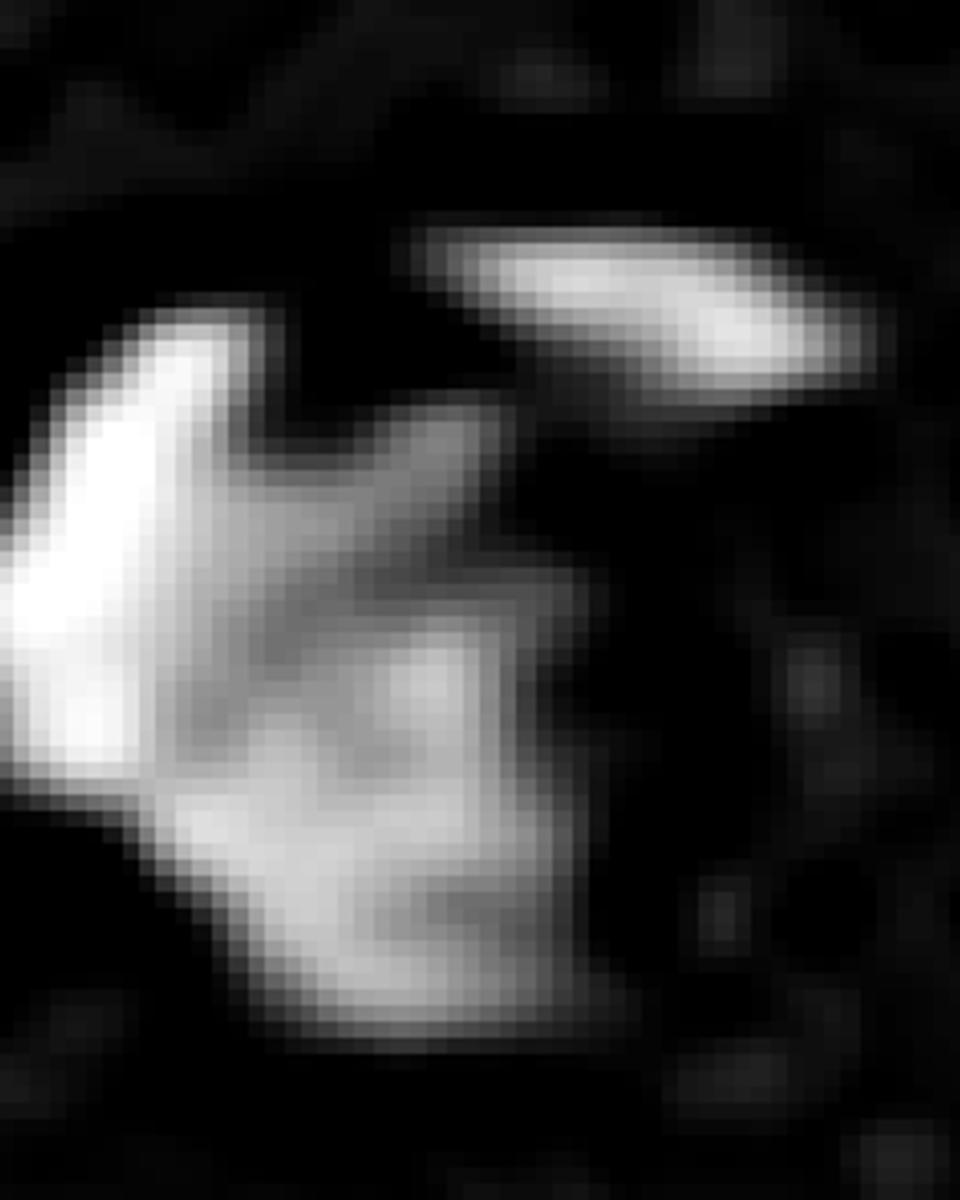
Dione's Lagrange Moon Helene
Saturn 's moon Helene is very unusual in that it circles Saturn near the orbit of a bigger moon: Dione . Helene is situated in what is called a “Lagrange point” of Dione - a place…
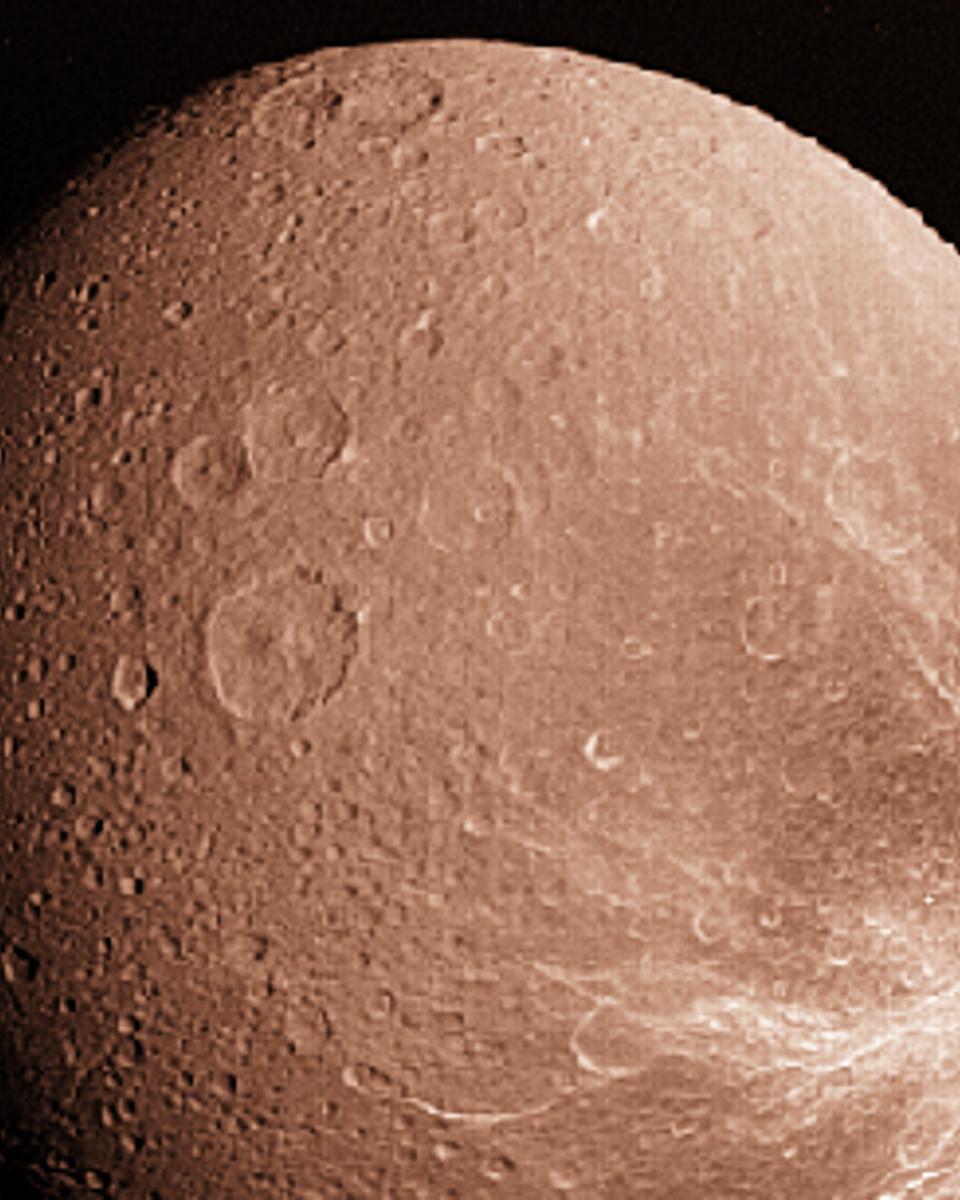
Saturn's Moon Dione
Dione , one of Saturn 's larger moons, is remarkable for its bright surface streaks. These streaks run across some of Dione's many craters, which indicate that the process which…
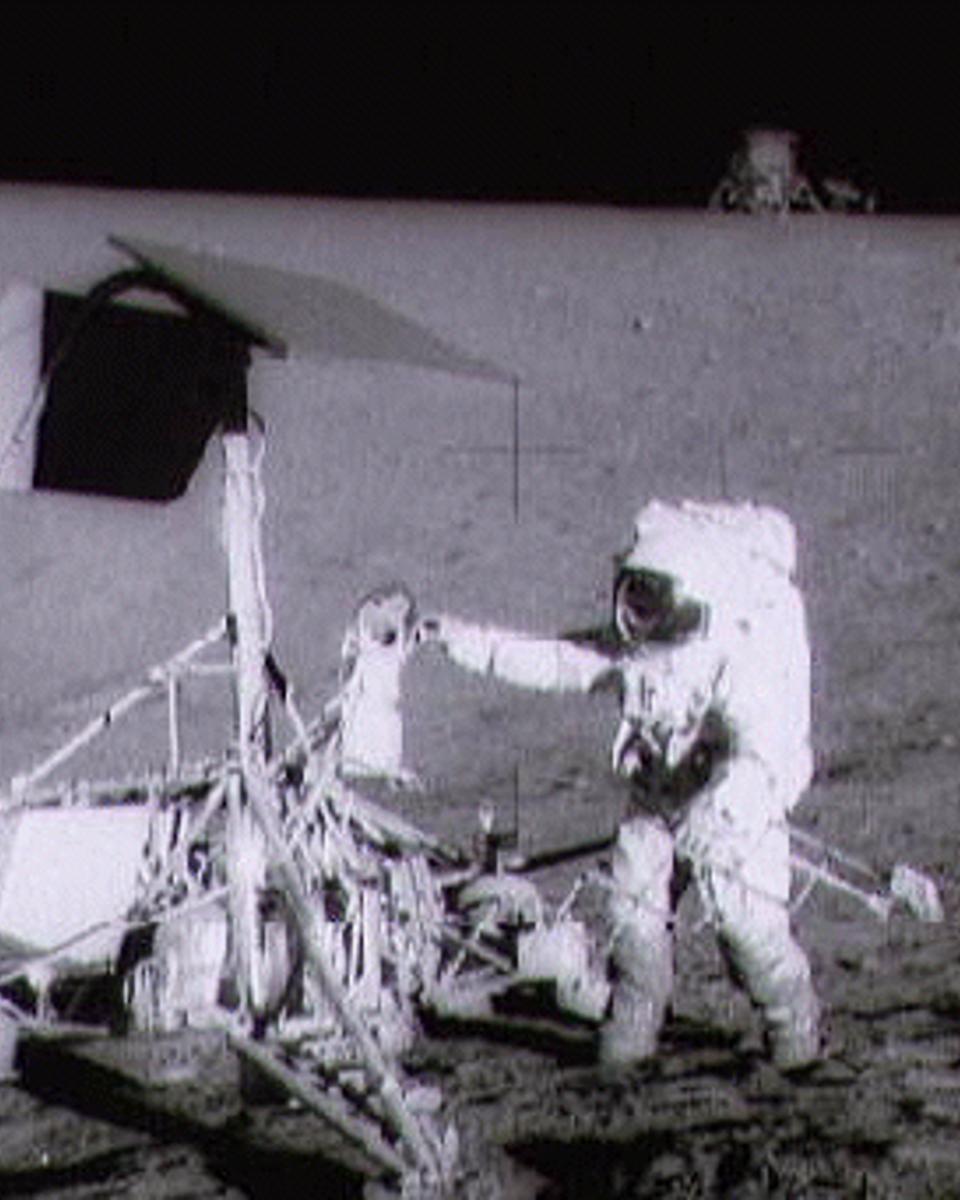
Apollo 12 Visits Surveyor 3
Apollo 12 was the second mission to land humans on the Moon . The landing site was picked to be near the location of Surveyor 3, a robot spacecraft that had landed on the moon…
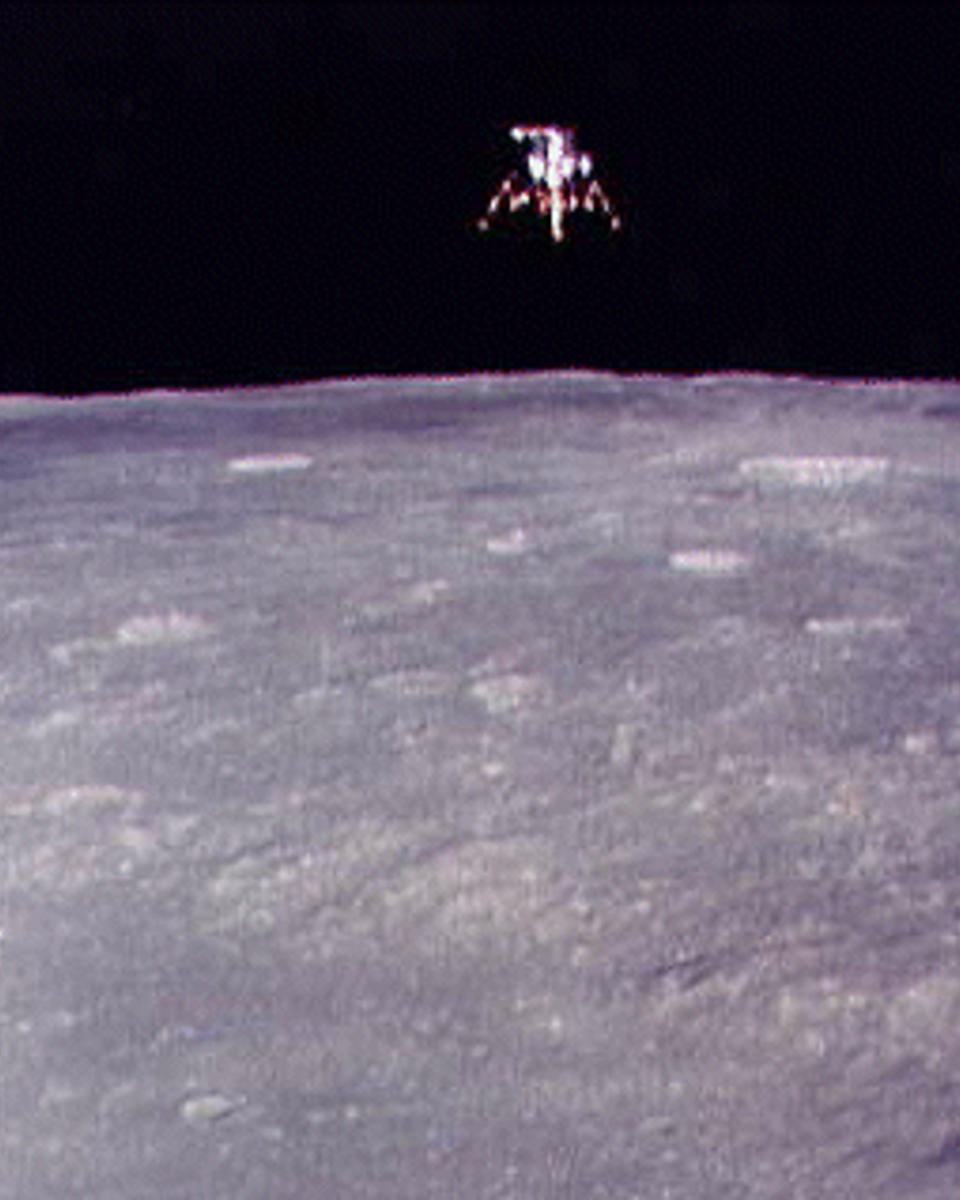
Apollo 12's Lunar Module Descends
A few months after Apollo 11 's historic Moon landing , Apollo 12 with commander Charles Conrad Jr., Command Module pilot Richard Gordan, and Lunar Module pilot Alan Bean returned…
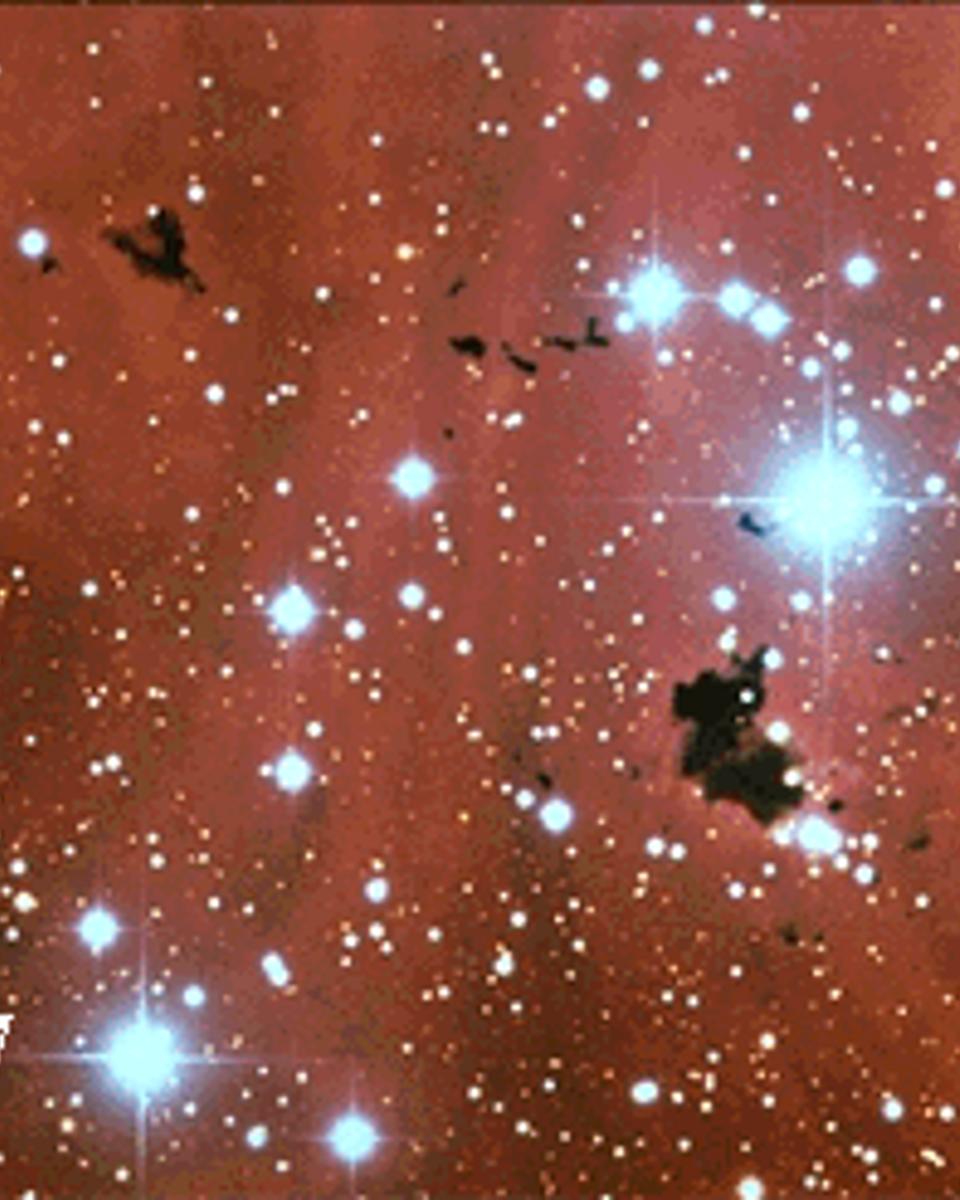
Dark Bok Globules in IC 2944
The dark spots in the above picture are not photographic defects but an unusual type of interstellar cloud known as a Bok globule. Bok globules, named after astronomer Bart Bok…
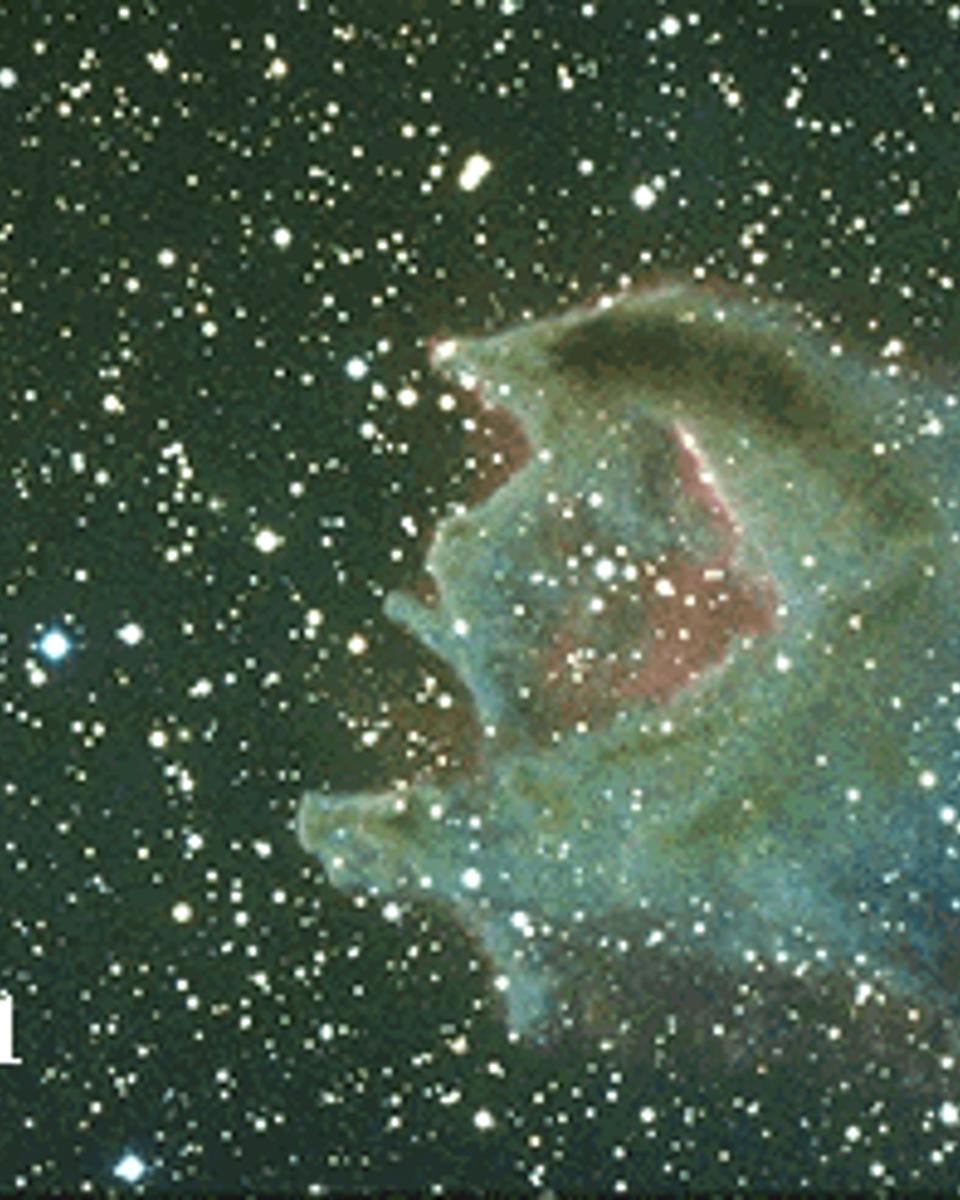
CG4: A Ruptured Cometary Globule
The odd looking “creature” to the right of center in the above photo is a gas cloud known as a cometary globule. This globule, however, has ruptured. Cometary globules are…
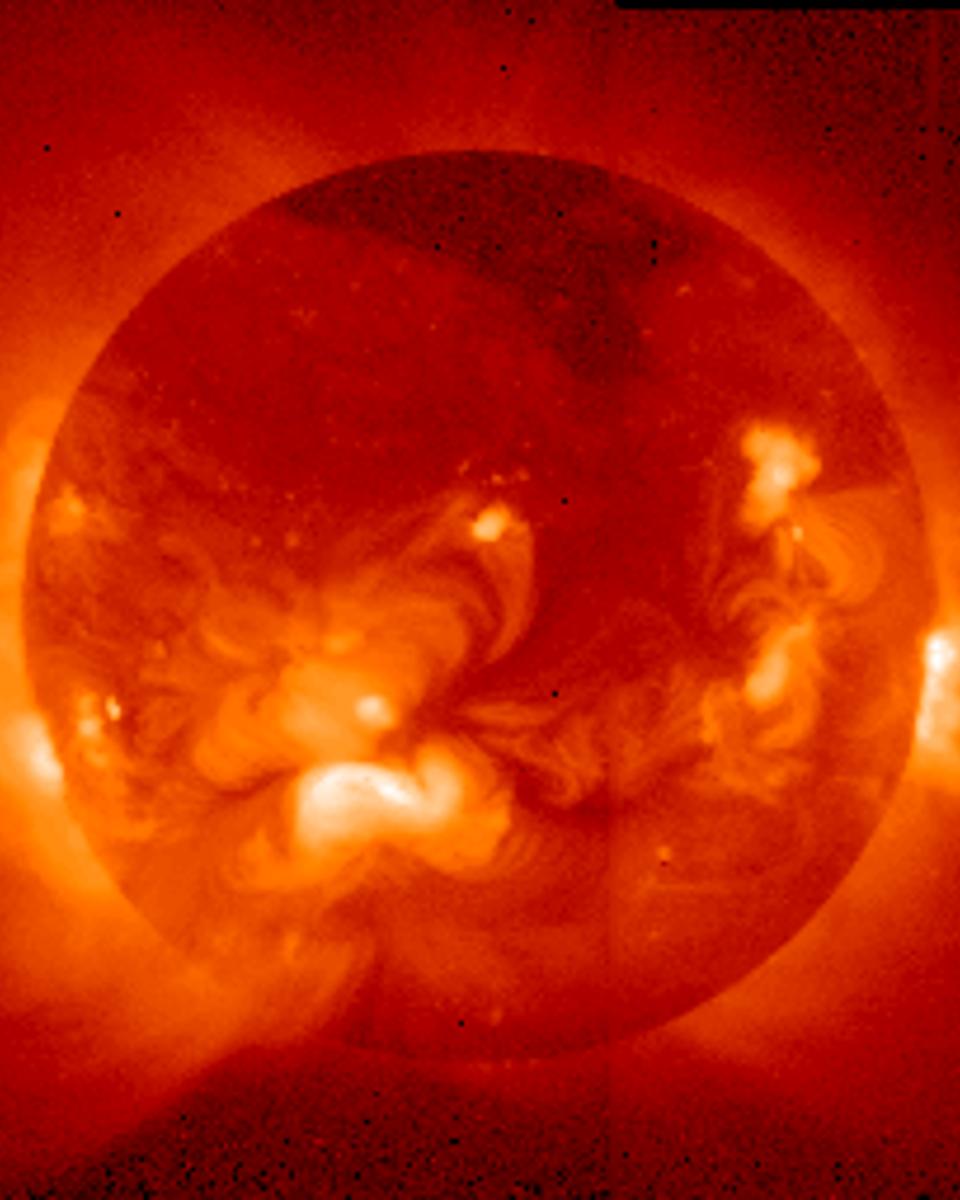
The Sun Spews X-rays
Our Sun is really very hot. The Sun's outer atmosphere is so hot that it emits much light in the X-ray band, which was unexpected. X-rays are usually emitted from objects having a…
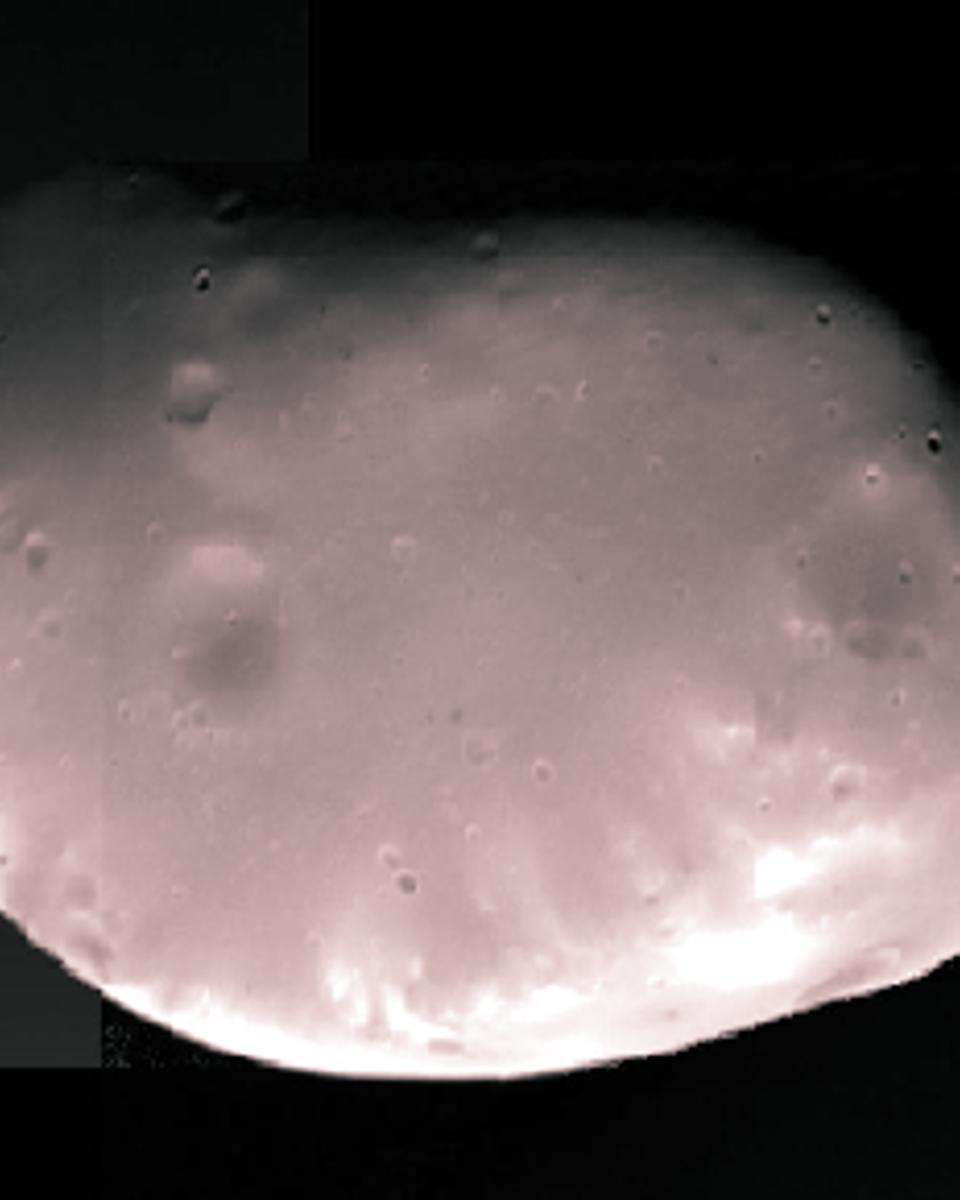
Deimos: A Small Martian Moon
Mars has two tiny moons, Phobos and Deimos. Pictured above is Deimos , the smallest moon of Mars . In fact, Deimos is the smallest known moon in the Solar System measuring only 9…
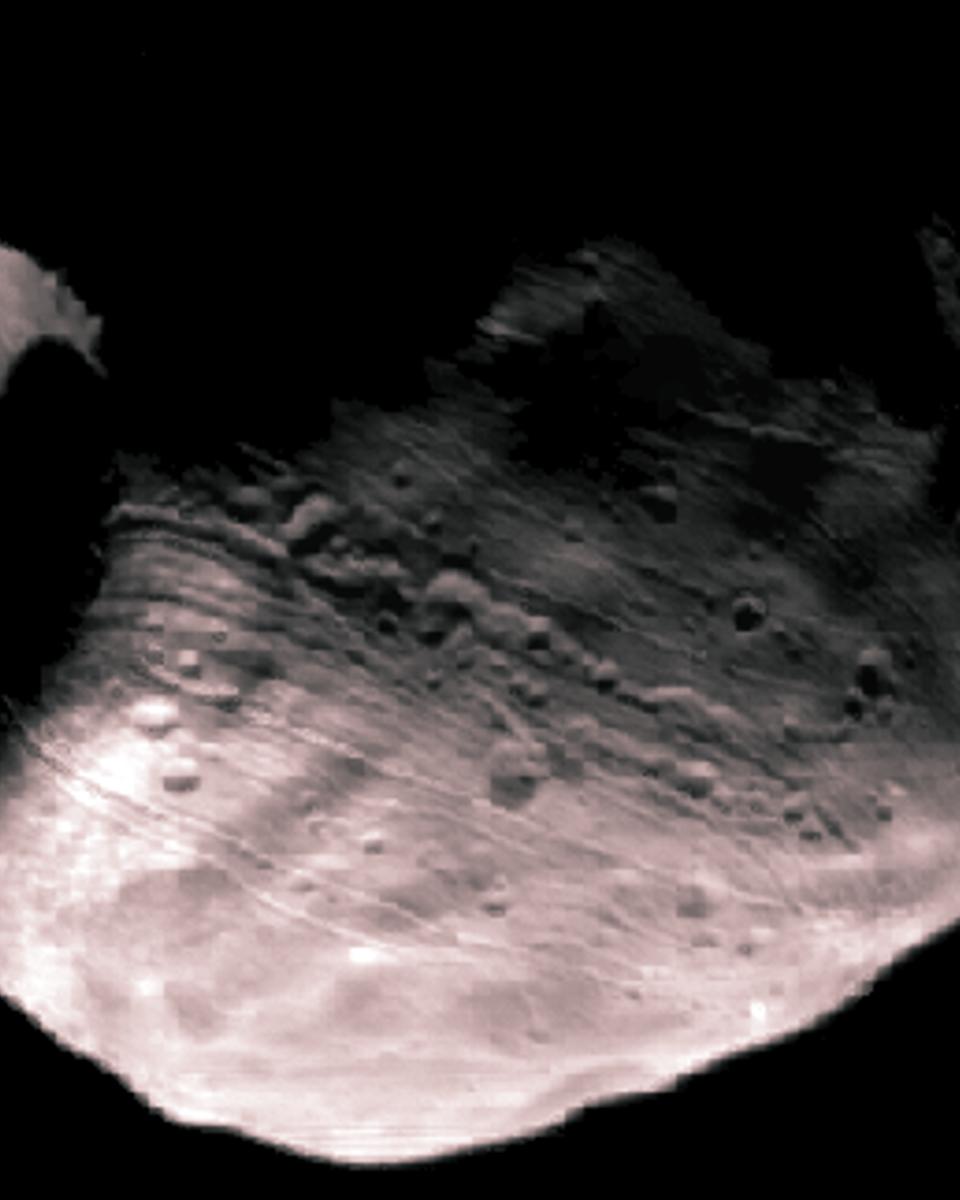
Phobos: Doomed Moon of Mars
Mars , the red planet named for the Roman god of war, has two tiny moons, Phobos and Deimos , whose names are derived from the Greek for Fear and Panic. These Martian moons may…
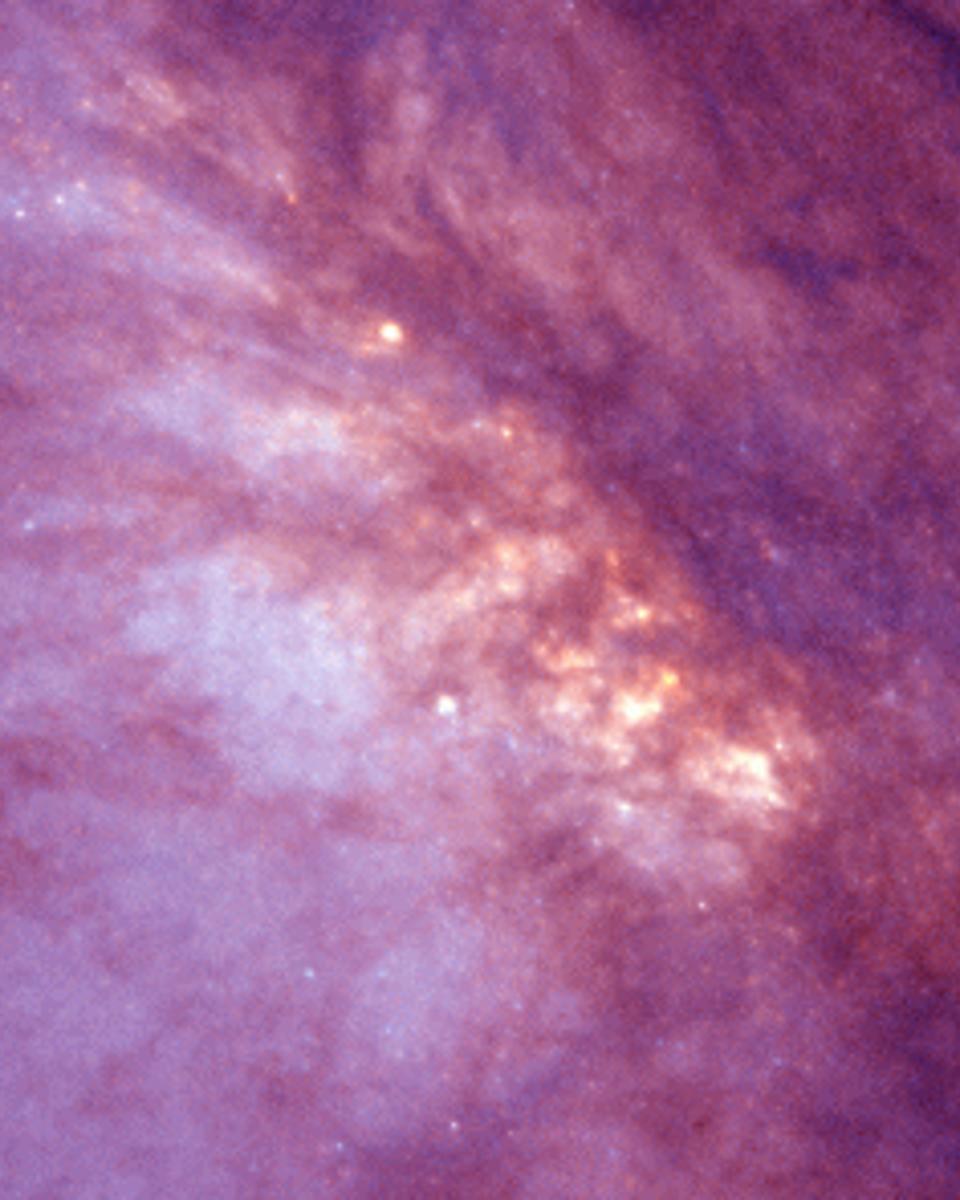
Central Galactic Star Bursts
The pictured core of the galaxy NGC 253 shows an exceptionally high rate of star formation. In the center are some of the densest knots of stars ever found, surrounded by glowing…
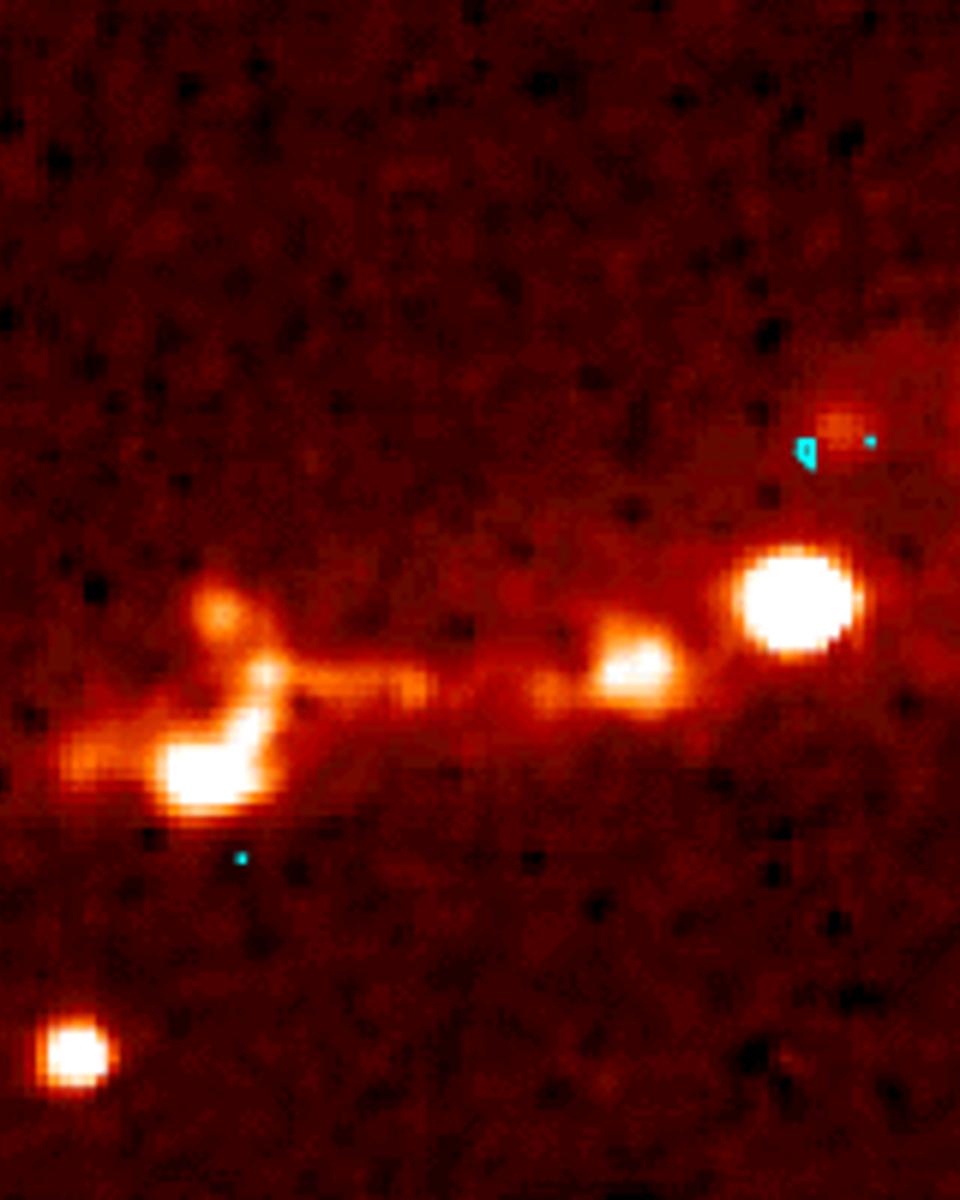
An Energetic Radio Galaxy
The radio and optical emission seen in the above superposed images of the radio galaxy 3C368 indicate that energetic processes are at work. A radio galaxy is a galaxy that is…
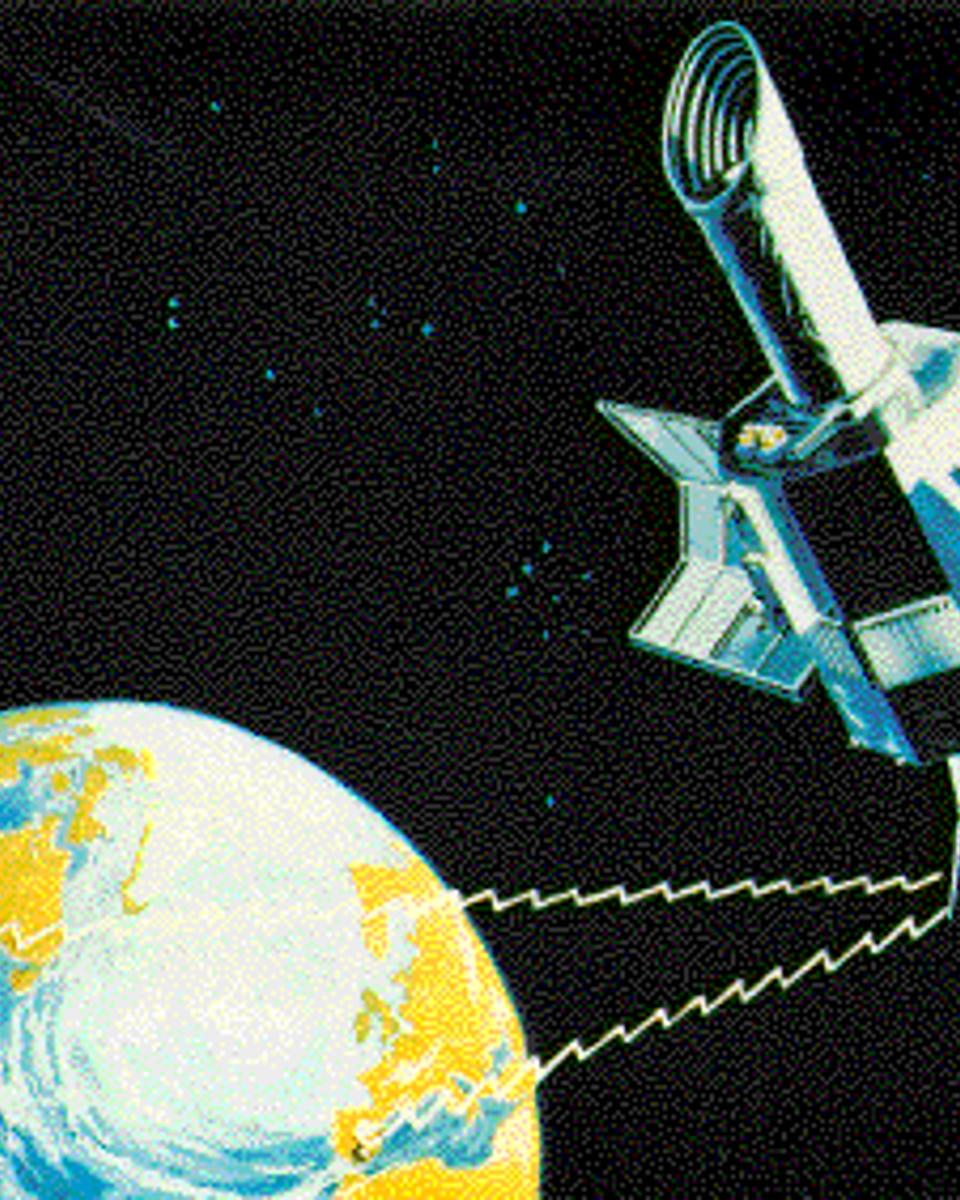
The International Ultraviolet Explorer
The International Ultraviolet Explorer (IUE) was launched by a NASA Delta rocket in 1978 to provide a space telescope for ultraviolet astronomy. A collaborative project among…
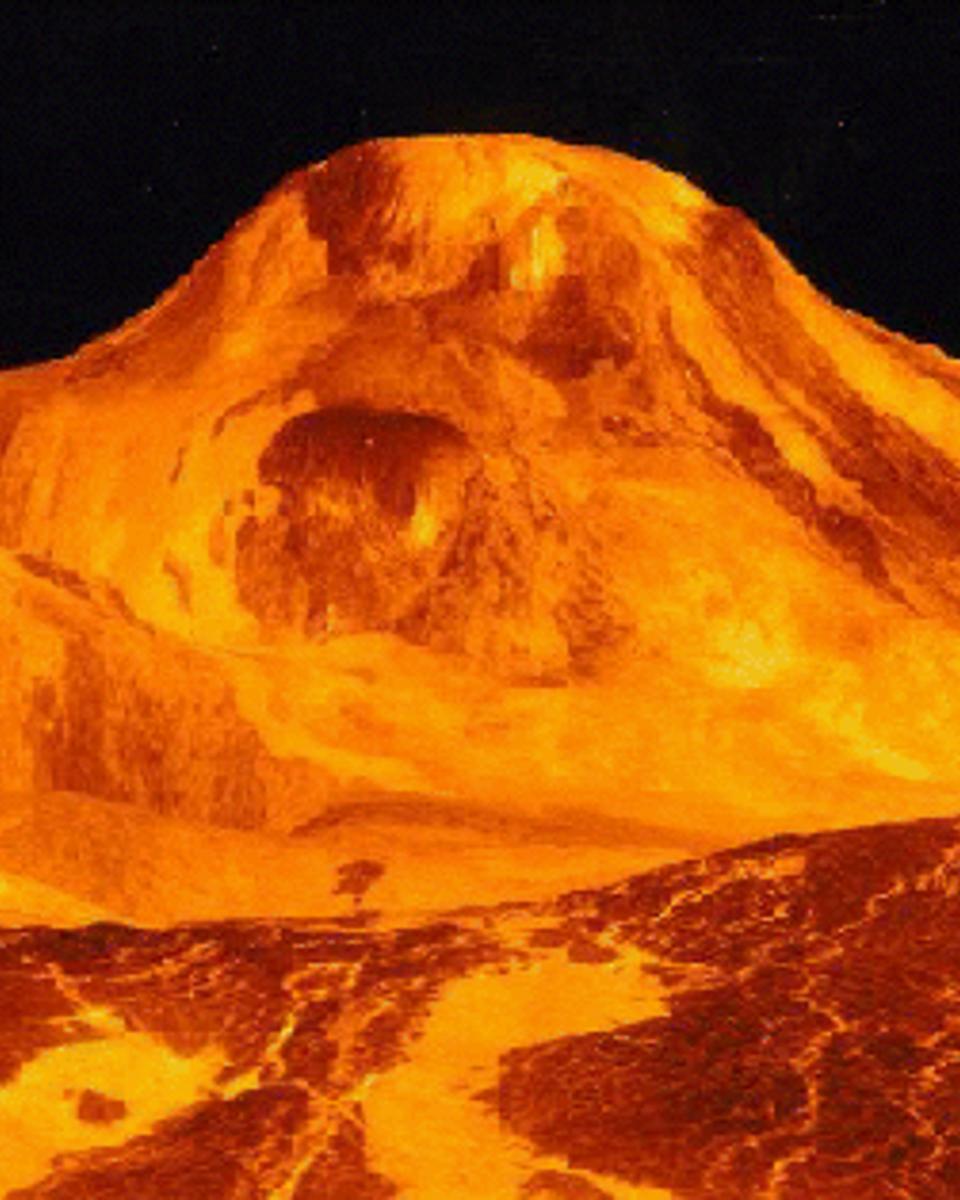
A Venusian Landscape
This computer generated view of a Venusian volcano was created using data from NASA's Magellan spacecraft . Magellan used its onboard radar to map the surface of Venus which is…
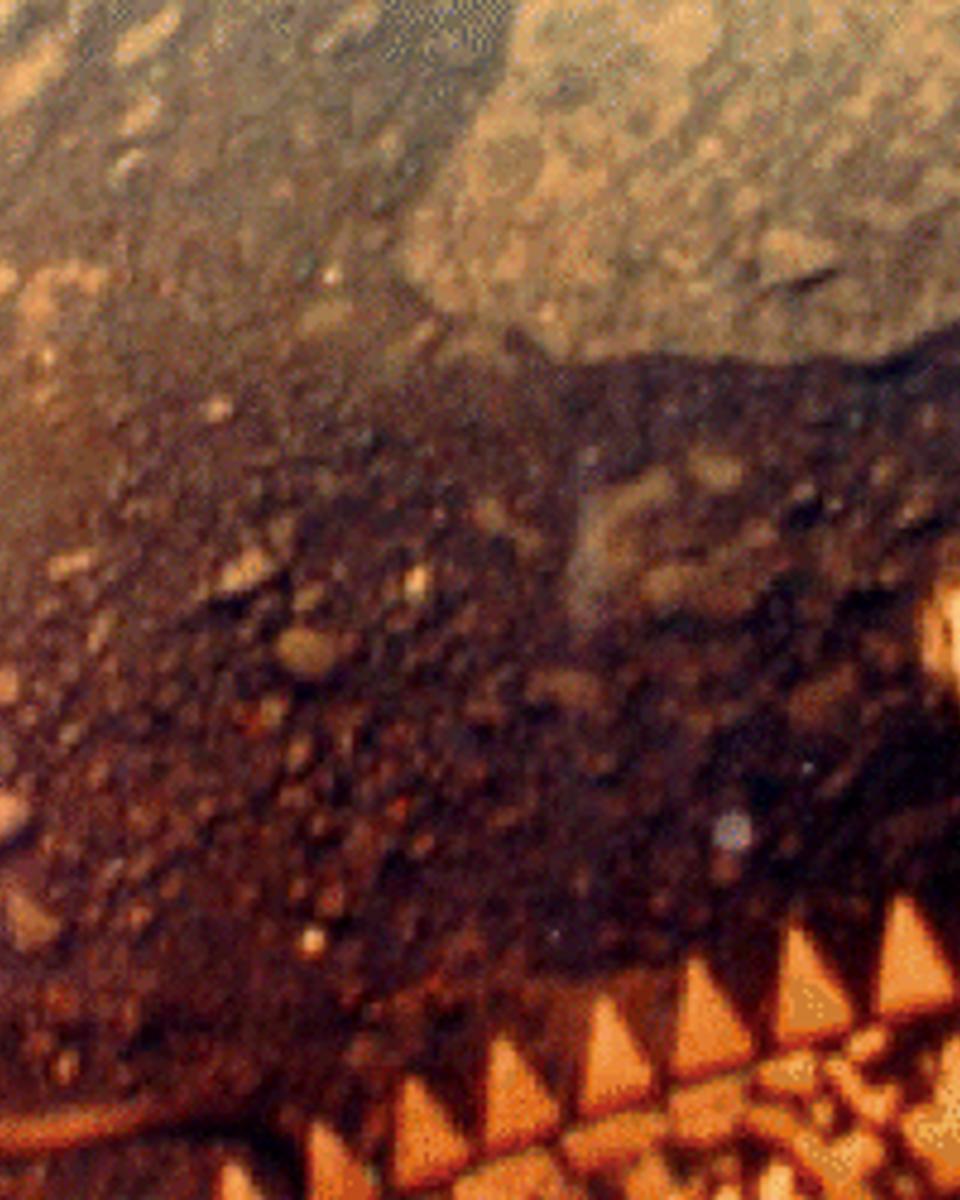
A Venus Landing
This image is part of the first color panoramic view from Venus . It was transmitted by a TV camera on the Soviet Venera 13 lander which parachuted to the surface on March 1,…
Viewing discoveries from 20 October 1995 through 27 September 1995.