Browse NASA Astronomy Picture of the Day archive by date and media: Archive Discoveries
Browse the NASA APOD archive without needing the exact date first. Filter by media type and keep moving deeper into older images and videos.
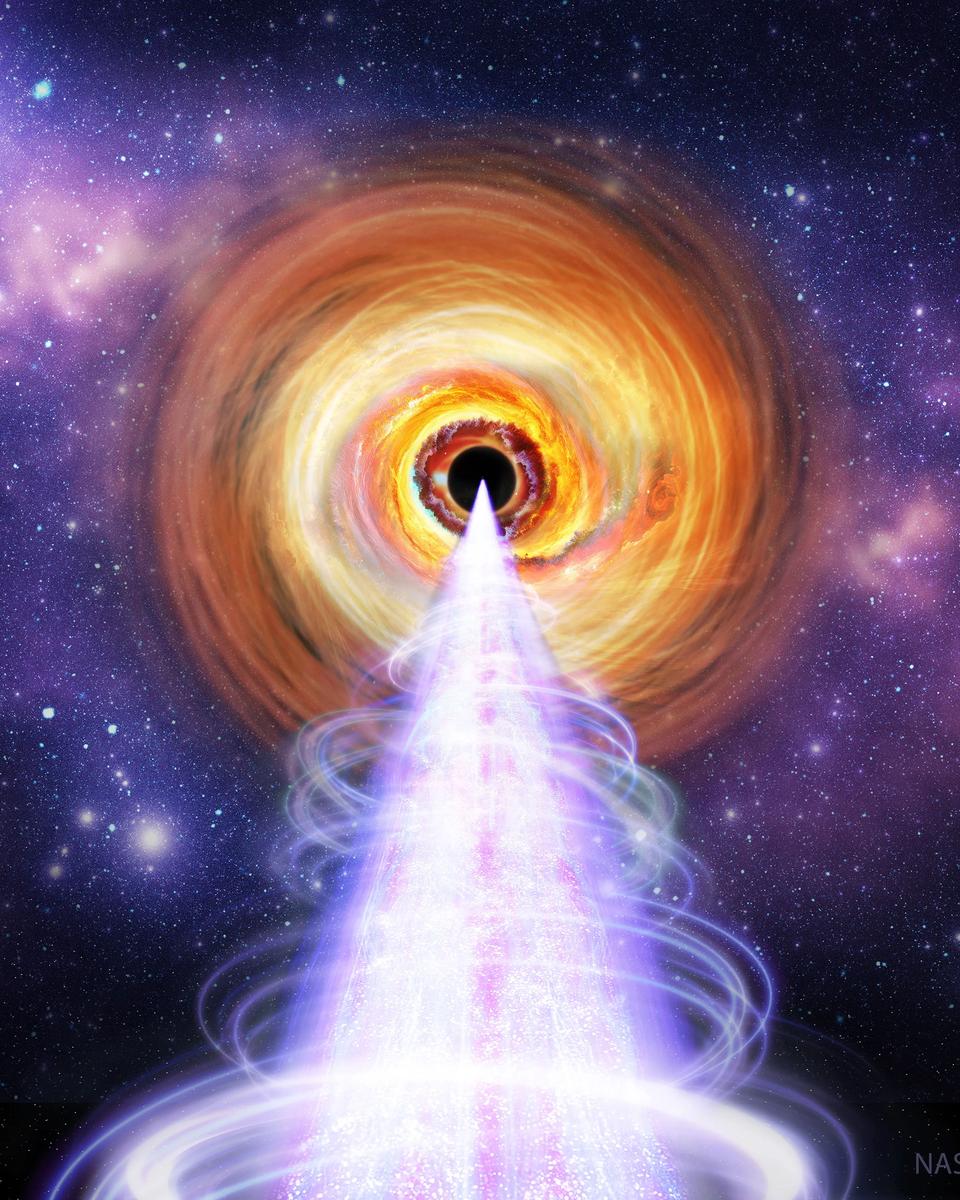
IXPE Explores a Black Hole Jet
How do black holes create X-rays? Answering this long-standing question was significantly advanced recently with data taken by NASA's IXPE satellite. X-rays cannot exit a black…
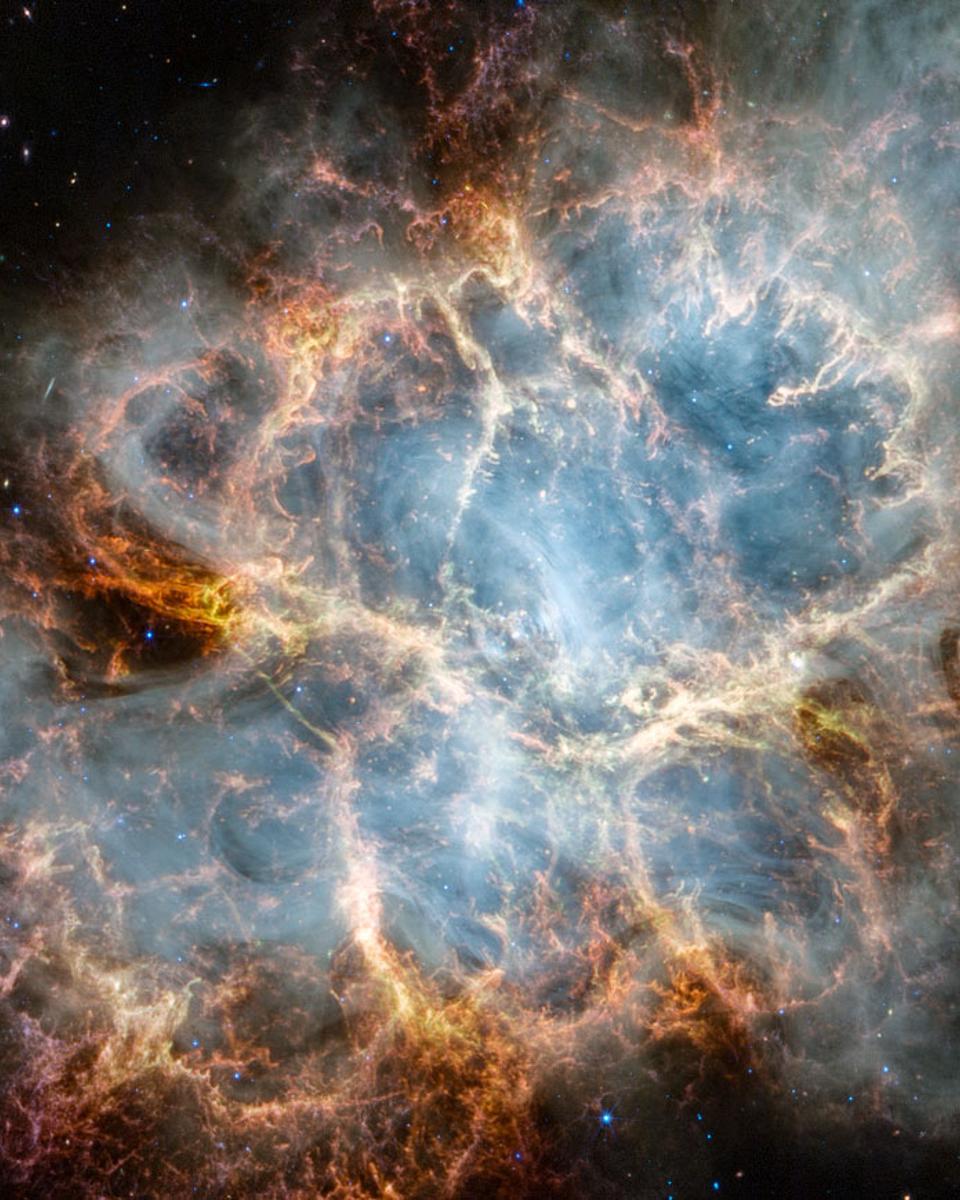
M1: The Incredible Expanding Crab
Cataloged as M1, the Crab Nebula is the first on Charles Messier's famous list of things which are not comets . In fact, the Crab Nebula is now known to be a supernova remnant, an…
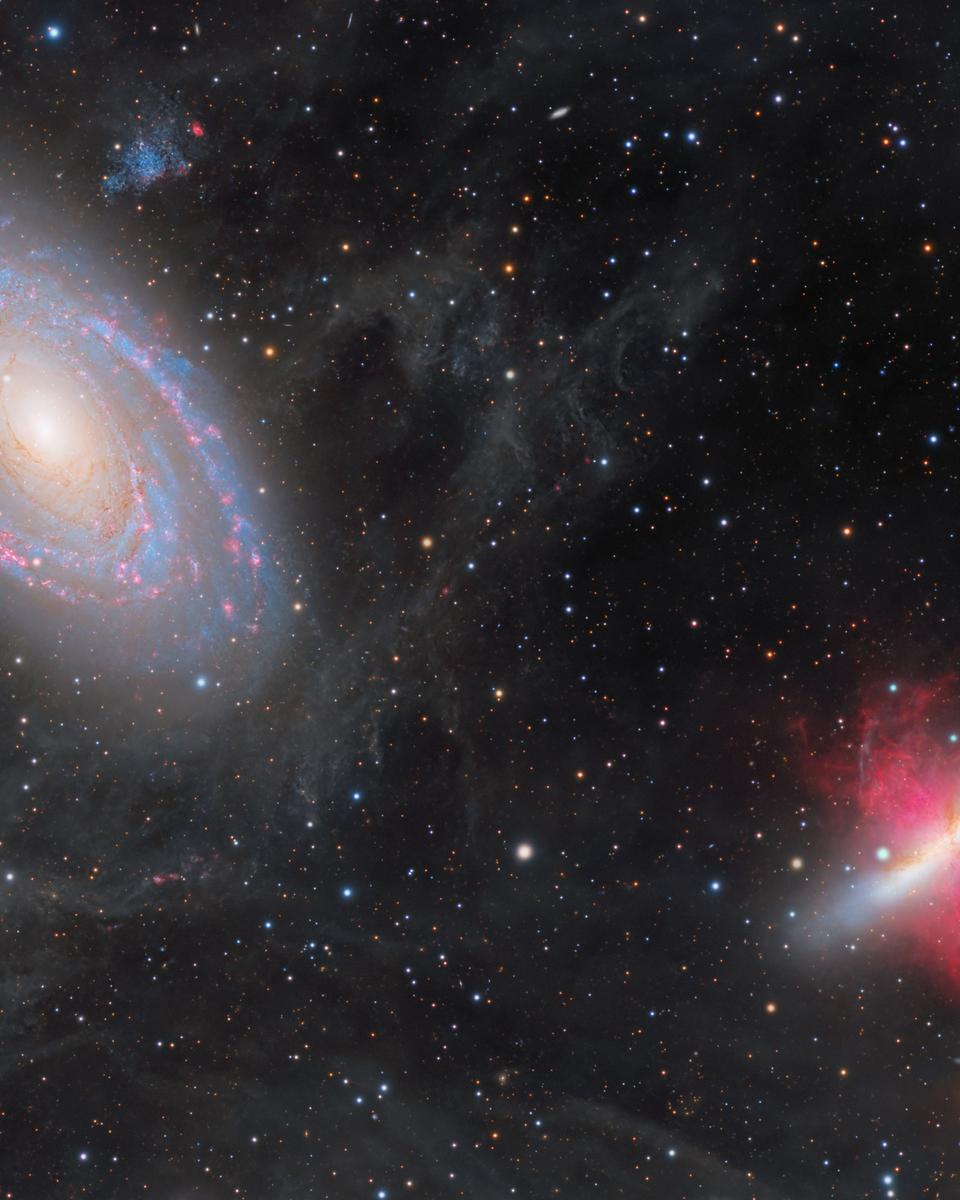
Galaxy Wars: M81 versus M82
In the upper left corner, surrounded by blue arms and dotted with red nebulas, is spiral galaxy M81 . In the lower right corner, marked by a light central line and surrounded by…

The Doubly Warped World of Binary Black Holes
If one black hole looks strange, what about two? Light rays from accretion disks around a pair of orbiting supermassive black holes make their way through the warped space-time…
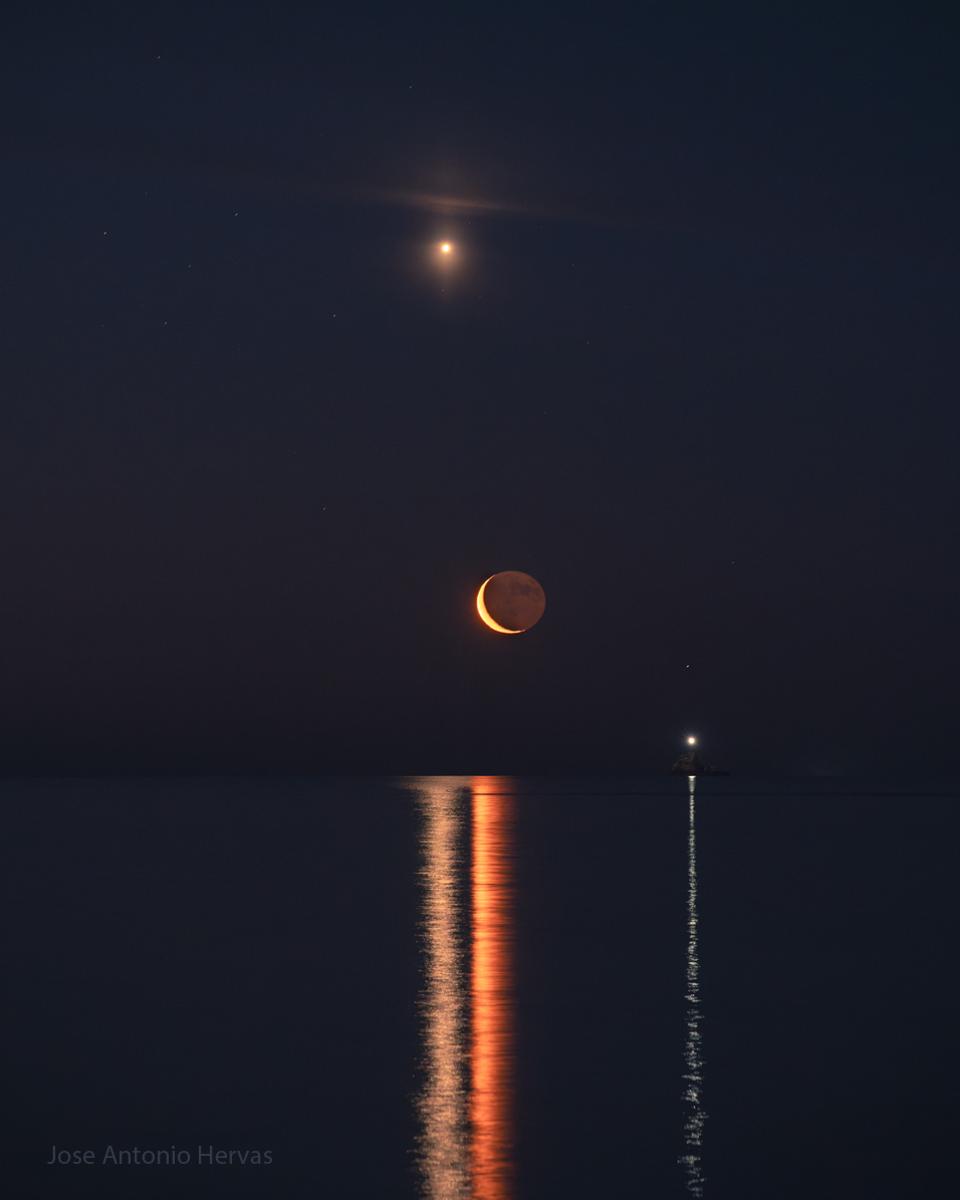
Planet Lines Across Water
What's causing those lines? Objects in the sky sometimes appear reflected as lines across water — but why? If the water's surface is smooth, then reflected objects would appear…
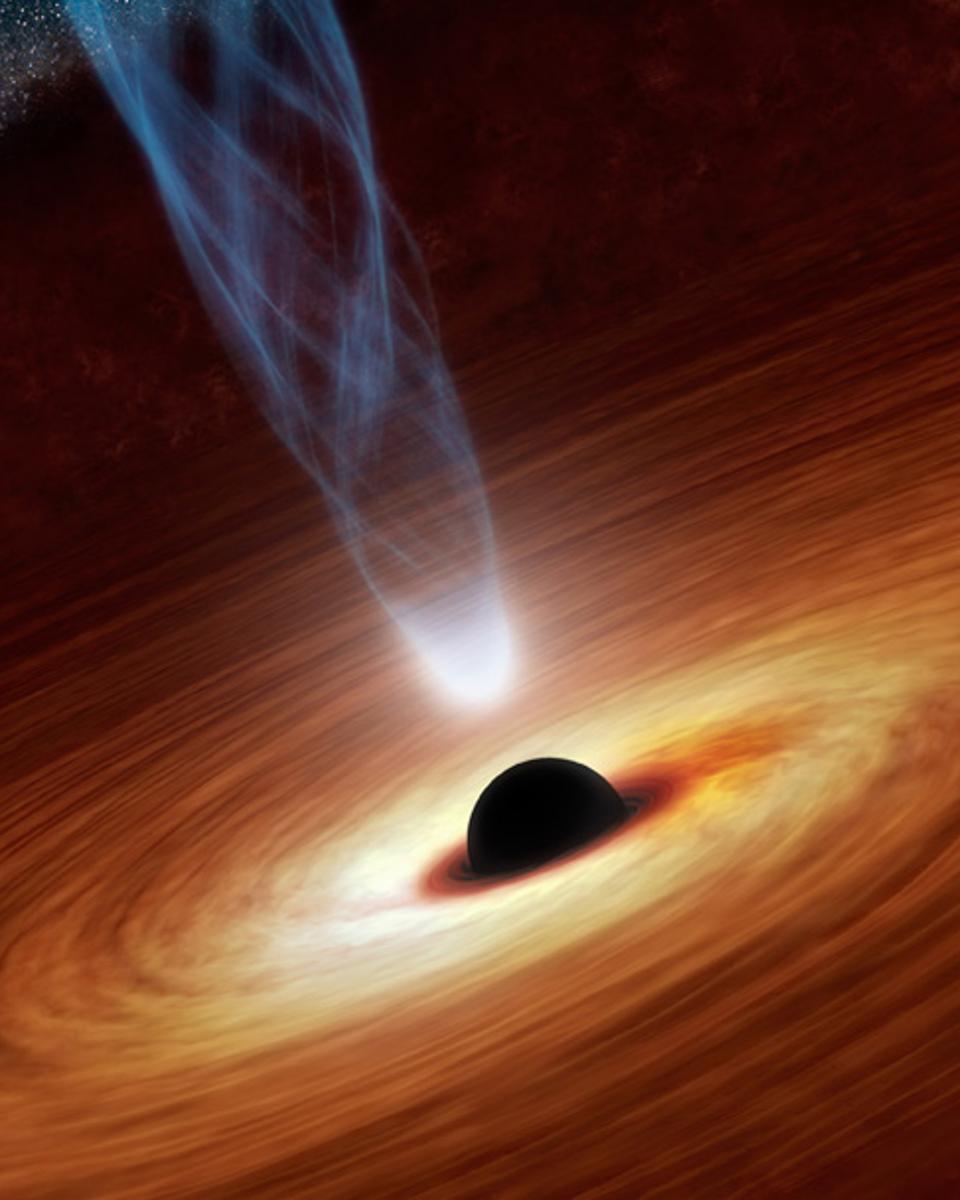
Spin up of a Supermassive Black Hole
How fast can a black hole spin? If any object made of regular matter spins too fast -- it breaks apart. But a black hole might not be able to break apart -- and its maximum spin…
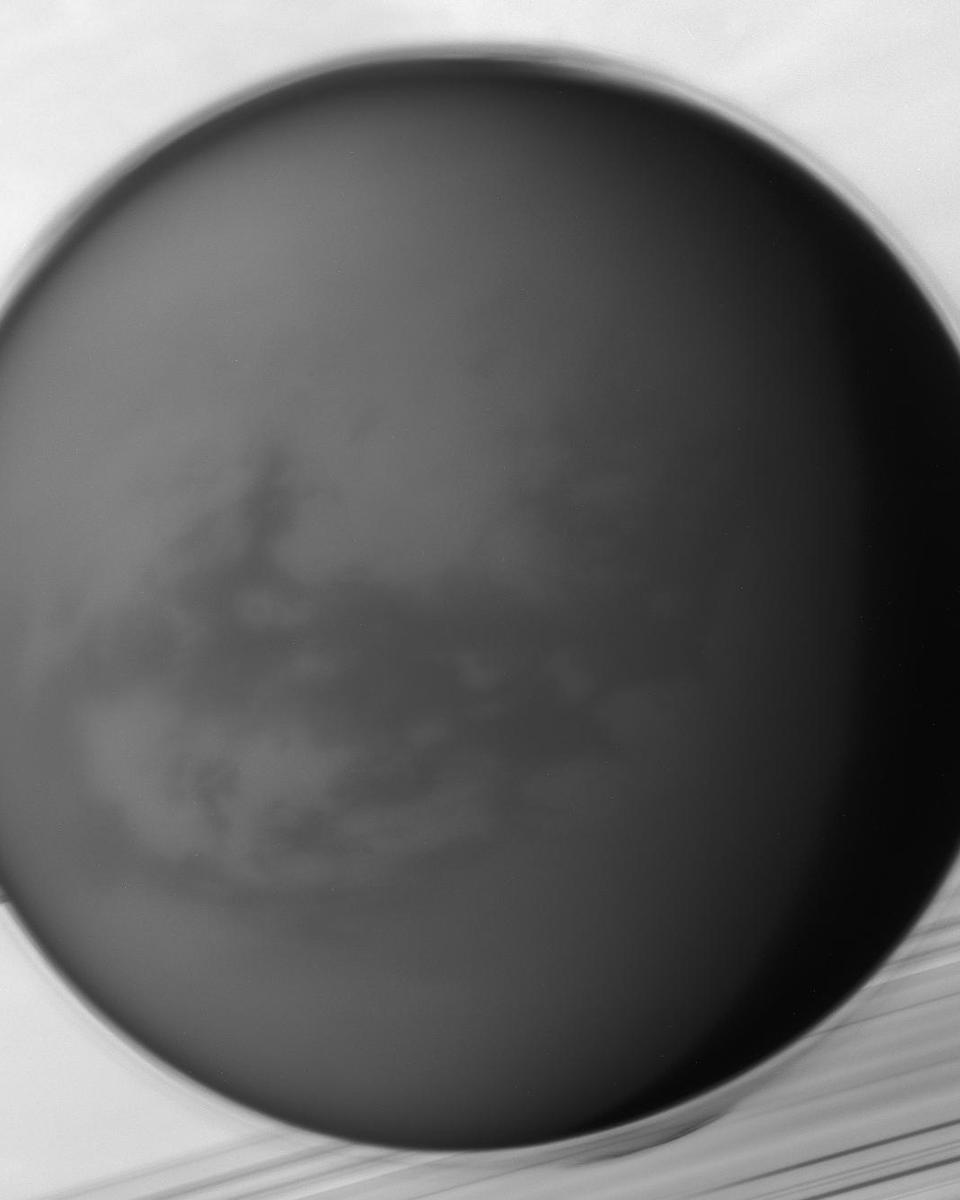
Titan: Moon over Saturn
Like Earth's moon, Saturn's largest moon Titan is locked in synchronous rotation with its planet. This mosaic of images recorded by the Cassini spacecraft in May of 2012 shows its…
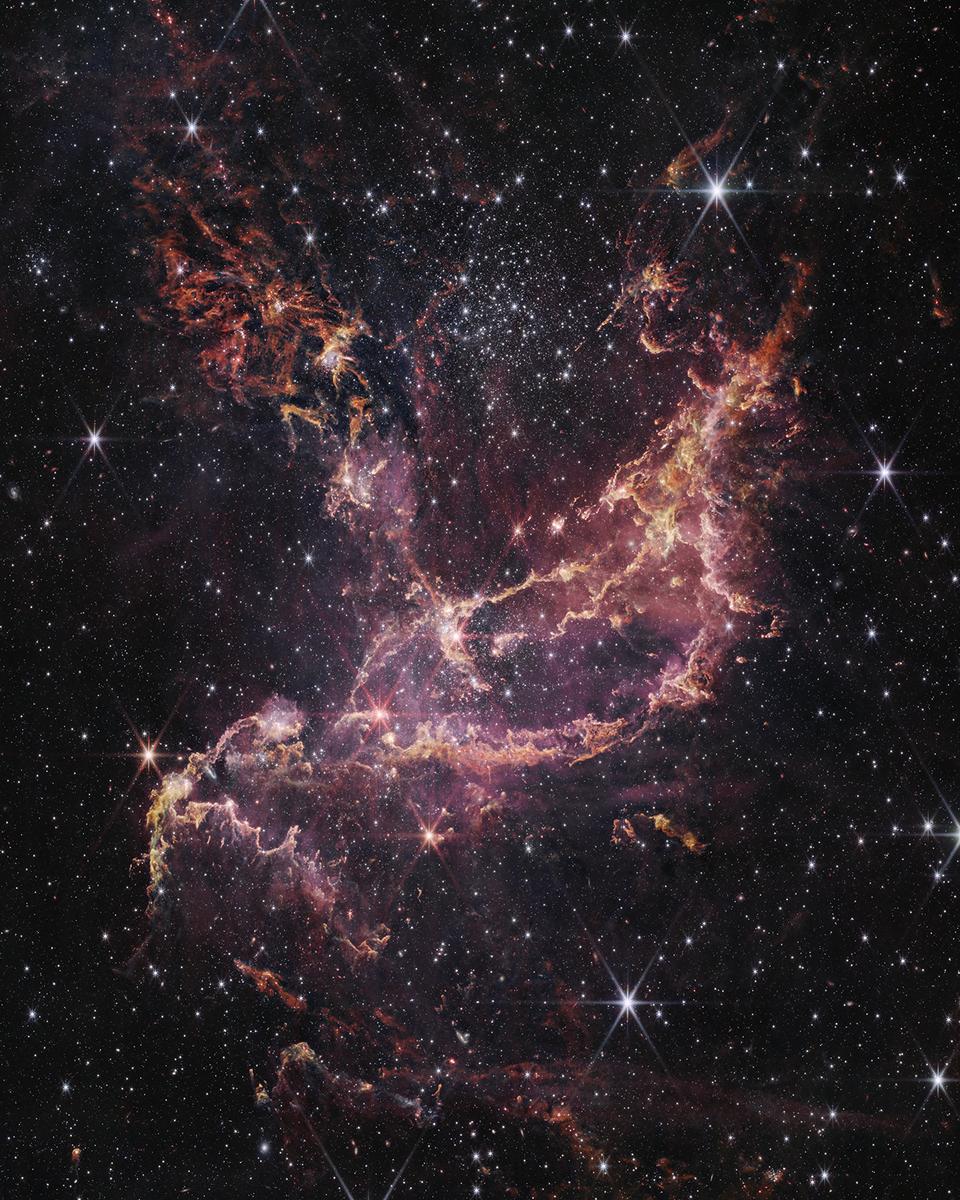
Young Star Cluster NGC 346
The most massive young star cluster in the Small Magellanic Cloud is NGC 346, embedded in our small satellite galaxy's largest star forming region some 210,000 light-years…
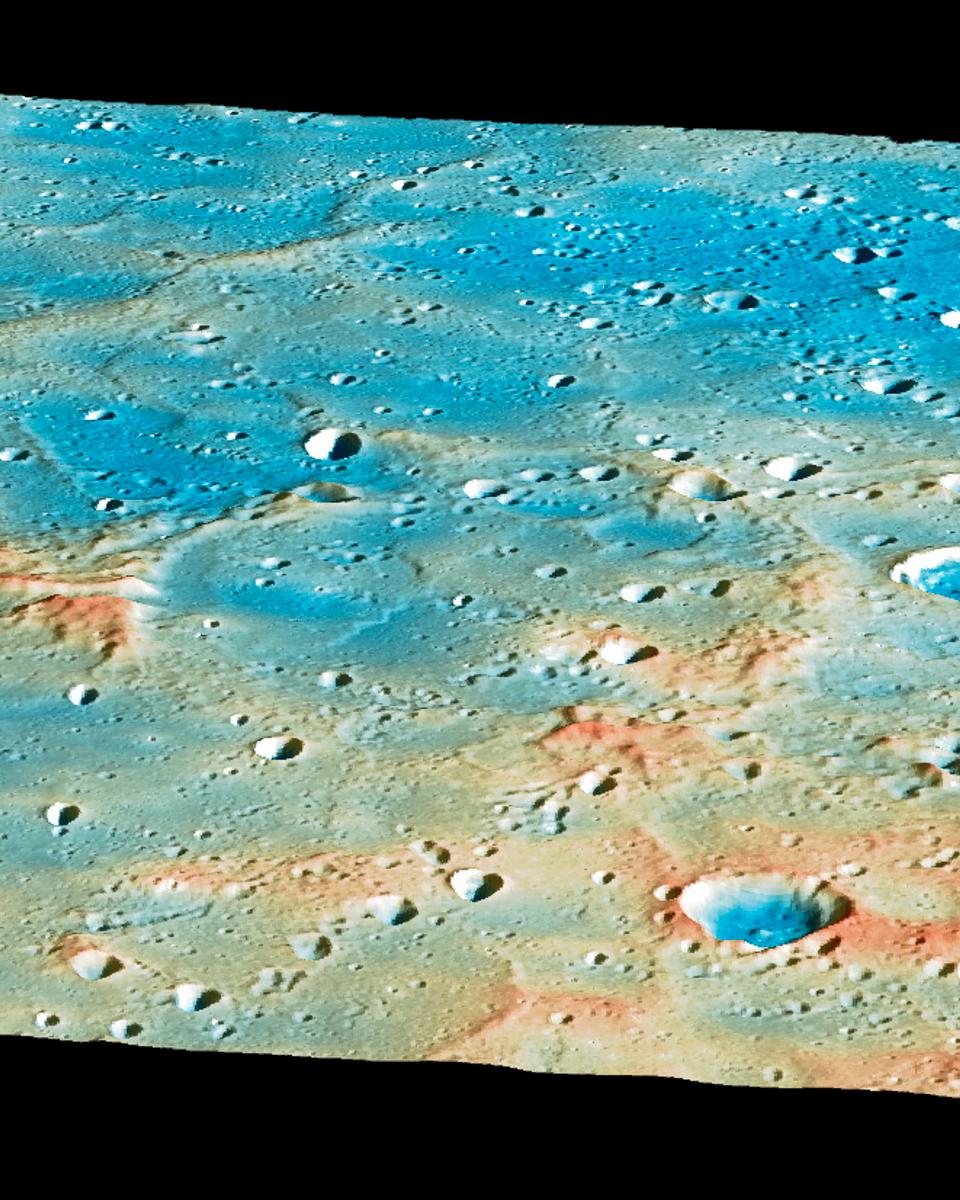
MESSENGER's Last Day on Mercury
The first to orbit inner planet Mercury, the MESSENGER spacecraft came to rest on this region of Mercury's surface on April 30, 2015. Constructed from MESSENGER image and laser…
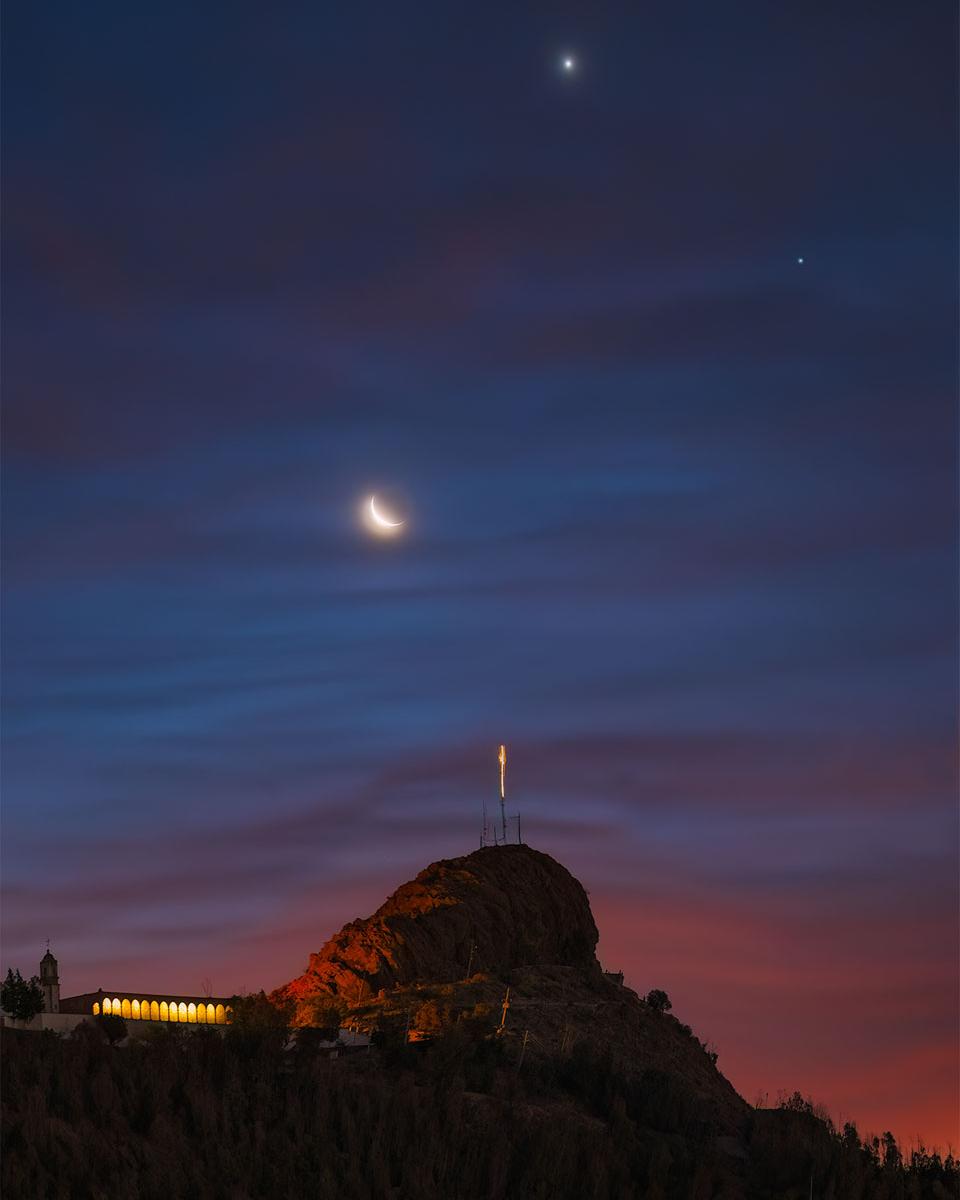
A Happy Sky over Bufa Hill in Mexico
Sometimes, the sky itself seems to smile. A few days ago, visible over much of the world, an unusual superposition of our Moon with the planets Venus and Saturn created just such…
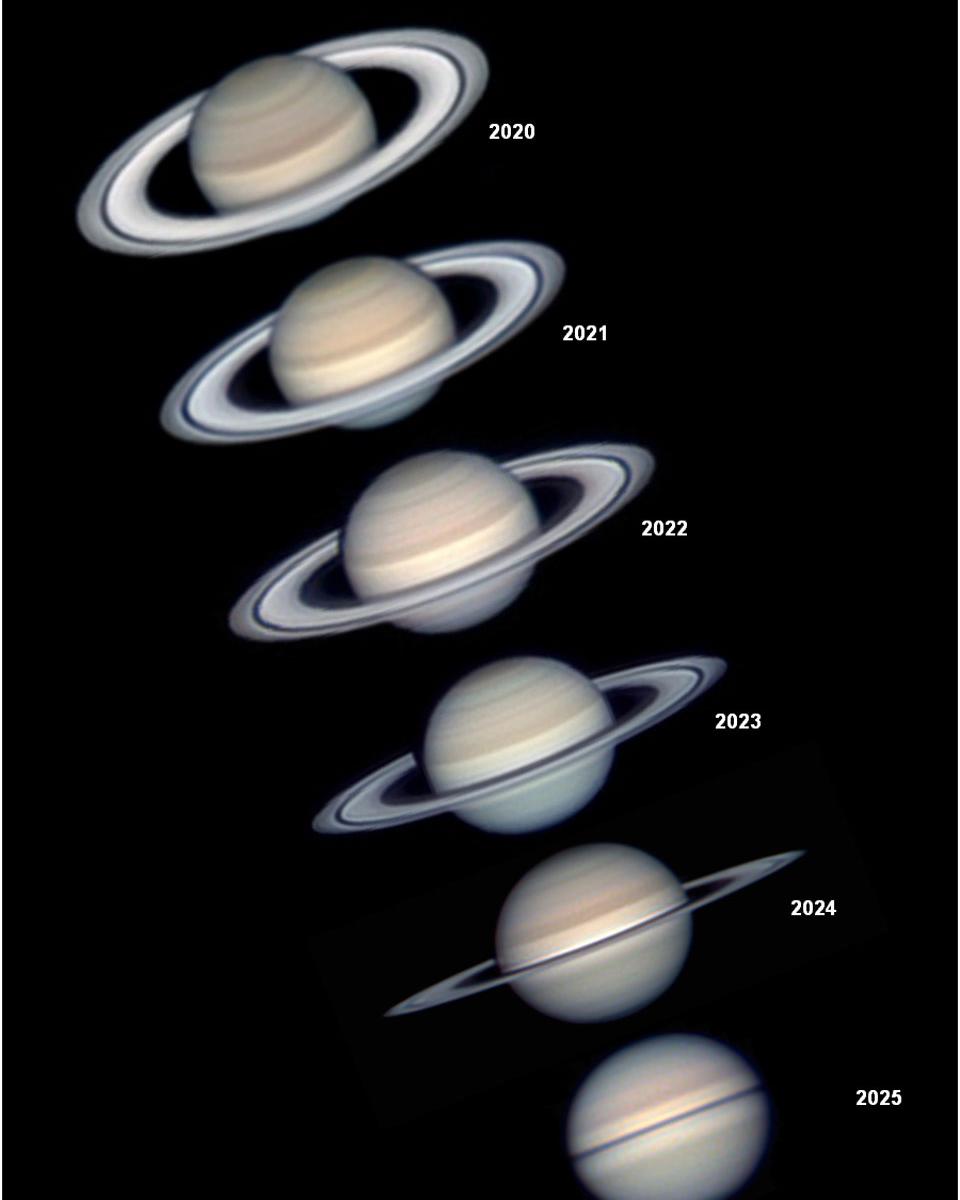
Saturn's Rings Appear to Disappear
Where are Saturn's ears? Galileo is credited, in 1610, as the first person to see Saturn's rings . Testing out Lipperhey 's recently co-invented telescope , Galileo did not know…
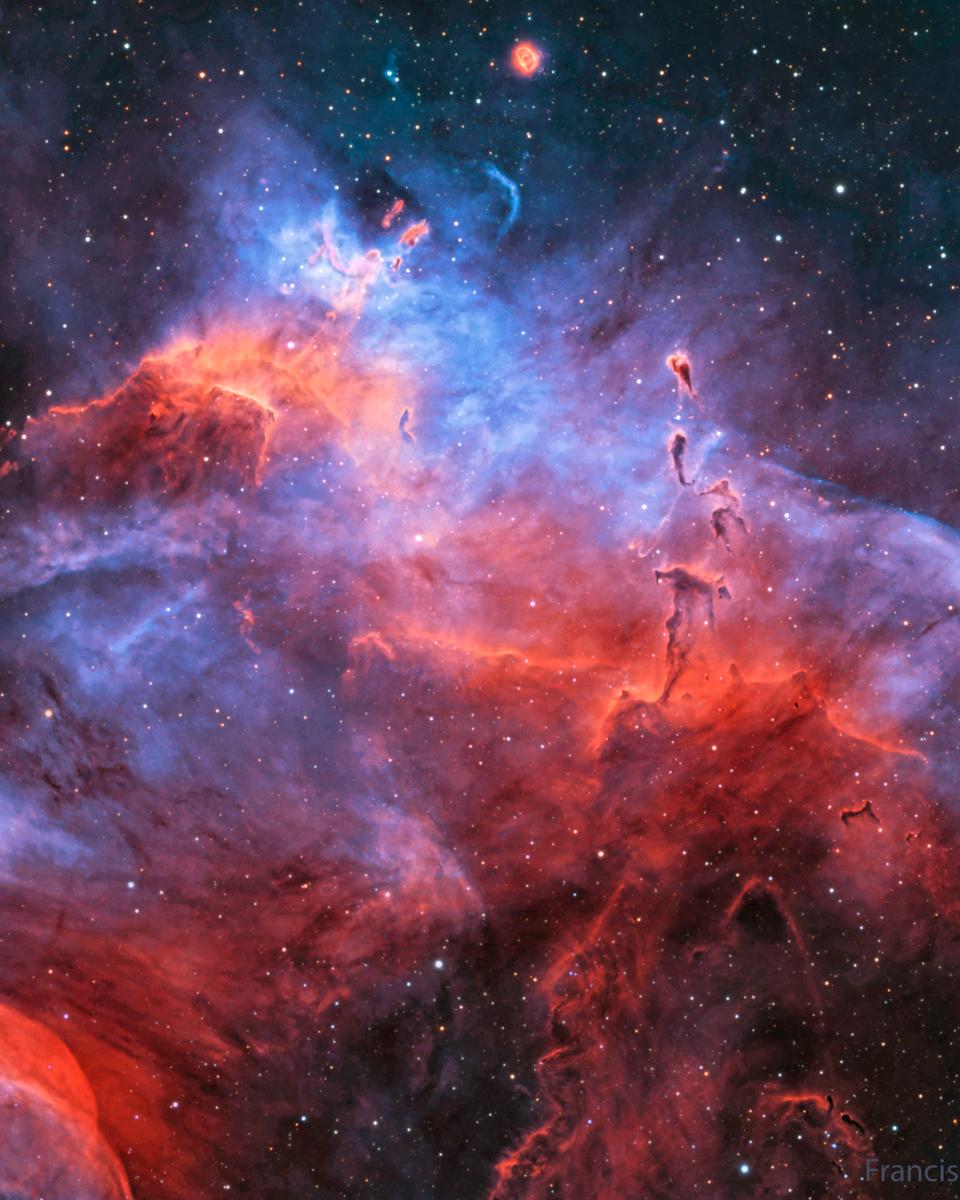
Gum 37 and the Southern Tadpoles
This cosmic skyscape features glowing gas and dark dust clouds alongside the young stars of NGC 3572 . A beautiful emission nebula and star cluster, it sails far southern skies…
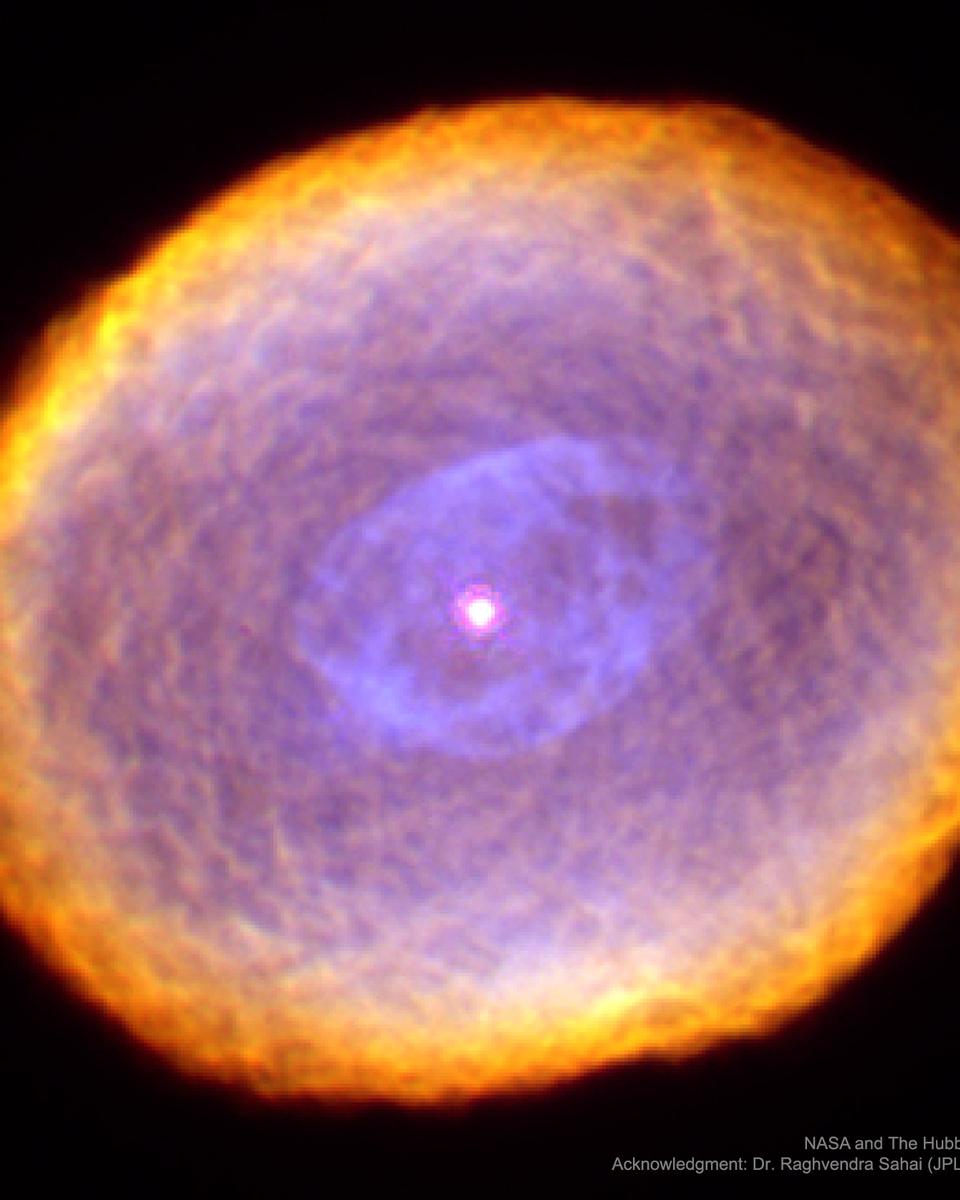
IC 418: The Spirograph Nebula
What is creating the strange texture of IC 418? Dubbed the Spirograph Nebula for its resemblance to drawings from a cyclical drawing tool , planetary nebula IC 418 shows patterns…
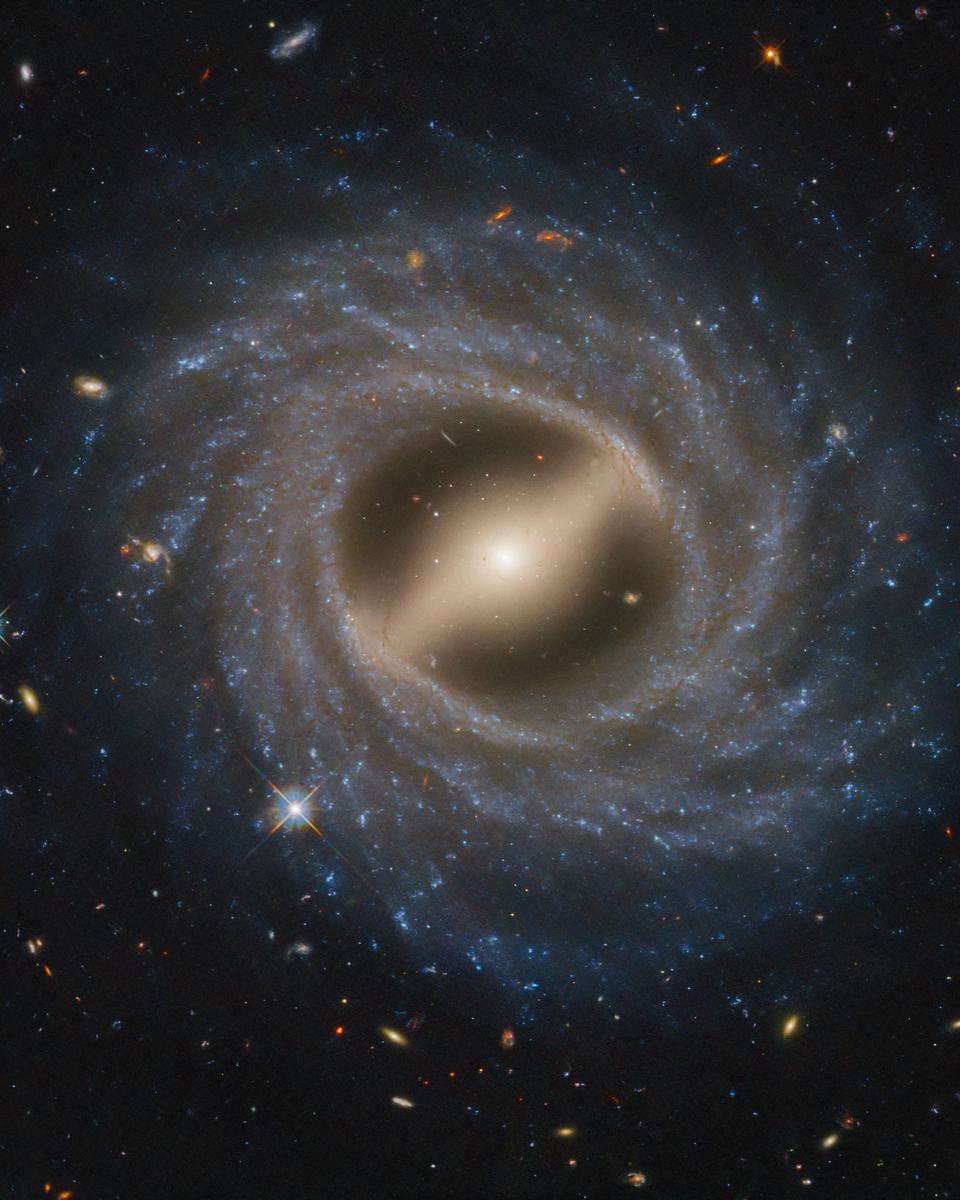
Barred Spiral Galaxy NGC 5335
This stunning portrait of NGC 5335 was captured by the Hubble Space Telescope. Some 170,000 light-years across and over 200 million light-years away toward the constellation…
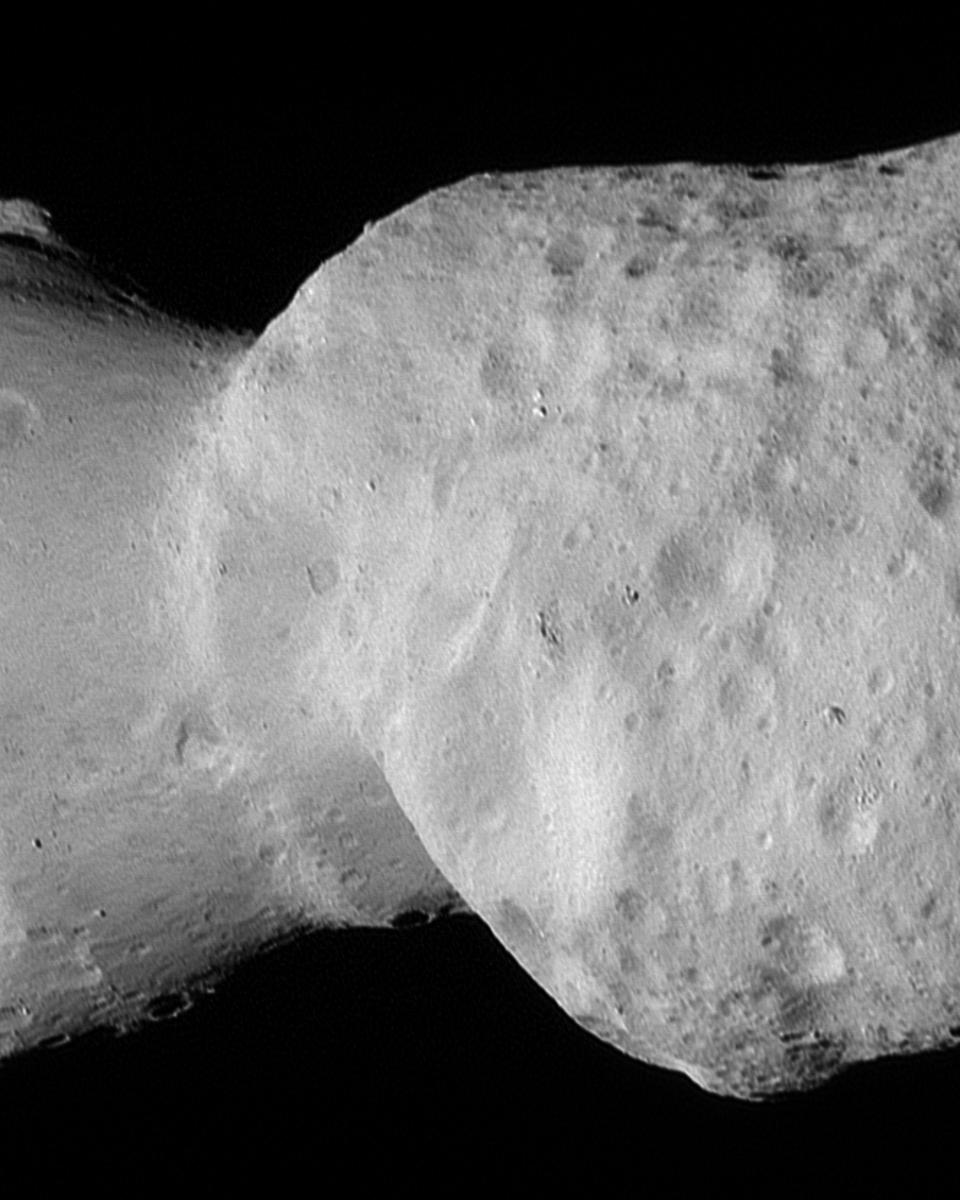
Asteroid Donaldjohanson
Main belt asteroid 52246 Donaldjohanson is about 8 kilometers long and 3.5 kilometers across. On April 20, this sharp close-up of the asteroid was captured at a distance of about…
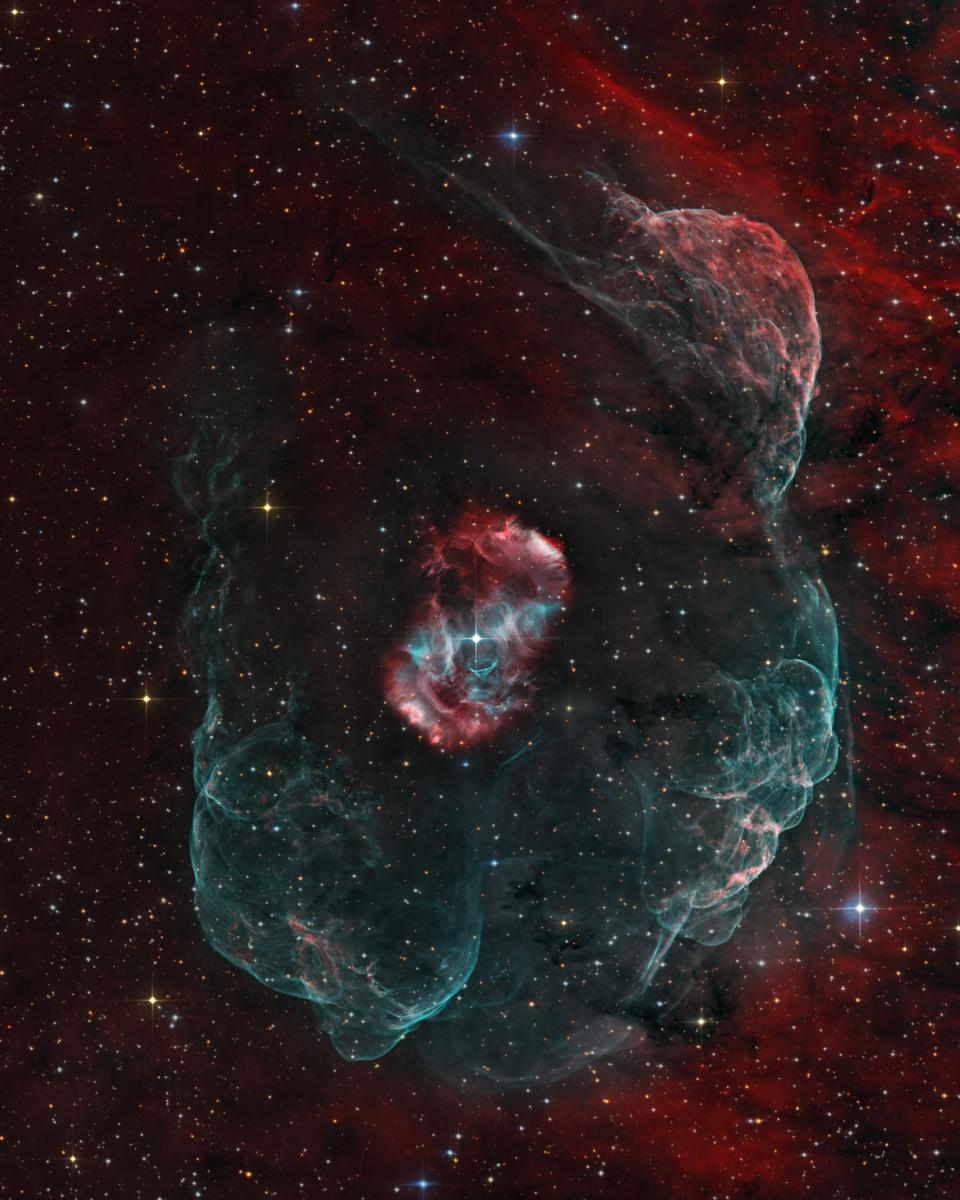
NGC 6164: A Dragon's Egg
Beautiful emission nebula NGC 6164 was created by a rare, hot, luminous O-type star, some 40 times as massive as the Sun. Seen at the center of the cosmic cloud, the star is a…
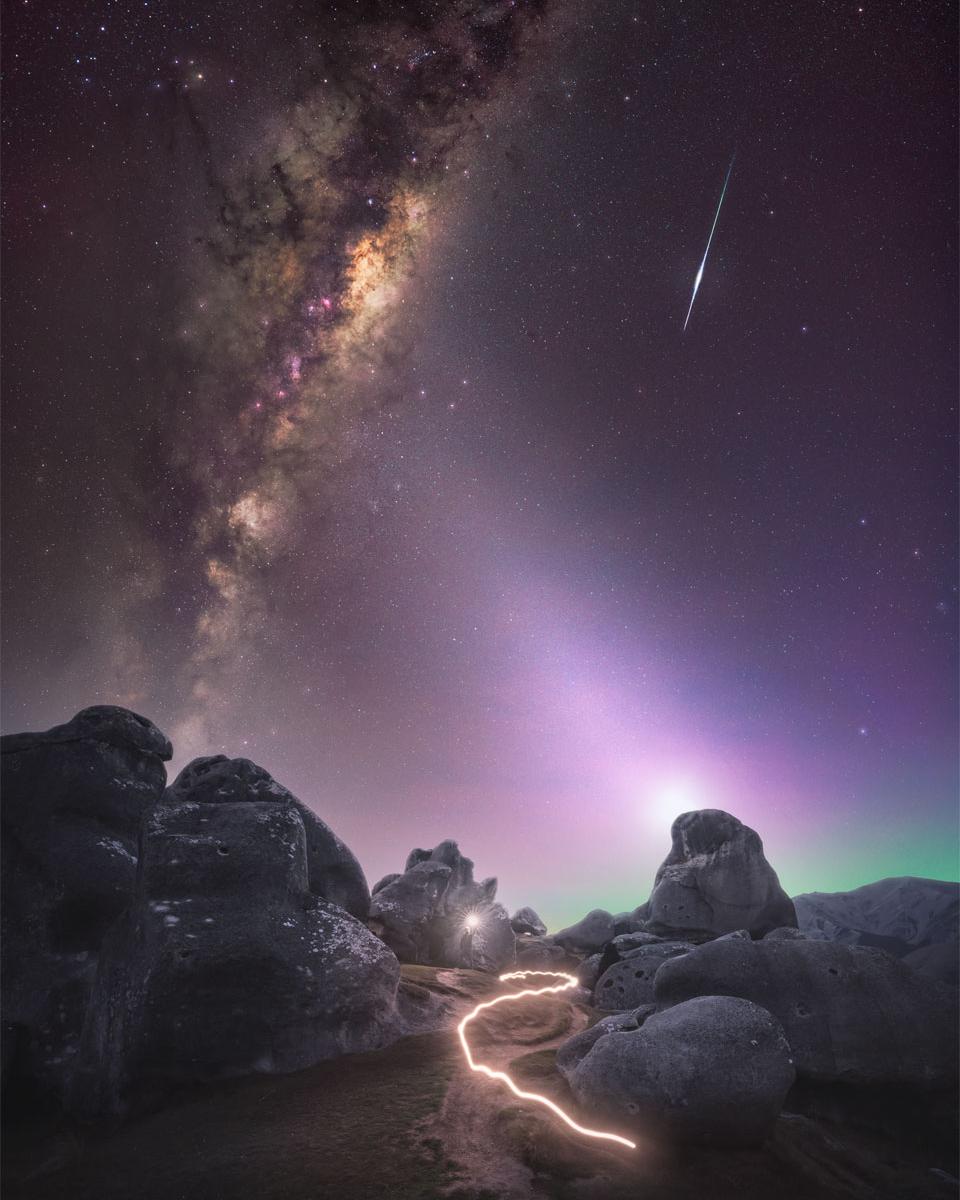
An Almost Everything Sky
This surprising sky has almost everything. First, slanting down from the upper left and far in the distance is the central band of our Milky Way Galaxy . More modestly, slanting…
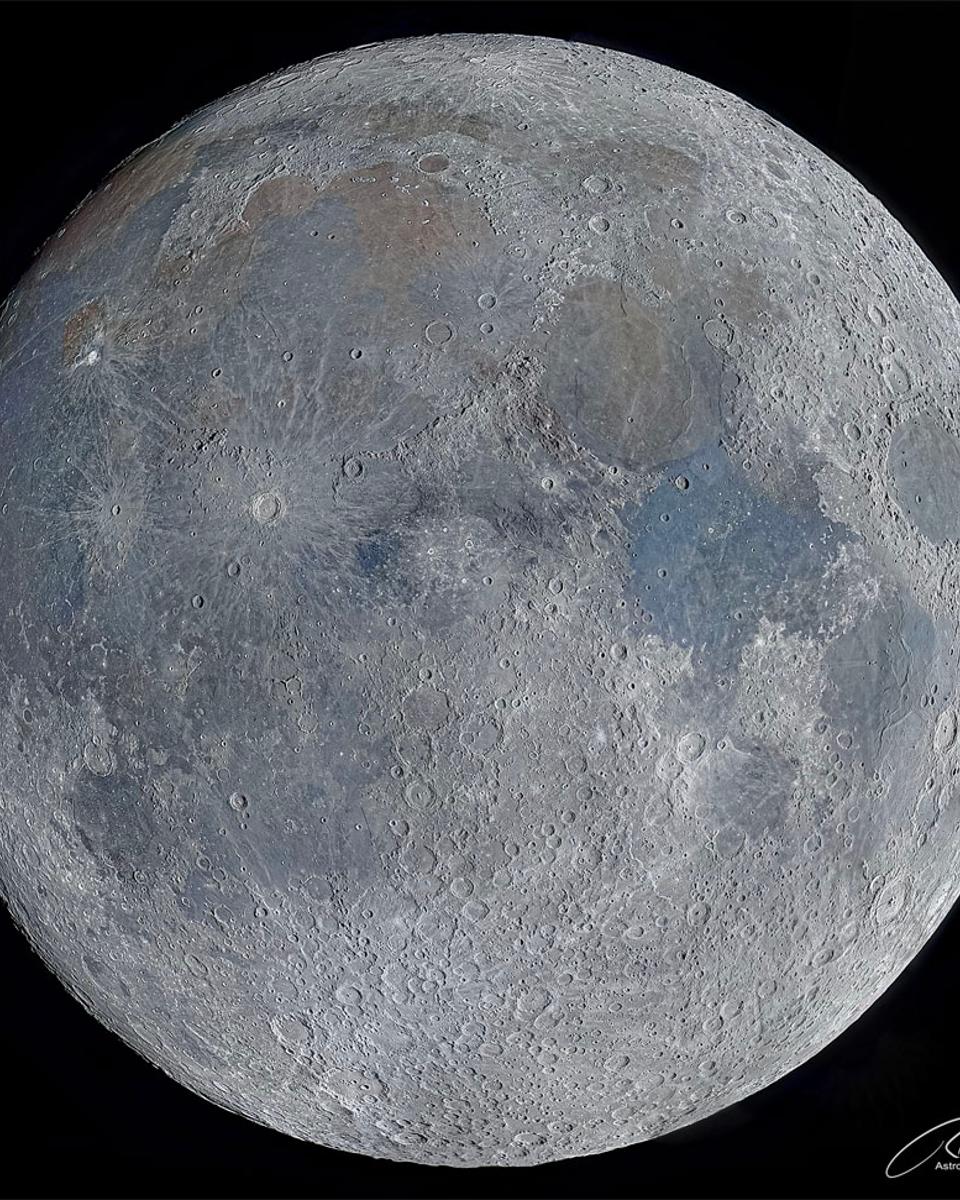
Terminator Moon: A Moonscape of Shadows
What's different about this Moon? It's the terminator s. In the featured image, you can't directly see any terminator -- the line that divides the light of day from the dark of…
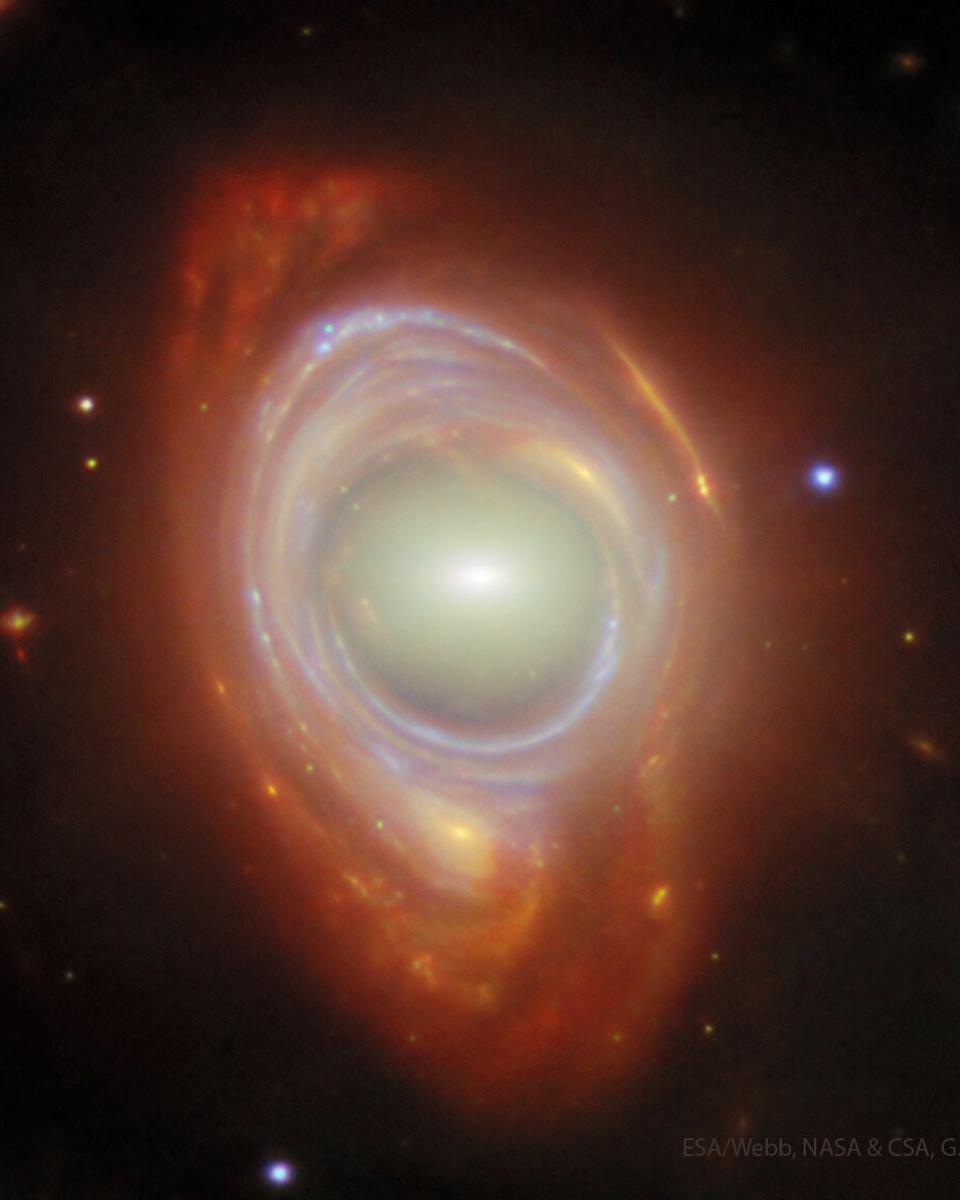
Galaxy Lenses Galaxy from Webb
Is this one galaxy or two? Although it looks like one, the answer is two. One path to this happening is when a small galaxy collides with a larger galaxy and ends up in the center…
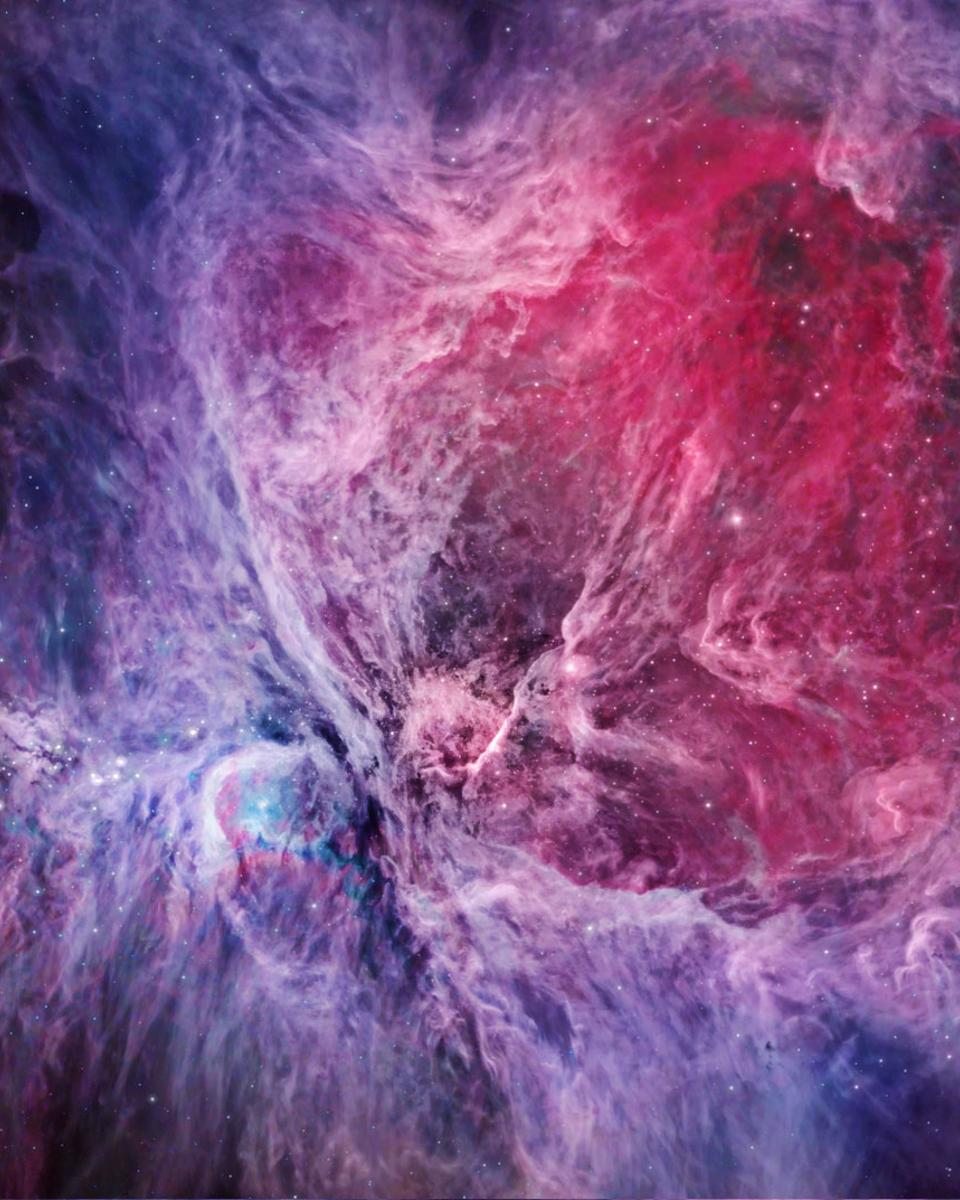
The Orion Nebula in Visible and Infrared
The Great Nebula in Orion is a colorful place. Visible to the unaided eye, it appears as a small fuzzy patch in the constellation of Orion . Long exposure, multi-wavelength images…
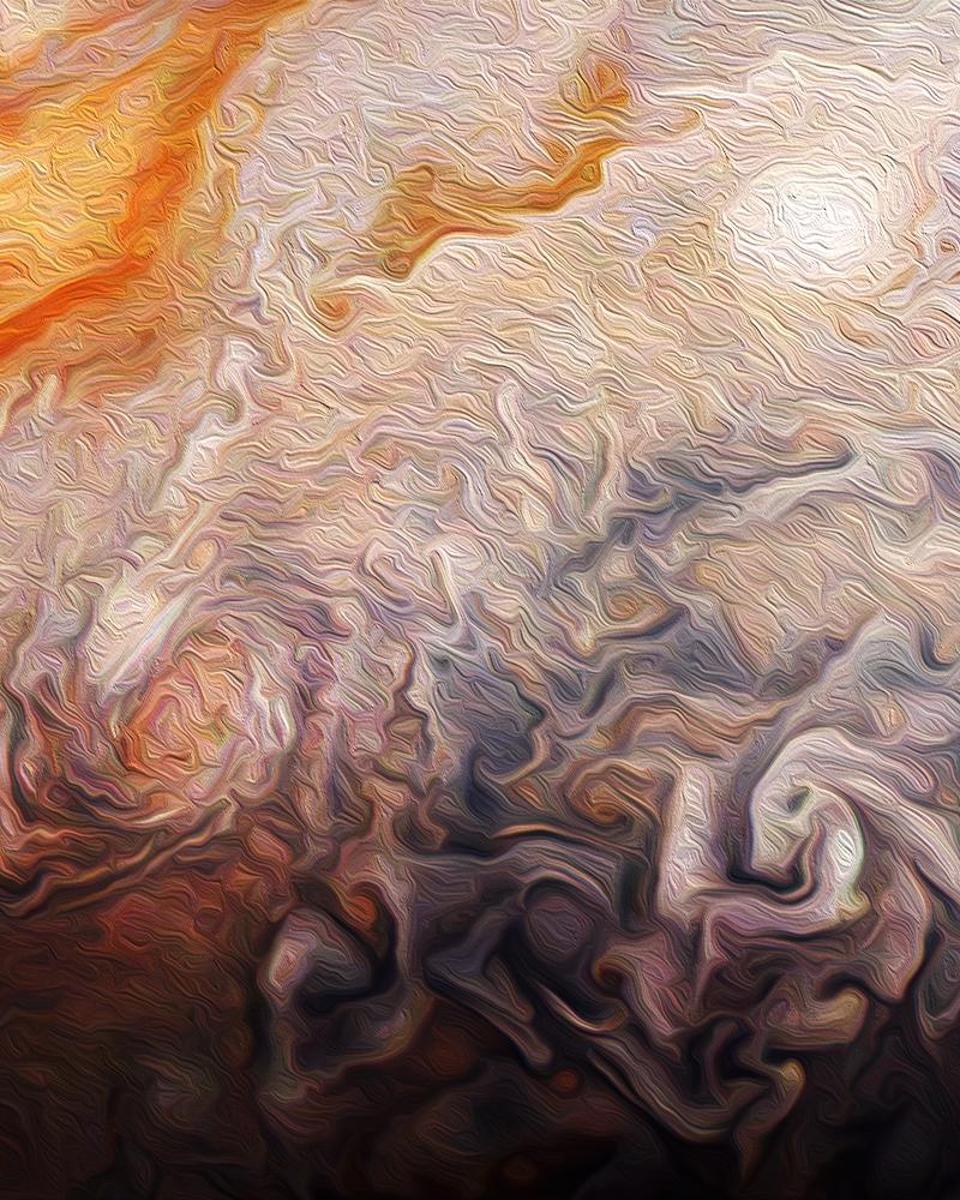
Painting with Jupiter
In digital brush strokes, Jupiter's signature atmospheric bands and vortices were used to form this interplanetary post-impressionist work of art. The creative image from citizen…
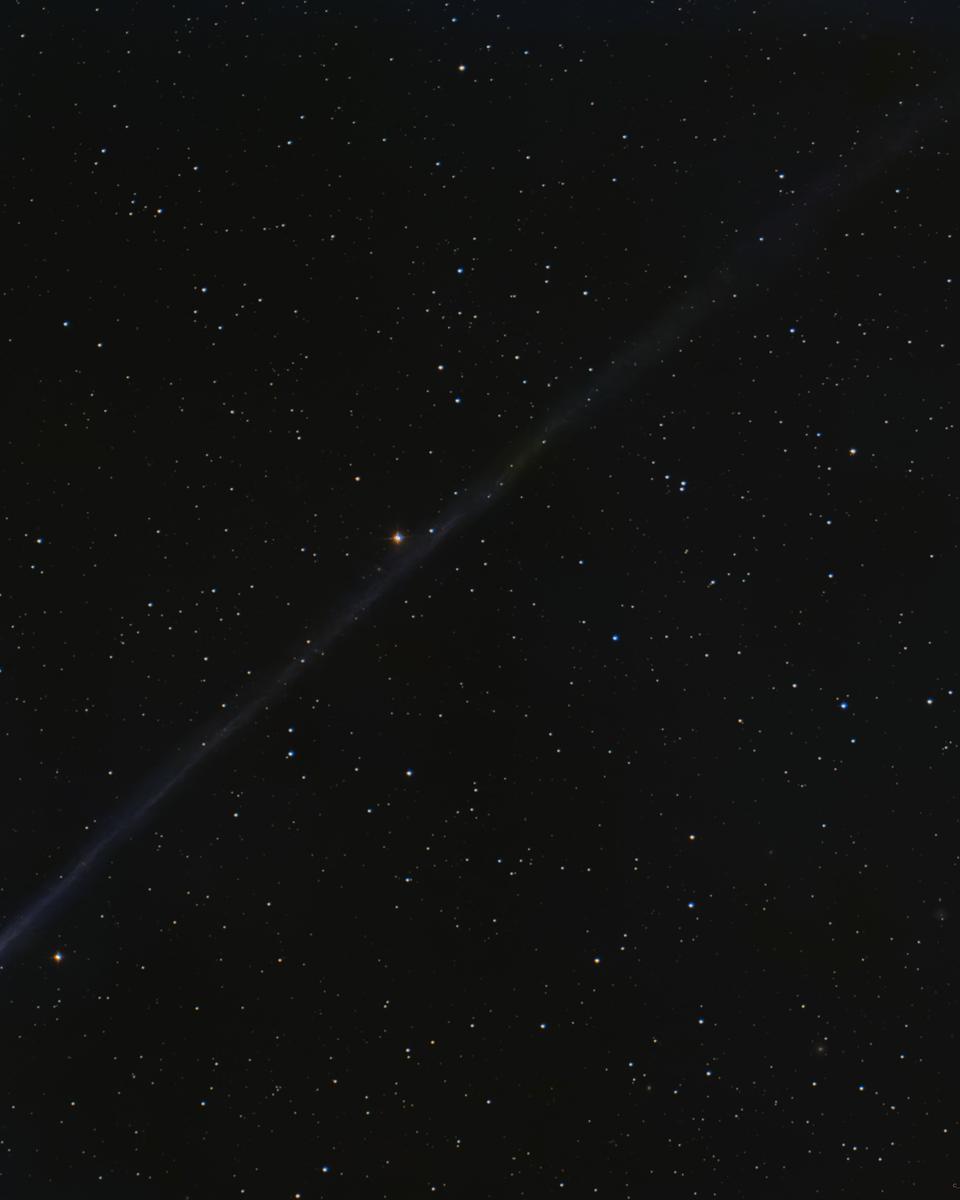
Comet C/2025 F2 SWAN
In late March, the comet now designated C/2025 F2 SWAN was found independently by citizen scientists Vladimir Bezugly, Michael Mattiazzo, and Rob Matson while examining publicly…
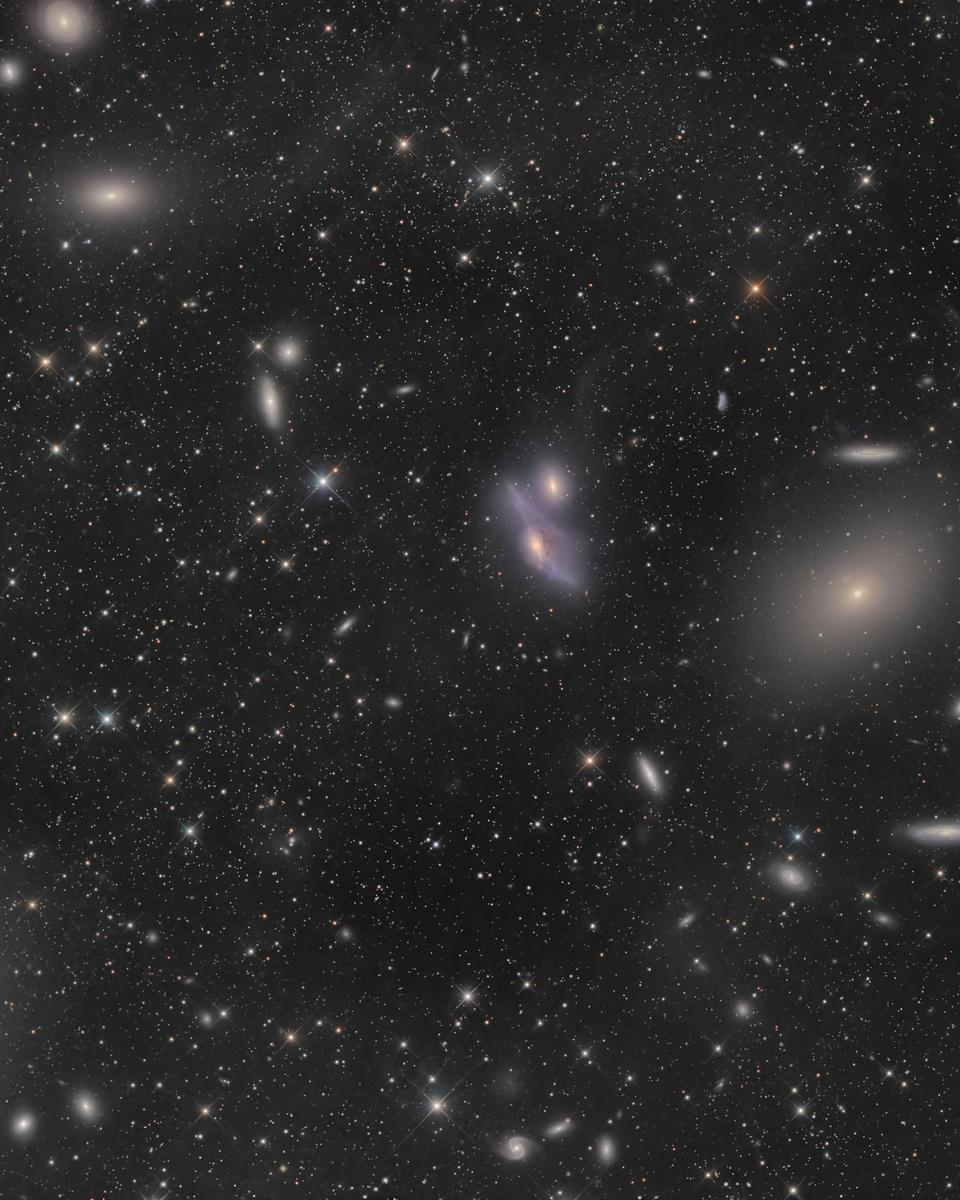
Virgo Cluster Galaxies
Galaxies of the Virgo Cluster are scattered across this nearly 4 degree wide telescopic field of view. About 50 million light-years distant, the Virgo Cluster is the closest large…
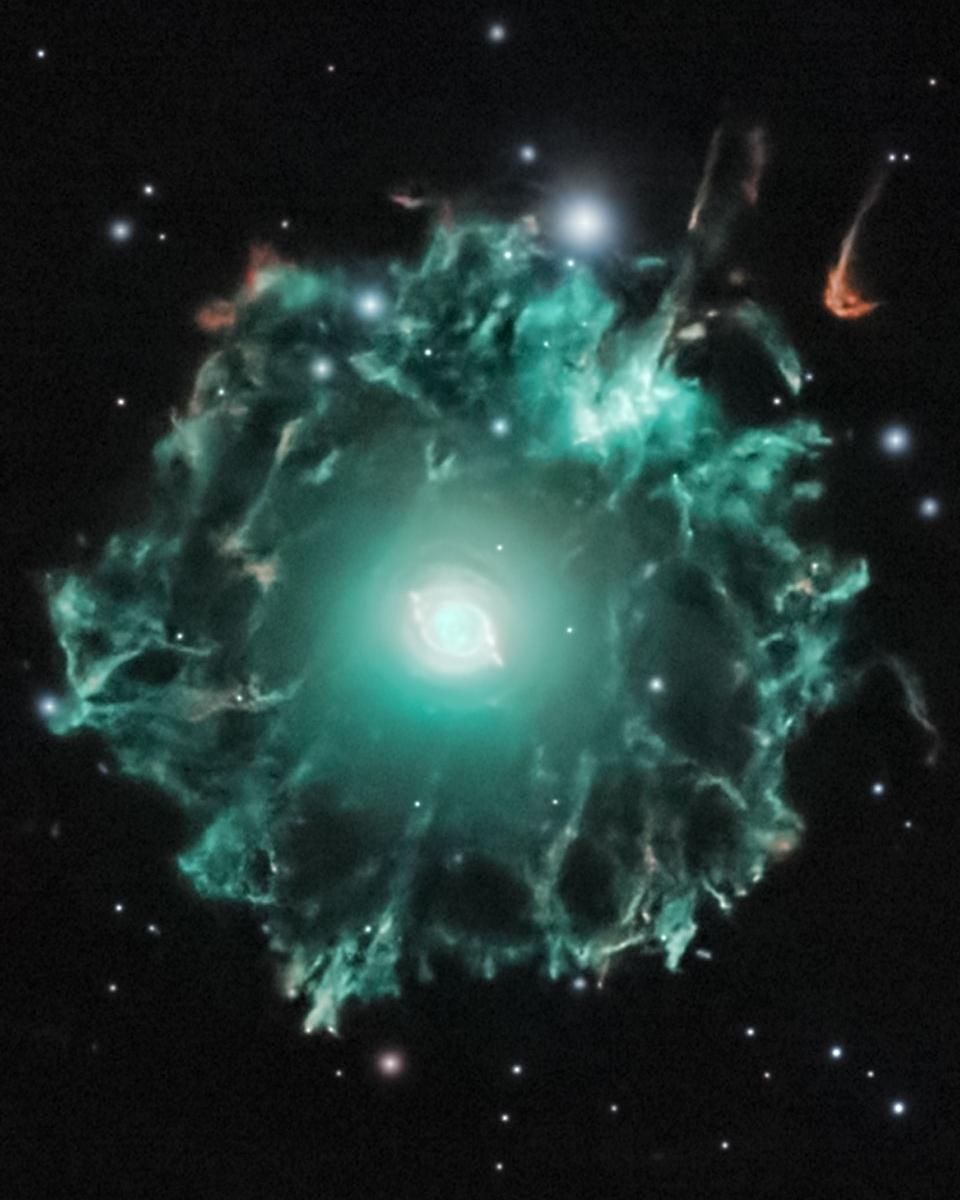
Halo of the Cat's Eye
What created the unusual halo around the Cat's Eye Nebula? No one is sure. What is sure is that the Cat's Eye Nebula (NGC 6543) is one of the best known planetary nebulae on the…
Viewing discoveries from 9 May 2025 through 16 April 2025.