Browse NASA Astronomy Picture of the Day archive by date and media: Archive Discoveries
Browse the NASA APOD archive without needing the exact date first. Filter by media type and keep moving deeper into older images and videos.
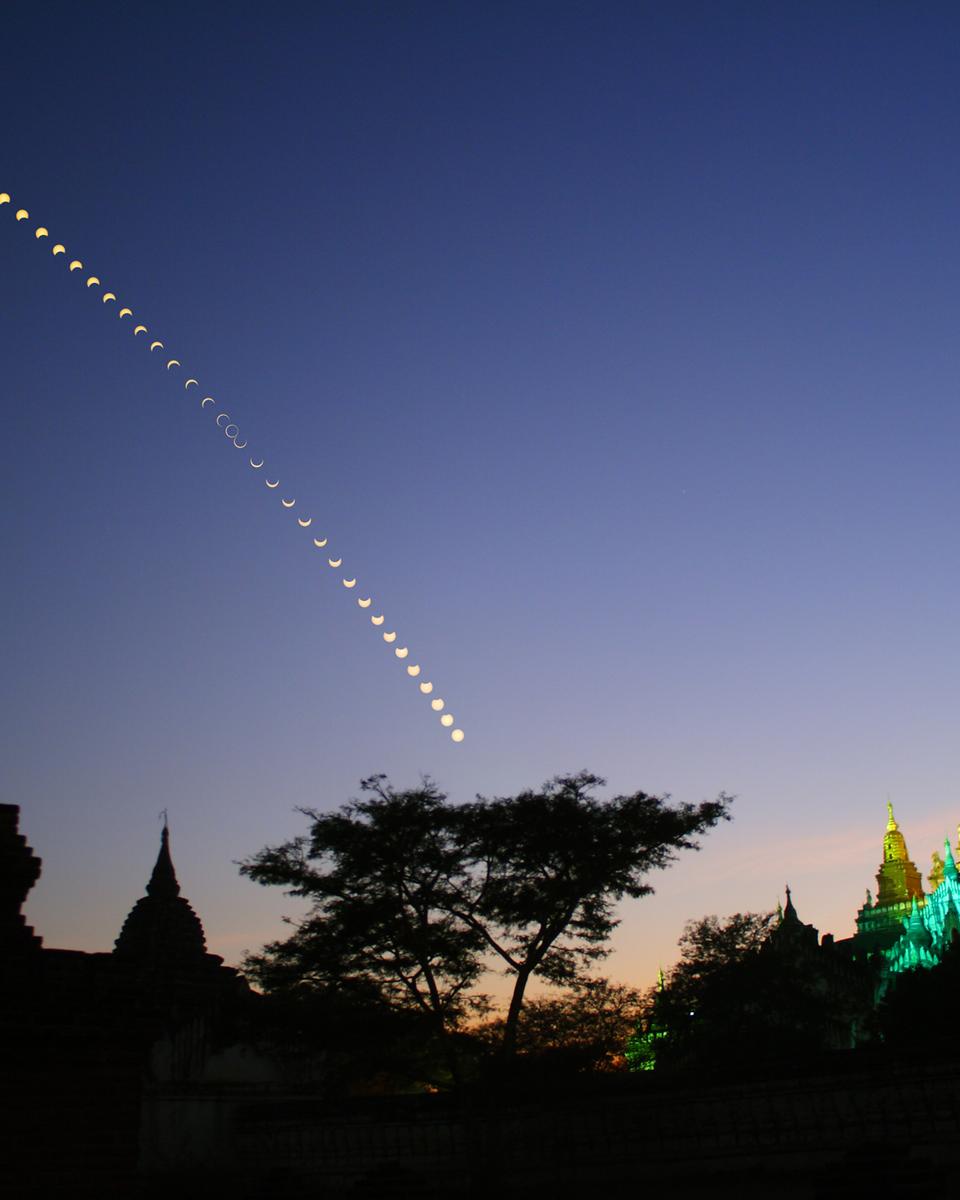
Annular Eclipse Over Myanmar
A hole crossed the Sun for a few minutes this month, as seen across a thin swath of planet Earth. The event on January 15 was actually an annular solar eclipse, and the hole was…
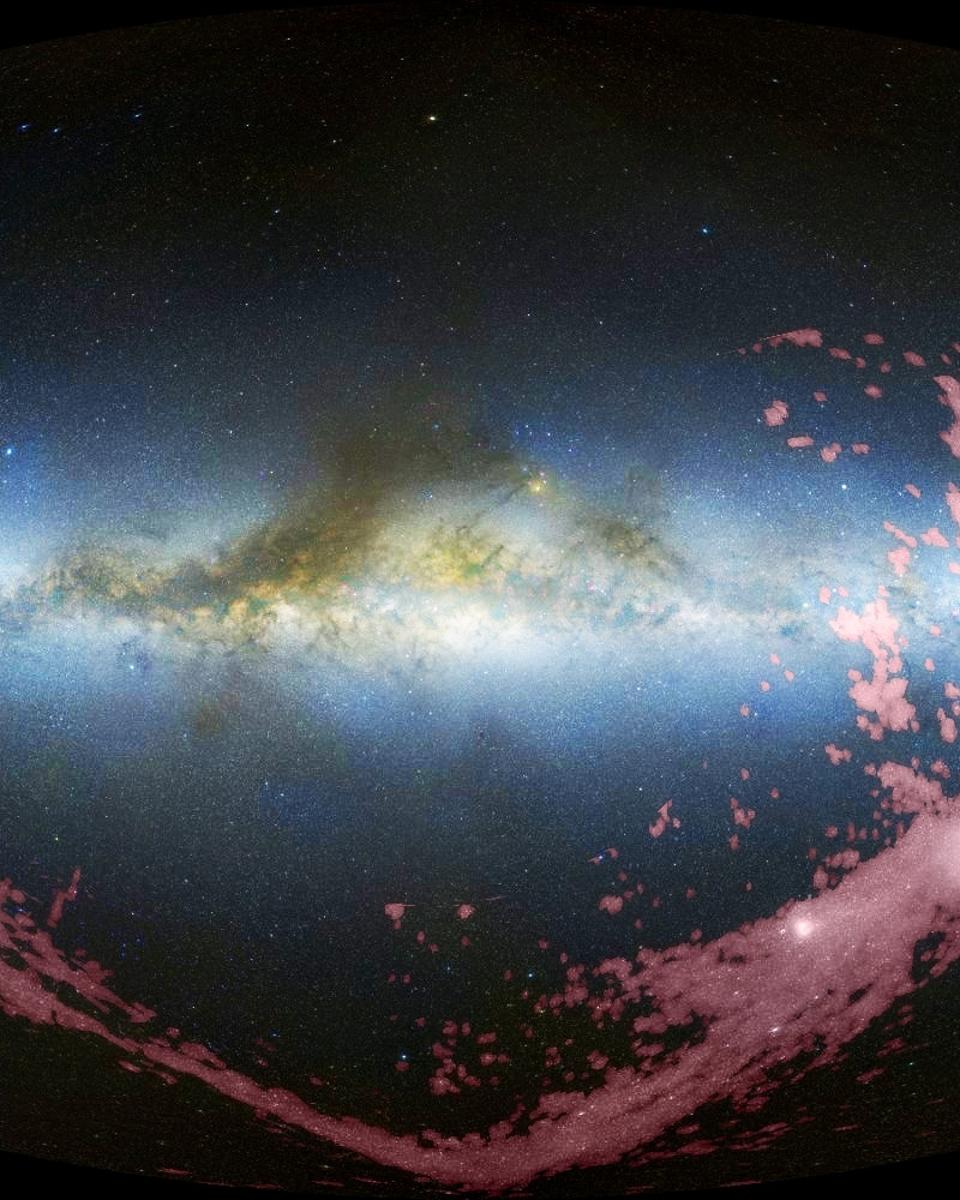
The Magellanic Stream
Spanning the sky toward the majestic Clouds of Magellan is an unusual stream of gas: the Magellanic Stream. The origin of this gas remains unknown but likely holds a clue to the…

Watch Jupiter Rotate
What would it be like to coast by Jupiter and watch it rotate? This was just the experience of the New Horizons spacecraft as it approached and flew by Jupiter in 2007.…
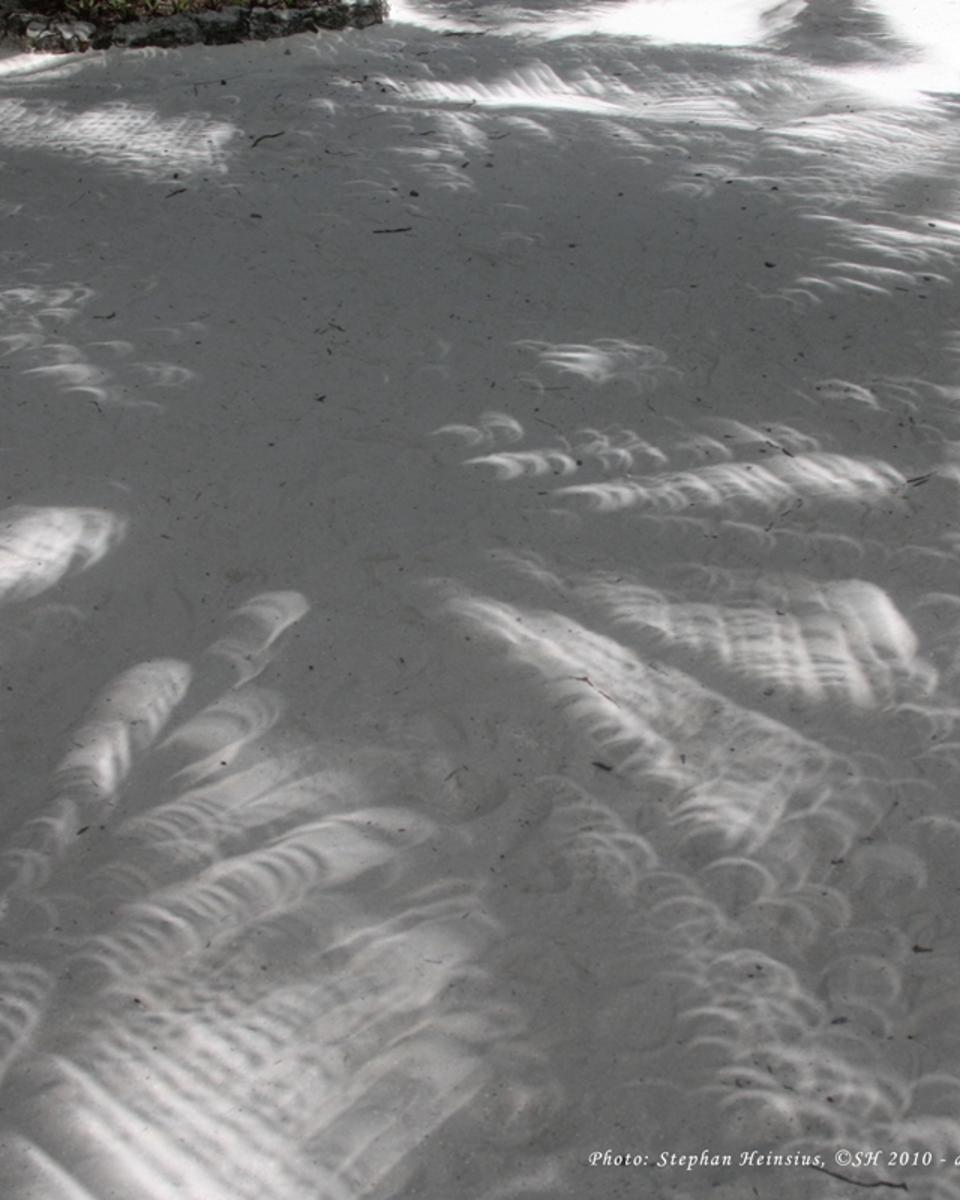
Eclipses in the Shade
Eclipses are everywhere in this shady scene. The picture was taken on the Indian Ocean atoll island of Ellaidhoo, Maldives, on January 15, during the longest annular solar eclipse…
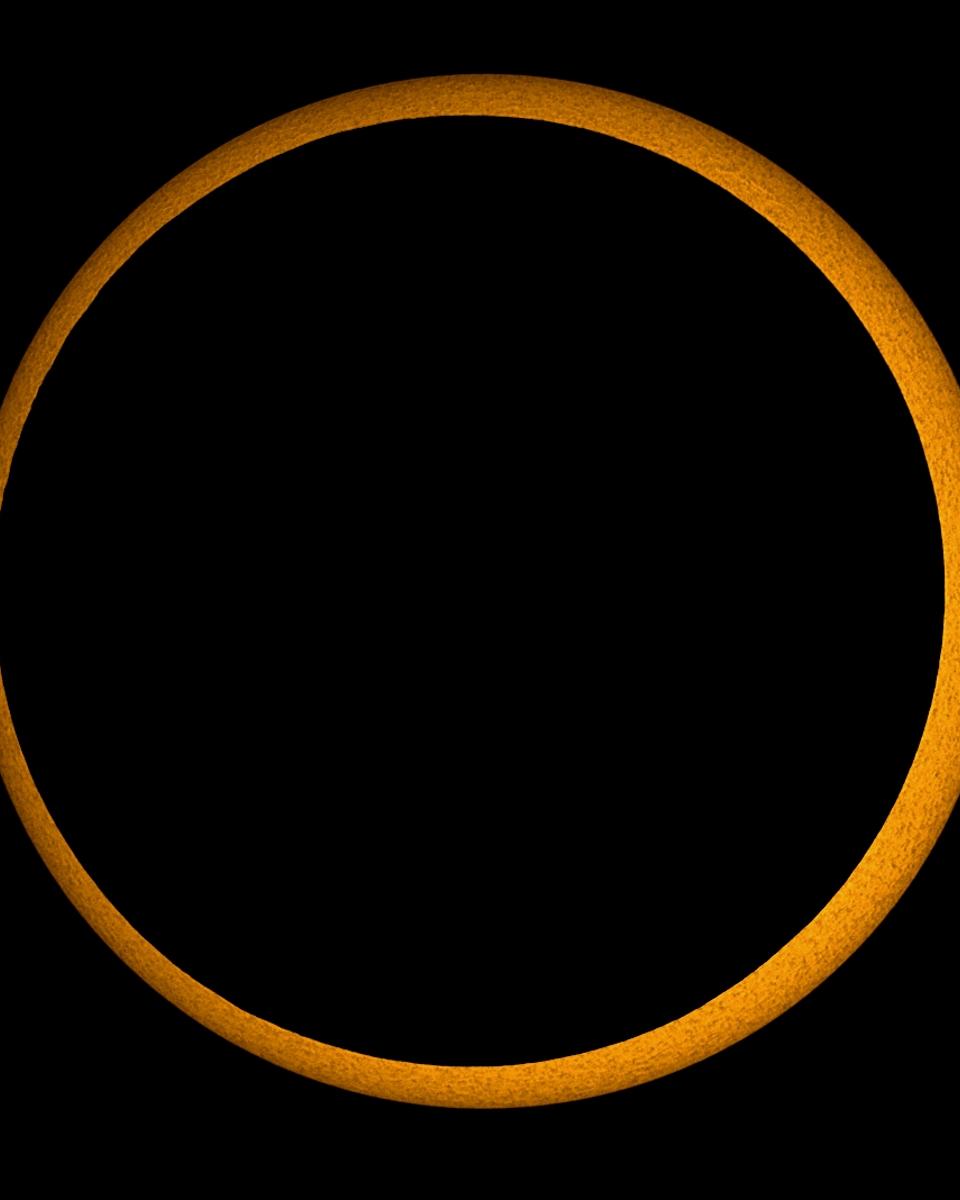
Millennium Annular Solar Eclipse
The Moon's shadow raced across planet Earth on January 15 . Observers within the central shadow track were able to witness an annular solar eclipse as the Moon's apparent size was…
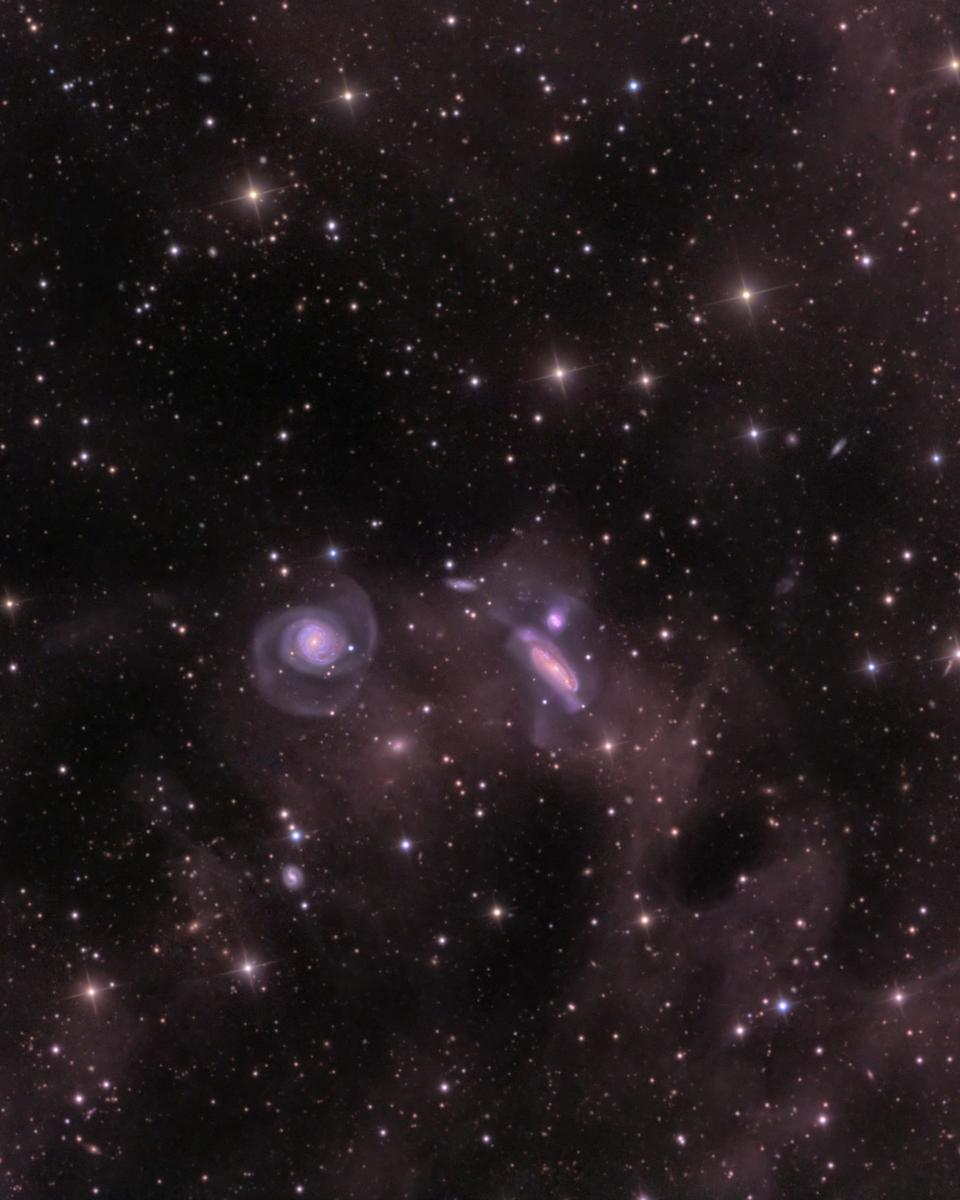
Dust and the NGC 7771 Group
Galaxies of the NGC 7771 Group are featured in this intriguing skyscape . Some 200 million light-years distant toward the constellation Pegasus, NGC 7771 is the large, edge-on…

The Known Universe
What would it look like to travel across the known universe? To help humanity visualize this, the American Museum of Natural History has produced a modern movie featuring many…
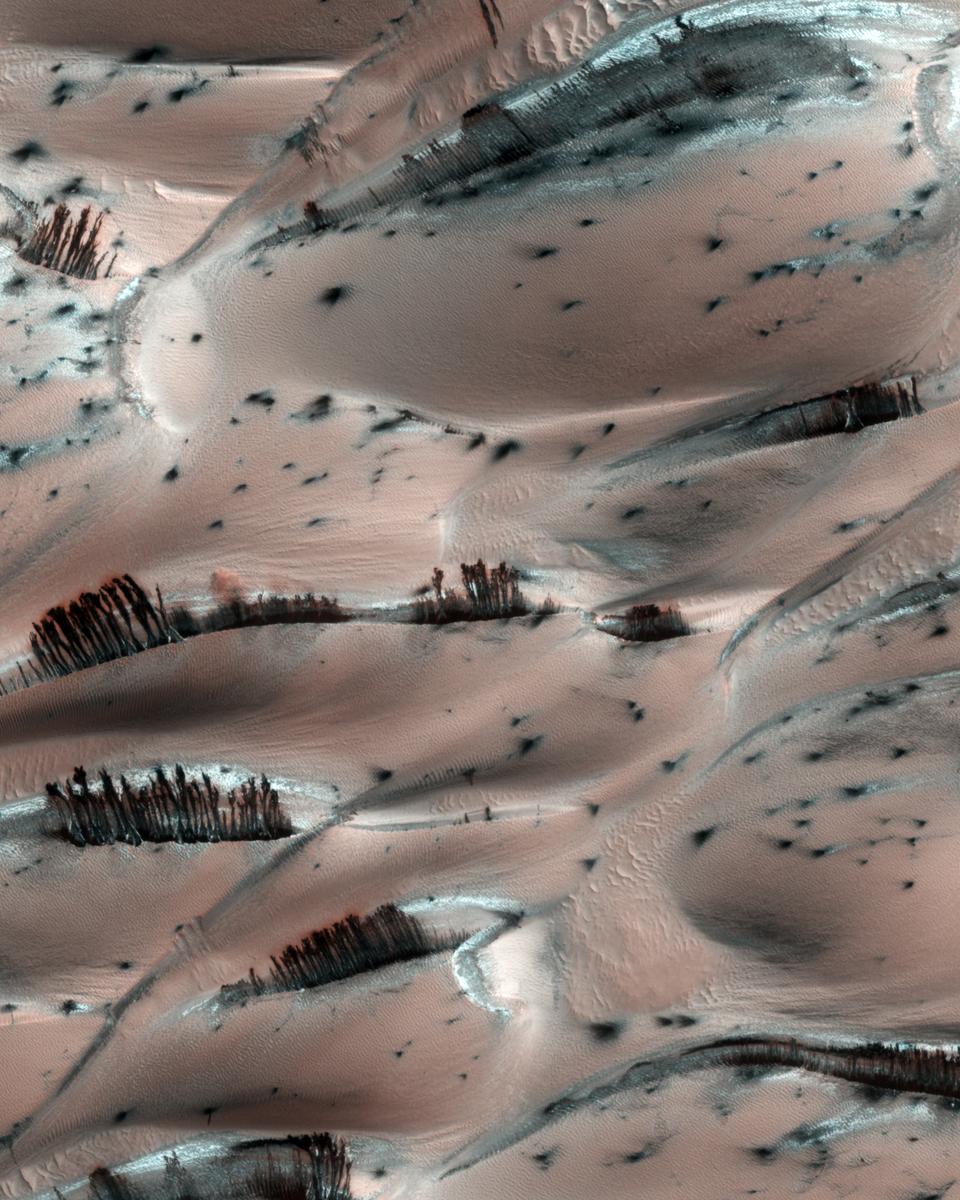
Dark Sand Cascades on Mars
They might look like trees on Mars, but they're not. Groups of dark brown streaks have been photographed by the Mars Reconnaissance Orbiter on melting pinkish sand dunes covered…
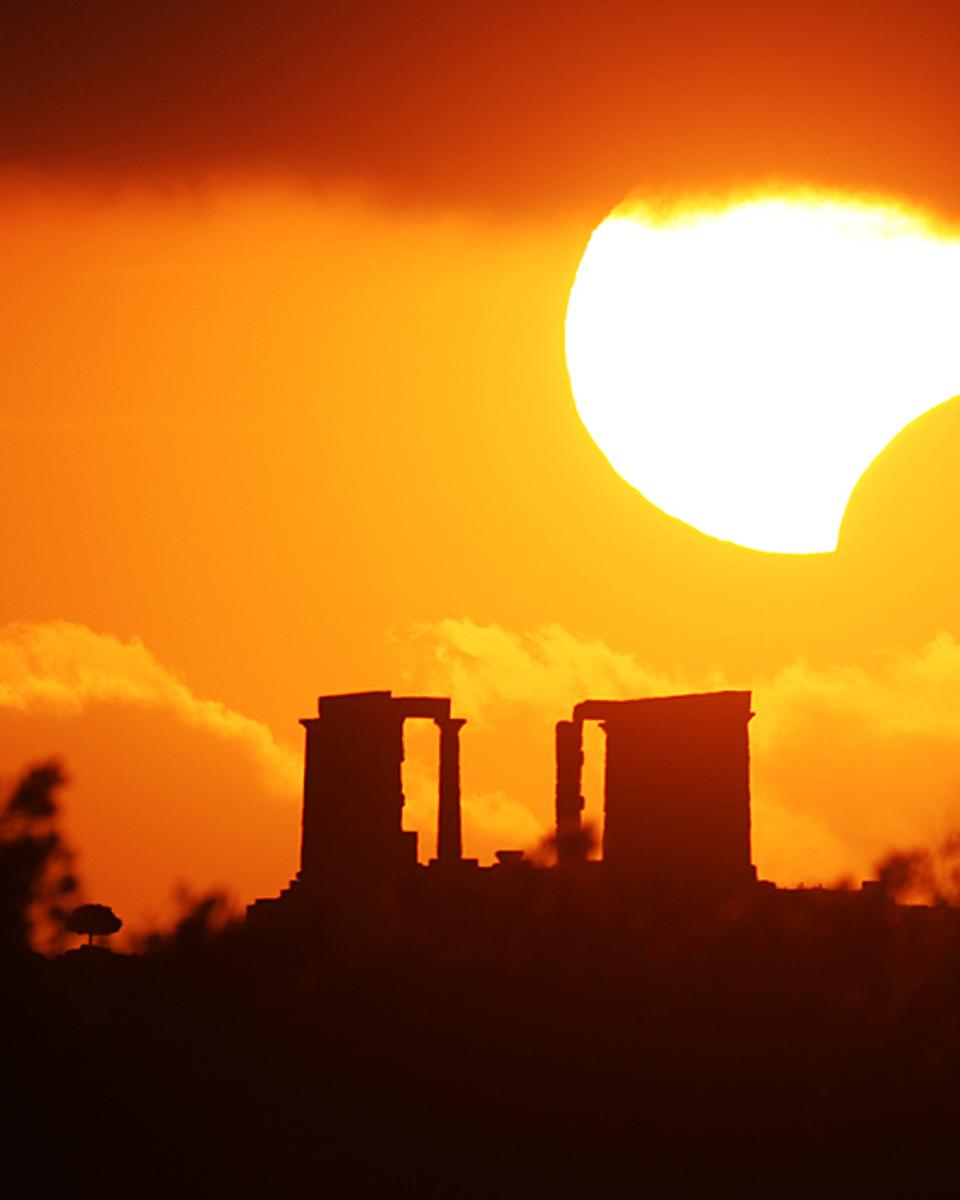
Eclipse over the Temple of Poseidon
What's happened to the Sun? The Moon moved to partly block the Sun for a few minutes last week as a partial solar eclipse became momentarily visible across part of planet Earth.…
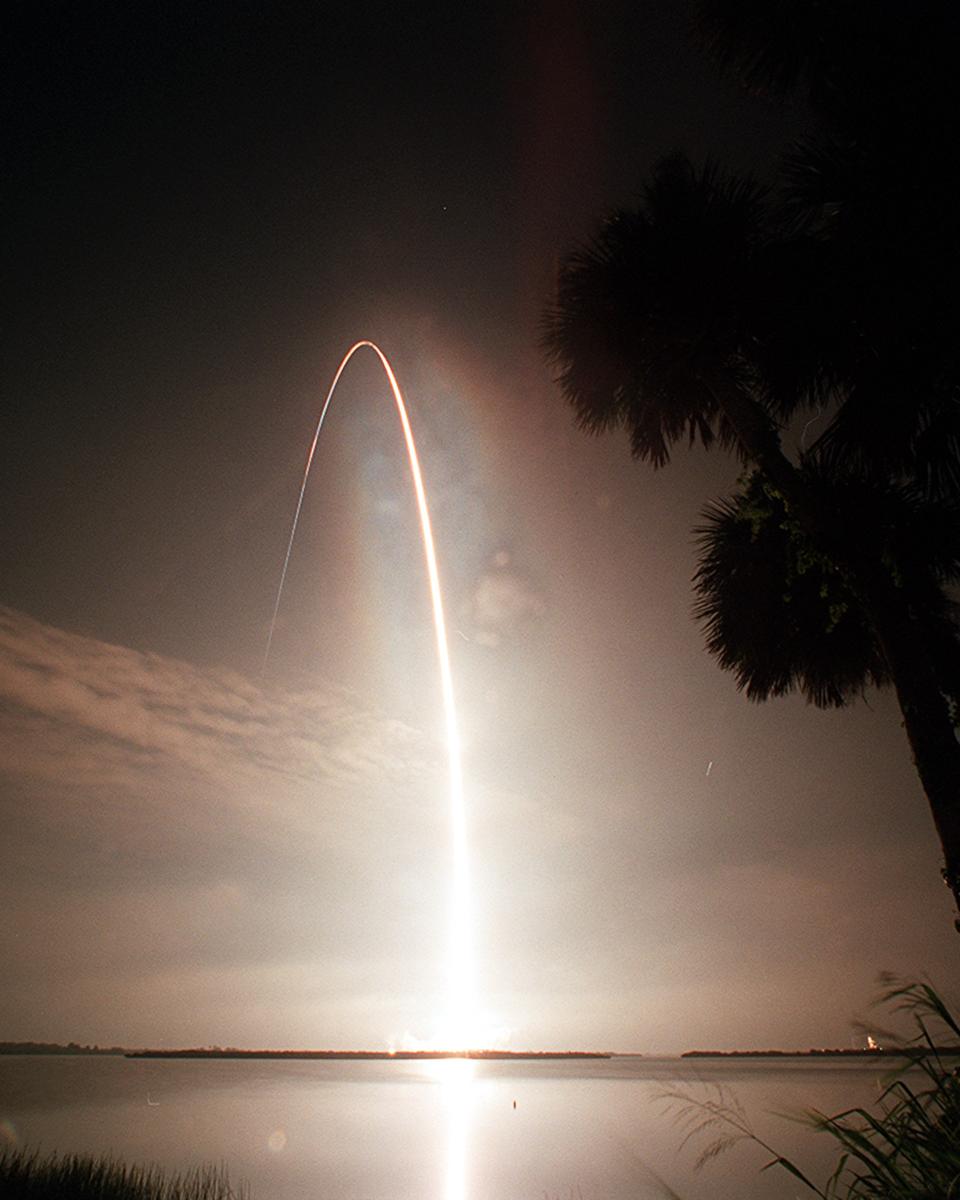
Atlantis to Orbit
Birds don't fly this high. Airplanes don't go this fast. The Statue of Liberty weighs less. No species other than human can even comprehend what is going on, nor could any human…
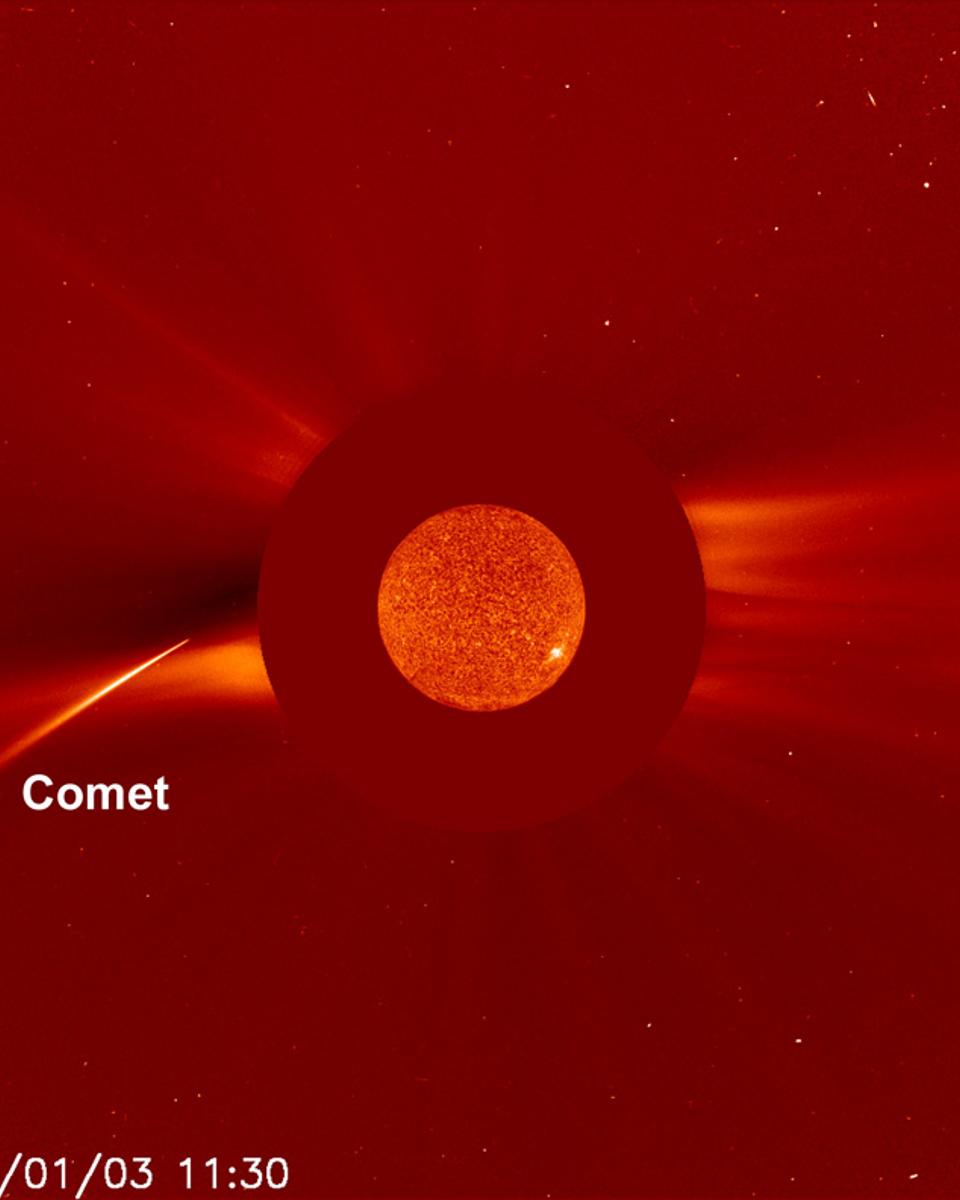
New Year Sungrazer
Intense and overwhelming, the direct glare of the Sun is blocked by the smooth occulting disk in this image from the sun-staring SOHO spacecraft. Taken on January 3rd, an extreme…
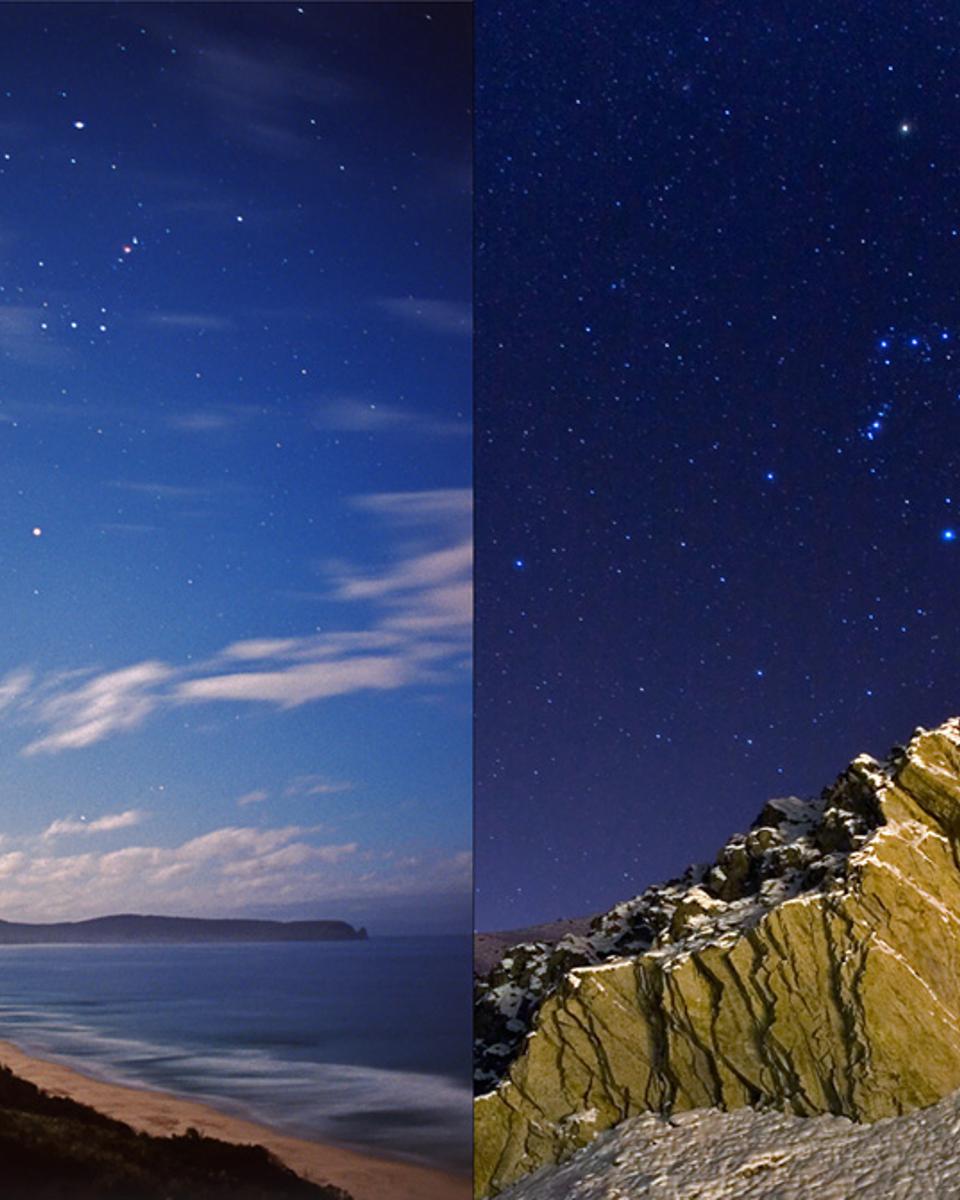
Scenes from Two Hemispheres
The stars of a summer night on the left and the winter night sky on the right are the same stars. In fact, both pictures were taken in late December and have similar fields of…
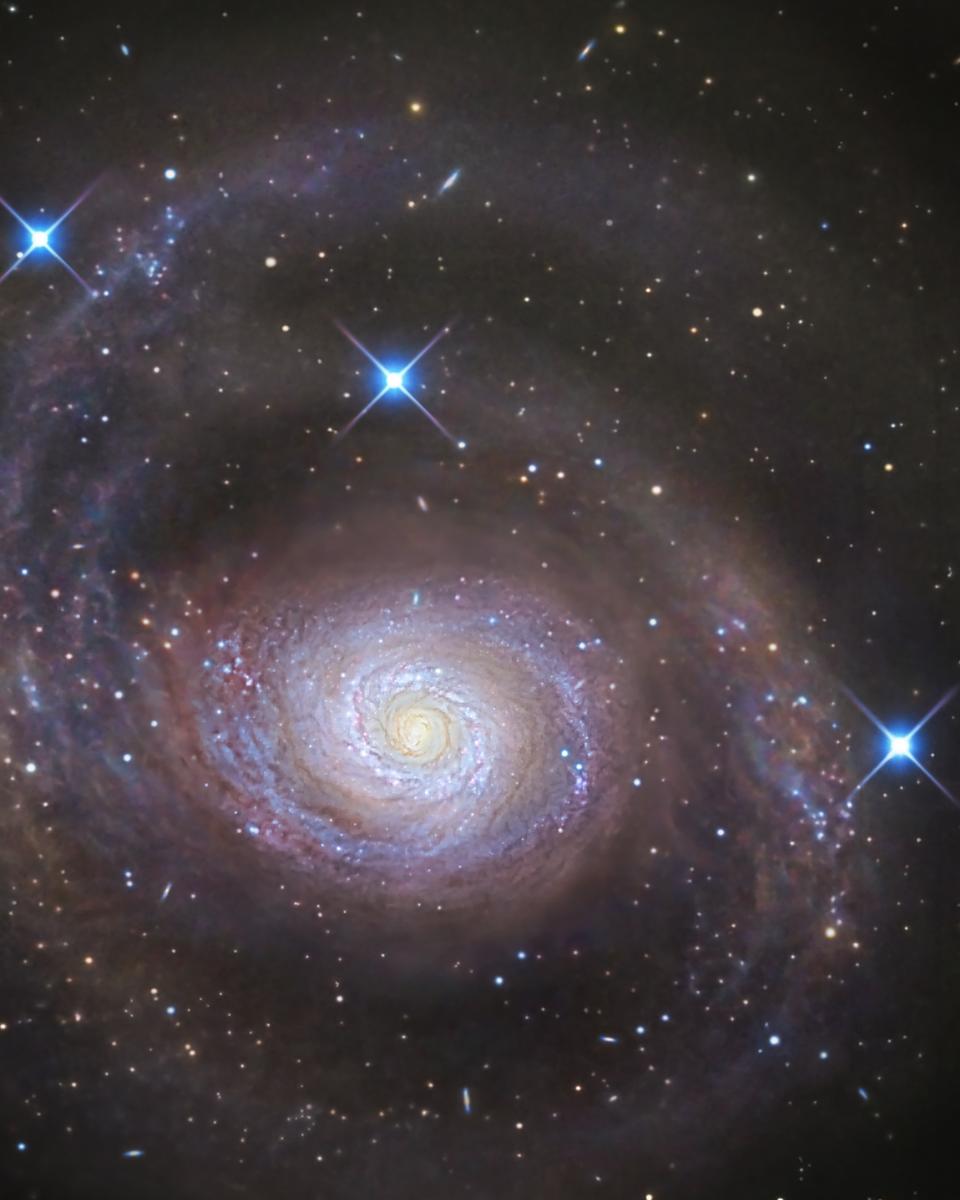
M94: A New Perspective
Beautiful island universe M94 lies a mere 15 million light-years distant in the northern constellation of the hunting dogs, Canes Venatici . A popular target for astronomers, the…
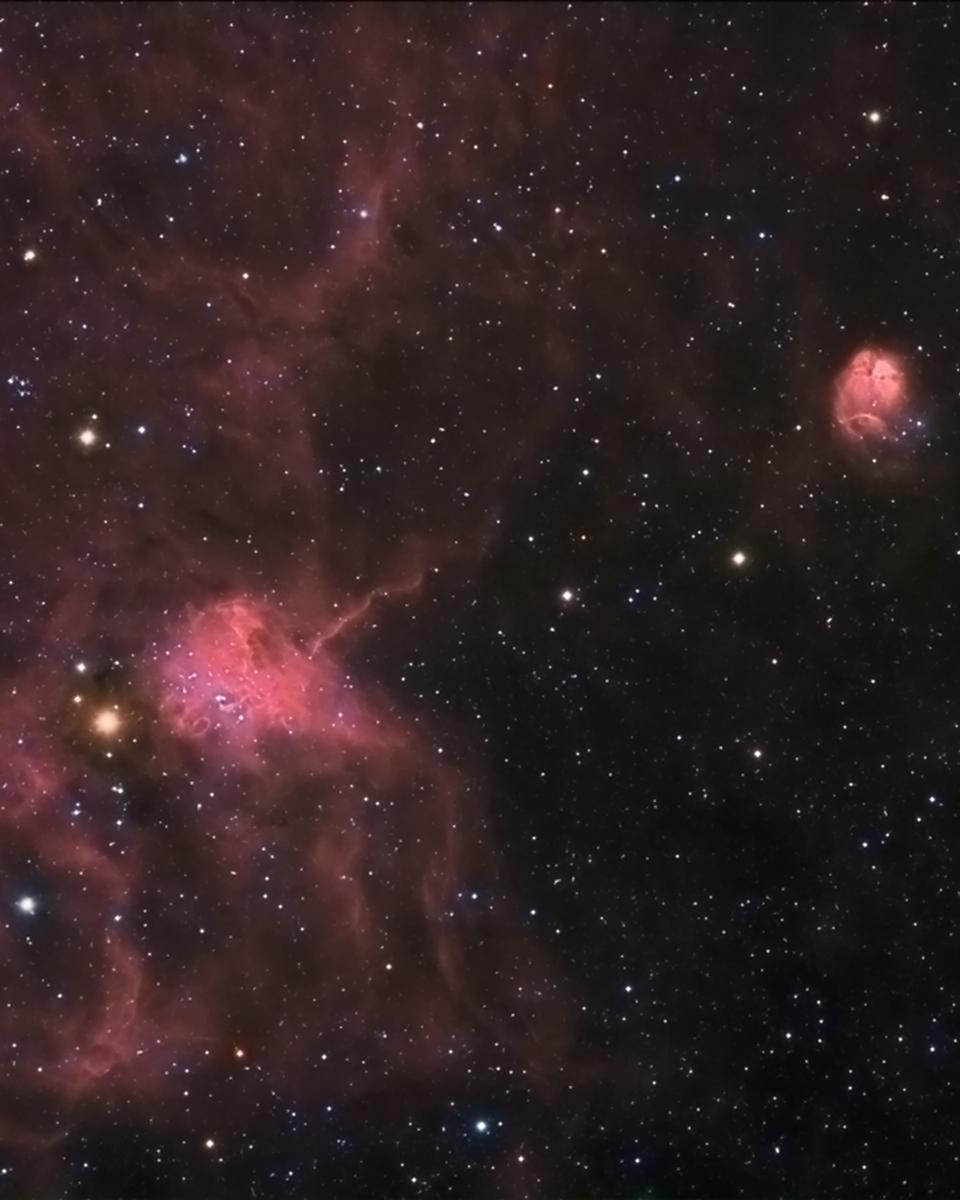
The Spider and The Fly
Bright clusters and nebulae abound in the ancient northern constellation of Auriga . The region includes the open star cluster M38 , emission nebula IC 410 with Tadpoles ,…
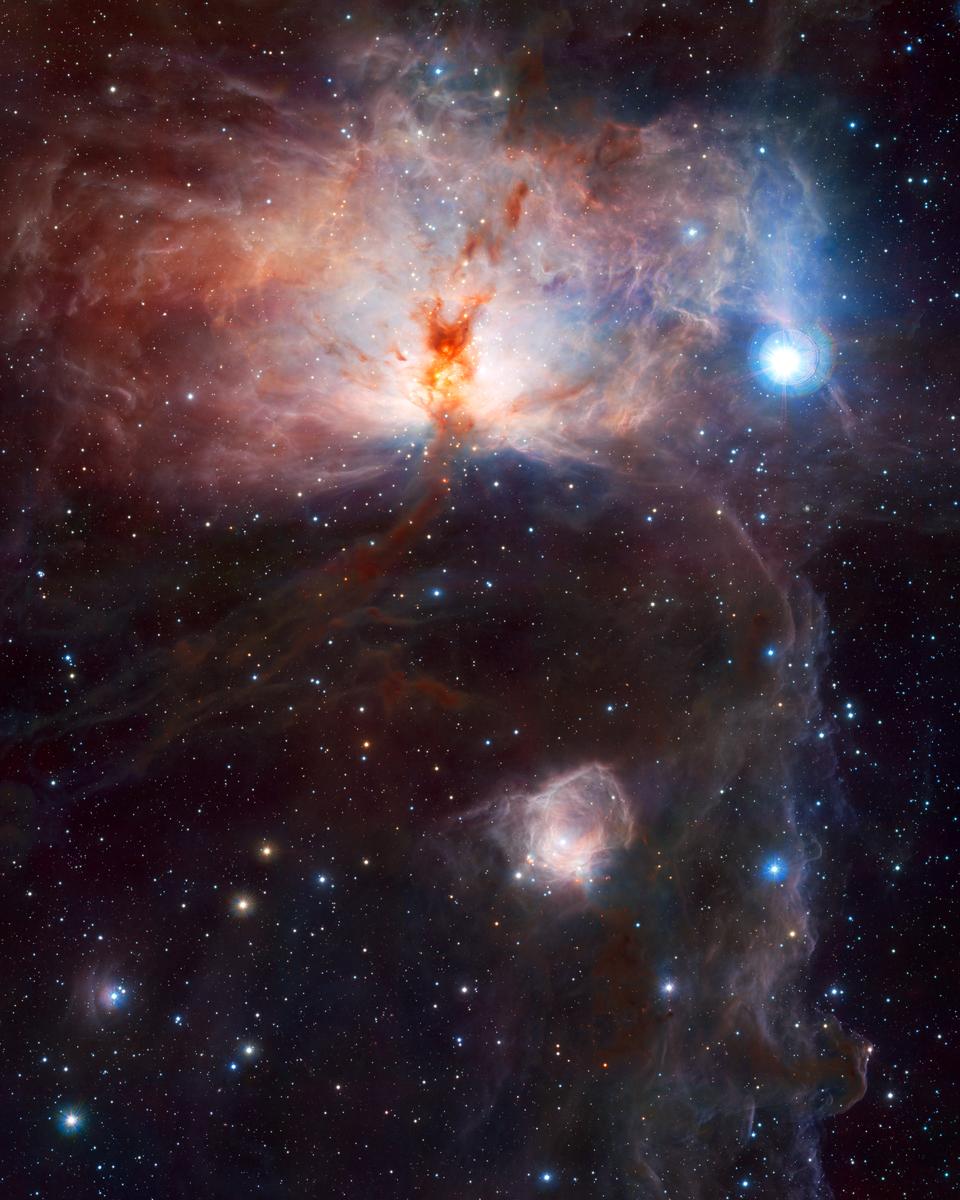
The Flame Nebula in Infrared
What lights up the Flame Nebula? Fifteen hundred light years away towards the constellation of Orion lies a nebula which, from its glow and dark dust lanes, appears, on the left,…
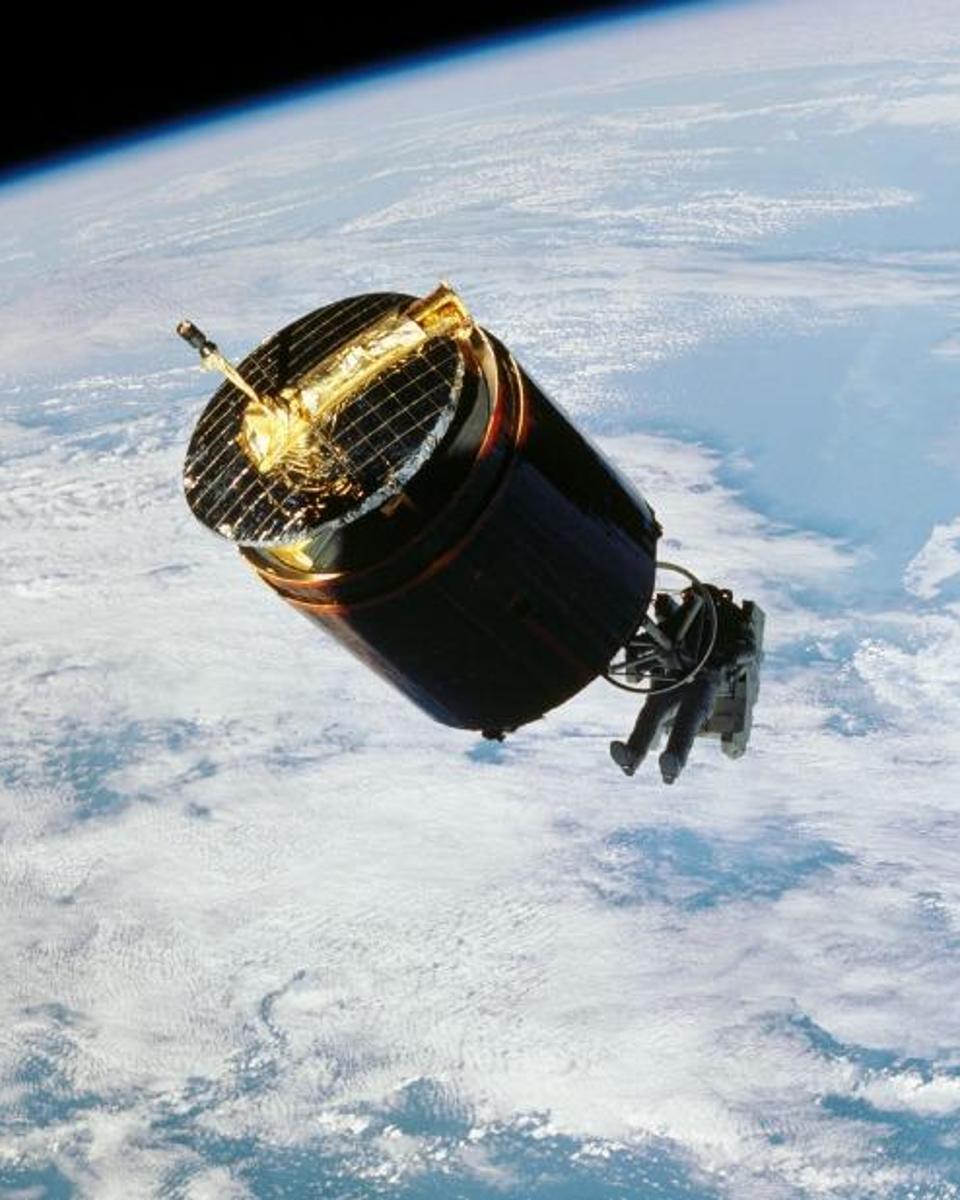
The Astronaut Who Captured a Satellite
In 1984, high above the Earth's surface, an astronaut captured a satellite. It was the second satellite captured that mission. Pictured above , astronaut Dale A. Gardner flies…
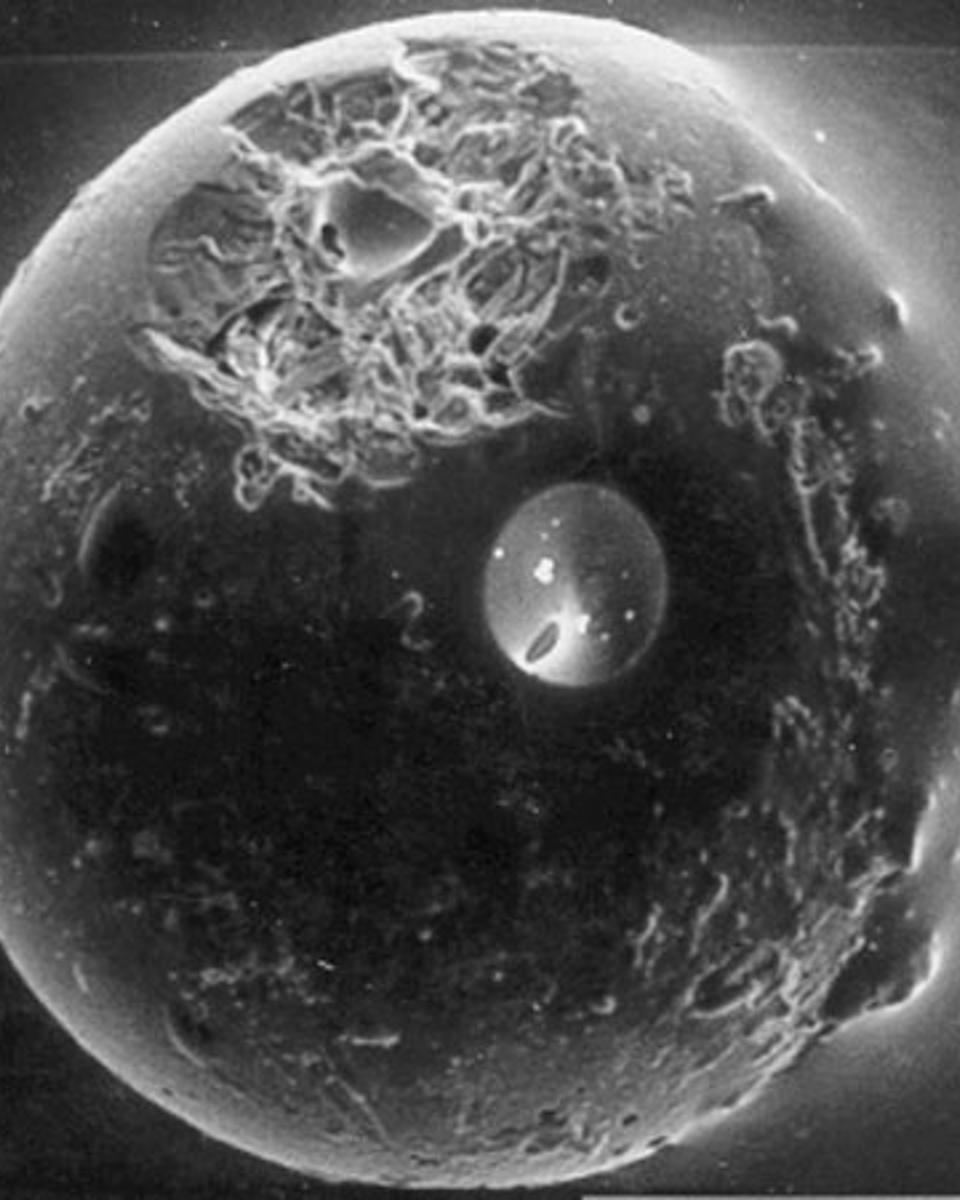
A Spherule from the Earth's Moon
How did this spherule come to be on the Moon? When a meteorite strikes the Moon , the energy of the impact melts some of the splattering rock , a fraction of which might cool into…
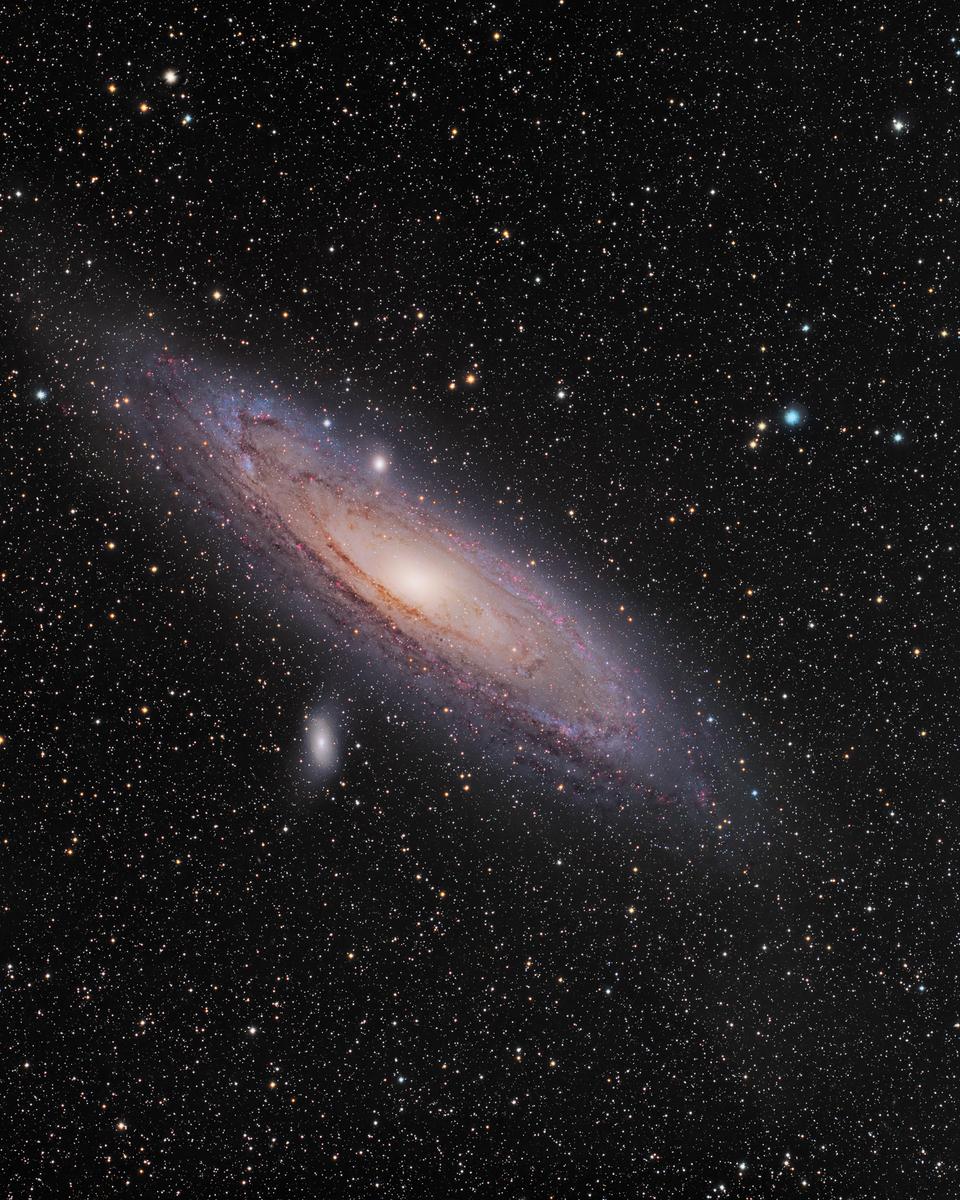
Andromeda Island Universe
The most distant object easily visible to the eye is M31 , the great Andromeda Galaxy some two and a half million light-years away. But without a telescope, even this immense…
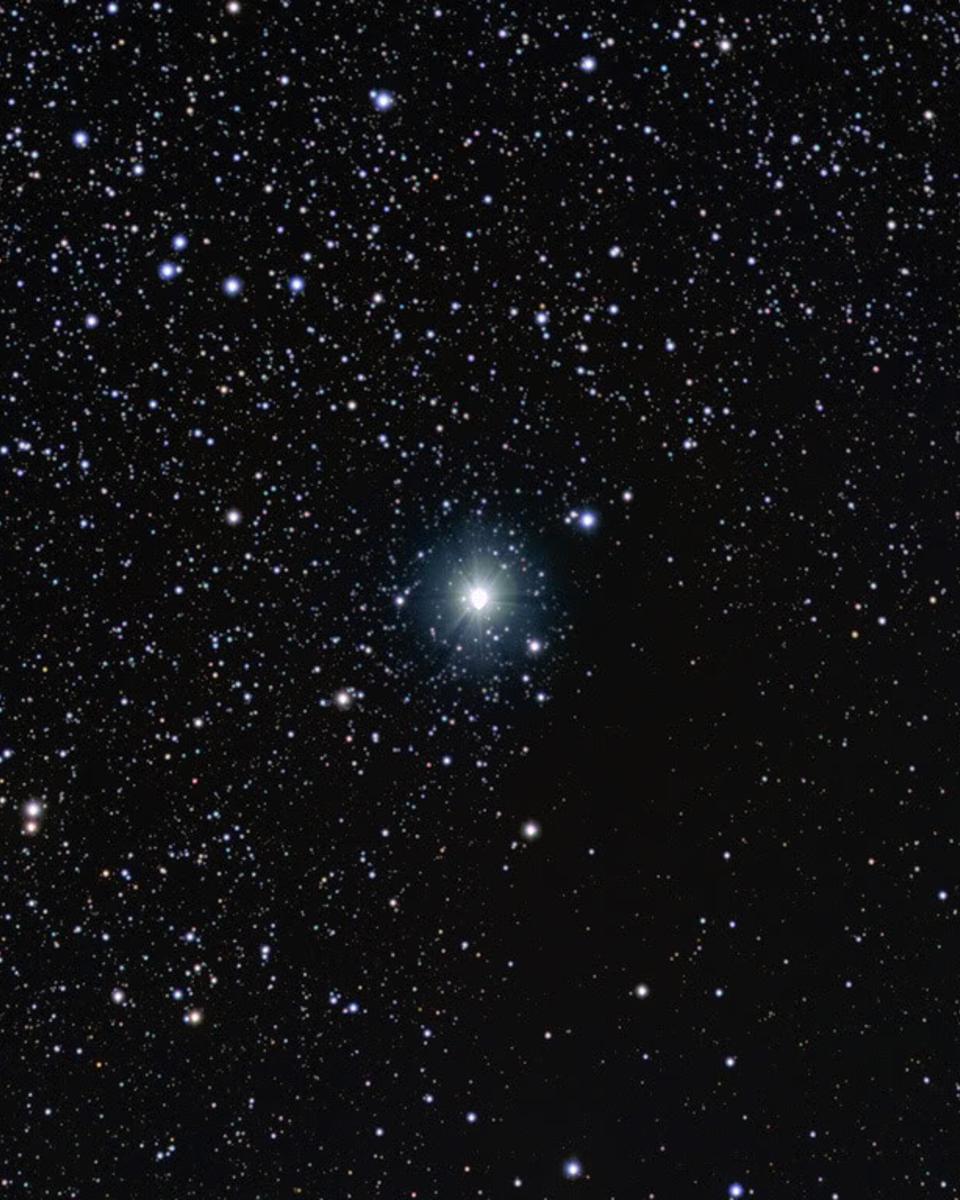
The Mystery of the Fading Star
Every 27 years Epsilon Aurigae fades, remaining dim for roughly two years before growing bright again. Since the 19th century, astronomers have studied the mystery star,…
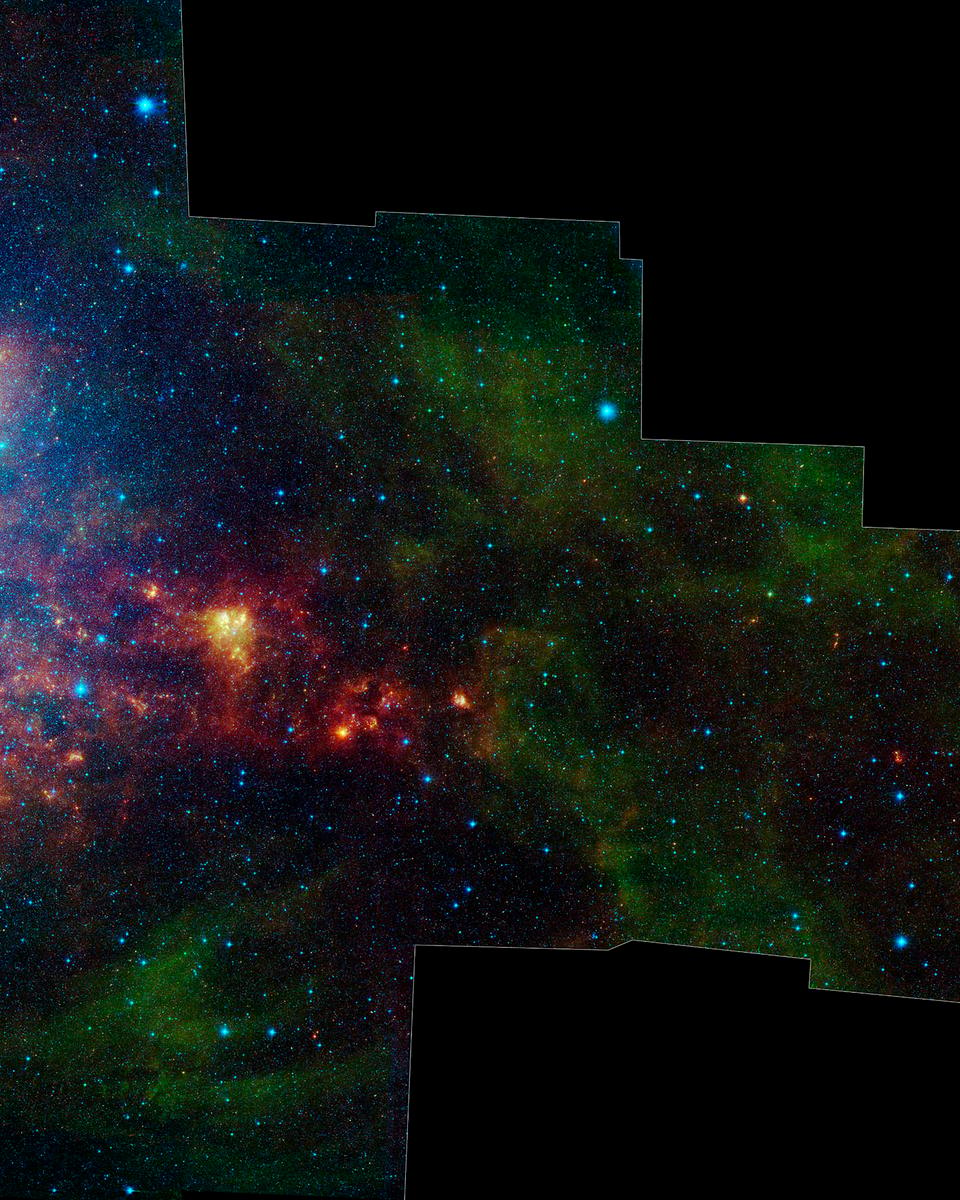
The Tail of the Small Magellanic Cloud
A satellite galaxy of our Milky Way, the Small Magellanic Cloud is wonder of the southern sky, named for 16th century Portuguese circumnavigator Ferdinand Magellan . Some 200,000…
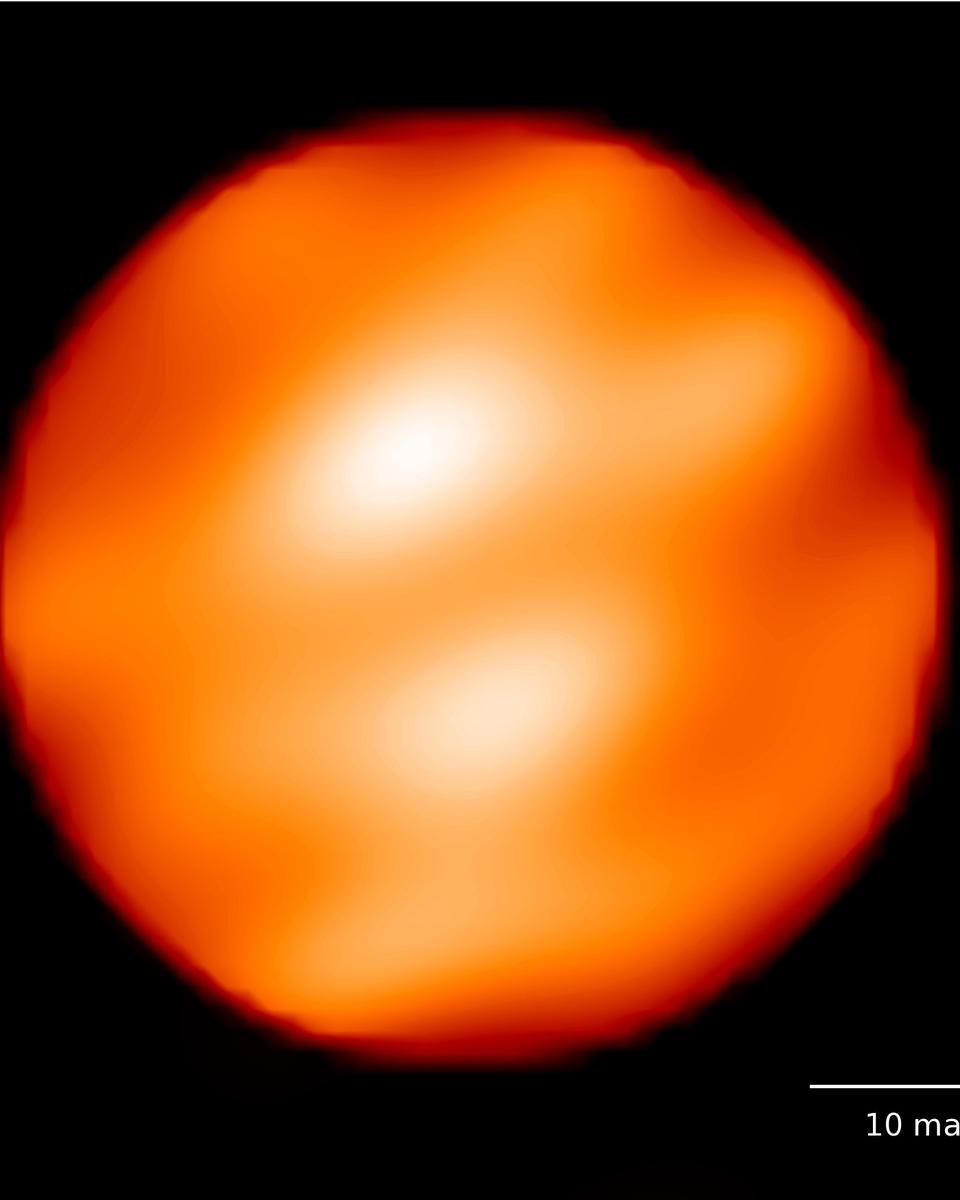
The Spotty Surface of Betelgeuse
Betelgeuse really is a big star. If placed at the center of our Solar System it would extend to the orbit of Jupiter. But like all stars except the Sun, Betelgeuse is so distant…
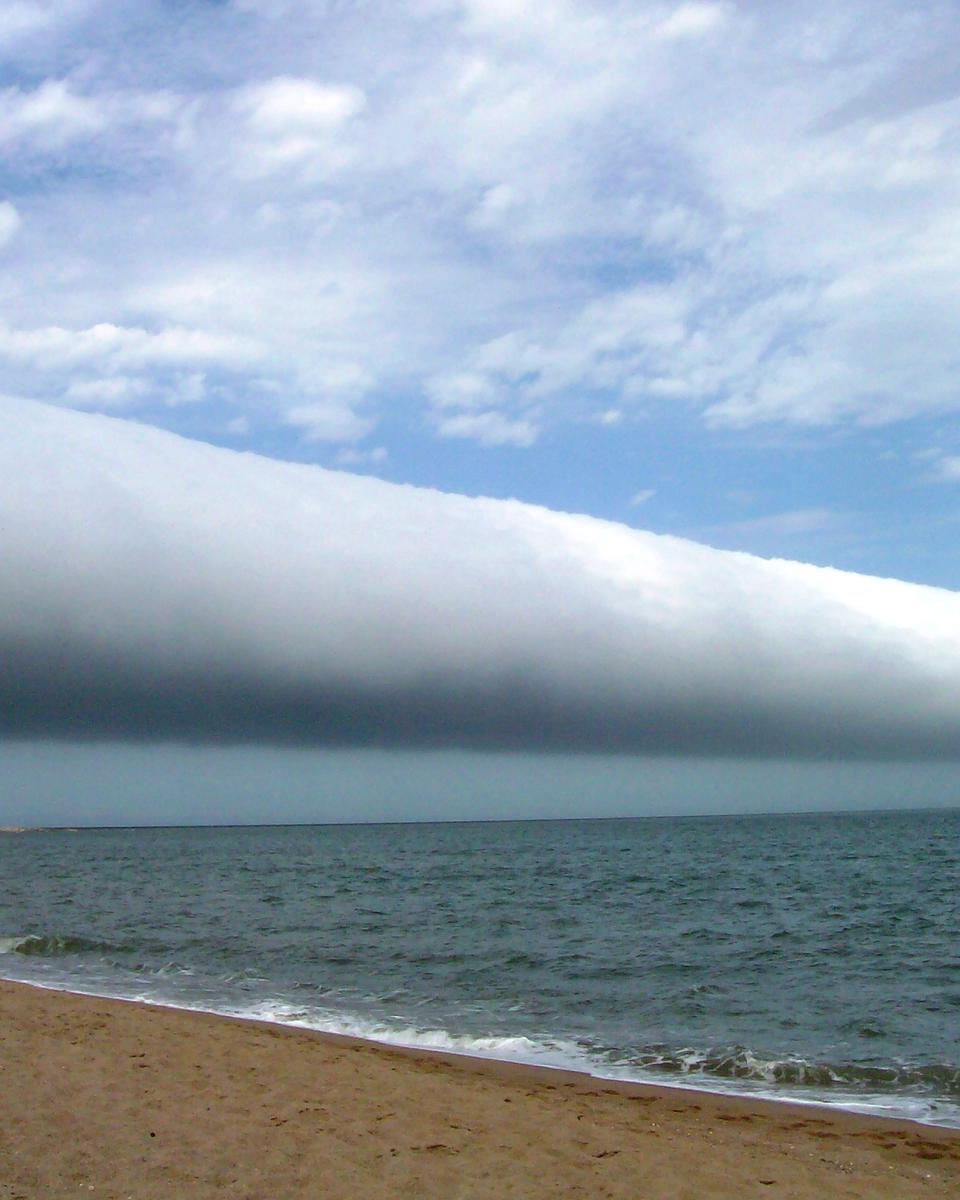
A Roll Cloud Over Uruguay
What kind of cloud is this? A roll cloud . These rare long clouds may form near advancing cold fronts. In particular, a downdraft from an advancing storm front can cause moist…
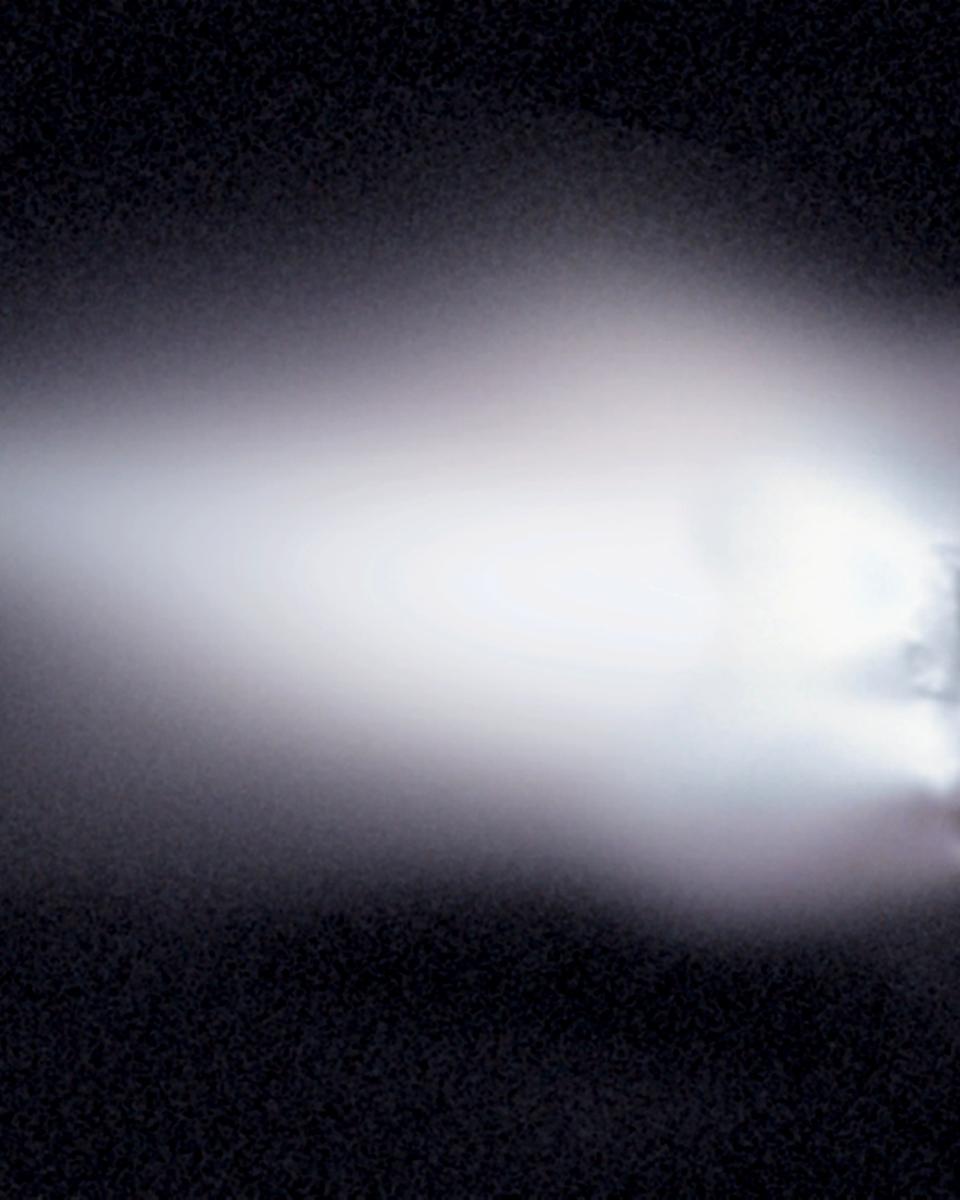
Comet Halley's Nucleus: An Orbiting Iceberg
What does a comet nucleus look like? Formed from the primordial stuff of the Solar System, comet nuclei were thought to resemble very dirty icebergs. But ground-based telescopes…
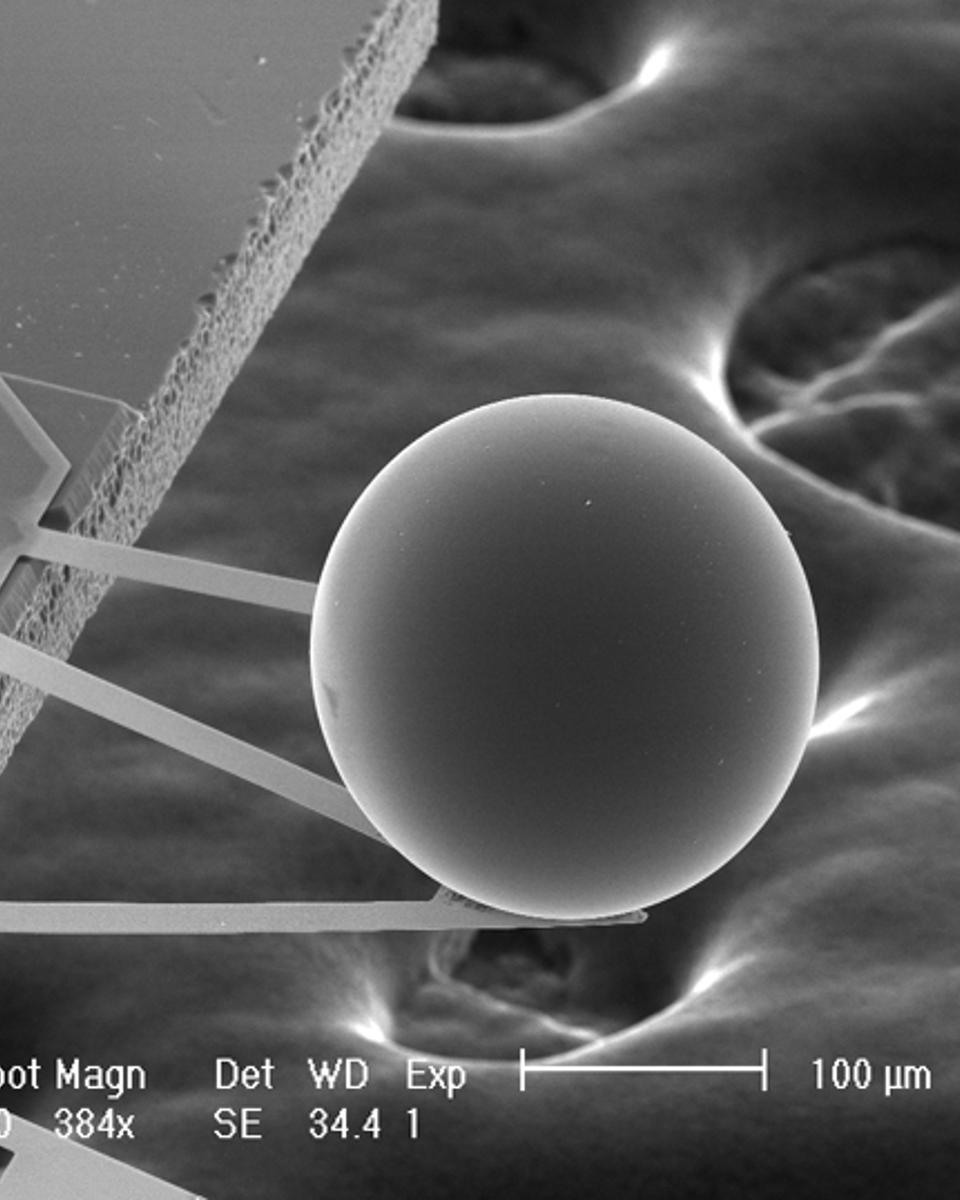
A Force from Empty Space: The Casimir Effect
This tiny ball provides evidence that the universe will expand forever. Measuring slightly over one tenth of a millimeter, the ball moves toward a smooth plate in response to…
Viewing discoveries from 26 January 2010 through 3 January 2010.