Browse NASA Astronomy Picture of the Day archive by date and media: Archive Discoveries
Browse the NASA APOD archive without needing the exact date first. Filter by media type and keep moving deeper into older images and videos.

X-Rays from the Galactic Plane
In February 2000, the orbiting Chandra X-ray Observatory spent 27 hours staring into the plane of our Milky Way galaxy . Its target was a spot in the small constellation Scutum ,…
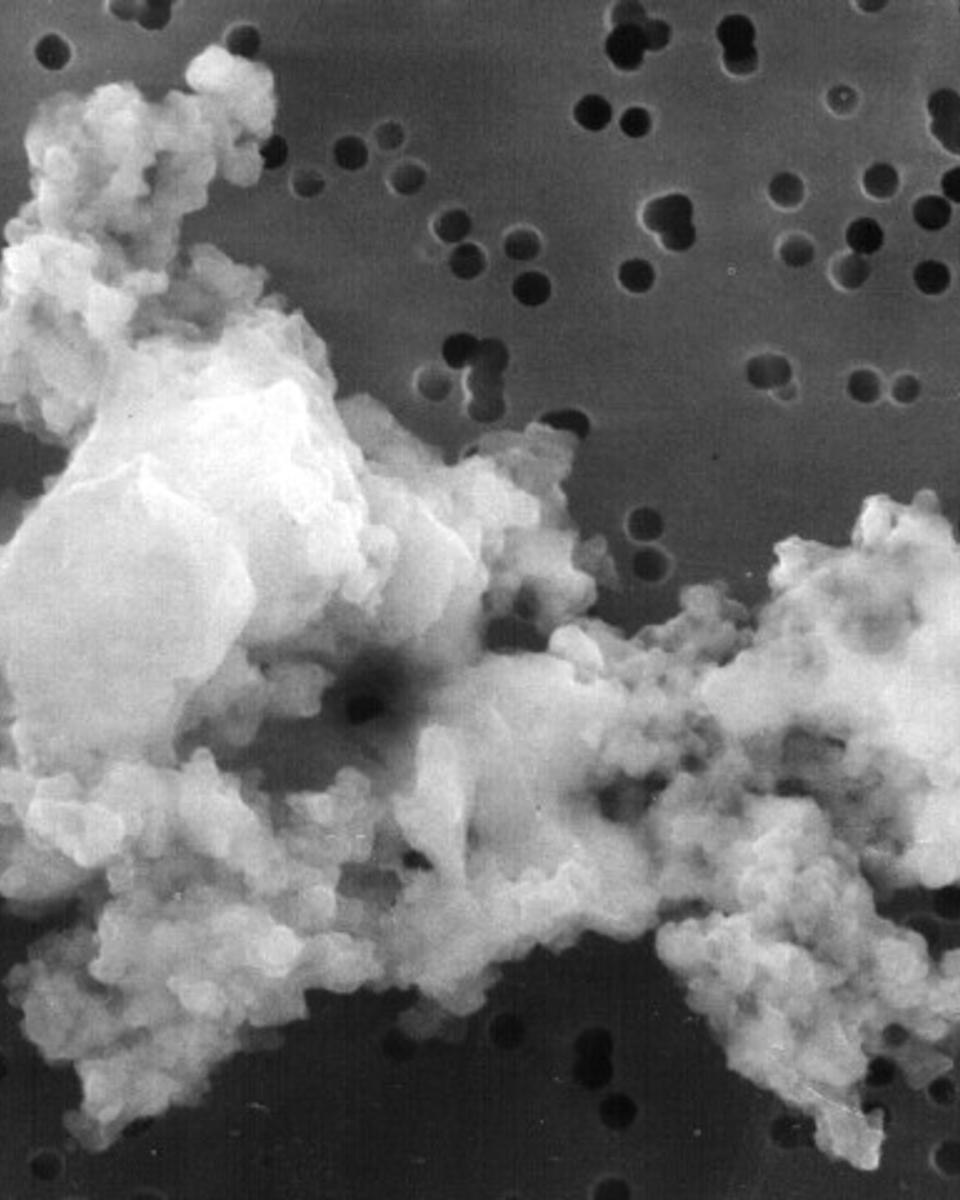
A Piece of Interplanetary Dust
The dust that pervades our Solar System is not the dust that pervades our homes. Solar System dust comes from comets and asteroids , whereas house dust is most likely lint or dead…
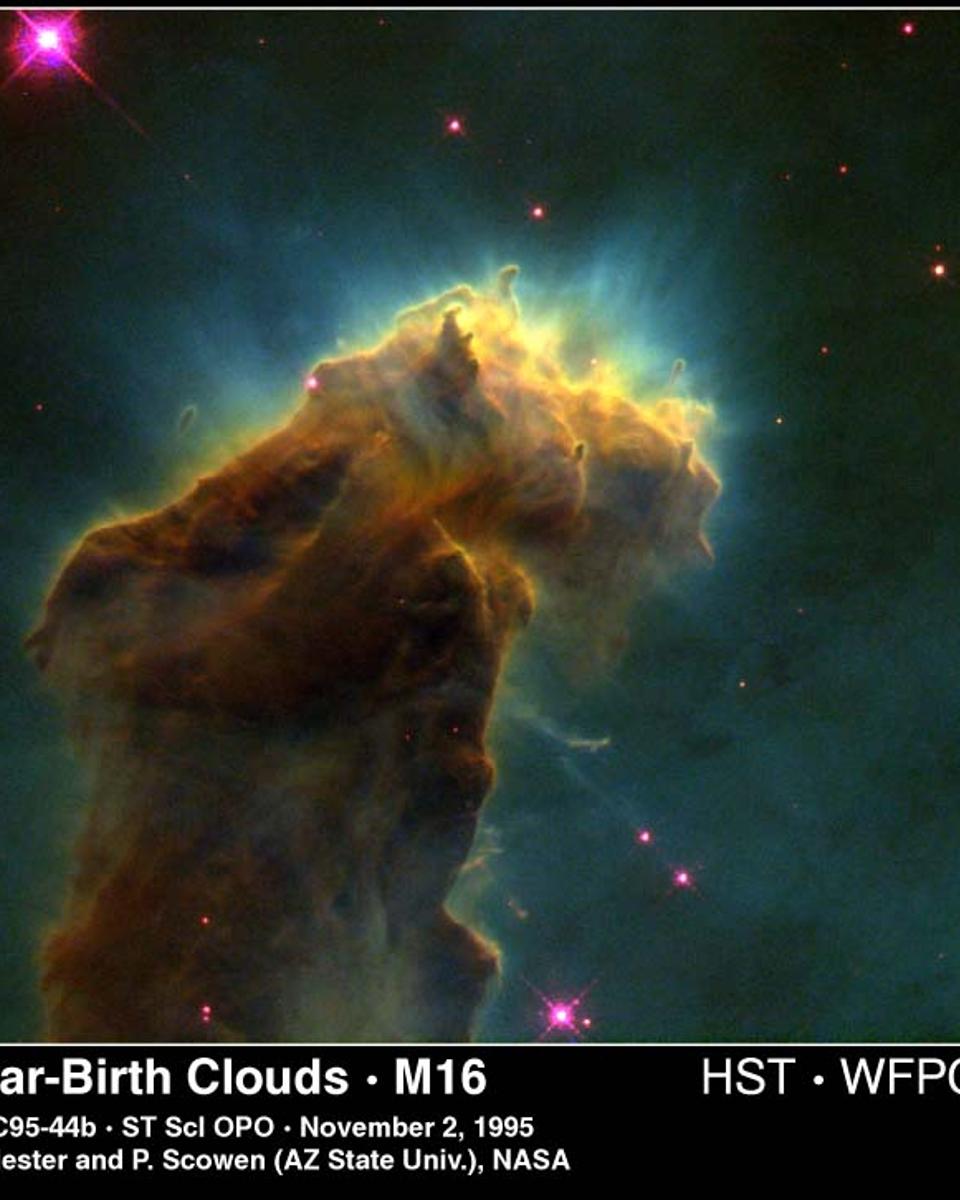
Eagle EGGs in M16
Star forming regions known as “EGGs” are uncovered at the end of this giant pillar of gas and dust in the Eagle Nebula ( M 16). EGGs, short for evaporating gaseous globules , are…
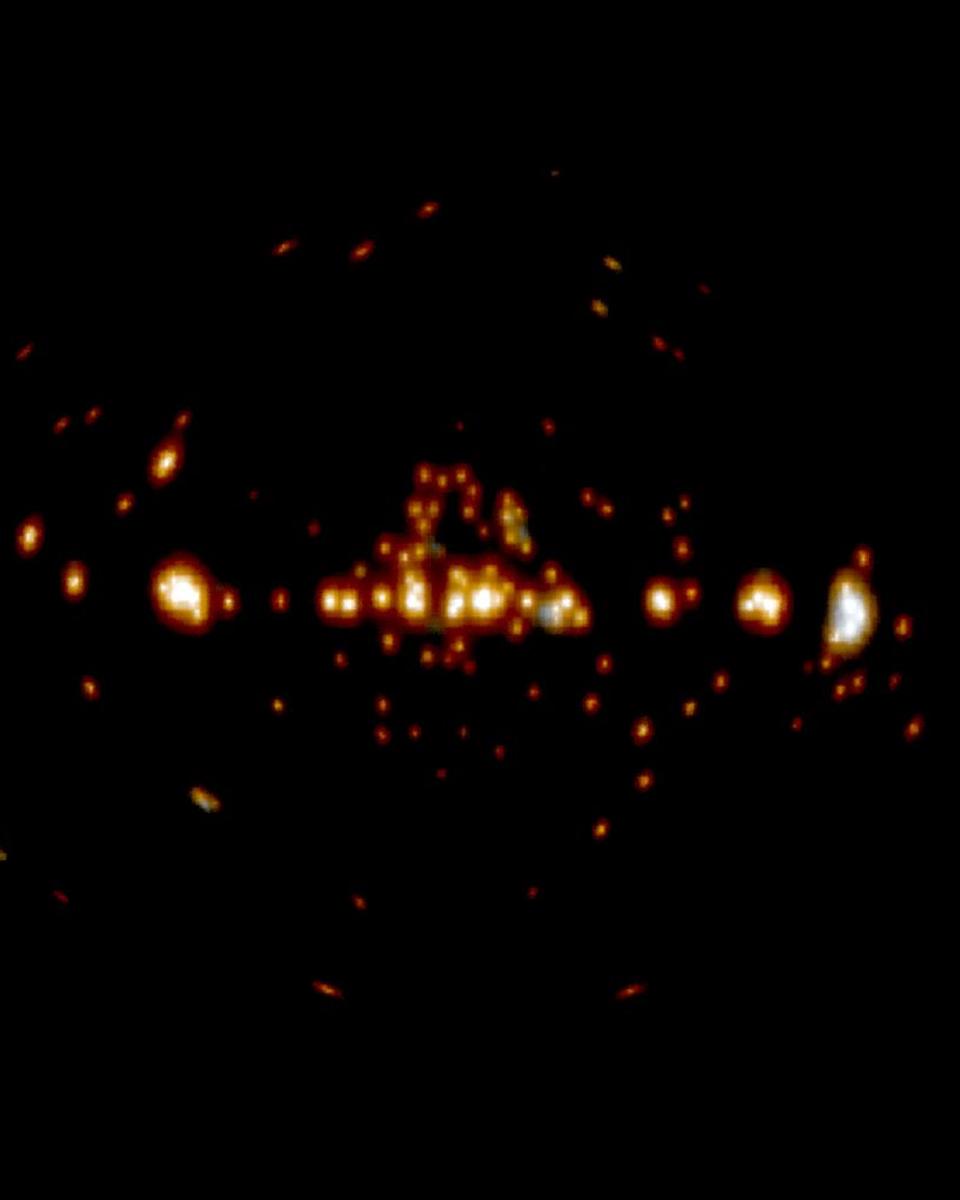
A Mystery In Gamma Rays
Gamma rays are the most energetic form of light, packing a million or more times the energy of visible light photons. If you could see gamma rays, the familiar skyscape of steady…
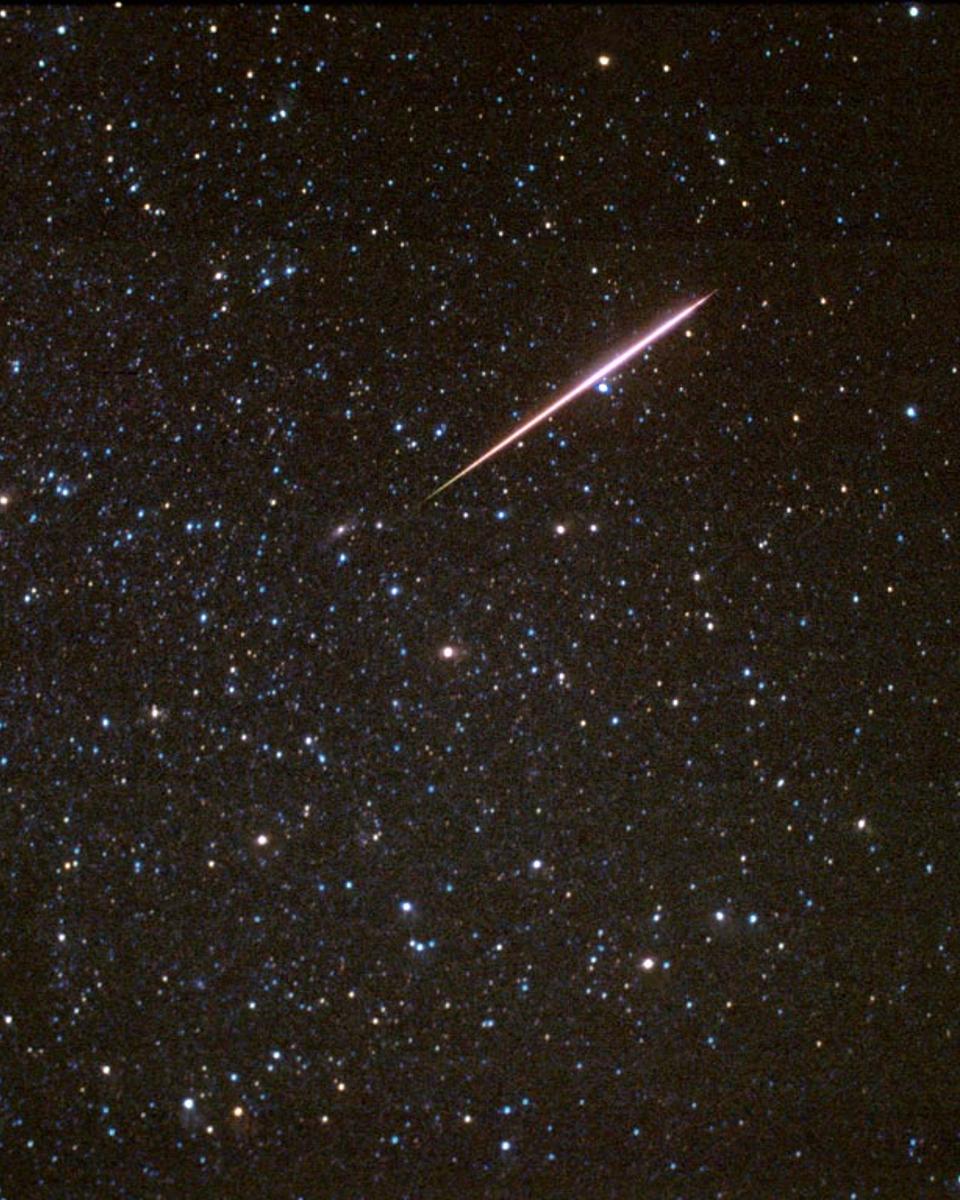
Perseids of Summer
Like falling stardust , cast off bits of comet Swift-Tuttle hurtle through the upper atmosphere about this time each year as planet Earth passes near the comet's orbital path. For…
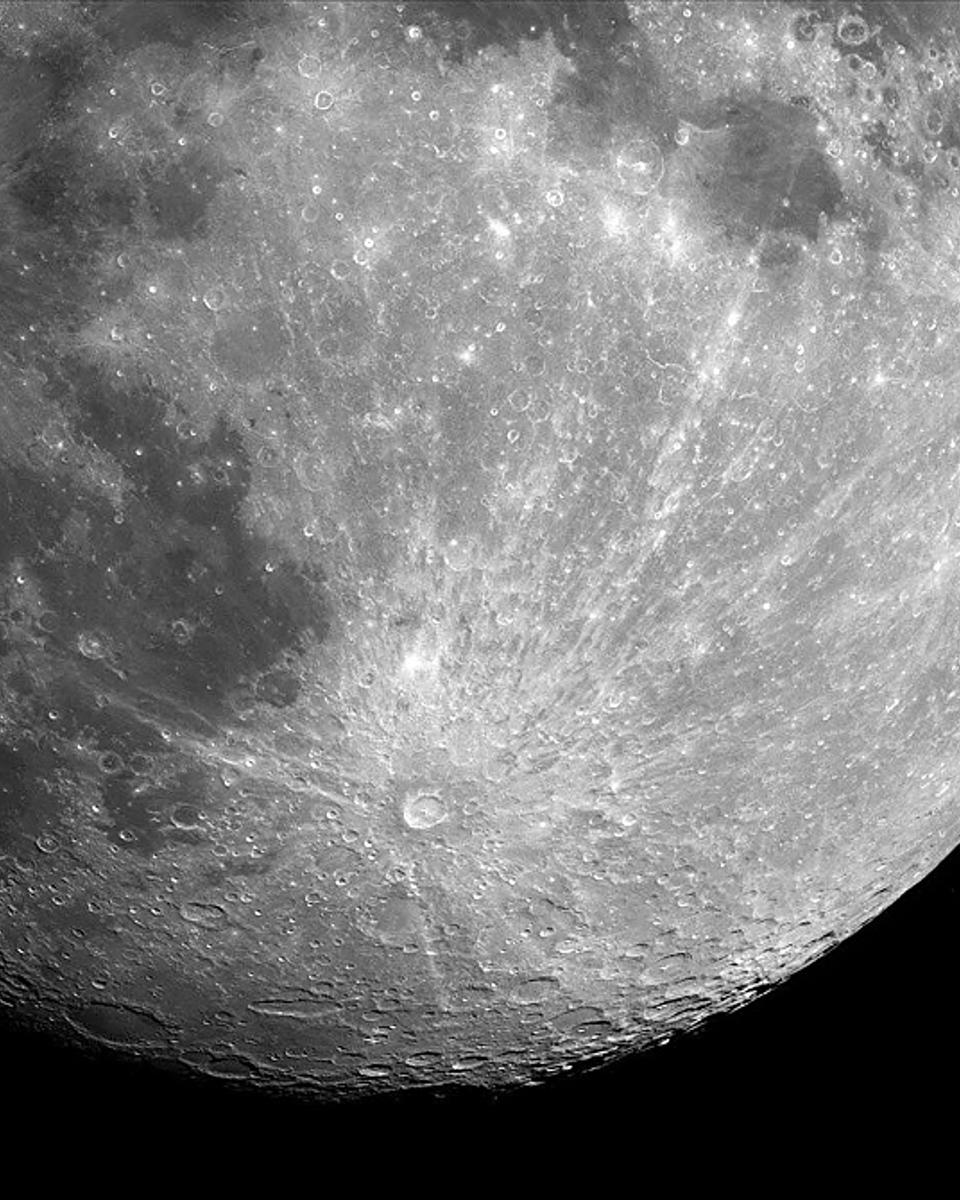
Tycho and Copernicus: Lunar Ray Craters
Dazzling in binoculars or a small telescope, the Moon is pocked with impact craters. During partial lunar phases , the craters along the terminator are cast in dramatic relief by…
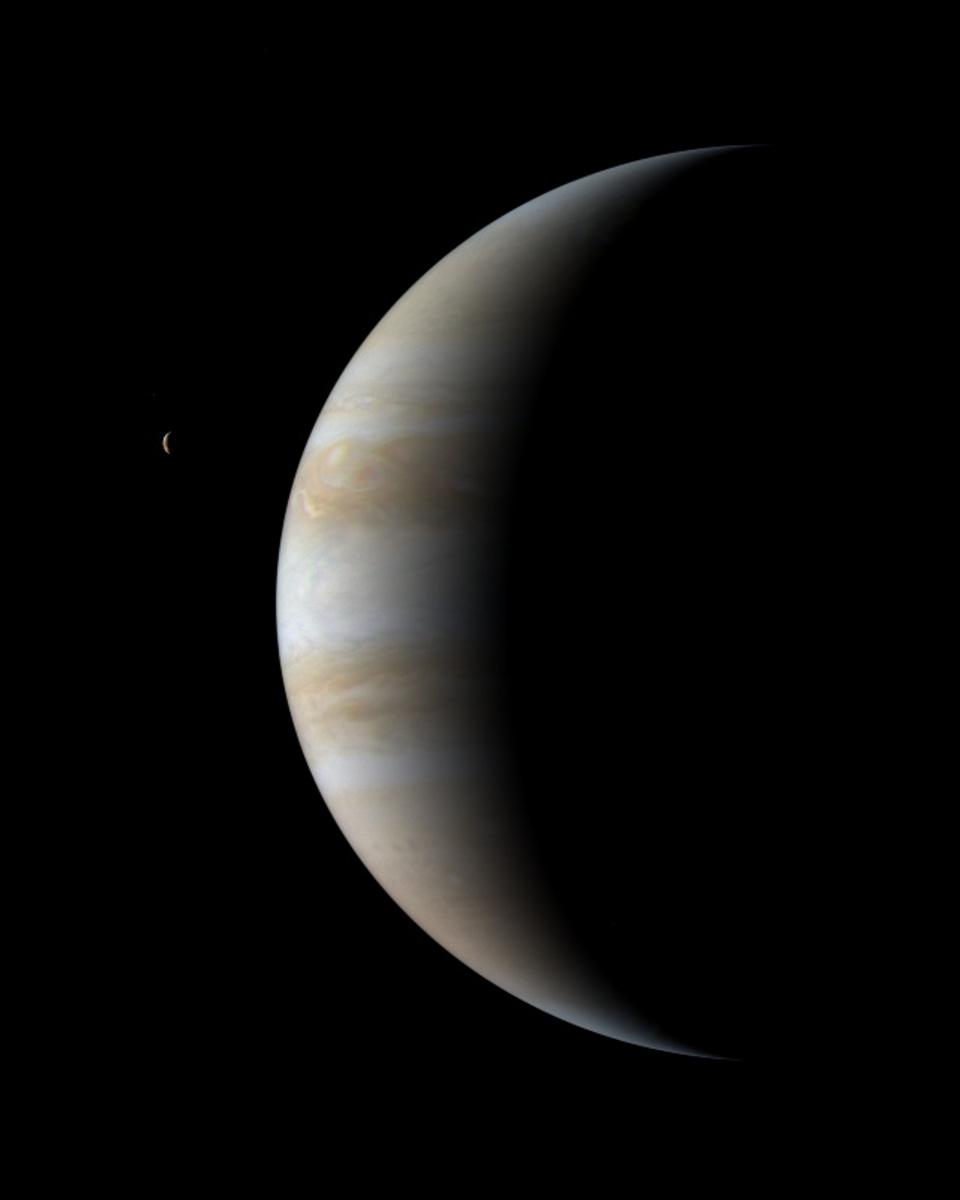
Farewell Jupiter
Next stop: Saturn. The Cassini spacecraft , launched from Earth four years ago, has now swung past Jupiter and should arrive at Saturn in the year 2004. Pictured to the left is a…
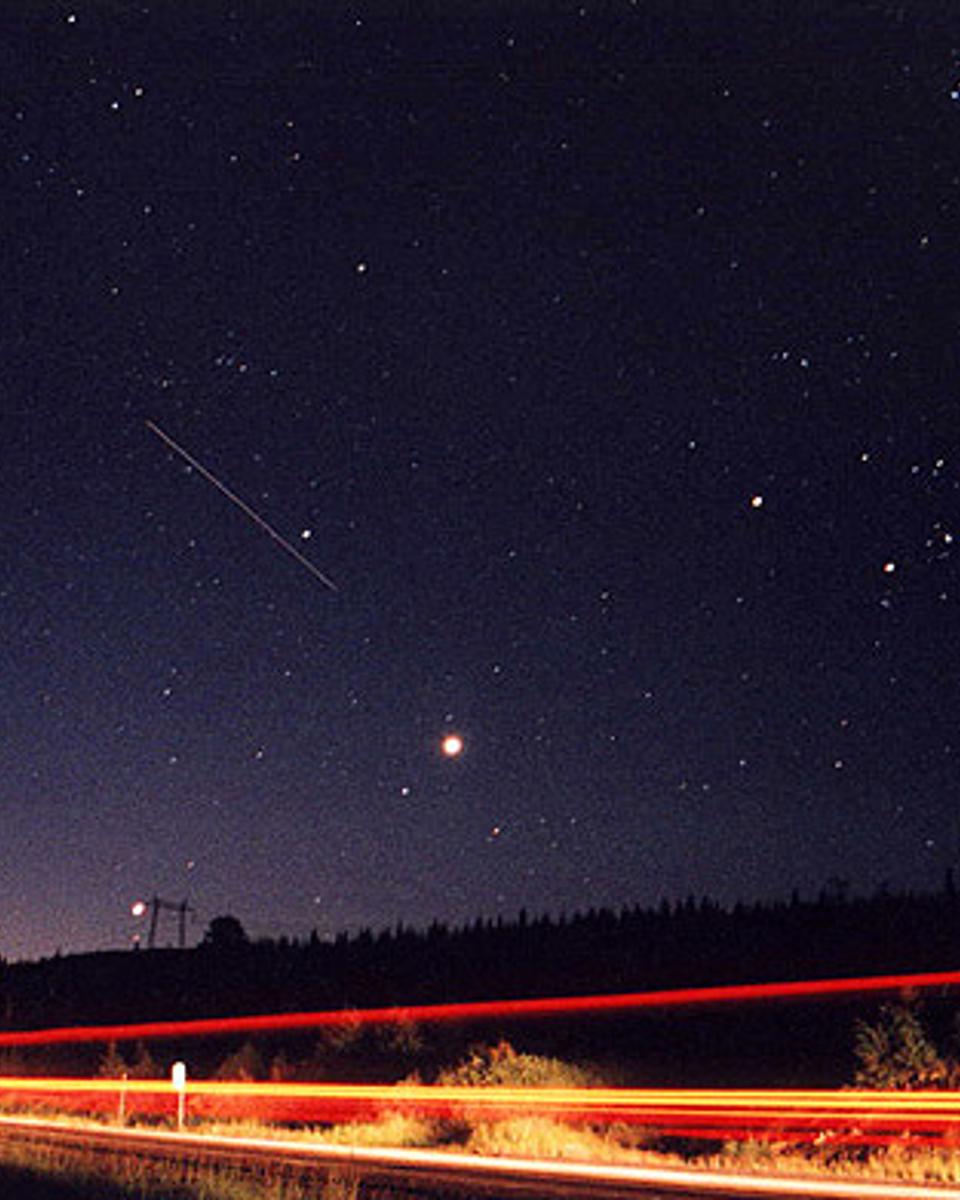
A July Dawn
Those up before dawn in late July in the northern hemisphere could see planets, stars , and a spacecraft in a single quick glance before starting their day. Near the eastern…
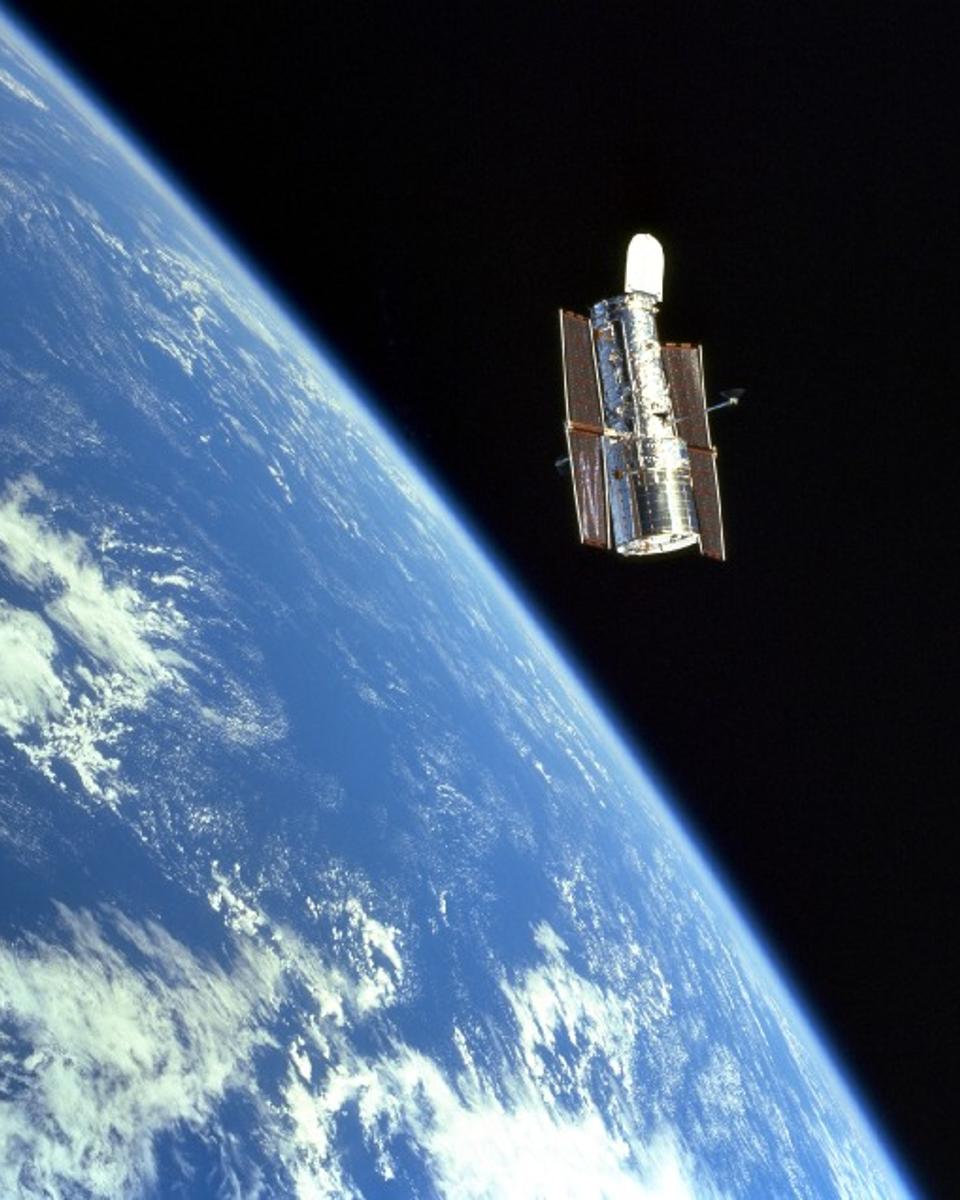
The Orbiting Hubble Space Telscope
The Hubble Space Telescope (HST) is the largest orbiting public optical telescope in history. Its 2.4 meter diameter reflecting mirror and it s perch above Earth's atmosphere…
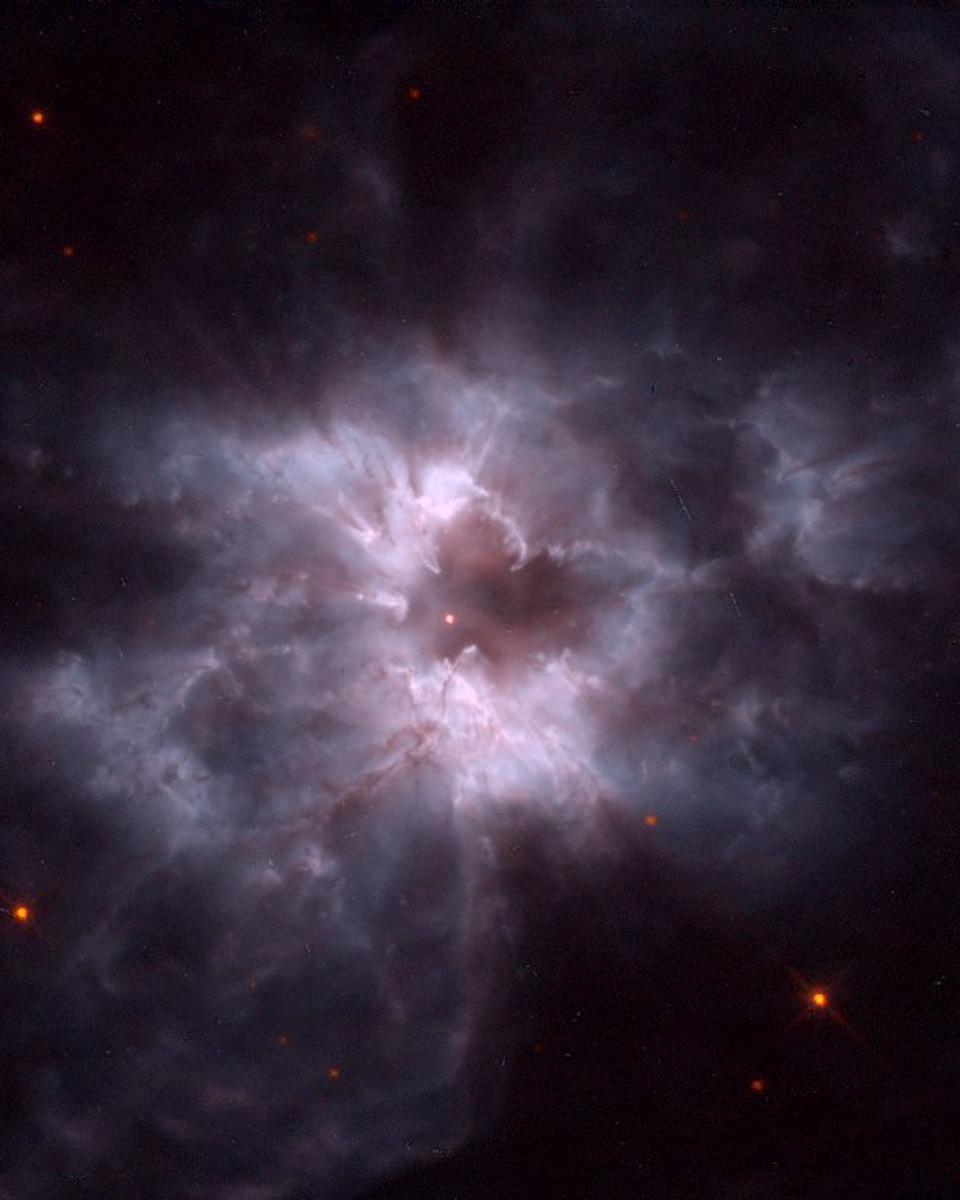
NGC 2440: Cocoon of a New White Dwarf
Like a butterfly , a white dwarf star begins its life by casting off a cocoon that enclosed its former self. In this analogy, however, the Sun would be a caterpillar and the…
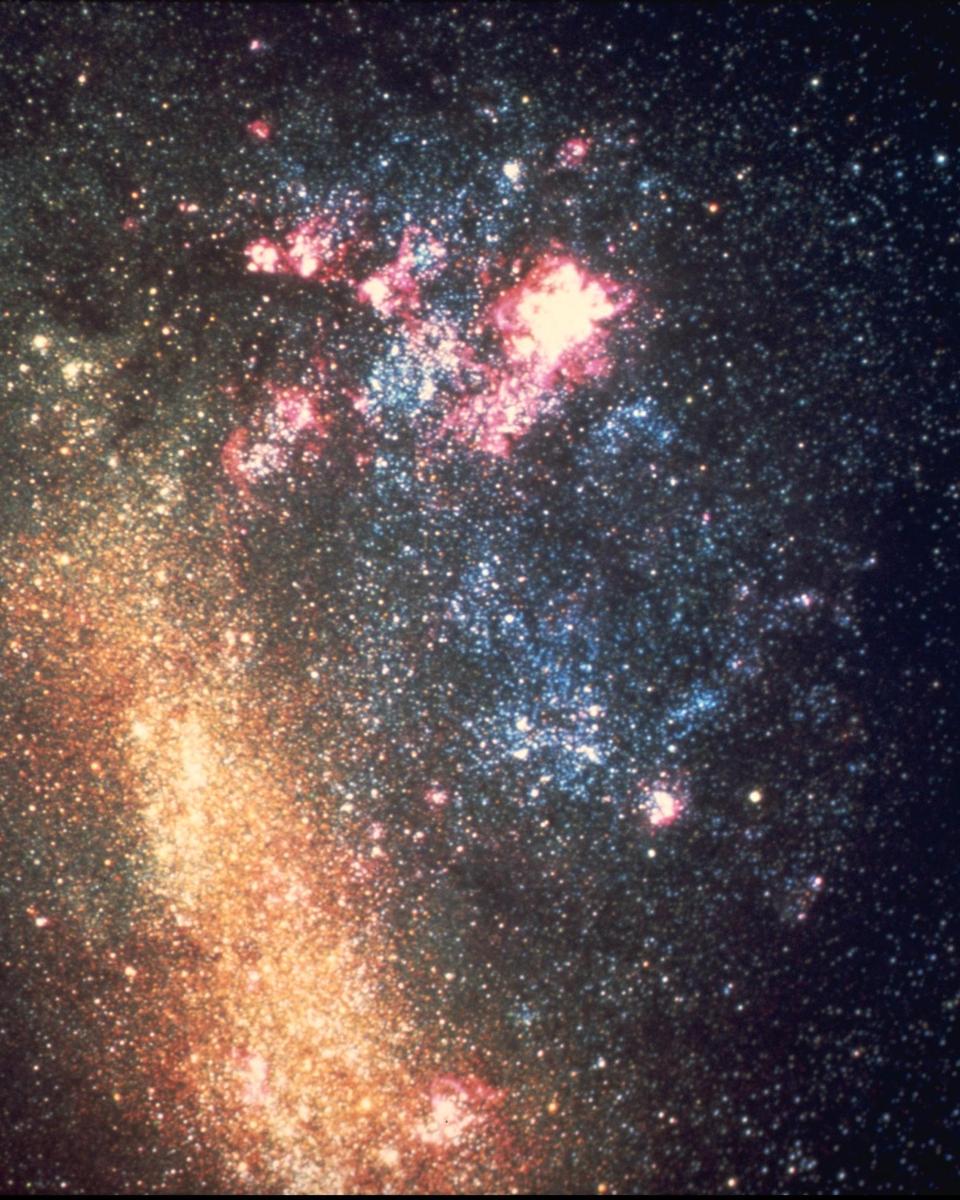
Neighboring Galaxy: The Large Magellanic Cloud
The brightest galaxy visible from our own Milky Way Galaxy is the Large Magellanic Cloud (LMC). Visible predominantly from Earth's Southern Hemisphere , the LMC is the second…
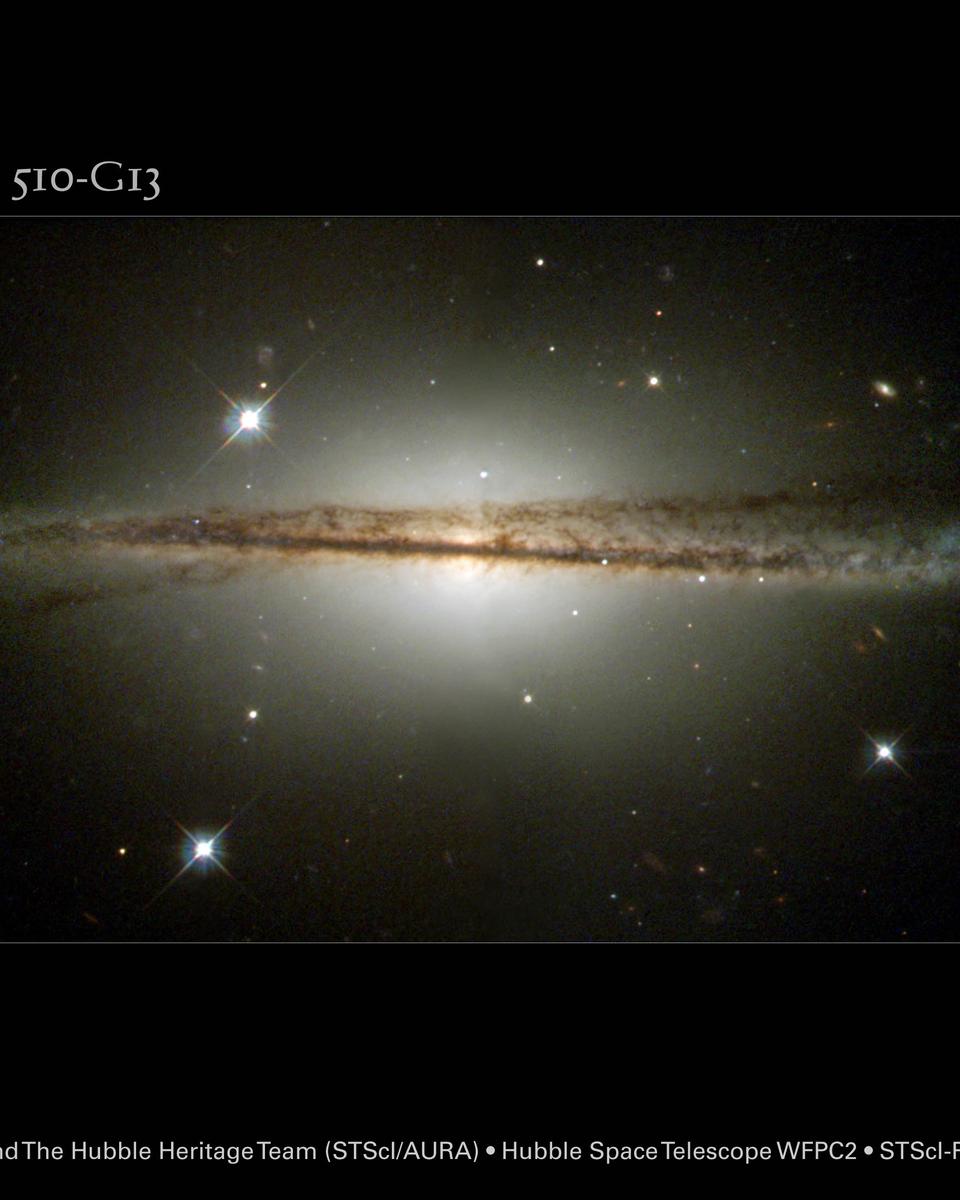
Warped Spiral Galaxy ESO 510-13
How did spiral galaxy ESO 510-13 get bent out of shape? The disks of many spirals are thin and flat , but not solid. Spiral disks are loose conglomerations of billions of stars…
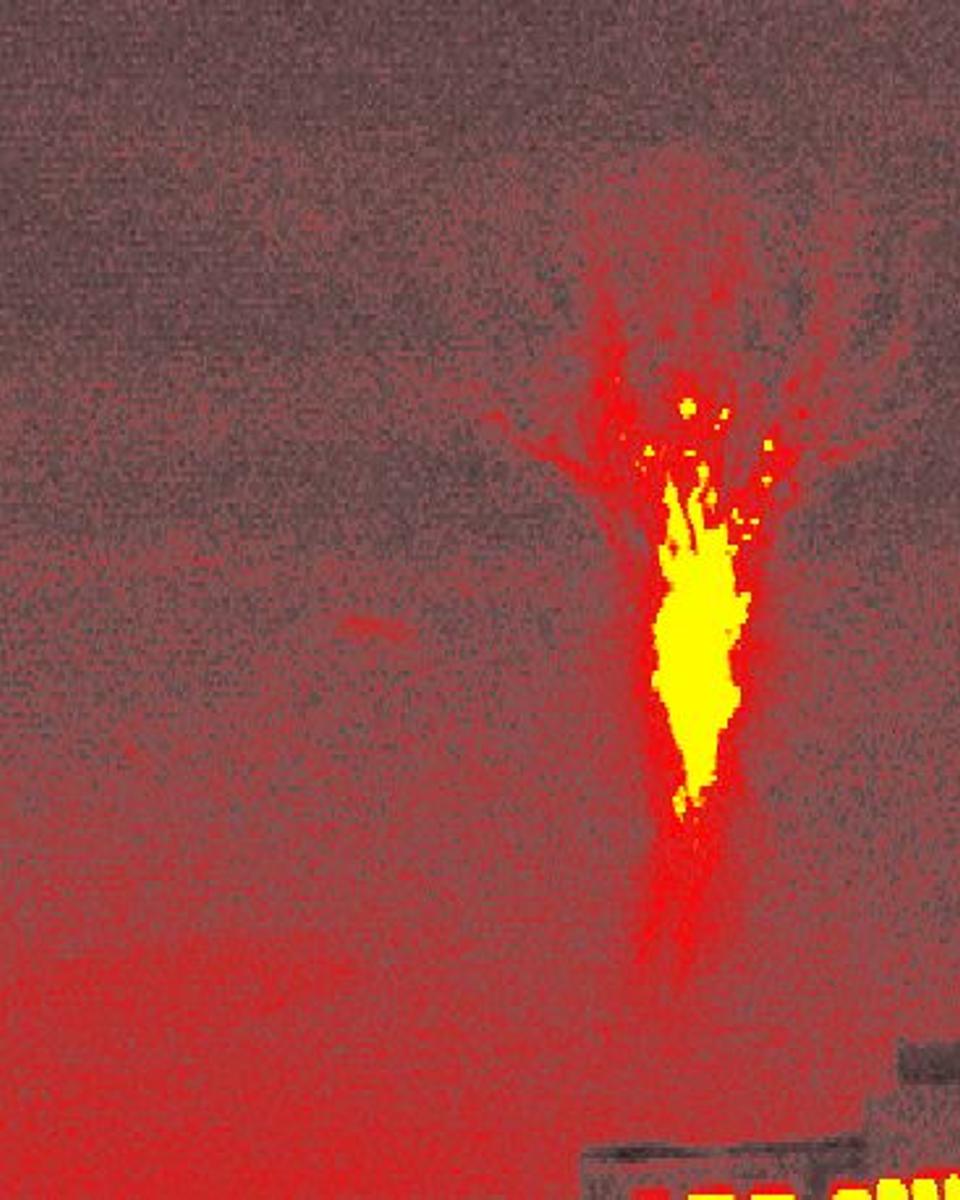
Burning Tree Sprite
This dramatic, garishly colored image was captured with a low-light level camera on 2001 June 7. It shows what appears to be a “burning tree” above the National Cheng Kung…
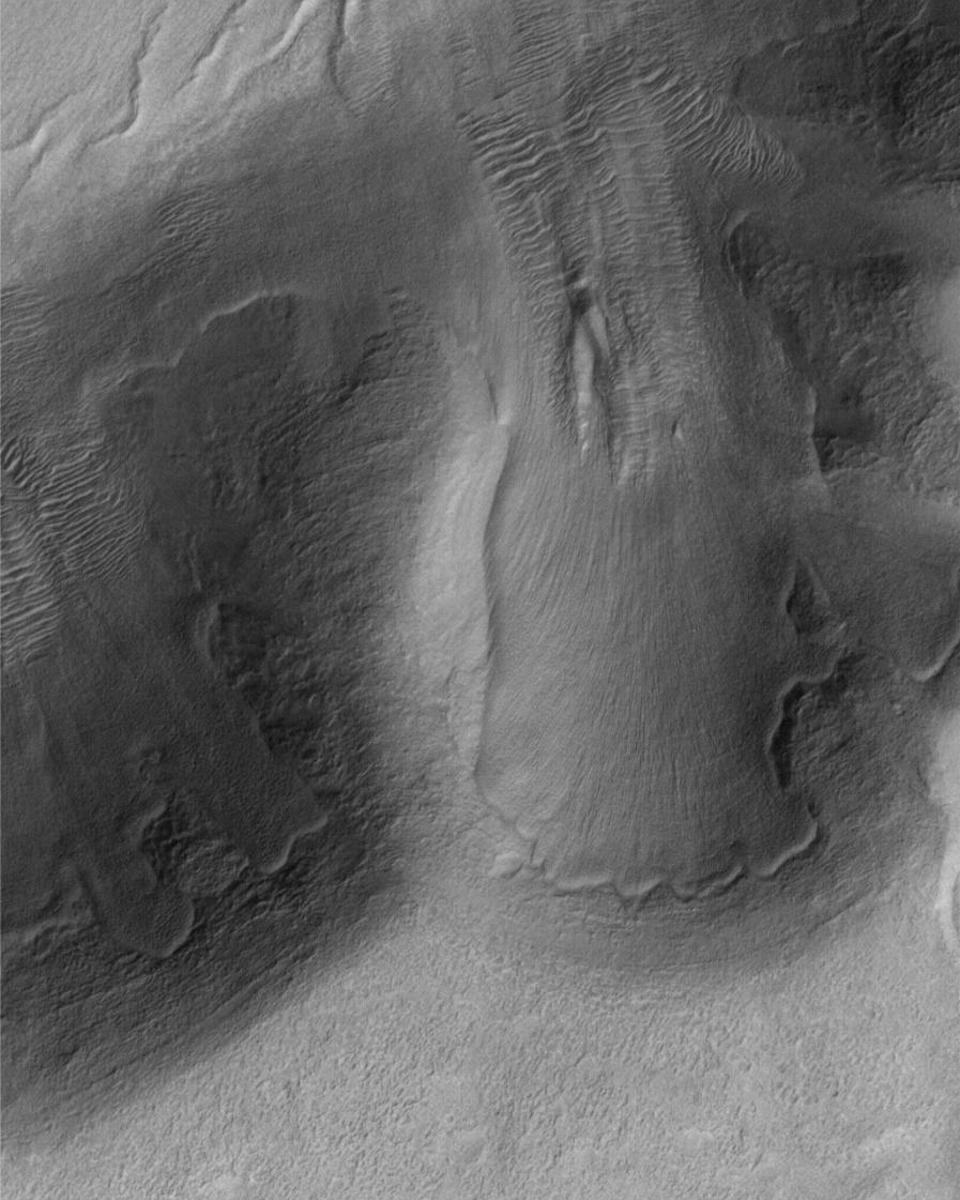
Young Martian Terrain
What caused the pits, ridges, and gullies on otherwise smooth Martian terrain? One hypothesis is water. The lack of craters at this mid-latitude location indicates that the…
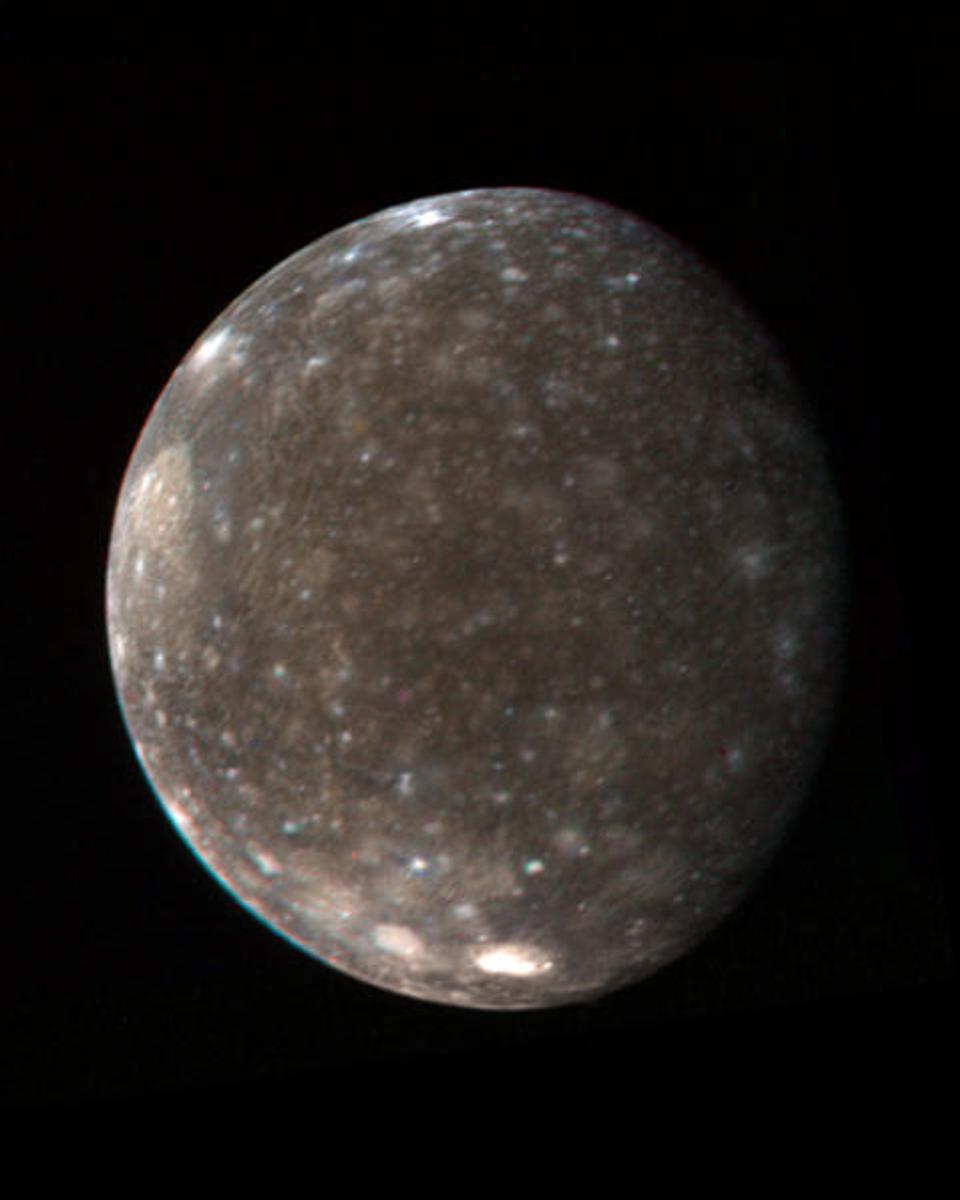
Oceans Under Jupiter's Callisto?
Why does Jupiter 's moon Callisto alter the magnetic field of Jupiter in its vicinity? Callisto itself does not have a strong magnetic field. One possible answer is that Callisto…
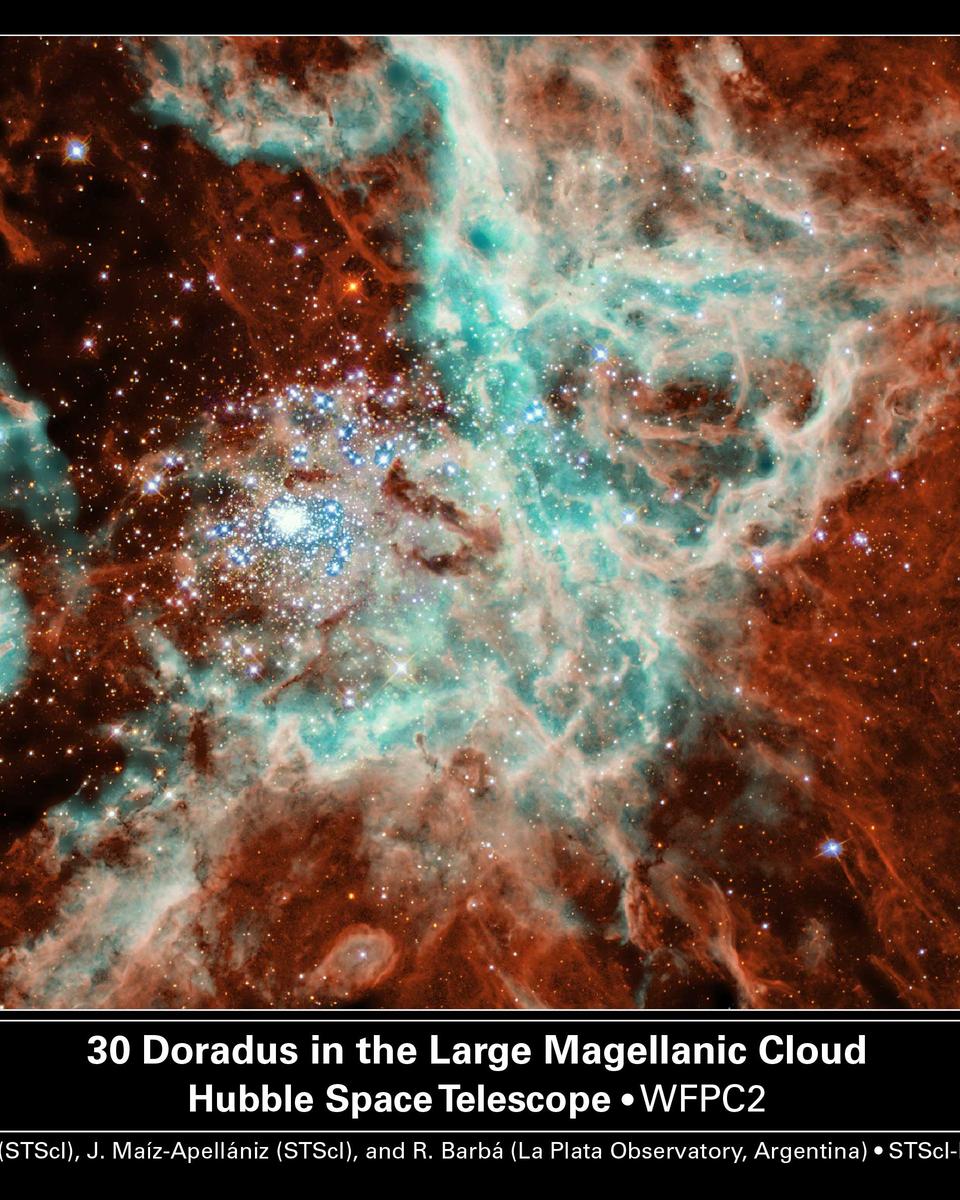
Star Cluster R136 Bursts Out
In the center of star-forming region 30 Doradus lies a huge cluster of the largest, hottest, most massive stars known. Known as R136 , the cluster's energetic stars are breaking…
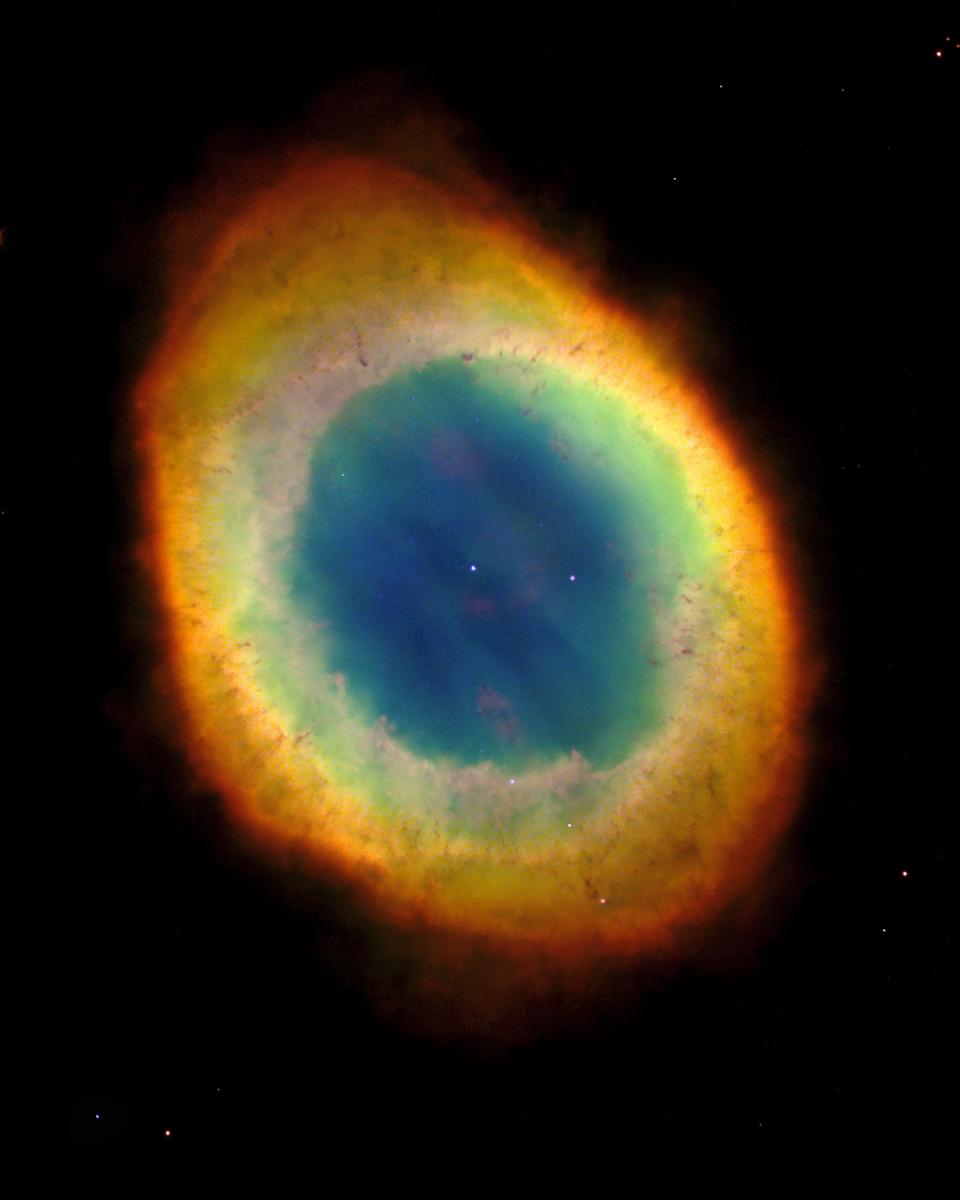
M57: The Ring Nebula
Except for the rings of Saturn , the Ring Nebula (M57) is probably the most famous celestial band. This planetary nebula's simple, graceful appearance is thought to be due to…
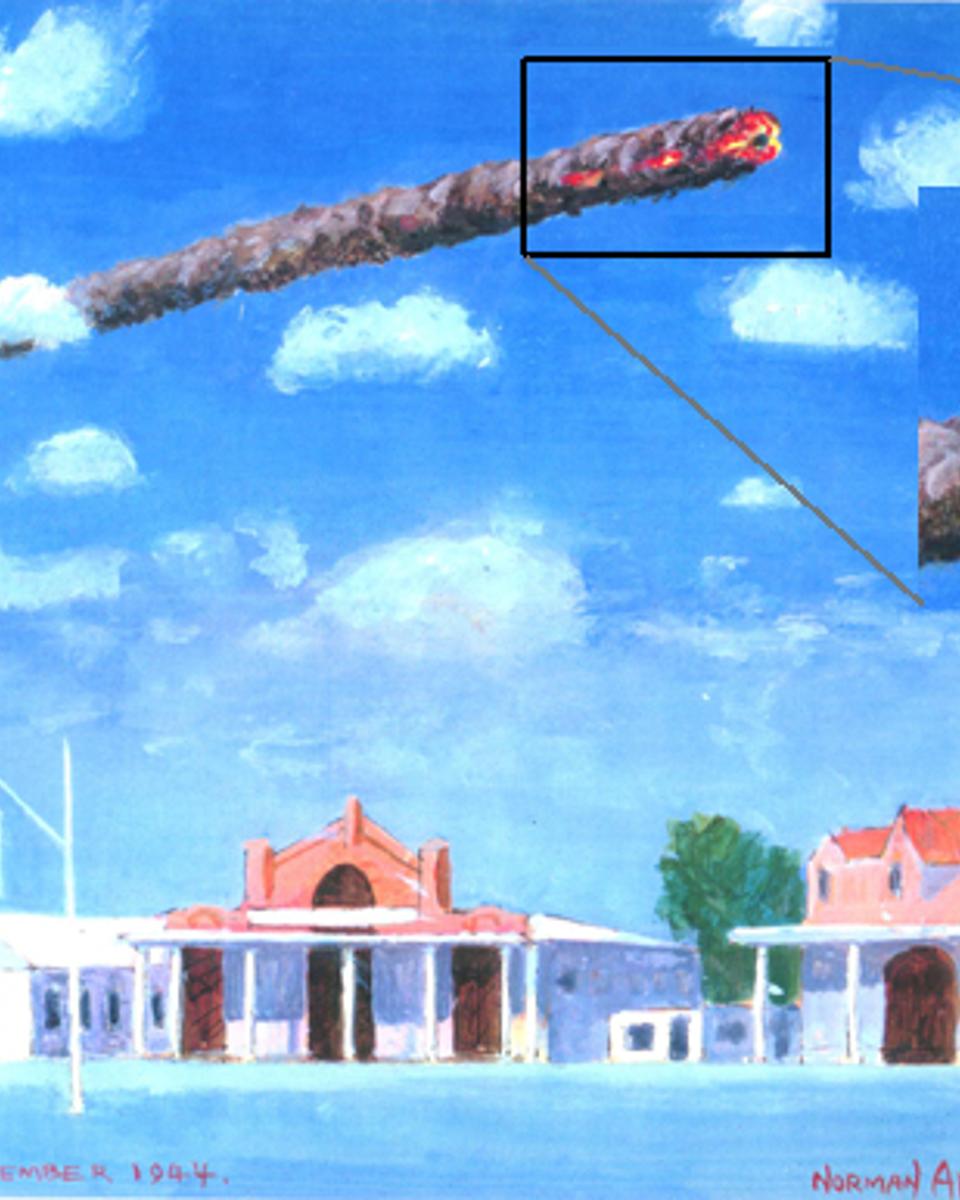
A Daytime Fireball in 1944
While stationed in central Africa in December 1944, Norman Appleton witnessed a meteor so bright he remembered it his entire life. Right before his eyes a tremendous smoking…
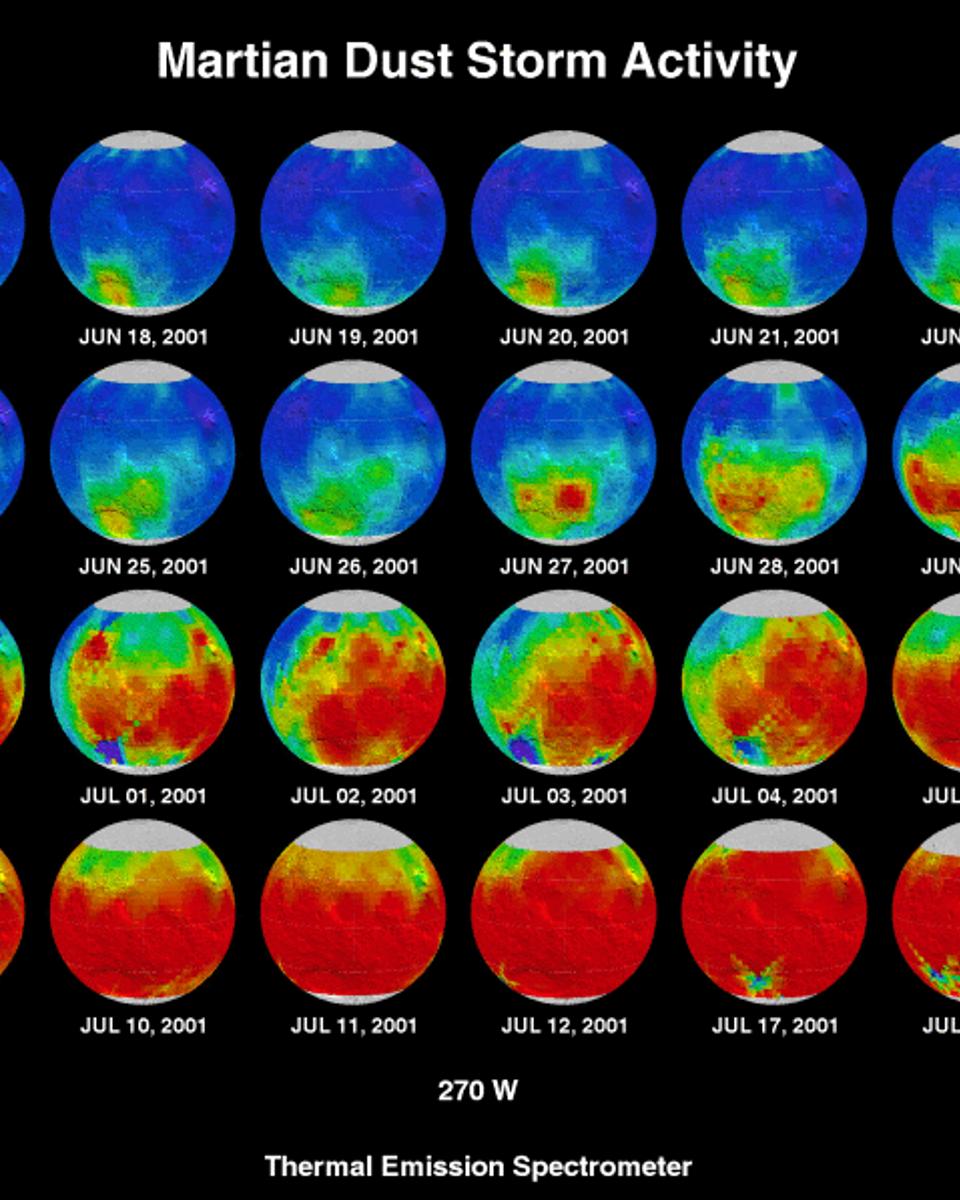
Martian Dust Storm
If you've been unhappy with the weather on Earth, check out Mars , now in the grip of a planet-wide dust storm . Above, observations from the orbiting Mars Global Surveyor (MGS)…
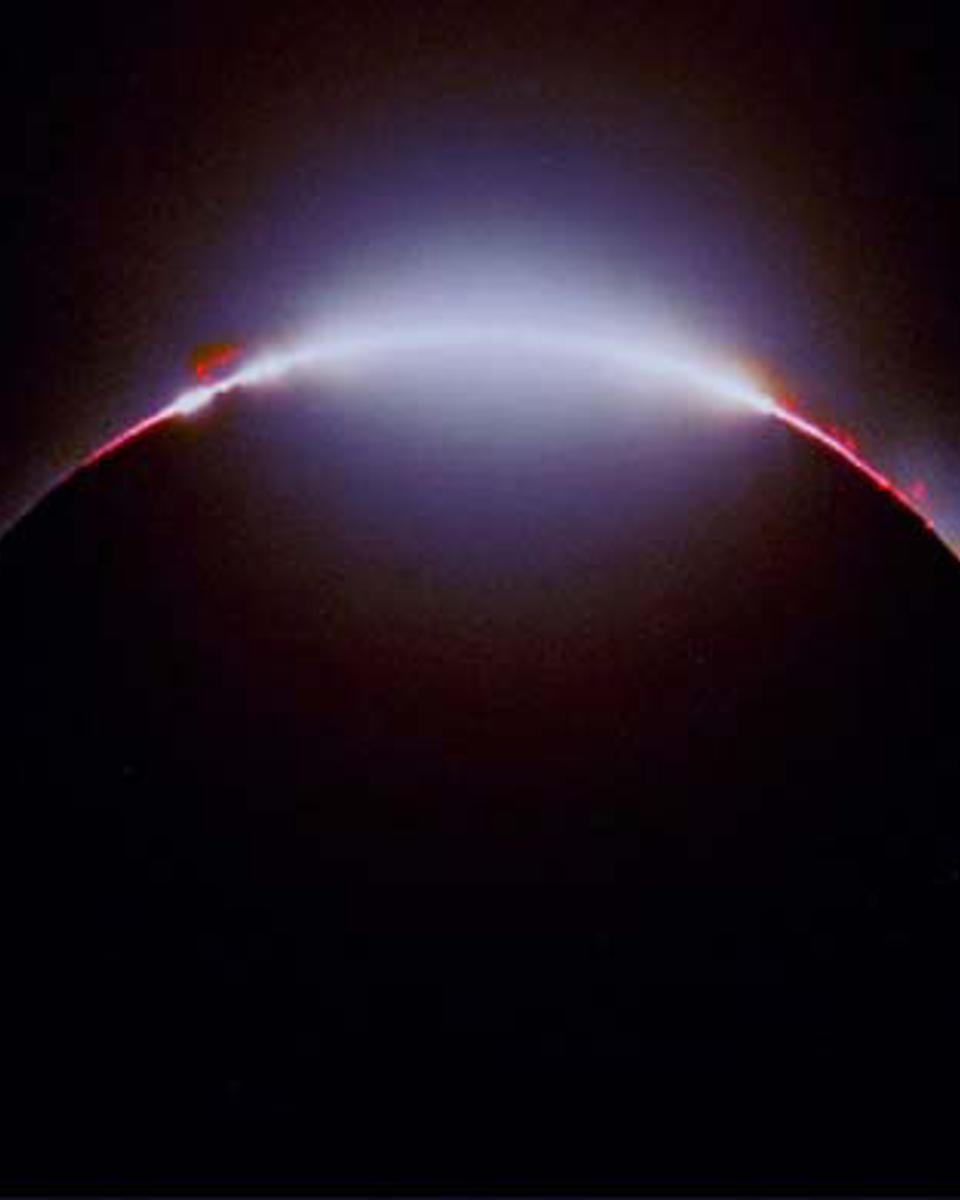
Madagascar Totality
When the Moon's shadow reached out and touched Earth's southern hemisphere on 2001 June 21, the first total solar eclipse of the 21st century began. Starting in the Atlantic, the…
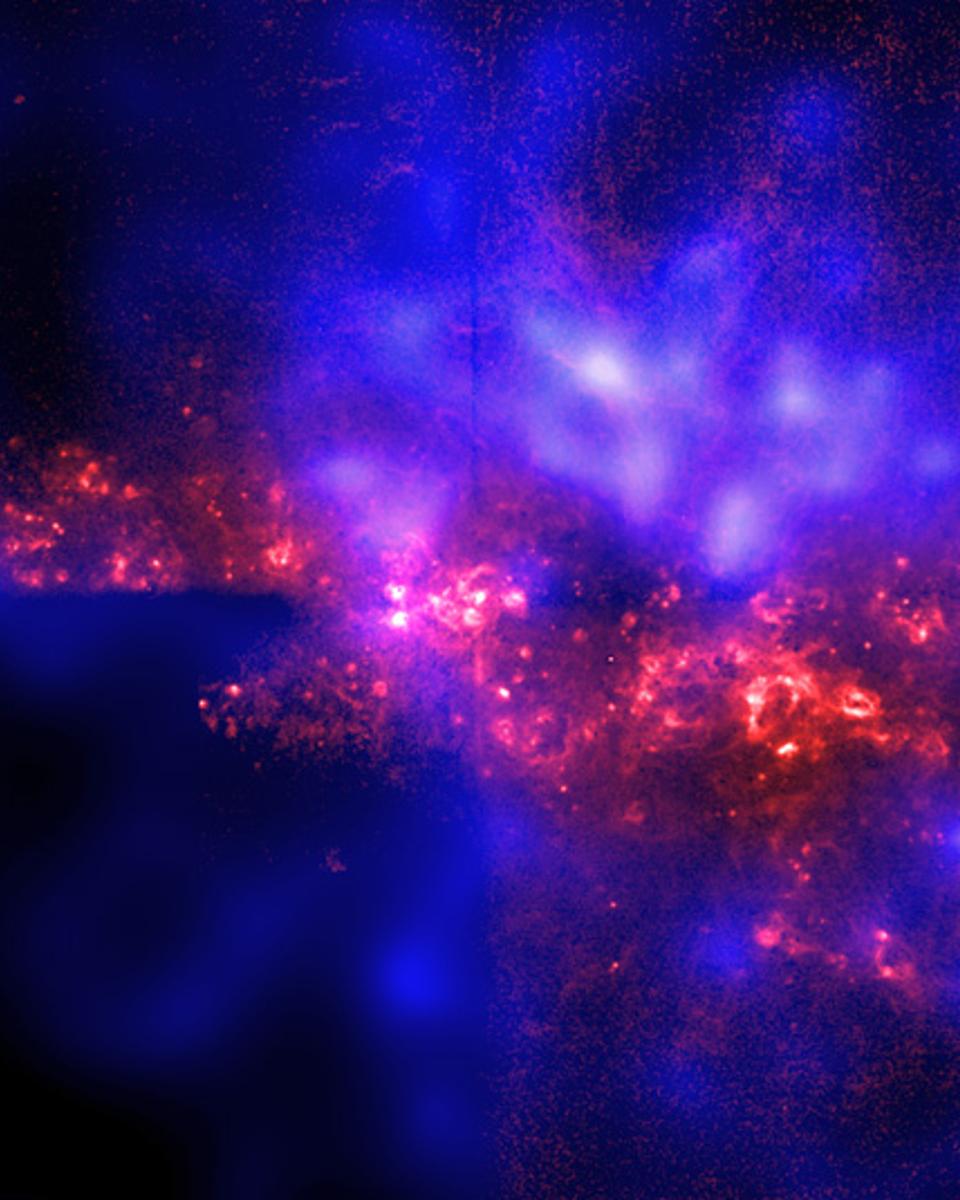
Hot Gas Halo Detected Around Galaxy NGC 4631
Is our Milky Way Galaxy surrounded by a halo of hot gas? A step toward solving this long-standing mystery was taken recently with Chandra X-ray observations of nearby galaxy NGC…
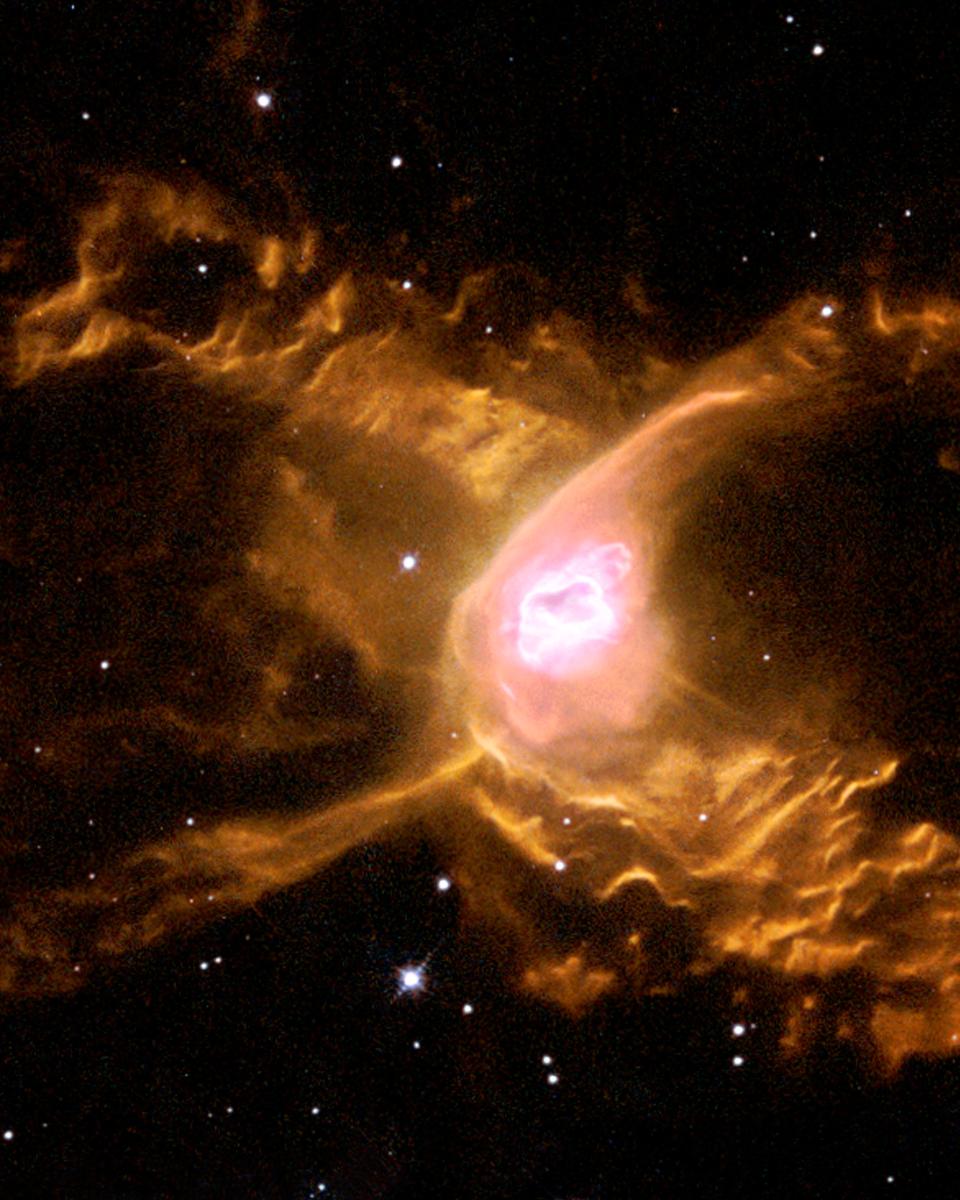
The Red Spider Planetary Nebula
Oh what a tangled web a planetary nebula can weave. The Red Spider Planetary Nebula shows the complex structure that can result when a normal star ejects its outer gases and…
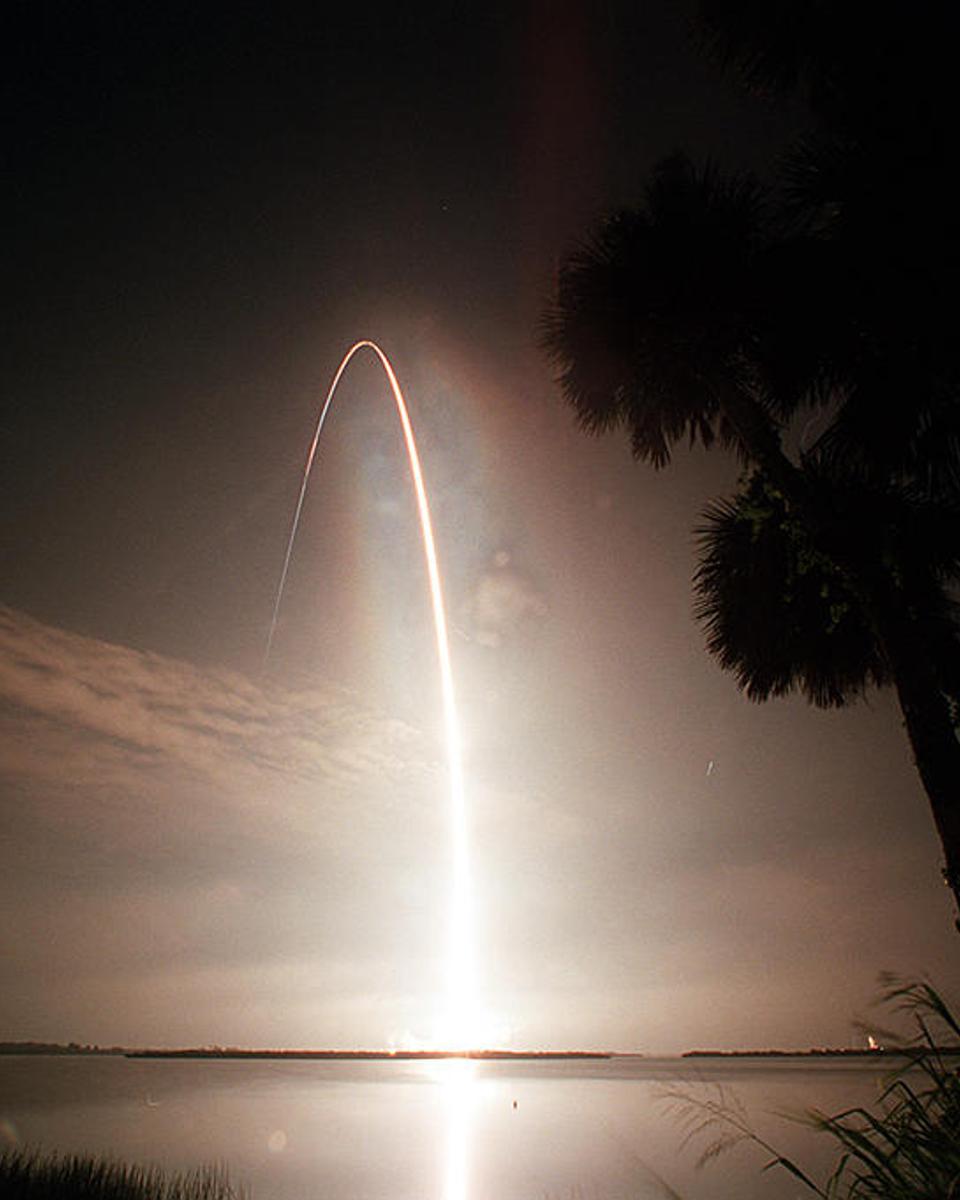
Atlantis to Orbit
Birds don't fly this high. Airplanes don't go this fast. The Statue of Liberty weighs less. No species other than human can even comprehend what is going on, nor could any human…
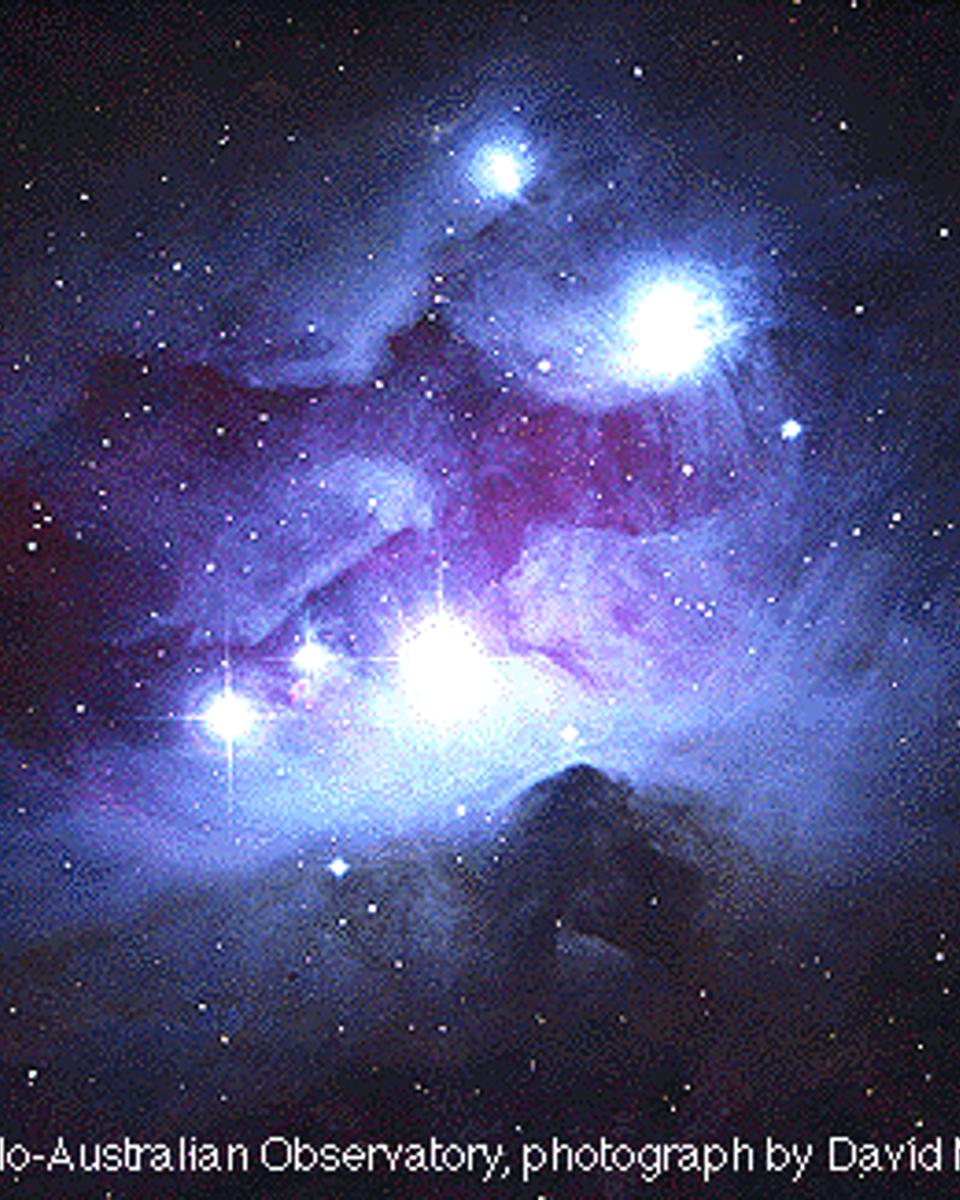
NGC 1977: Blue Reflection Nebula in Orion
The Orion Nebula is visible to the unaided eye as a fuzzy patch near the famous belt of three stars in the <a Orion . The above picture captures a part of the Orion Nebula that…
Viewing discoveries from 14 August 2001 through 22 July 2001.