Browse NASA Astronomy Picture of the Day archive by date and media: Archive Discoveries
Browse the NASA APOD archive without needing the exact date first. Filter by media type and keep moving deeper into older images and videos.
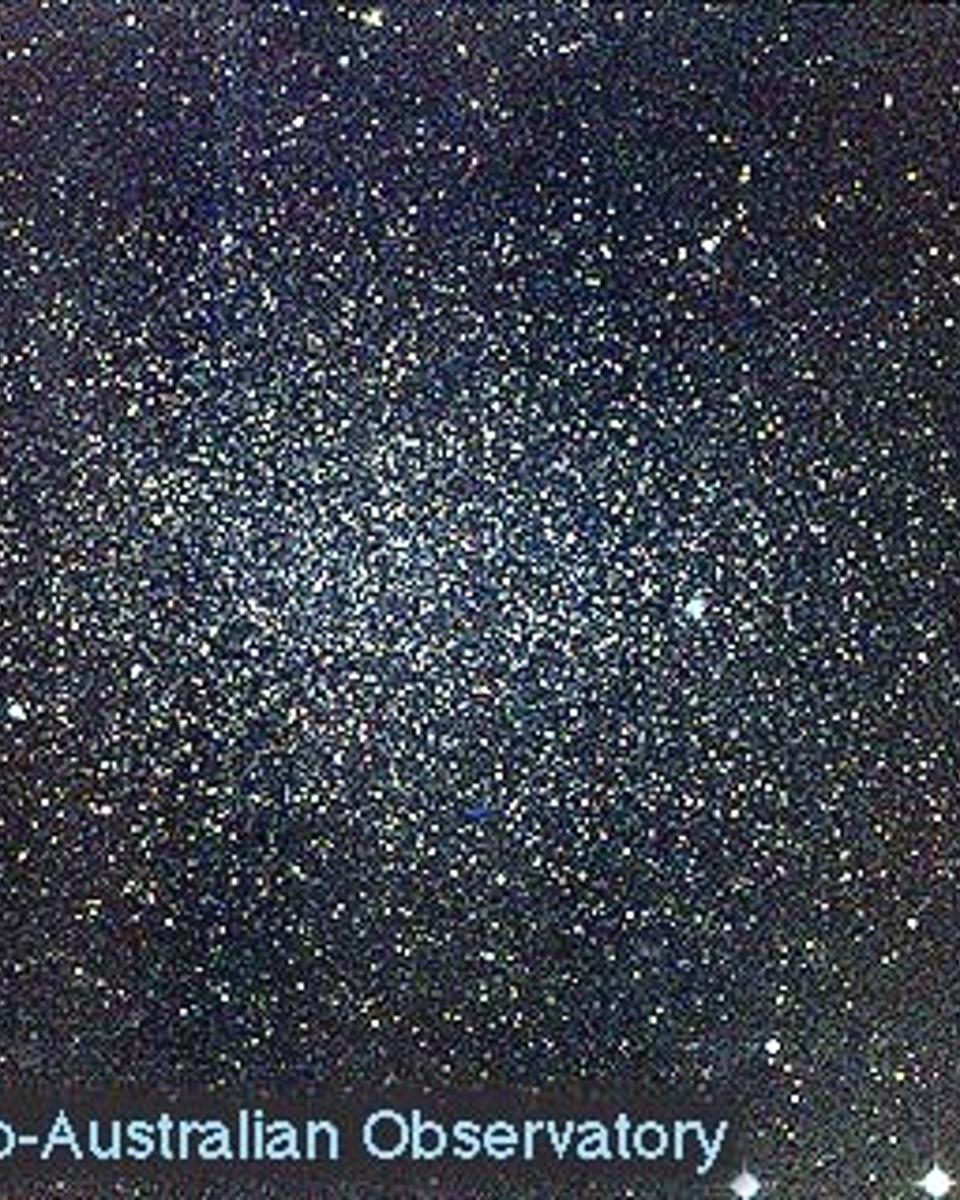
Nearby Dwarf Galaxy Leo I
Leo I is a dwarf spheroidal galaxy in the Local Group of galaxies dominated by our Milky Way Galaxy and M31 . Leo I is thought to be the most distant of the eleven known small…
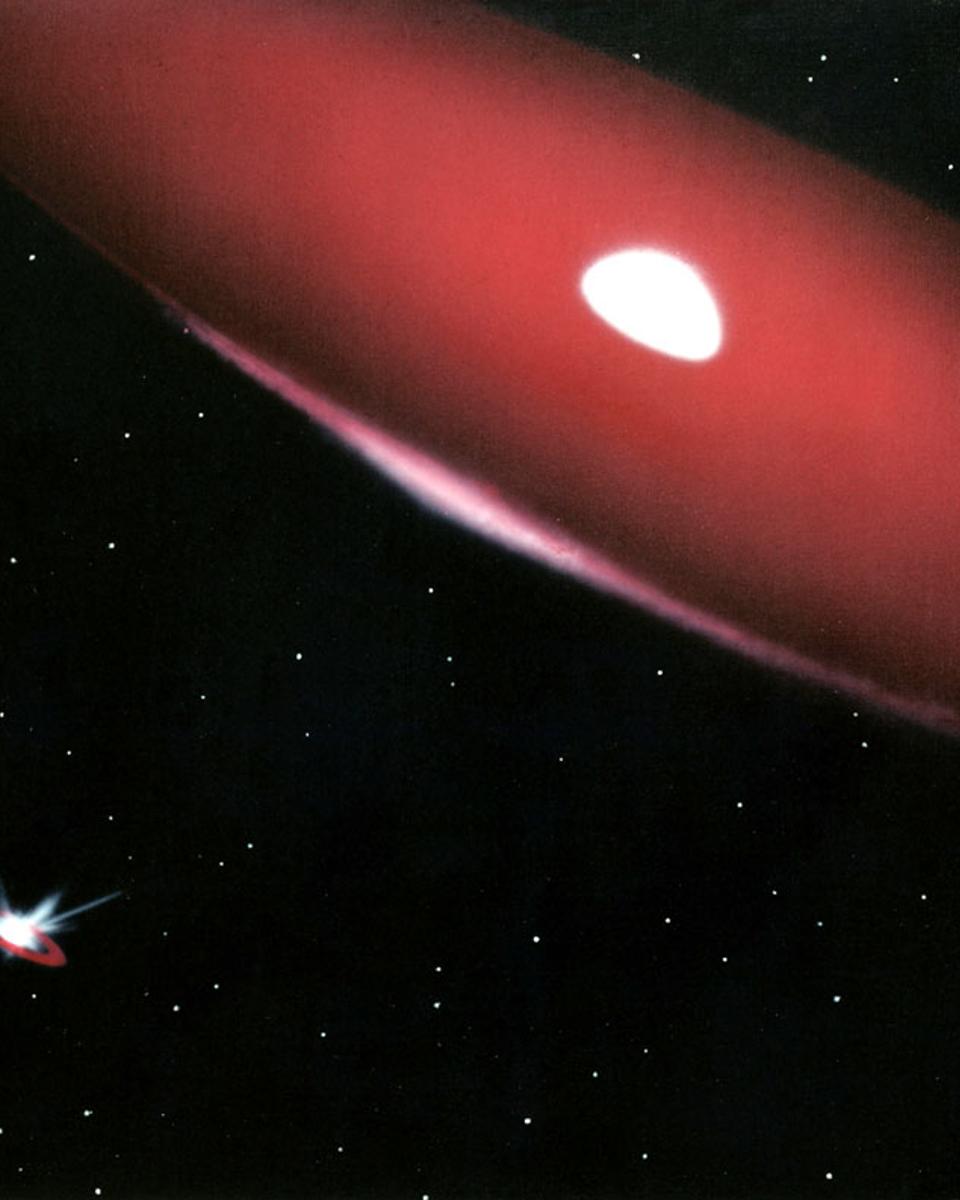
Phi Persei: Double Star
It's clear who is the biggest star in this binary system. Based on recent results , this artist's vision of the double star Phi Persei , 720 light years away, shows a bright,…
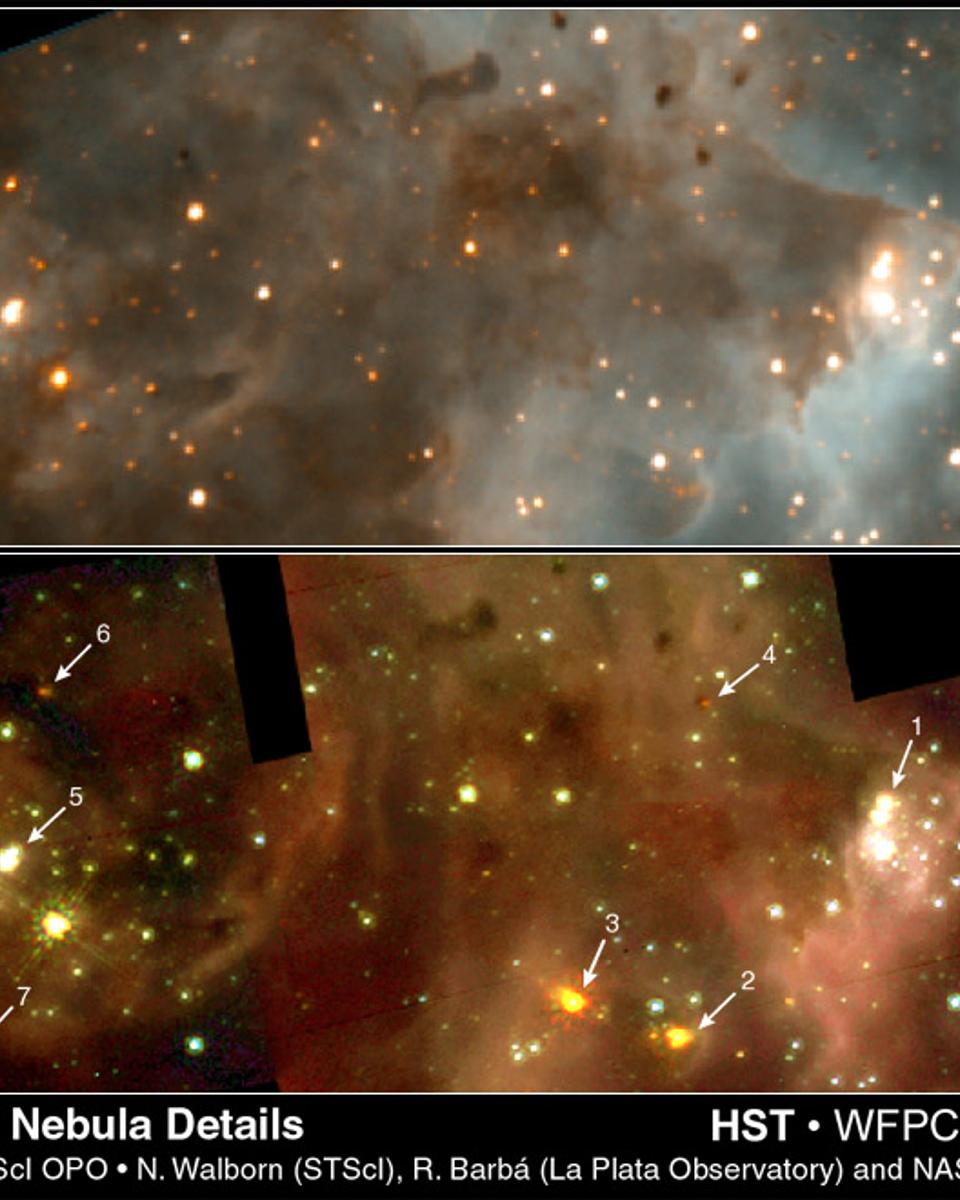
New Stars In 30 Doradus
Compare these matched Hubble Space Telescope views (visible-light on top; infrared on bottom) of a region in the star-forming 30 Doradus Nebula . Find the numbered arrows in the…
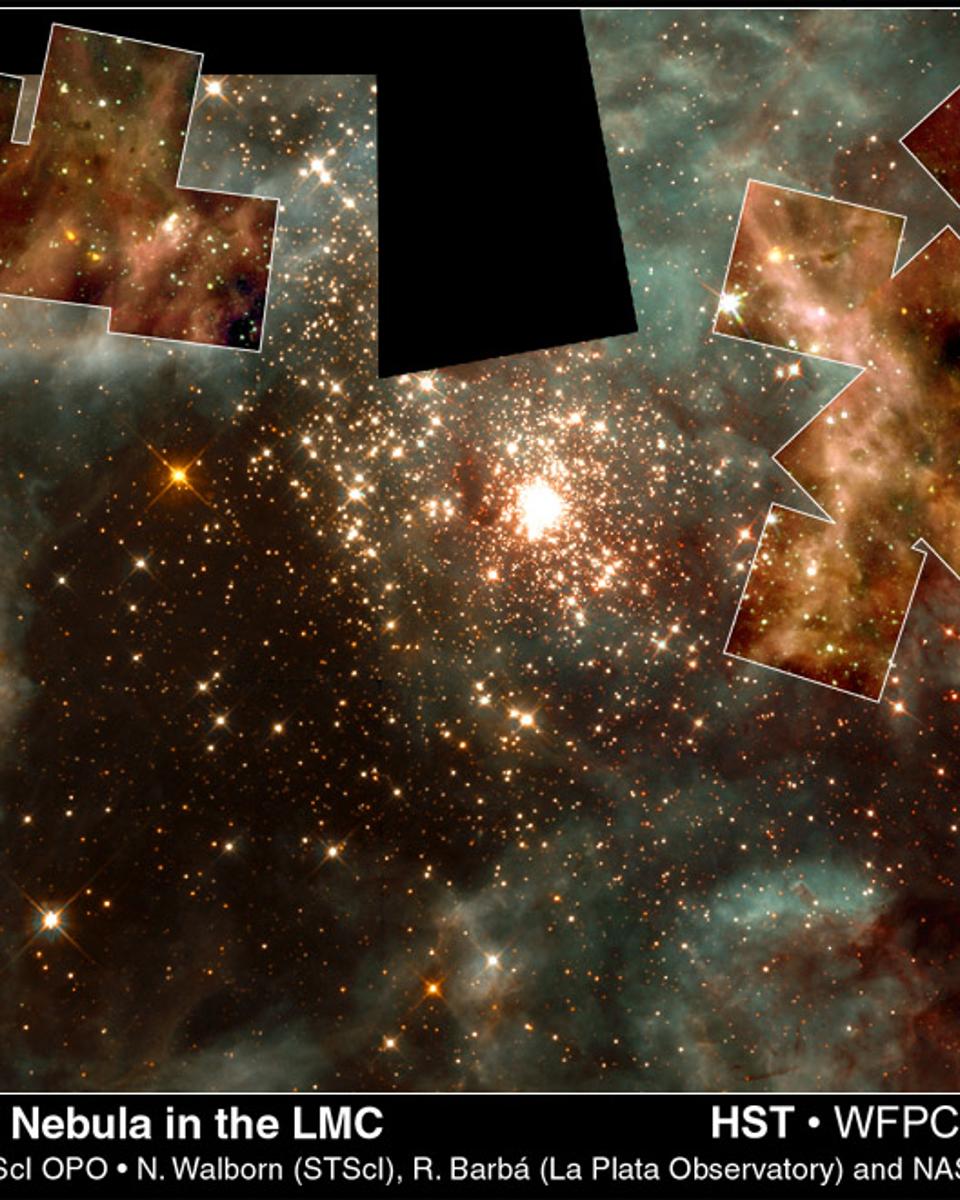
Massive Stars Of 30 Doradus
This gorgeous visible-light Hubble Space Telescope image shows a young cluster of massive stars at the center of the 30 Doradus Nebula . Gas and dust clouds in 30 Doradus, also…
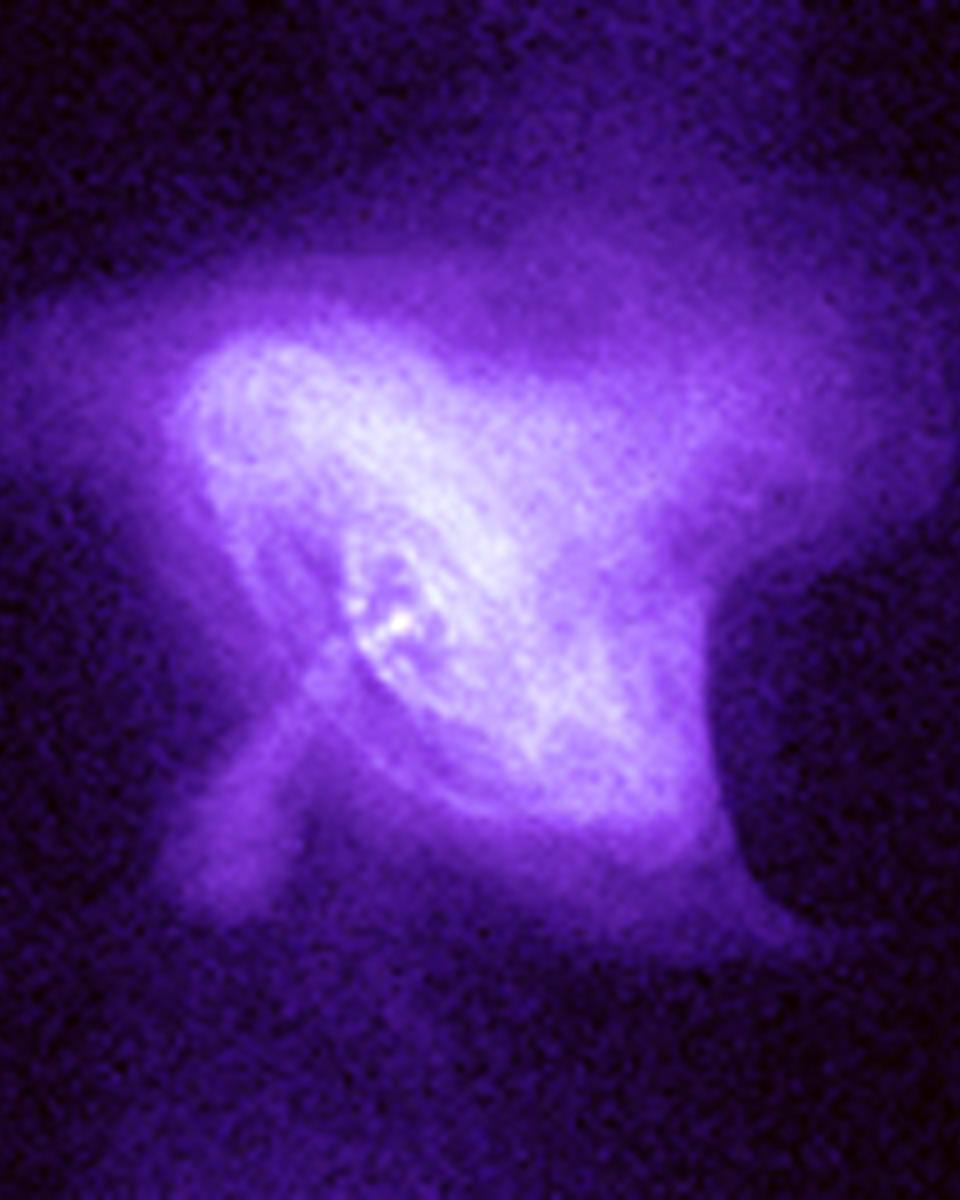
The Crab Nebula in X-Rays
Why does the Crab Nebula still glow? In the year 1054 A.D. a supernova was observed that left a nebula that even today glows brightly in every color possible, across the entire…
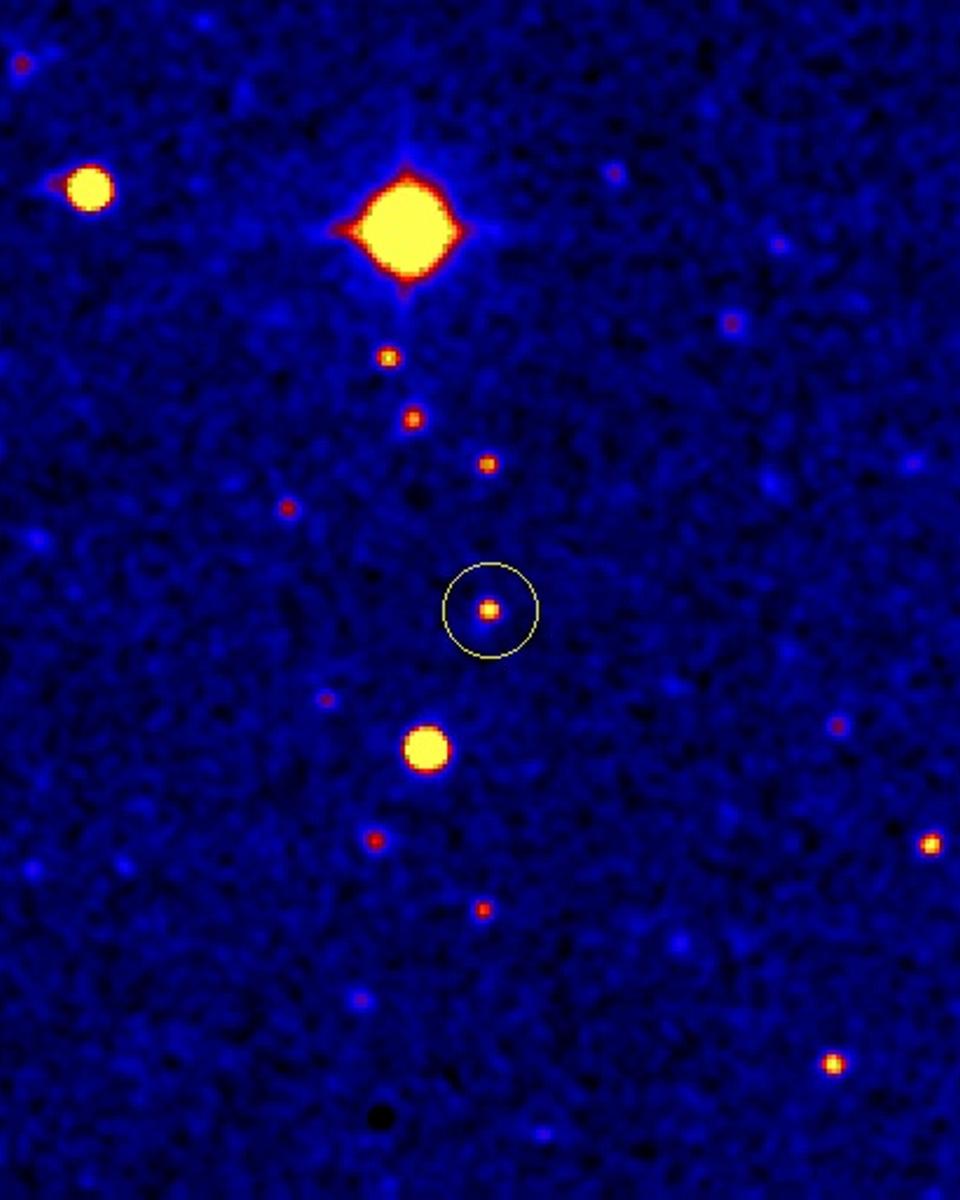
Mystery Object Explained
Explorers often discover the unexpected . Such was the case when the Second Palomar Observatory Sky Survey chanced upon the unusual object circled in the above photograph . The…
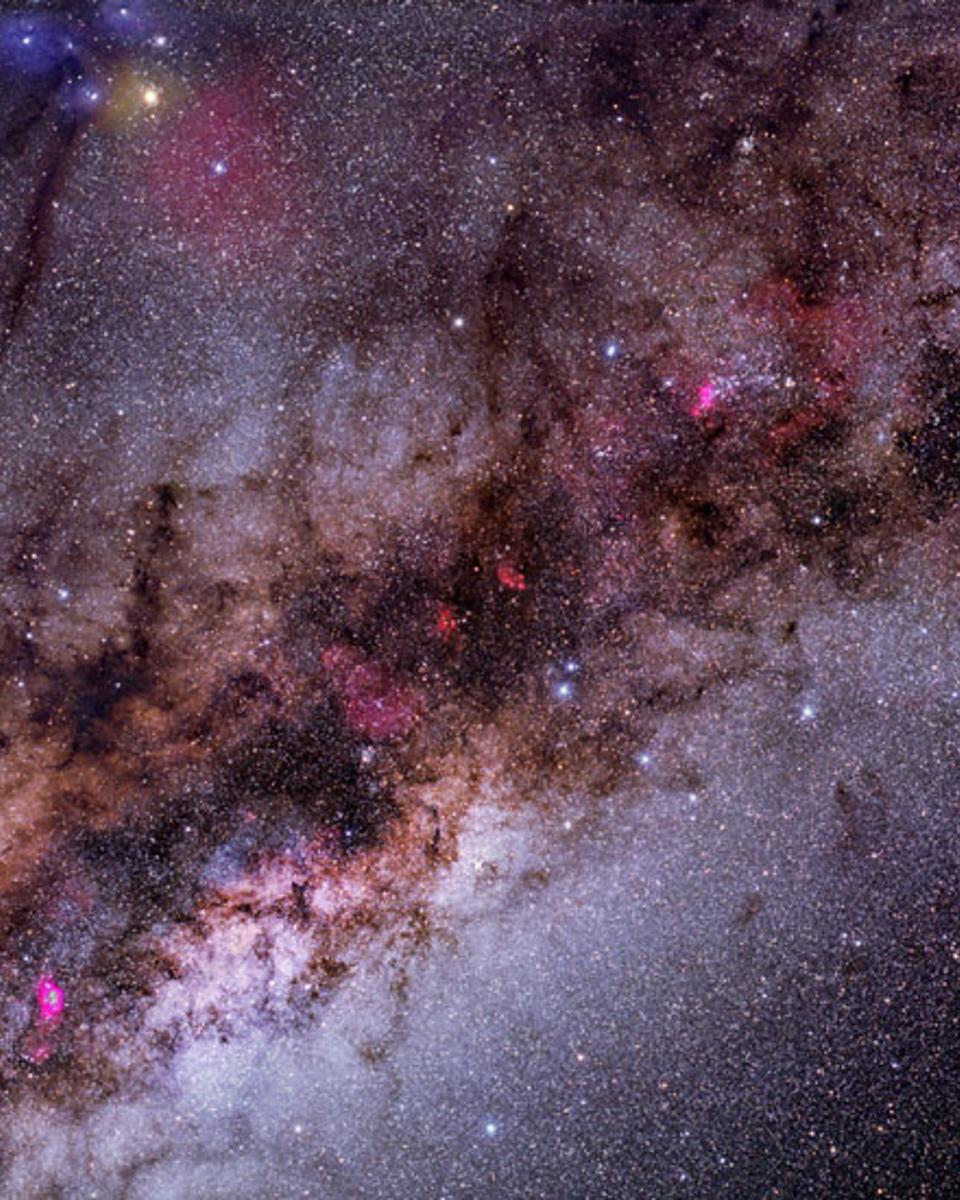
Our Galaxy in Stars, Gas, and Dust
The disk of our Milky Way Galaxy is home to hot nebulae, cold dust, and billions of stars. The red nebulae visible in the above contrast-enhanced picture are primarily emission…
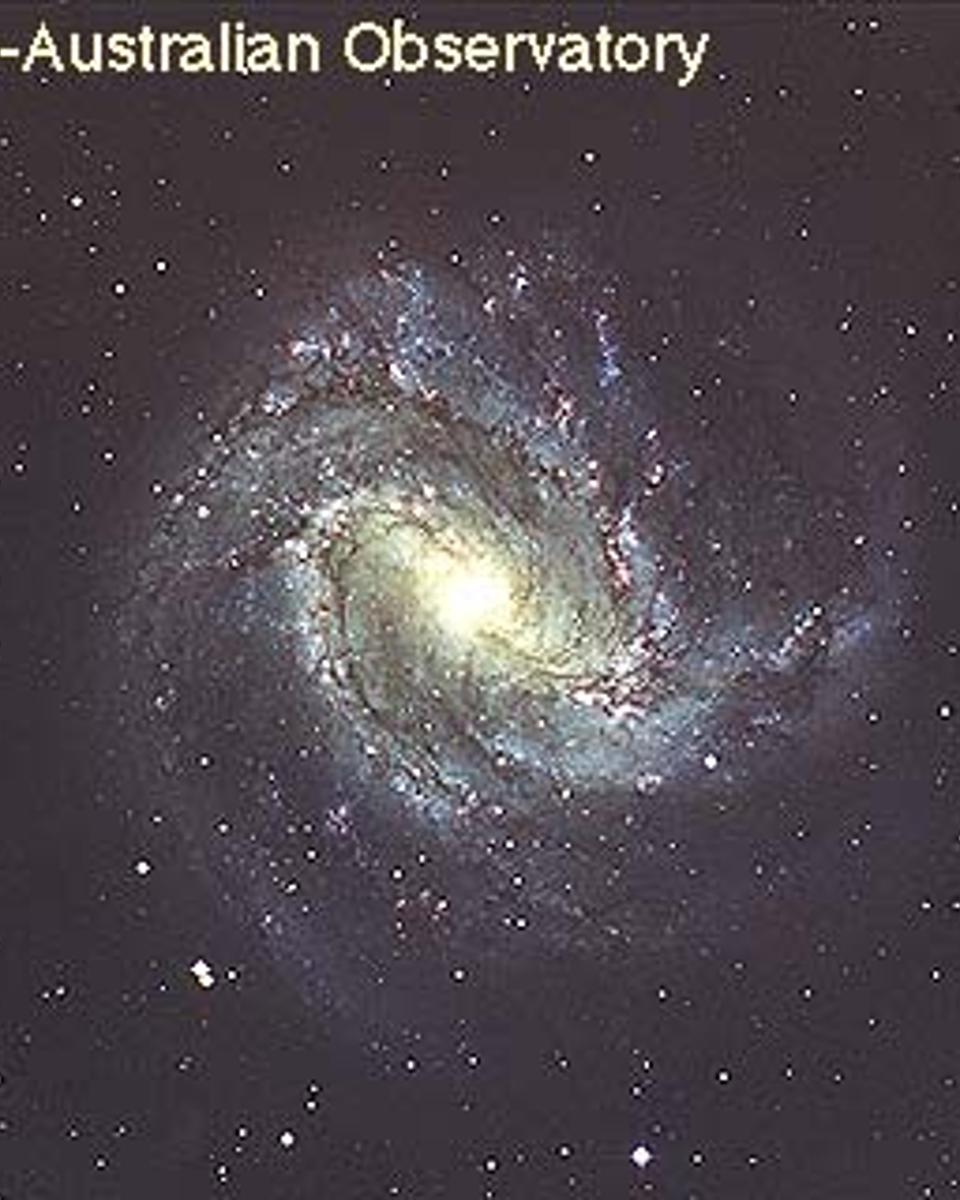
M83: A Barred Spiral Galaxy
M83 is a bright spiral galaxy that can be found with a small telescope in the constellation of Hydra . It takes light about 15 million years to reach us from M83 . M83 is quite a…
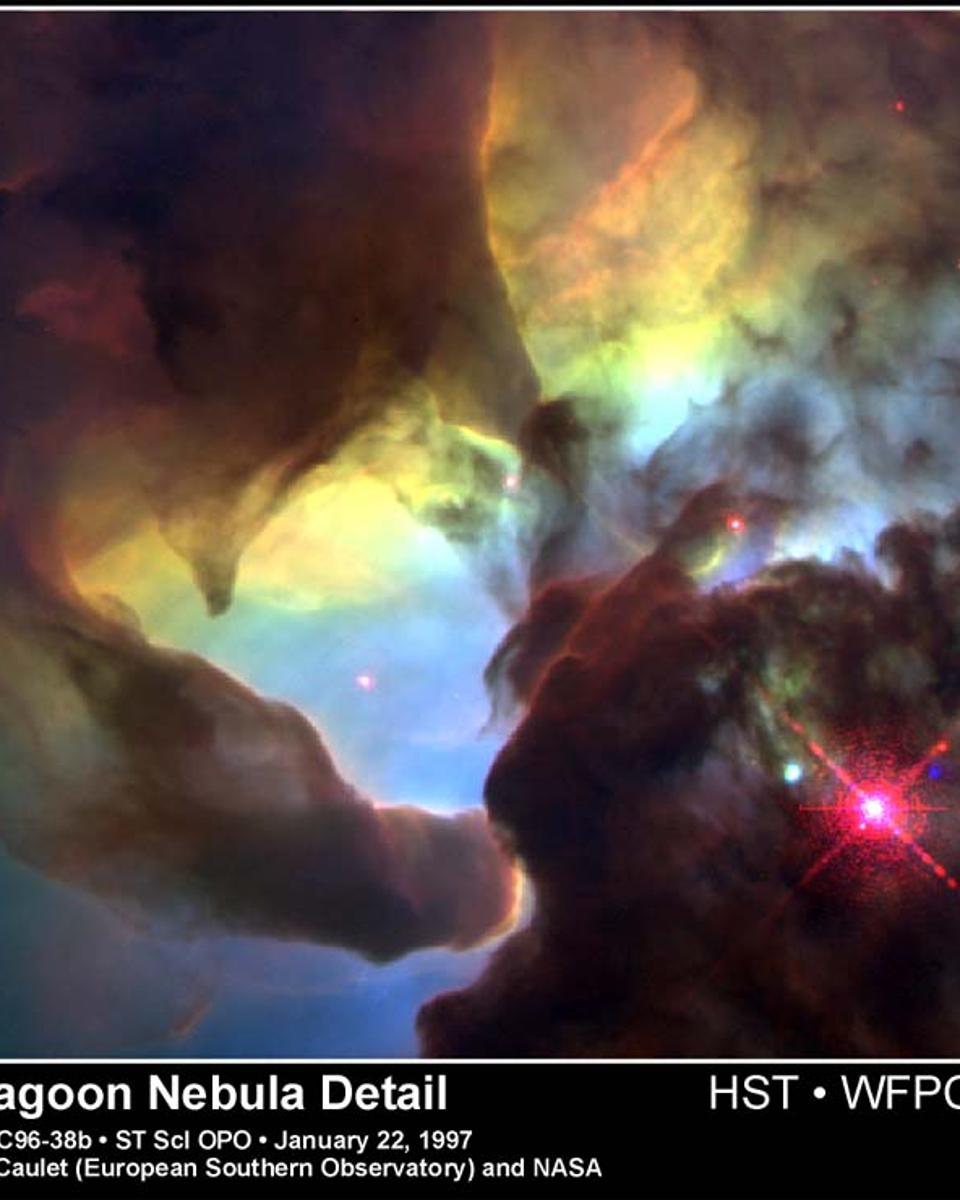
Twistin' By The Lagoon
The awesome spectacle of starbirth produces extreme stellar winds and intense energetic starlight -- bombarding dusty molecular clouds inside the Lagoon Nebula ( M8 ). At least…
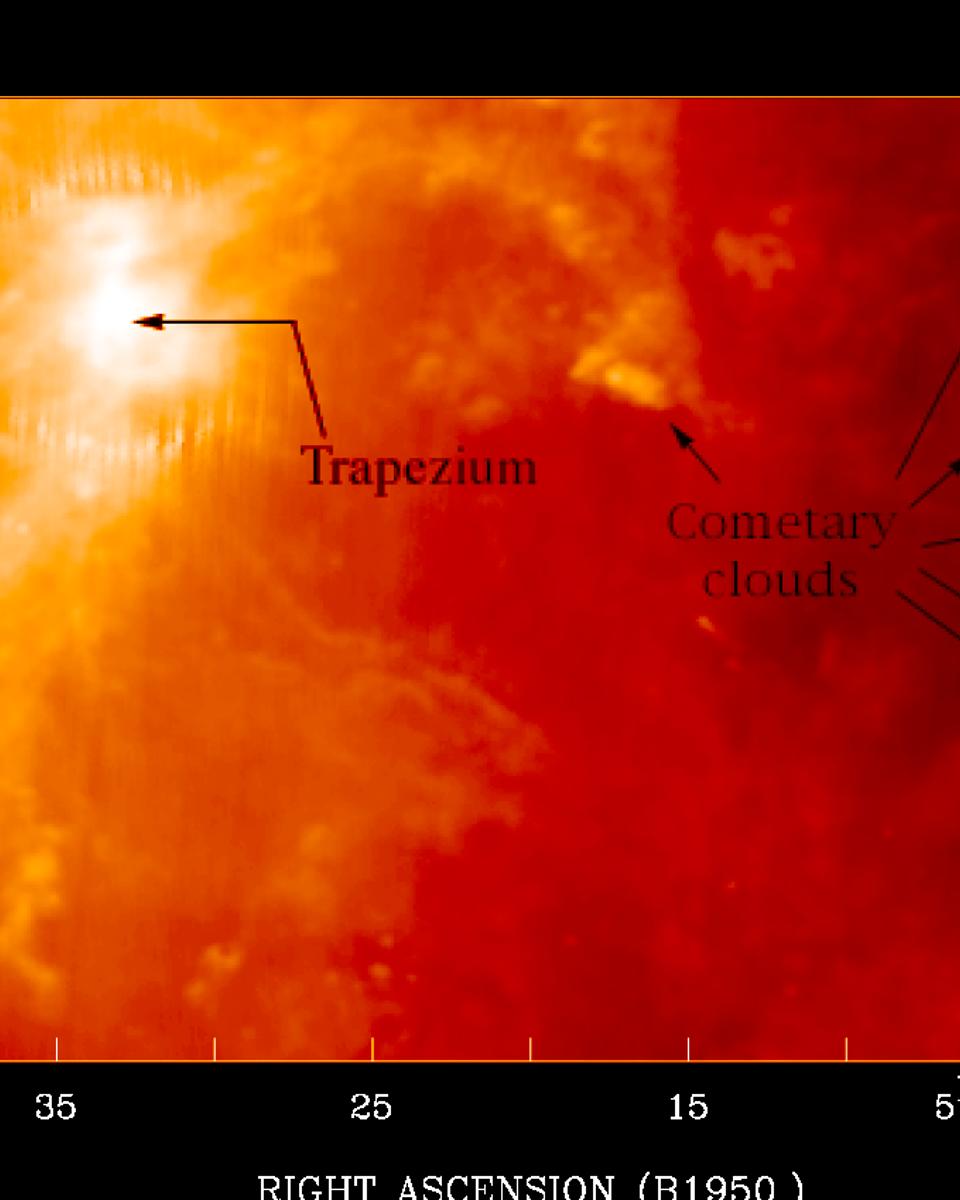
Cometary Globules In Orion
Intense ultraviolet light from massive, hot stars in the Orion region has sculpted and compressed clouds of dust and gas in to distinctively shaped Cometary Globules . Seen in…
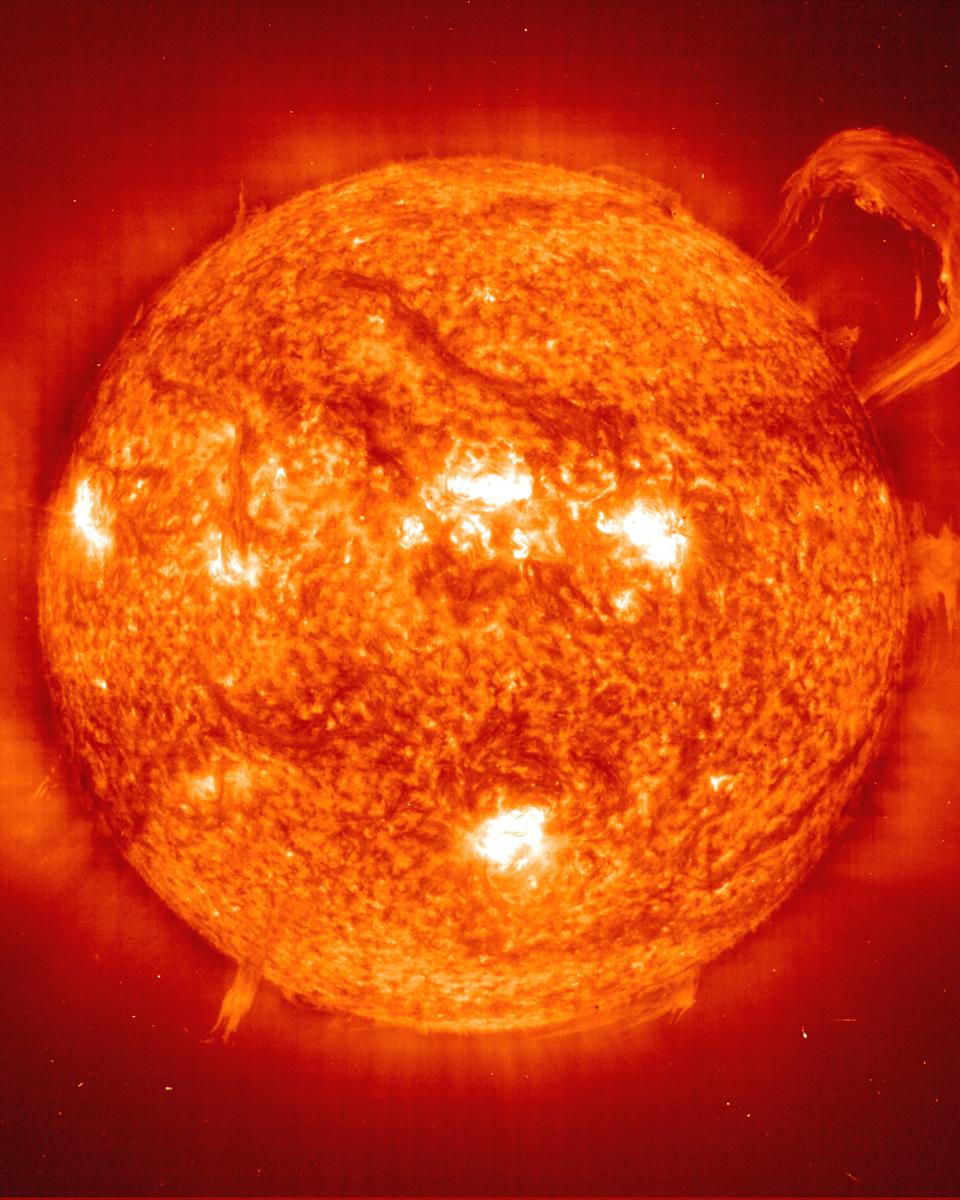
Equinox and Eruptive Prominence
Today, the Sun crosses the celestial equator and seasons change from Summer to Fall in the north and Winter to Spring in the southern hemisphere. Defined by the Sun's position in…
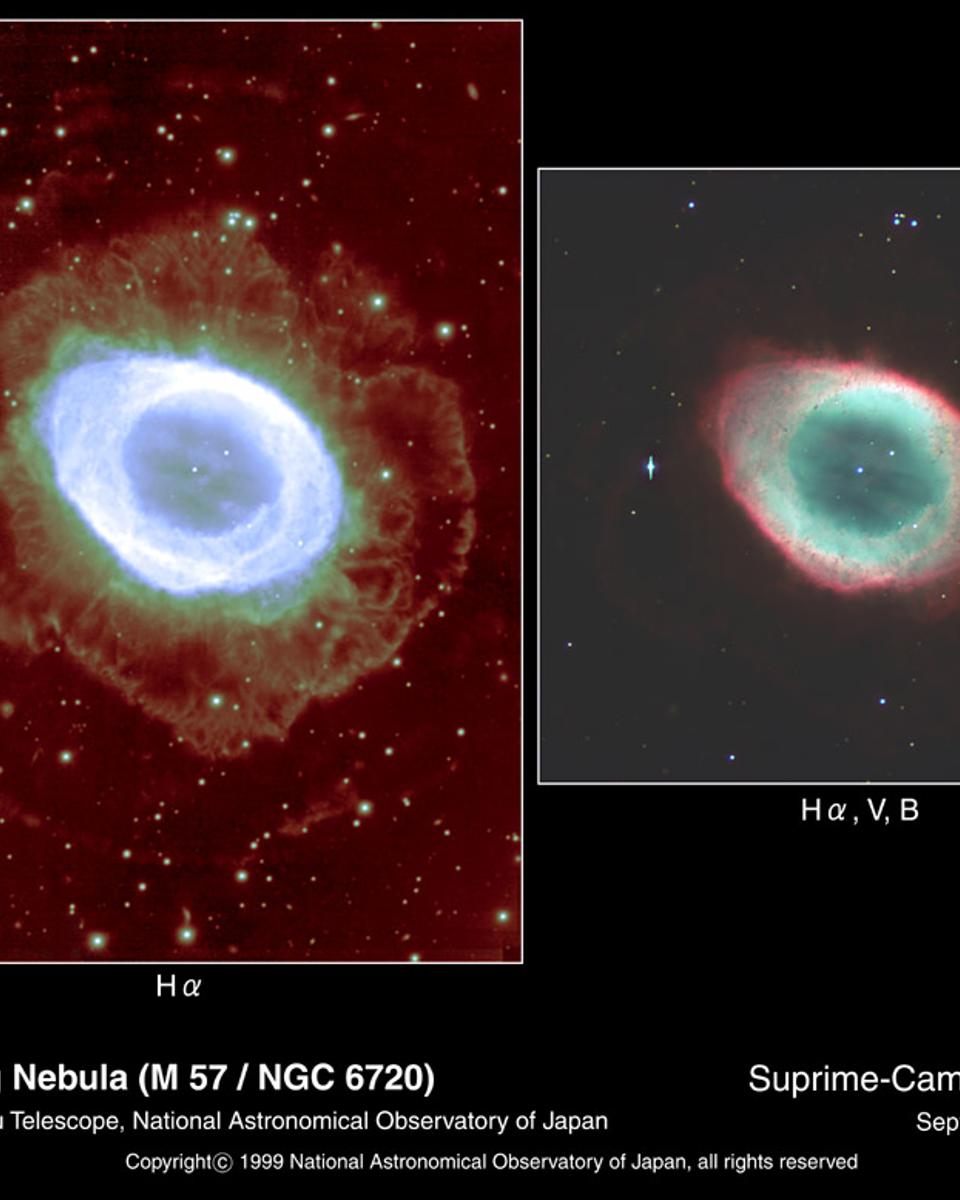
Halos Around the Ring Nebula
What's happened to the Ring Nebula? The familiar Ring that can be seen with a small back-yard telescope takes on a new look when viewed in dim light. The above recently-released,…
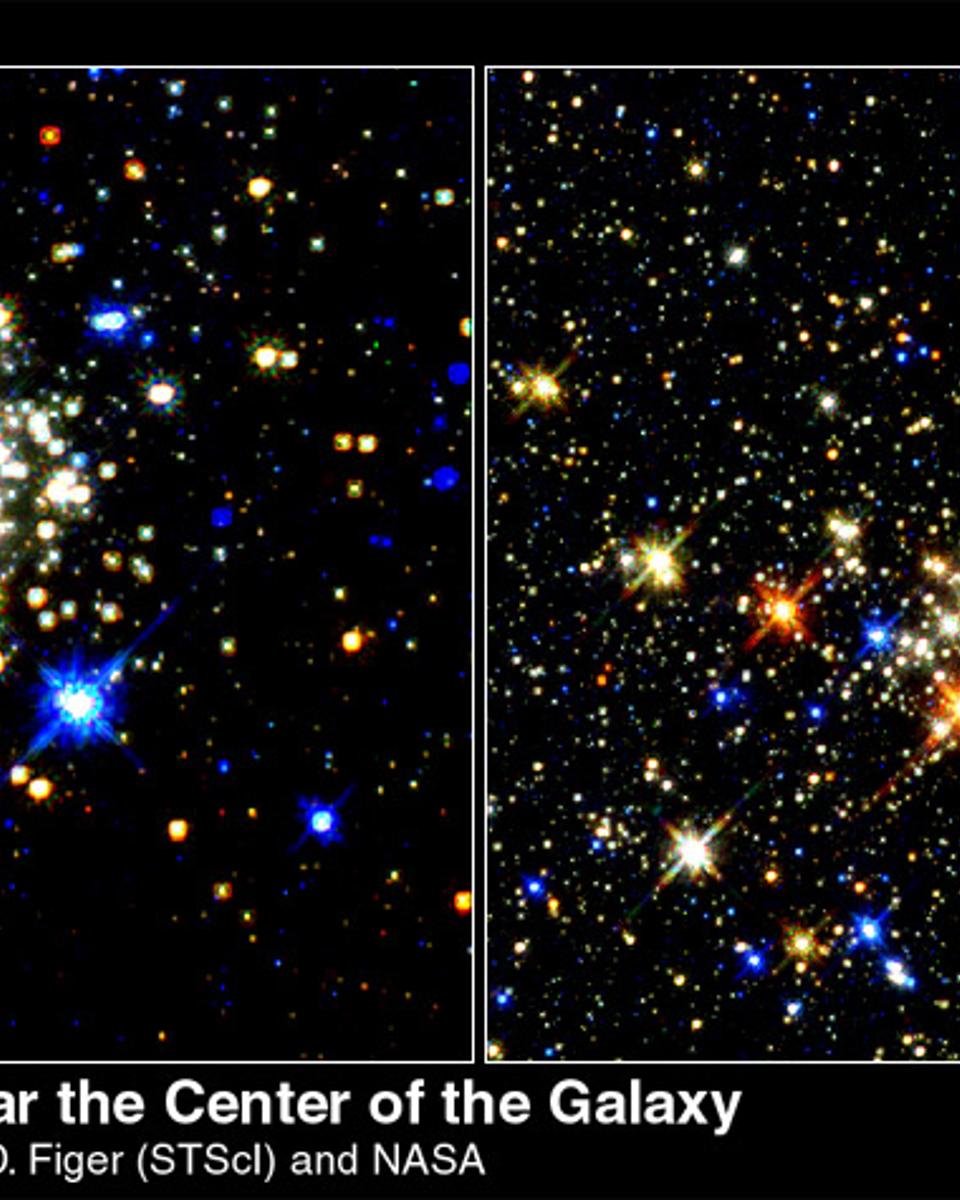
The Quintuplet Star Cluster
Bright clusters of stars form and disperse near the center of our Galaxy . Four million years ago the Quintuplet Cluster, pictured above , formed and is now slowly dispersing. The…
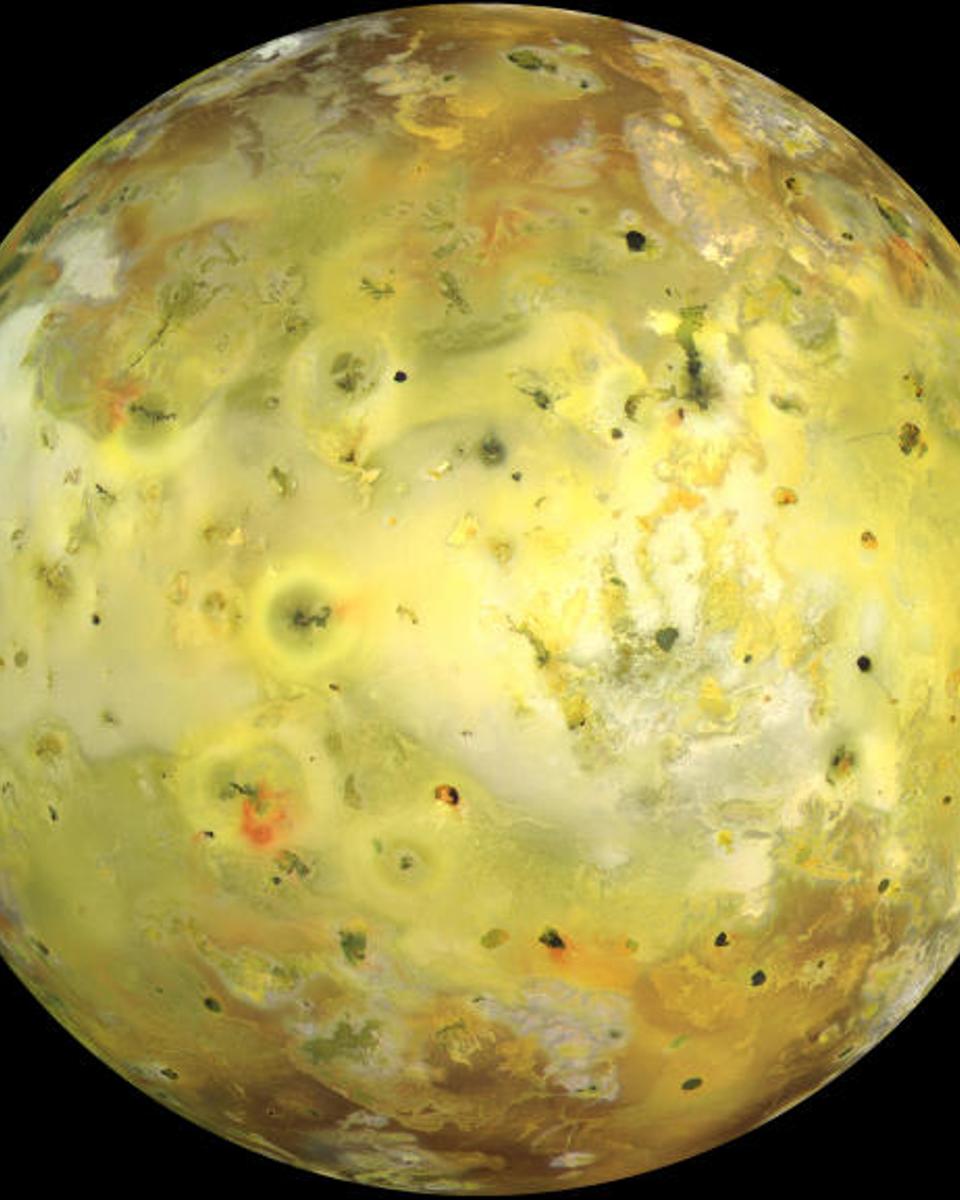
Io in True Color
The strangest moon in the Solar System is bright yellow. This recently released picture , showing Io's true colors, was taken in July by the Galileo spacecraft currently orbiting…
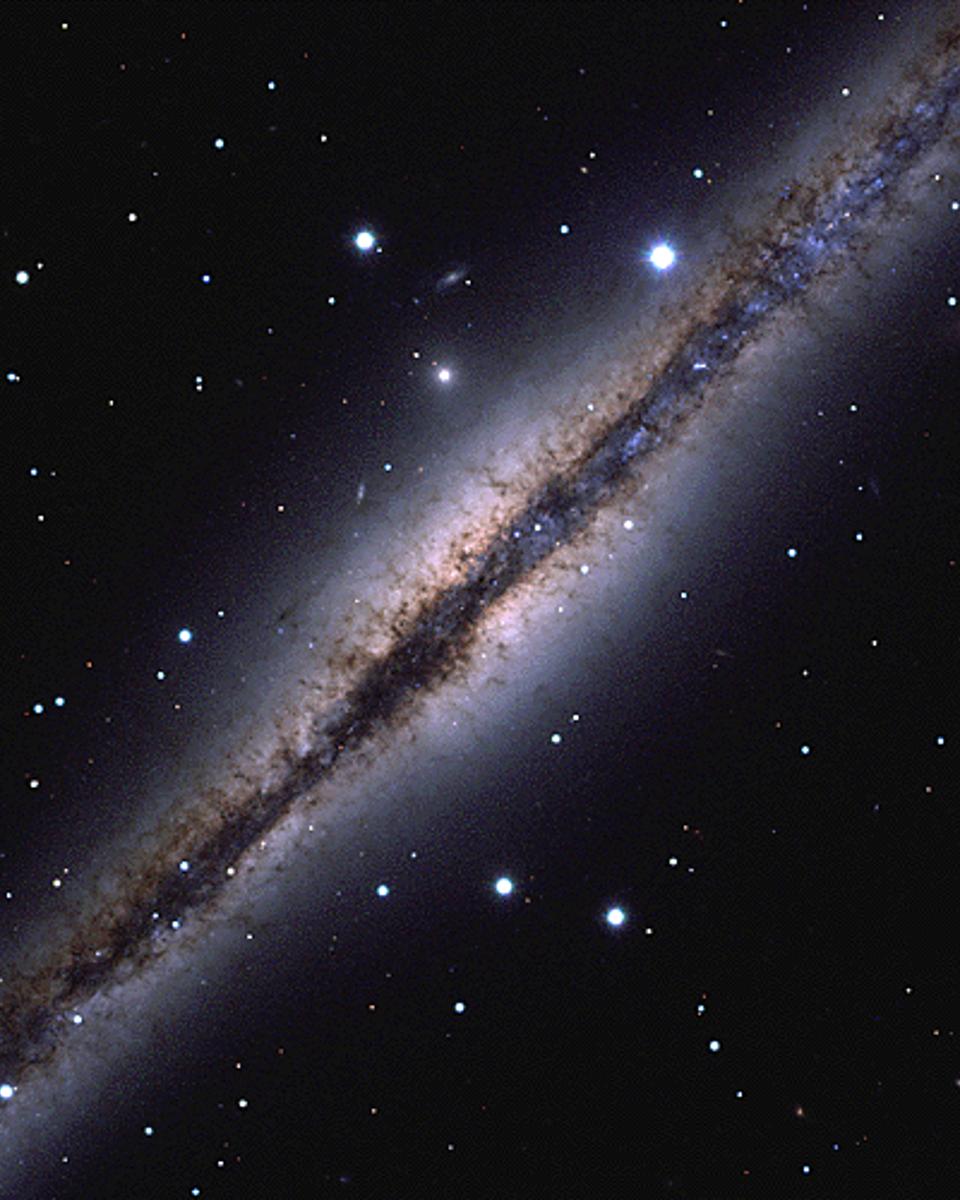
Interstellar Dust-Bunnies of NGC 891
What is going on in NGC 891 ? This galaxy appeared previously to be very similar to our own Milky Way Galaxy : a spiral galaxy seen nearly edge-on . However, recent…
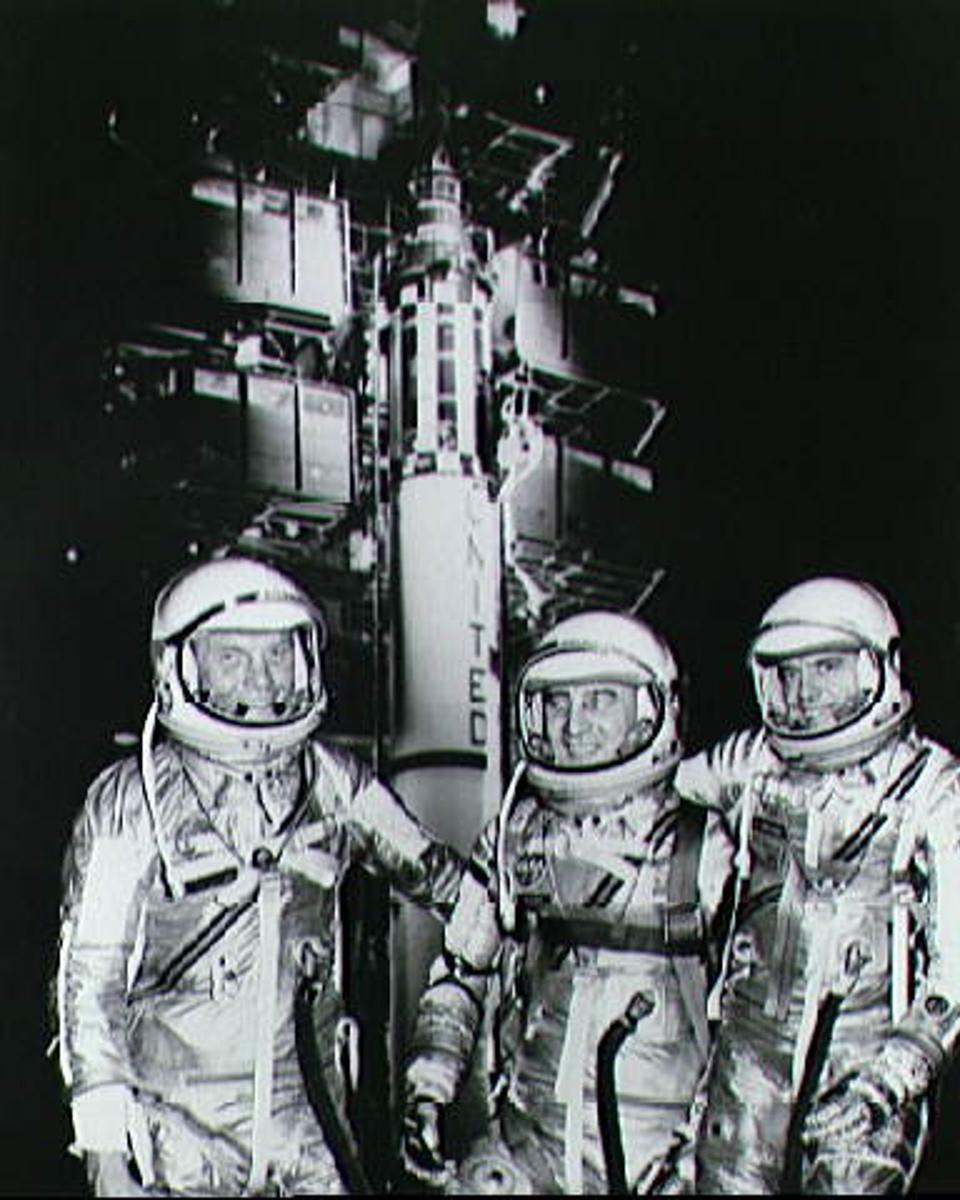
Mercury Astronauts and a Redstone
Space suited project Mercury astronauts John H. Glenn , Virgil I. Grissom , and Alan B. Shepard Jr. (left to right) are posing in front of a Redstone rocket in this vintage 1961…
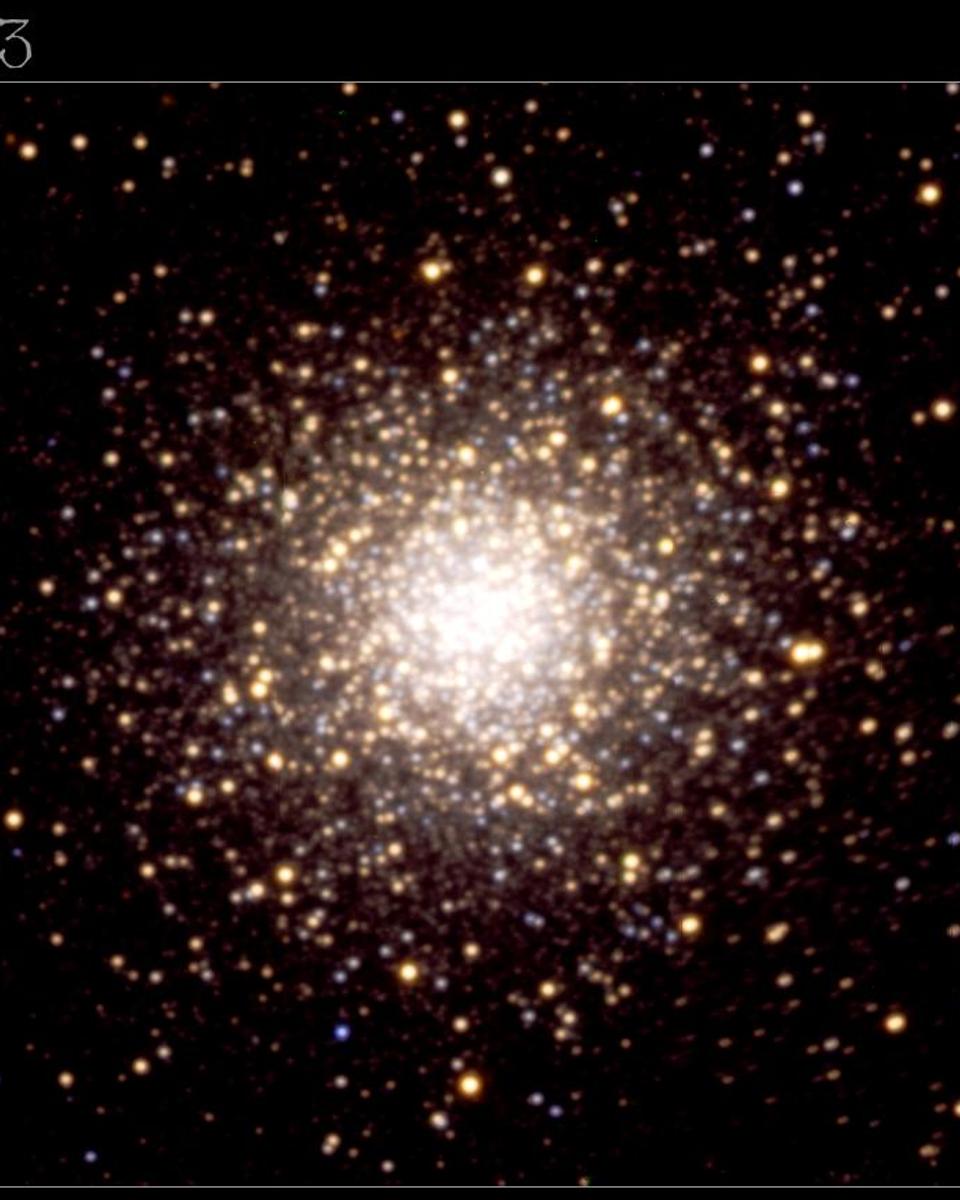
M3: Half A Million Stars
This immense ball of half a million stars older than the sun lies 30,000 light-years above the plane of our Galaxy. Cataloged as M 3 (and NGC 5272), it is one of about 250…
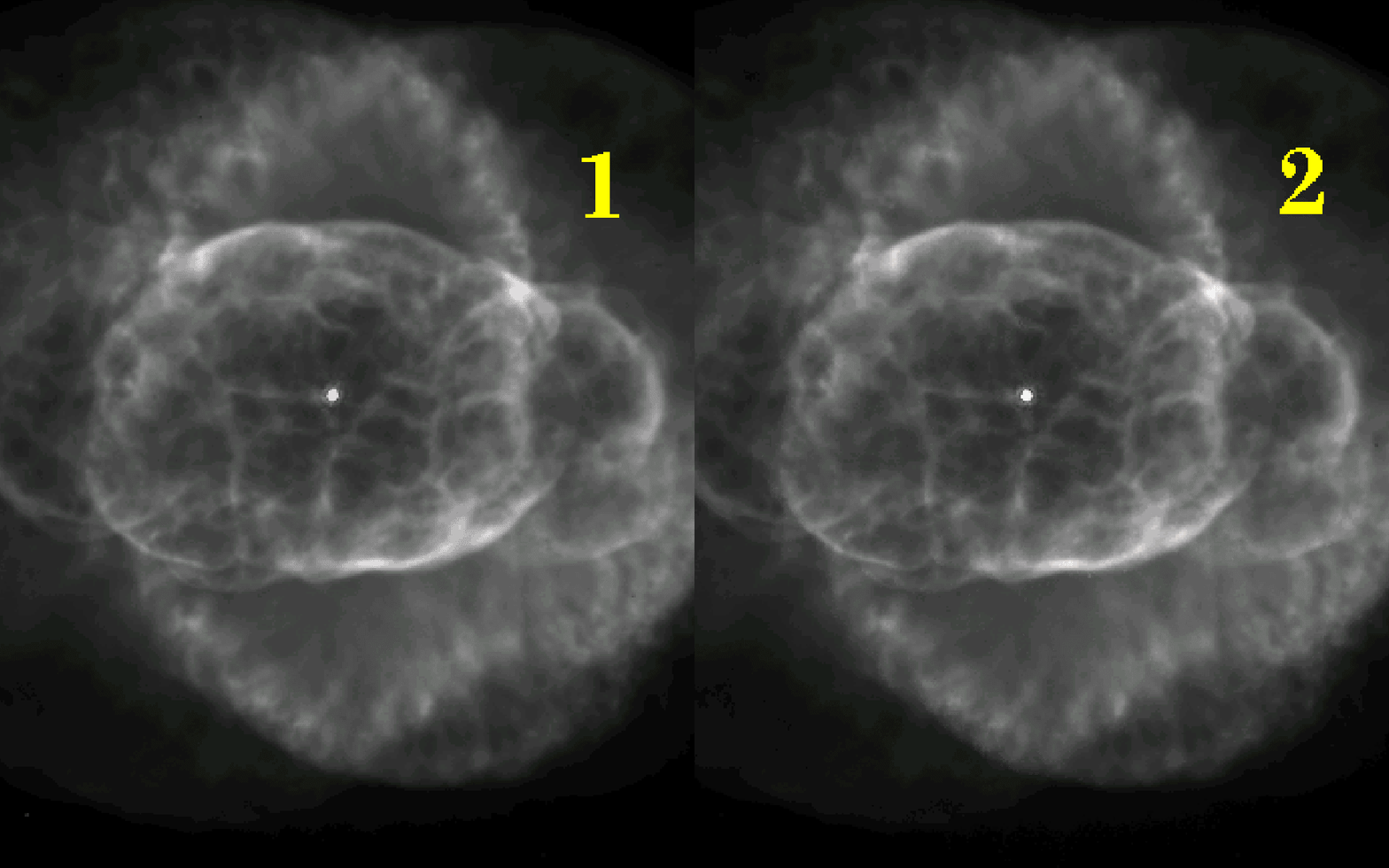
The Incredible Expanding Cat's Eye
Watch closely. As this animation blinks between two Hubble Space Telescope images of NGC 6543 - the first from 1994 and the second from 1997 - the intricate filaments of this…
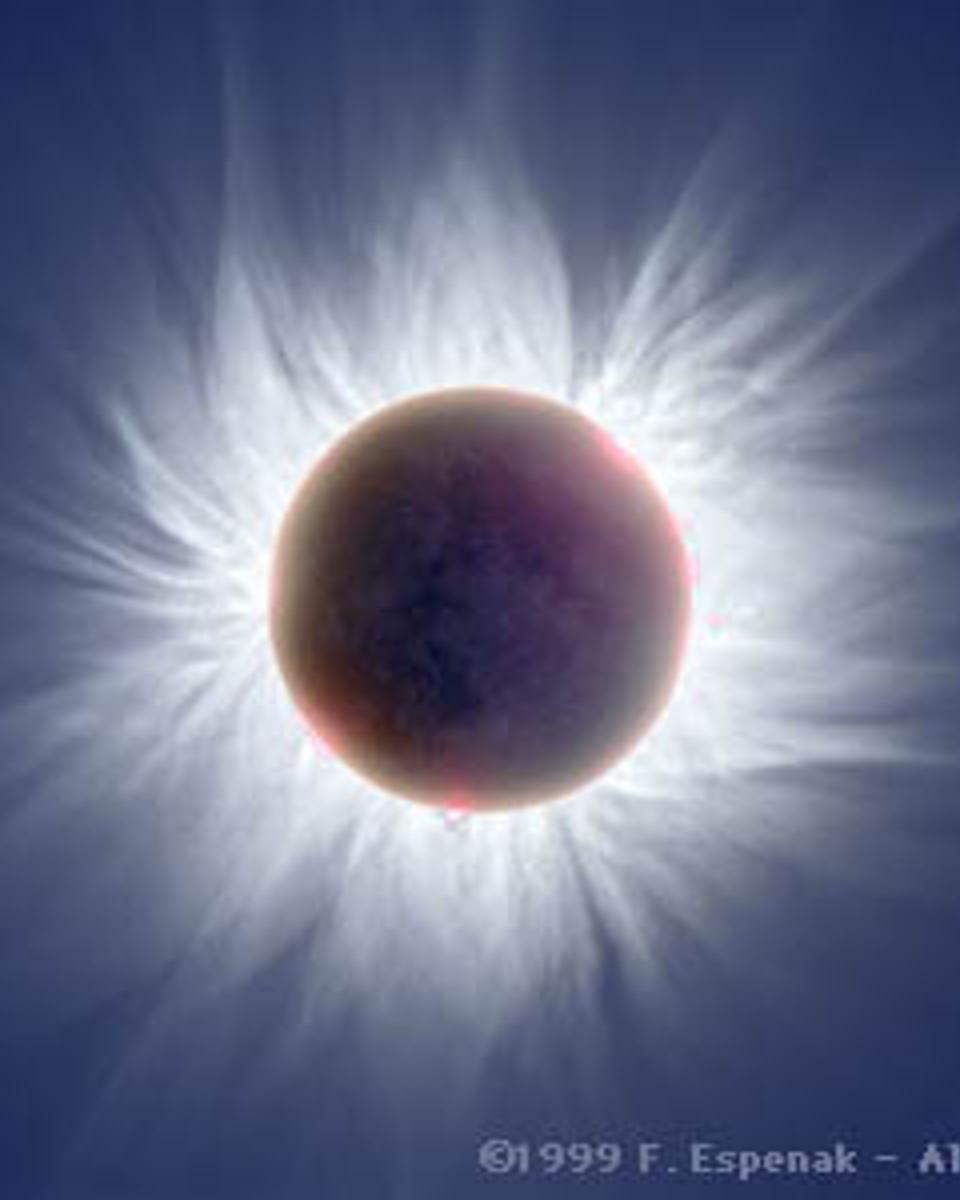
The Big Corona
Most photographs don't adequately portray the magnificence of the Sun 's corona. Seeing the corona first-hand during a total solar eclipse is best. The human eye can adapt to see…
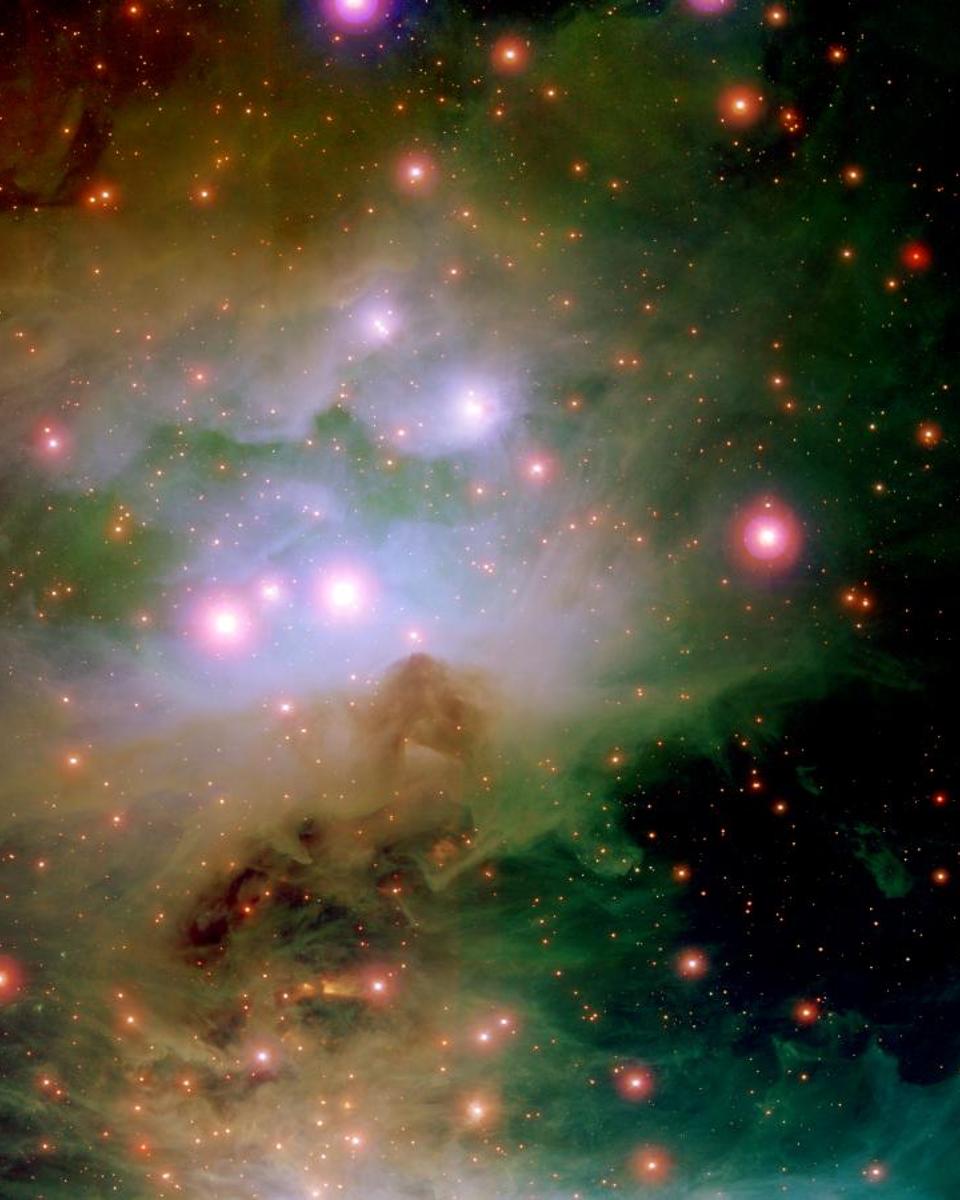
The Colorful Orion Nebula
The Great Nebula in Orion is a colorful place. Visible to the unaided eye as a fuzzy patch in the constellation of Orion , this image taken with the Big Throughput Camera shows…
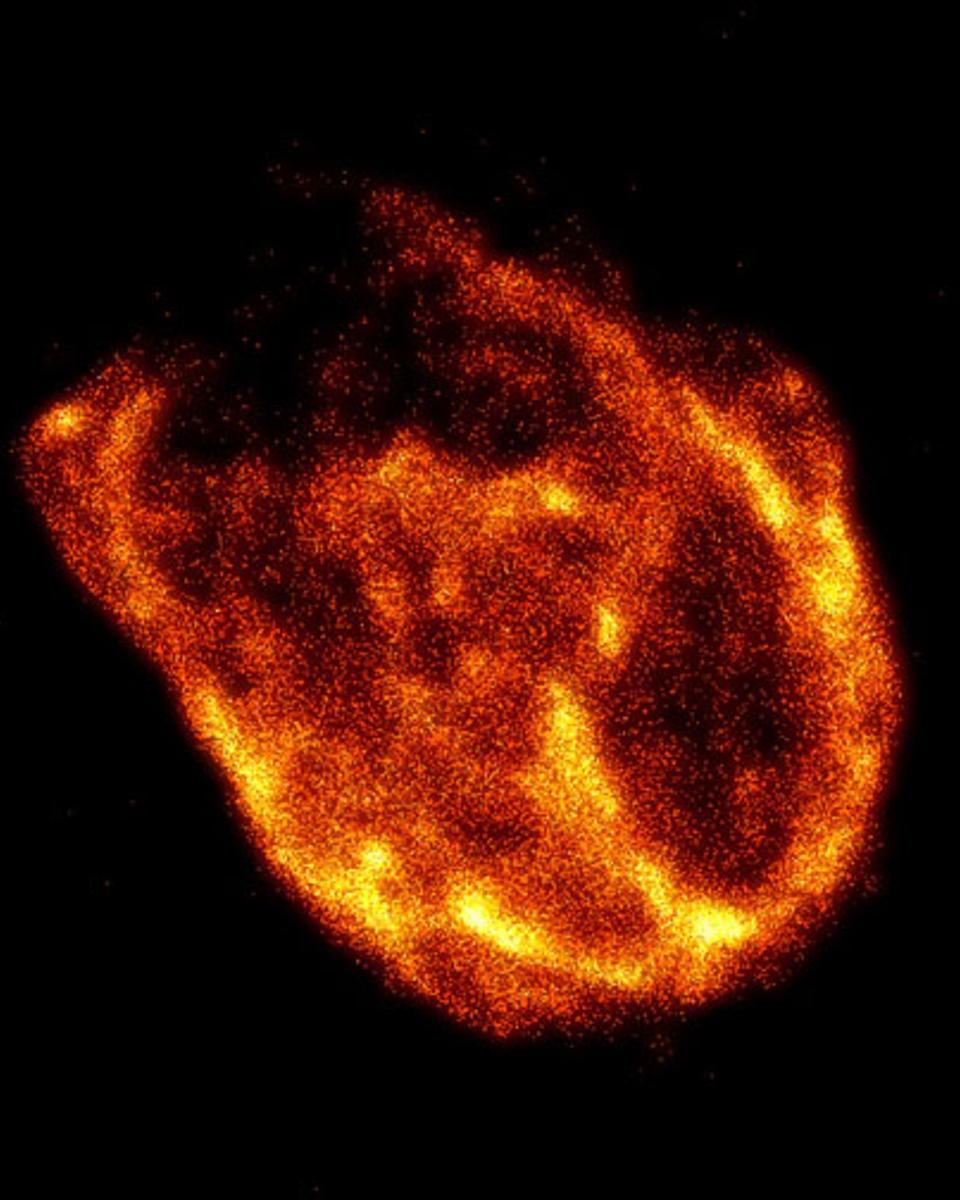
Supernova Remnant N132D in X-Rays
Thousands of years after a star explodes, an expanding remnant may still glow brightly. Such is the case with N132D , a supernova remnant located in the neighboring Large…
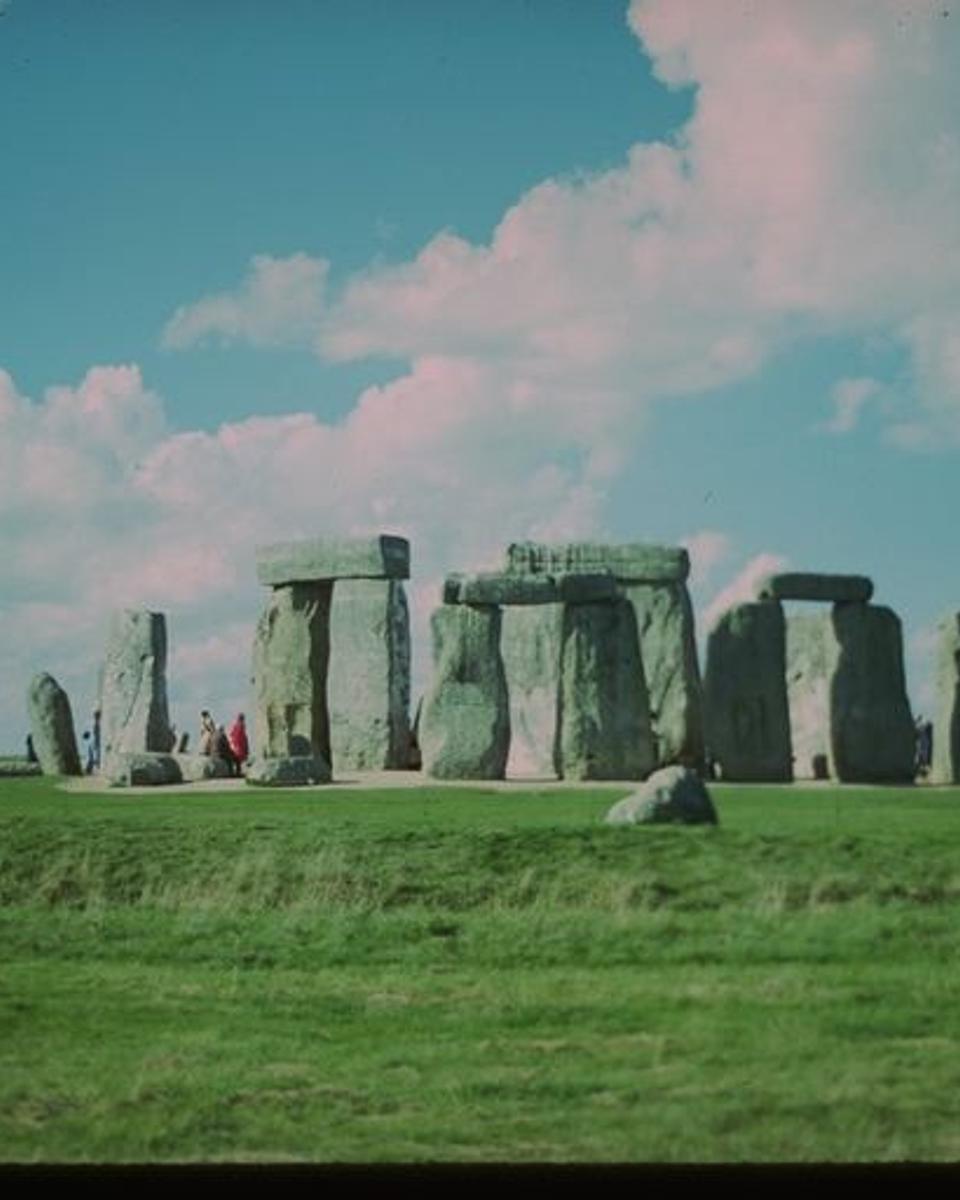
Stonehenge: Ancient Monument to the Sun
Stonehenge consists of large carved stones assembled about 4000 years ago. Long before modern England was established, ancient inhabitants somehow moved 25 ton rocks nearly 20…
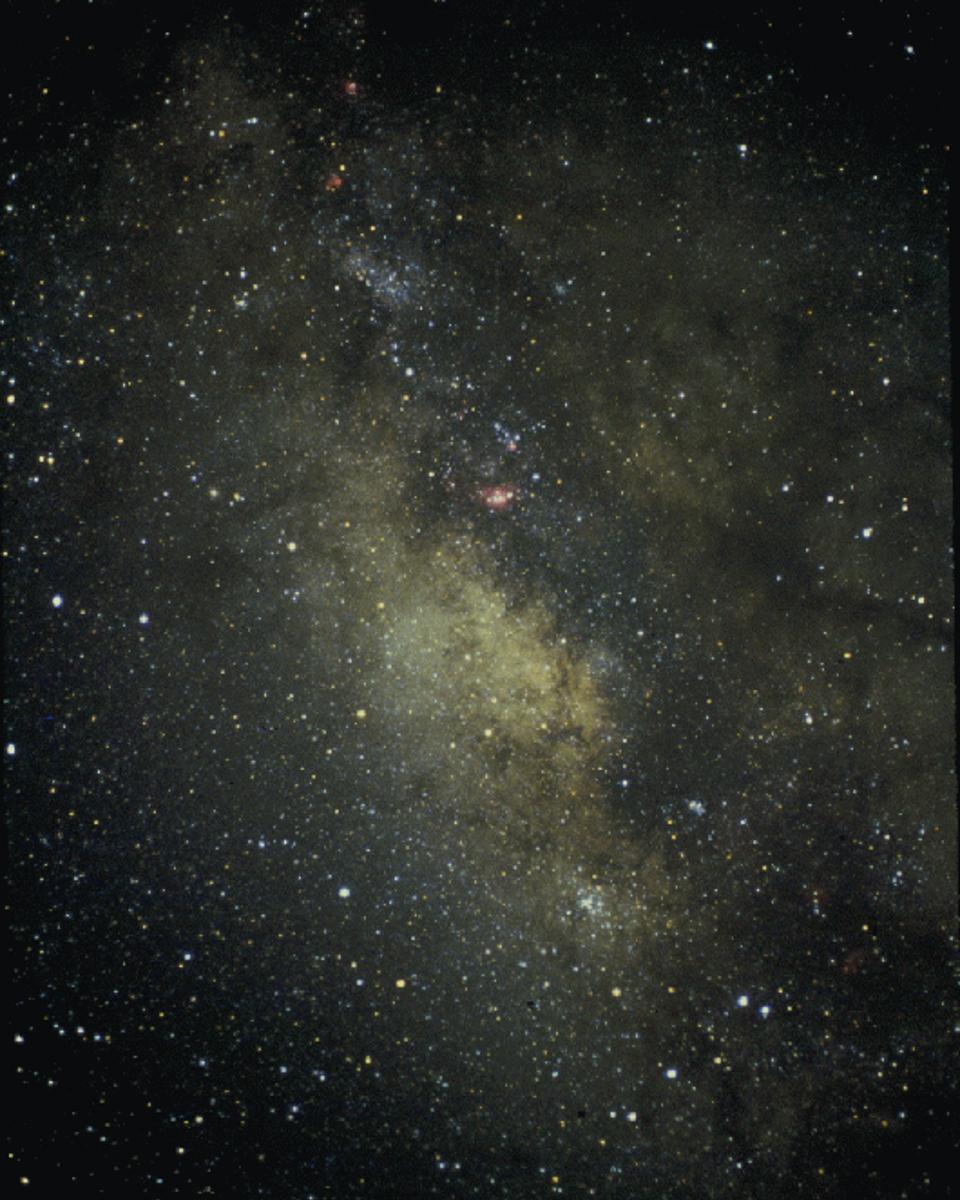
The Annotated Galactic Center
The sky toward the center of our Galaxy is filled with a wide variety of celestial wonders . Many are easily visible with binoculars. Constellations near the galactic center…
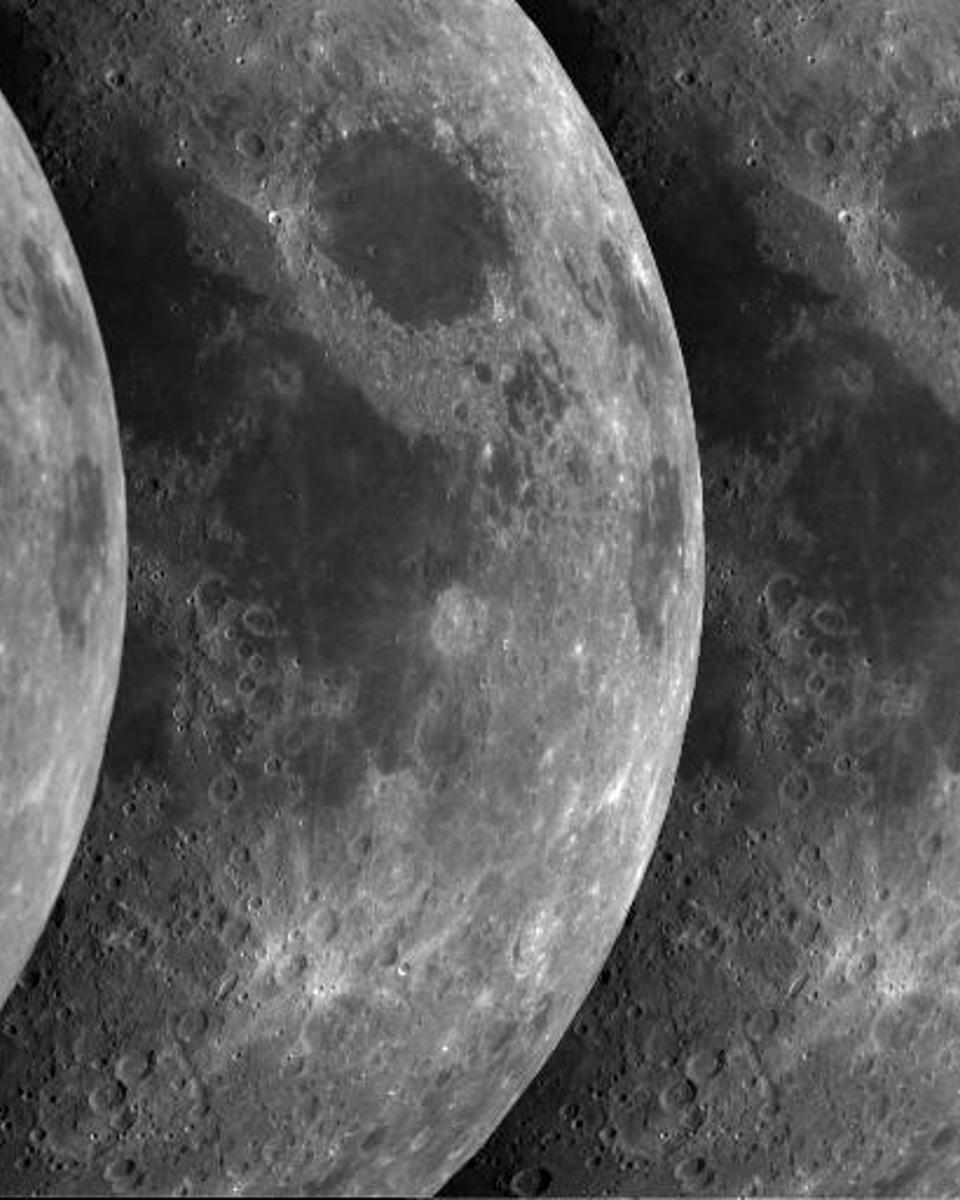
Cassini Images The Moon
On August 18, the Cassini spacecraft flew by the Earth and Moon , then continued on its way to the outer solar system. Near its closest approach to the Moon , a distance of about…
Viewing discoveries from 3 October 1999 through 10 September 1999.