Browse NASA Astronomy Picture of the Day archive by date and media: Archive Discoveries
Browse the NASA APOD archive without needing the exact date first. Filter by media type and keep moving deeper into older images and videos.
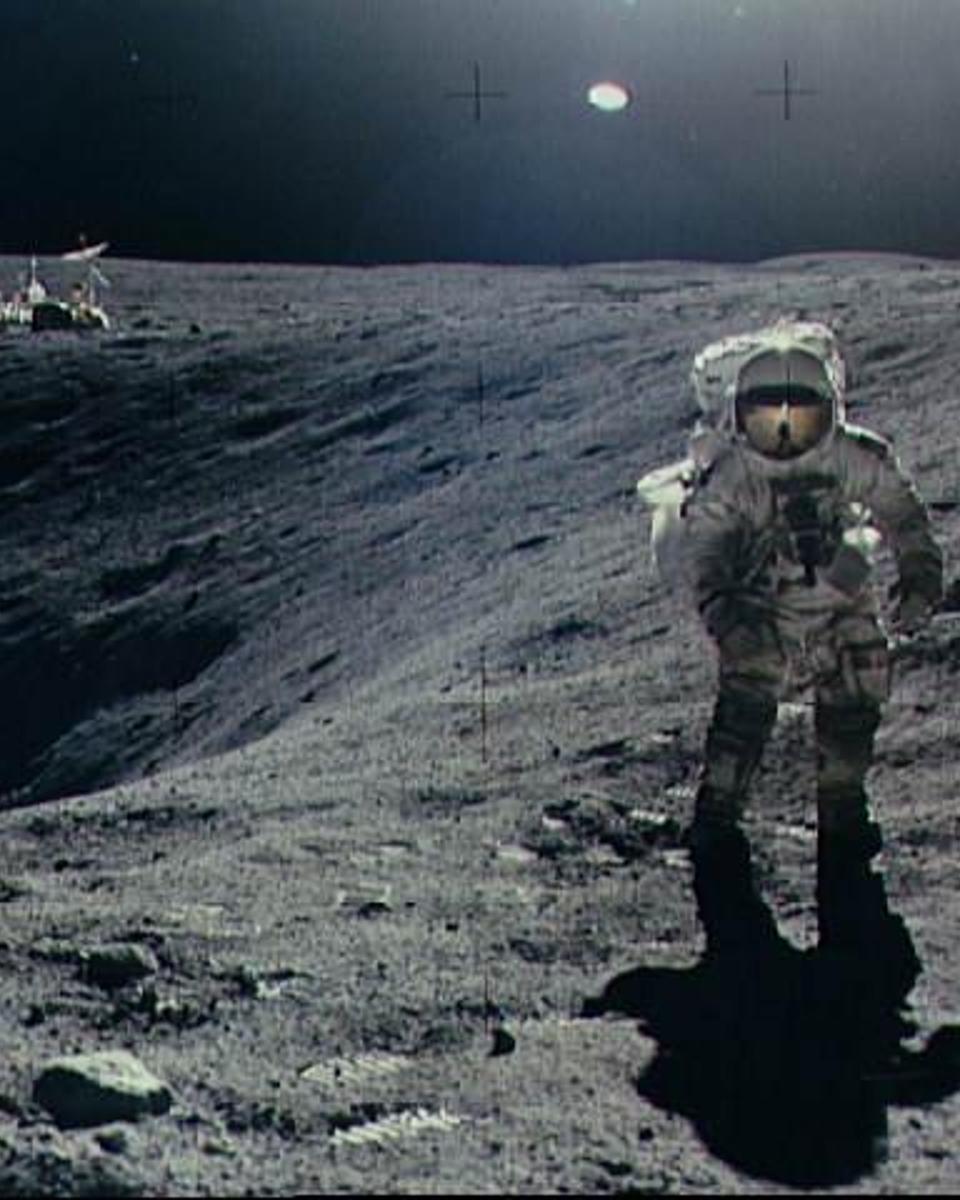
Apollo 16: Exploring Plum Crater
Apollo 16 spent three days on Earth's Moon in April 1972. The fifth lunar landing mission out of six, Apollo 16 was famous for deploying and using an ultraviolet telescope as the…
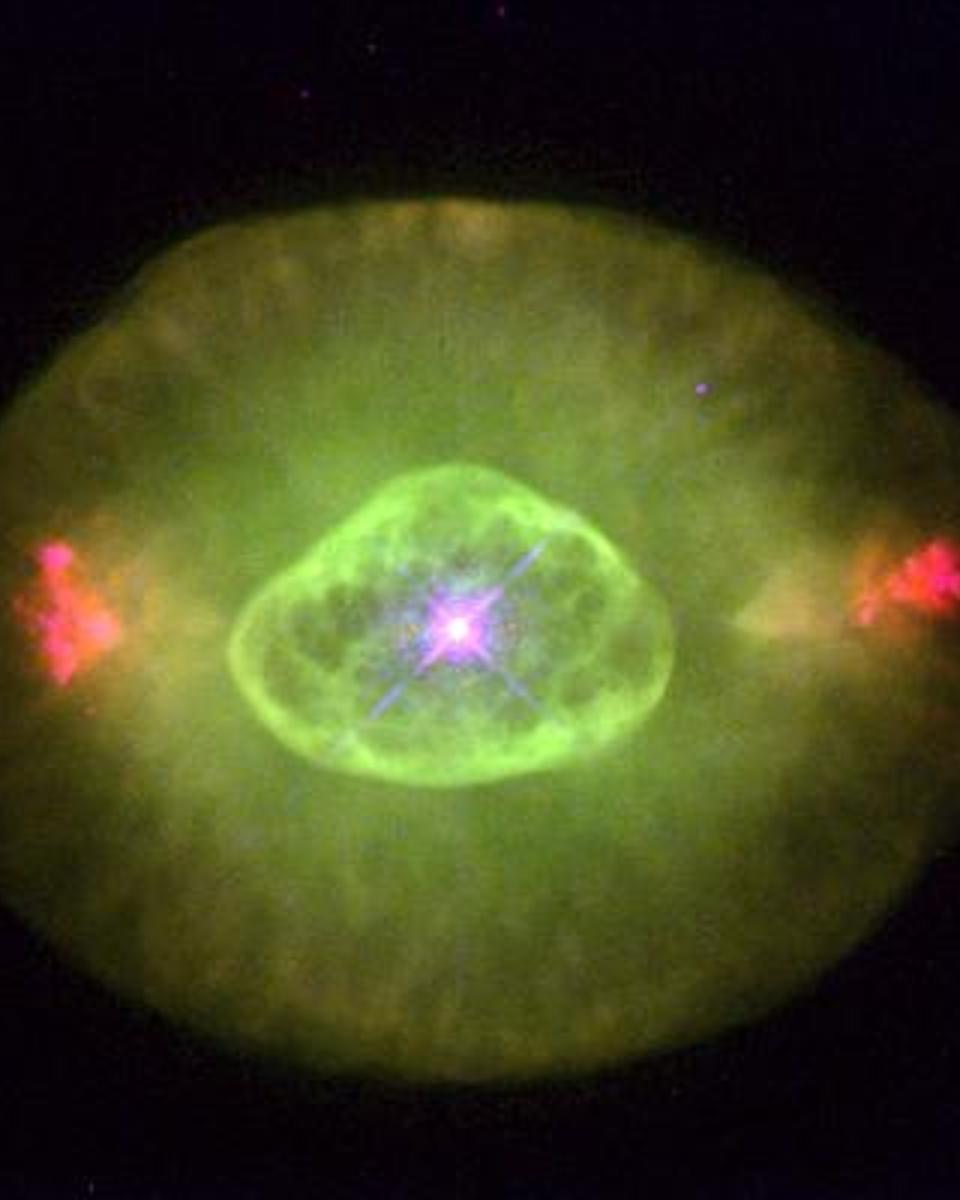
NGC 6826: The Blinking Eye
The colorful planetary nebula phase of a sun-like star's life is brief . Almost in the “blink of an eye” - cosmically speaking - the star's outer layers are cast off, forming an…
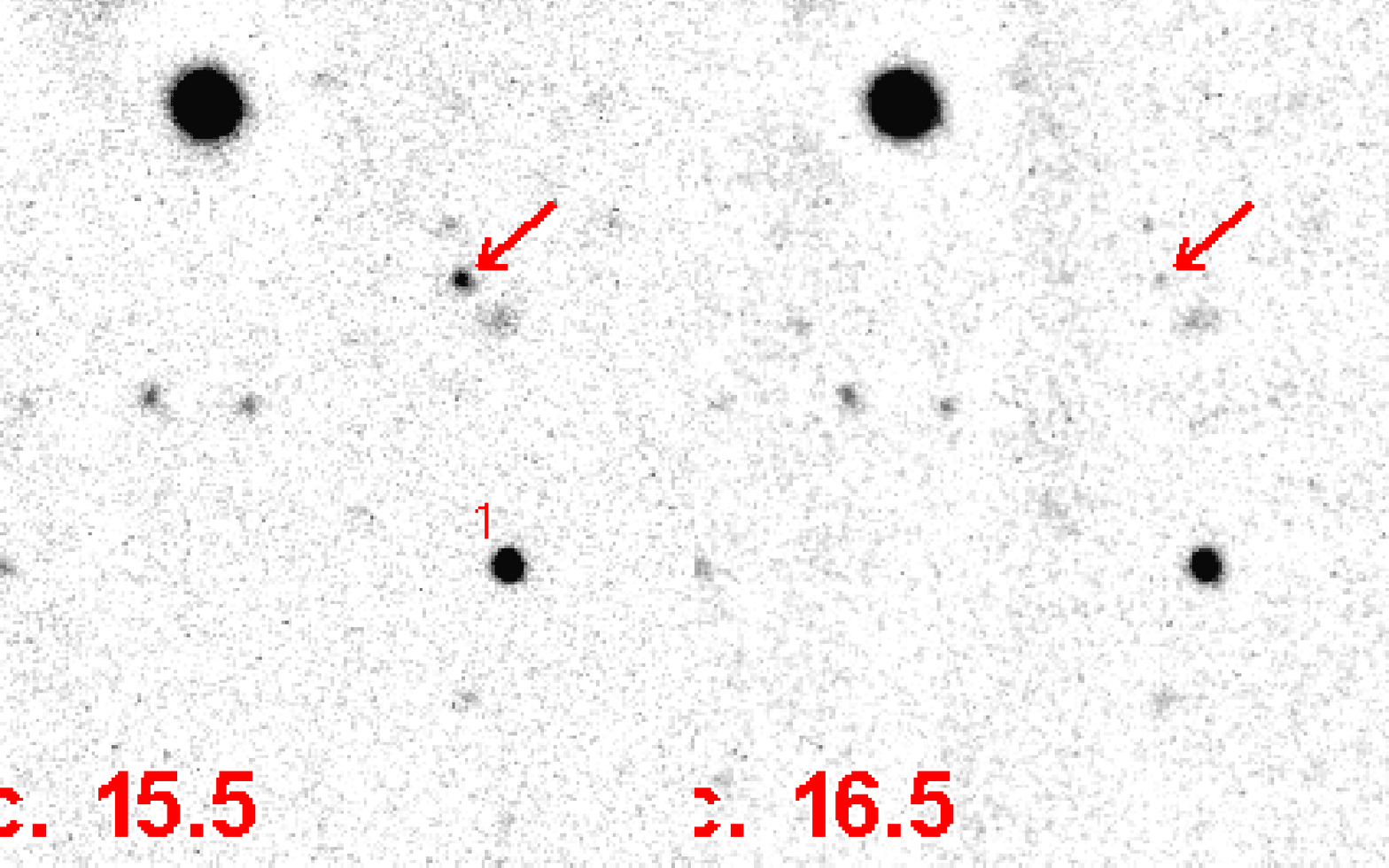
Gamma-Ray Burster
Gamma-ray bursts seem to be the most powerful explosions in the Universe. Yet their sources continue to elude researchers who stand in awe and frustration at the bursts'…
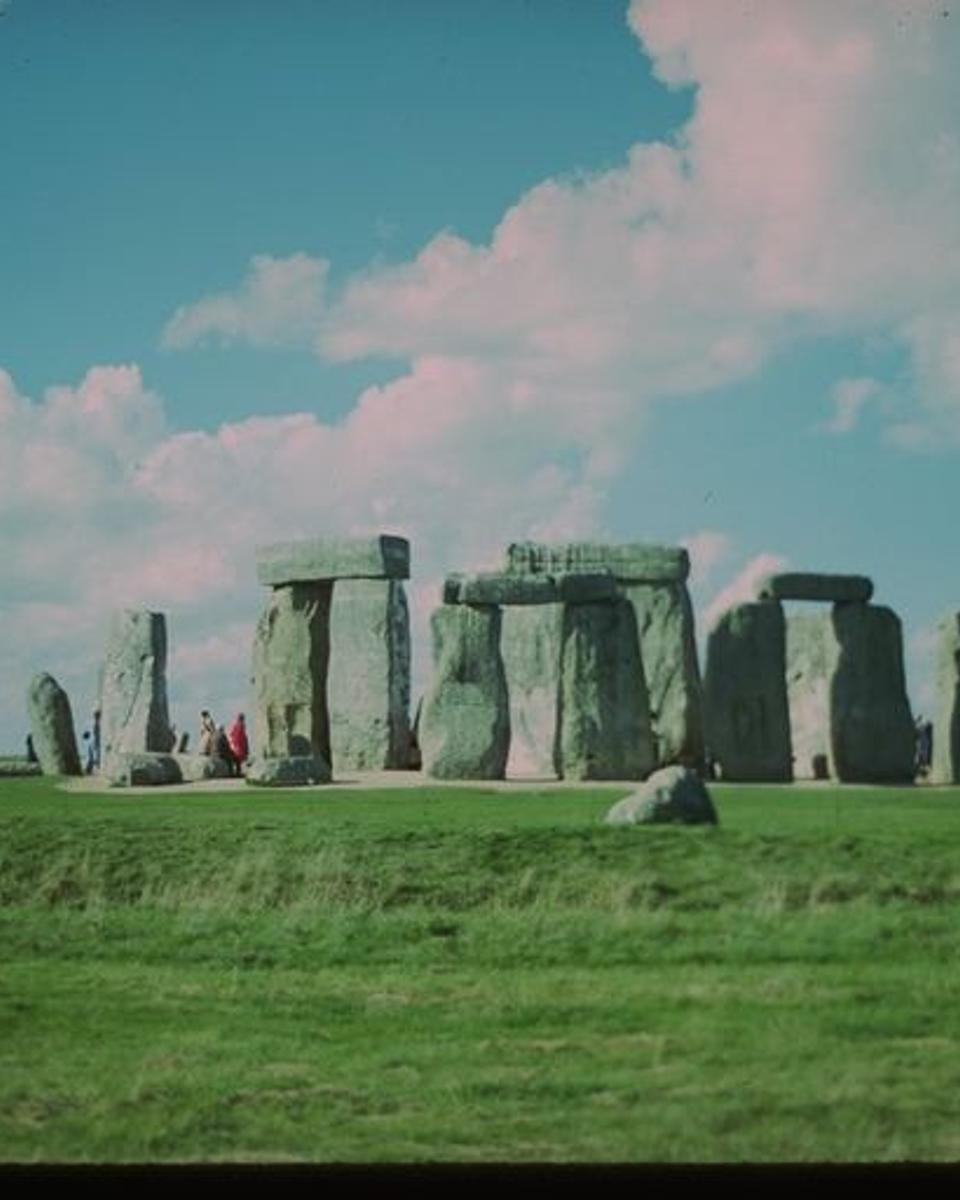
Stonehenge: Ancient Monument to the Sun
Stonehenge consists of large carved stones assembled about 4000 years ago. Long before modern England was established, ancient inhabitants somehow moved 25 ton rocks nearly 20…
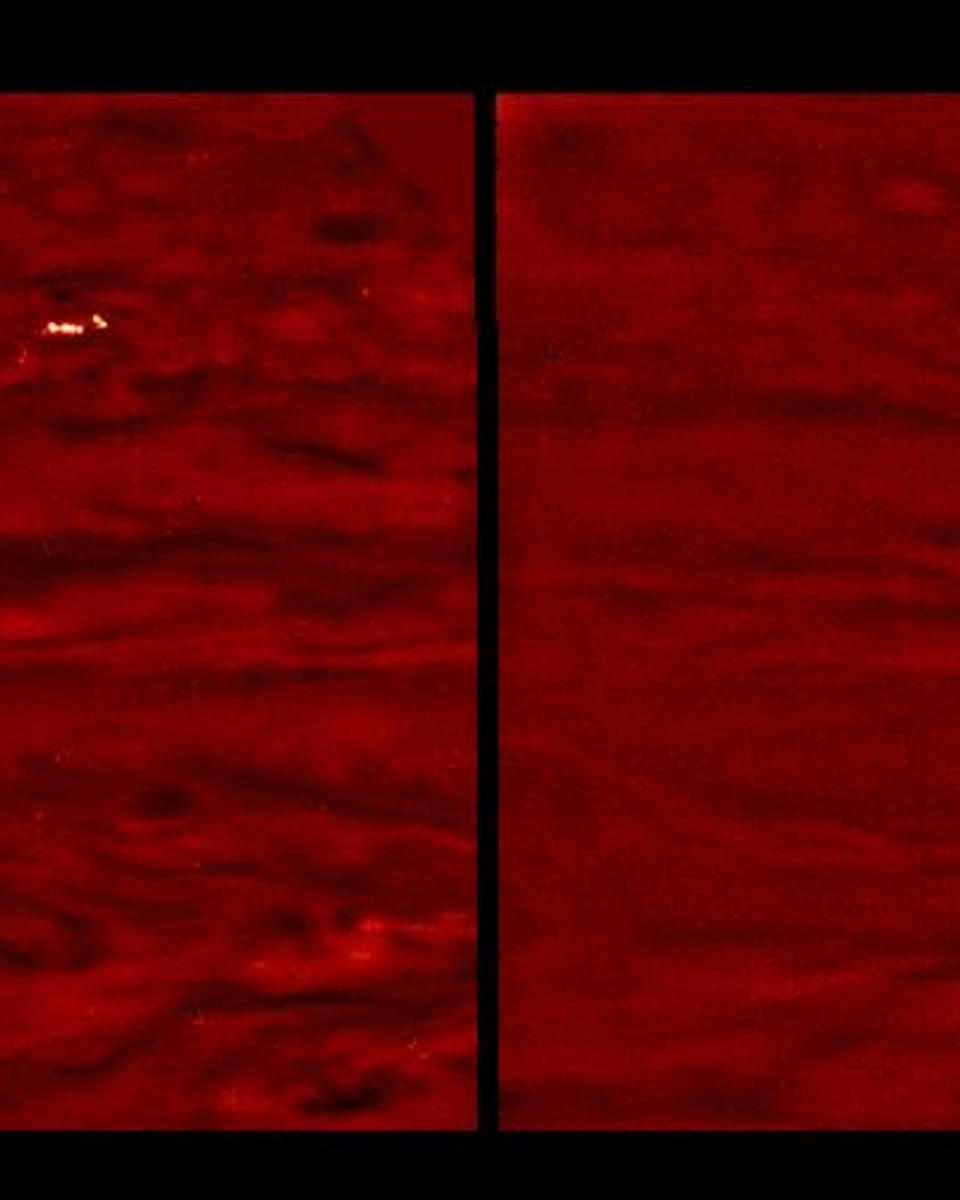
Night Lightning on Jupiter
Why is there lightning on Jupiter ? Lightning is a sudden rush of electrically charged particles from one location to another. To create lightning , charges must first separate…
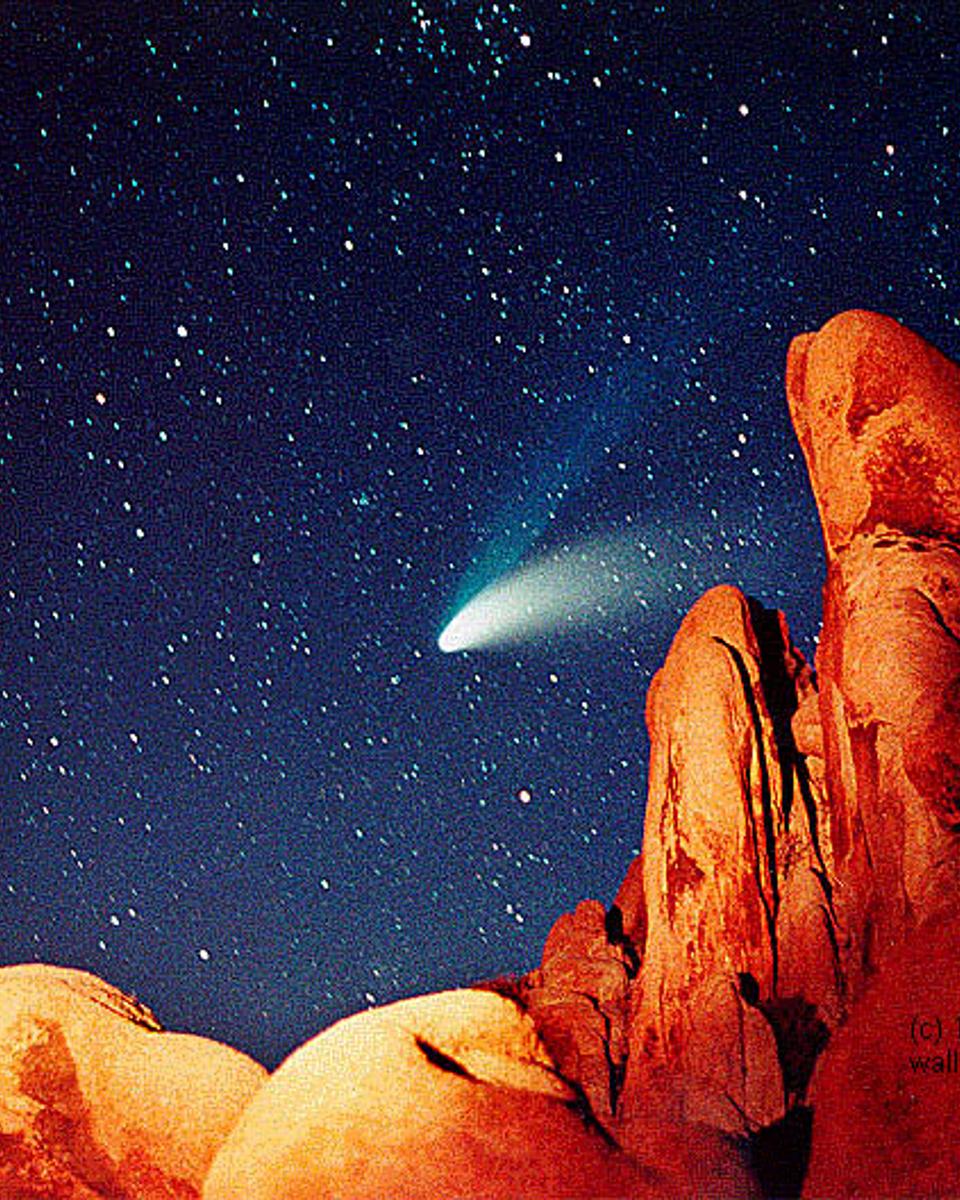
A Farewell to Tails
As 1997 fades, so does the Great Comet of 1997: Comet Hale-Bopp . Discovered even before the Great Comet of 1996 , Comet Hale-Bopp became the brightest comet since 1976 . Many…
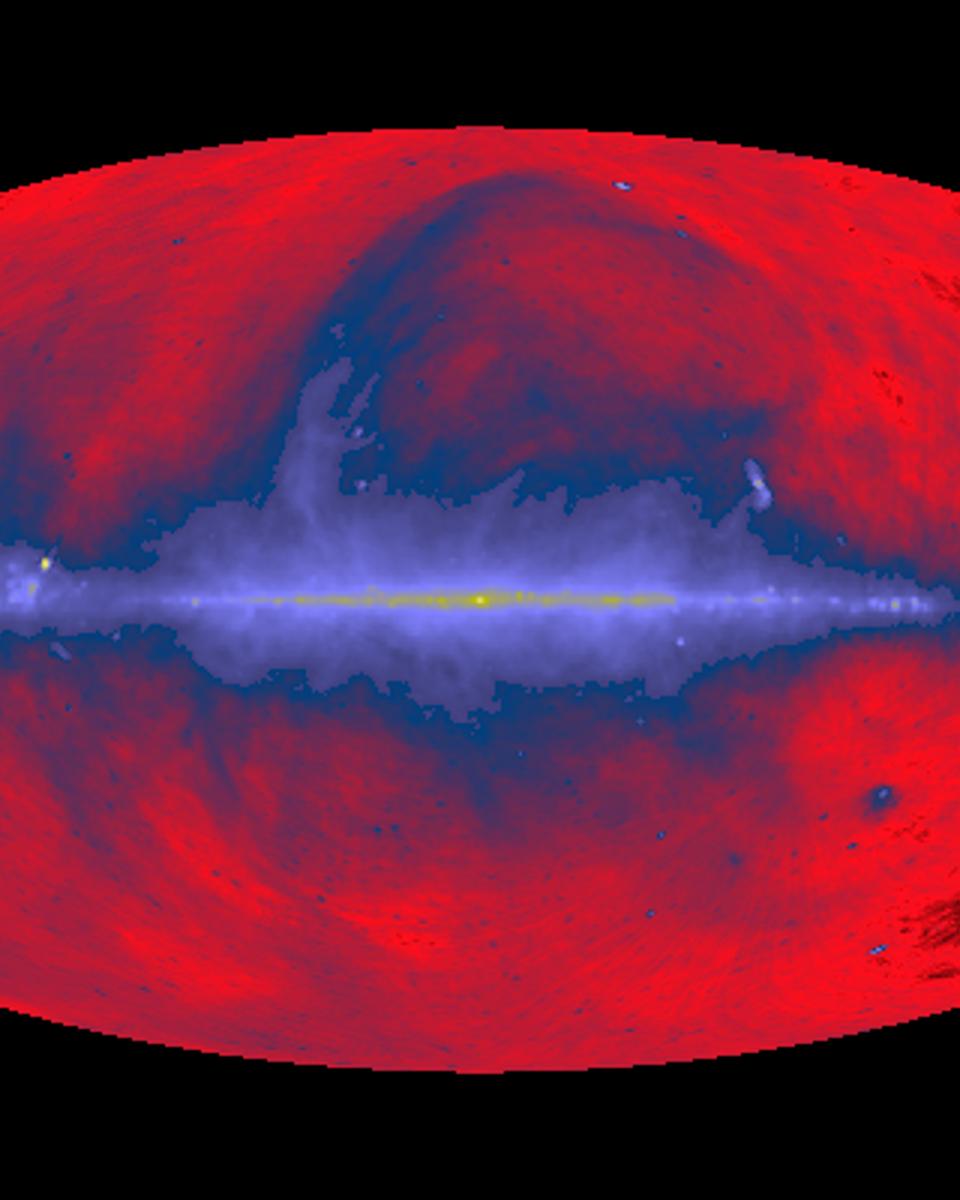
The Radio Sky: Tuned to 408MHz
Tune your radio telescope to 408MHz (408 million cycles per second) and check out the Radio Sky! You should find that frequency on your dial somewhere between US broadcast…
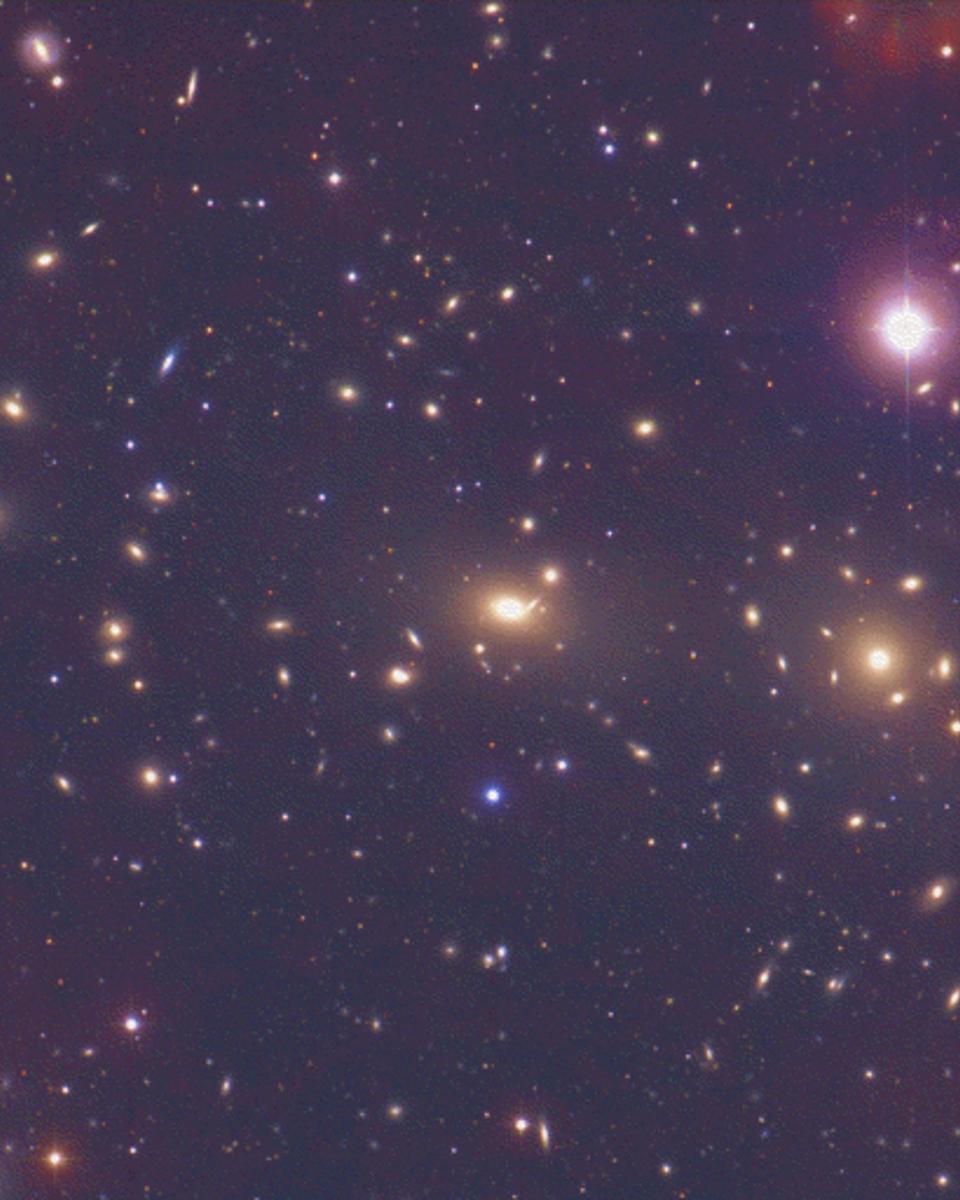
The Coma Cluster of Galaxies
Almost every object in the above photograph is a galaxy. The Coma Cluster of Galaxies pictured is one of the densest clusters known - it contains thousands of galaxies . Each of…
Phi Persei: Double Star
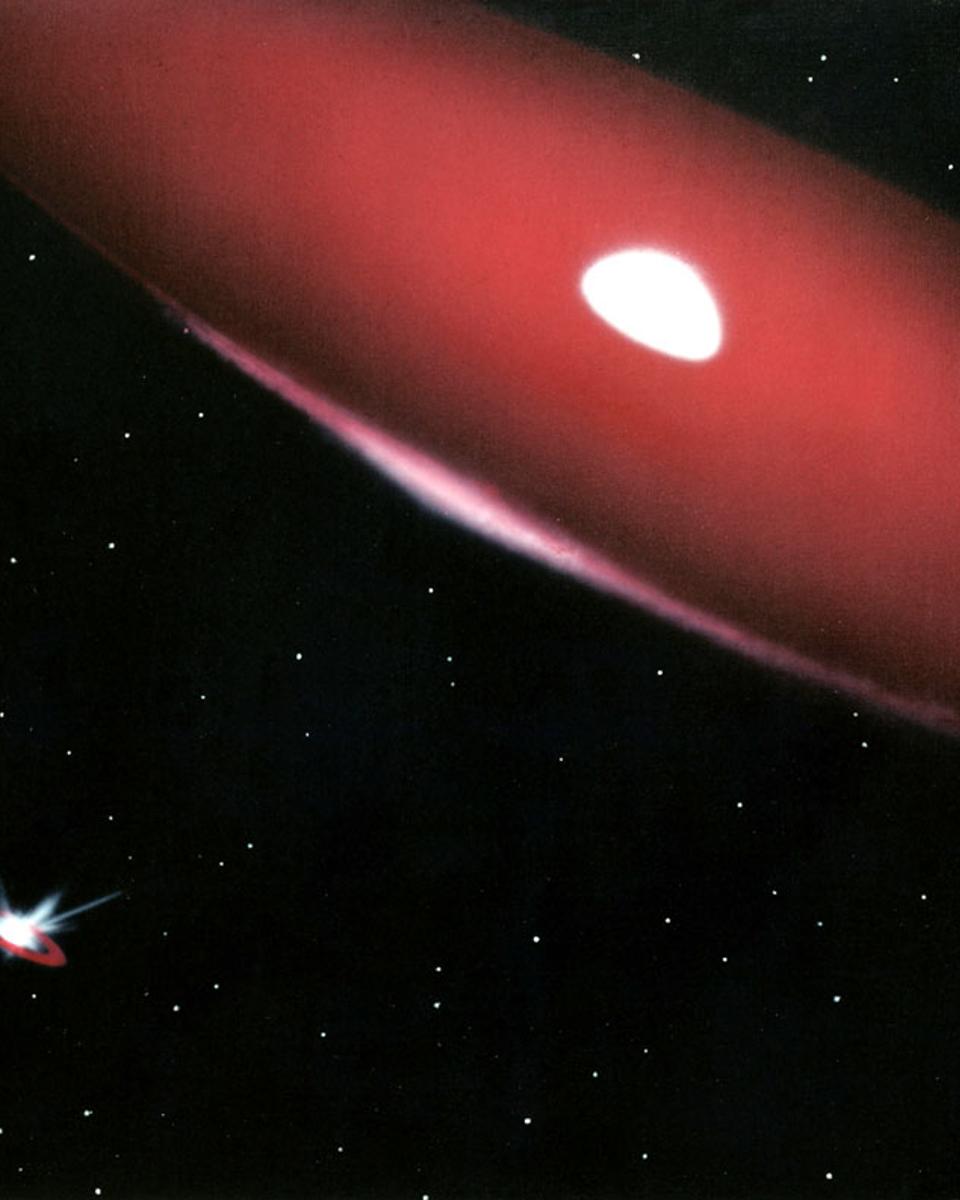
It's clear who is the biggest star in this binary system. Based on recent results , this artist's vision of the double star Phi Persei , 720 light years away, shows a bright,…
A Martian Lake Bed?
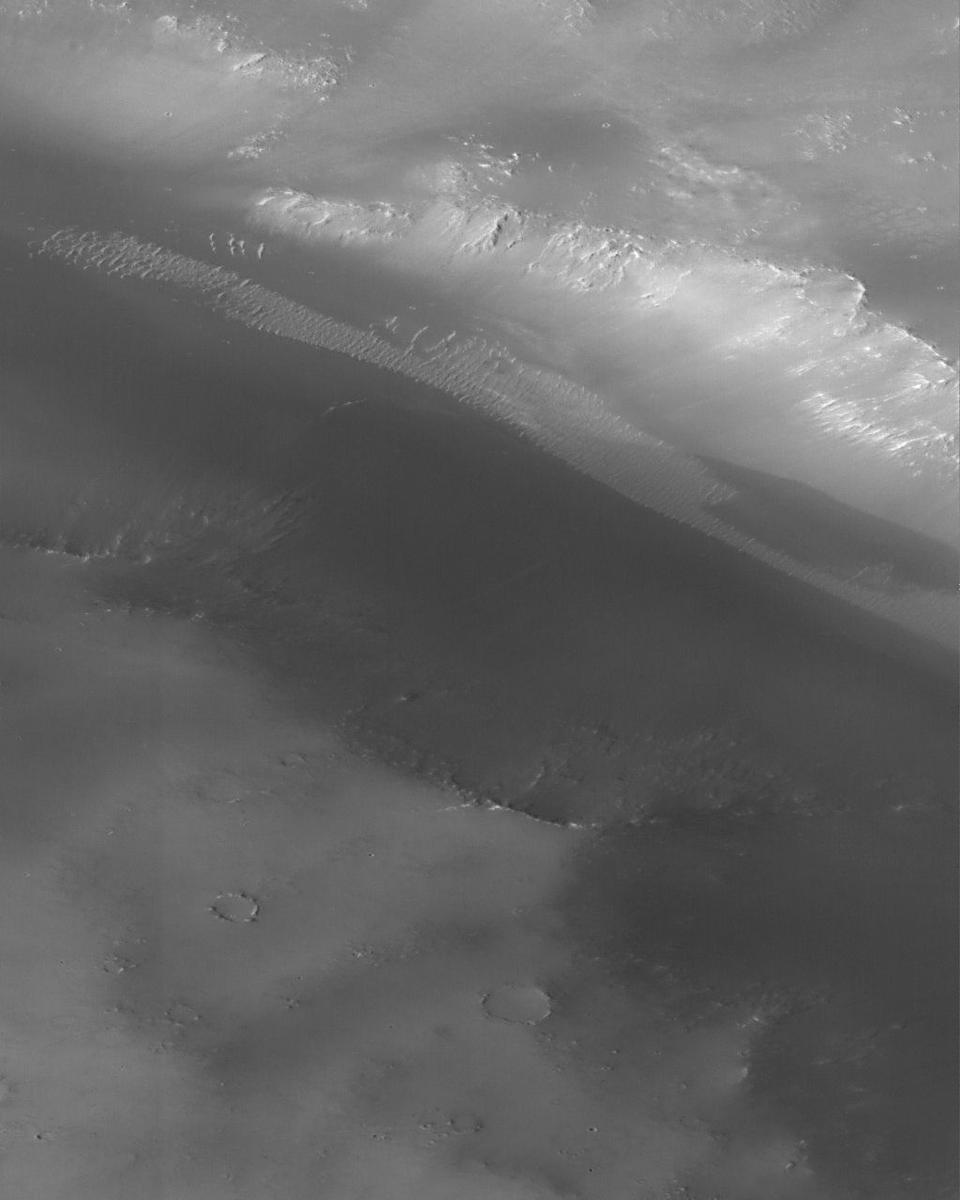
Look closely. In this Mars Global Surveyor image of the Martian surface just south of Schiaparelli crater , dark lines appear to criss-cross light colored depressions. One…
Sprint the Flying Space Camera
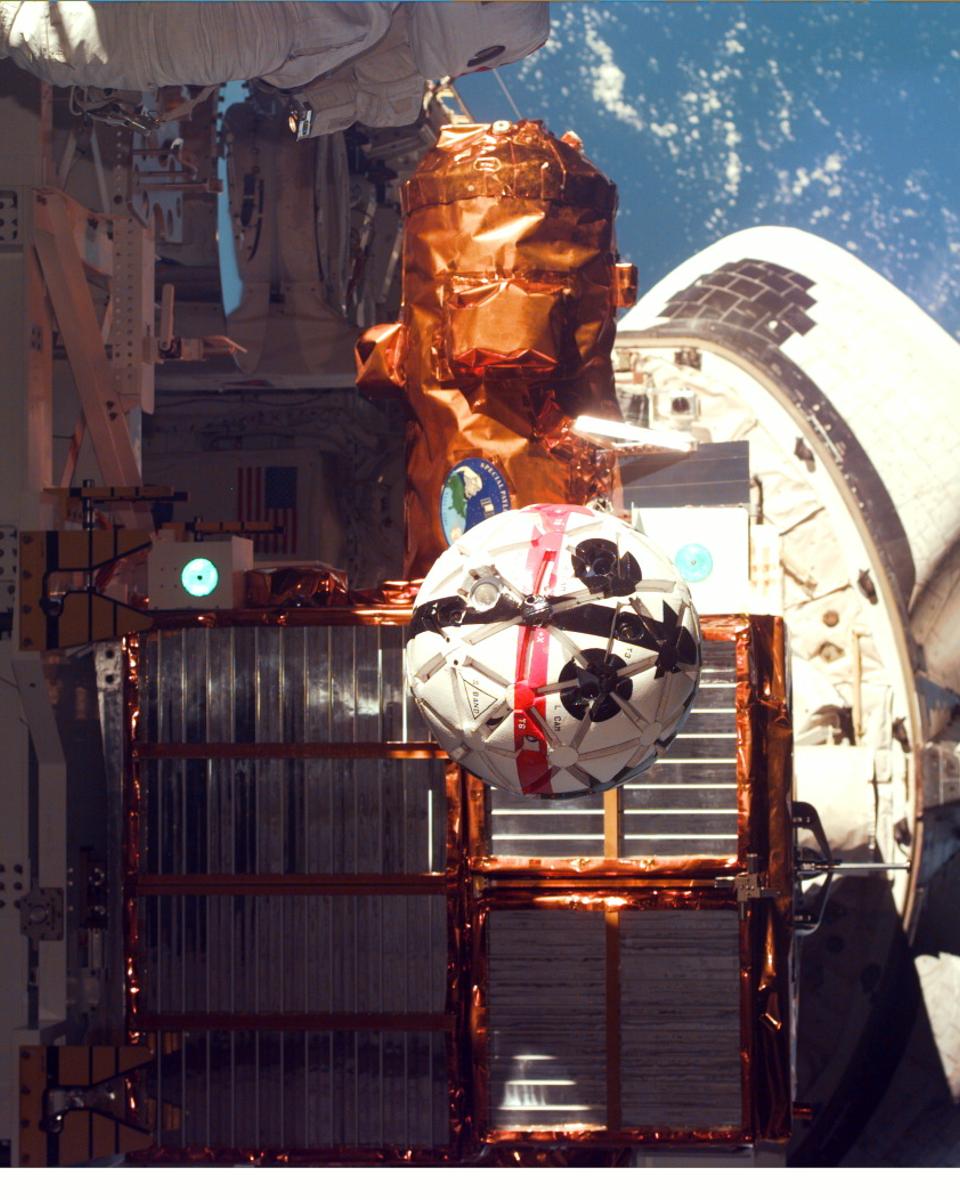
Yes, but can your soccer ball do this? The ball near the middle of the above photograph is actually a robotic camera designed to float about a Space Shuttle and the International…
Mysterious Features on Ganymede
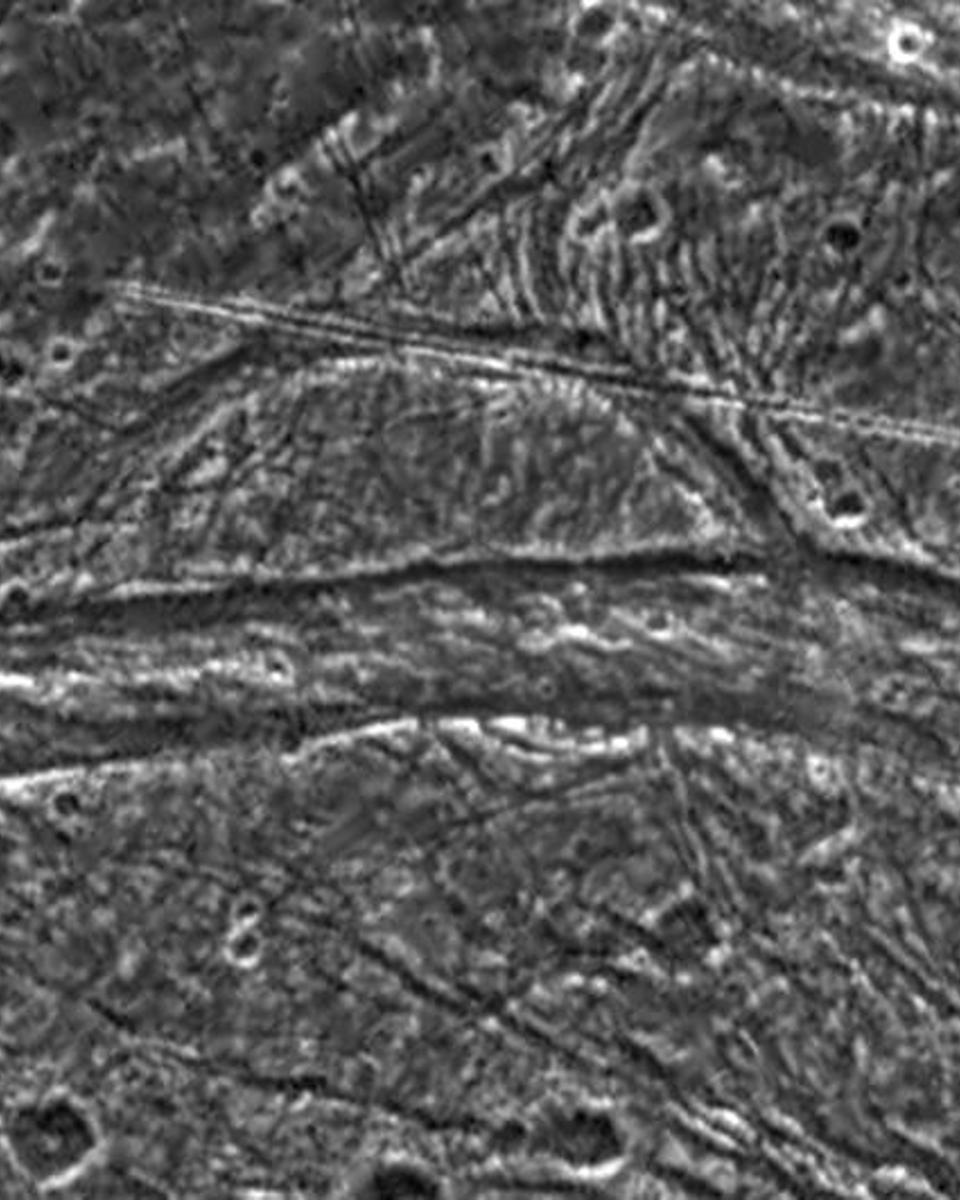
Where is the rest of the circle? Jupiter 's largest moon Ganymede has some truly unusual terrain, including the pictured half circle above cut by nearly parallel curves. Full…
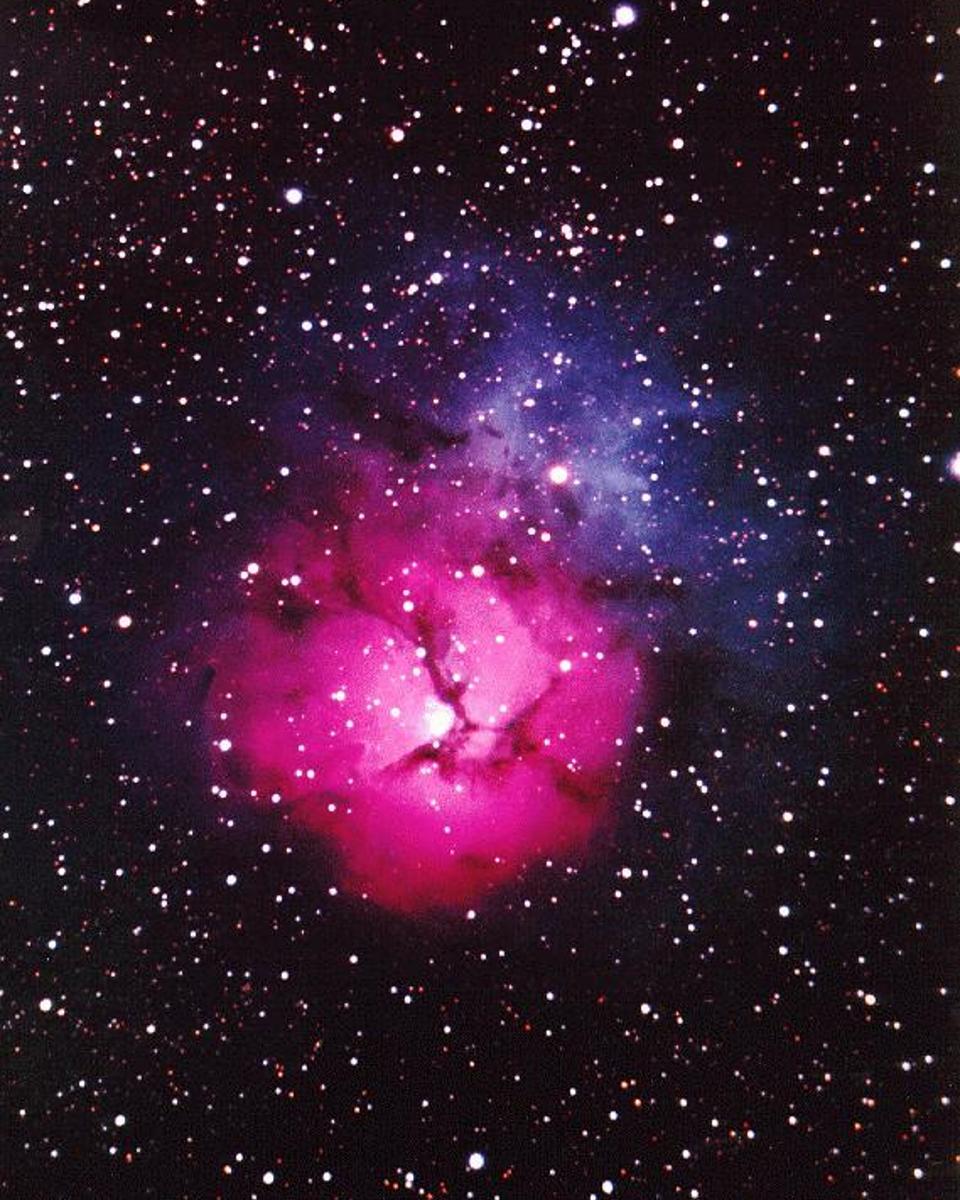
The Trifid Nebula in Red, White and Blue
Three dark dust lanes give the picturesque Trifid Nebula its name. The red and blue colors of the Trifid Nebula are present in different regions and are created by different…
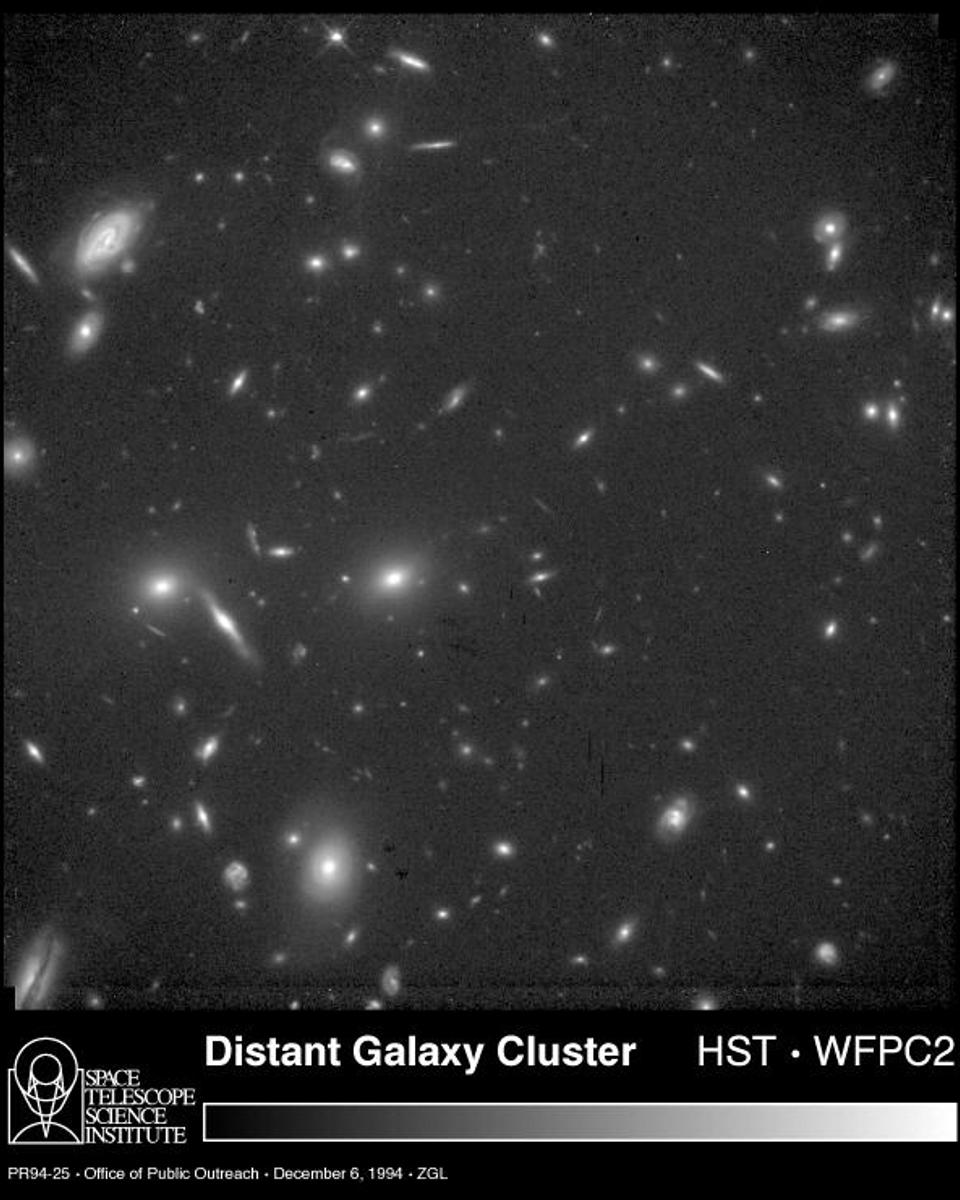
A Distant Cluster of Galaxies
In this 1994 Hubble Space Telescope photograph , every bright object is a galaxy . Oddly - most of them are spiral galaxies. This rich cluster of galaxies , named CL 0939+4713 ,…
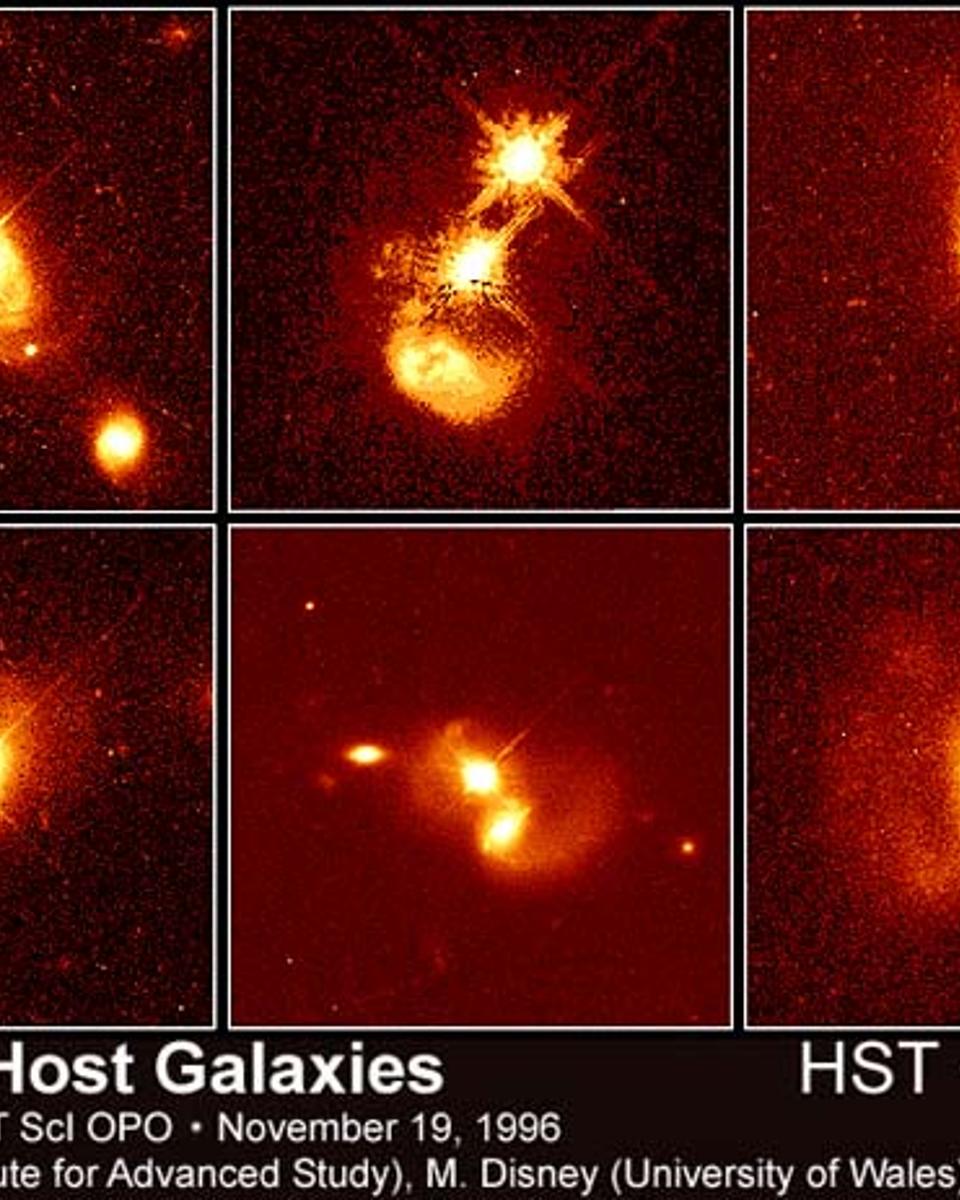
A Quasar Portrait Gallery
QUASARs (QUASi-stellAR objects) lie near the edge of the observable Universe . Discovered in 1963 , astronomers were astounded that such objects could be visible across billions…
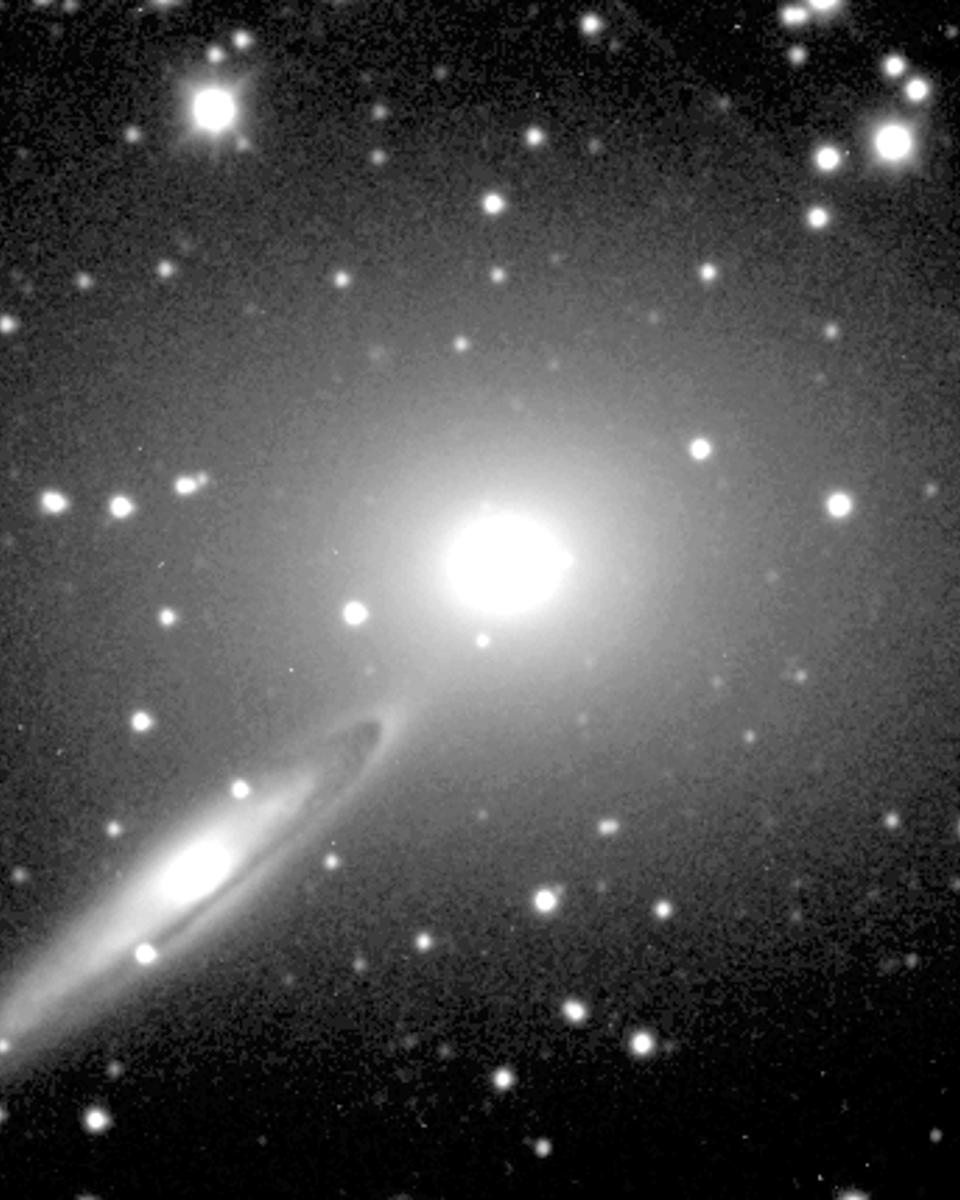
Seeing Through Galaxies
In this dramatic picture, spiral galaxy NGC 5091 appears in the foreground. Tilted nearly edge-on , the dust lanes between its spiral arms are clearly visible. The large…
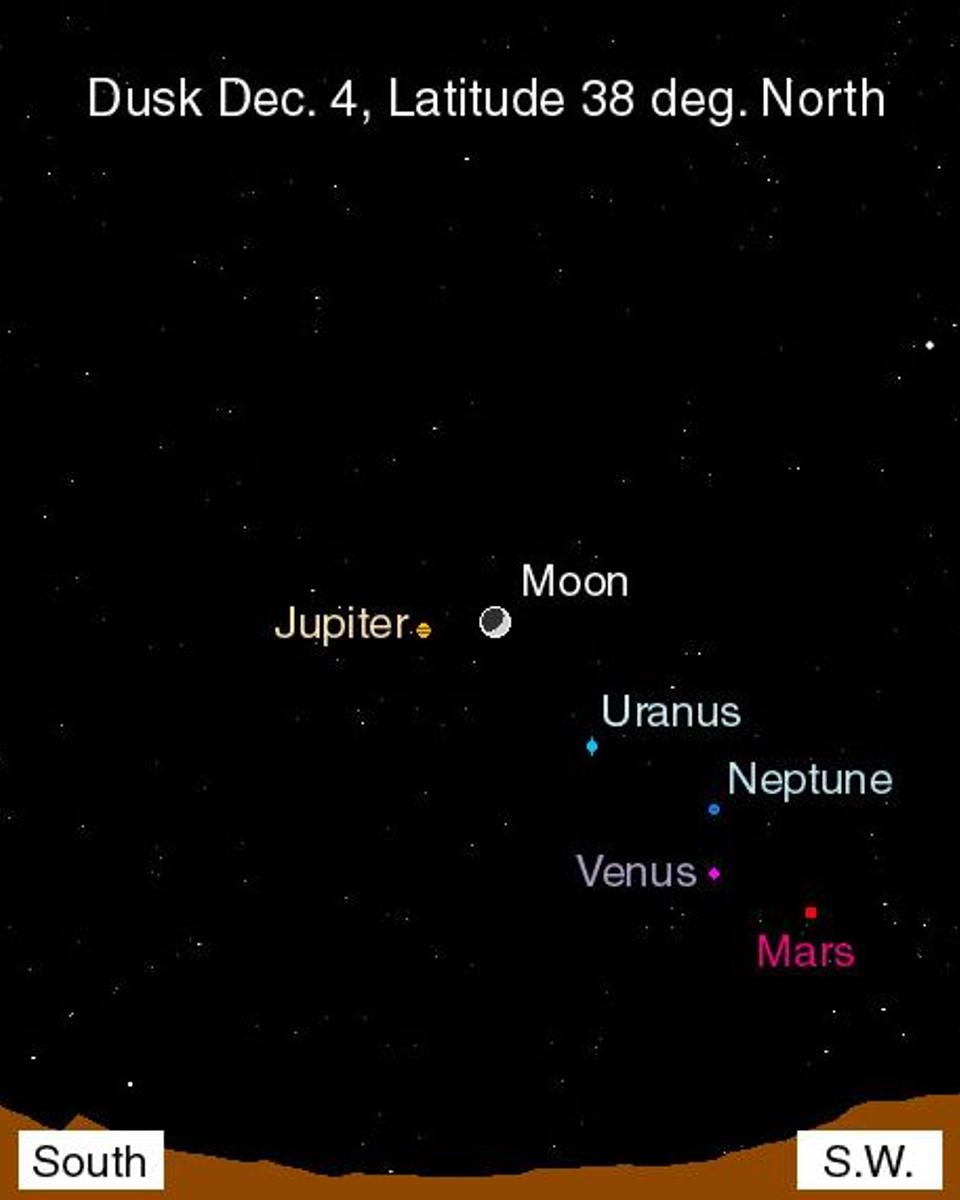
A Sky Full Of Planets
Look up tonight . Just after sunset, the crescent moon and all five “naked-eye” planets ( Mercury , Venus , Mars , Jupiter , and Saturn ) will be visible (depending on your…
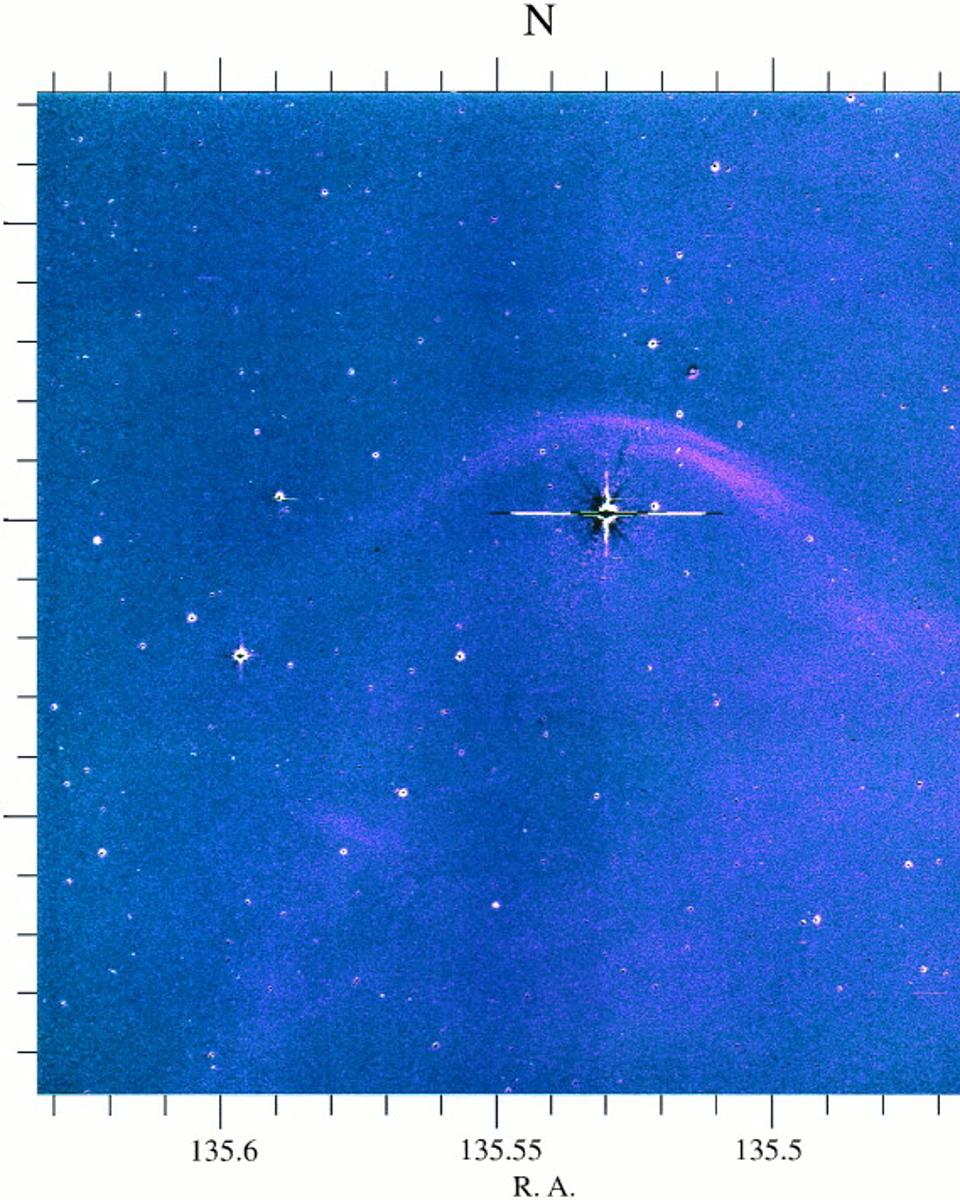
Runaway Star
Runaway stars are massive stars traveling rapidly through interstellar space. Like a ship plowing through the interstellar medium , runaway star HD 77581 has produced this…
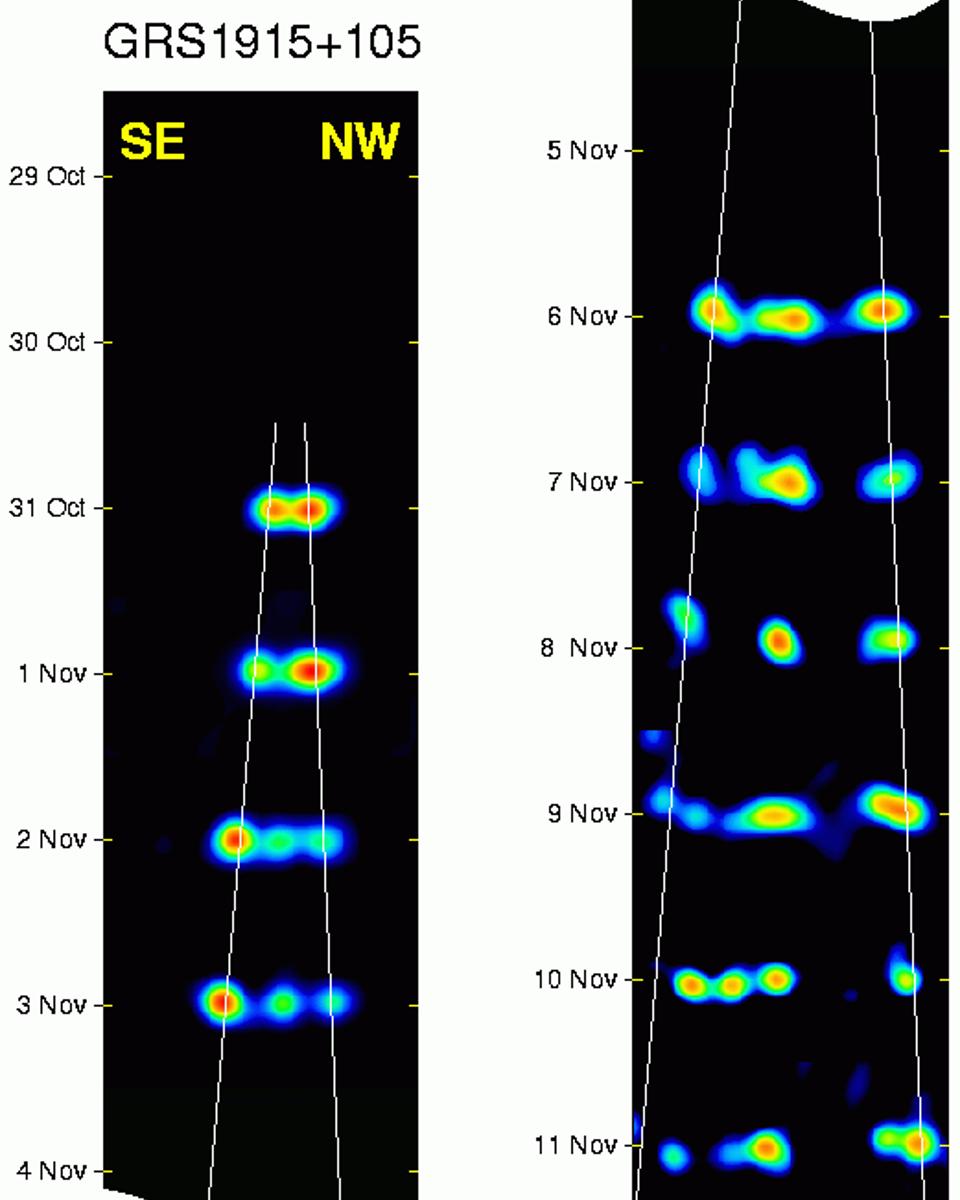
Micro-Quasar GRS1915 Puffs
On the far side of our Galaxy , gas clouds explode away from a small black hole . This might seem peculiar, as black holes are supposed to attract matter. But material falling…
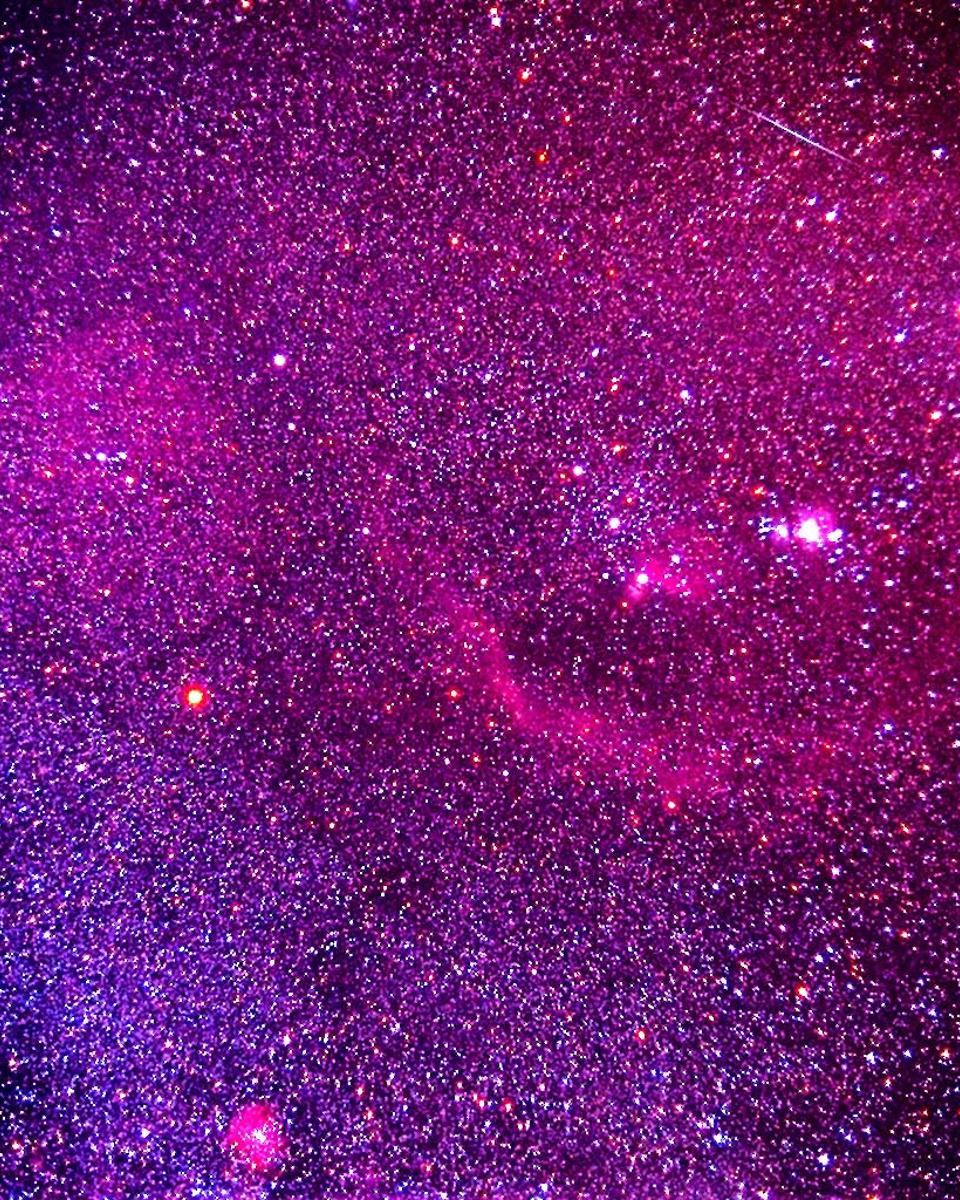
Orion: The Big Picture
Orion is big. Some of the stars that form the constellation of Orion are part of a giant gas cloud complex that stretches over 100 light years and appears more than 50 times the…
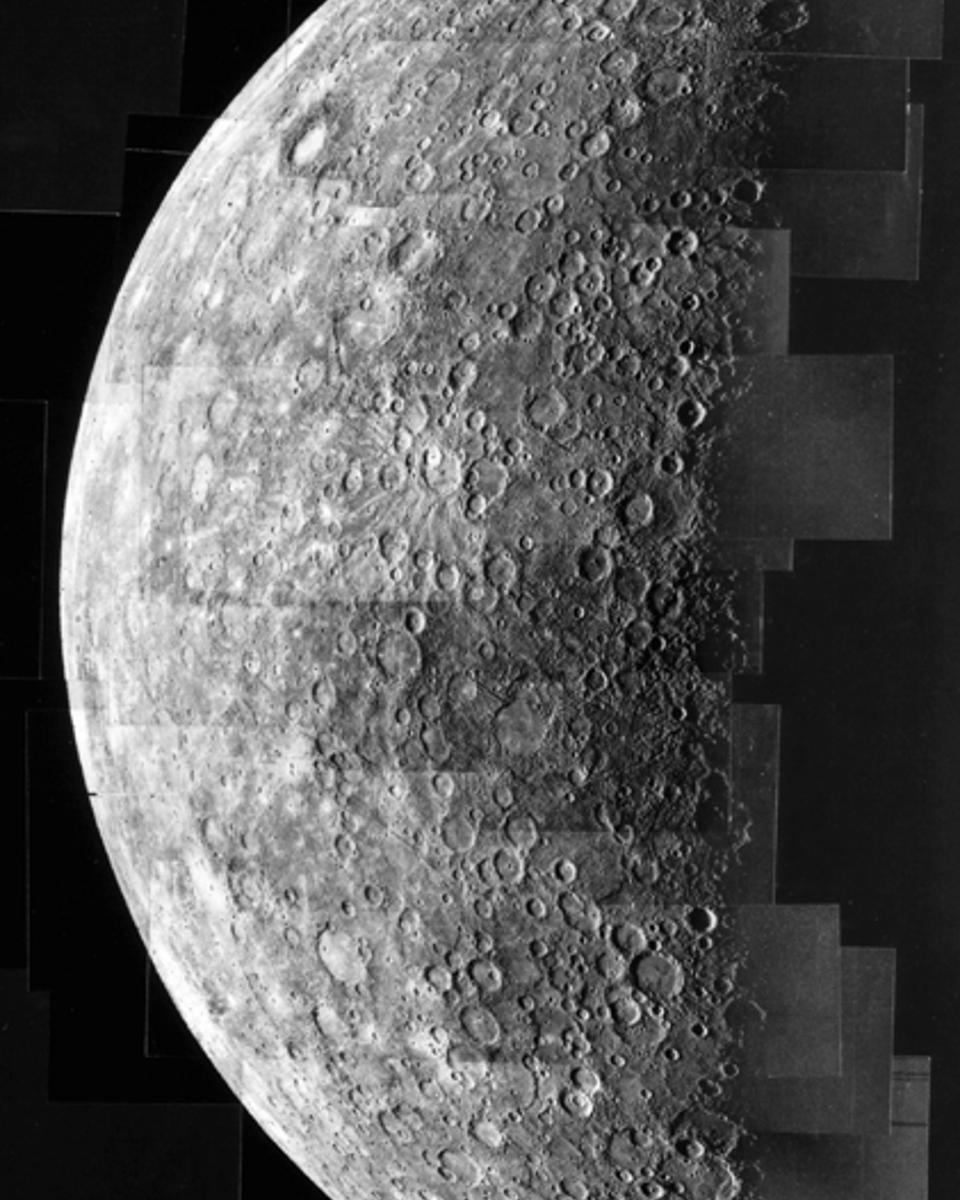
Mercury: A Cratered Inferno
Mercury's surface looks similar to our Moon's. Each is heavily cratered and made of rock. Mercury 's diameter is about 4800 km, while the Moon 's is slightly less at about 3500 km…
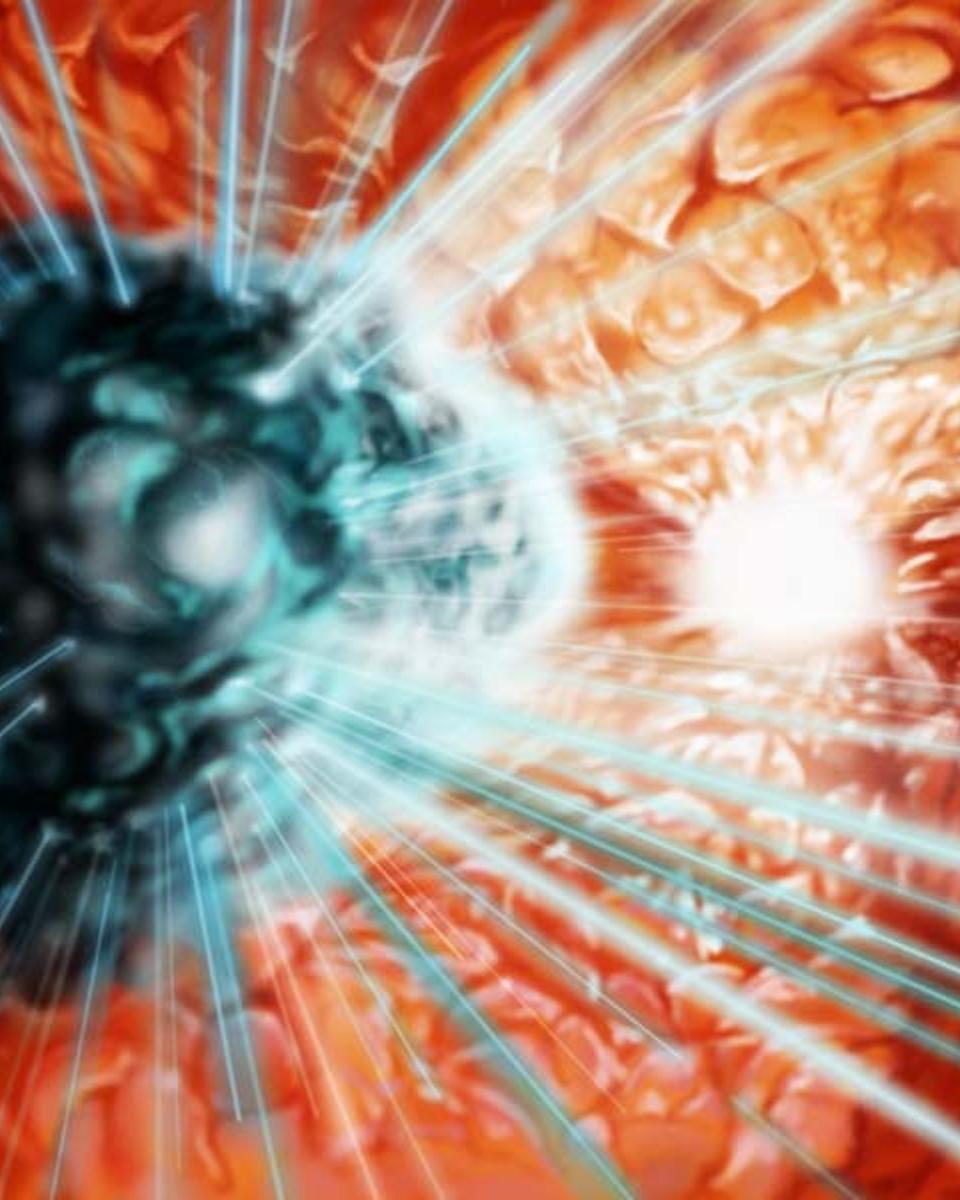
Lasers in Eta Carinae
Have you heard about the great LASER light show in the sky? A team led by K. Davidson ( U. Michigan ) and S. Johansson ( U. Lund ) discovered that the chaotically variable star…
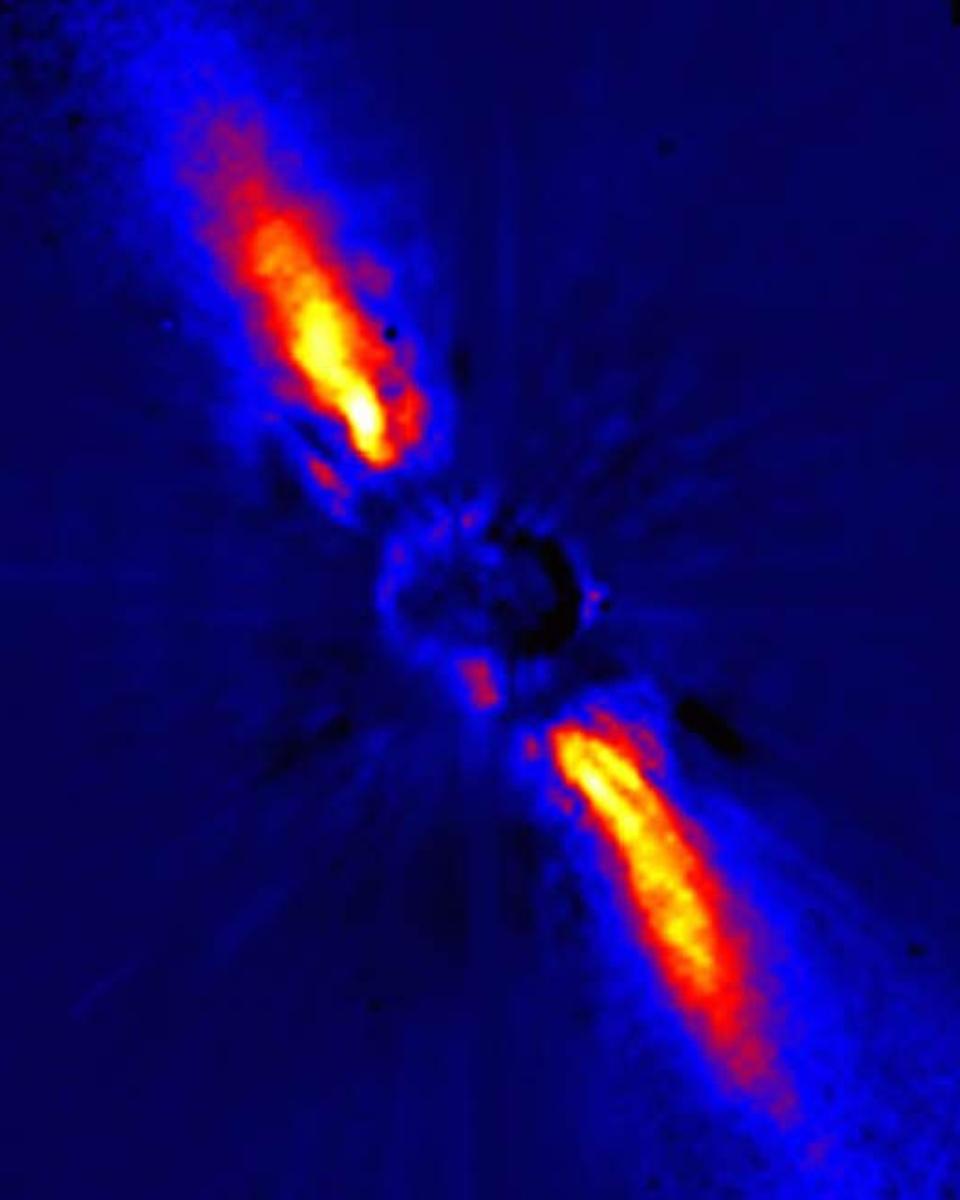
Beta Pictoris Revisited
In the early 1980s, Beta Pictoris became one of the most important stars in the sky. Satellite and ground-based telescopic observations revealed the presence of a surrounding…
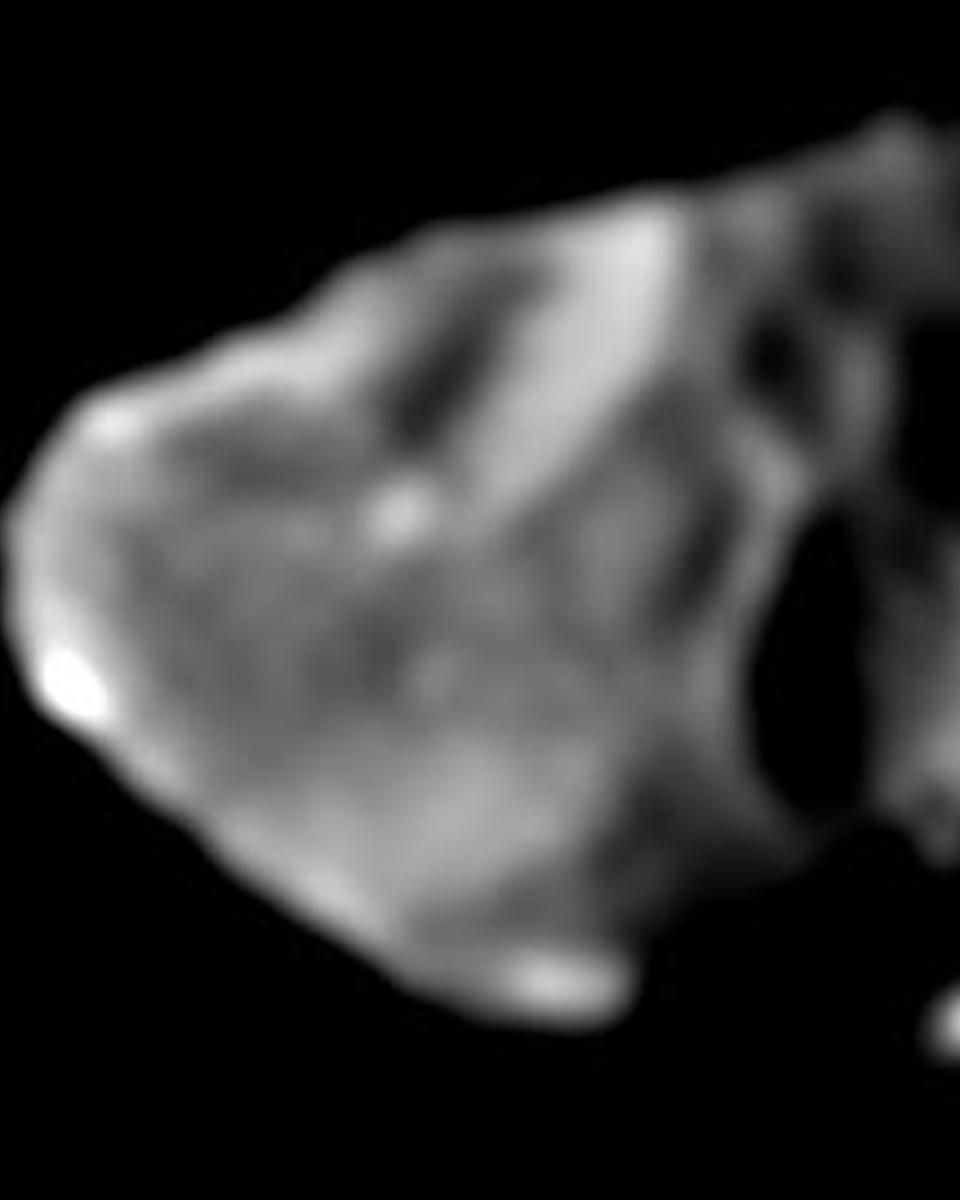
Jupiter's Inner Moons
The potato-shaped inner moons of Jupiter are lined-up in this mosaic “family portrait” of these tiny Jovian satellites. The individual images were recorded over the last year by…
Viewing discoveries from 20 December 1997 through 27 November 1997.