Browse NASA Astronomy Picture of the Day archive by date and media: Archive Discoveries
Browse the NASA APOD archive without needing the exact date first. Filter by media type and keep moving deeper into older images and videos.
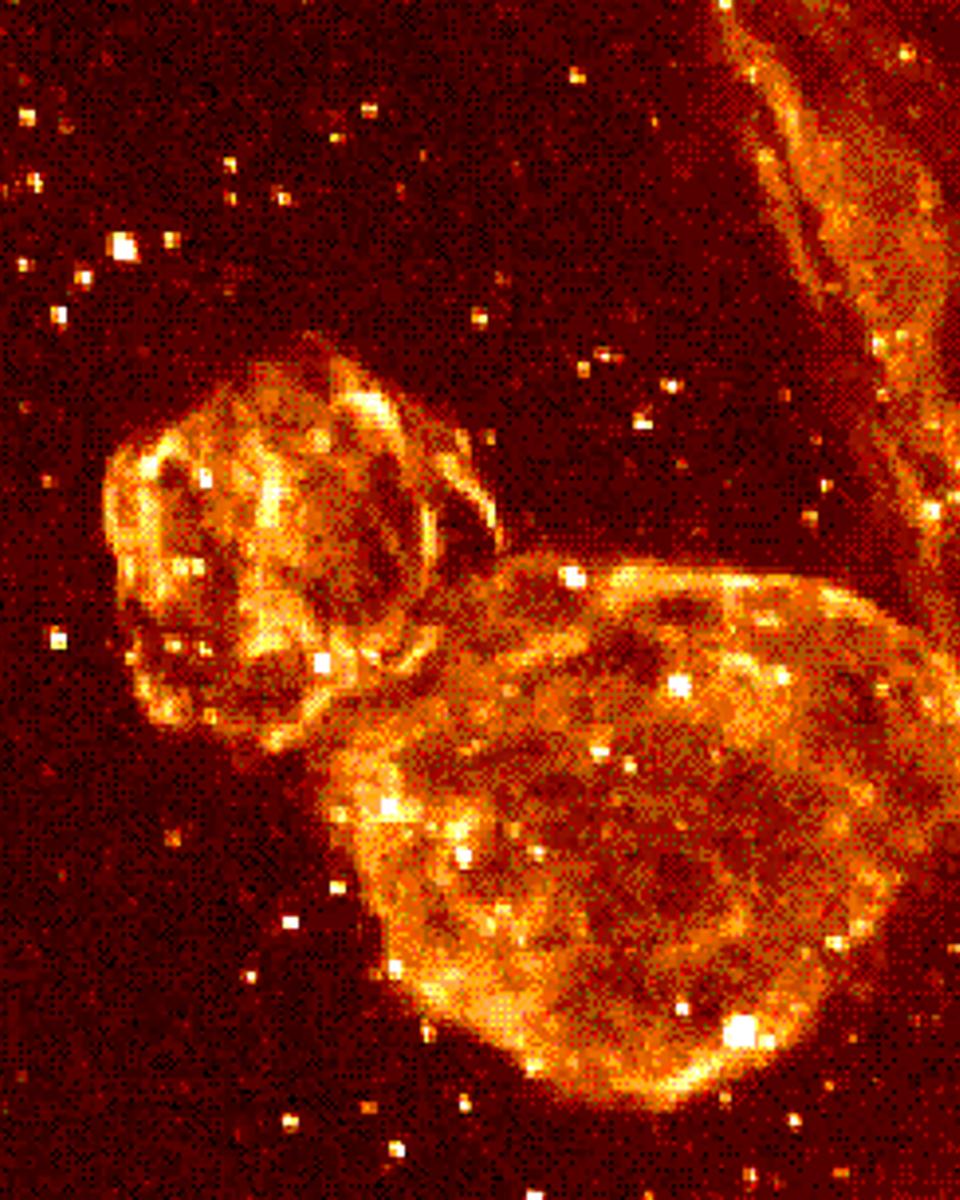
Colliding Supernova Remnants
When a massive star exhausts its nuclear fuel it explodes . This stellar detonation, a supernova , propels vast amounts of starstuff outwards, initially at millions of miles per…
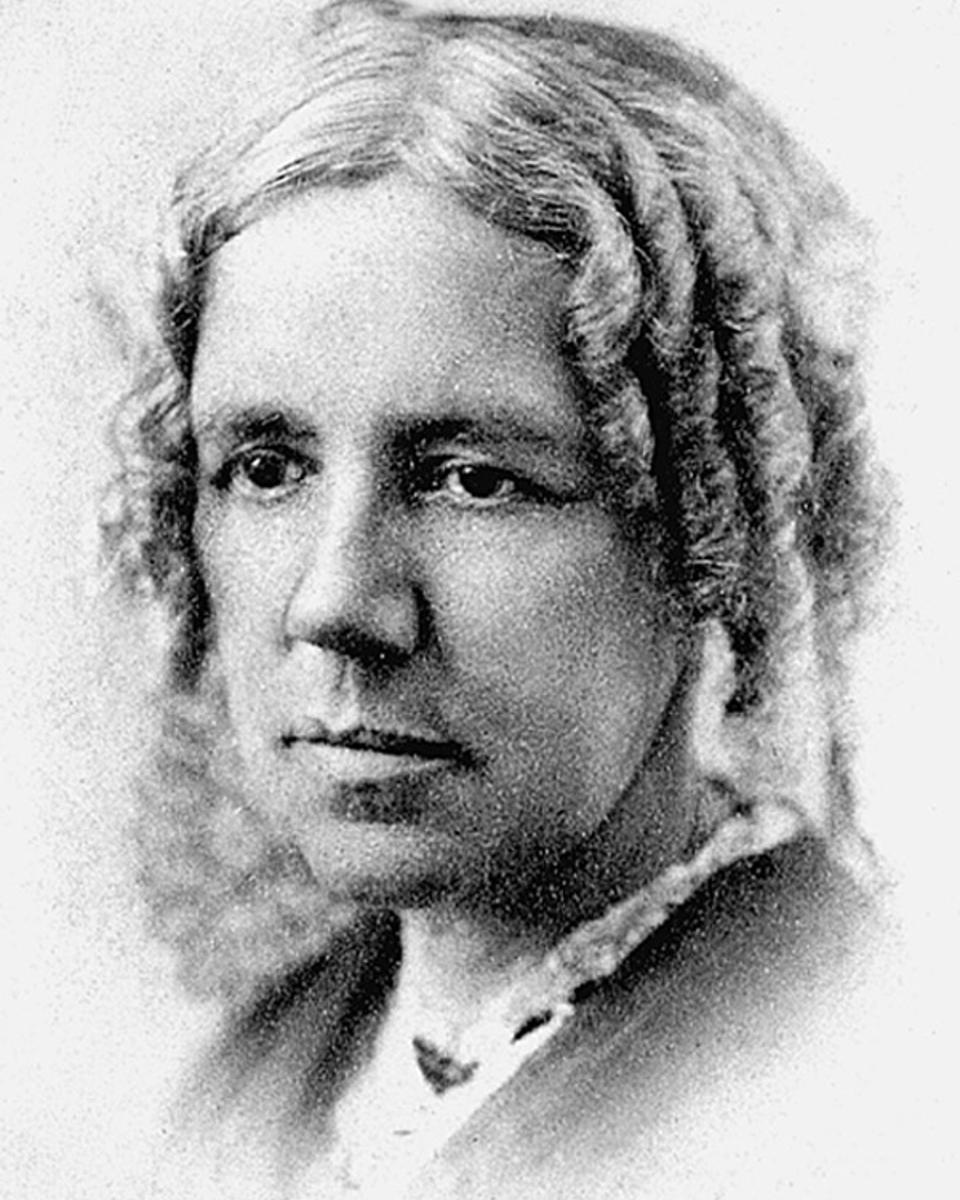
Maria Mitchell Inspires a Generation
“Do not look at stars as bright spots only - try to take in the vastness of the universe.” Today is the 150th anniversary of the day Maria Mitchell swept the sky with her…
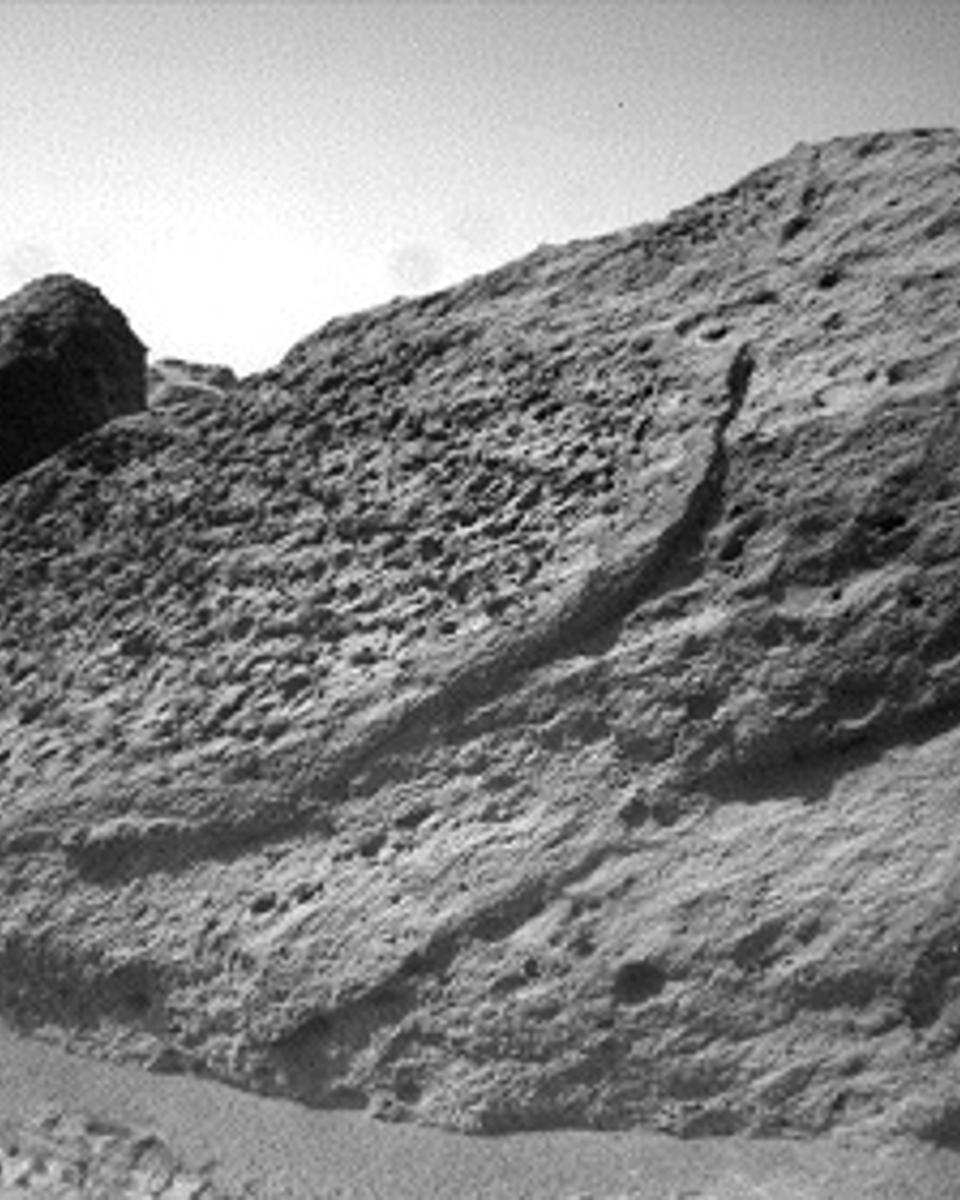
Half Dome Rock on Mars
Who ordered the Martian pizza? As Mars Pathfinder and its mobile robot Sojourner continue to explore Mars , new and interesting rocks are being discovered, even though the primary…
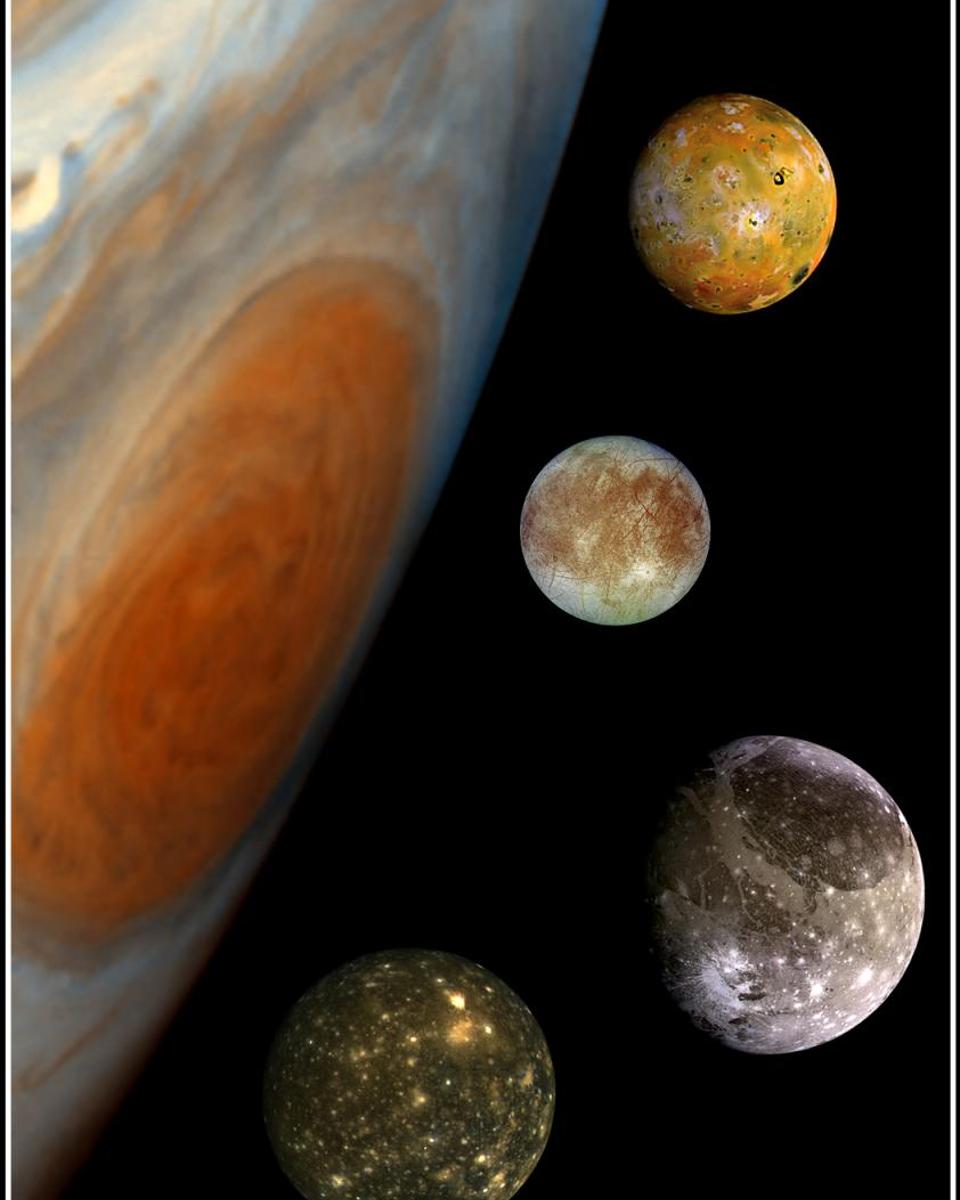
Jupiter And Family
This composite image features classic portraits of members of one of the Solar System's most prominent families - Jupiter and its four large “Galilean” moons. Starting from the…
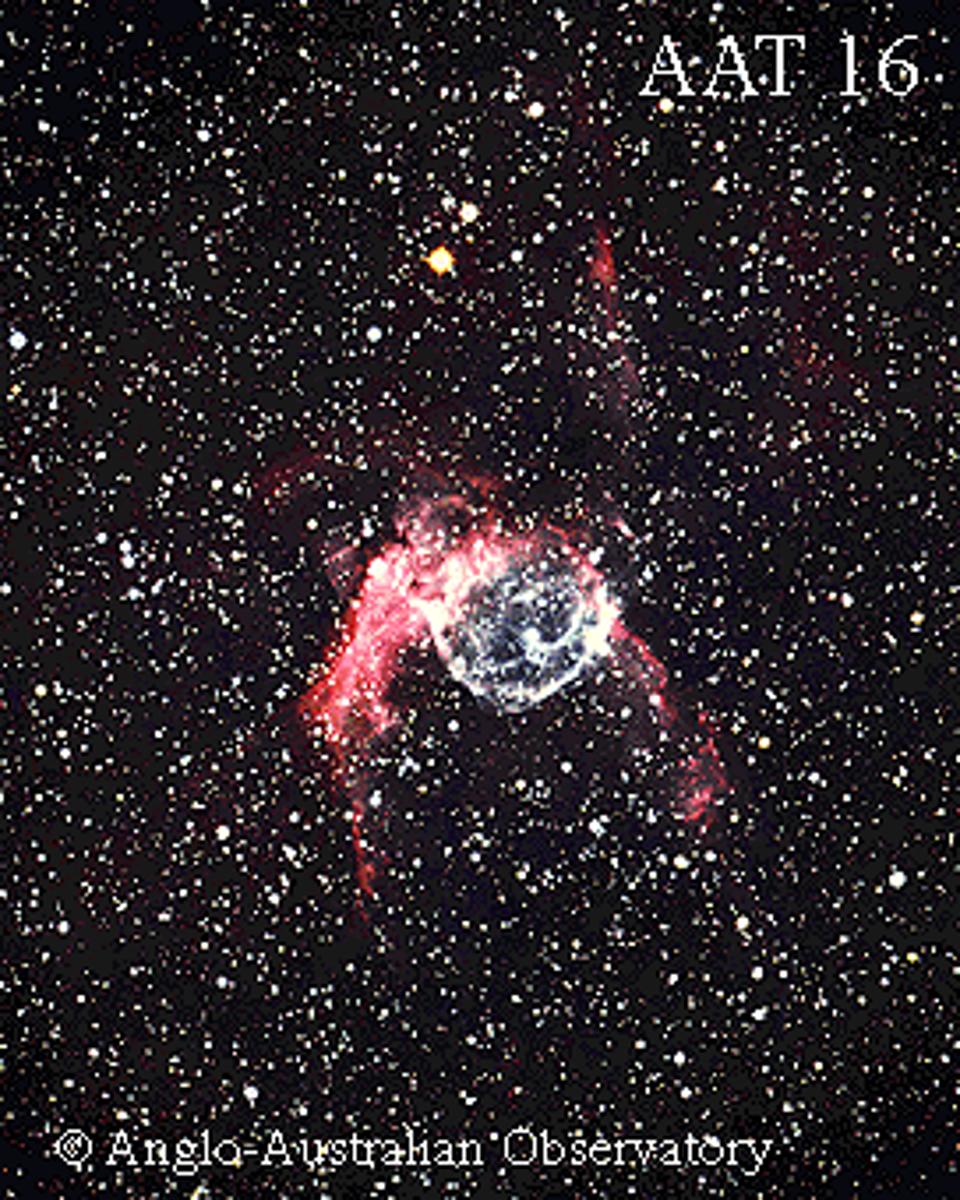
A Wolf Rayet Star Bubble
What's a Wolf-Rayet star, and how did it create that spherical bubble and sweeping arc? A Wolf-Rayet star is a star that originated with a mass over 40 times that of our Sun . An…
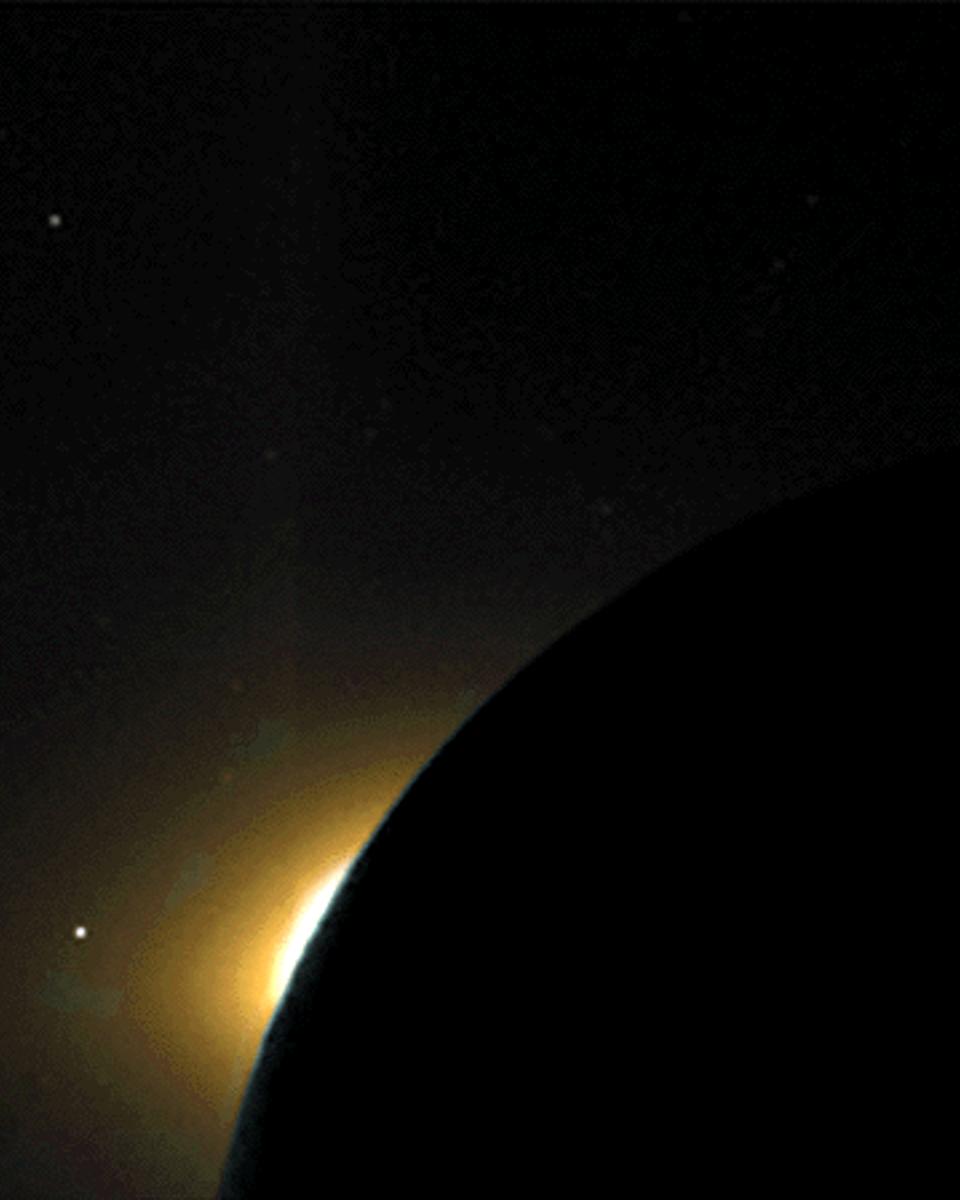
The Ecliptic Plane
The Plane of the Ecliptic is illustrated in this Clementine star tracker camera image which reveals (from right to left) the Moon lit by Earthshine, the Sun's corona rising over…
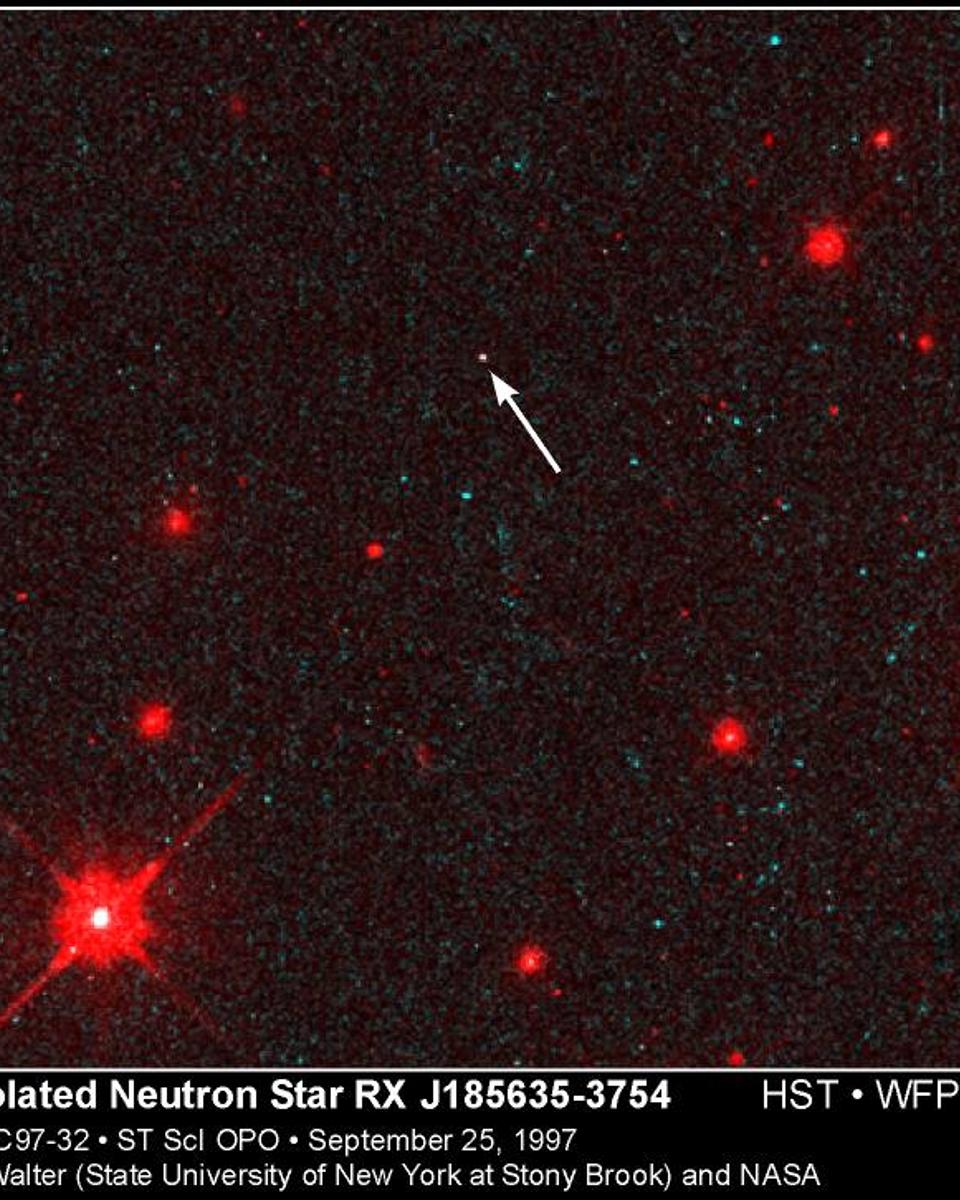
A Lonely Neutron Star
How massive can a star get without imploding into a black hole? These limits are being tested by the discovery of a lone neutron star in space. Observations by the Hubble Space…
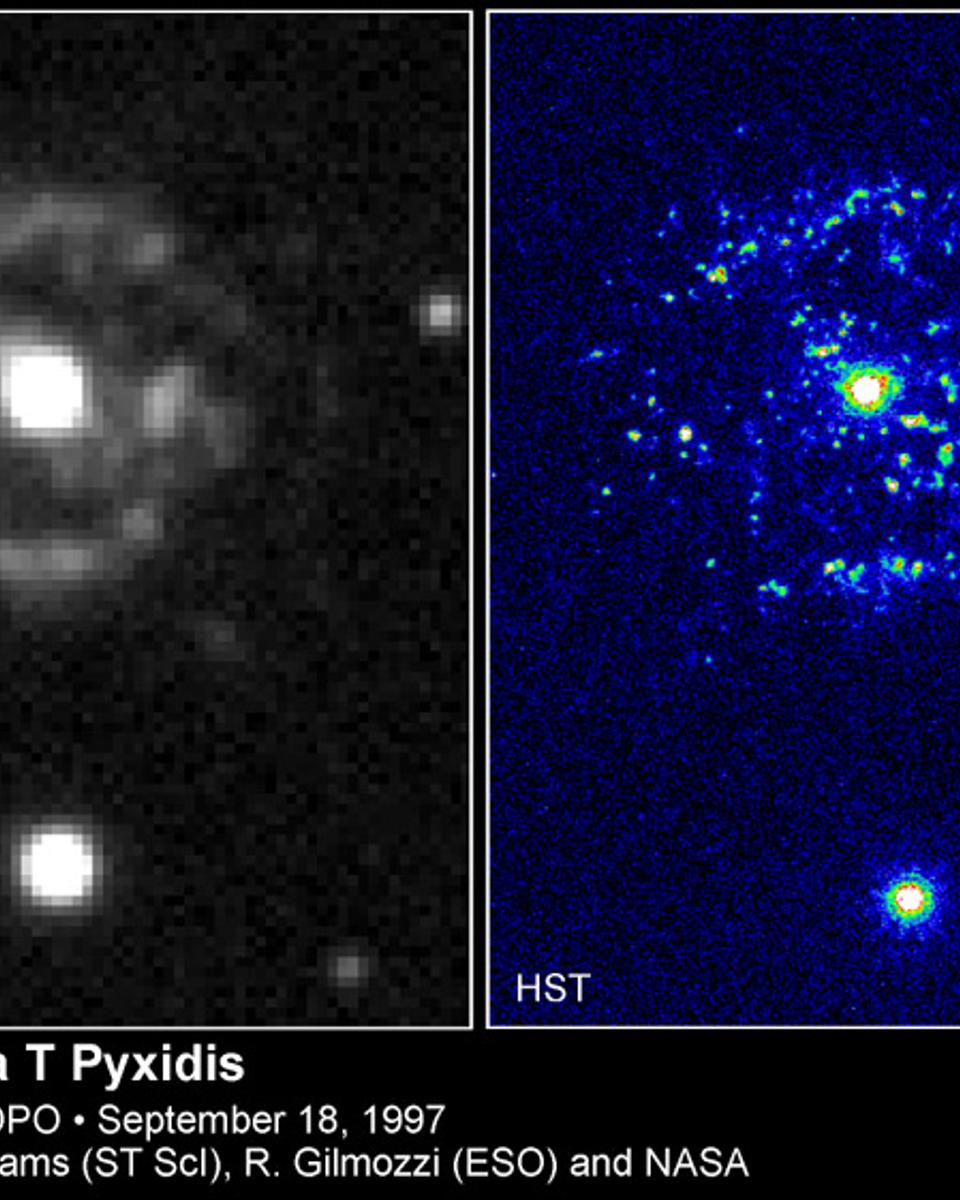
T Pyxidis: Recurrent Nova
What happens when a thermonuclear blast occurs on the surface of a white dwarf star? Over the years astronomers have watched (at a safe distance ...) as, 6,000 light years from…
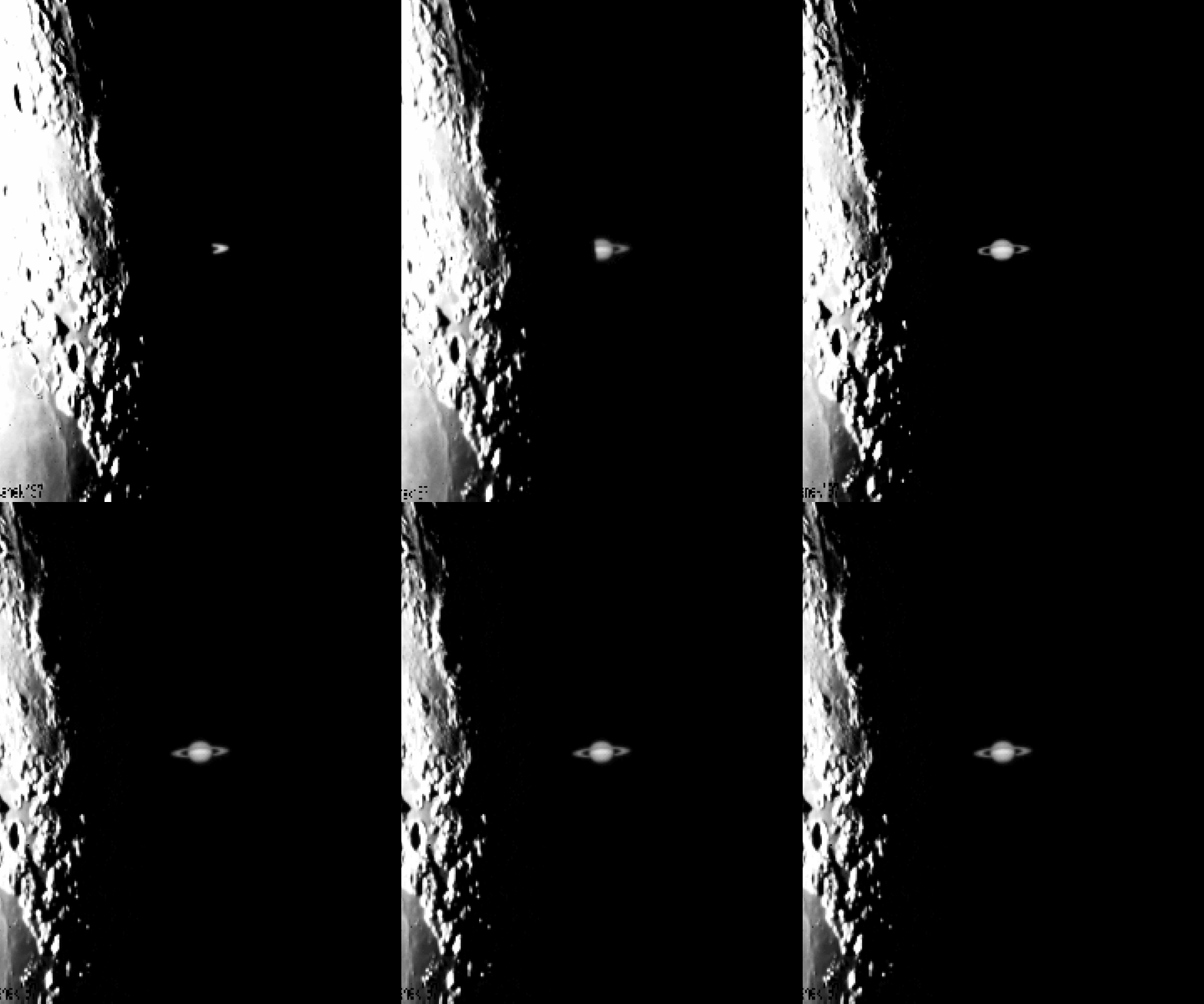
Moon Occults Saturn
Many stargazers in the U. S. were able to watch a lovely lunar occultation early last Thursday morning as a bright Moon passed in front of Saturn . Using a 1.2 meter reflector ,…
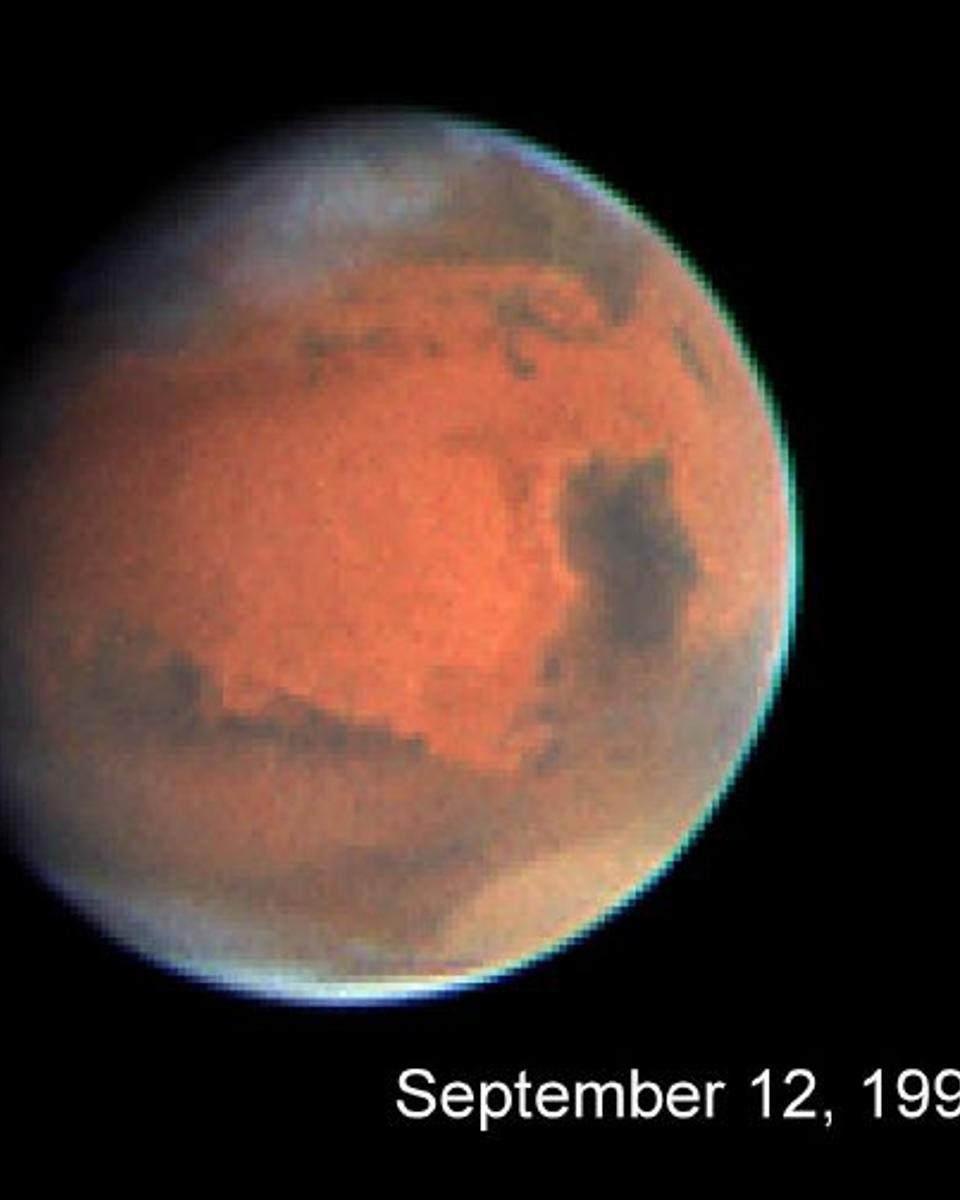
A Martian Autumn Begins
Today is the first day of Autumn in the Northern Hemisphere of Planet Earth. The Autumnal Equinox occured yesterday at 7:56 pm EDT as the Sun crossed the celestial equator from…
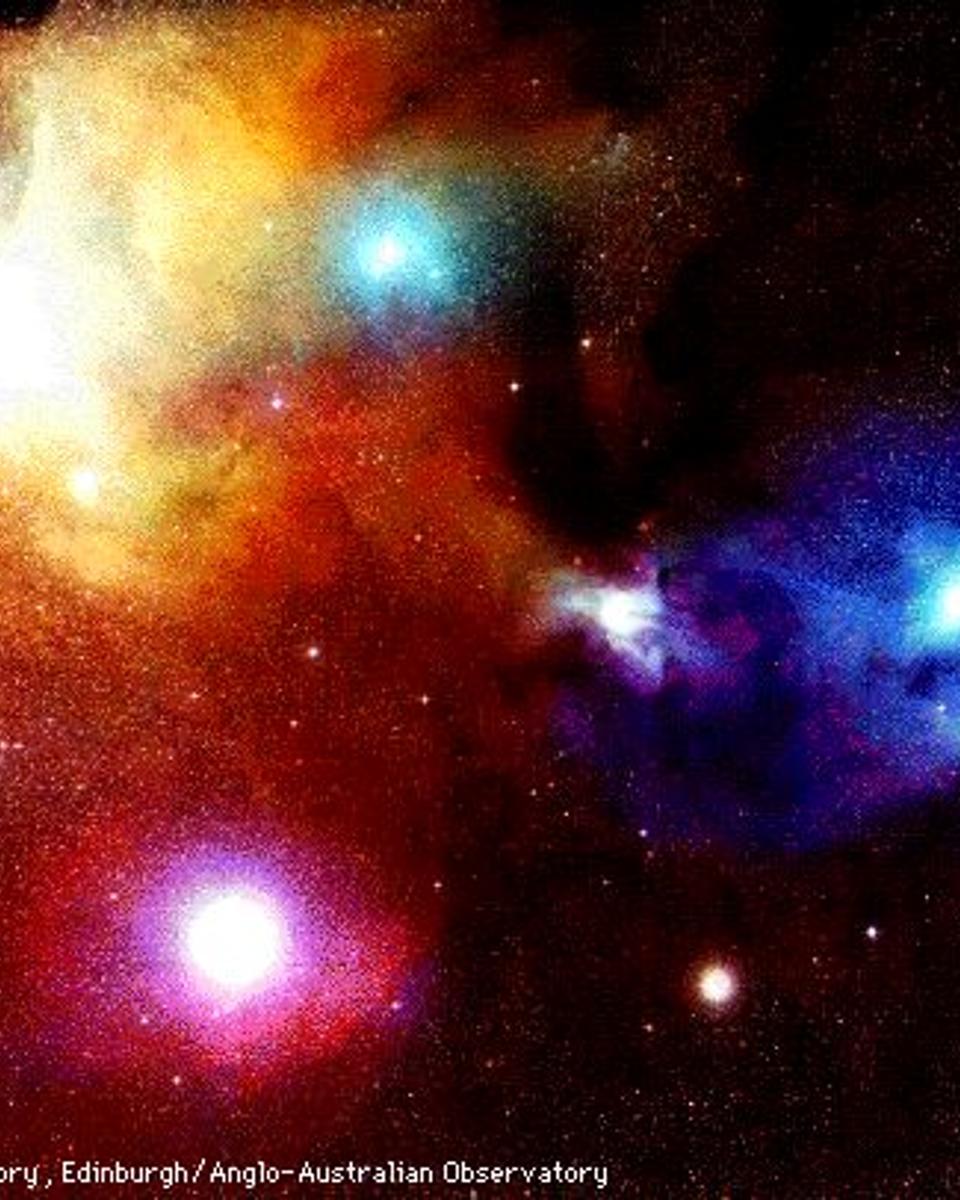
Antares and Rho Ophiuchi
Why is the sky near Antares and Rho Ophiuchi so colorful? The colors result from a mixture of objects and processes. Fine dust illuminated from the front by starlight produces…
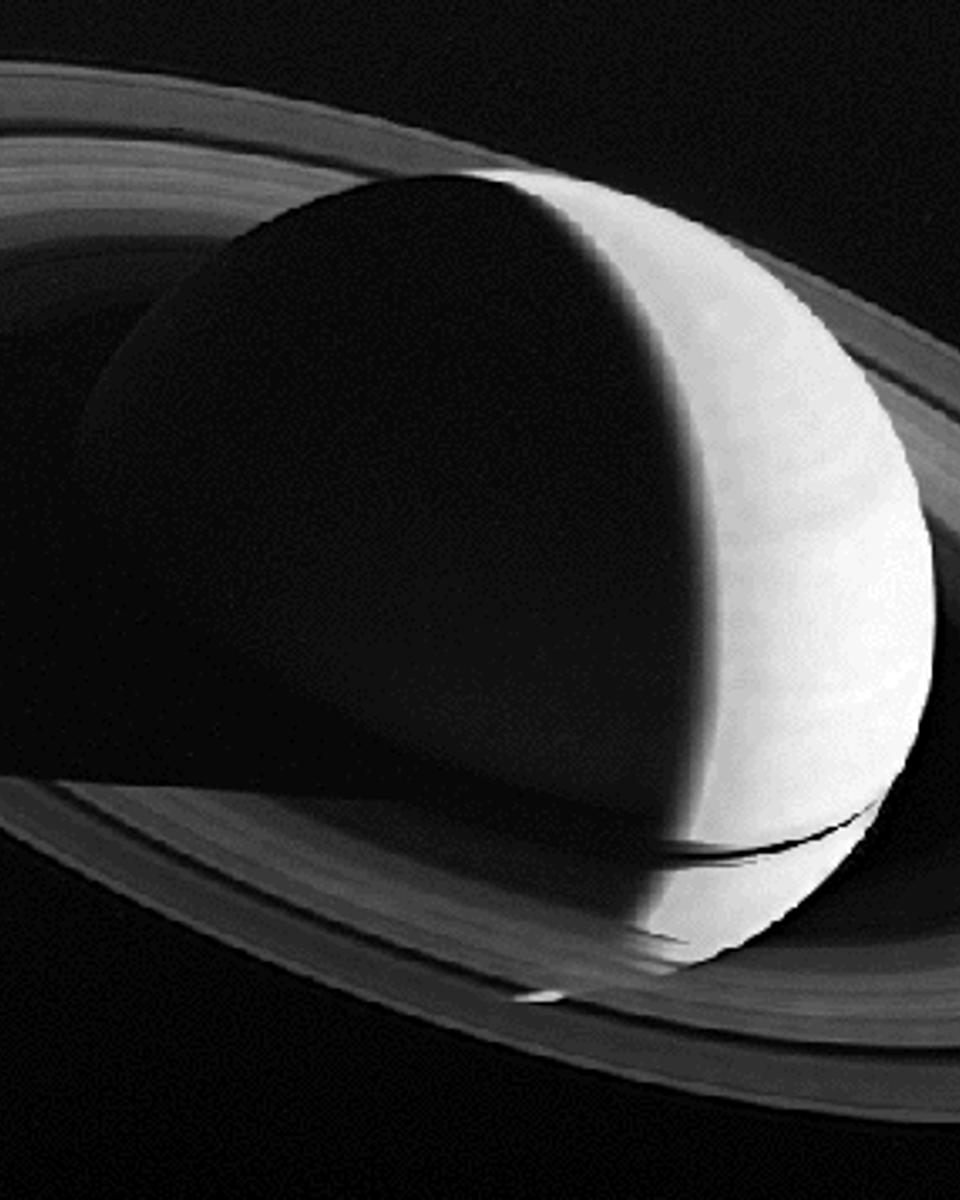
Looking Down on Saturn
This picture of Saturn could not have been taken from Earth . No Earth based picture could possibly view the night side of Saturn and the corresponding shadow cast across Saturn's…
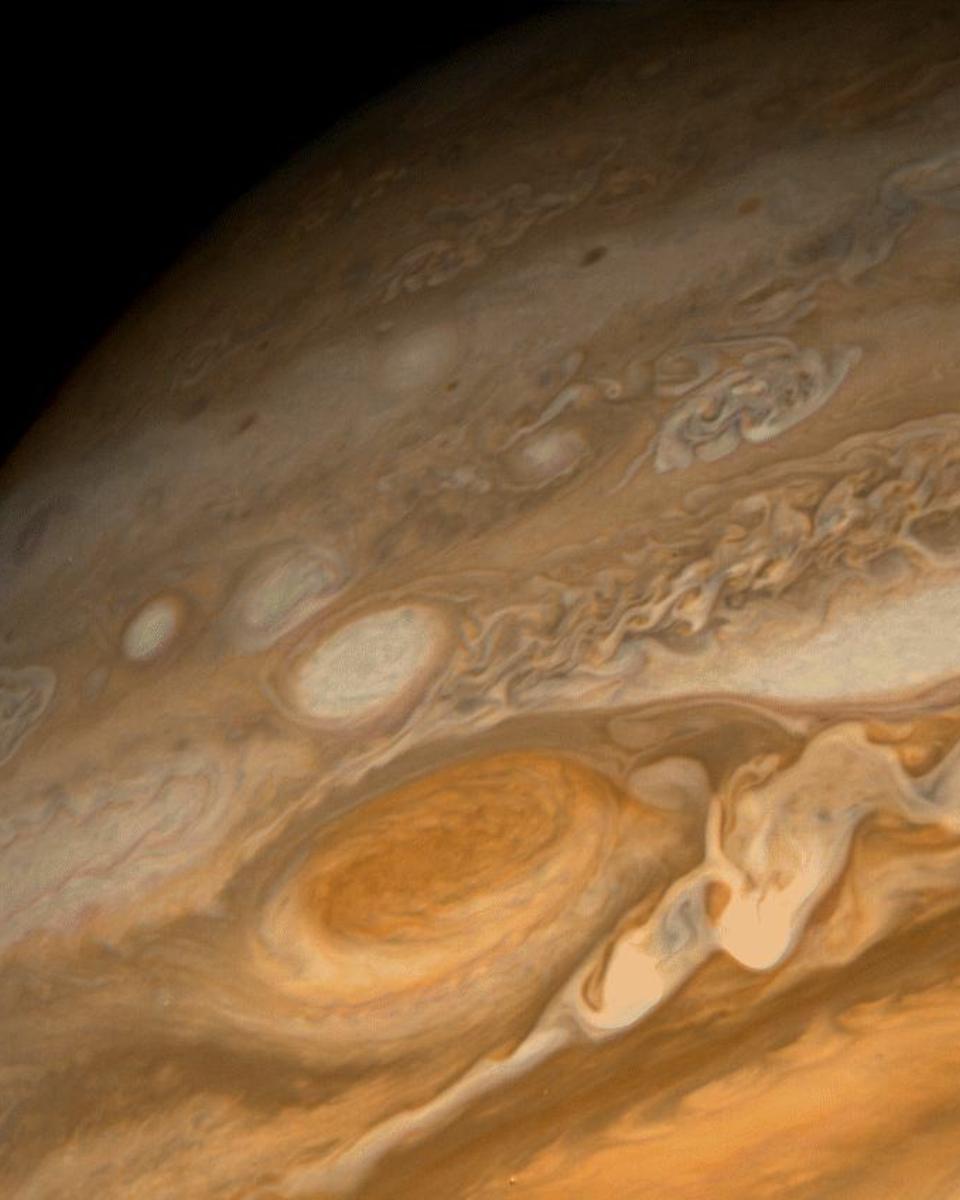
The Clouds of Jupiter
What makes the colors in Jupiter's clouds ? With a mean temperature of 120 degrees Kelvin (-153 degrees Celsius) and a composition dominated by hydrogen (about 90%), and helium…
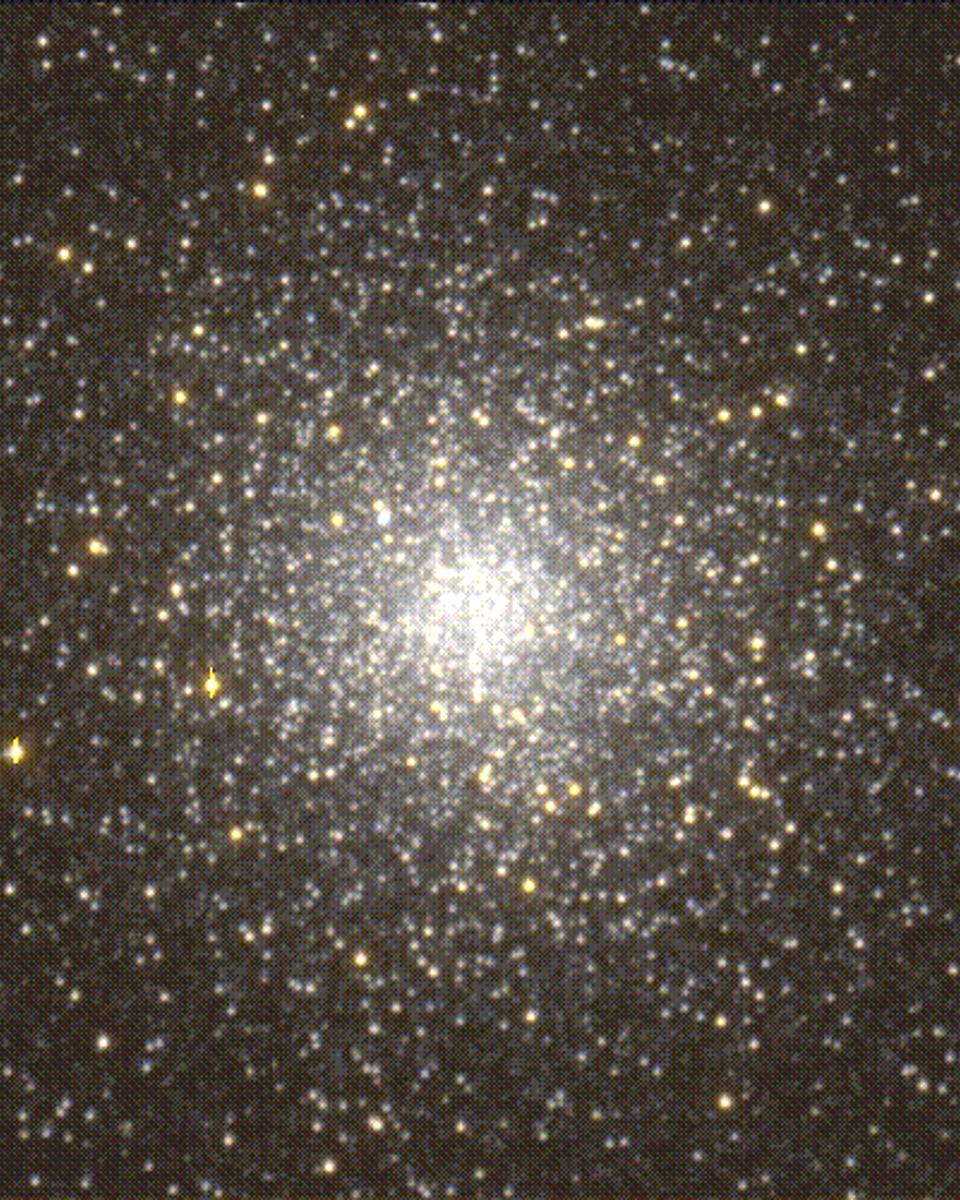
Globular Cluster 47 Tucanae
Stars come in bunches. Of the over 200 globular star clusters that orbit the center of our Milky Way Galaxy , 47 Tucanae is the second brightest globular cluster (behind Omega…
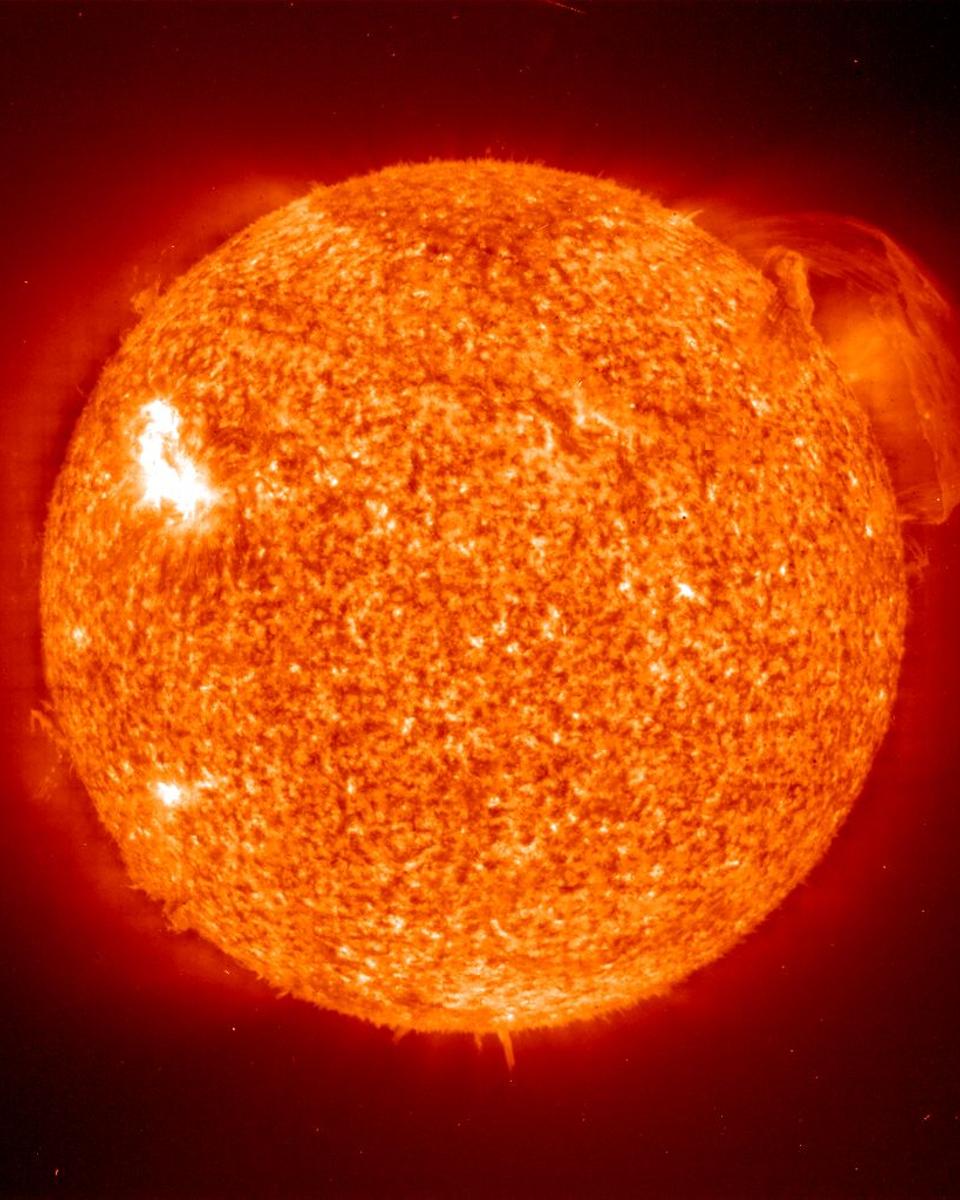
Erupting Sun
On August 27th twisting magnetic fields propelled this huge eruptive prominence a hundred thousand miles above the Sun's surface. The seething plasma of ionized gases is at a…
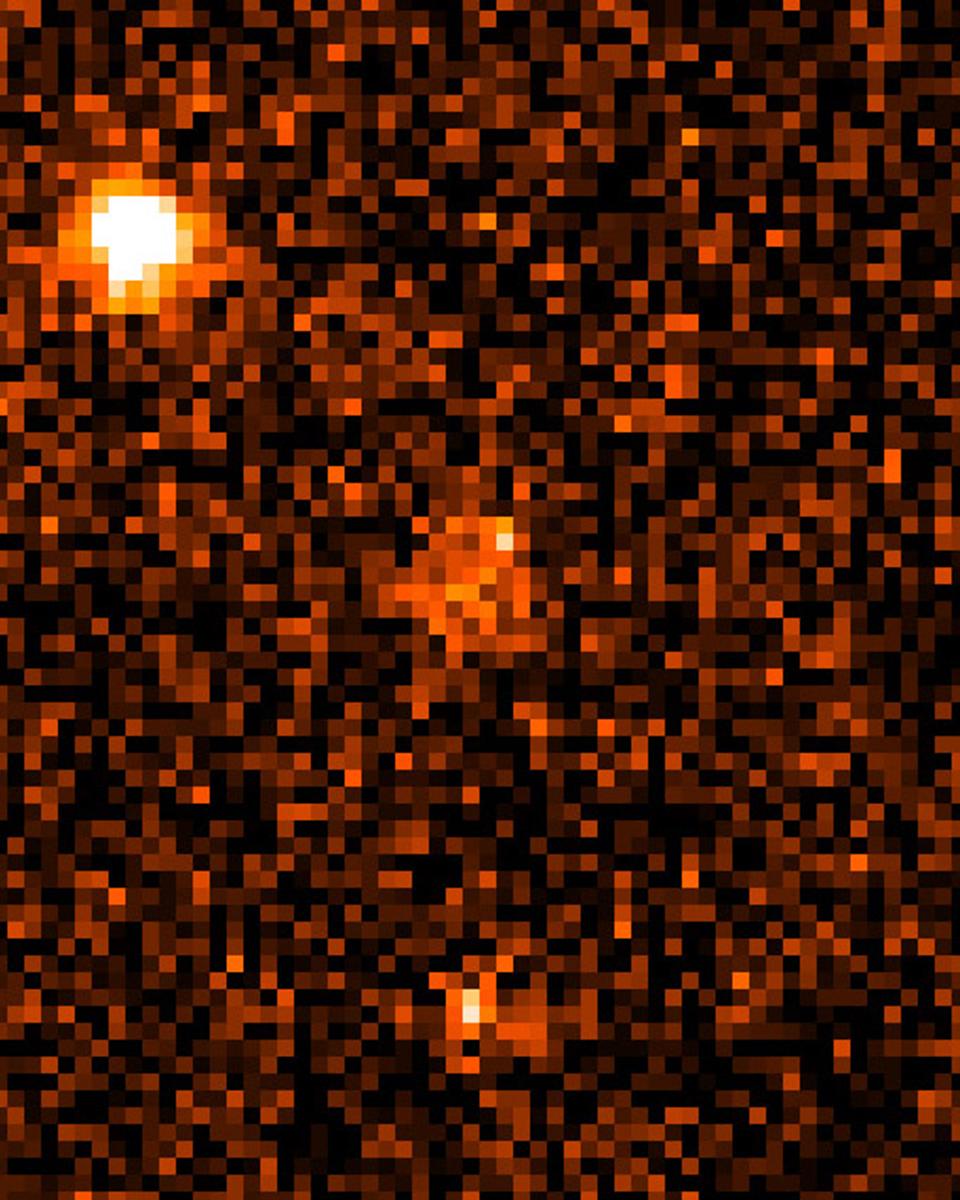
GRB Fireball Persists
It's still there. The optical counterpart to the instantly famous gamma-ray burst (GRB) that occurred last February 28th has faded - but not completely. The astronomical community…
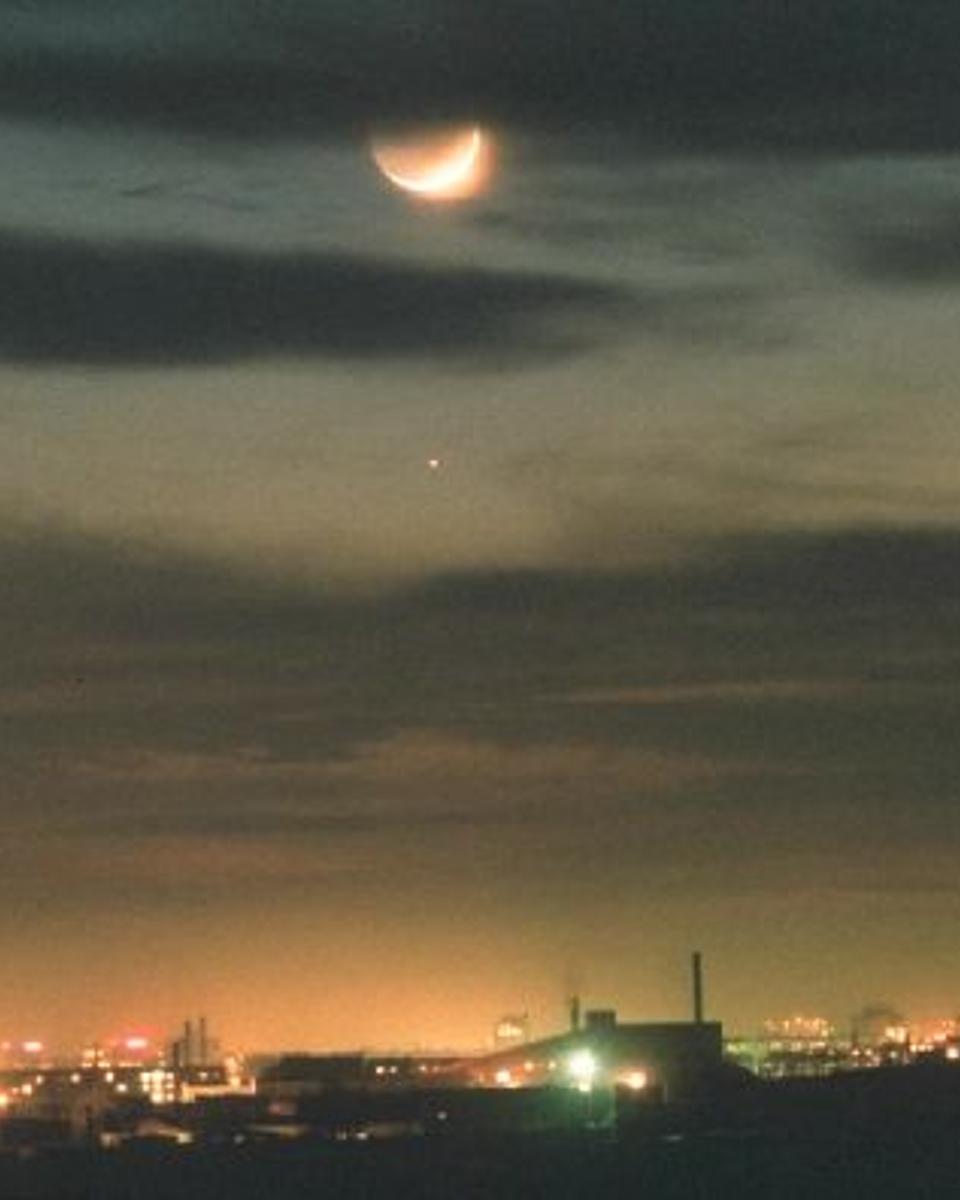
Moon Over Mongolia
Fighting clouds and the glow of city lights, a young Moon shines over the western horizon of Mongolia's capital Ulaan-Baatar. The thin sunlit crescent is 1.5 days old and strongly…
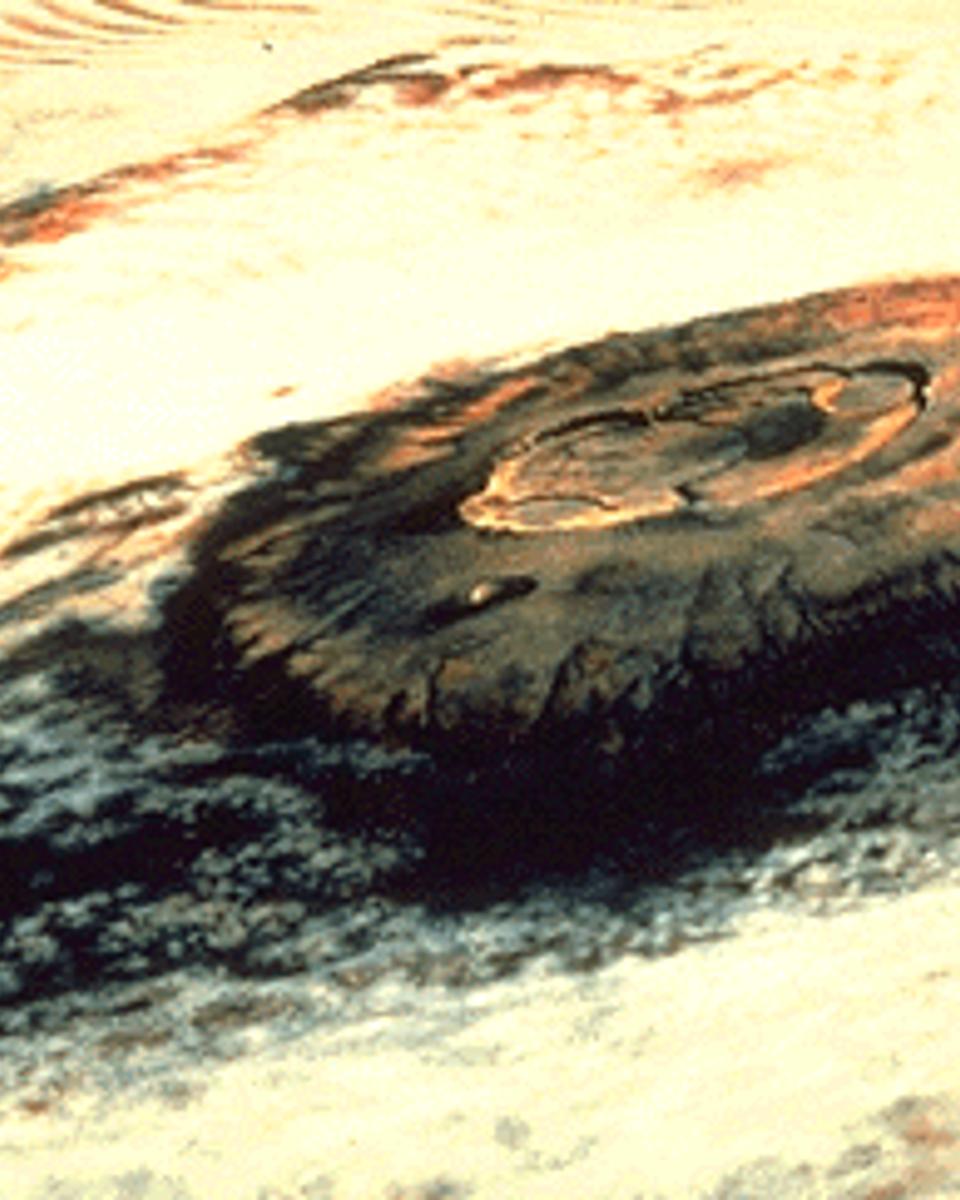
Olympus Mons on Mars: The Largest Volcano
The largest volcano in the Solar System is on Mars. Olympus Mons rises 24 kilometers high and measures 550 km across. By comparison, Earth' s largest volcano, Mauna Loa in Hawaii…
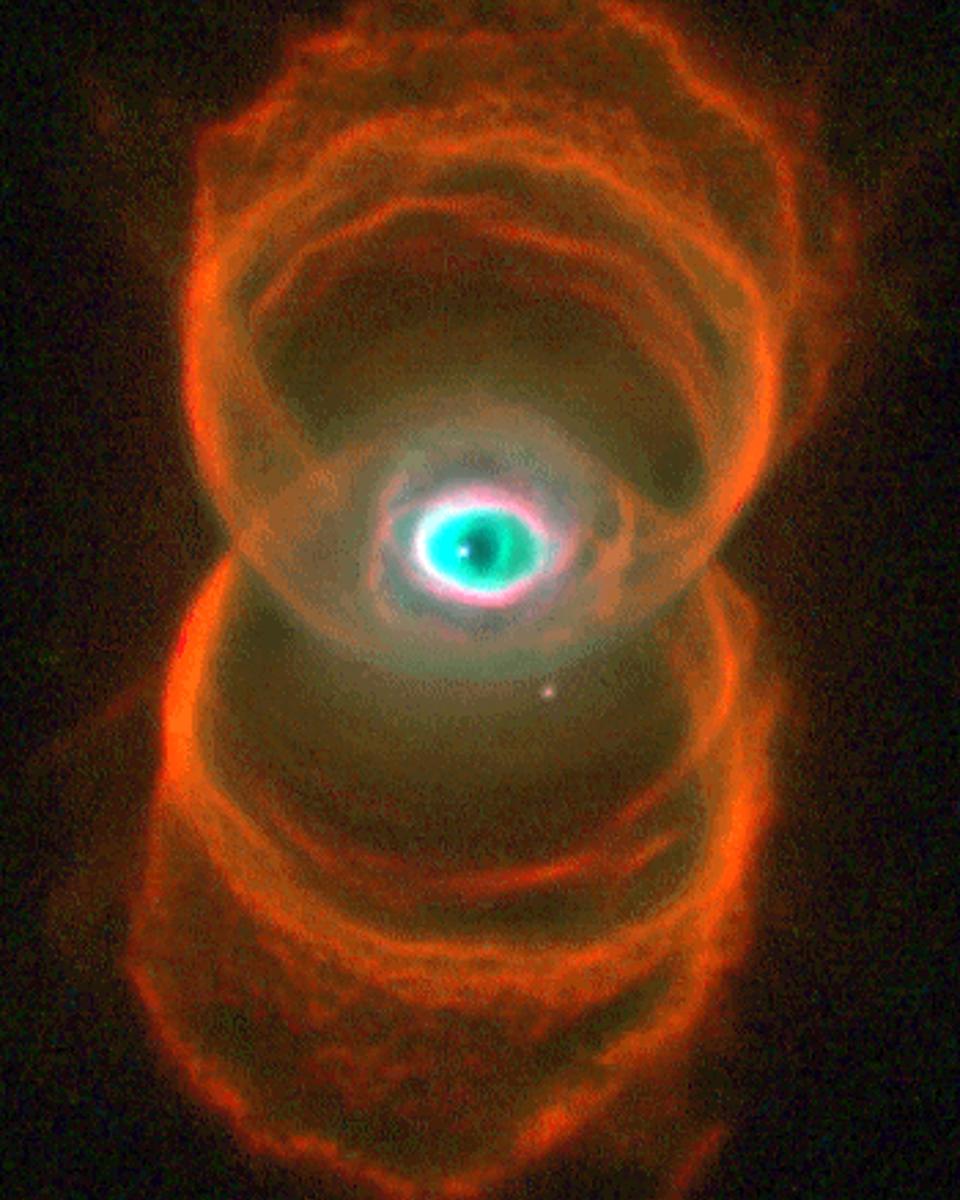
MyCn18: An Hourglass Nebula
The sands of time are running out for the central star of this hourglass-shaped planetary nebula . With its nuclear fuel exhausted, this brief, spectacular, closing phase of a…
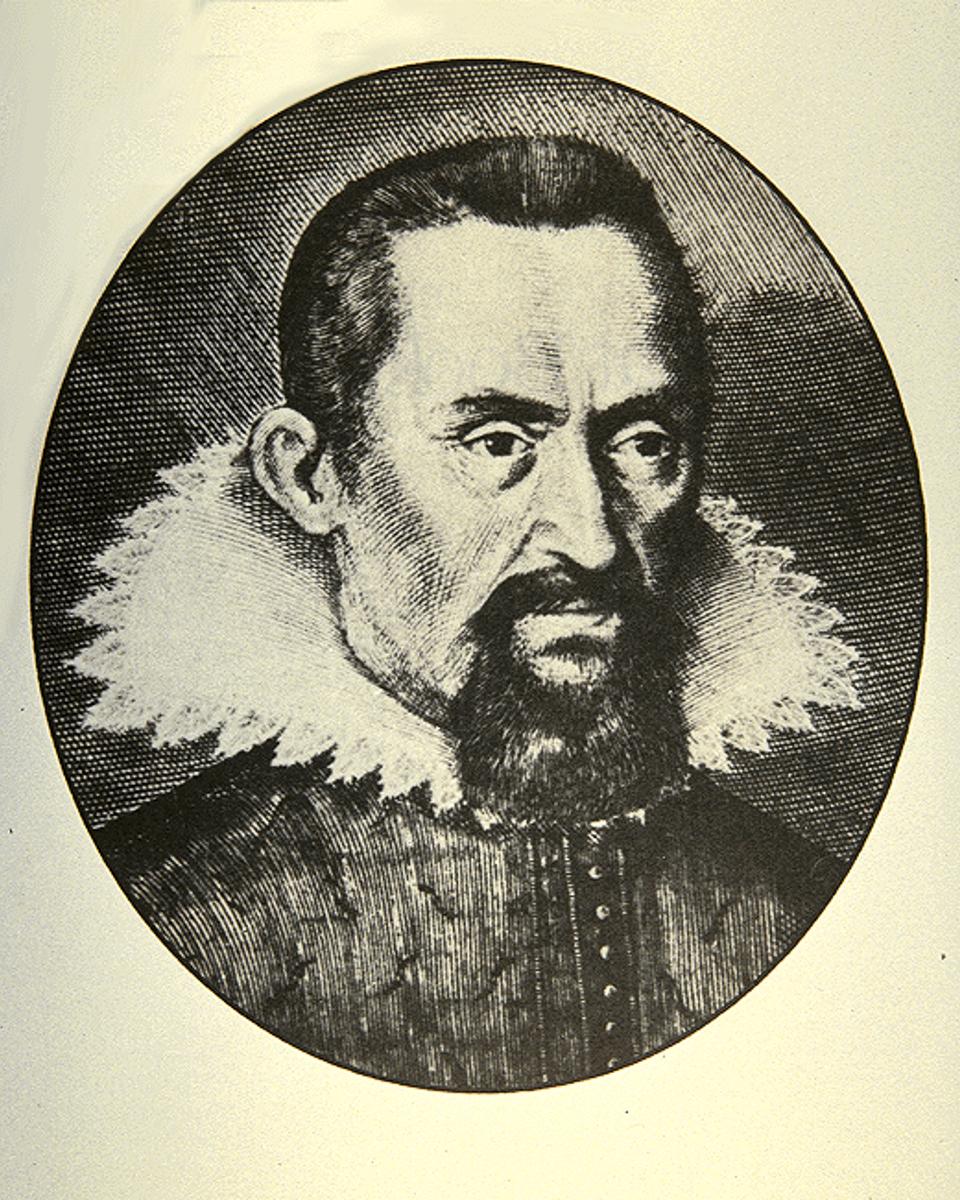
Kepler Discovers How Planets Move
Johannes Kepler used simple mathematics to describe how planets move. Kepler was an assistant to the most accurate astronomical observer of the time, Tycho Brahe . Kepler was able…
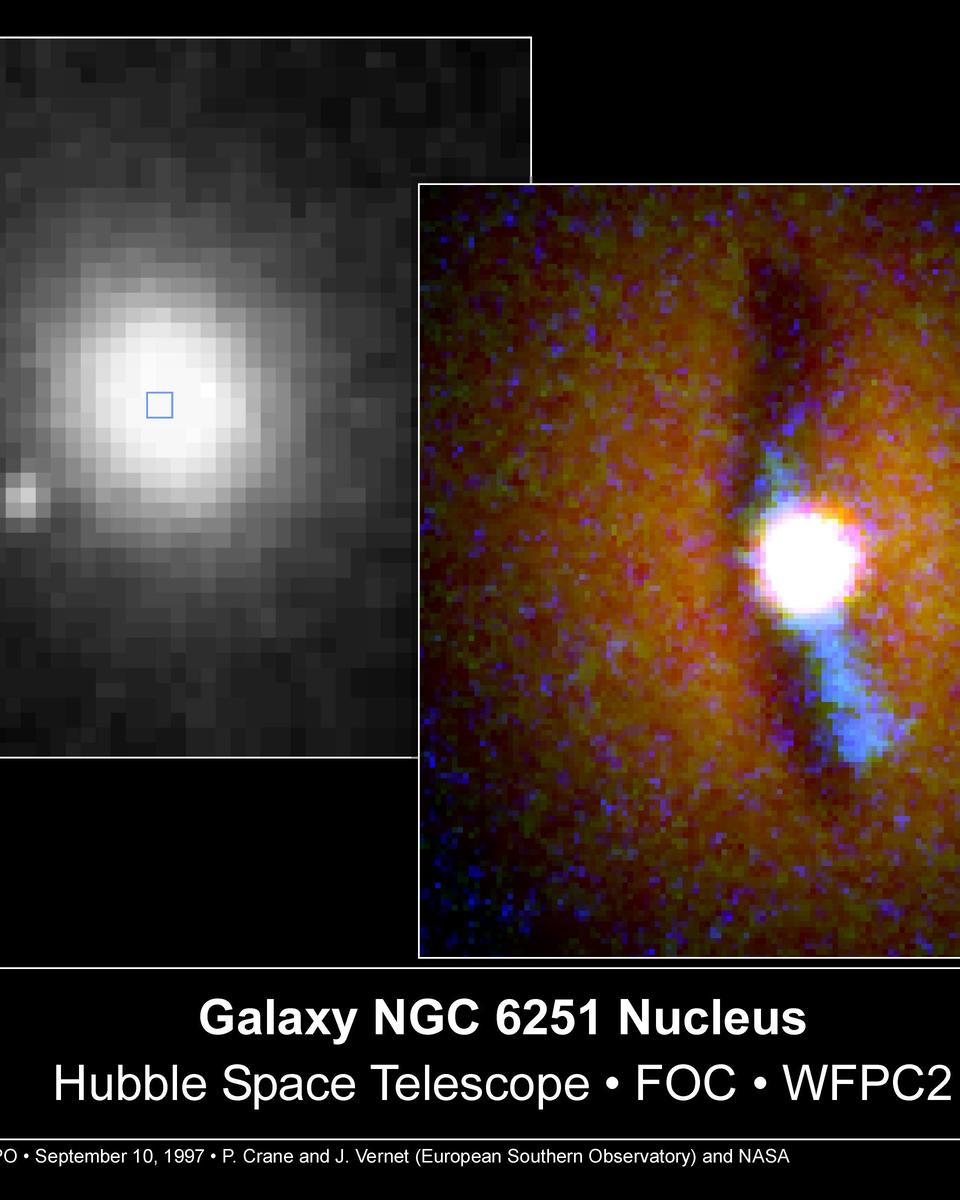
The Center of NGC 6251 is Glowing
Something is lighting up the center of galaxy NGC 6251. Leading speculation holds that it is a large black hole not shrouded by gas and dust typically found near the center of a…
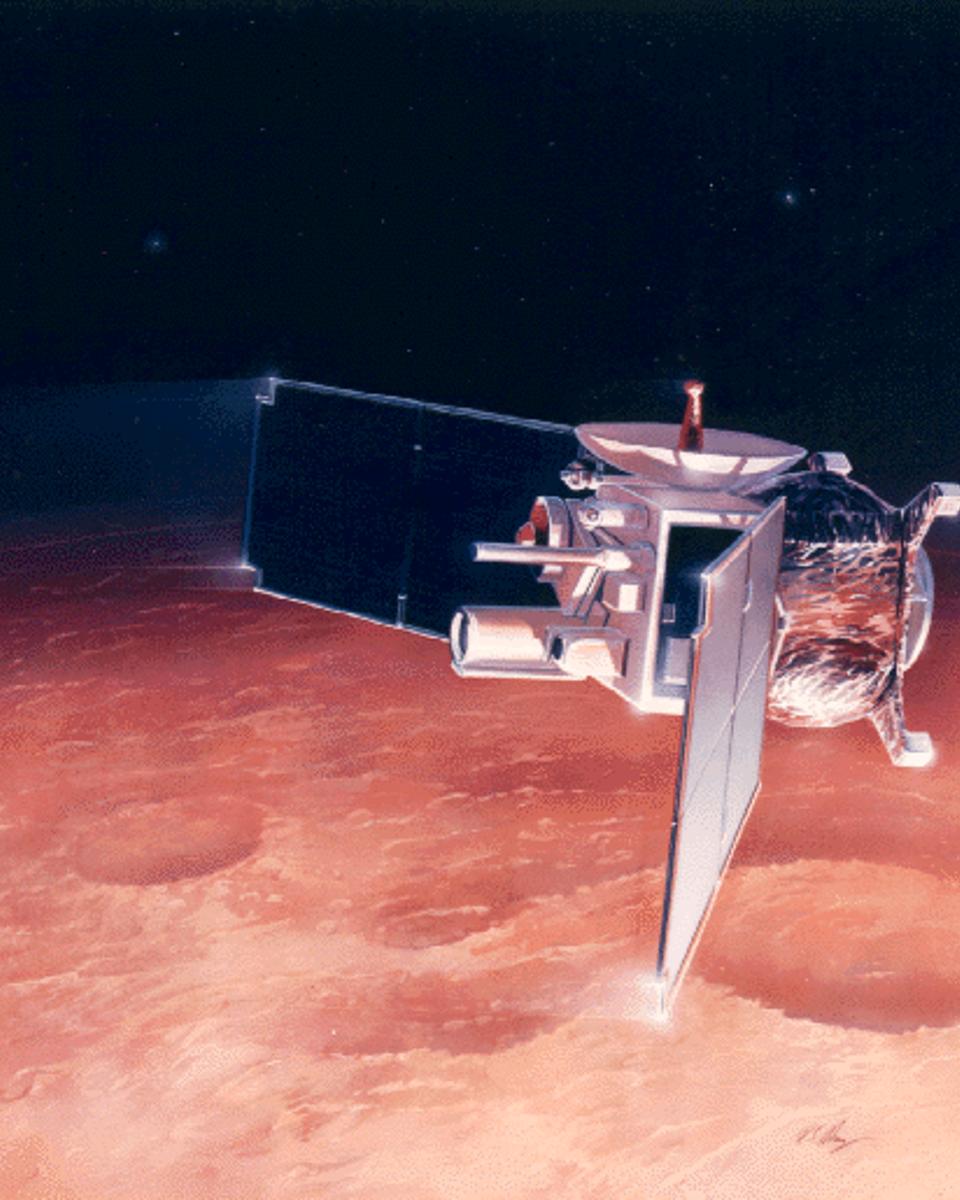
Mars Global Surveyor: Aerobraking
Completing a 10 month journey, another spacecraft from Earth arrives at Mars today . The Mars Global Surveyor (MGS) is scheduled to fire its main rocket engine for 22 minutes at…
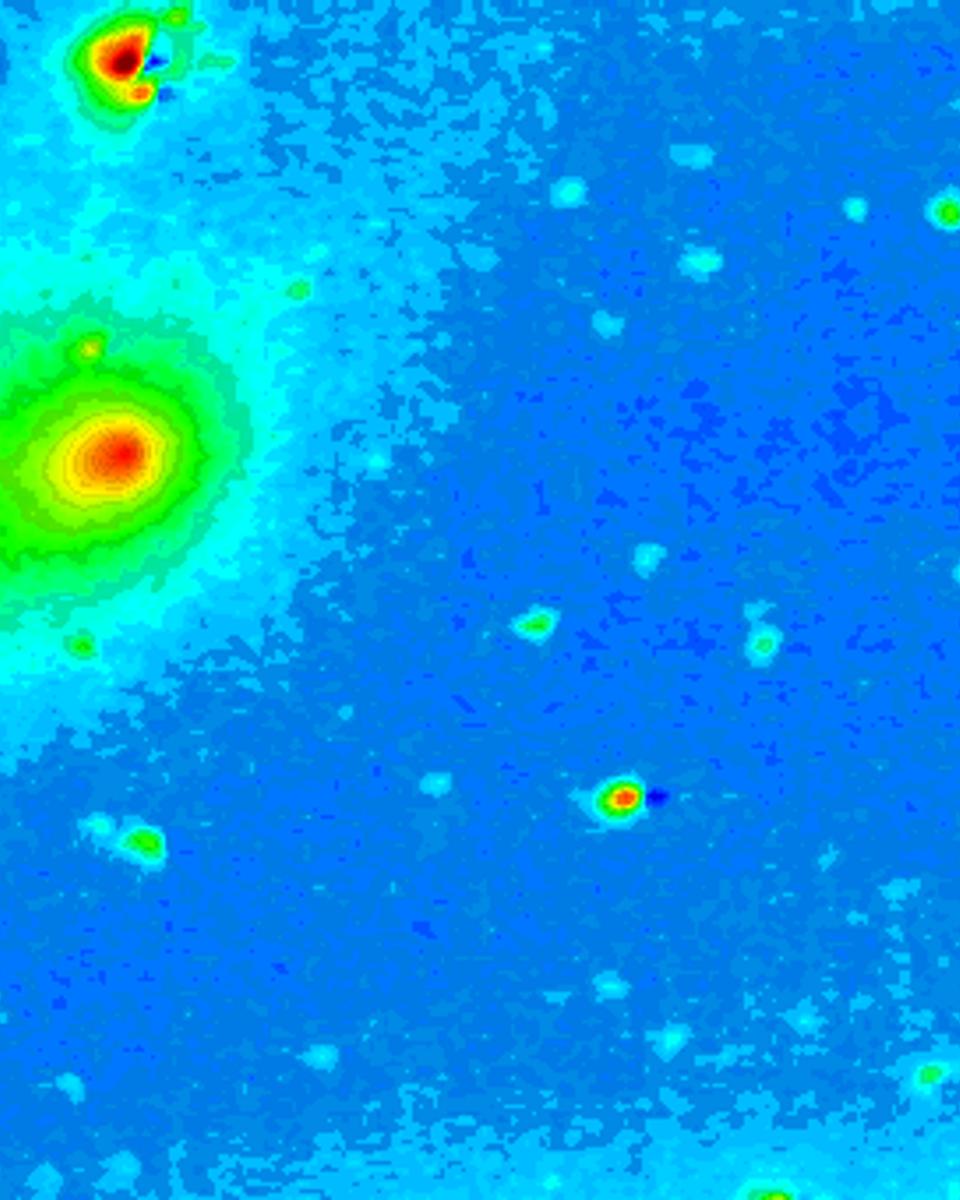
Comet Hale-Bopp Outbound
Hale-Bopp , the Comet of the Century , is leaving the inner Solar System. Outbound at about 12 miles per second it is presently nearing the main asteroid belt between Mars and…
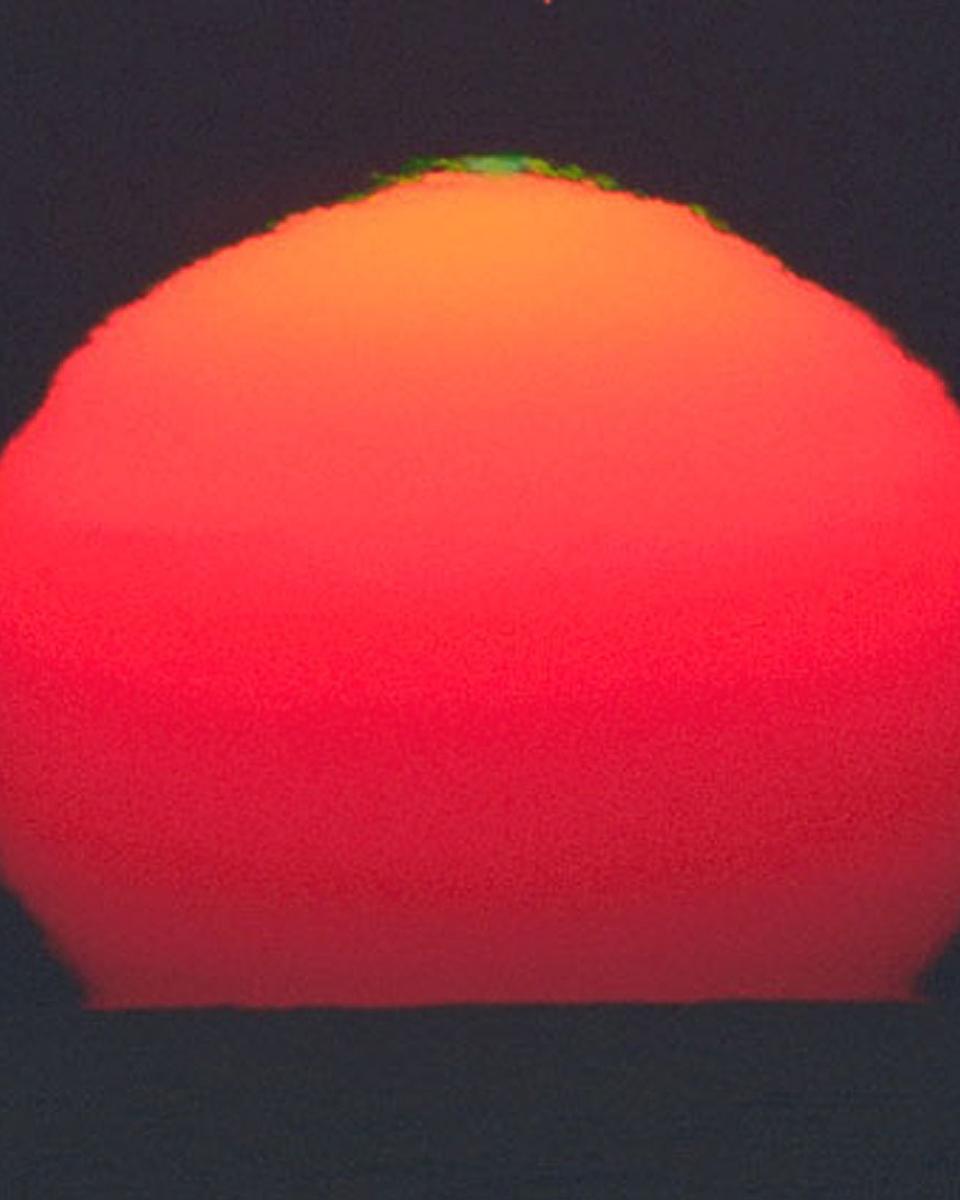
A Green Flash from the Sun
Many think it is just a myth. Others think it is true but its cause isn't known. Adventurers pride themselves on having seen it. It's a green flash from the Sun . The truth is the…
Viewing discoveries from 2 October 1997 through 9 September 1997.