Browse NASA Astronomy Picture of the Day archive by date and media: Archive Discoveries
Browse the NASA APOD archive without needing the exact date first. Filter by media type and keep moving deeper into older images and videos.
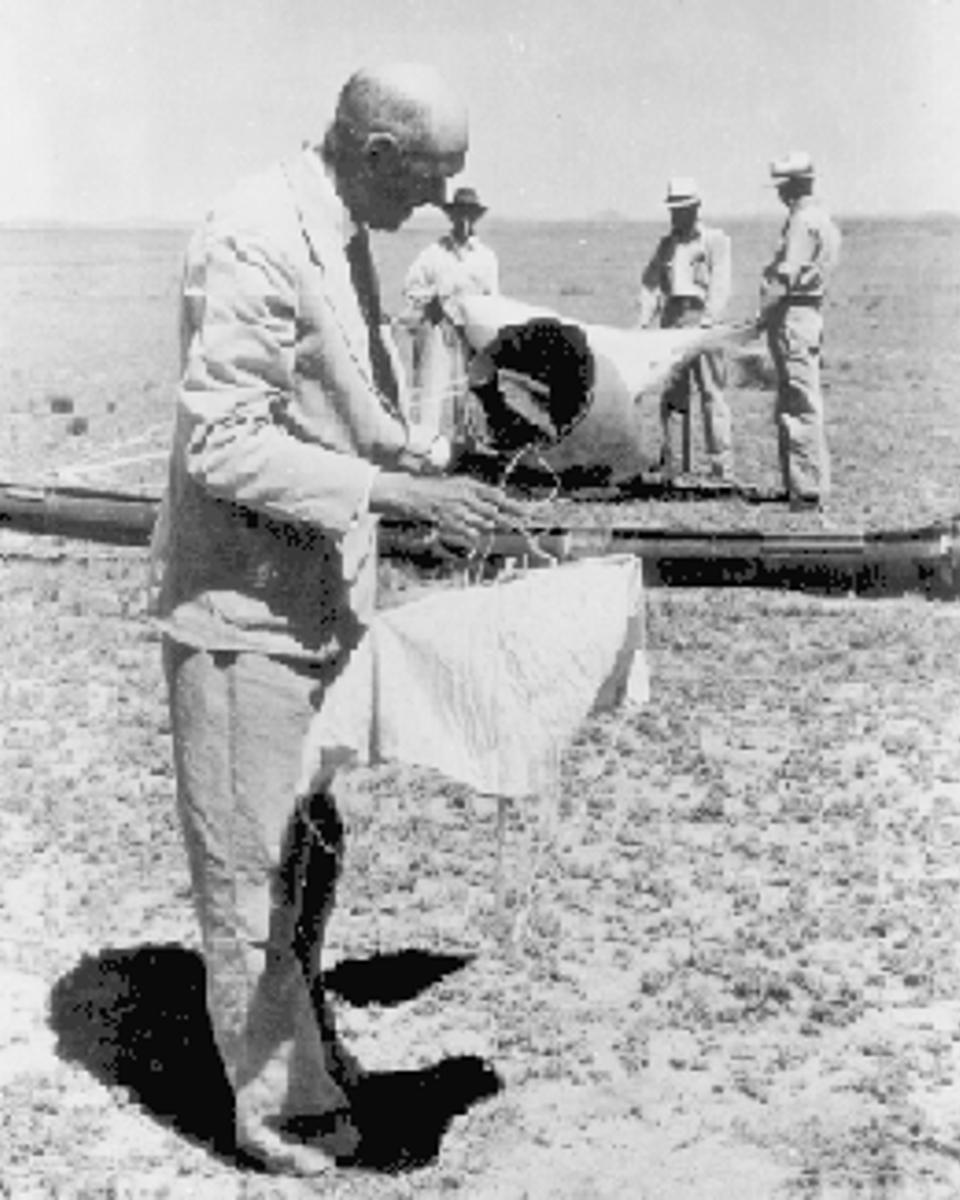
Rockets and Robert Goddard
Robert H. Goddard , one of the founding fathers of modern rocketry, was born in Worcester Massachusetts in 1882. As a 16 year old, Goddard read H.G. Wells' science fiction classic…
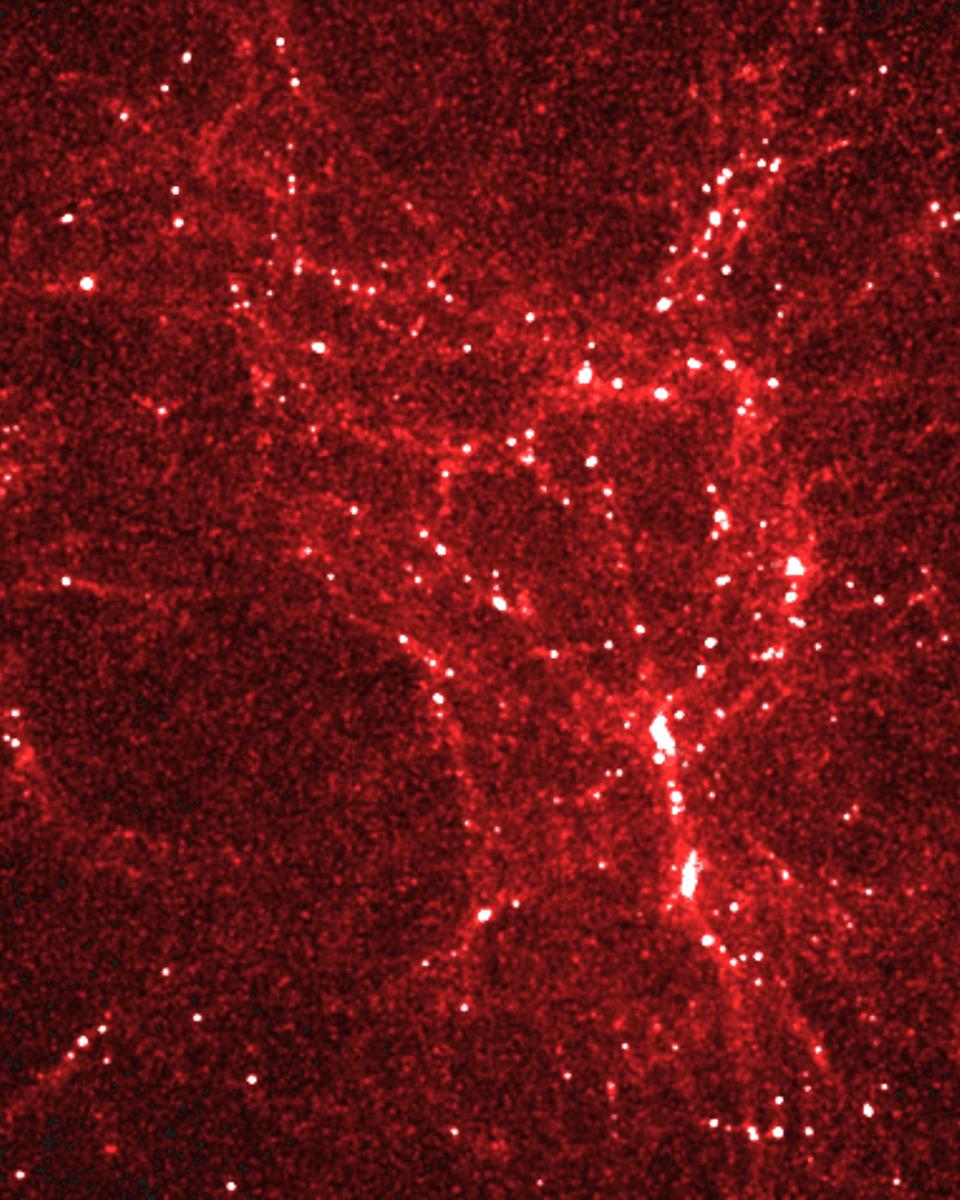
The Early Universe
What did our universe look like when it was young? To answer this, cosmologists run sophisticated computer programs tracking the locations of millions of particles. The above…
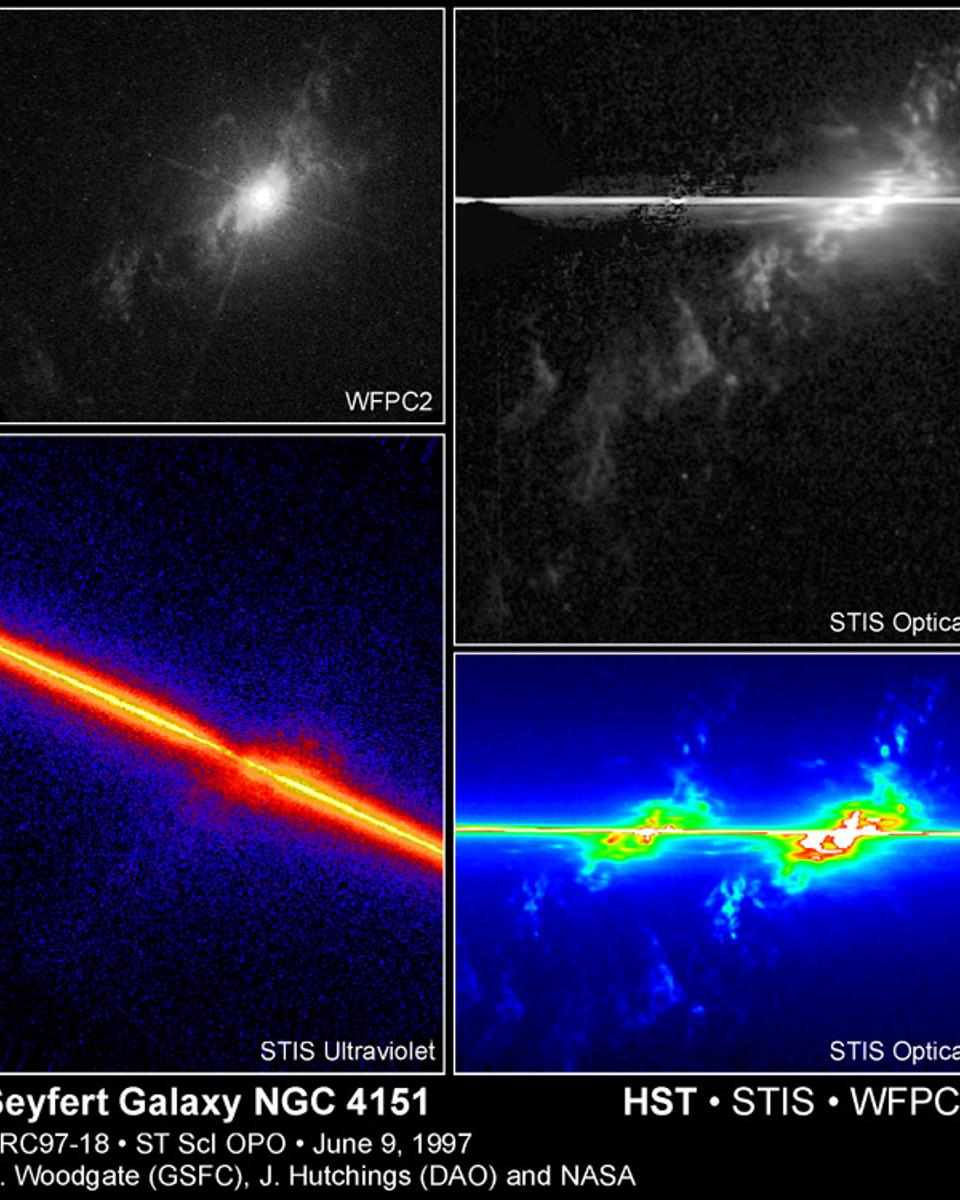
Streaming From A Black Hole
Glowing gas clouds are streaming from the core of galaxy NGC4151 at hundreds of thousands of miles per hour. A powerful tool, the Hubble Space Telescope's new STIS instrument ,…
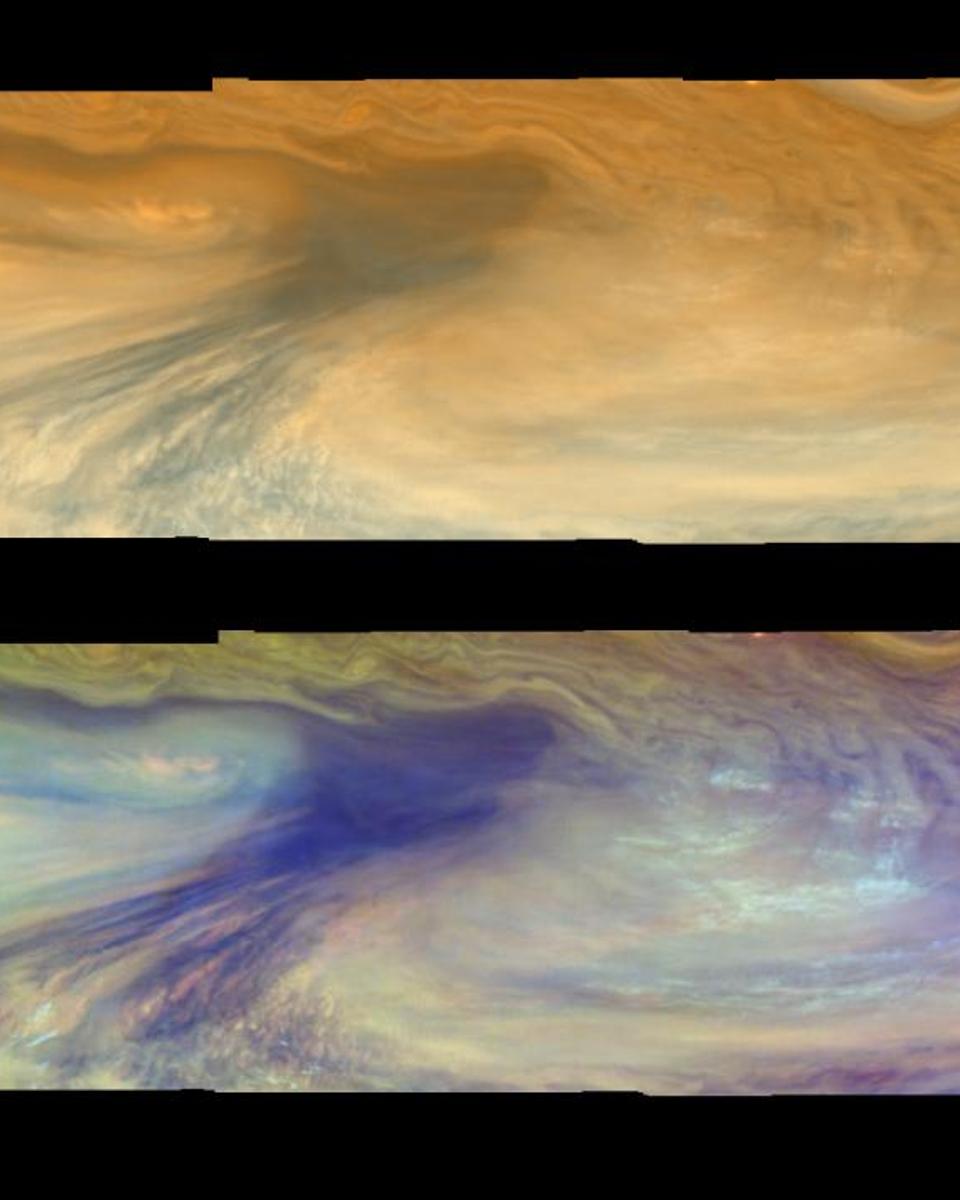
Jupiter's Dry Spots
Known for its spectacular images of Jupiter's moons, Io , Ganymede , Callisto , and Europa , the robot spacecraft Galileo has also aggressively explored the Jovian atmosphere. In…
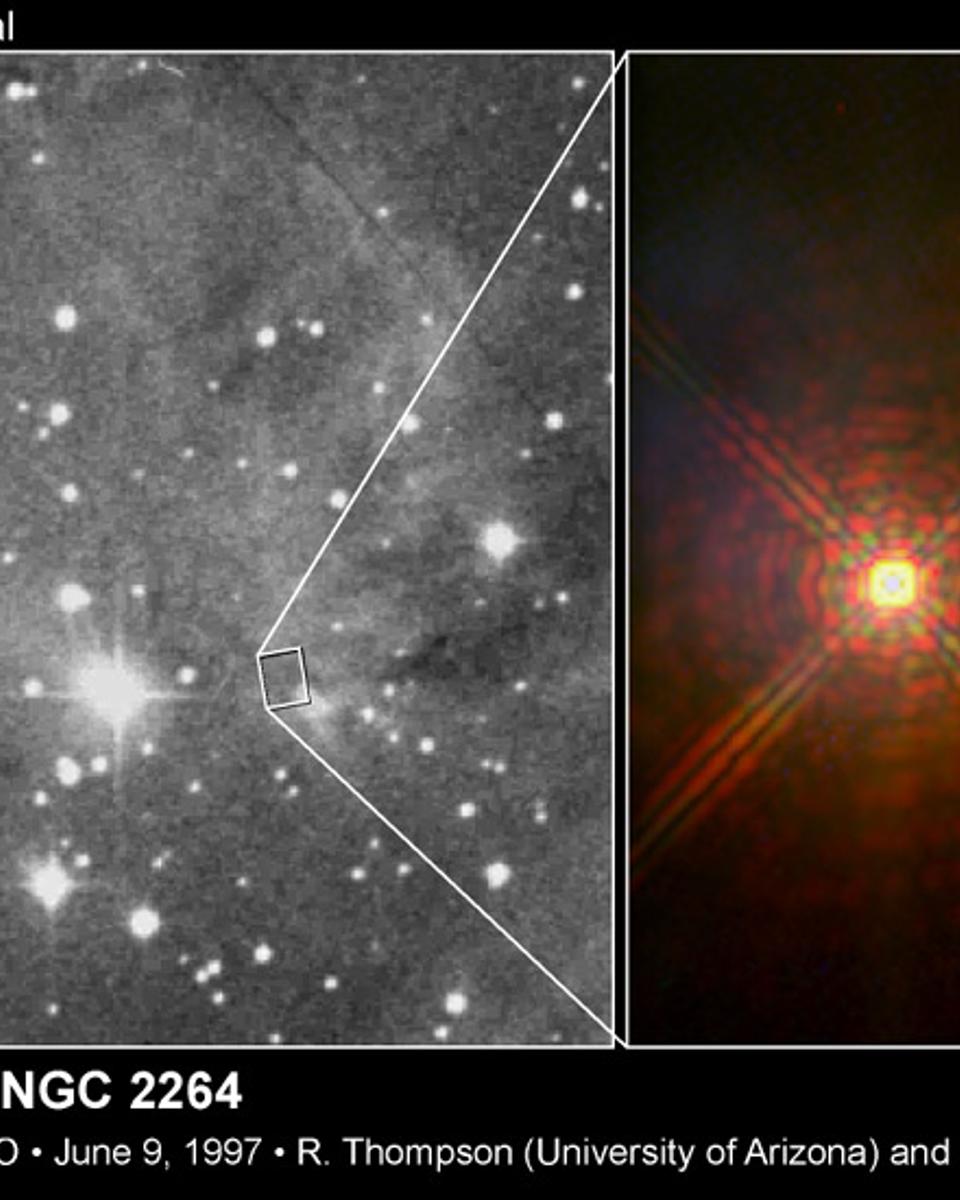
Young Suns
The star cataloged as NGC2264 IRS is normally hidden from the inquiring gaze of optical telescopes . It resides in the midst of the obscuring gas and dust of a nearby star forming…
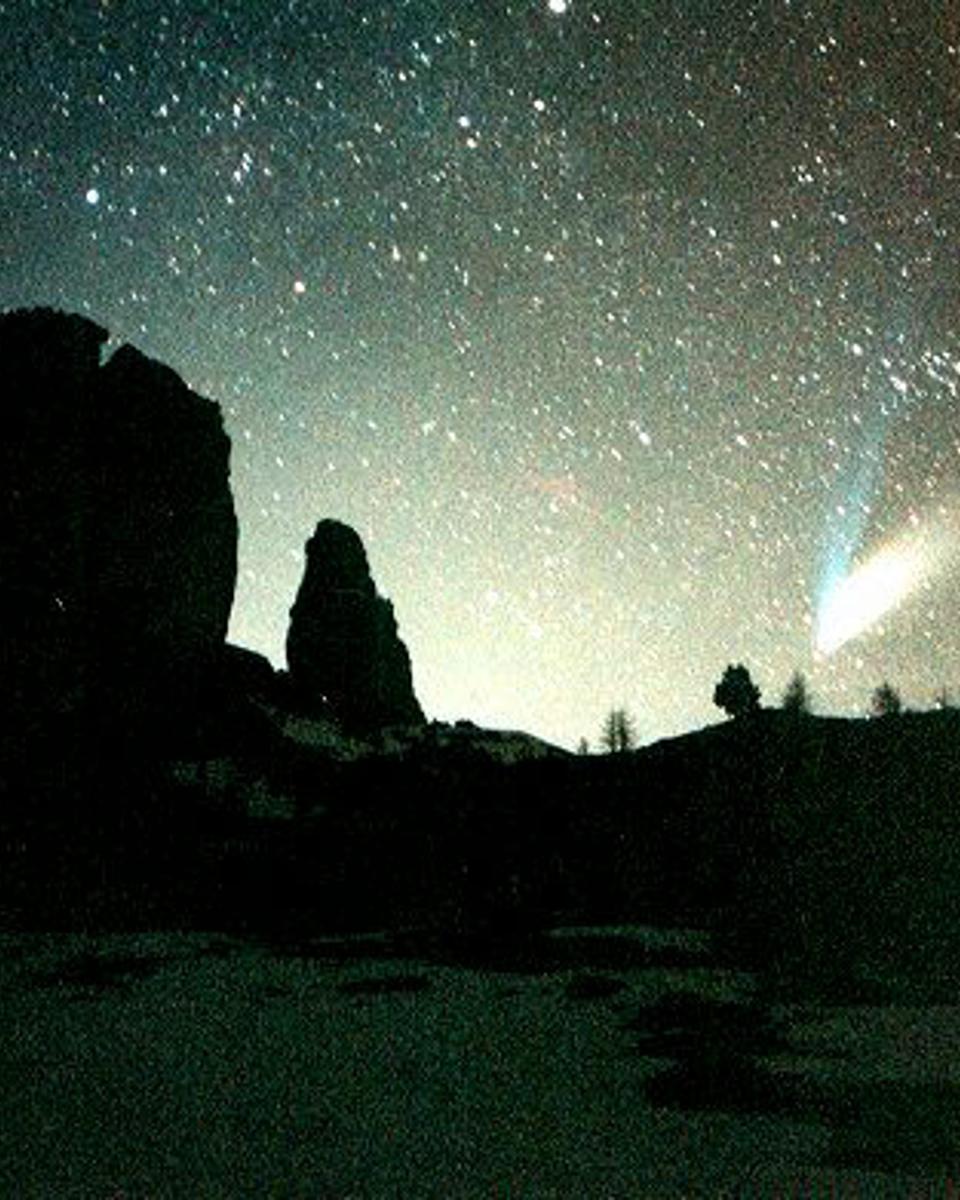
Hale-Bopp Above the Cinqui Torri Mountains
Hale-Bopp may be the most photographed comet in history. Above , our photogenic giant flying snowball appeared last month as a backdrop to the “Cinque Torri” Mountains near…
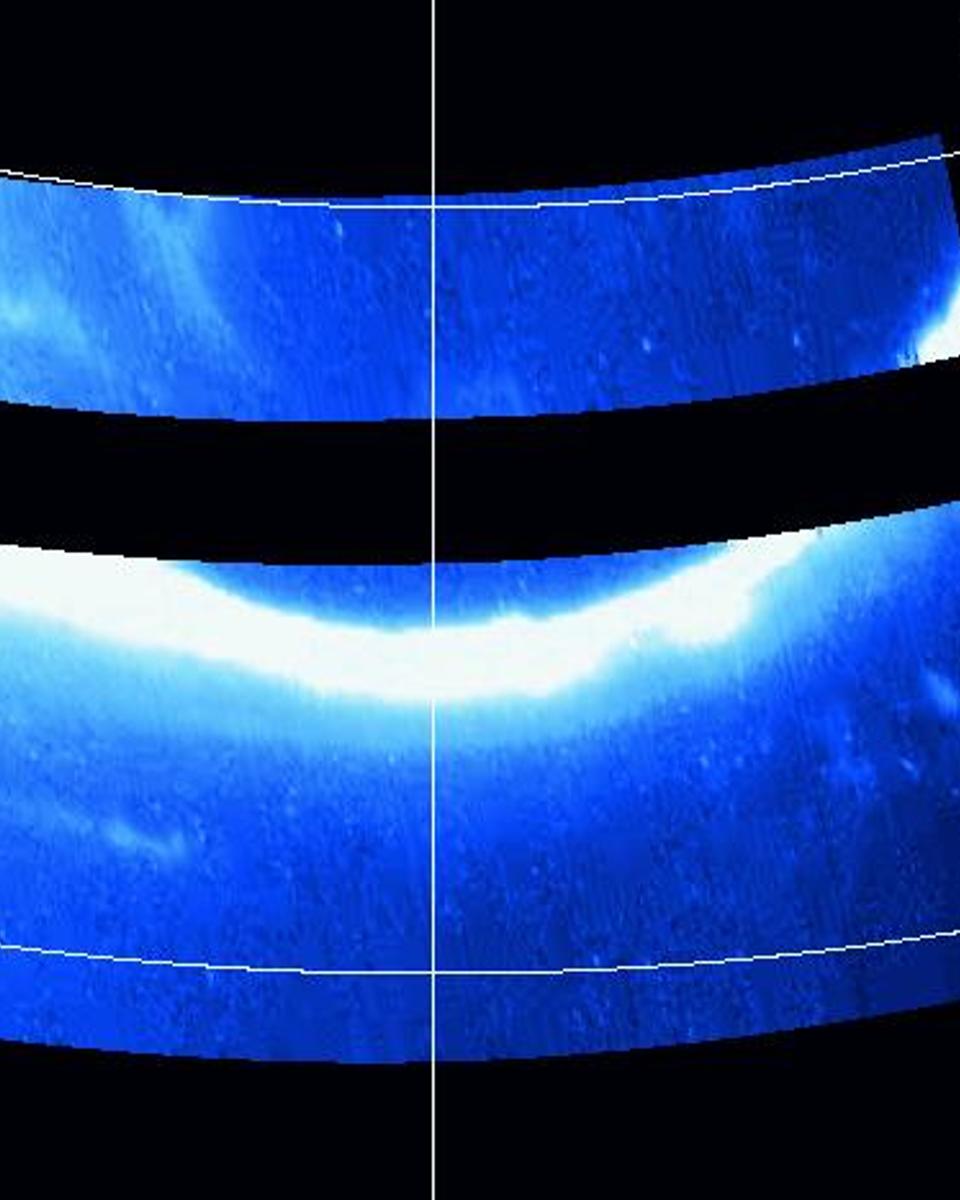
An Auroral Ring on Jupiter
Do other planets have aurora? Terrestrial and spacecraft observations have found evidence for aurora on Venus , Mars , Jupiter , Saturn , Uranus , and Neptune . In the above…
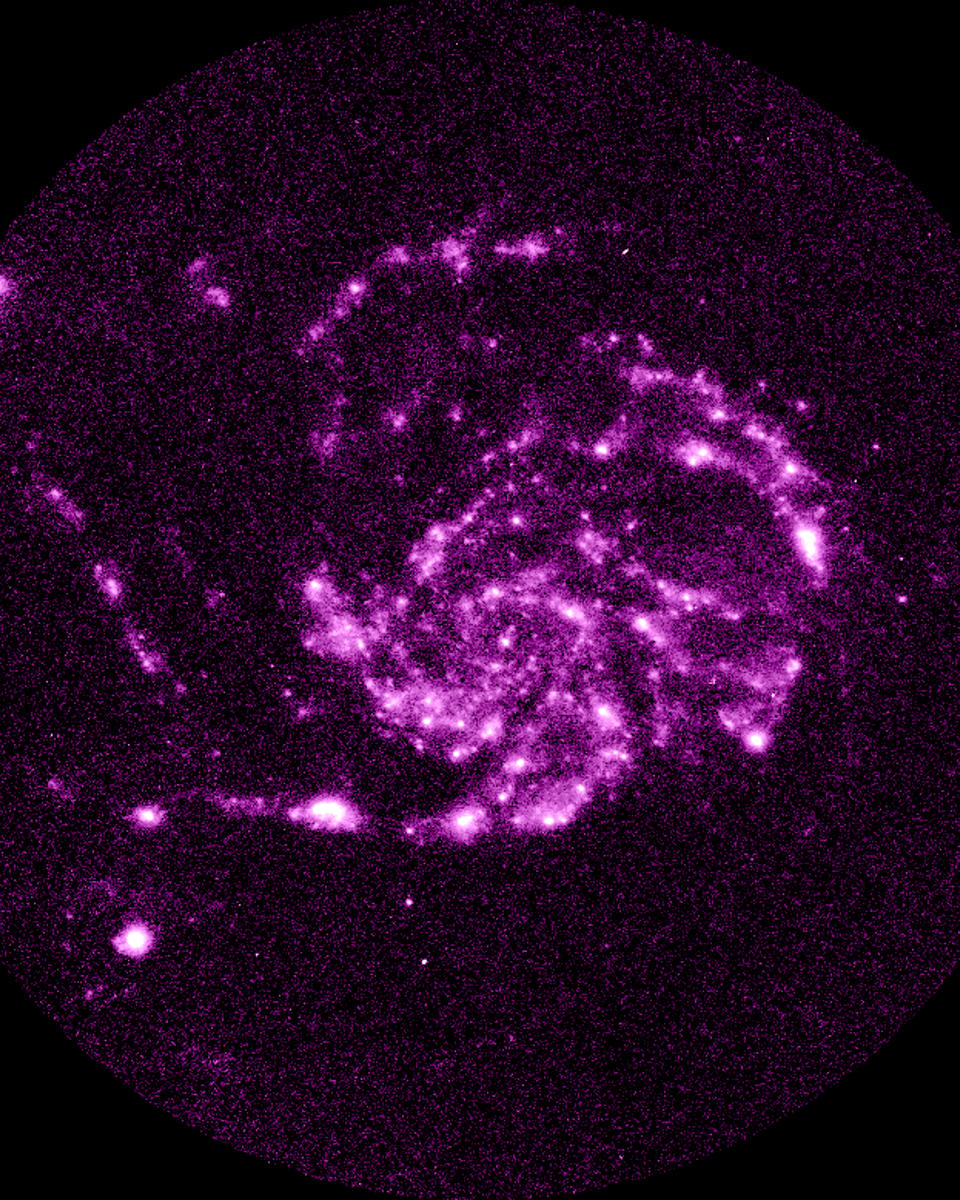
M101: An Ultraviolet View
Explanation : This giant spiral galaxy, Messier 101 (M101) , was photographed by the Ultraviolet Imaging Telescope ( UIT ). UIT flew into orbit as part of the Astro 2 mission…
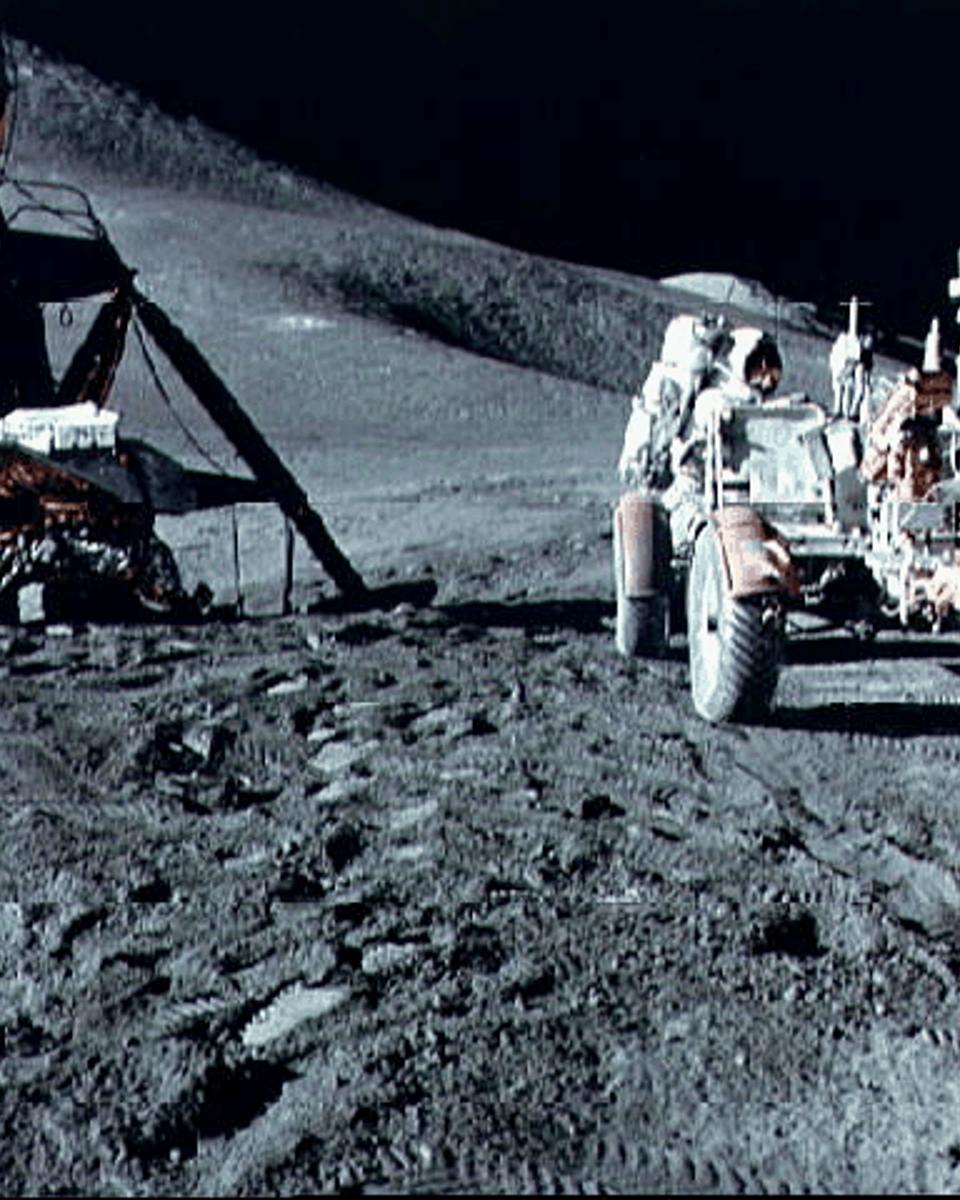
Apollo 15: Driving on the Moon
Apollo 15 astronaut James Irwin works on the first Lunar Roving Vehicle , before he and fellow astronaut David Scott take it out for a drive. Sloping up behind the lunar module…
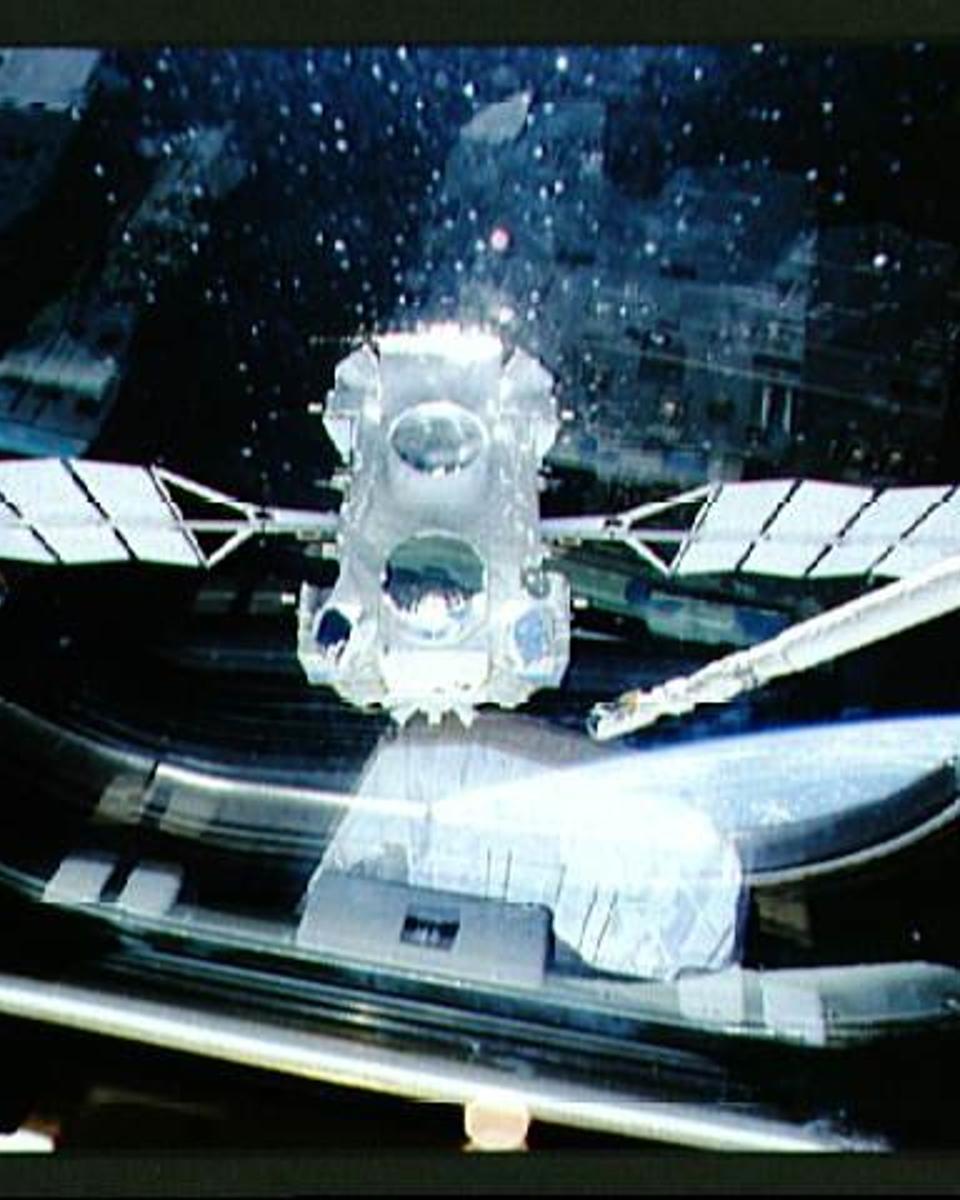
Boosting Compton
Explanation : Even great observatories need a boost from time to time -- including the orbiting Compton Gamma-Ray Observatory . Sparkling reflections and the bright limb of the…
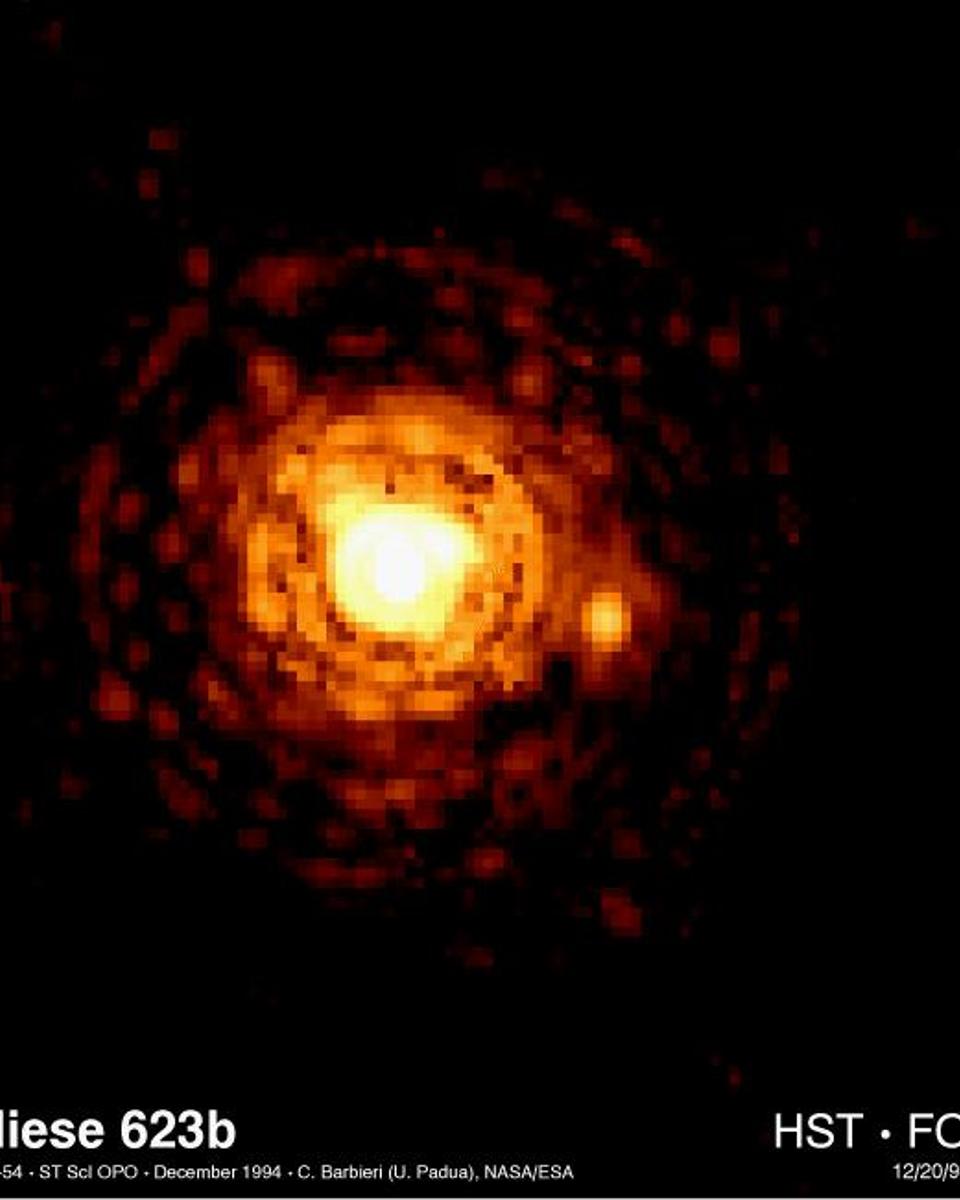
Small Star
Explanation : A dim double star system cataloged as Gliese 623 lies 25 light-years from Earth, in the constellation of Hercules . The individual stars of this binary system were…
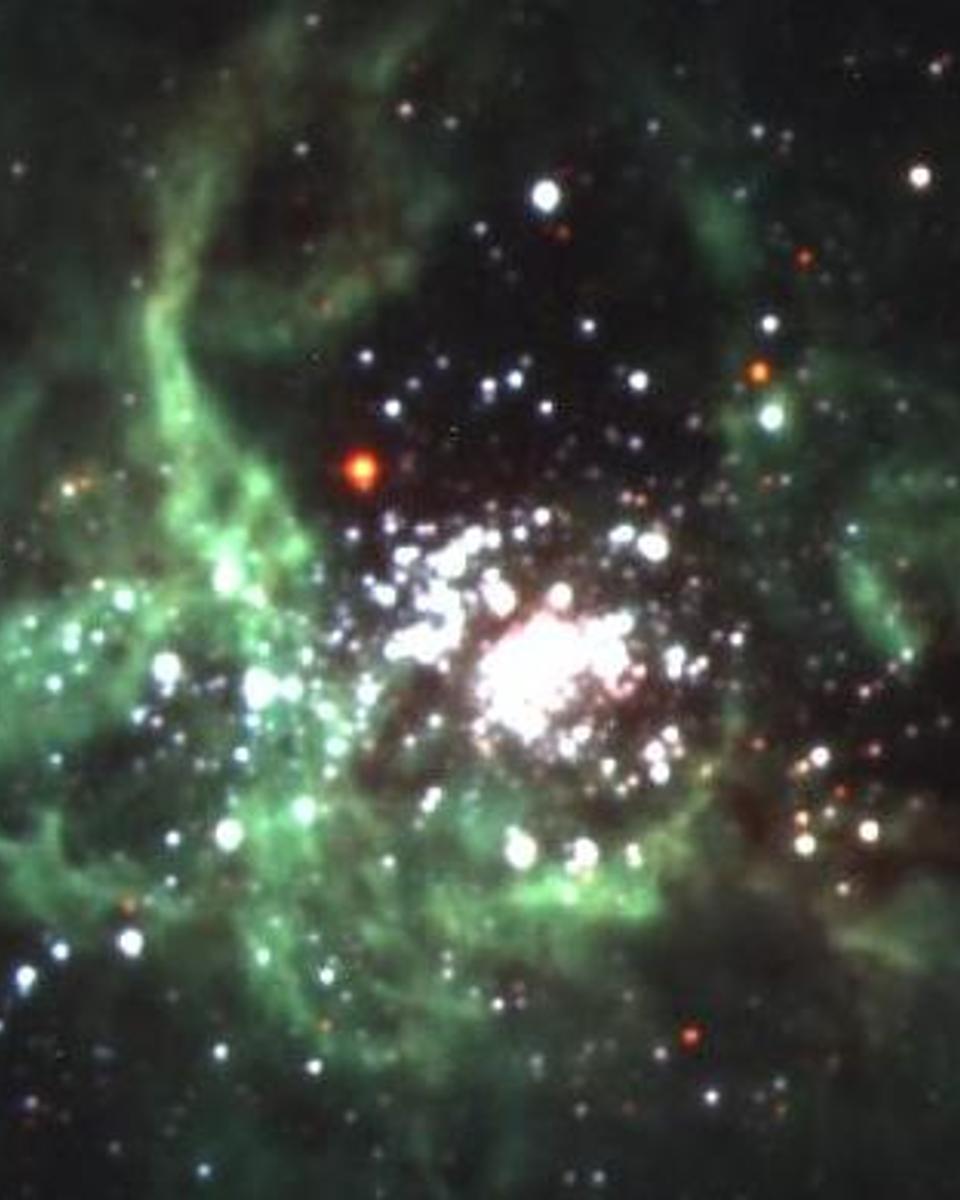
Tarantula
Explanation : NGC 2070 is an immense star forming region in a nearby galaxy known as the Large Magellanic Cloud . Its spidery appearance is responsible for its popular name, “The…
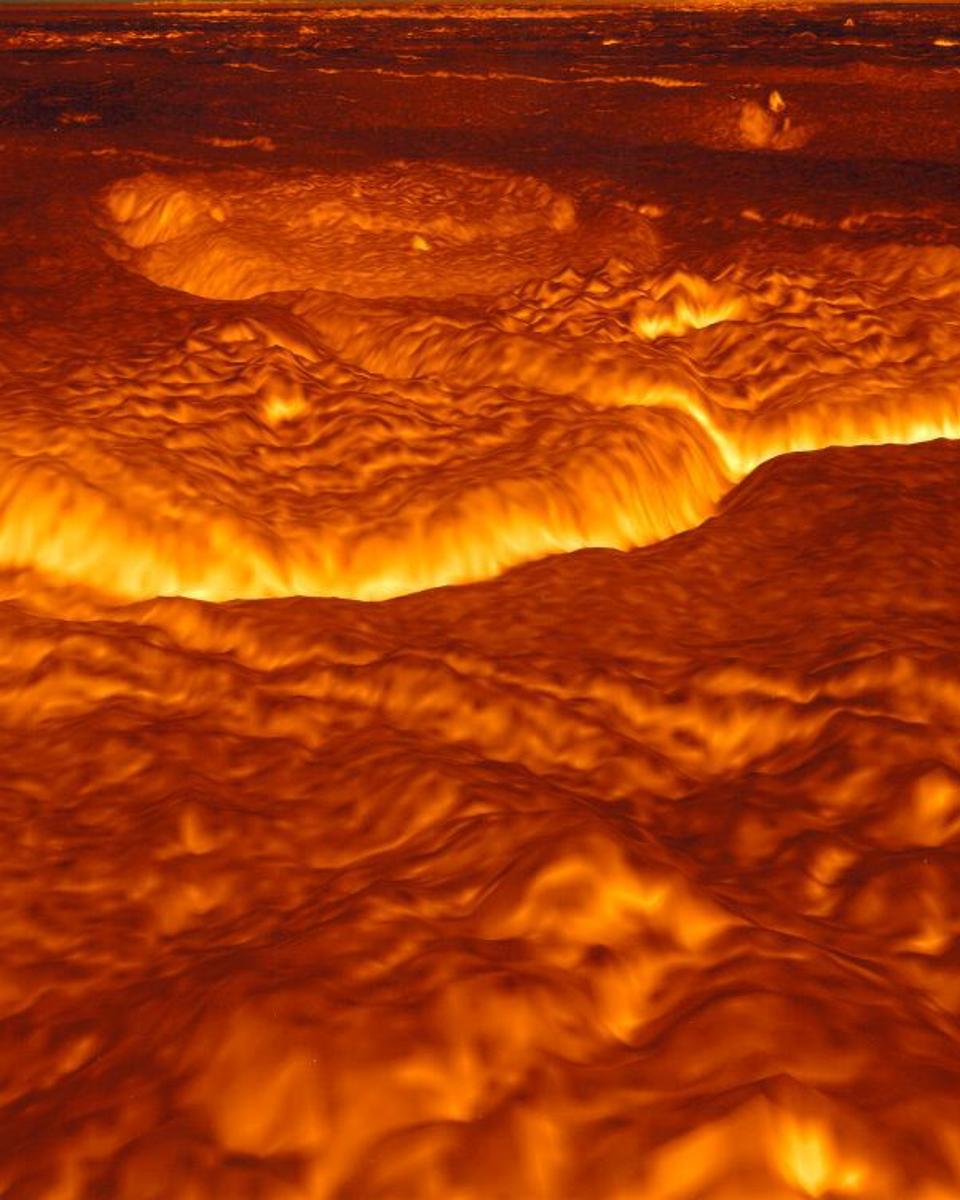
Venus' Once Molten Surface
Explanation : If you could look at Venus with radar eyes - this is what you might see. This computer reconstruction of the surface of Venus was created from data from the Magellan…
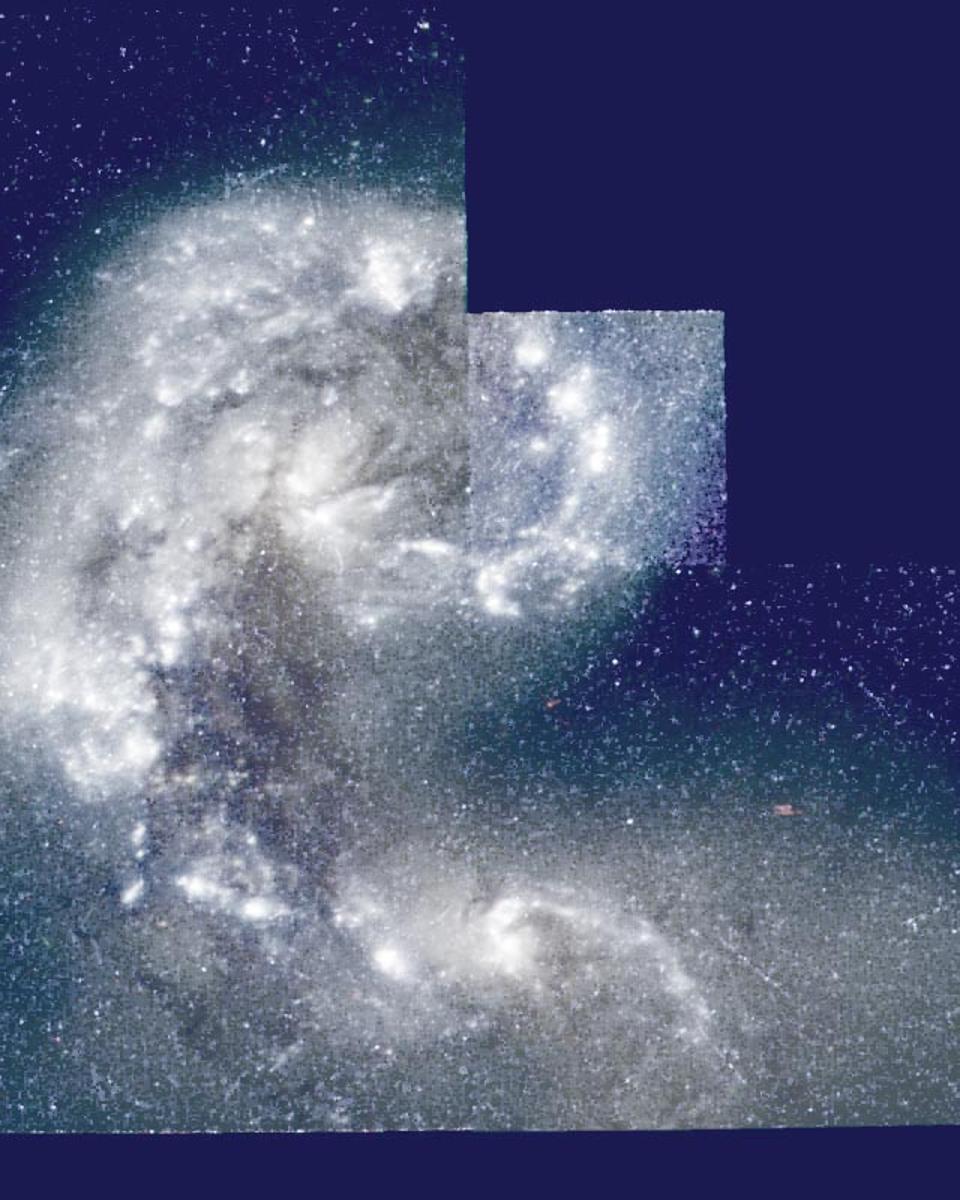
Bright Star Knots in NGC 4038
Explanation : This galaxy is having a bad millennium. In fact, the past 100 million years haven't been so good, and probably the next billion or so should be quite tumultuous. NGC…
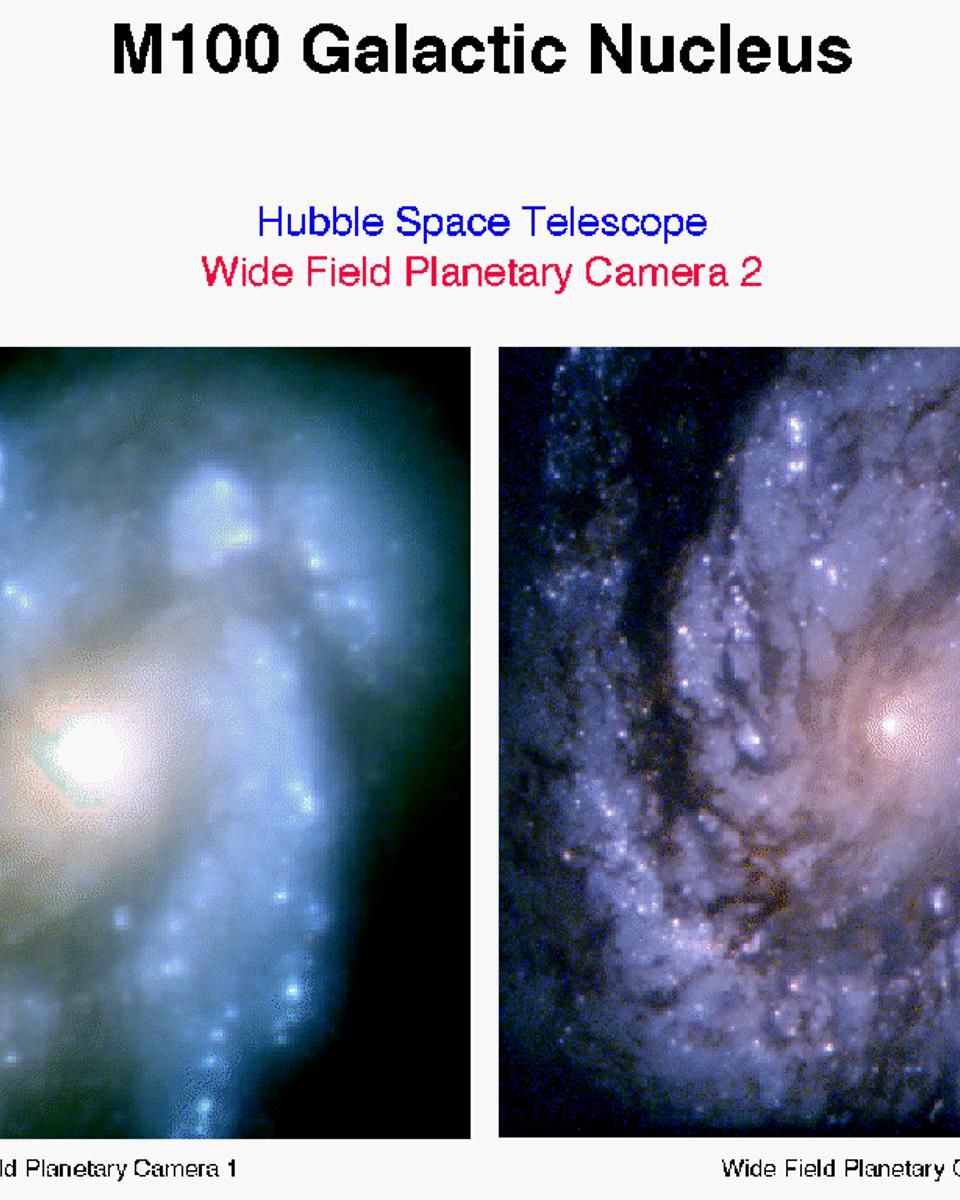
M100: A Grand Design
Majestic on a truly cosmic scale, M100 is appropriately known as a Grand Design spiral galaxy . A large galaxy of over 100 billion or so stars with well defined spiral arms , it…
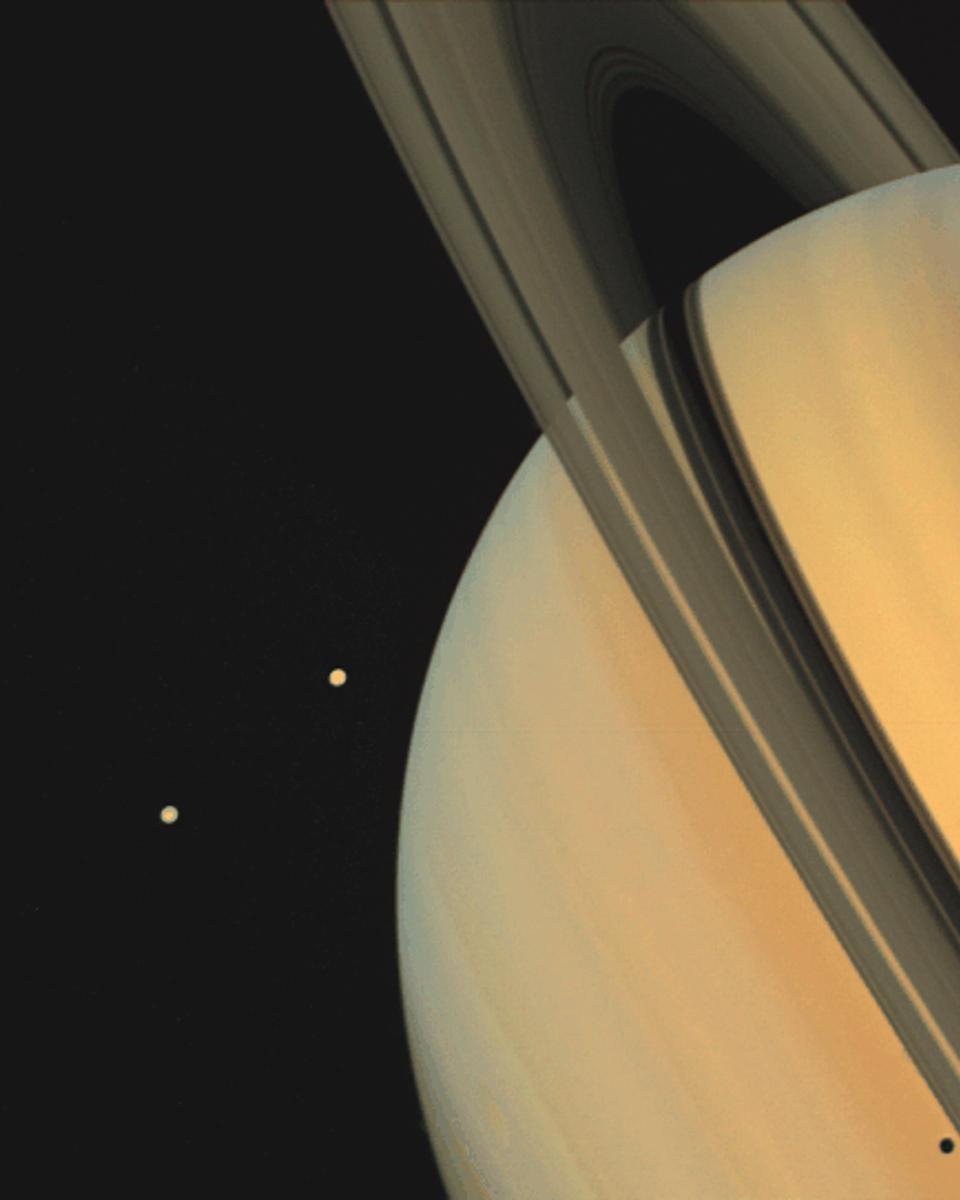
Saturn with Moons Tethys and Dione
Saturn and two of its larger moons - Tethys and Dione - were photographed by the Voyager 1 spacecraft which flew by the planet in November of 1980. This picture gives an…
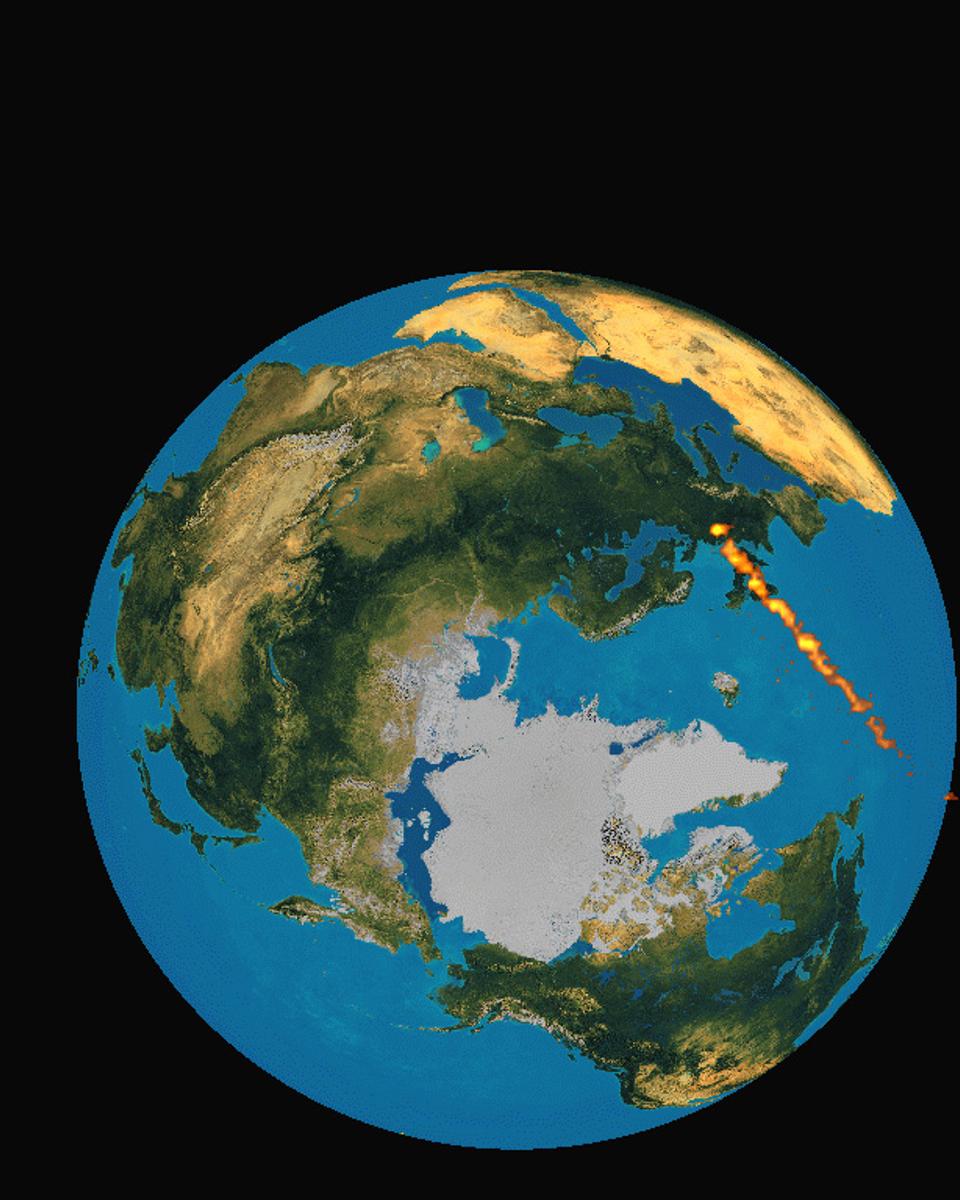
A Cosmic Snowball
Like cosmic snowballs, fluffy comet-like objects the size of houses and composed mostly of water-ice, may be pummeling planet Earth 5 to 30 times a minute. This controversial…
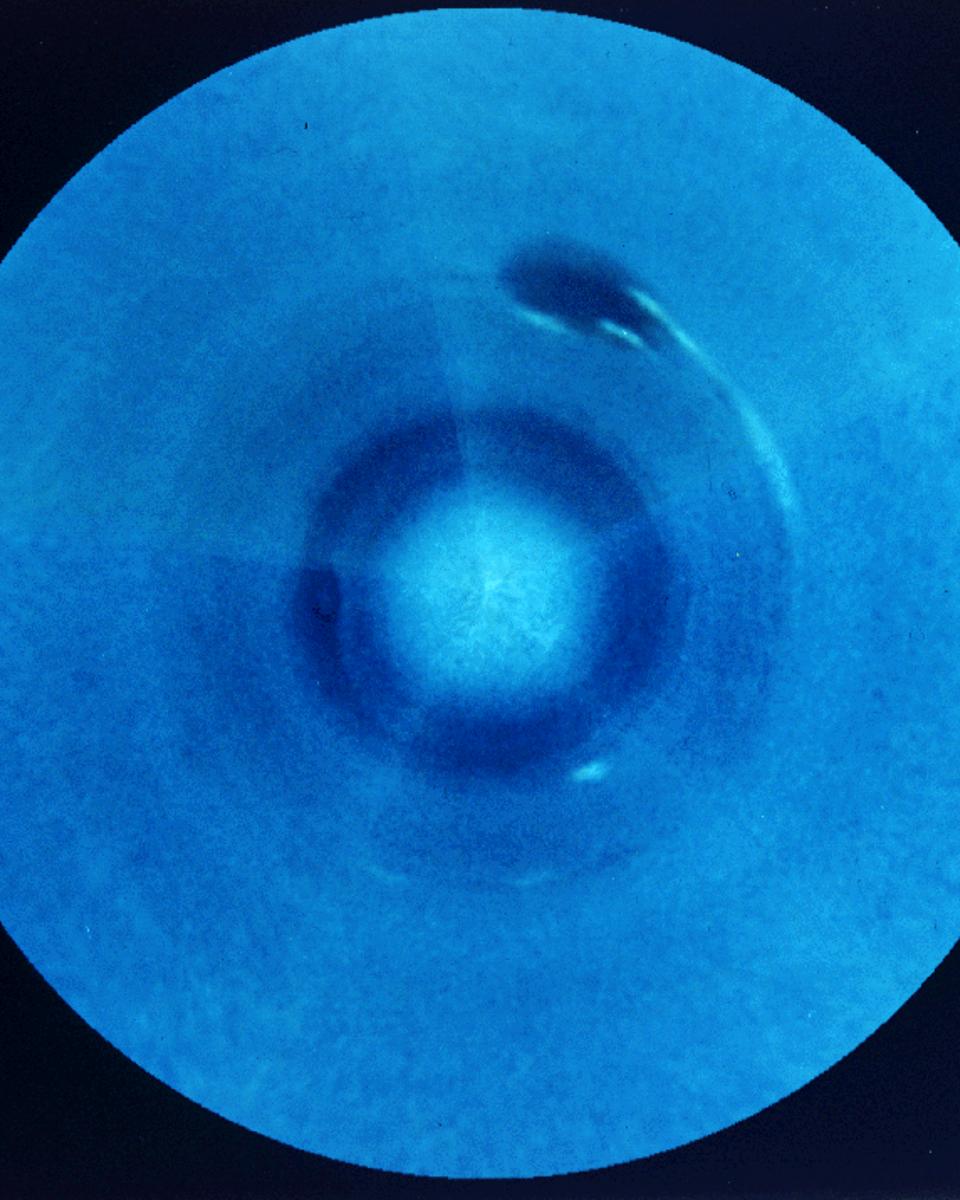
Southern Neptune
Neptune , the Solar System's outermost gas giant planet, is 30 times farther from the Sun than Earth. Twelve years after a 1977 launch , Voyager 2 flew by Neptune and found…
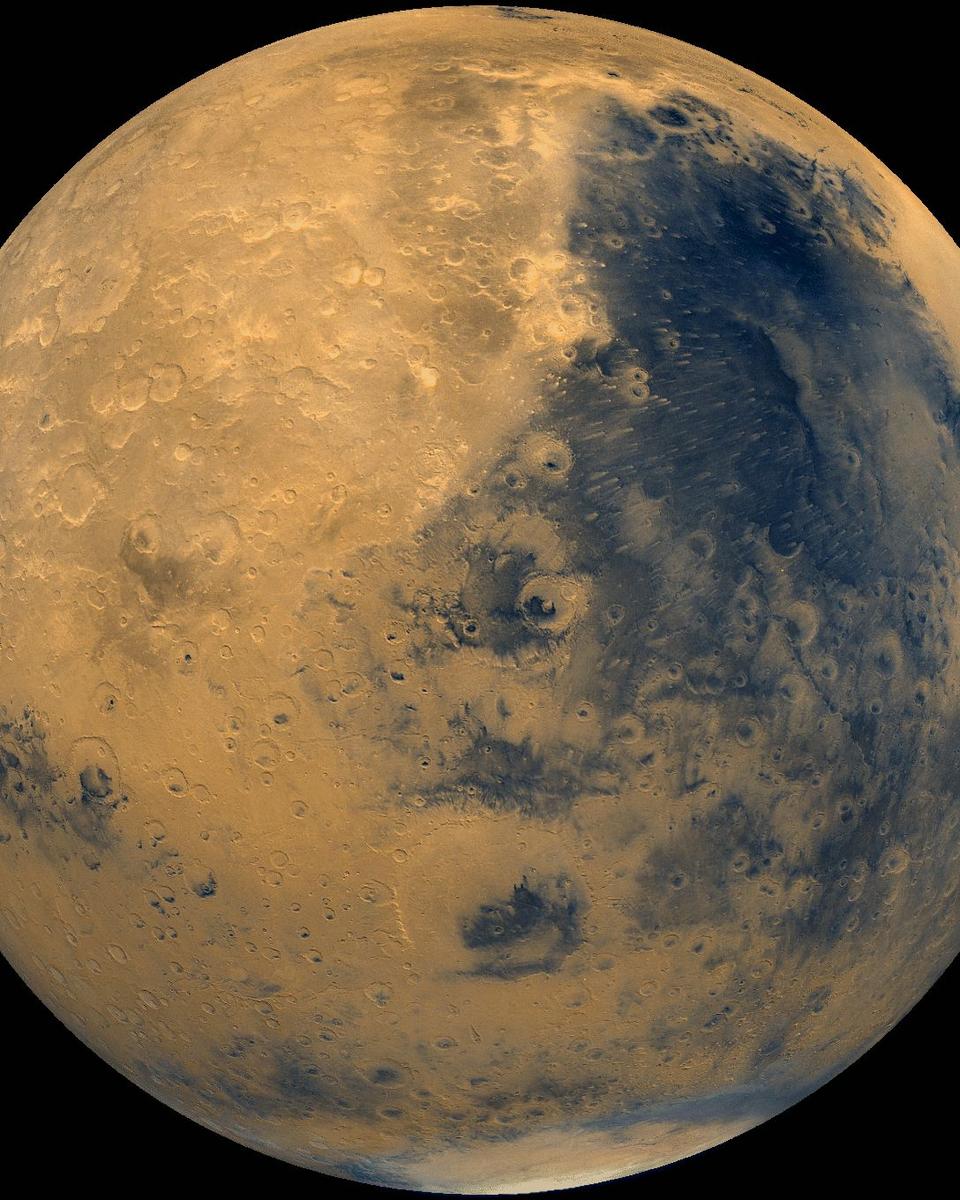
Mars: Just The Fiction
For centuries, astronomers have observed Mars , patiently compiling many facts and theories. Like a distant mirror of Earth dwellers' hopes and fears for the future, Mars, the…
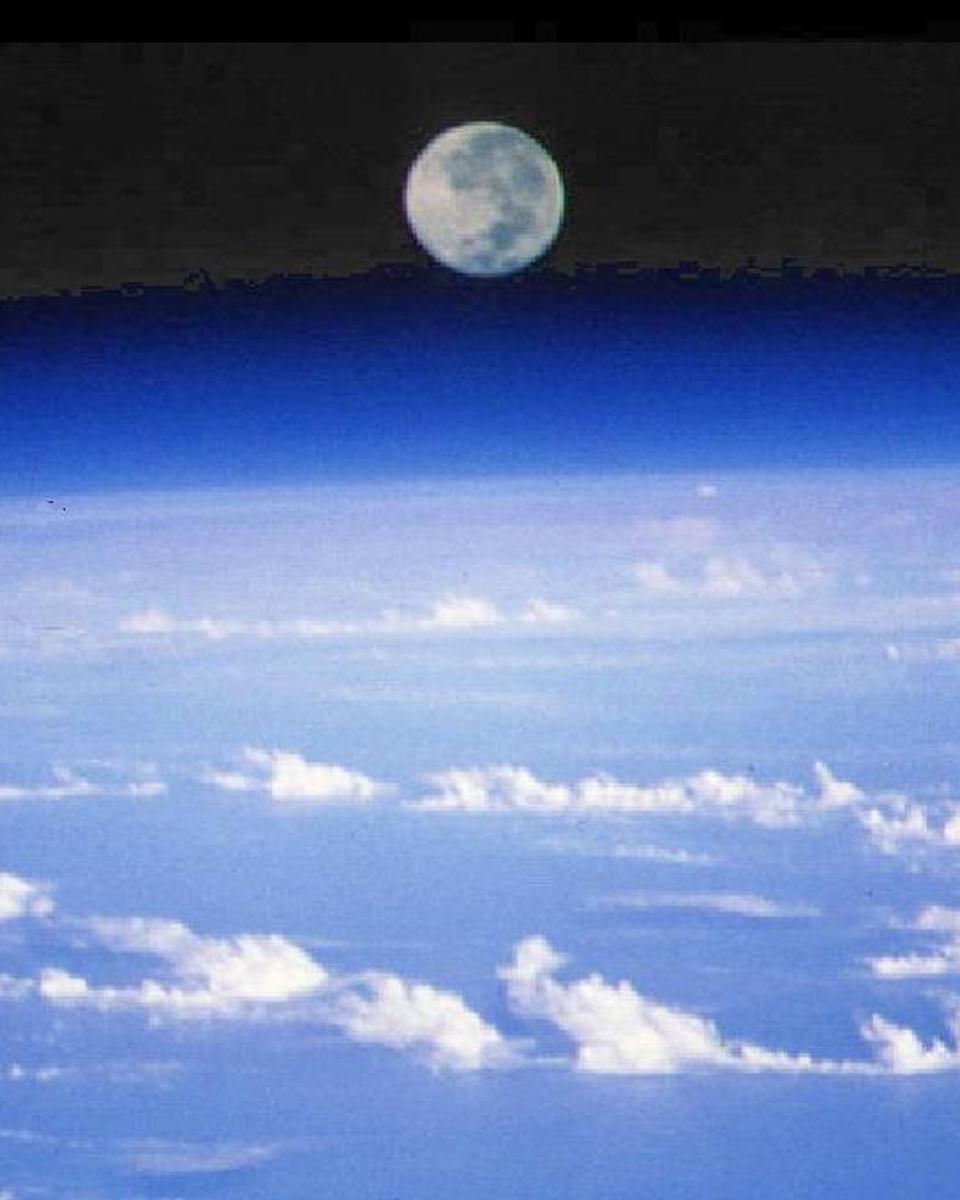
Moonrise, Planet Earth
During the Astro-1 astronomy mission of December, 1990, Space Shuttle astronauts photographed this stunning view of the full moon rising above the Earth's limb. In the foreground,…
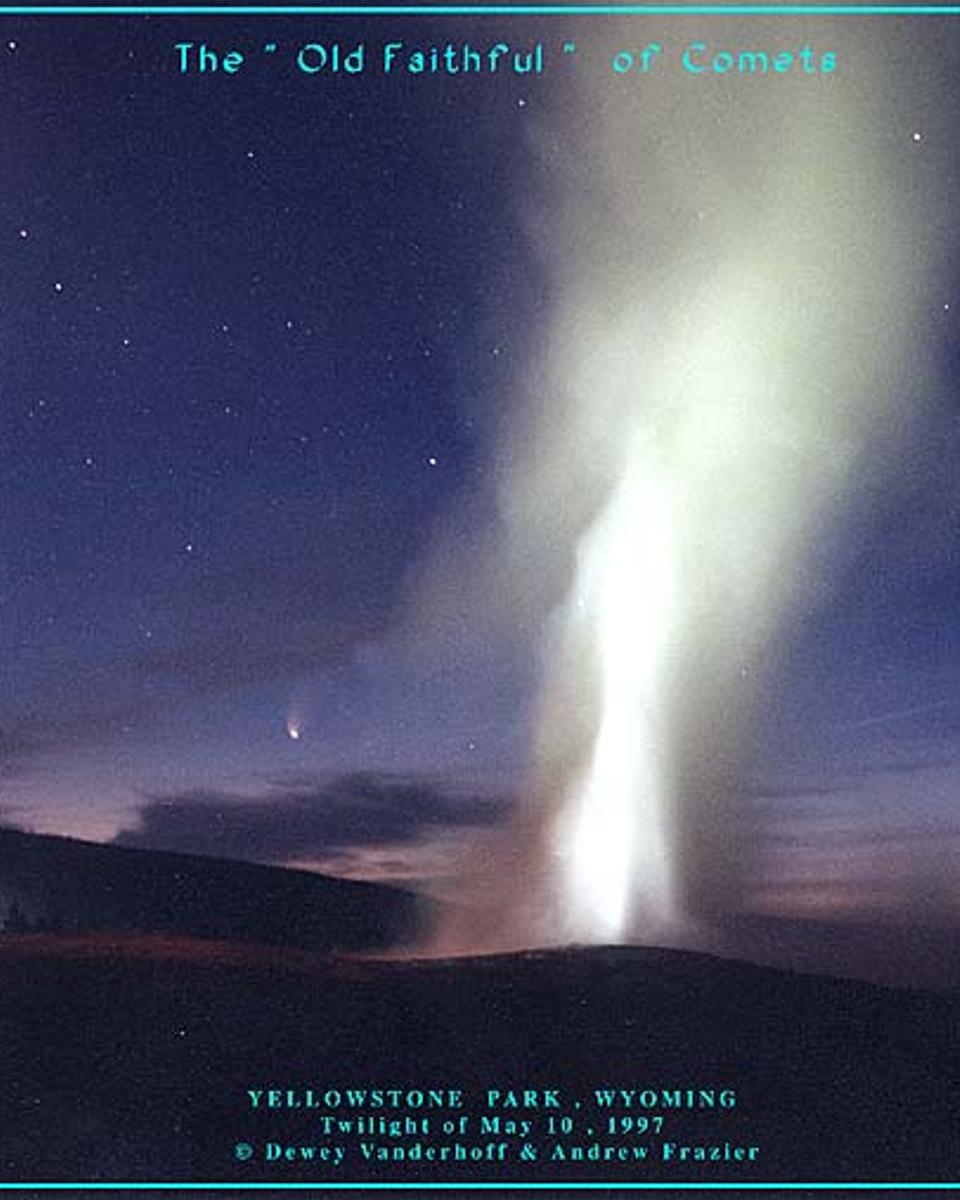
Old Faithful Meets Hale-Bopp
As Comet Hale-Bopp leaves our Northern Skies, it provides us with yet another burst of joy. On May 11th the fading comet was photographed behind the famous “ Old Faithful ” water…
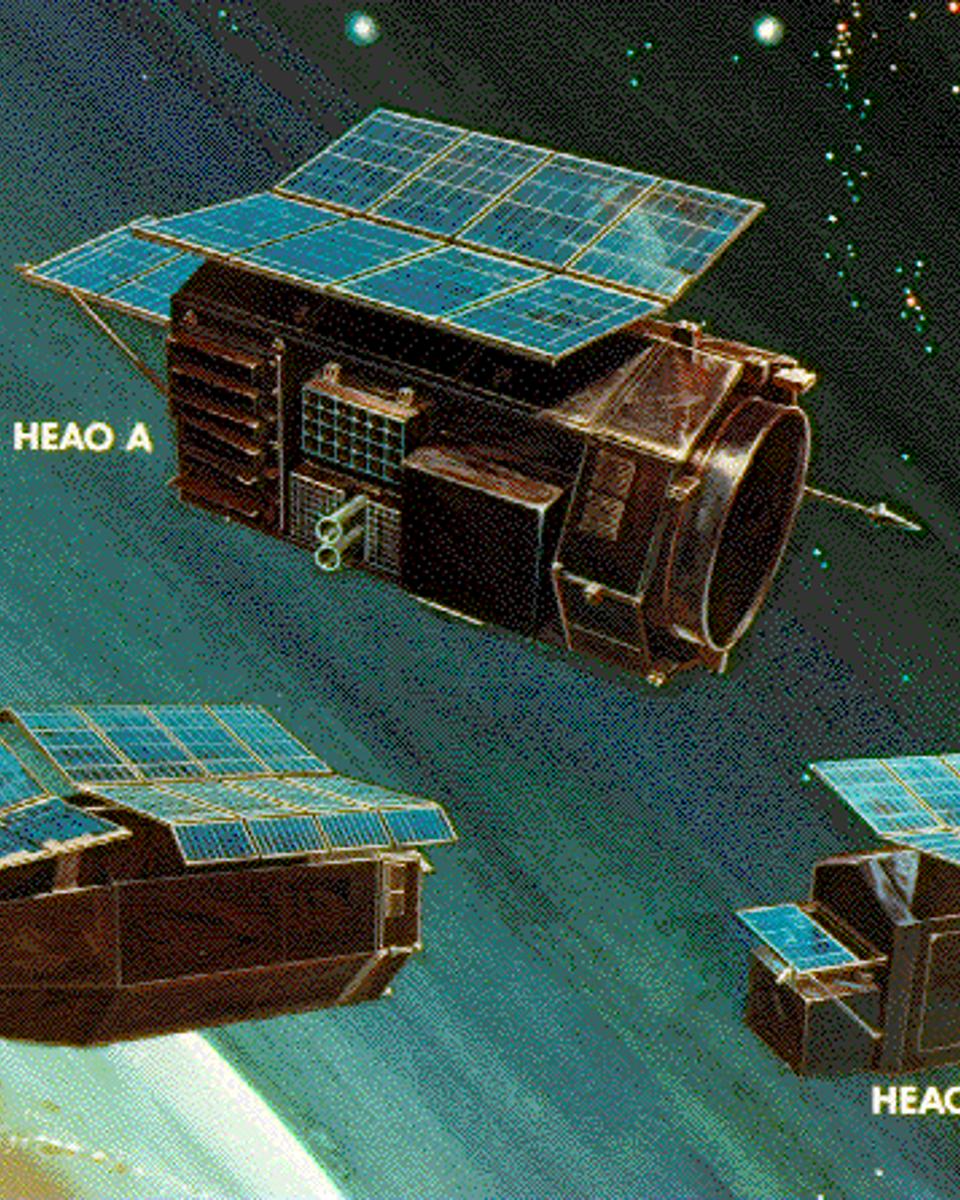
A High Energy Fleet
Looking like a fleet of futuristic starcruisers, NASA's highly successful series of High Energy Astrophysical Observatory (HEAO) spacecraft appear poised over planet Earth .…
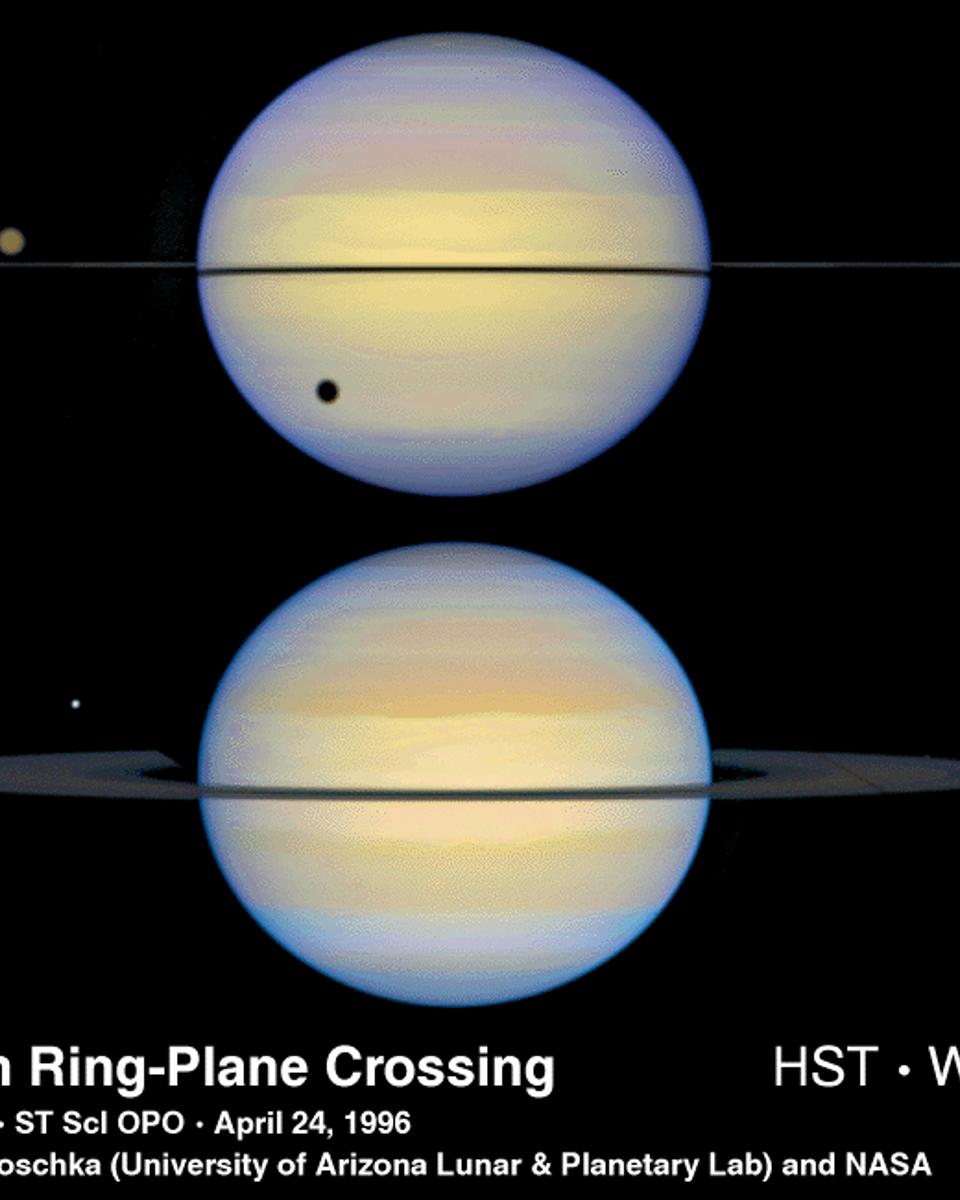
Saturn's Rings Seen Sideways
Saturn's rings are actually very thin. This picture from the Hubble Space Telescope was taken on August 6, 1995 when the rings lined up sideways as seen from Earth . Saturn 's…
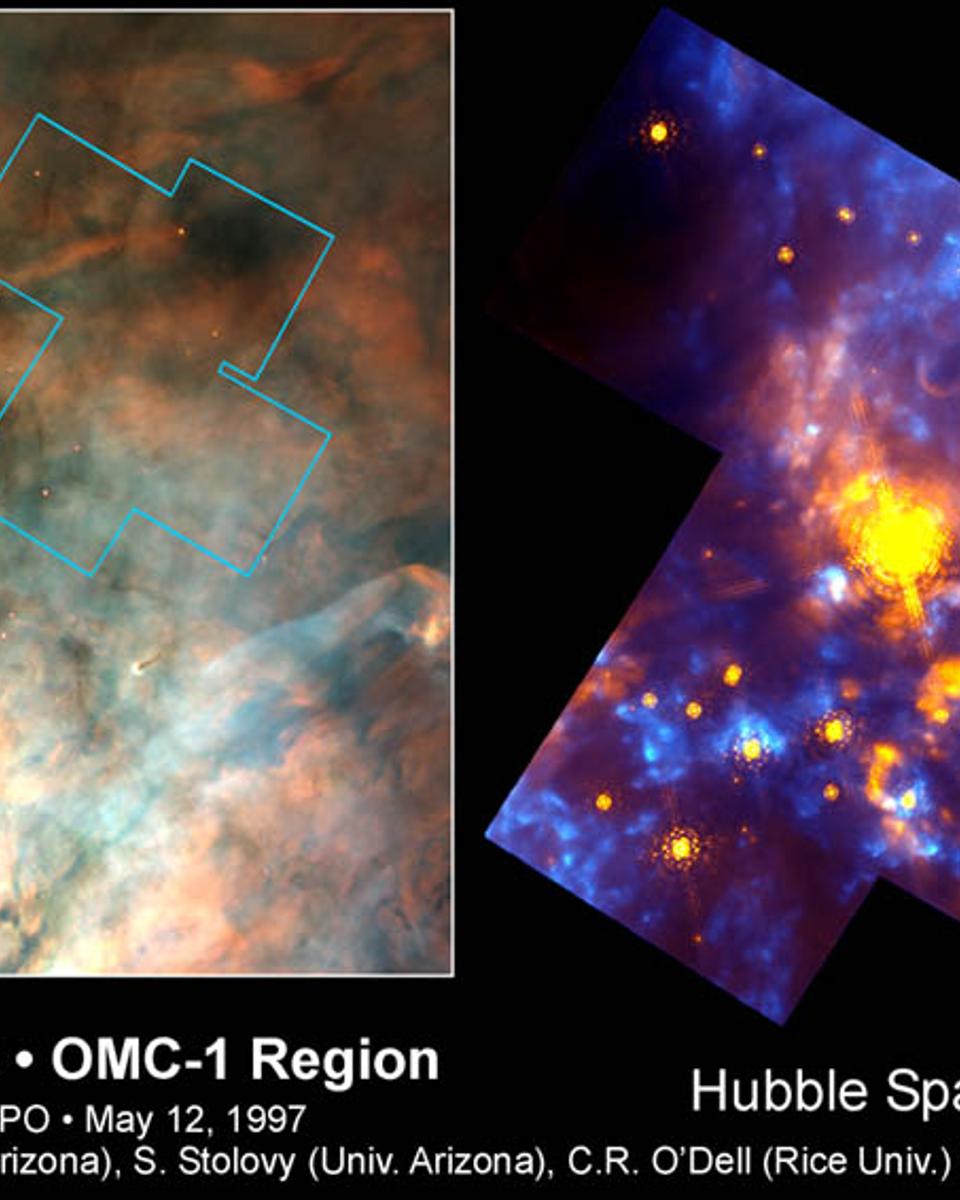
The Heart Of Orion
Newborn stars lie at the heart of the Orion Nebula , hidden from view by the dust and gas of the giant Orion Molecular Cloud number 1 (OMC-1). Sensitive to invisible infrared…
Viewing discoveries from 15 June 1997 through 23 May 1997.