Browse NASA Astronomy Picture of the Day archive by date and media: Archive Discoveries
Browse the NASA APOD archive without needing the exact date first. Filter by media type and keep moving deeper into older images and videos.
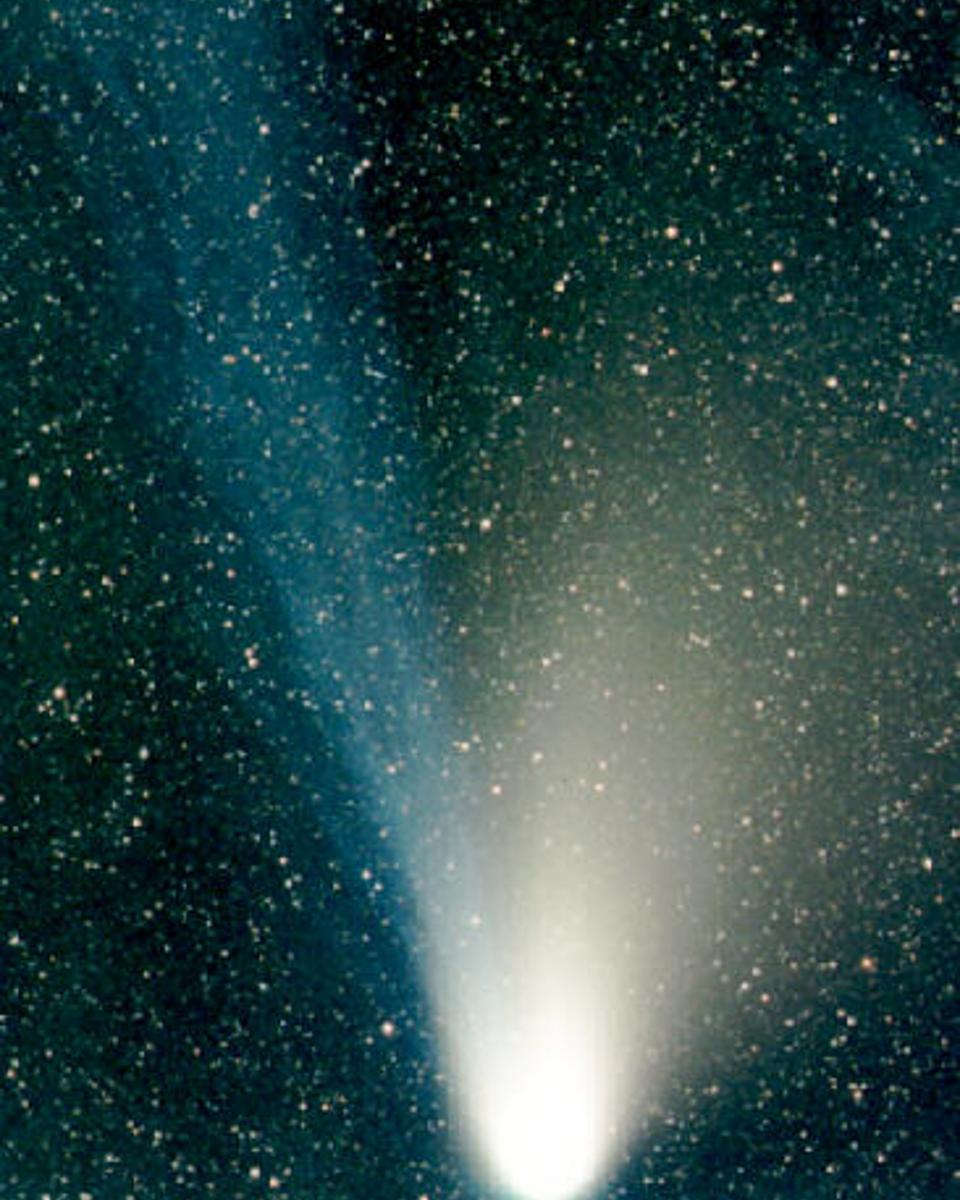
Comet Hale-Bopp Enters the Evening Sky
Explanation : You no longer have to wake-up early to see Comet Hale-Bopp . From many northern locations, you can now go outside just after sunset and see Comet Hale-Bopp above the…
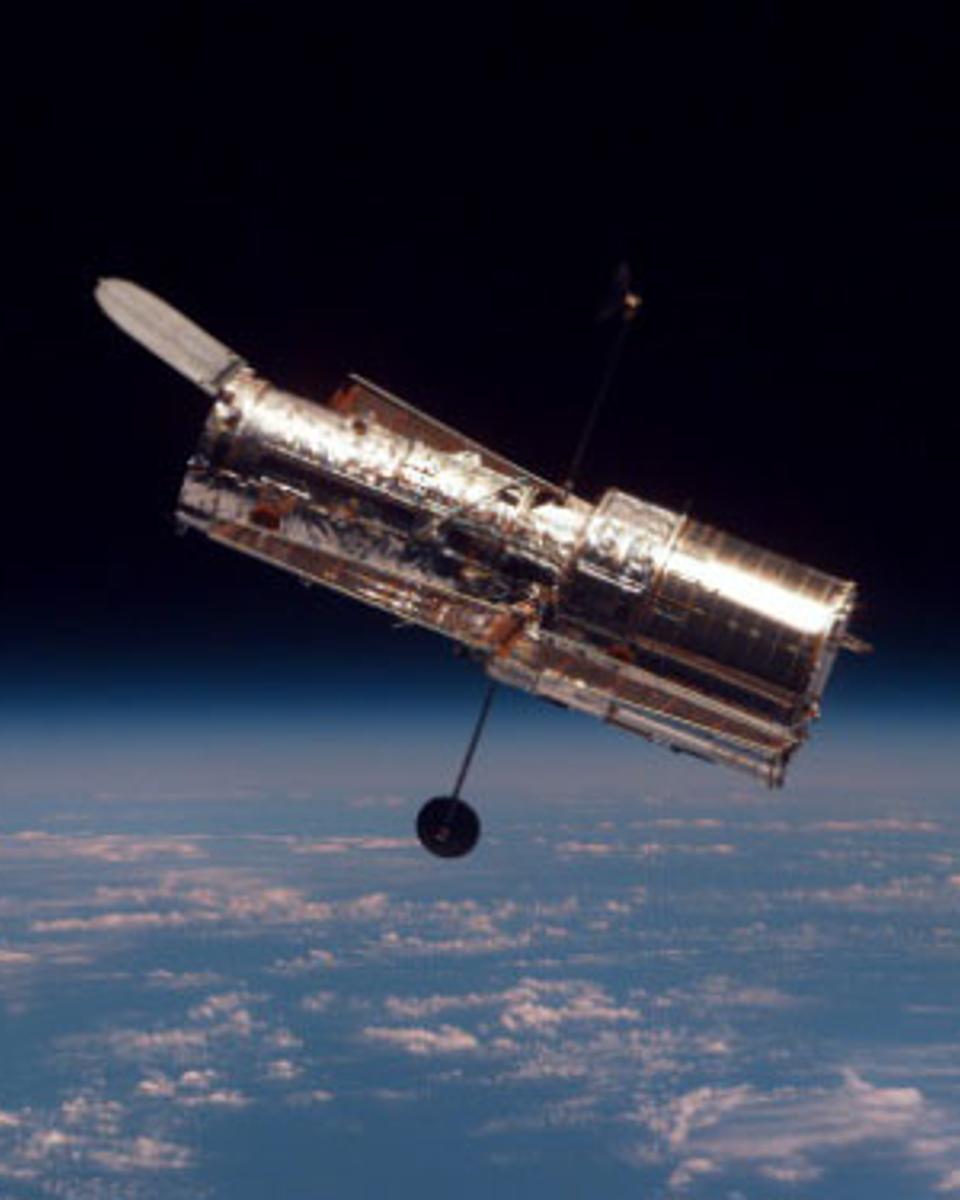
Hubble Floats Free
Explanation : Why put observatories in space? Most telescopes are on the ground. On the ground, you can deploy a heavier telescope and upgrade it more easily. The trouble is that…
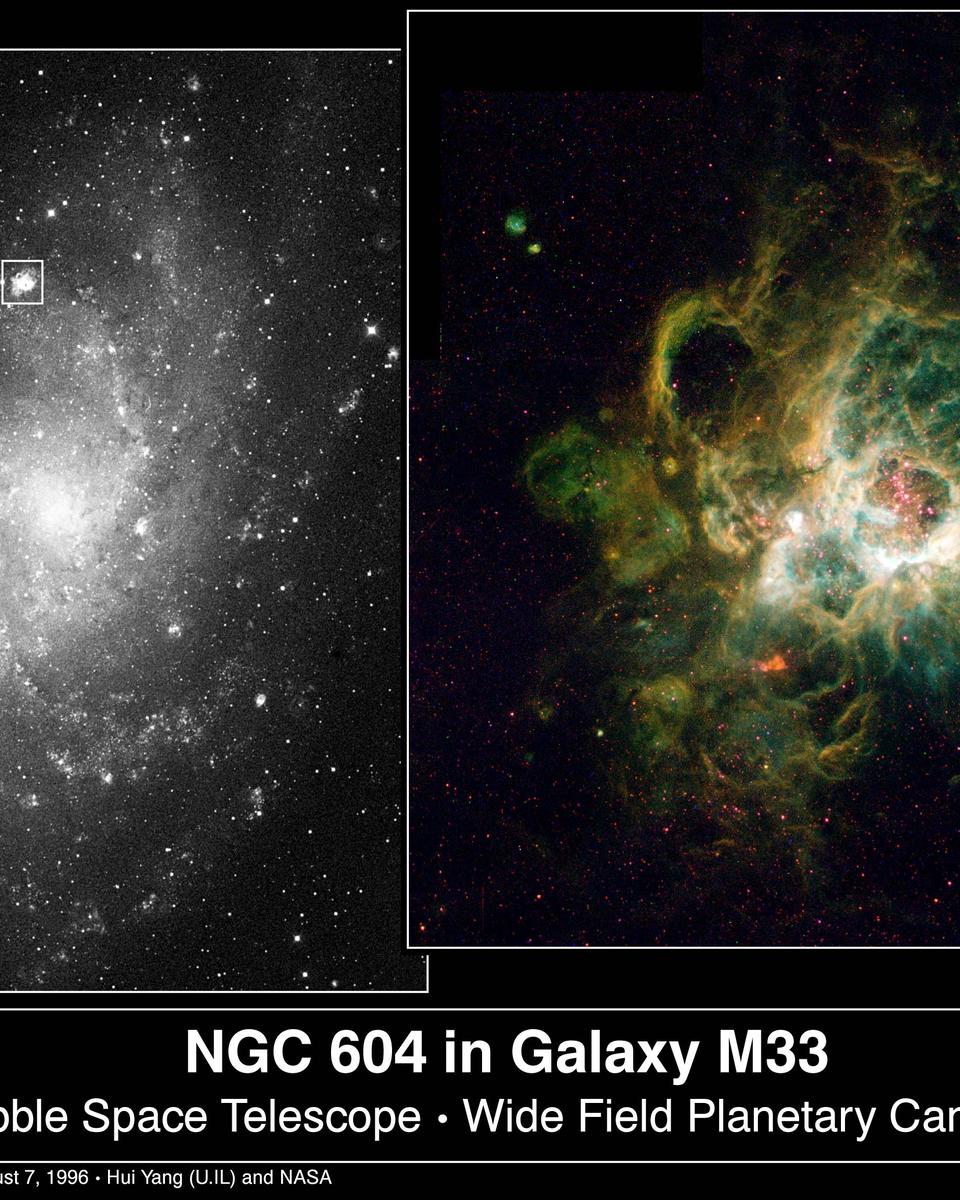
In the Center of NGC 604
Explanation : Stars are sometimes born in the midst of chaos. About 3 million years ago in the nearby galaxy M33 , a large cloud of gas spawned dense internal knots which…
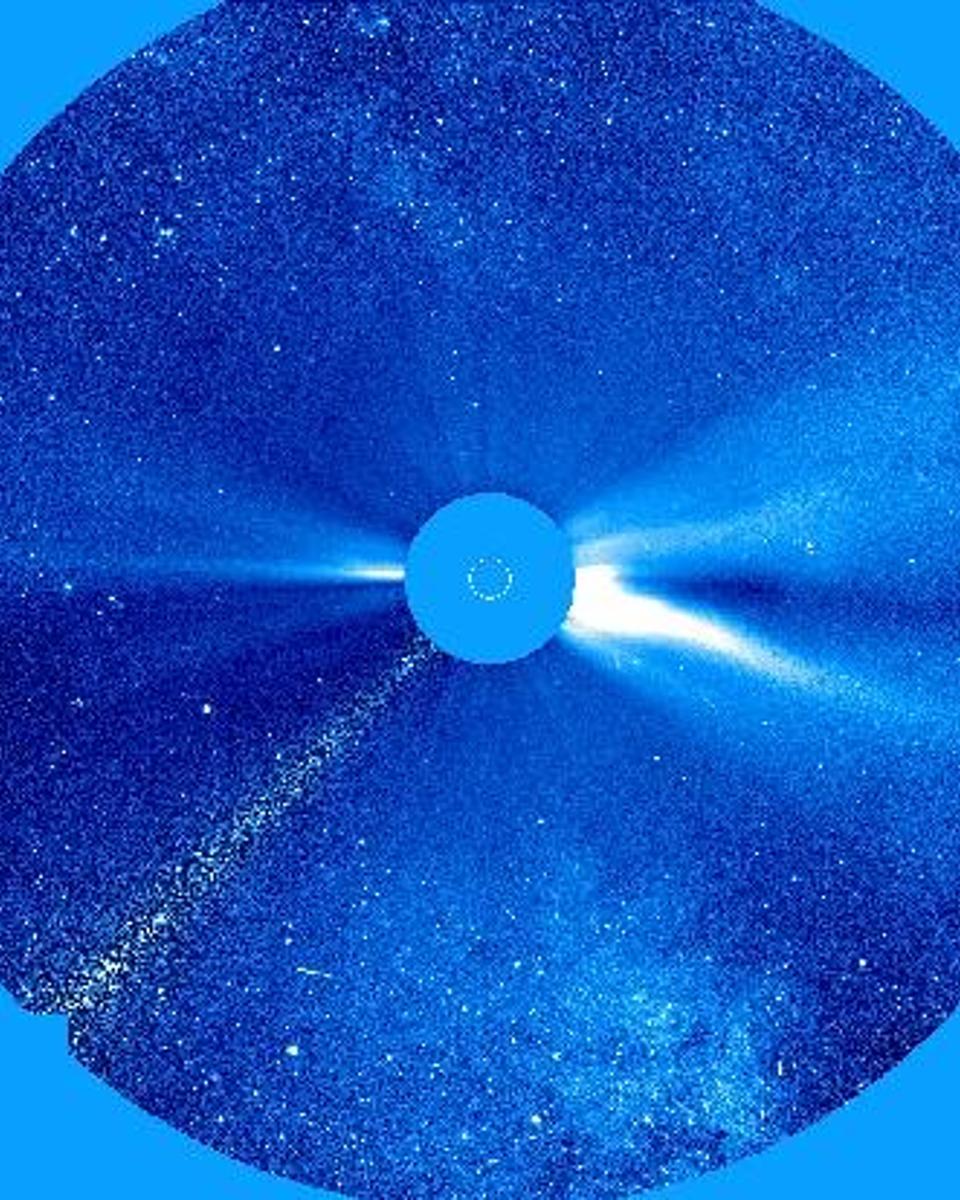
Solar Wind And Milky Way
Explanation: The Sun is bright, so bright that it overwhelms the light from other stars even for most satellite-borne telescopes. But LASCO, a coronograph onboard the space-based…
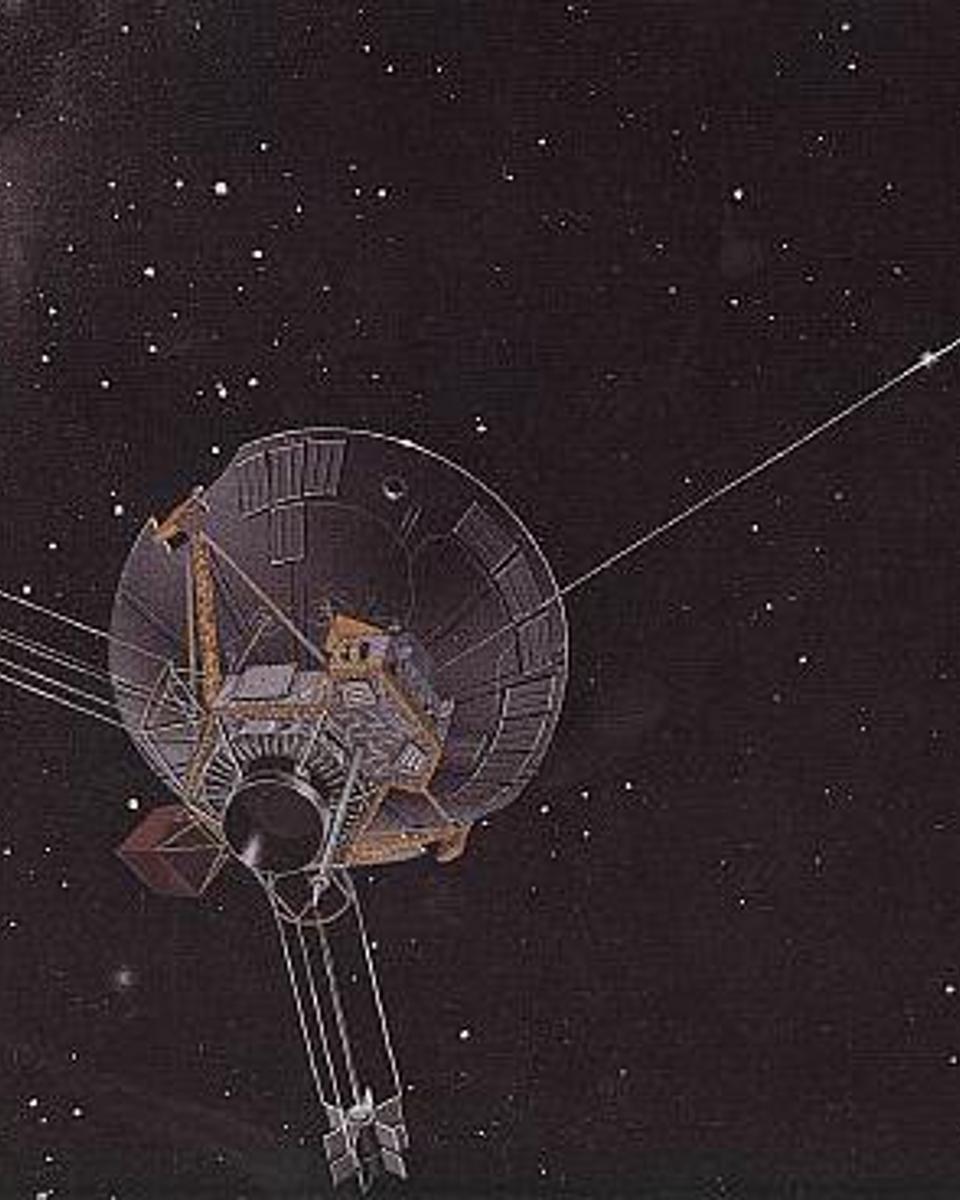
Pioneer 10: The First 6 Billion Miles
Explanation : Q: What was made by humans and is 6 billion miles away? A: Pioneer 10 - and yesterday was the 25th anniversary of its launch . More than 9 light hours distant,…
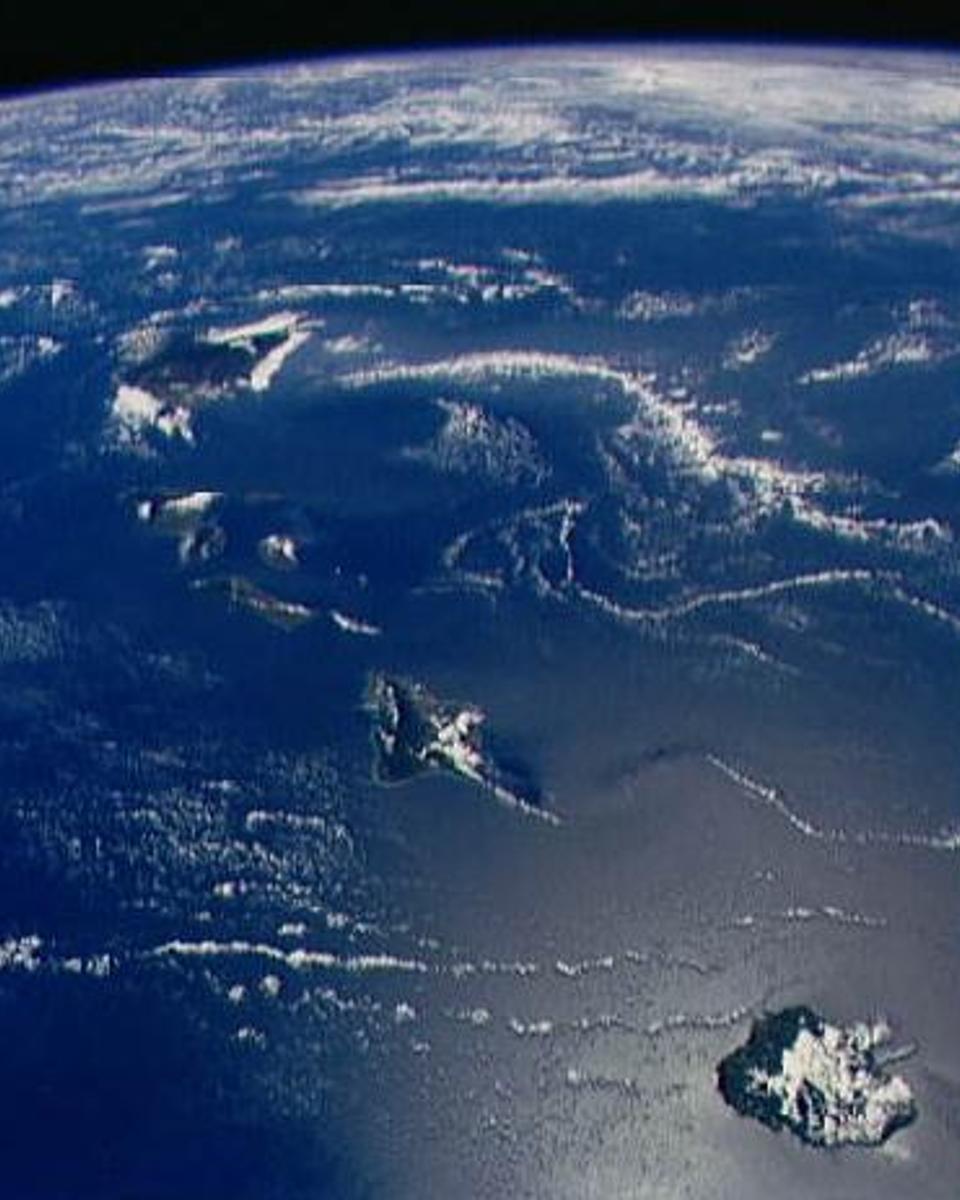
Hawaii
Explanation : Aloha! With the graceful arc of the Earth's limb in the background, the entire Hawaiian Island archipelago is visible in this stunning photo taken by the astronauts…
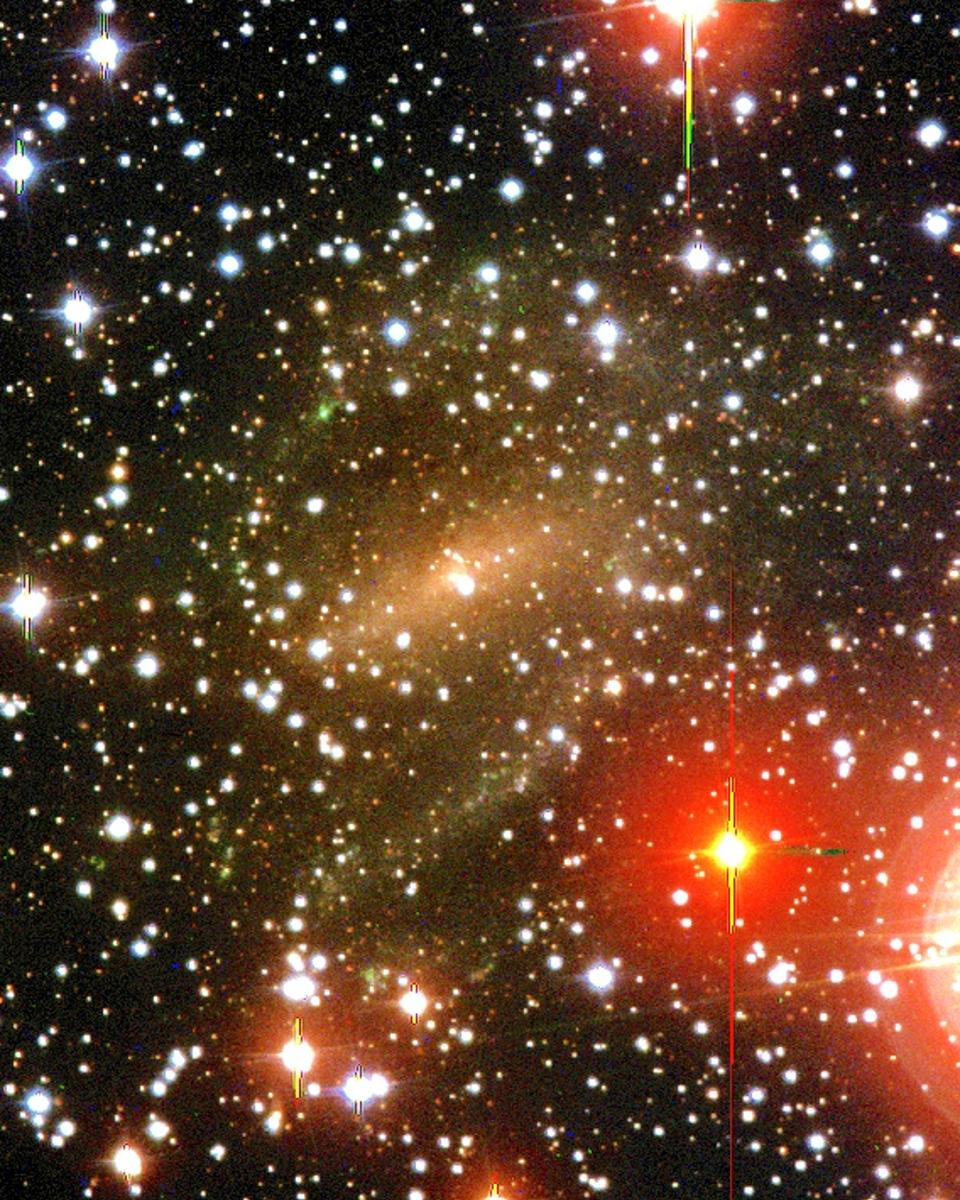
Galaxy Dwingeloo 1 Emerges
Explanation : Sometimes you can't see the forest for the trees. But if you look closely at the center of the above photograph , you will see a whole spiral galaxy behind the field…
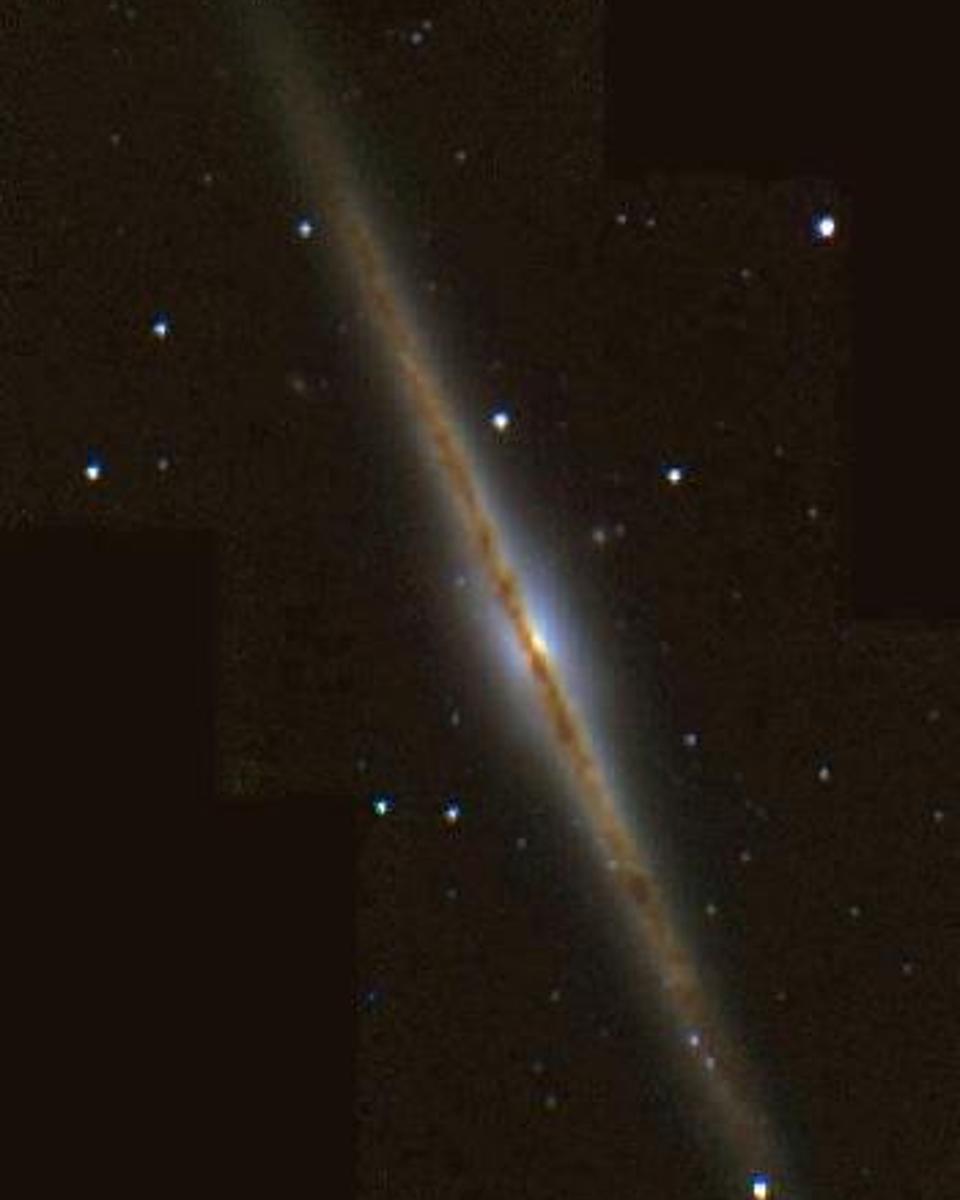
Edge-On Spiral Galaxy NGC 891
Explanation : Is our Galaxy this thin? We believe so. The Milky Way , like NGC 891 pictured above , has the width of a typical spiral galaxy . Spirals have most of their bright…
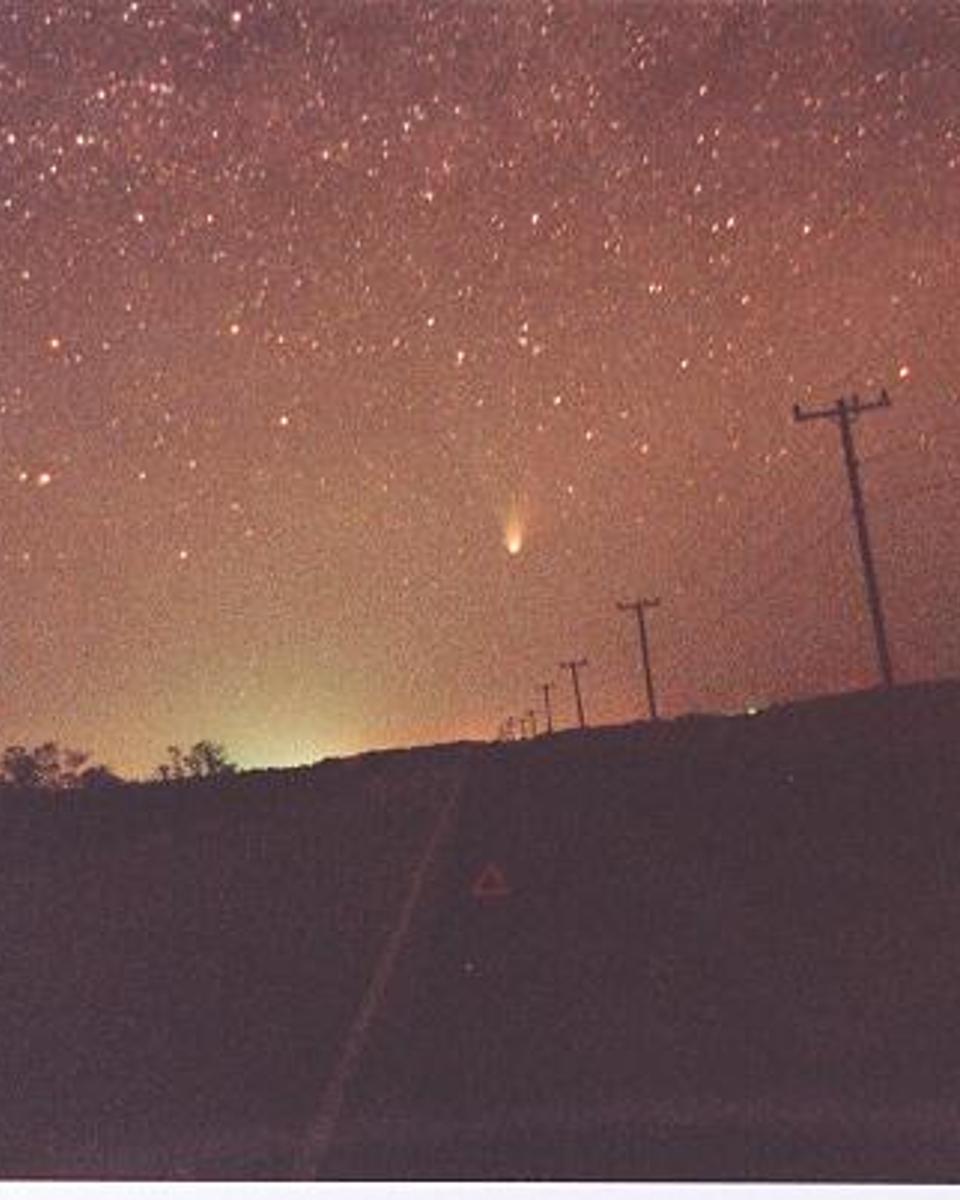
Comet Hale-Bopp is That Bright
Explanation : What's that fuzzy star? It's not a star, it's Comet Hale-Bopp . Not only has Comet Hale-Bopp become easy to see in the morning sky , it has become hard not to see…
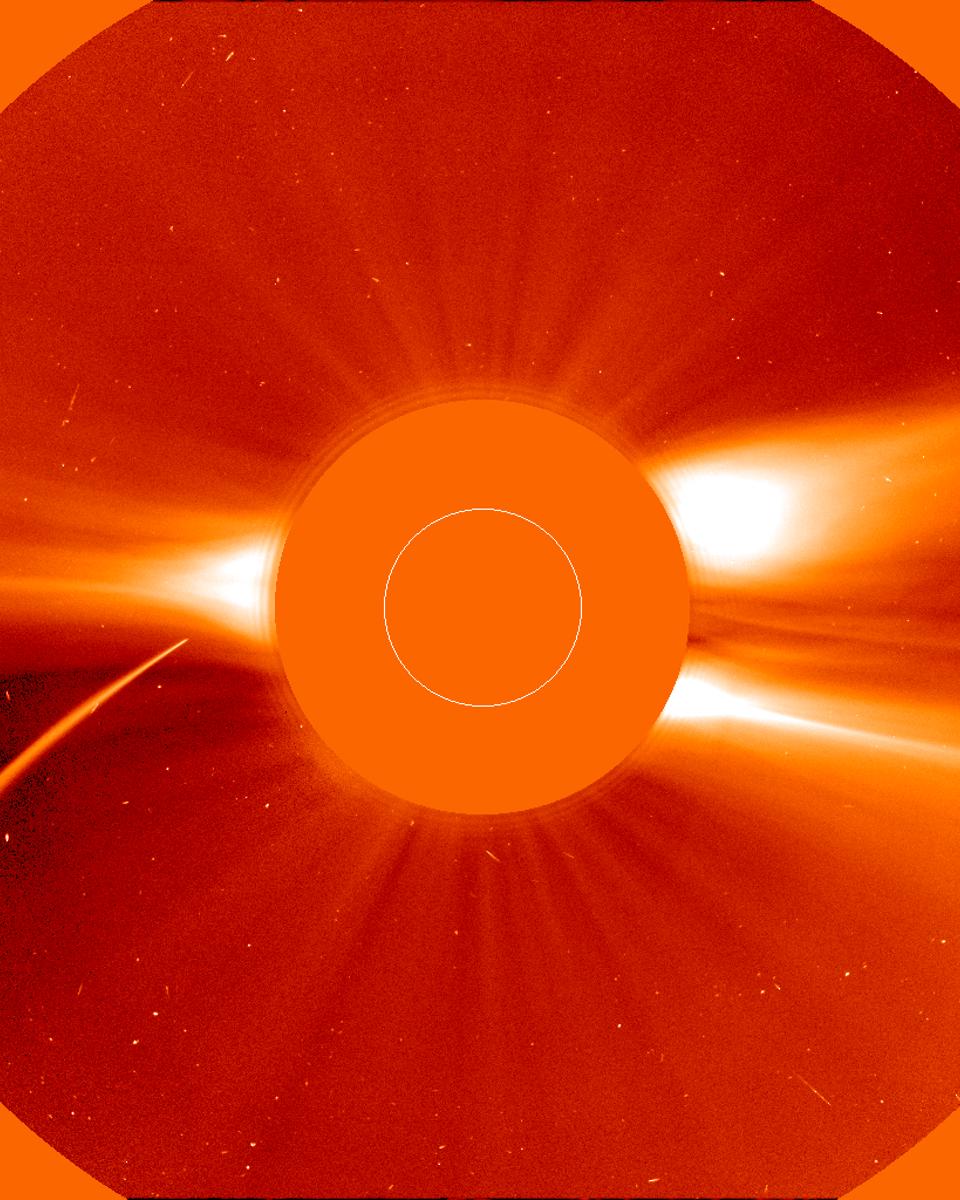
Sungrazer
Explanation : Arcing toward a fiery fate, this Sungrazer comet was recorded by the SOHO spacecraft's Large Angle Spectrometric COronagraph (LASCO) on Dec. 23rd, 1996. LASCO uses…
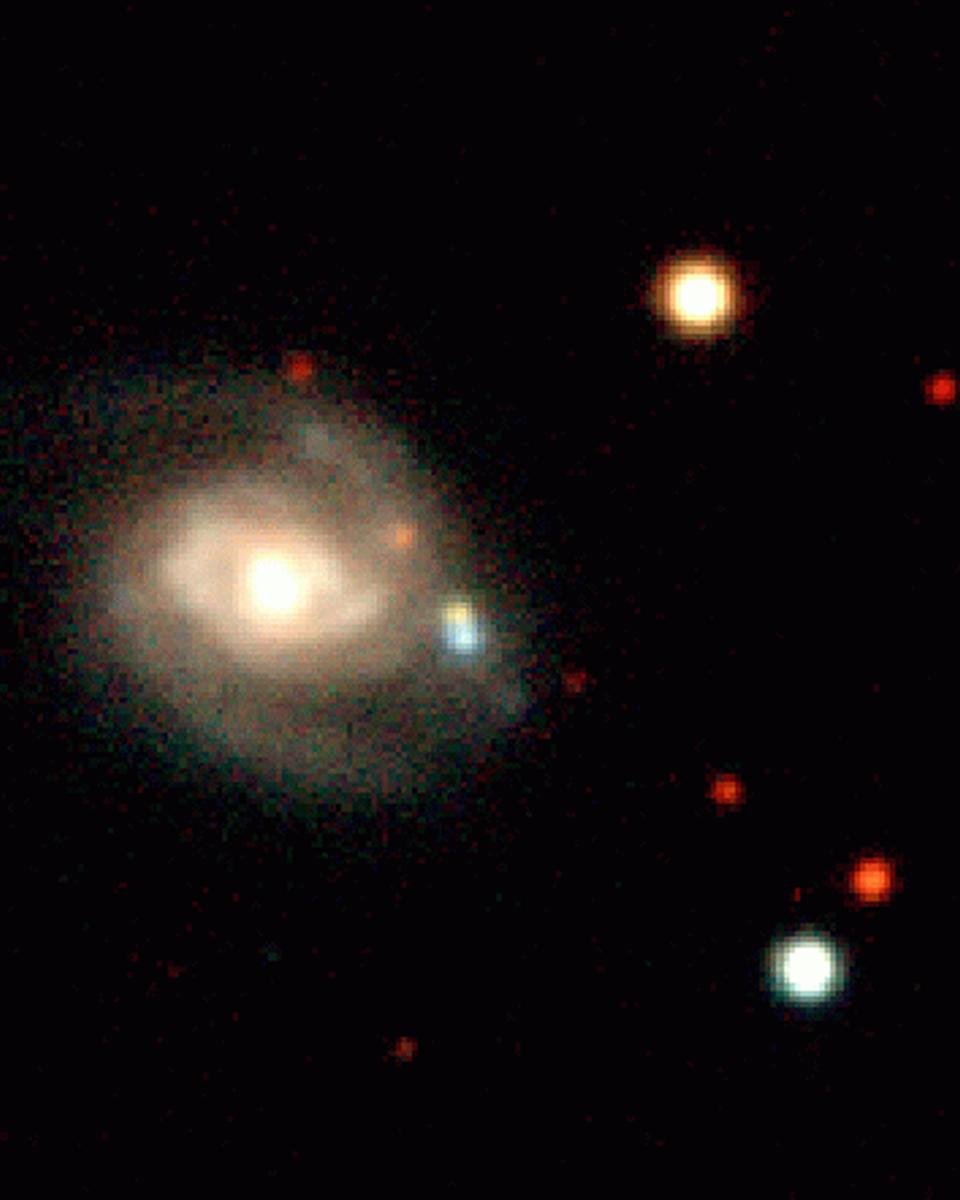
Star Wars in NGC 664
Explanation : Long ago in a galaxy far, far away, locked in their final desperate struggle against the force of gravity ... two stars exploded! Stellar explosions - Supernovae -…
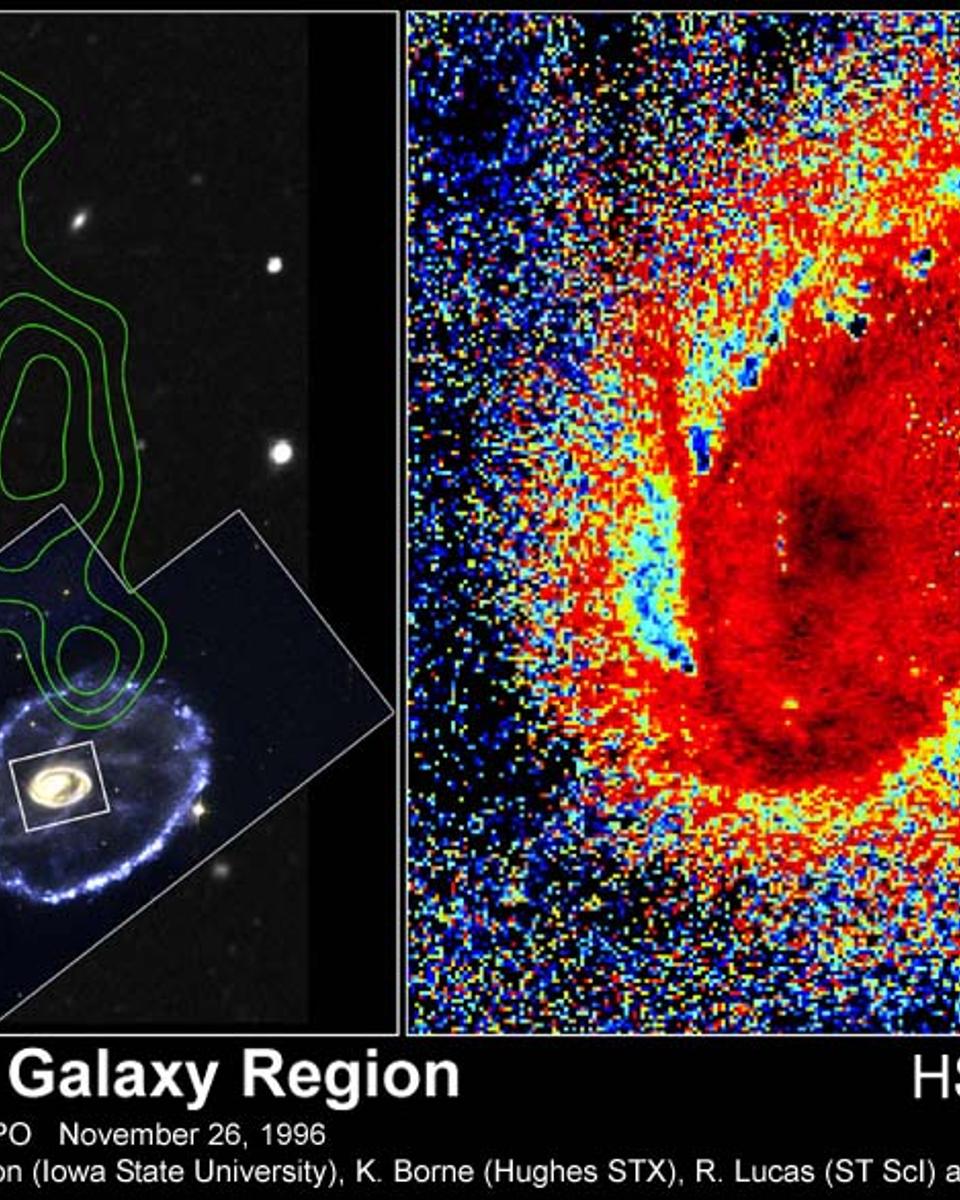
The Trail of the Intruder
Explanation : In yesterday's episode our hero, the Cartwheel galaxy , had survived a chance cosmic collision with a small intruder galaxy - triggering an expanding ring of star…
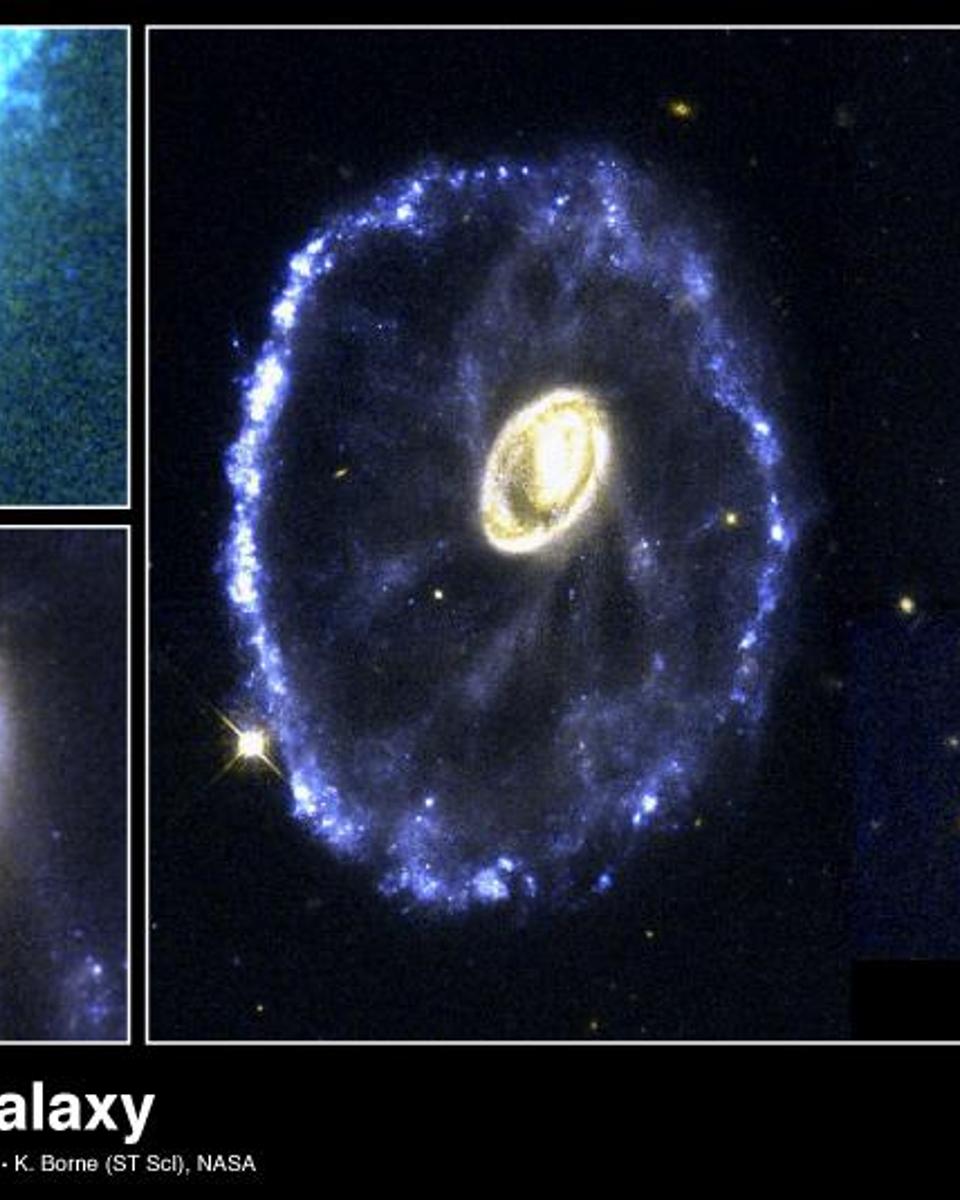
Cartwheel of Fortune
Explanation : By chance, a collision of two galaxies has created a surprisingly recognizable shape on a cosmic scale - “The Cartwheel Galaxy” . The Cartwheel is part of a group of…
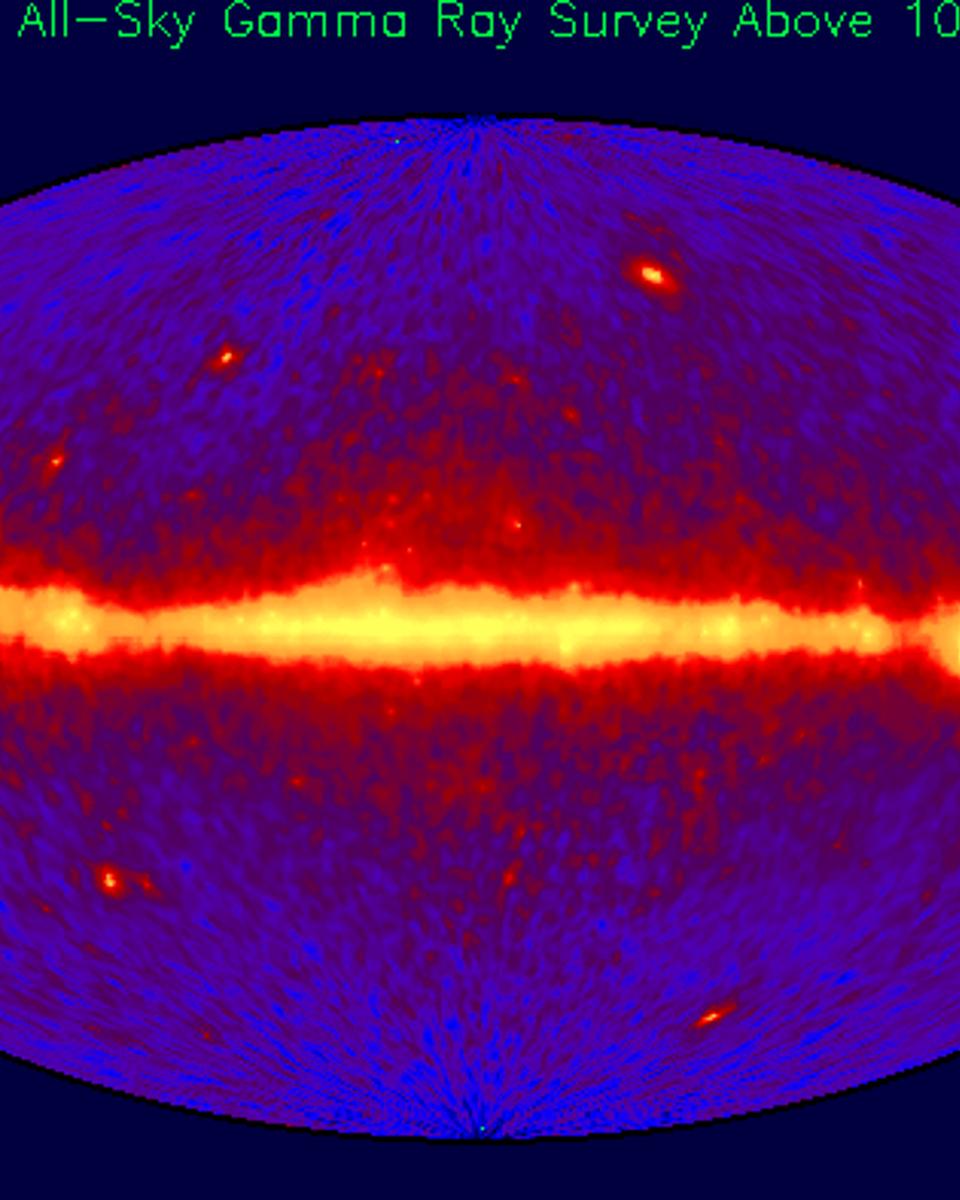
The Gamma Ray Sky
Explanation : What if you could “see” gamma rays? If you could, the sky would seem to be filled with a shimmering high-energy glow from the most exotic and mysterious objects in…
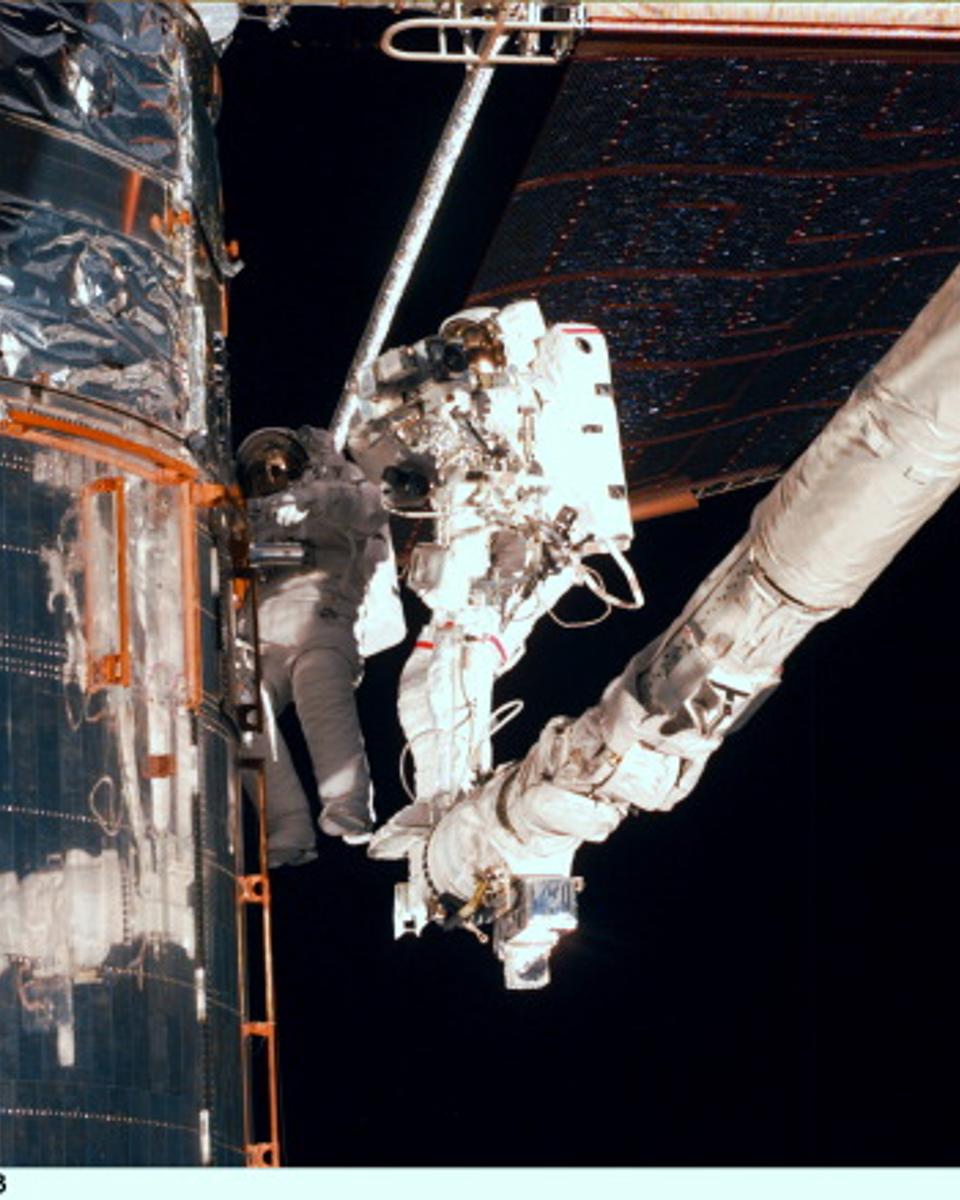
New Eyes for the Hubble Space Telescope
Explanation : The Hubble Space Telescope 's second servicing mission has been completed. Every few years, the telescope is visited by a Space Shuttle to allow astronauts to switch…
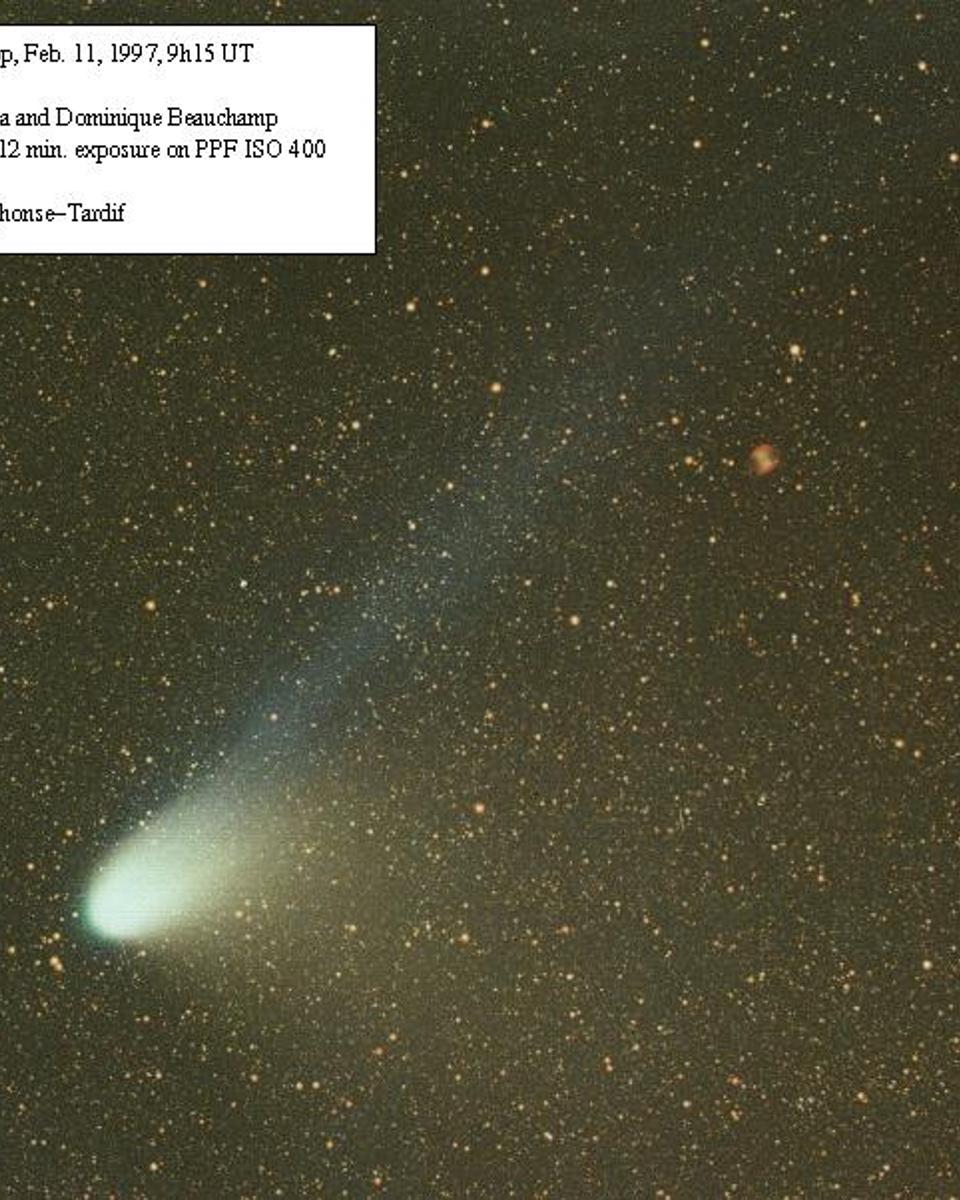
Comet Hale-Bopp and the Dumbbell Nebula
Explanation : Comet Hale-Bopp is now slowly moving across the morning sky . During its trip to our inner Solar System , the comet passes in front of several notable objects. Here…
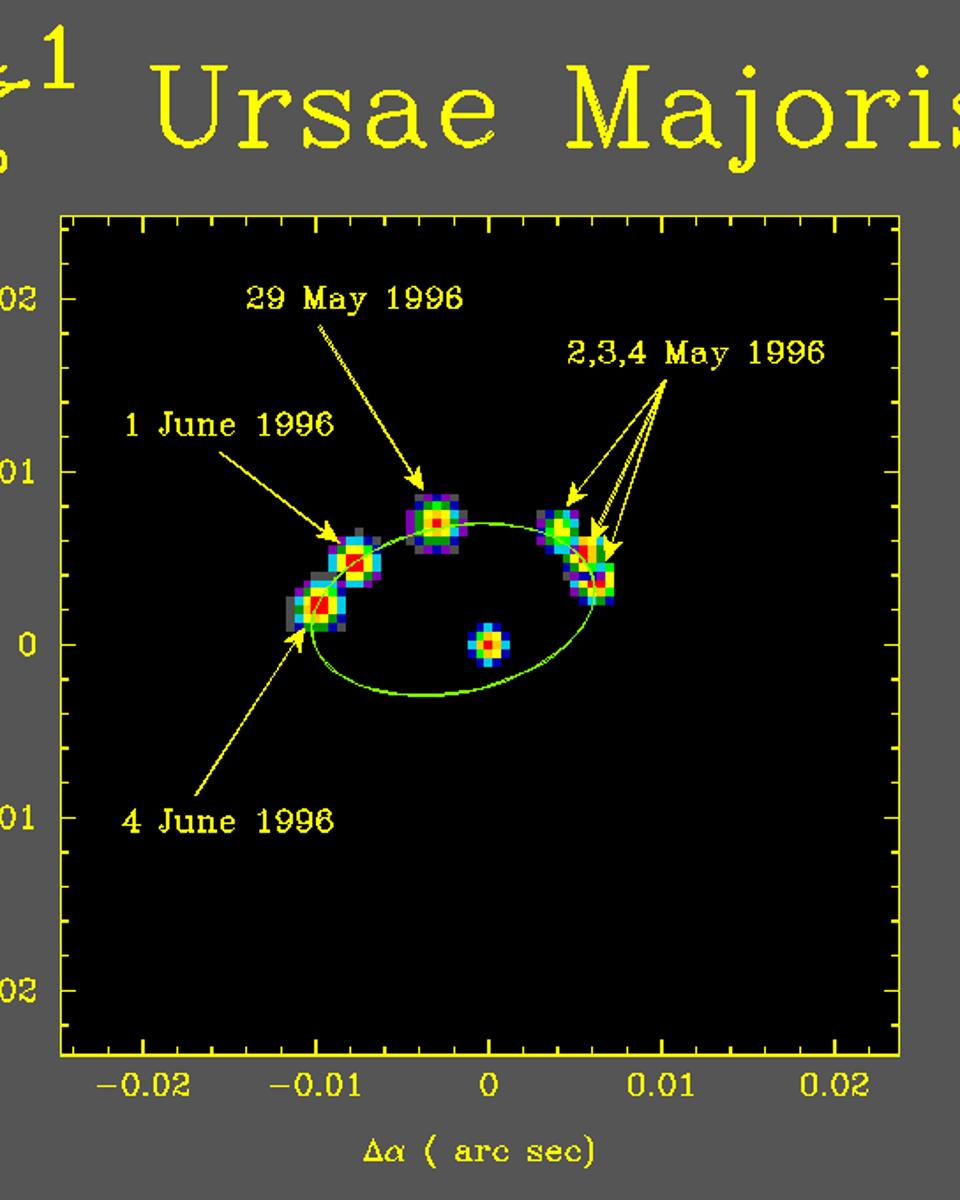
Mizar Binary Star
Explanation : Mizar (sounds like “My Czar”) is a binary star. In fact, most stars are binary stars . In a binary star system , each star of the pair follows an elliptical orbital…
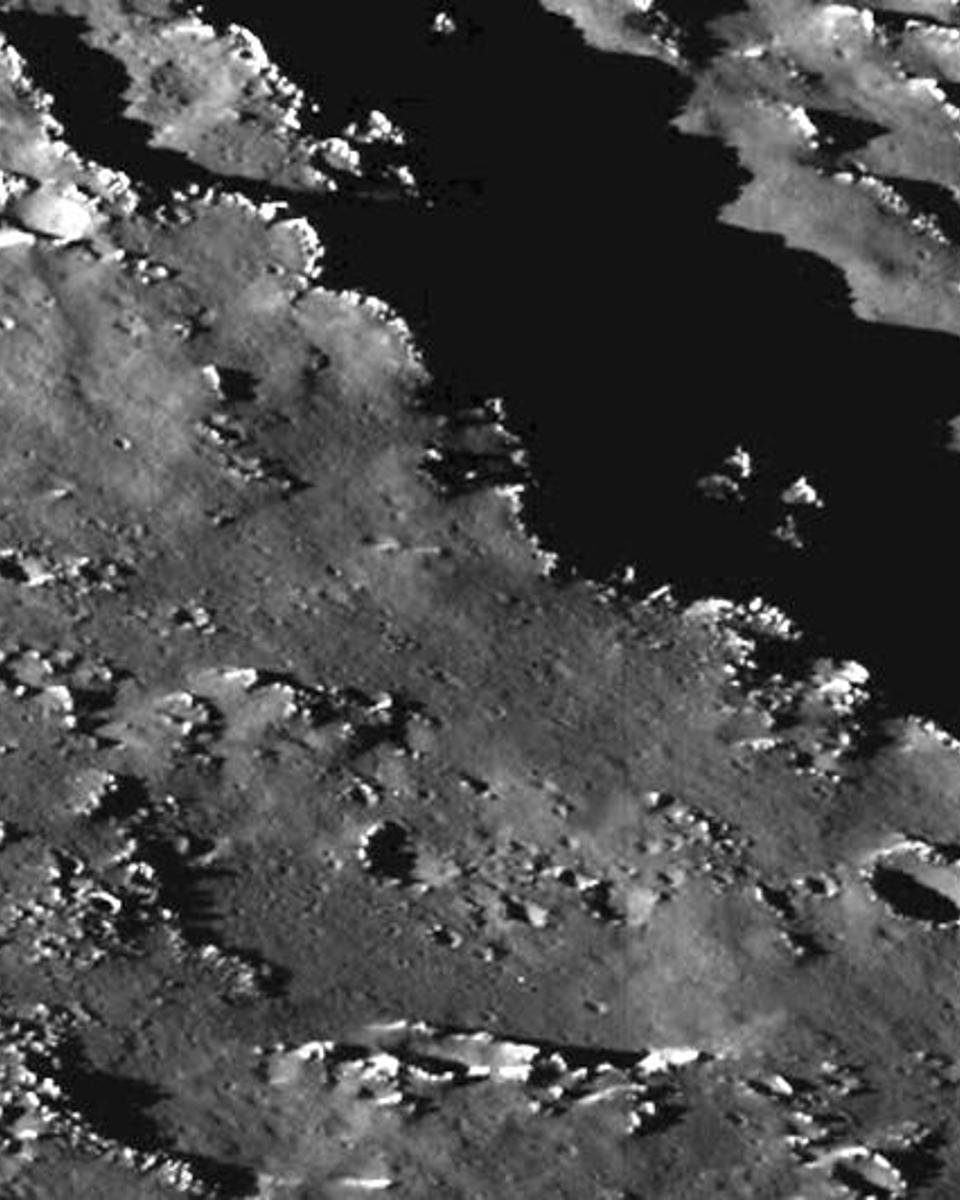
A Big Cliff on Jupiter's Callisto
Explanation : Callisto 's surface is not without fault. In fact, an explorer crossing the surface of this large moon of Jupiter would need climbing equipment to pass this large,…
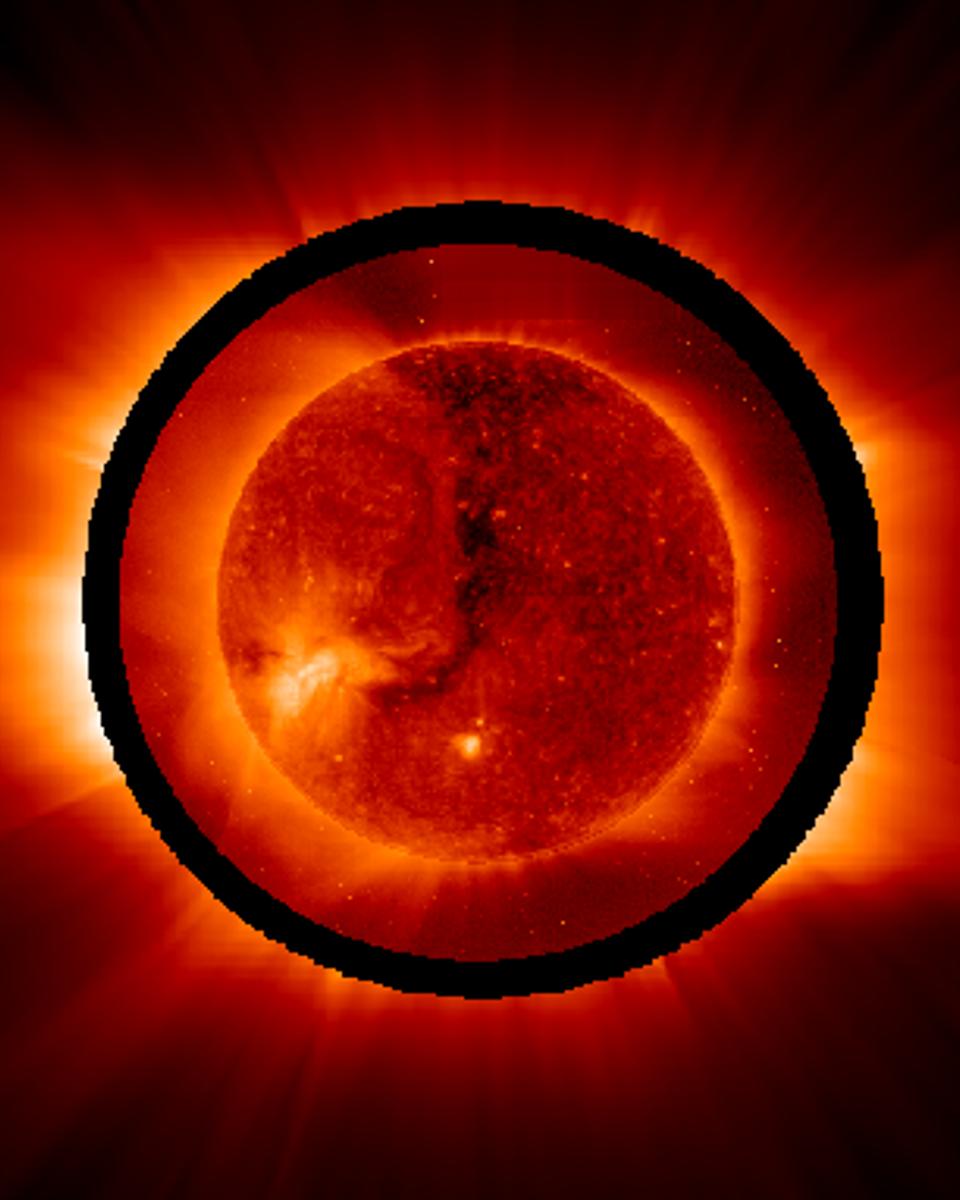
A Wind From The Sun
Explanation : A wind from the Sun blows through our Solar System . The behaviour of comet tails as they flapped and waved in this interplanetary breeze gave astronomers the first…
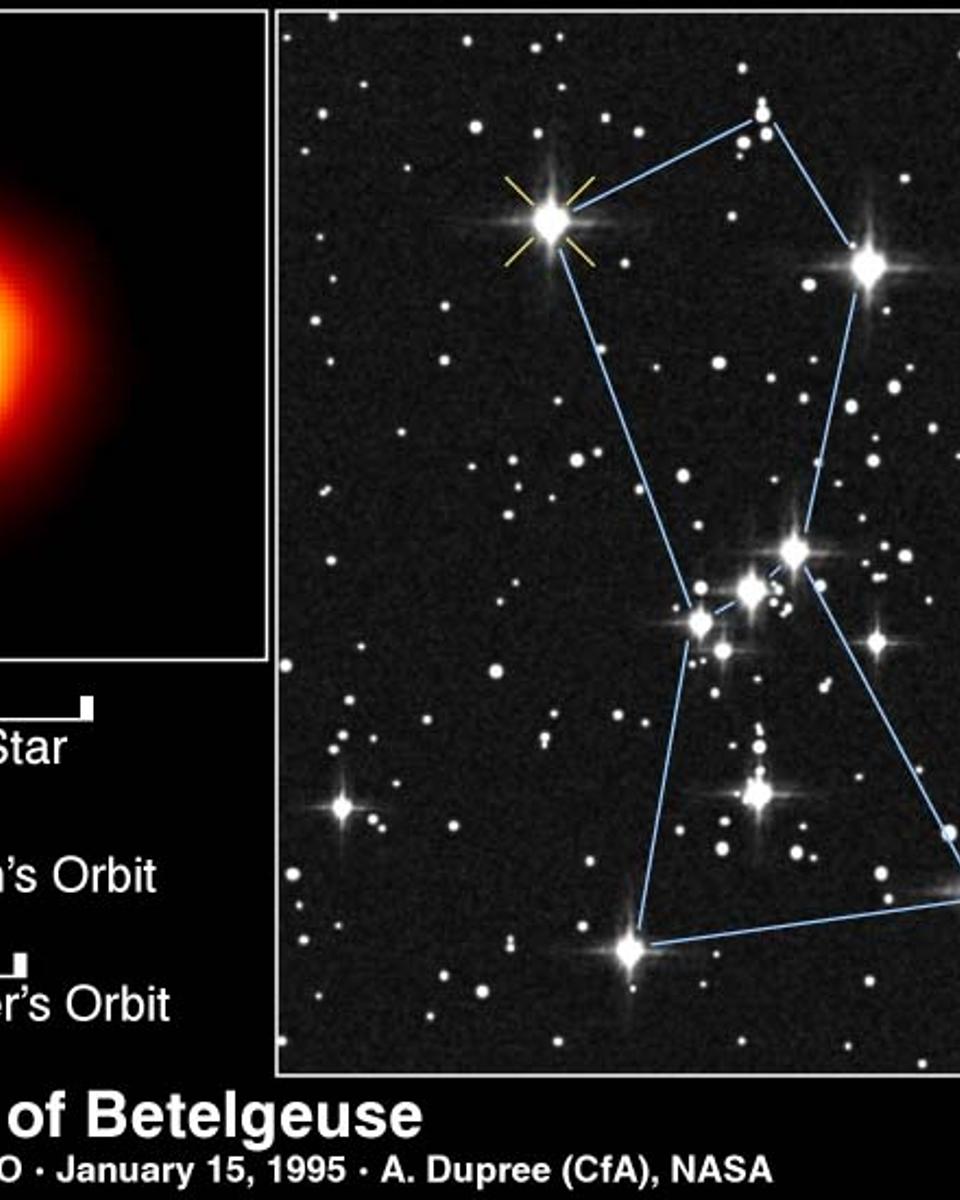
Betelgeuse, Betelgeuse, Betelgeuse
Explanation : Betelgeuse (sounds a lot like “beetle juice”), a red supergiant star about 600 light years distant, is seen in this Hubble Space Telescope image -- the first direct…
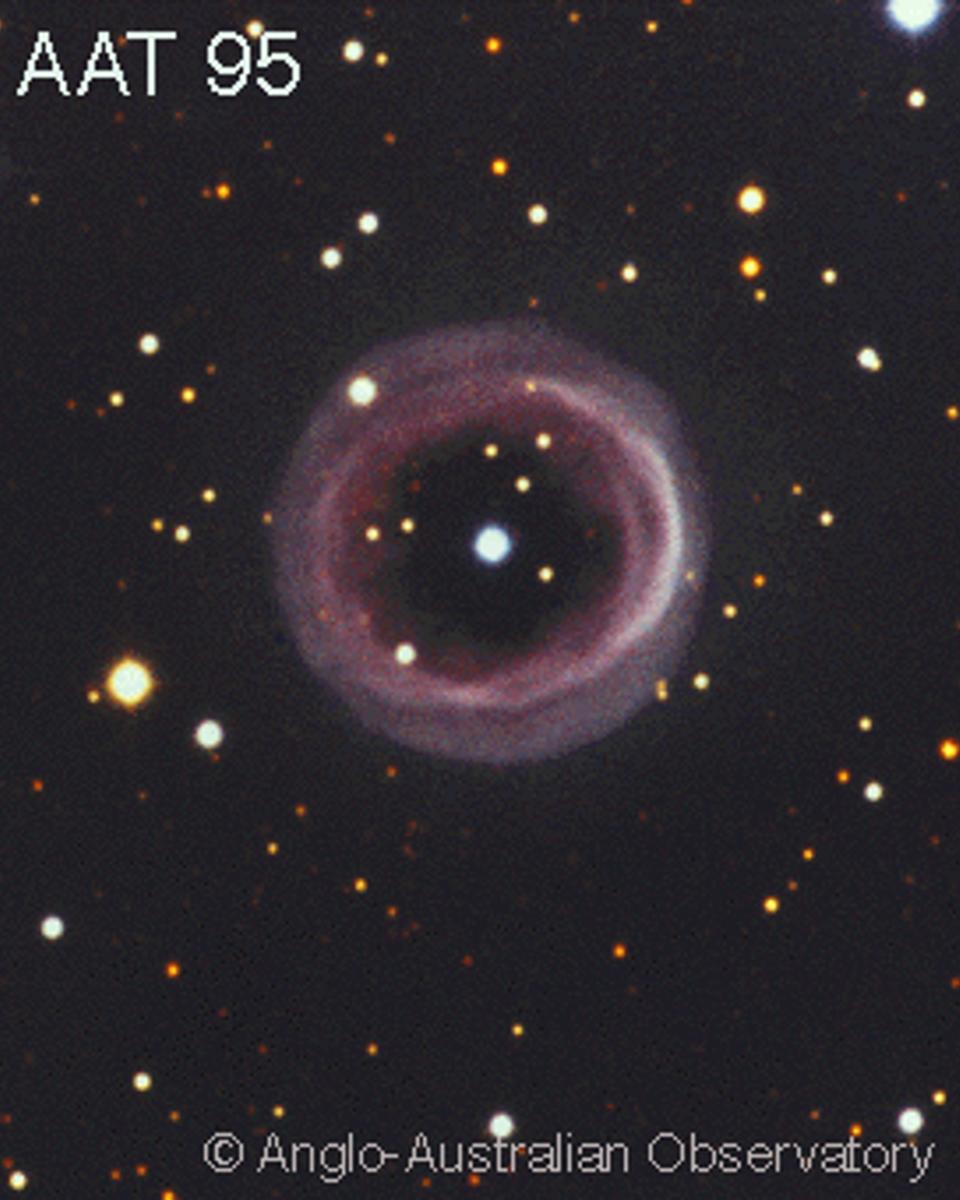
Shapley 1: An Annular Planetary Nebula
Explanation : What happens when a star runs out of nuclear fuel ? The center condenses into a white dwarf while the outer atmospheric layers are expelled into space and appear as…
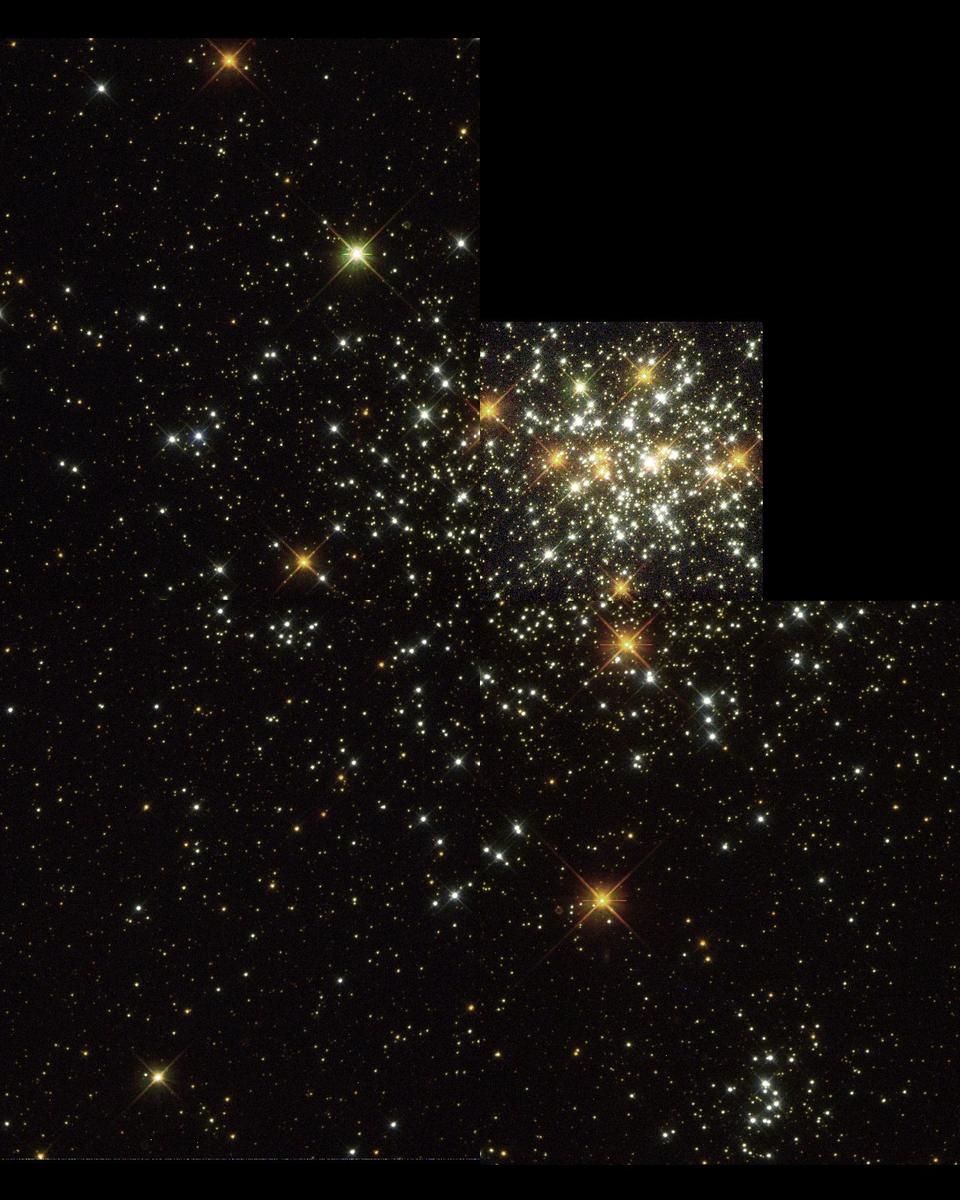
NGC 1818: A Young Globular Cluster
Explanation : Globular clusters once ruled the Milky Way . Back in the old days , back when our Galaxy first formed, perhaps thousands of globular clusters roamed our Galaxy.…
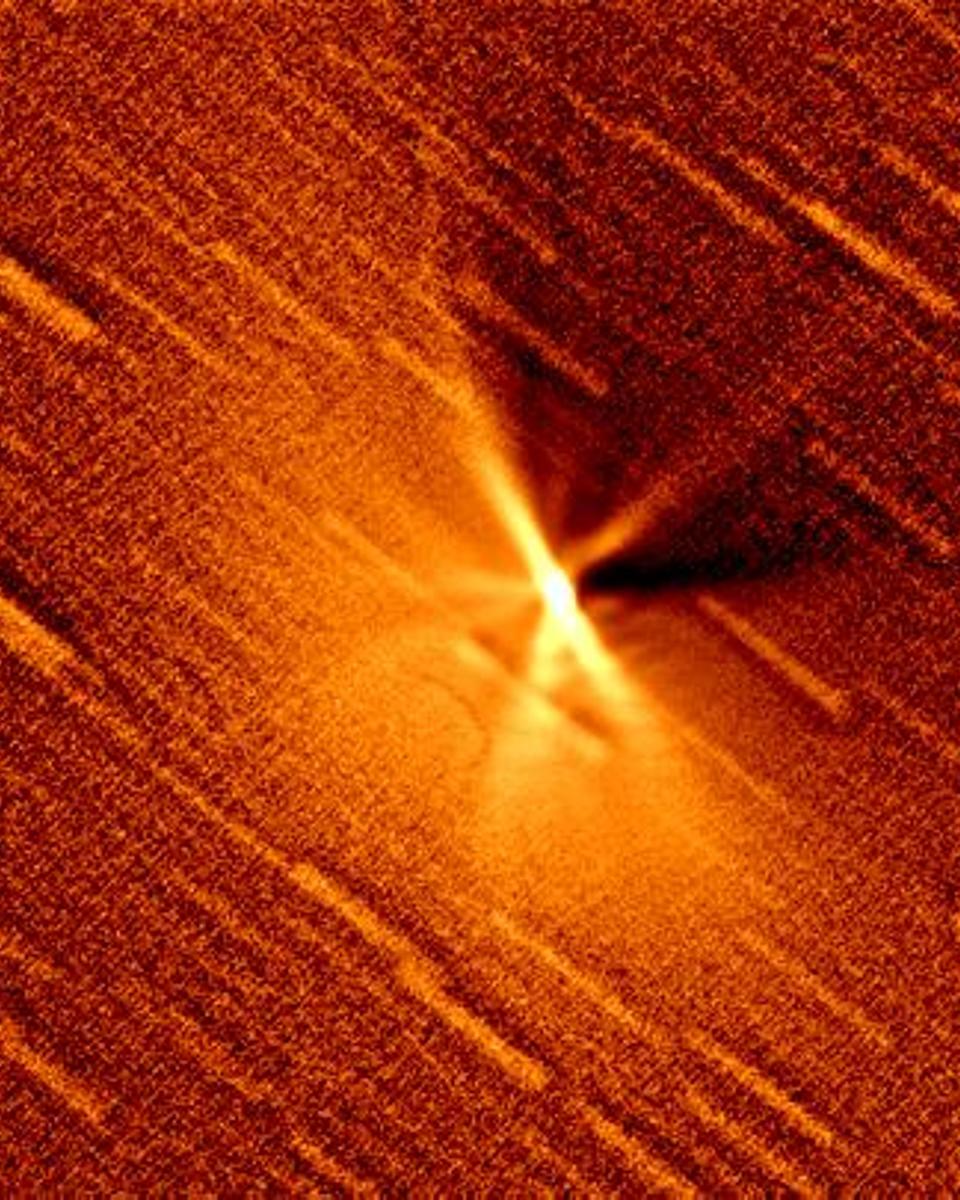
More Jets from Comet Hale-Bopp
Explanation : Comets become fountains of gas and dust as they get near the Sun . Solar heat vaporizes the outer layers of these spectacular orbiting icebergs , exposing caverns of…
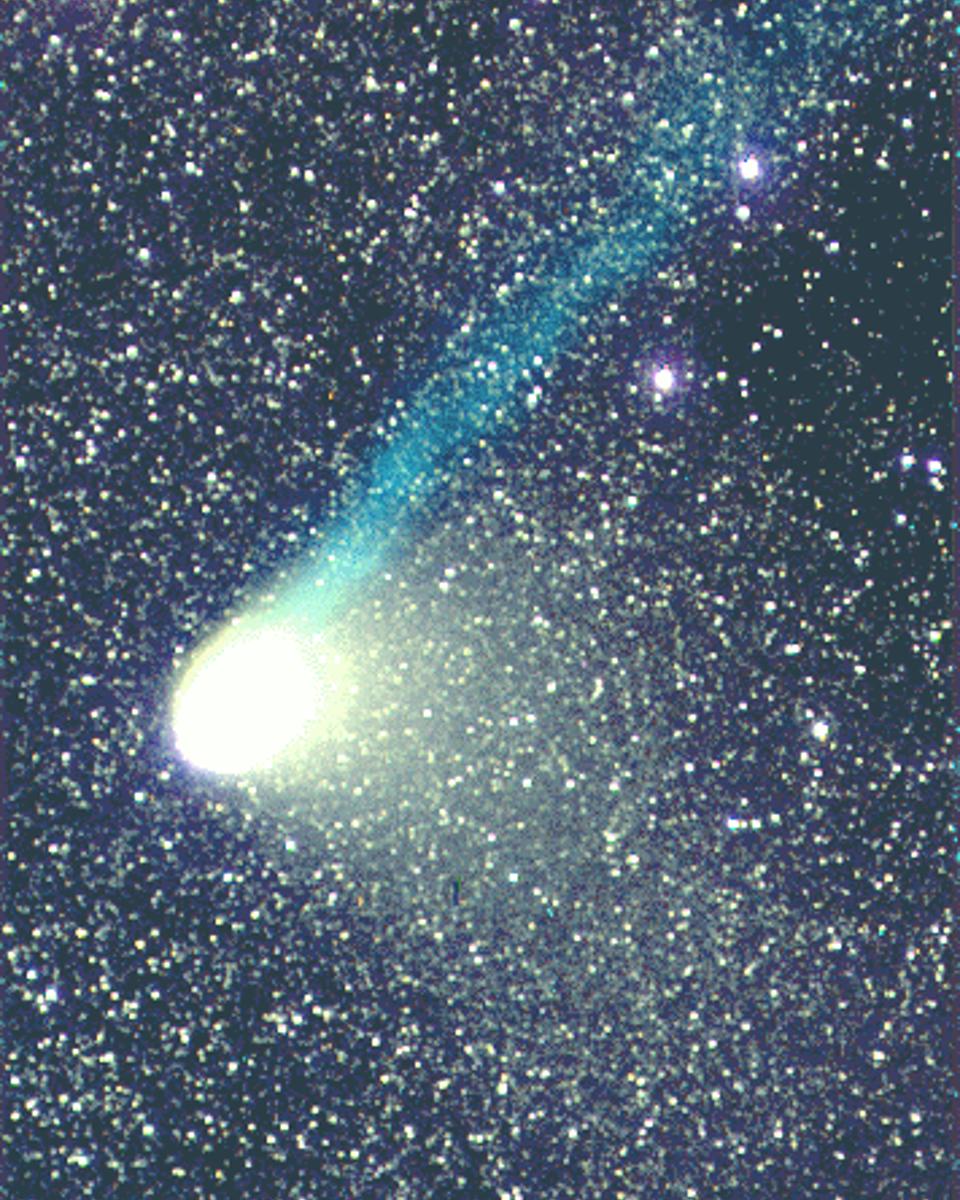
Comet Hale-Bopp Develops a Tail
Explanation : Comet Hale-Bopp has quite a tail to tell already. This remarkable comet was first discovered in 1995, even before Comet Hyakutake . Since then, this erupting…
Viewing discoveries from 7 March 1997 through 12 February 1997.