Browse NASA Astronomy Picture of the Day archive by date and media: Archive Discoveries
Browse the NASA APOD archive without needing the exact date first. Filter by media type and keep moving deeper into older images and videos.
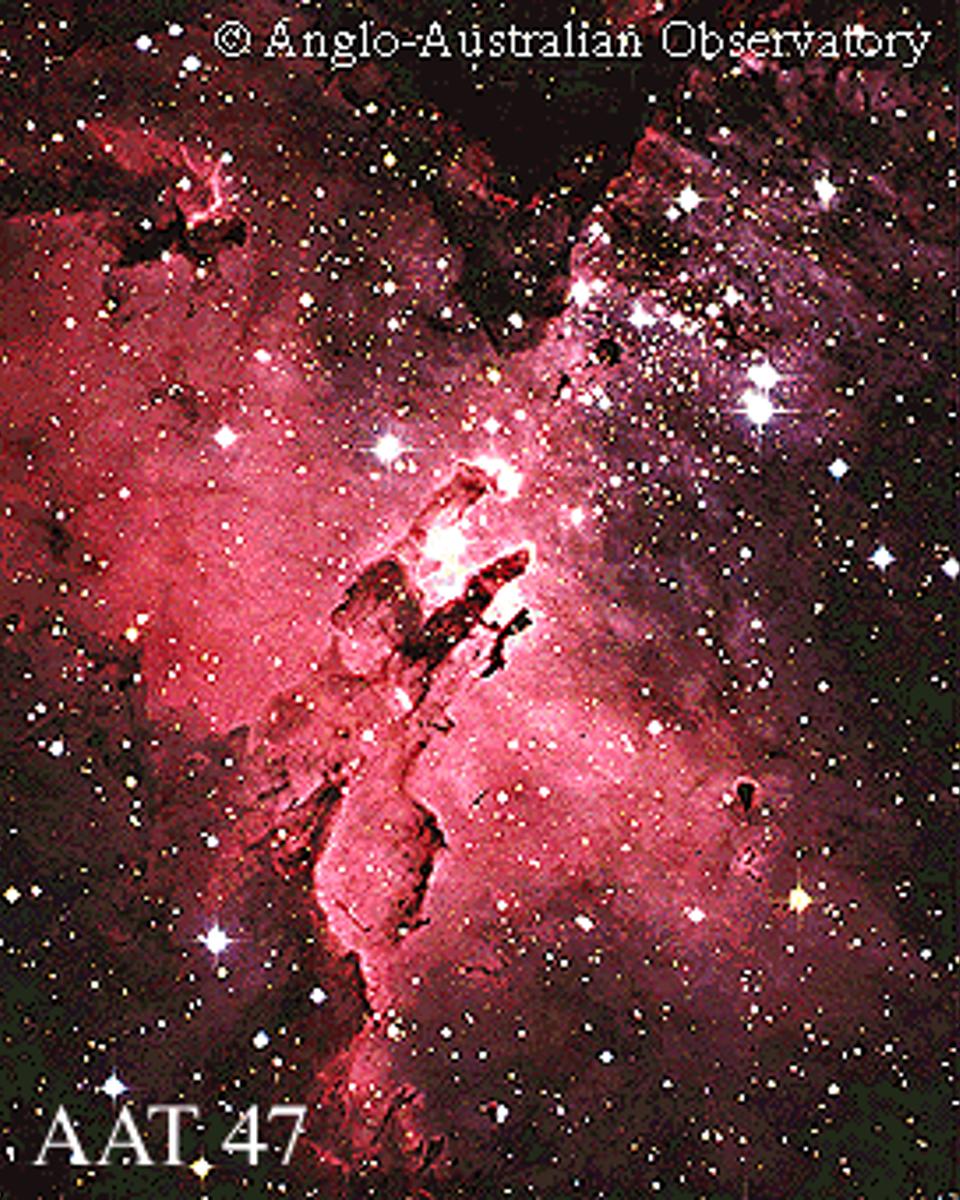
M16: Nebula With Star Cluster
Explanation : The photogenic M 16 shown above is composed of a young star cluster associated with a spectacular emission nebulae lined with clouds of interstellar dust . The…
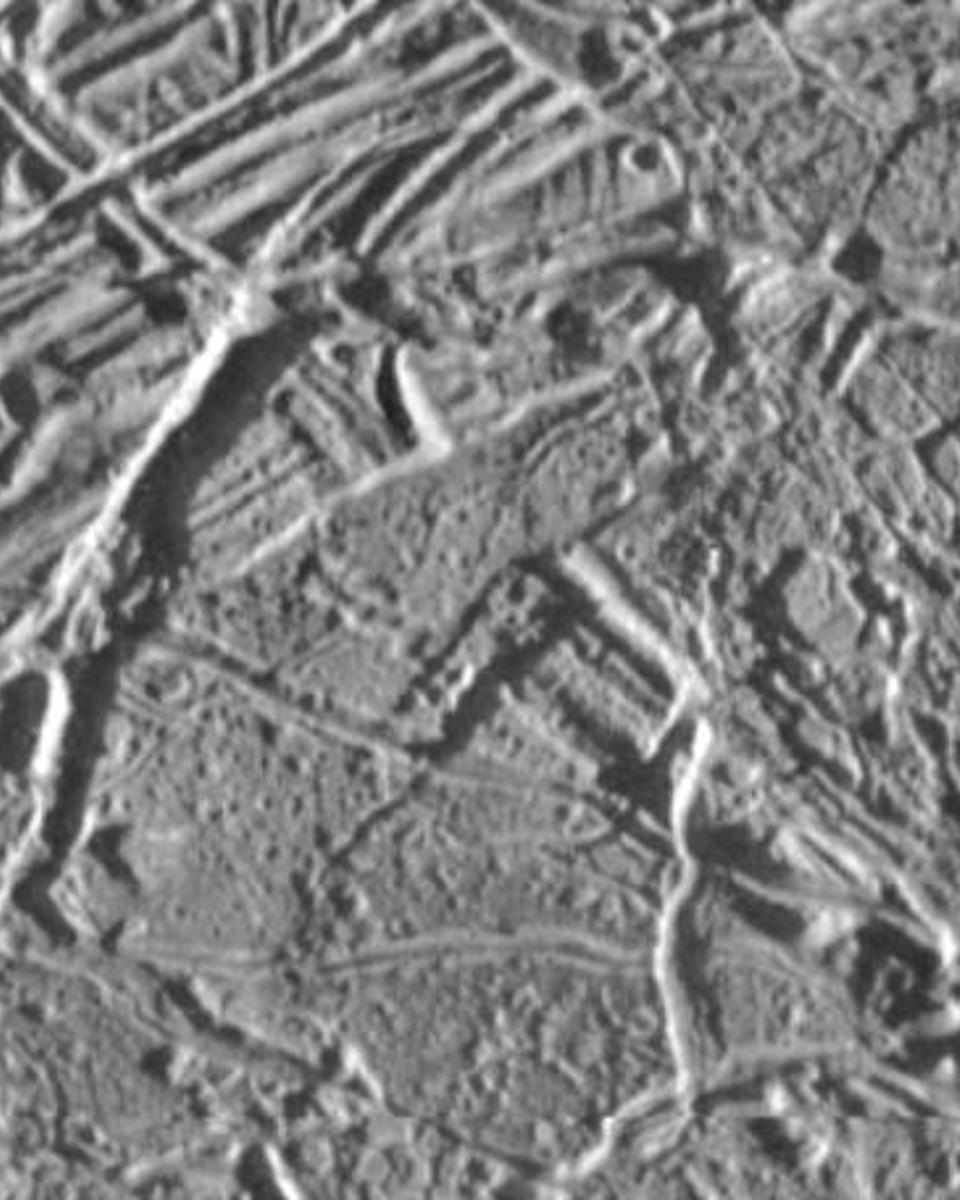
Europa: The Latest From Galileo
Explanation : Today, NASA revealed recent results from the Galileo Probe's December 19th flyby of Europa, Jupiter's ice-covered moon - including this close-up image of fractured…
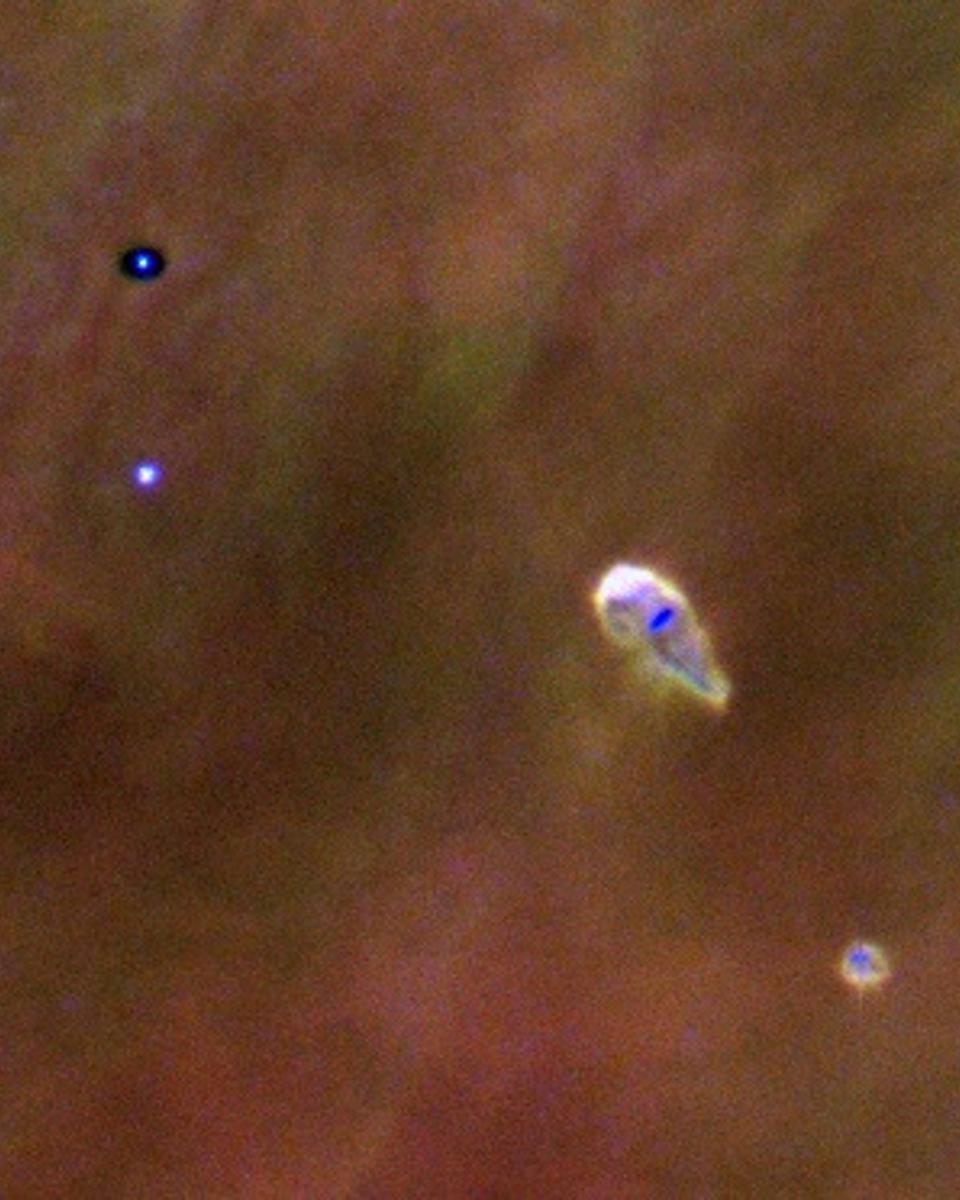
Trapezium: Teardrops in My Skies
Explanation : Sometimes the unexpected comes in a familiar shape. In this recently released picture , the seemingly familiar teardrop-shaped object just right of center is…
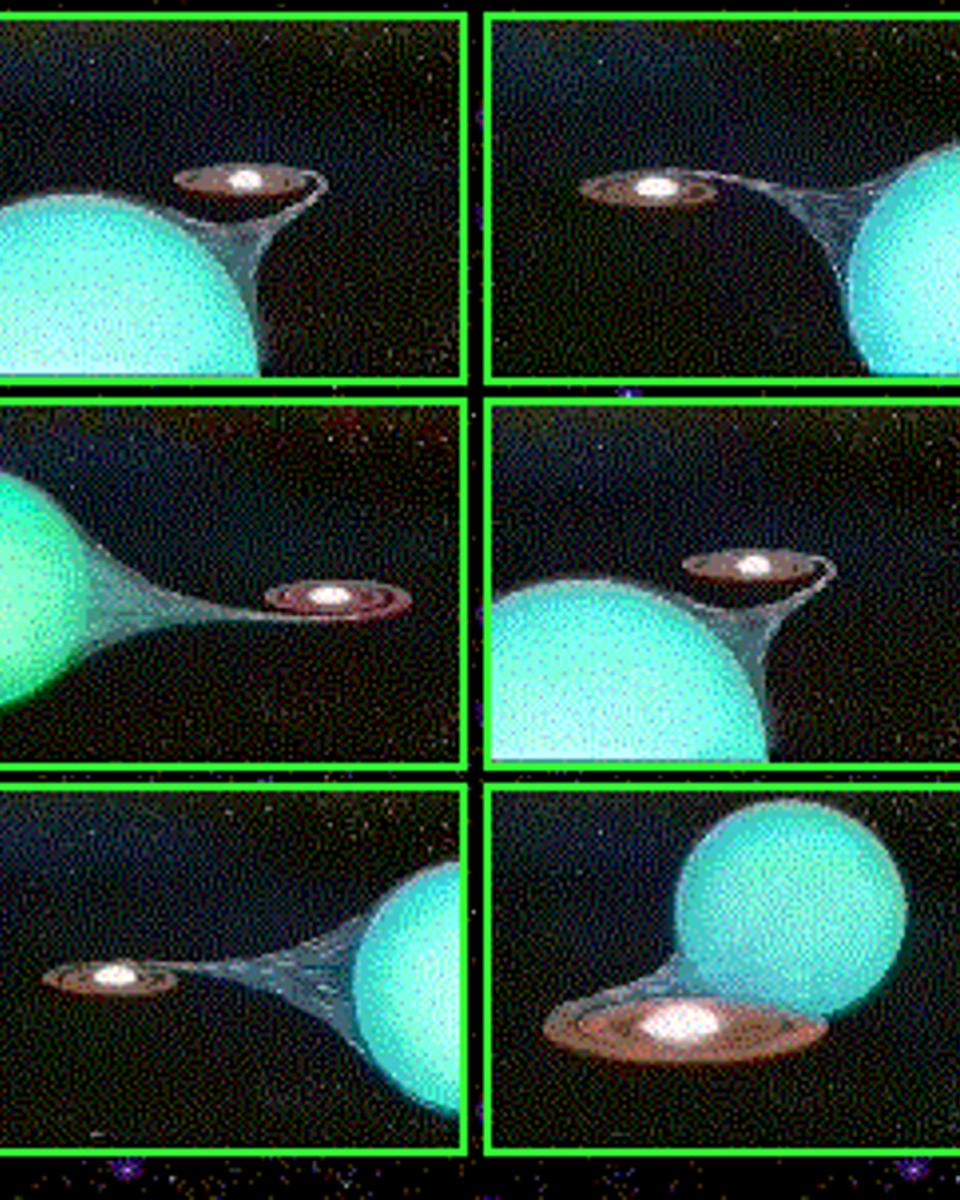
Black Hole Signature From Advective Disks
Explanation : What does a black hole look like? If alone, a black hole would indeed appear quite black, but many black hole candidates are part of binary star systems . So how…
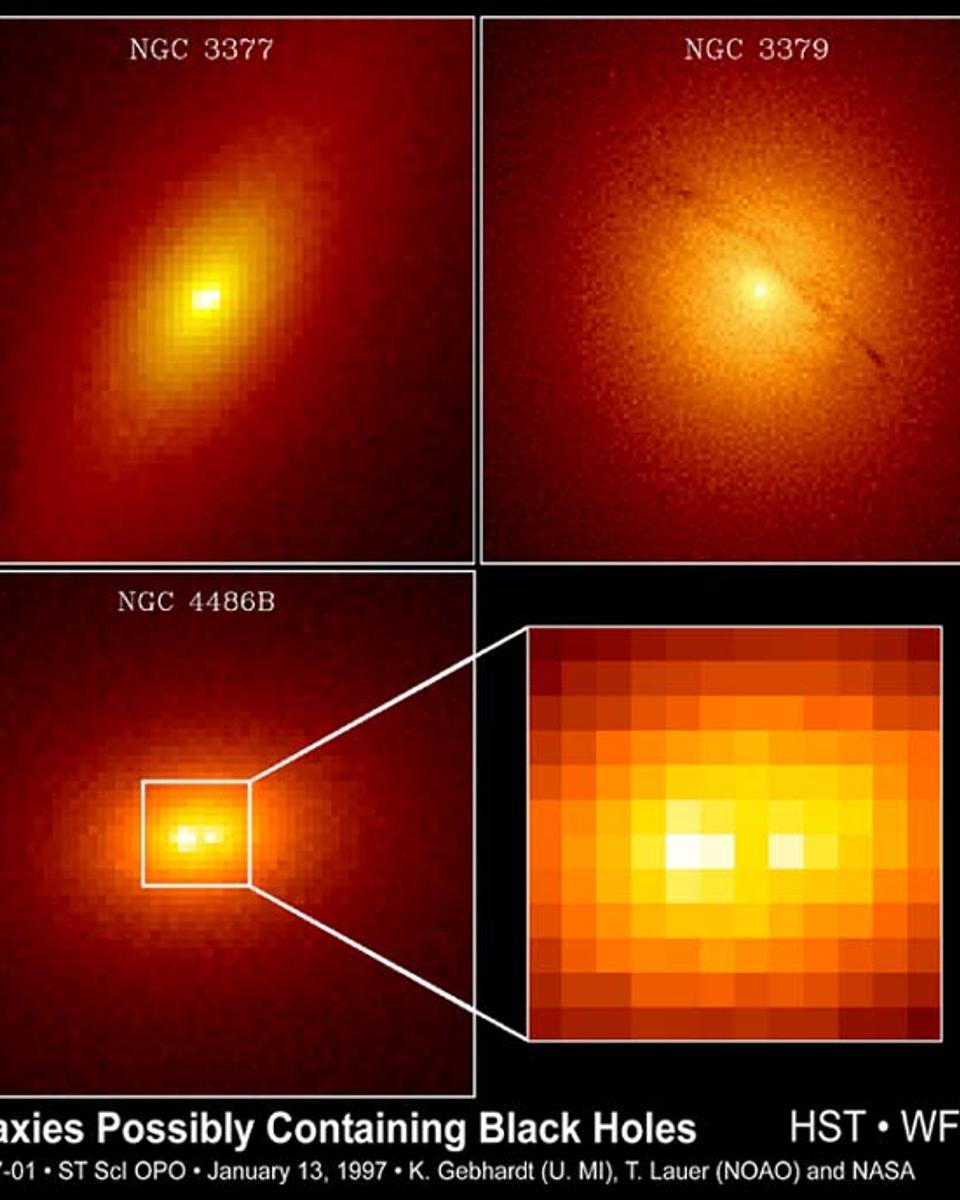
Black Holes in Galactic Centers
Explanation : Do all galaxies have black holes at their centers? Although not even a single galaxy has yet been proven to have a central black hole , the list of candidates has…
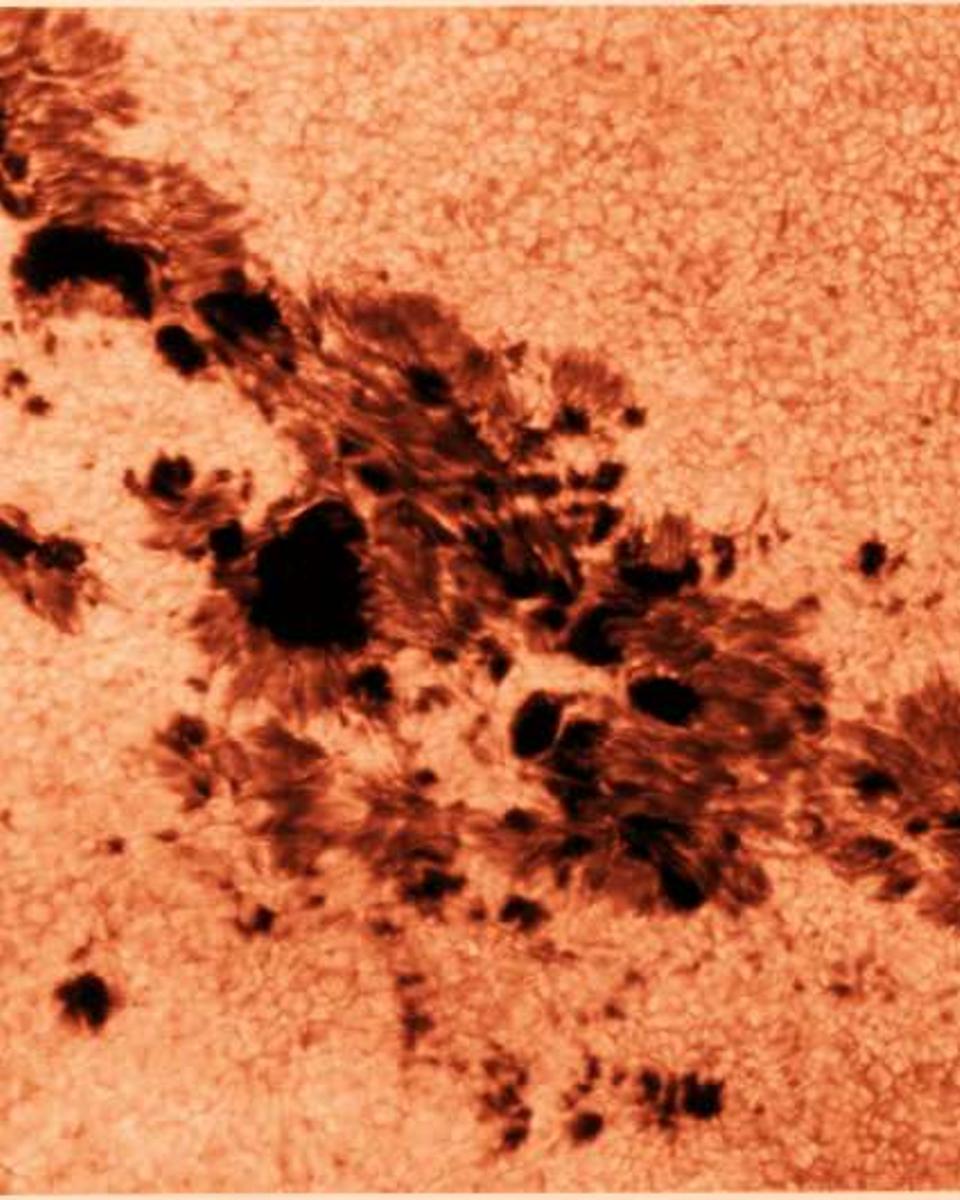
Sunspots: Magnetic Depressions
Explanation : Our Sun has spots! These spots appear dark in photographs like the one above, but in fact sunspots are quite bright - they are just dark compared to the rest of the…
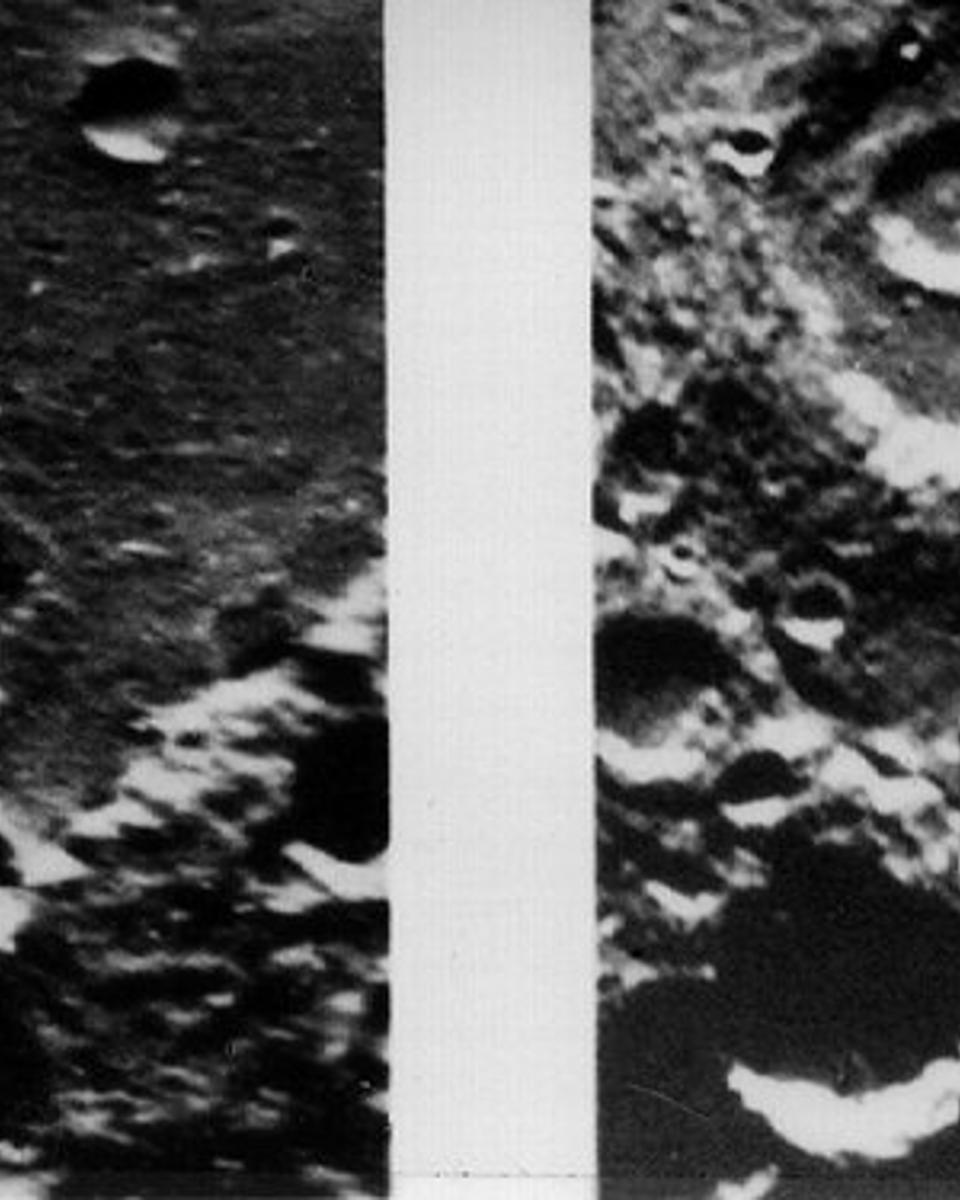
Mercury in Stereo: Craters Within Craters
Explanation : This Stereo image pair of craters on on Mercury was produced using data from NASA's robot explorer Mariner 10 which performed three close flybys of the Sun's closest…
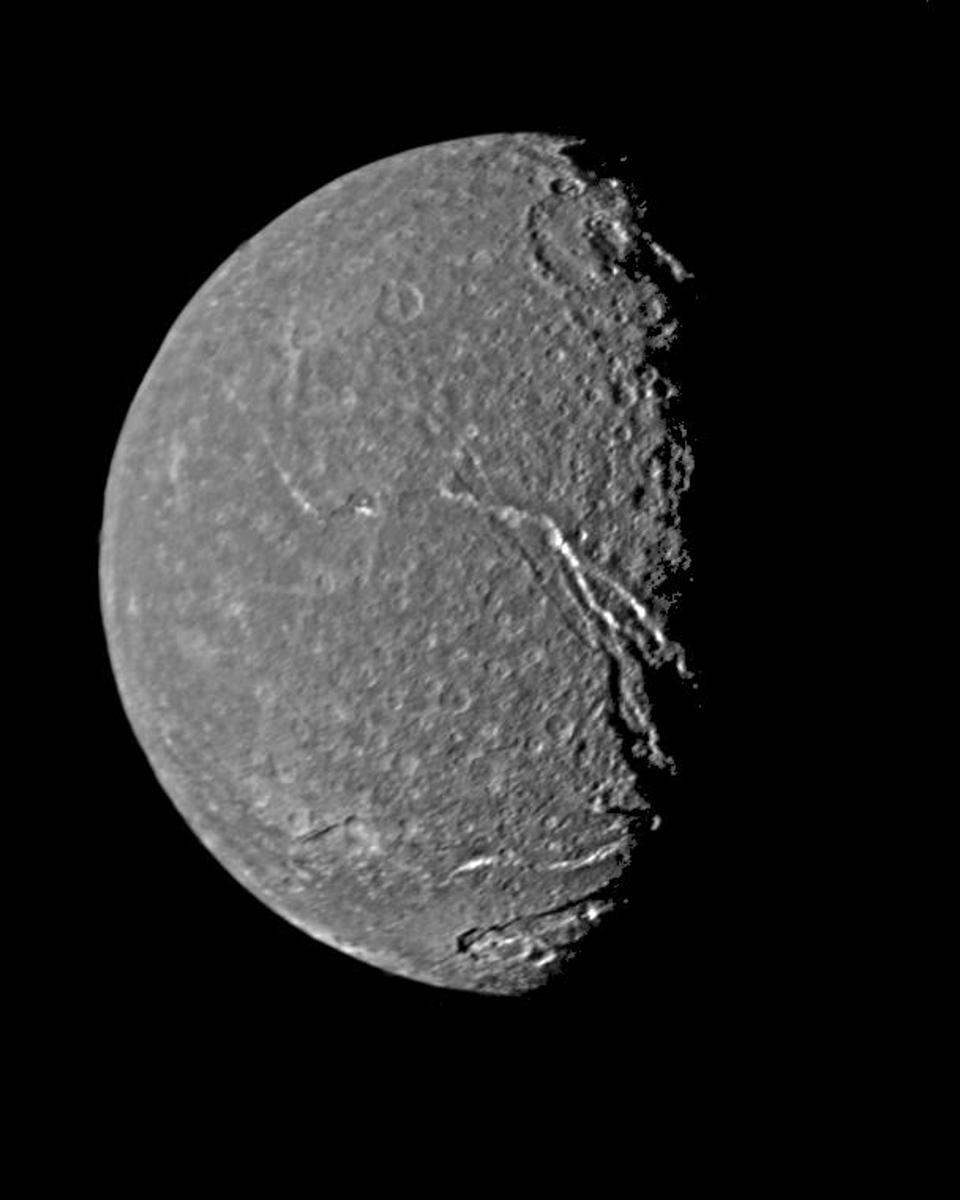
Titania's Trenches
Explanation : British astronomer Sir William Herschel discovered Titania and Oberon in 1787, 210 years ago today. He wasn't reading Shakespeare's A Midsummer Night's Dream though,…
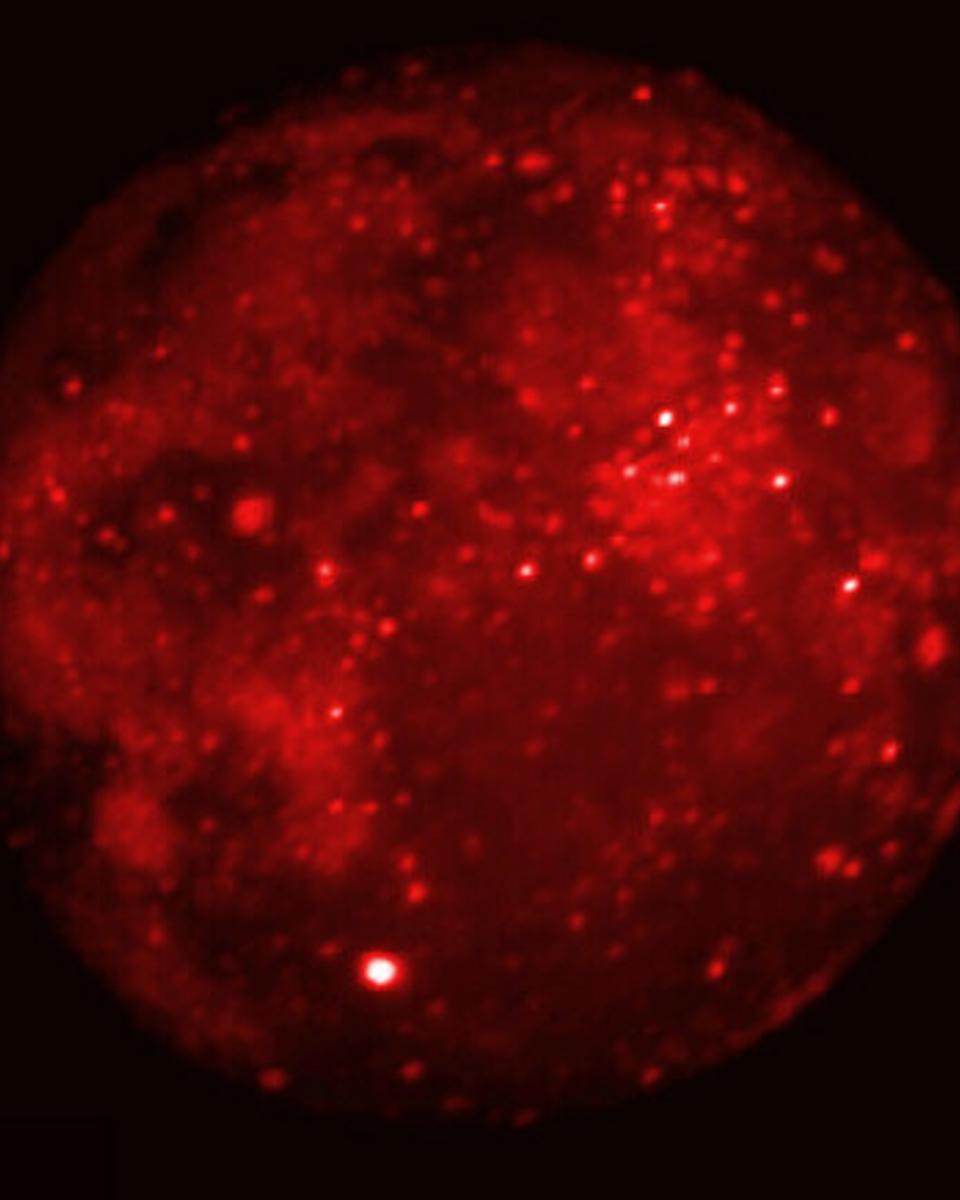
Eclipsed Moon in Infrared
Explanation : Last September's total lunar eclipse disappointed many observers in the Eastern and Midwestern US who were cursed with cloudy skies. However, the Midcourse Space…
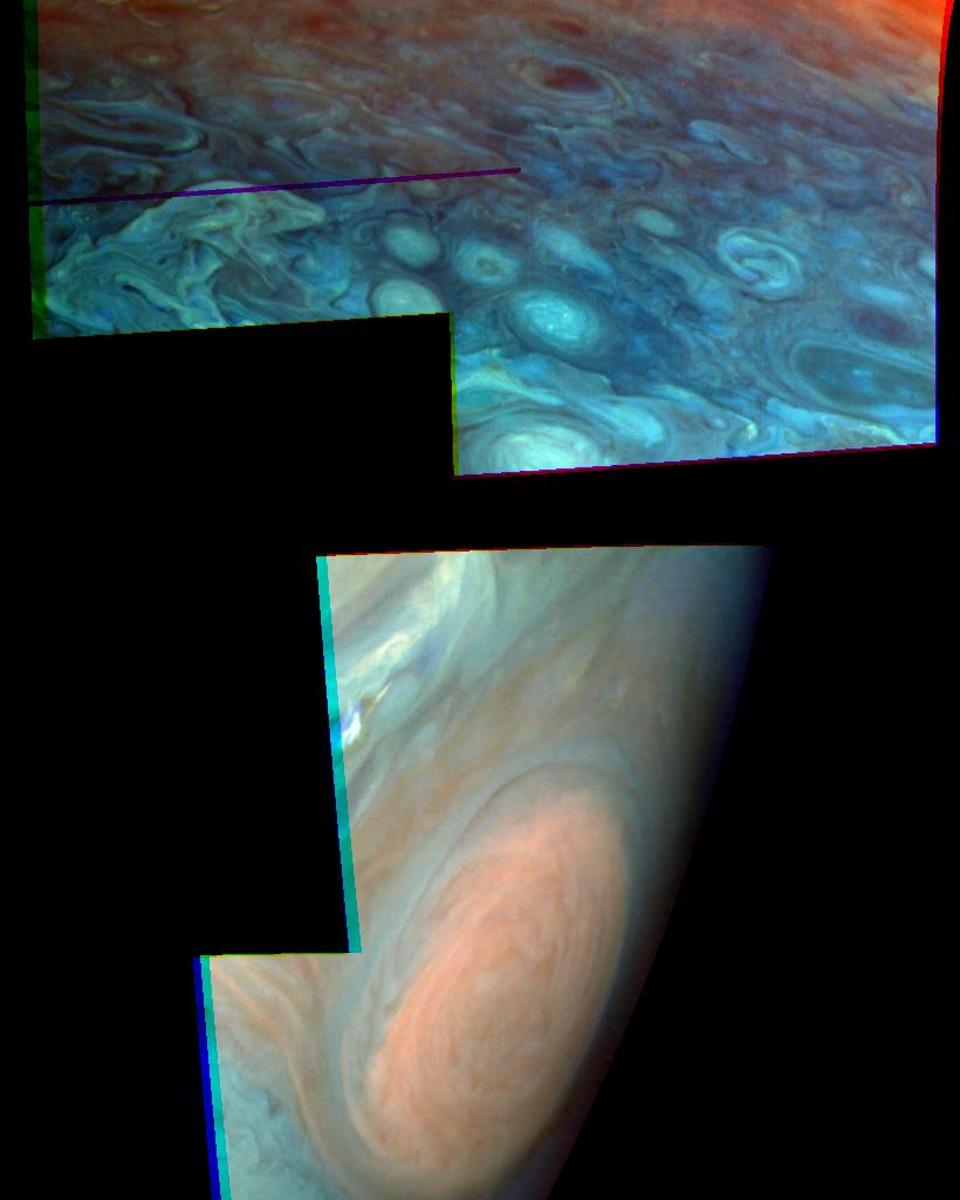
Hazing Jupiter
Explanation : A dramatic mosaic of recent images from the Galileo spacecraft reveals details of swirling clouds and a thick stratospheric haze in the atmosphere of Jupiter , the…
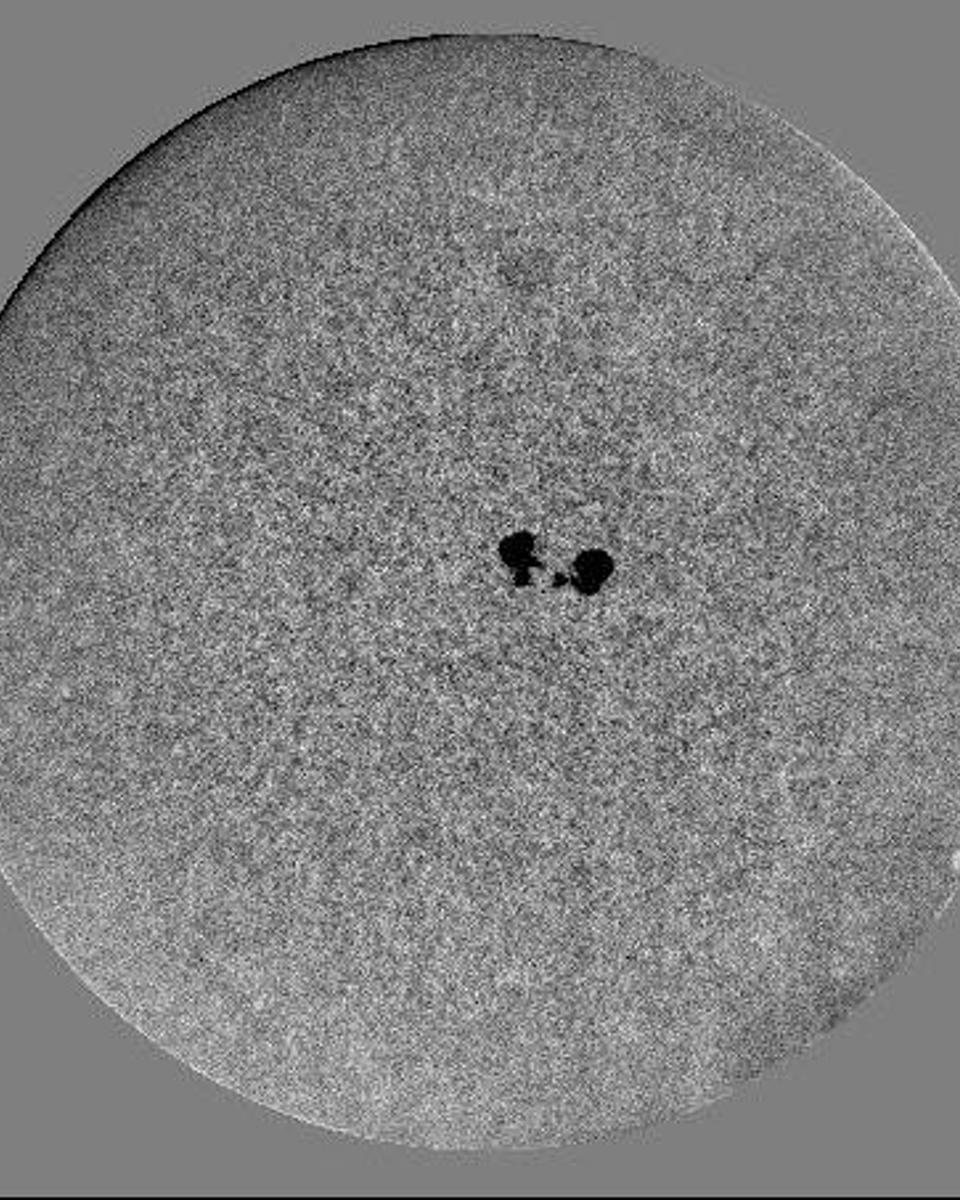
Grey Sun Seething
Explanation : The Sun 's surface is not smooth. It has thousands of bumps called granules and usually a few dark depressions called sunspots. Each of the numerous granules is the…
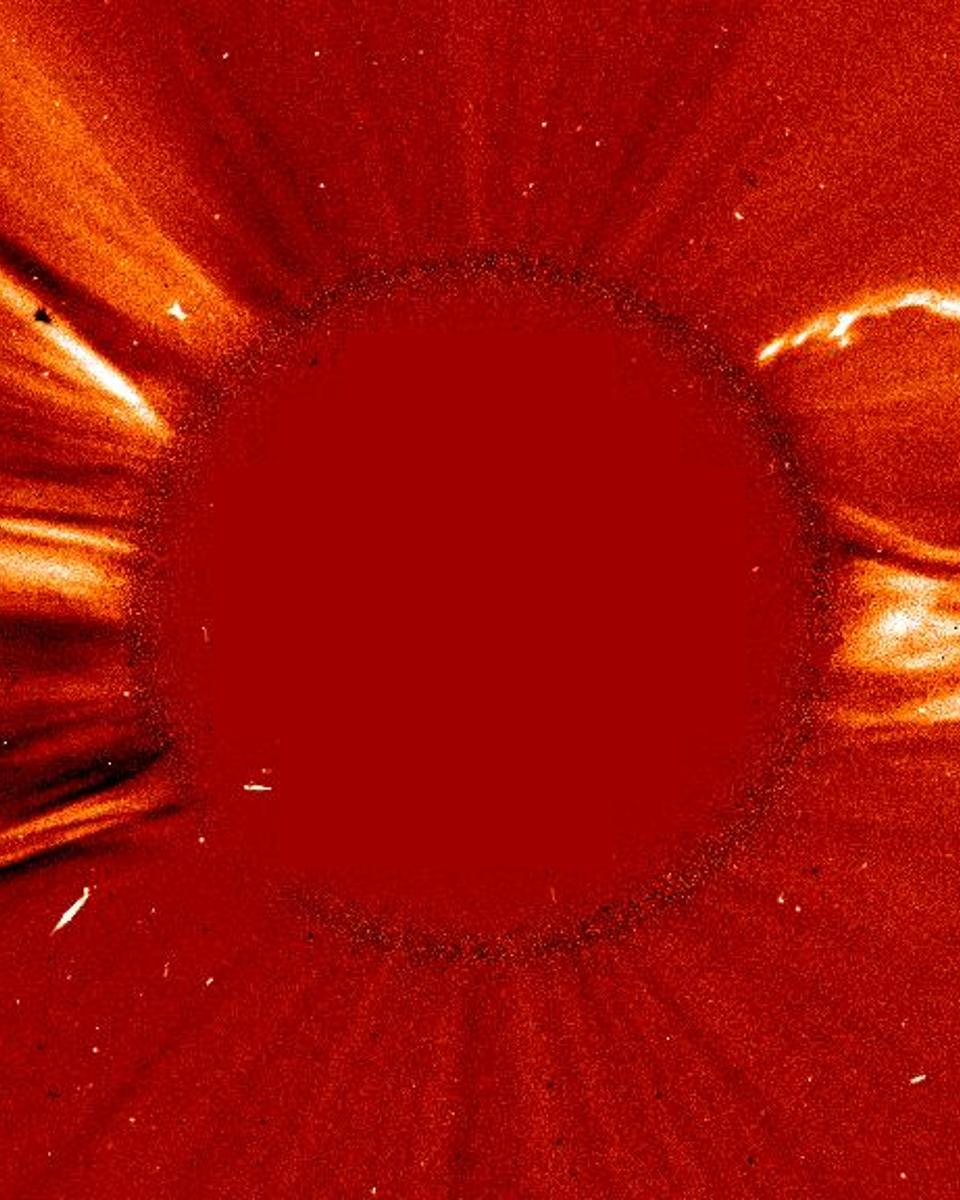
Red Sun Streaming
Explanation : The Sun is leaking. In fact, it is gushing: particles stream away from the Sun at hundreds of kilometers per second. Some of these particles strike the Earth and…
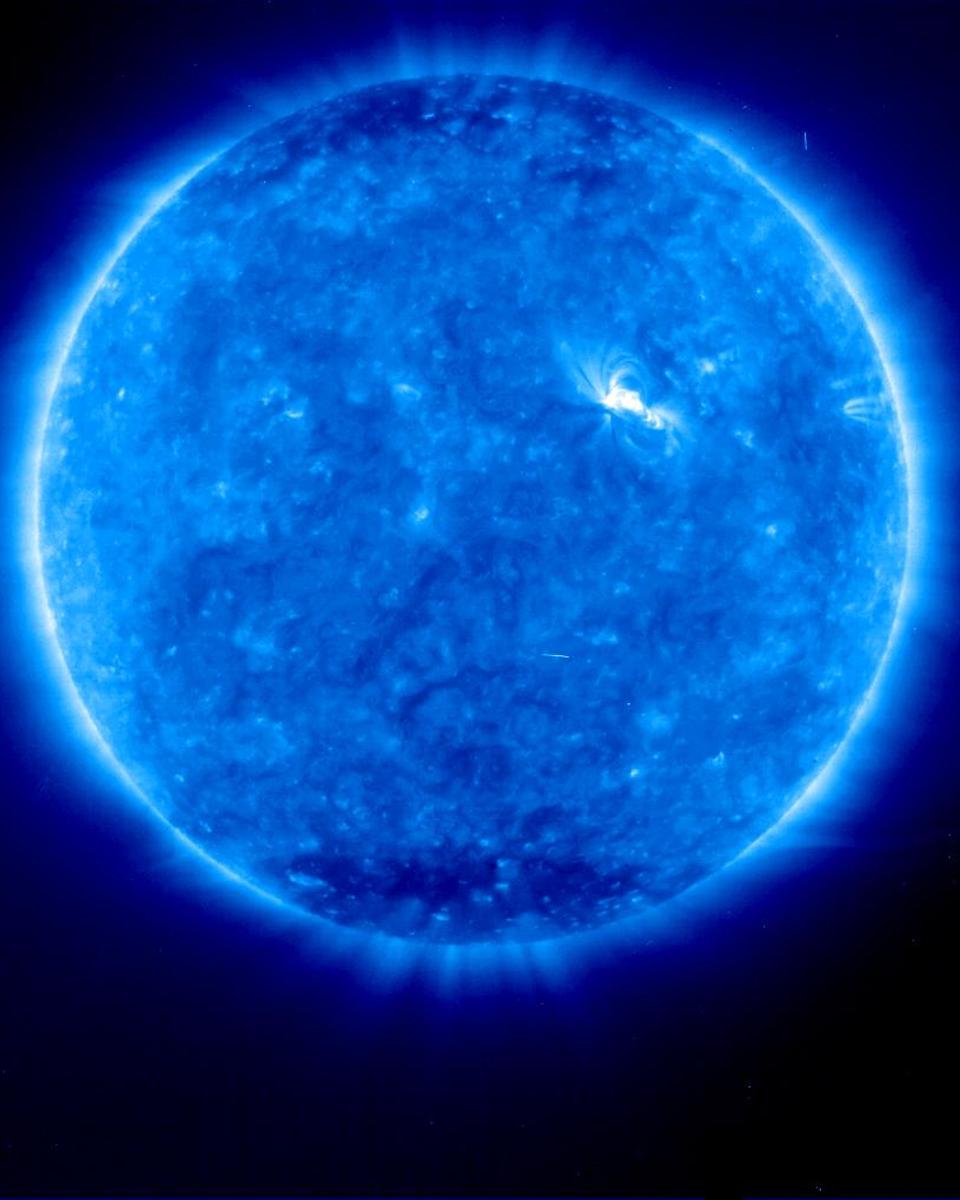
Blue Sun Glaring
Explanation : The Sun is a bubbling ball of extremely hot gas. In this false-color picture , light blue regions are extremely hot - over 1 million degrees , while dark blue…
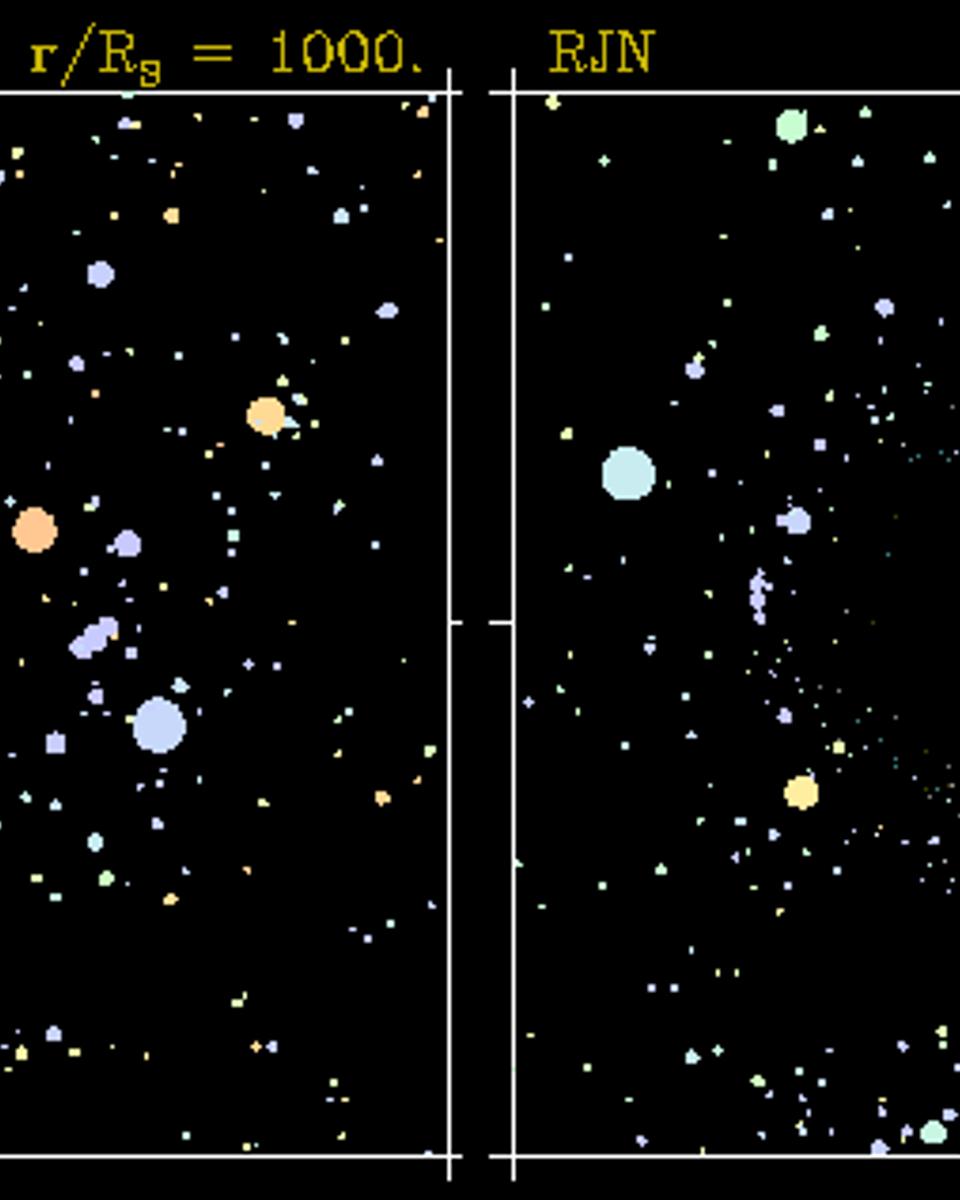
Too Close to a Black Hole
Explanation : What would you see if you went right up to a black hole ? Above are two computer generated pictures highlighting how strange things would look. On the left is a…

A Star Where Photons Orbit
Explanation : The above computer animated picture depicts how a very compact star would look to a nearby observer. The star pictured is actually more compact that any known except…
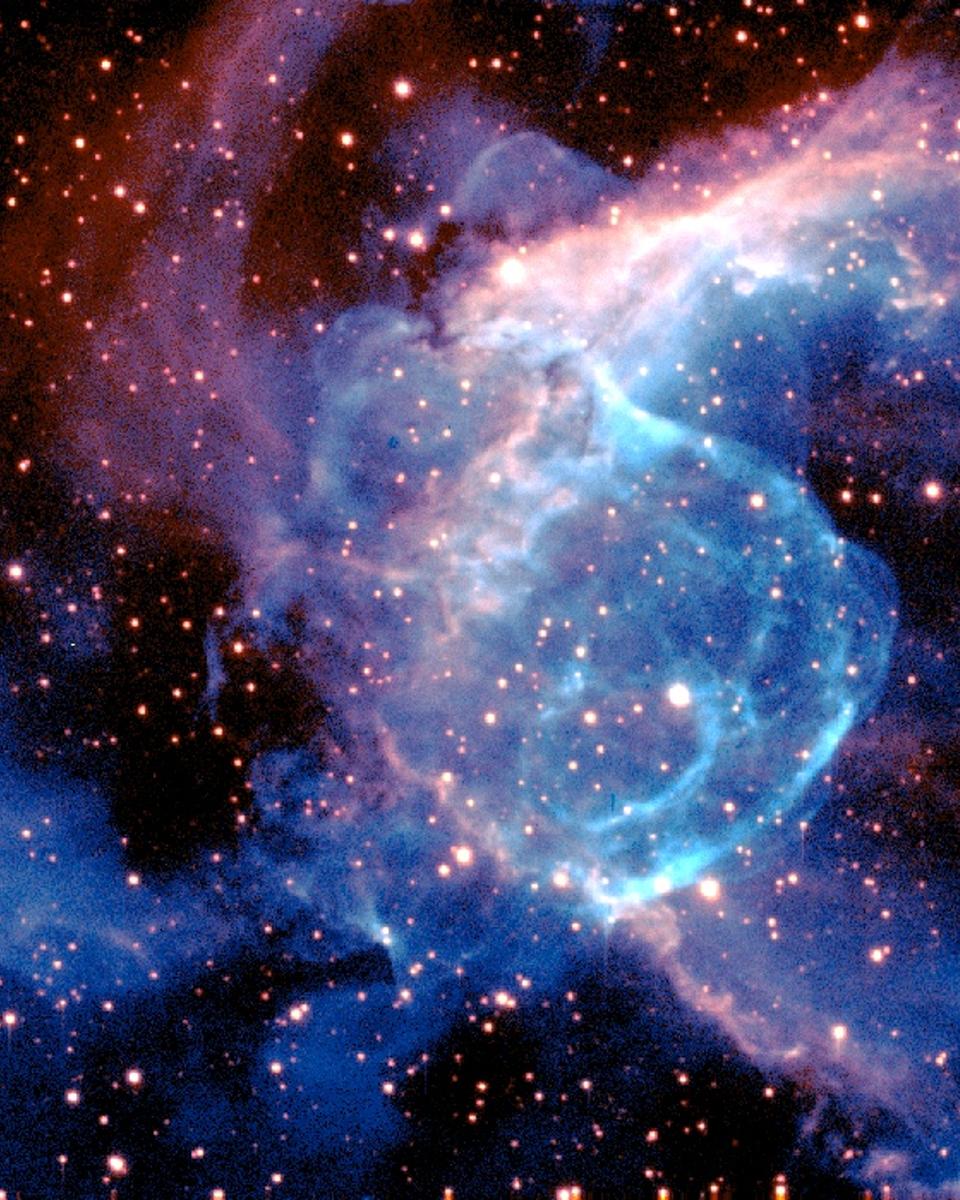
A Wolf-Rayet Star Blows Bubbles
Explanation : Wolf-Rayet stars can blow bubbles. These unusual stars are much hotter and more luminous than our Sun . All extremely massive stars will eventually evolve though a…
Bubbles and Arcs in NGC 2359
Explanation : What caused the bubbles and arcs in NGC 2359? The main suspect is the Wolf-Rayet star in the center of one of the bubbles - visible slightly below and to the right…
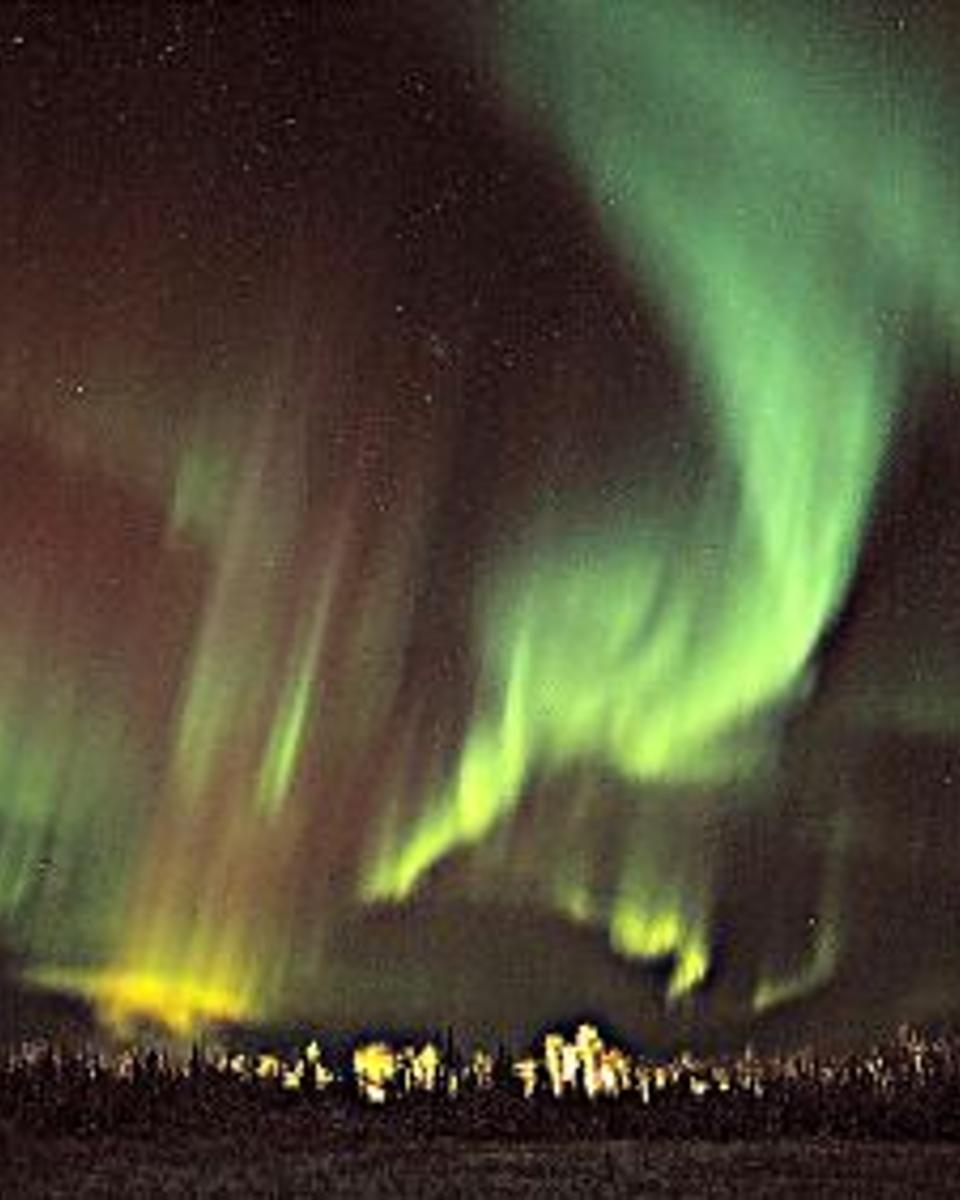
Aurora Over Circle, Alaska
Explanation : Aurora can make spectacular sights. This particular aurora was photographed hovering over the town of Circle, Alaska. Although Aurora might first appear to be…
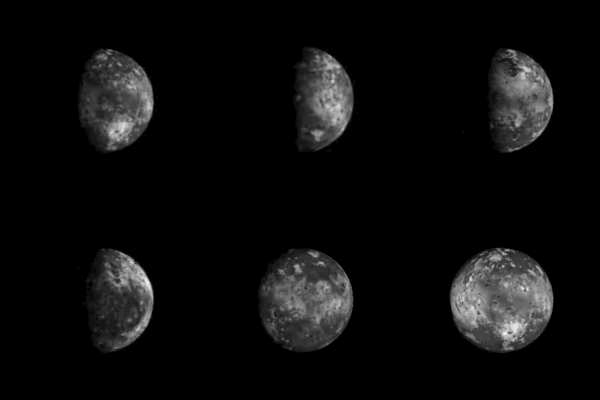
Io Rotating
Explanation : Are any volcanoes on Io currently erupting? To help answer this, scientists instructed the robot spacecraft Galileo to take hourly pictures of this moon of Jupiter…
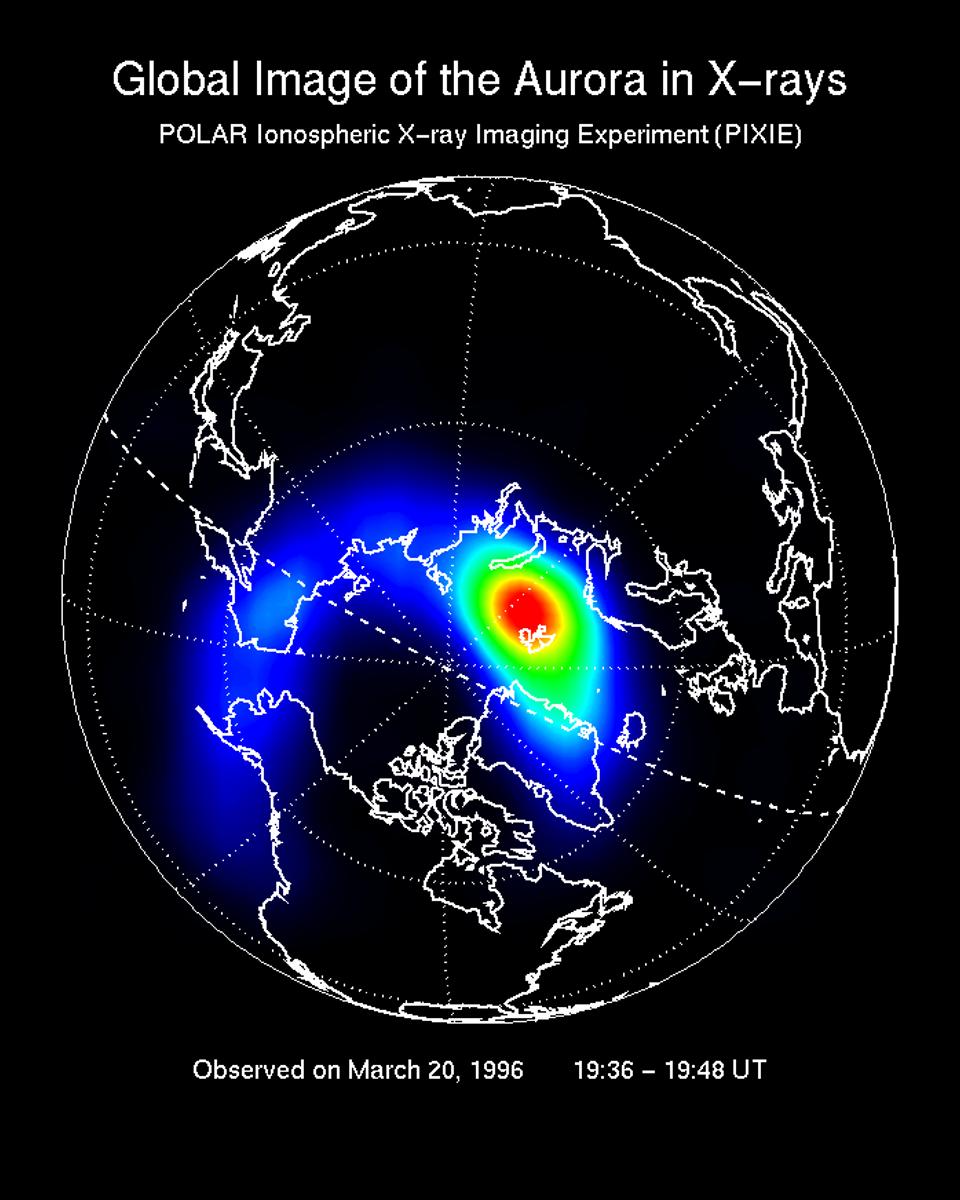
X-Ray Earth
Explanation : The Earth glows in many kinds of light, including the energetic X-ray band. Actually, the Earth itself does not glow - only aurora produced high in the Earth's…
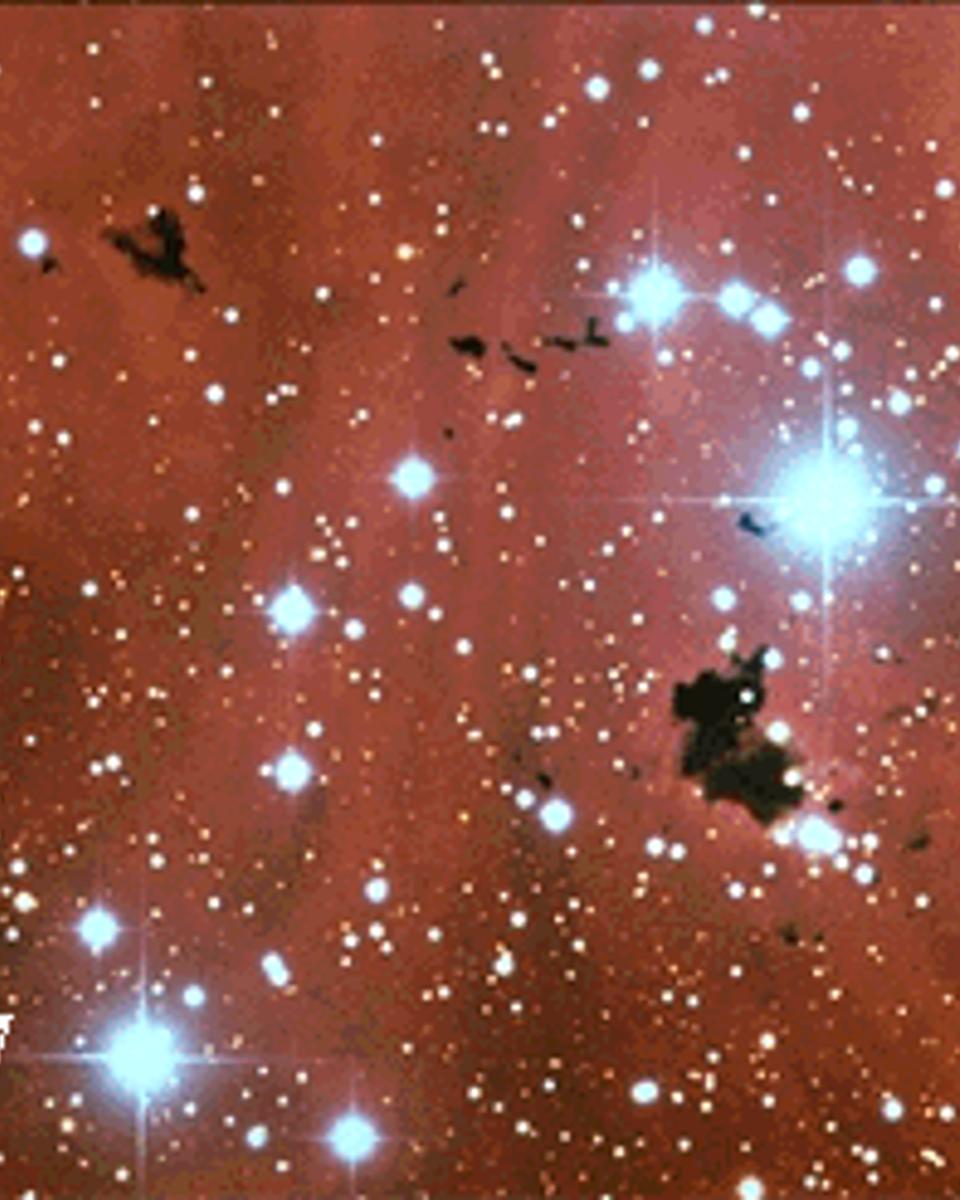
Dark Bok Globules in IC 2944
Explanation : The dark spots in the above picture are not photographic defects but an unusual type of interstellar cloud known as a Bok globule . Bok globules, named after…
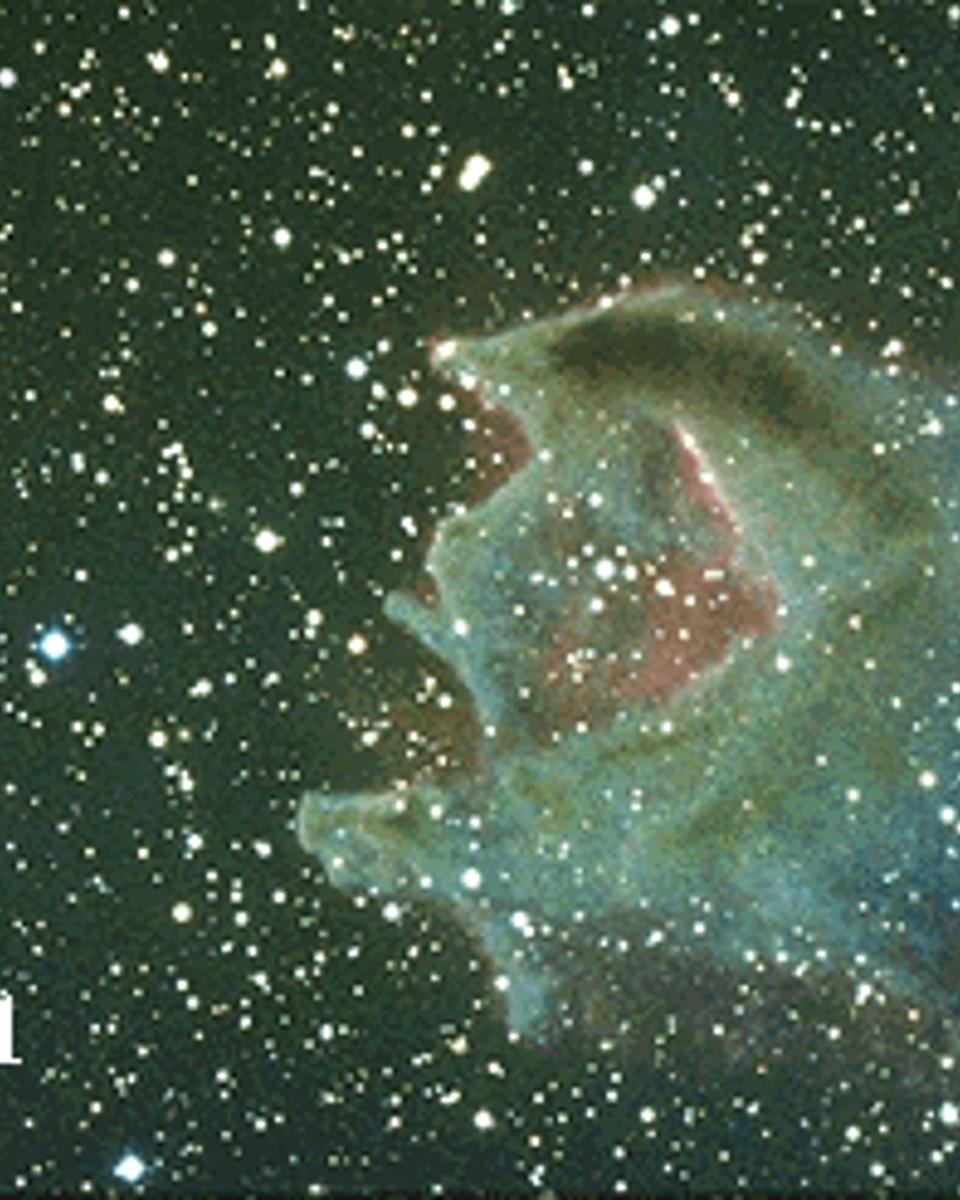
CG4: A Ruptured Cometary Globule
Explanation : The odd looking “creature” to the right of center in the above photo is a gas cloud known as a cometary globule . This globule, however, has ruptured. Cometary…
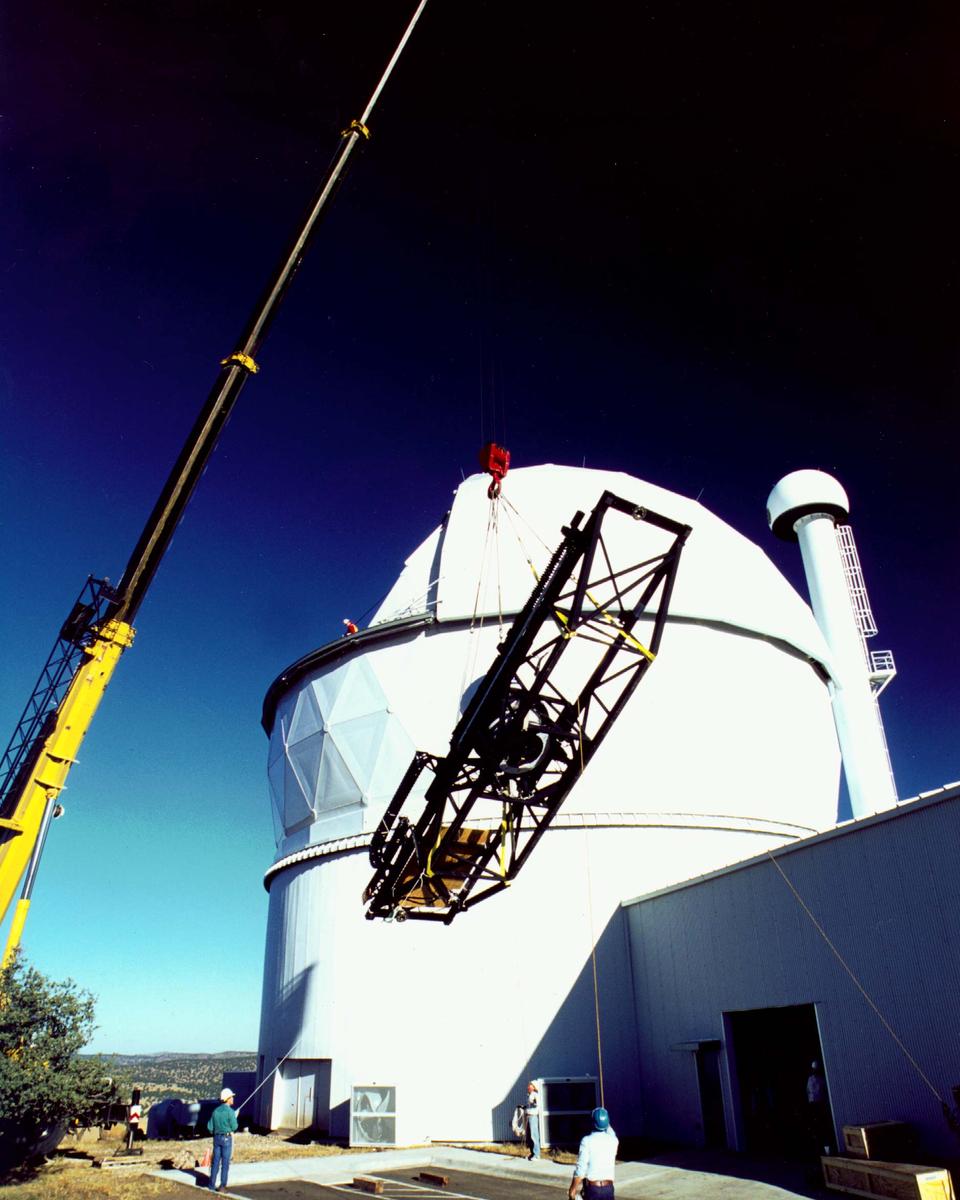
HET: The New Largest Optical Telescope
Explanation : Most of our universe is too dim to see. To peer into our cosmos' unknown depths, astronomers must deploy new tools - and the classic new tool is a larger telescope.…

Carl Sagan 1934-1996
Explanation : Carl Sagan died last Friday at the age of 62. Sagan was the world's most famous astronomer. Among his many activities as a scientist, he contributed to the discovery…
Viewing discoveries from 18 January 1997 through 26 December 1996.